
Not Your Grandma’s Birdhouse: Bold Designs You Can Actually Recreate
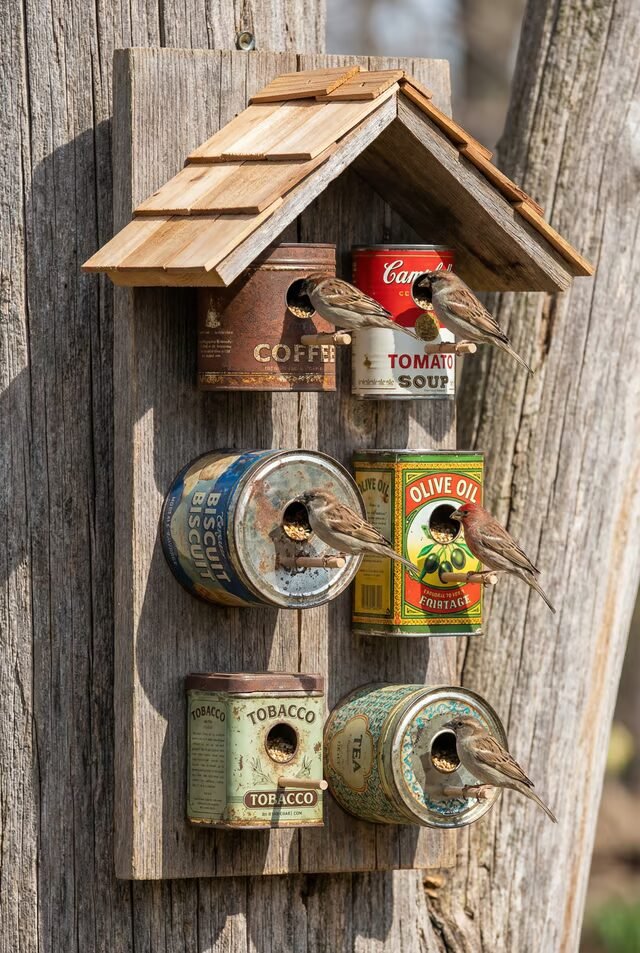
Birdhouses don’t have to be basic little wooden boxes nailed to a tree. They can be sculptural, playful, architectural, and completely personality-packed while still being safe and functional for birds. When we think about unique bird houses, we’re really talking about blending creativity with solid design principles.
The magic happens when form meets function. A whimsical shape catches the eye, but proper ventilation, drainage, and correct entrance hole sizing keep birds comfortable and protected. What makes these ideas exciting is how they treat birdhouses like miniature architecture. We see repetition, symmetry, layering, contrast, and storytelling—all the same principles used in real home design.
That’s why they feel intentional rather than random DIY experiments. And the best part? We can recreate them with thoughtful material choices, smart mounting techniques, and weather-resistant finishes. Unique bird houses aren’t just decor. They’re tiny, functional design statements living right in our own backyard.
Rustic Twig Roof Woodland Cottage
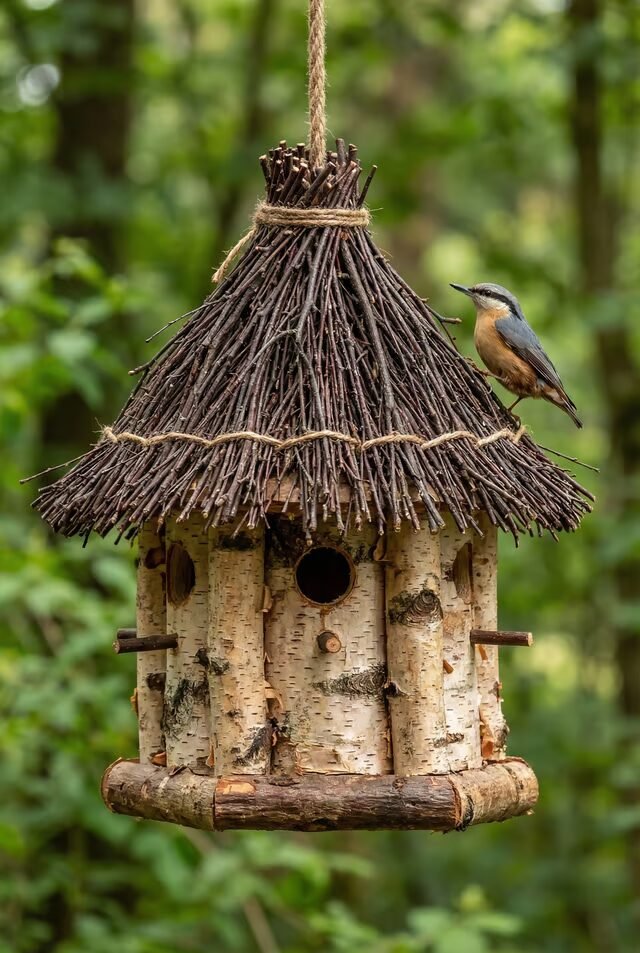
This one is giving woodland fairy contractor energy and honestly, we’re obsessed. The twig roof works because of texture layering. Notice how the thin sticks create a dense, overlapping surface? That’s basically the same principle as roof shingles: repetition builds rhythm and waterproofing. If we want to recreate it, use similar twig thickness so the pattern feels intentional, not chaotic. Bind the bundles tightly with jute rope for that rustic cohesion moment.
The birch log body brings contrast through material variation. Smooth bark + rough twigs = visual balance. Keep the entrance hole about 1.25–1.5 inches for small songbirds and place it high enough to protect from predators. Also, add small drainage holes underneath. Design rule we love? Function first, aesthetics second. When both work together, it looks effortlessly charming instead of Pinterest-fail DIY.
Seal everything with a non-toxic outdoor sealant so your fairy tenants don’t move out after one rainstorm.
Playful Cartoon Character Birdhouse
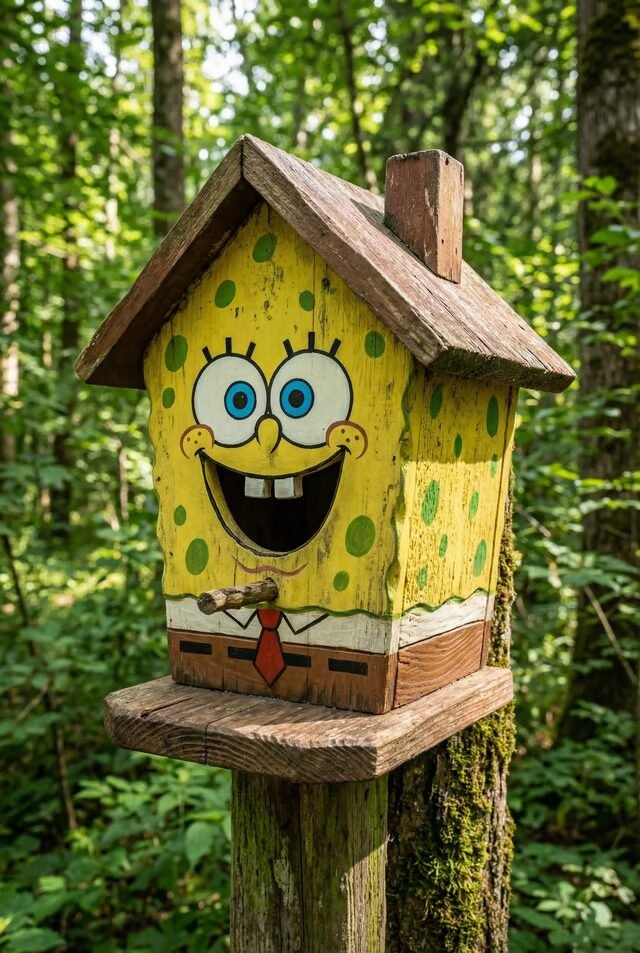
Okay but imagine birds moving into SpongeBob’s vacation home. This design works because of bold focal points. The giant eyes instantly grab attention, making the birdhouse a statement piece in a neutral forest backdrop. When recreating, keep the base structure simple and sturdy first, then treat the character details as decorative overlays.
Color theory moment: bright yellow pops beautifully against greenery because of high contrast saturation. If we’re painting, use exterior-grade acrylic and finish with UV-protective sealant so it doesn’t fade into sad mustard.
Important tip: the entrance hole should still be a clean circular cut, not distorted by the smile. Bird safety > cartoon accuracy. Mount it on a stable post at least 5 feet high to deter predators. Keep the perch short or skip it entirely, since perches can actually help predators. This design proves playful doesn’t mean impractical. It’s about layering personality onto a structurally sound core.
Hand-Carved Bearded Wood Spirit House
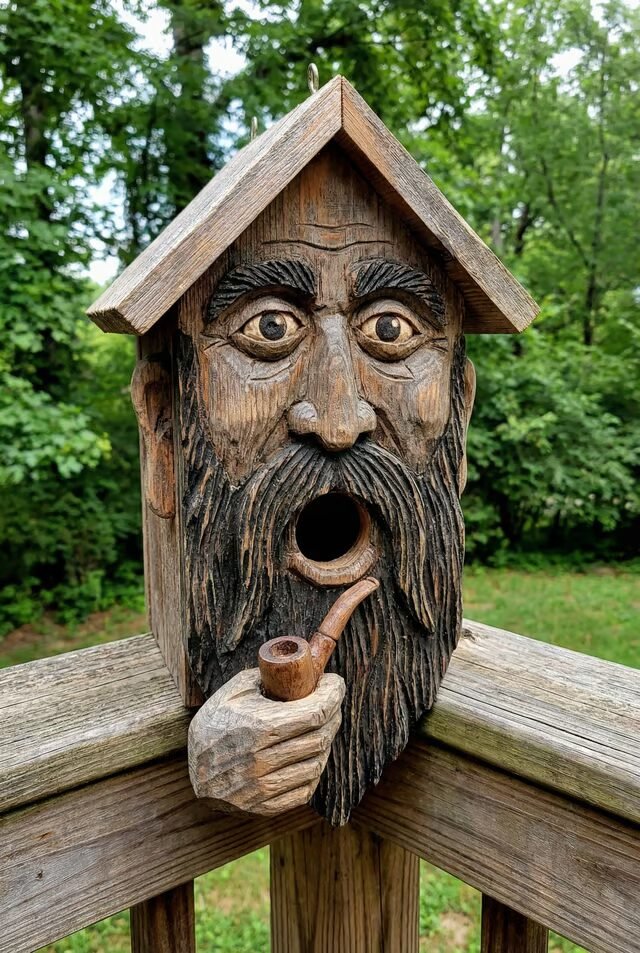
This one feels like the forest elder who knows everyone’s secrets. The carved face works because of sculptural depth and shadow play. Deep grooves in the beard create contrast, which adds visual drama even in natural light. When recreating, choose a solid hardwood like cedar. It’s weather-resistant and easier to carve than you think.
Design principle alert: make the functional element part of the story. The entrance hole cleverly becomes the mouth. That’s integrated design, not an afterthought. If we carve something similar, keep the hole smooth inside to protect delicate feathers.
Mounting matters too. Attach it to a railing or tree with brackets instead of nails directly into living bark. Also, tilt the roof slightly forward to help rain runoff. Seal with breathable oil, not thick varnish, so the wood can expand naturally. It’s bold, yes. But it works because it respects proportion, craftsmanship, and practical bird needs.
Multi-Level Mini Birdhouse Apartment
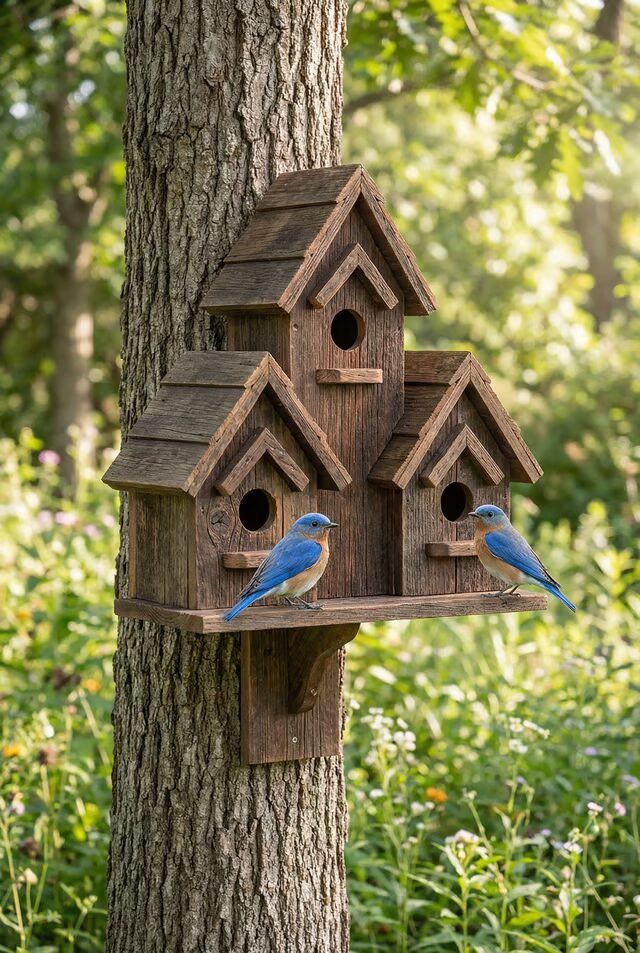
Why build one when we can build the whole condo complex? This stacked design works because of symmetry and repetition. The repeating rooflines create harmony, while the vertical layering adds visual interest without looking messy. When recreating, keep spacing consistent between levels so it feels balanced, not crowded.
Super important: if multiple nesting boxes are connected, add interior dividers. Birds are territorial during nesting season. Separate chambers prevent drama in the bird community. Each hole should face slightly different directions to reduce territorial tension.
Use untreated pine or cedar and sand all edges smooth. Mount it firmly to a tree with a bracket, not rope, for stability. Also, add ventilation slots under the roofline. Tiny detail, huge difference. Design takeaway? Repetition builds cohesion. When shapes repeat intentionally, even a “bird apartment” looks elegant instead of chaotic DIY energy.
Charming Garden Cottage With Planter
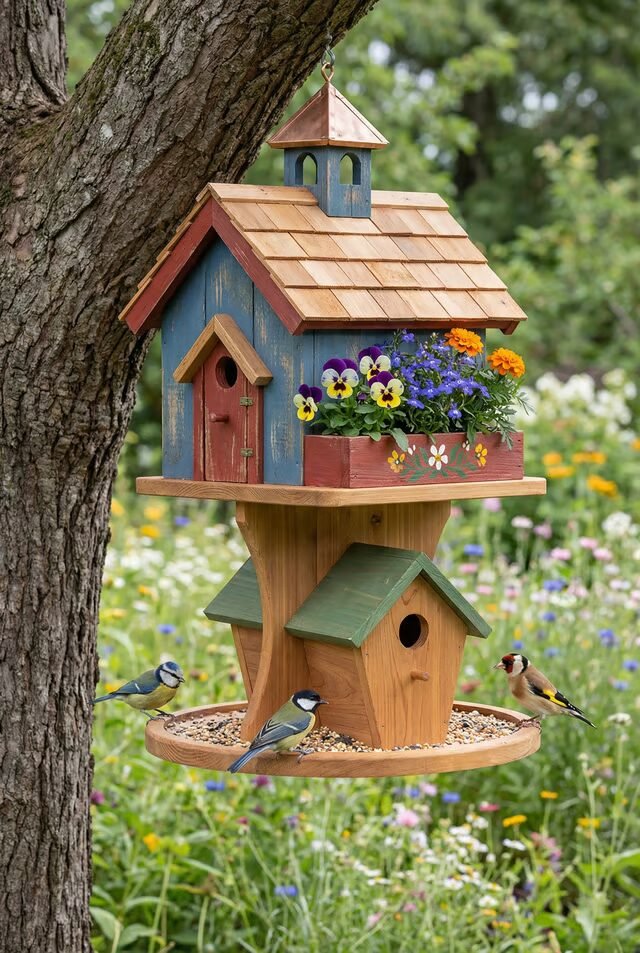
This one said birdhouse but make it cottagecore influencer. The magic here is multi-function design. We’ve got nesting space above and a feeder tray below, which creates layered activity zones. That’s smart zoning, even in miniature architecture.
Color coordination matters too. The muted blue and warm wood trim create contrast without overpowering the flowers. Stick to 2–3 main colors max so it feels curated, not carnival. Use exterior paint and line the planter box with plastic before adding soil to prevent rot.
Important structural tip: keep soil weight in mind. Reinforce the base with thicker wood and strong brackets. Also, ensure drainage holes in the planter so excess water doesn’t seep into the nesting area. By combining habitat, feeding station, and visual charm, this design follows one golden rule: when form and function coexist, everything just feels intentional.
Expressive Wooden Character Birdhouses Trio
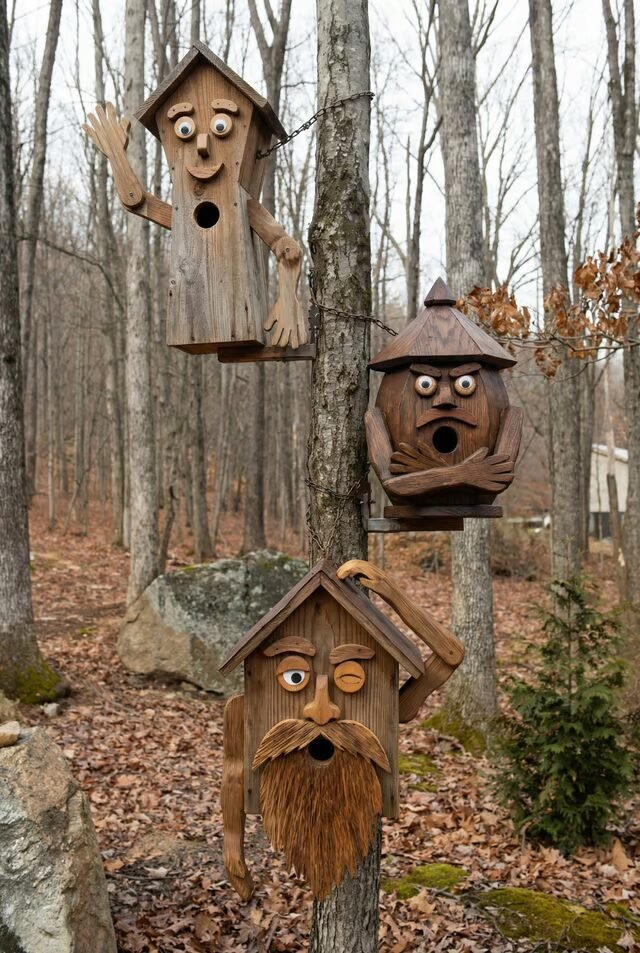
Okay but this trio is giving forest sitcom energy and we love it. The reason this works visually is personality through proportion. Exaggerated eyes, eyebrows, and arms create instant emotional connection, which makes the birdhouses feel intentional instead of random DIY chaos. When recreating, start with a simple rectangular nesting box and build the character features as layered appliqués. That keeps the structure strong and the decoration lightweight.
Design principle moment: hierarchy matters. The face should dominate visually, but the entrance hole must remain clearly defined and smooth inside. Keep the hole around 1.25–1.5 inches for small birds. Mount using brackets or straps instead of wrapping chains tightly around living trees.
Stick to natural wood tones for cohesion. Too many stain colors will compete with the facial details. Seal with breathable outdoor oil so moisture can escape. The magic formula? Whimsy on the outside, proper nesting specs on the inside. That’s how we balance art and habitat responsibly.
Whimsical Garden Post Birdhouse Village
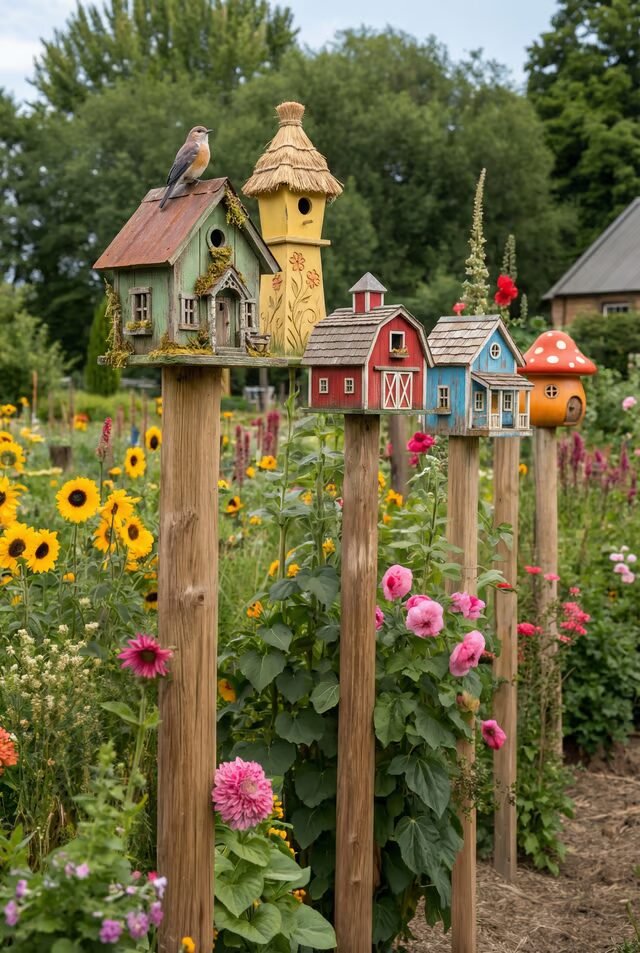
This lineup is basically a tiny suburban dream but for birds. The reason it feels cohesive is repetition with variation. Every house has a different shape and color, yet they share similar scale and mounting height. That consistency keeps it charming instead of chaotic.
When recreating, use uniform post heights and spacing to create rhythm in the landscape. Visual rhythm is what makes multiple elements feel intentional. Choose exterior-grade paints in complementary colors rather than random brights. Think coordinated palette, not kindergarten art class.
Each birdhouse should function independently. Avoid connecting interiors. Keep entrance holes species-specific and face away from prevailing winds. Mount at least 5 feet high and secure posts deep into the soil for stability.
Pro tip: position them near flowering plants for natural integration, but not so close that foliage blocks the entrance. Design takeaway? Consistency in structure lets creativity shine safely.
Stacked Terracotta Planter Birdhouse Tower
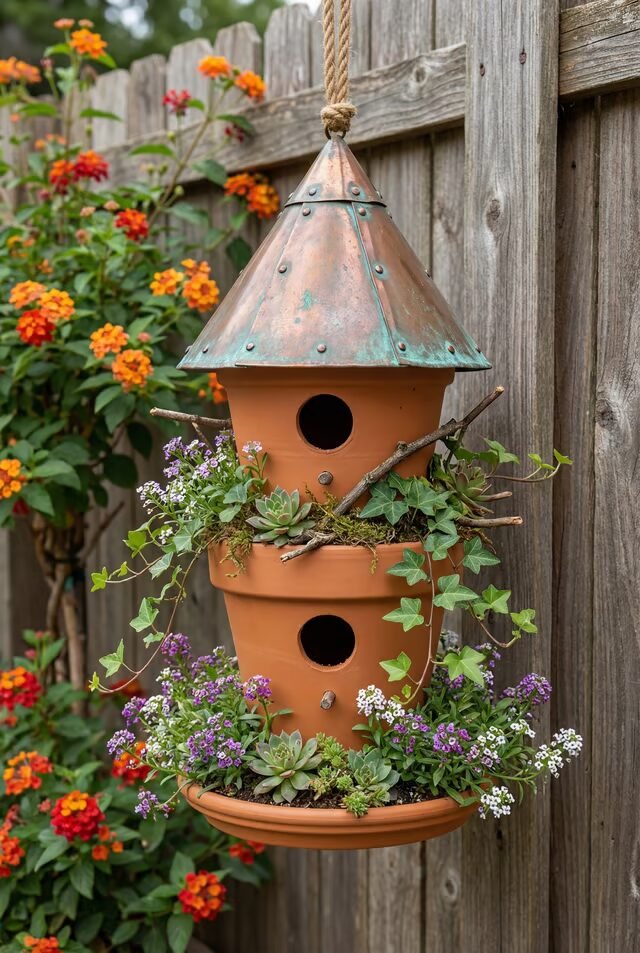
This one is genius because it blends vertical layering and multi-use design. We’re stacking planters to create nesting zones plus greenery, which adds texture contrast and natural camouflage. The copper top brings material contrast, and that patina? Chef’s kiss.
If recreating, drill clean entrance holes using a ceramic bit and sand edges smooth. Important: terracotta absorbs moisture, so seal the interior lightly with a bird-safe sealant. Add drainage holes so water doesn’t pool inside.
Keep plant choices lightweight and shallow-rooted like succulents or trailing ivy. Too much soil equals too much weight. Suspend with heavy-duty rope and secure hardware rated for outdoor loads.
Design principle alert: vertical repetition builds visual impact in small spaces. By stacking forms consistently, we create height without clutter. Functionally smart, aesthetically layered, and surprisingly space-efficient. We love a multitasker moment.
Coastal Sunset Painted Storybook House
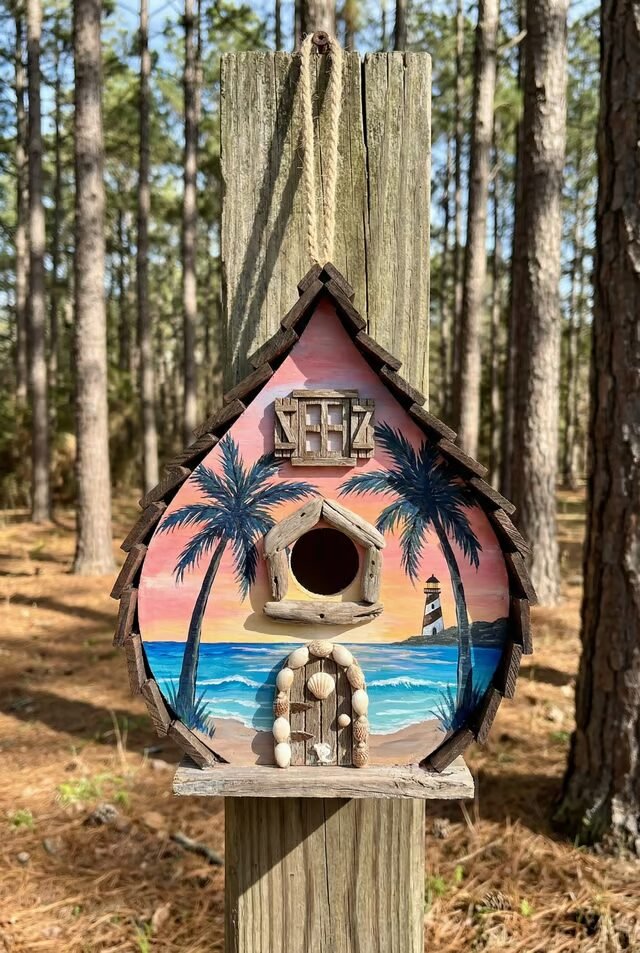
Okay this one said beach vacation but make it architectural. The reason it works is narrative design. The painted sunset, palm trees, and lighthouse create a clear visual theme, while the entrance hole stays centered as the functional anchor.
When recreating, sketch your composition first. Strong focal points need framing. Notice how the circular hole becomes part of the scene? That integration keeps it cohesive. Use exterior acrylic paint and seal with UV-protective clear coat so colors don’t fade.
Keep embellishments like shells minimal and firmly attached. Too many protrusions can invite predators. Mount on a sturdy post instead of hanging if wind exposure is high.
Color theory tip: gradient backgrounds add depth and dimension without extra materials. Blend warm to cool tones smoothly for realism. It’s playful, yes, but grounded in solid composition rules and weather-conscious finishing.
Victorian Gothic Mansion Birdhouse
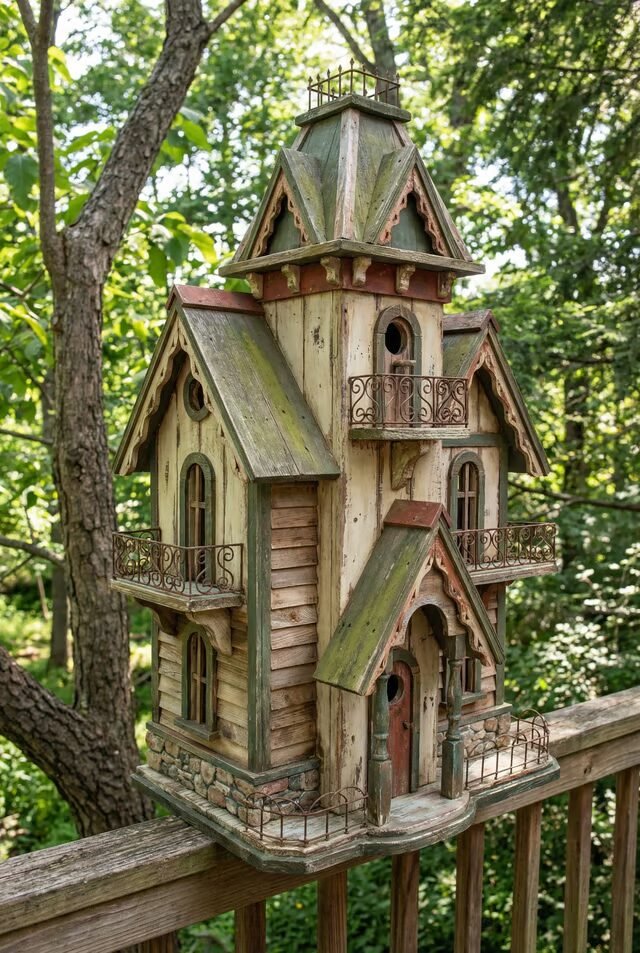
This is not a birdhouse. This is an estate. The reason it doesn’t feel overwhelming is architectural symmetry and proportion control. Even with balconies and towers, the scale relationships stay balanced. That’s what keeps it elegant instead of chaotic.
If recreating, sketch elevations first like real architecture. Symmetry creates visual stability, especially with complex builds. Use lightweight trim pieces so decorative balconies don’t add excessive weight. Keep nesting chambers simple inside, even if the exterior is dramatic.
Ventilation slots under roof eaves are crucial. Also, ensure each nesting hole leads to a separate internal compartment. Birds need privacy more than drama.
Use weathered paint techniques for aged charm, but seal thoroughly. Moisture is not the aesthetic we want. The lesson? Go maximalist on details, minimalist on structure. That’s how we build a tiny mansion that’s actually bird-approved.
Design Boldly, Build Smart, Welcome Birds
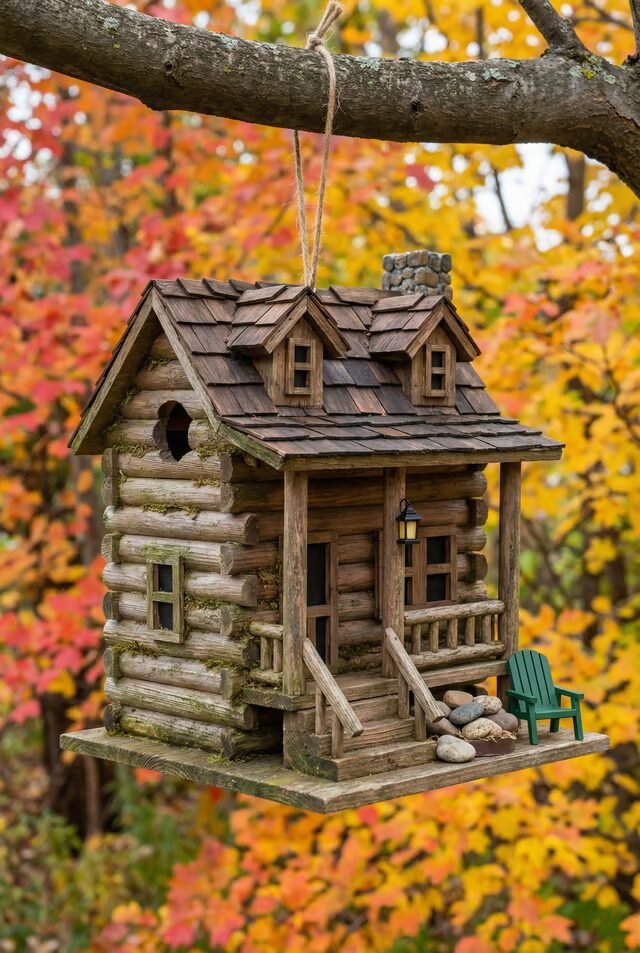
At the end of the day, a unique bird house should do two things extremely well: look unforgettable and support real nesting needs. Creativity grabs attention, but construction quality keeps birds coming back season after season. That means smooth interior walls, proper drainage holes, ventilation gaps under rooflines, and secure mounting at safe heights.
These details might not be glamorous, but they’re what transform a cute project into a responsible habitat. What we’ve seen across all ten ideas is a clear pattern. Strong focal points, consistent proportions, thoughtful color palettes, and layered textures make each design stand out.
Whether we’re going whimsical, rustic, coastal, or gothic, the underlying structure stays practical and bird-friendly. That balance is everything. When we design boldly and build smart, we’re not just decorating our garden. We’re creating functional micro-architecture that blends creativity, craftsmanship, and care for wildlife in one beautiful, tiny home.