
Whimsical Kids Bedroom Ideas That Feel Magical, Not Cluttered
Designing a whimsical kids bedroom is not about throwing pastel paint and fairy lights everywhere and hoping for the best. It is about intention. It is about storytelling. It is about creating a space that feels like it belongs inside a favorite book but still functions on a Monday morning before school. Whimsy works best when creativity meets structure.
When we design these spaces, we are balancing three things: personality, practicality, and proportion. Color needs repetition so it feels cohesive. Themes need restraint so they feel elevated instead of chaotic. Storage needs to be accessible so kids can actually use their magical kingdom without turning it into a toy tornado.
A truly whimsical room supports independent play, encourages reading, sparks imagination, and still allows for growth over time. If we build a strong design foundation first, the magic does not fade. It evolves beautifully.
Colorful Paper Stars and Playful Layers
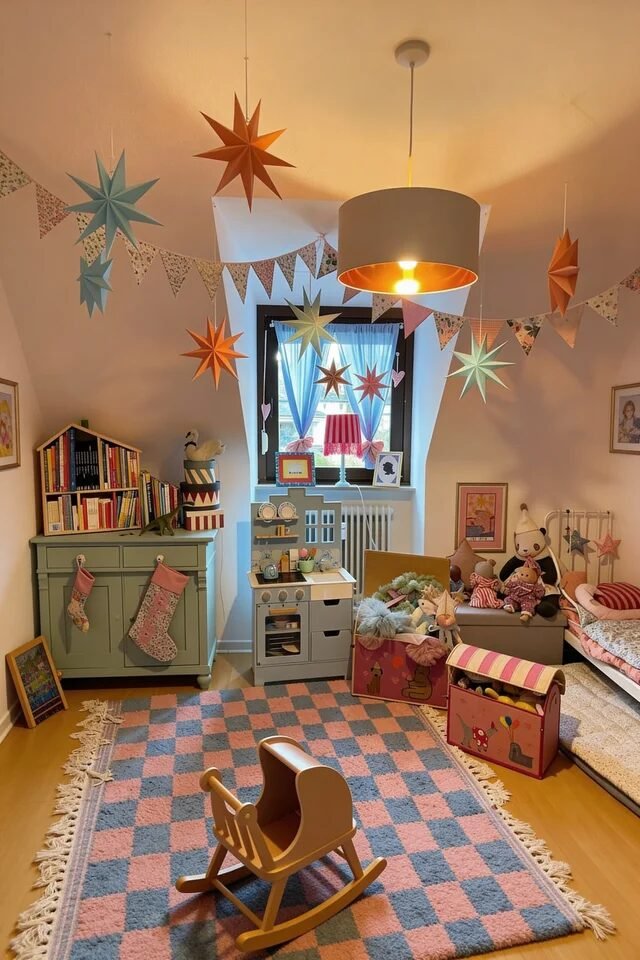
This room is basically a serotonin boost in architectural form. The hanging paper stars instantly draw the eye upward, which is genius because when we decorate vertically, we make small rooms feel taller and more magical. Notice how the bunting and ceiling décor create visual movement across the space, guiding our gaze from one corner to another. That’s intentional layering at work.
The soft, warm lighting from the pendant lamp keeps everything cozy instead of chaotic. Bold colors are balanced with muted furniture, which is key. When we mix bright accents with grounded neutrals, the room feels playful but not overwhelming. The checkerboard rug anchors the center and defines a play zone, which is super important for kids’ spatial clarity.
If you’re recreating this, focus on lightweight décor for the ceiling and repeat at least two colors throughout the room for cohesion. Whimsical works best when it’s curated, not random chaos.
Storybook Reading Nook With Soft Florals
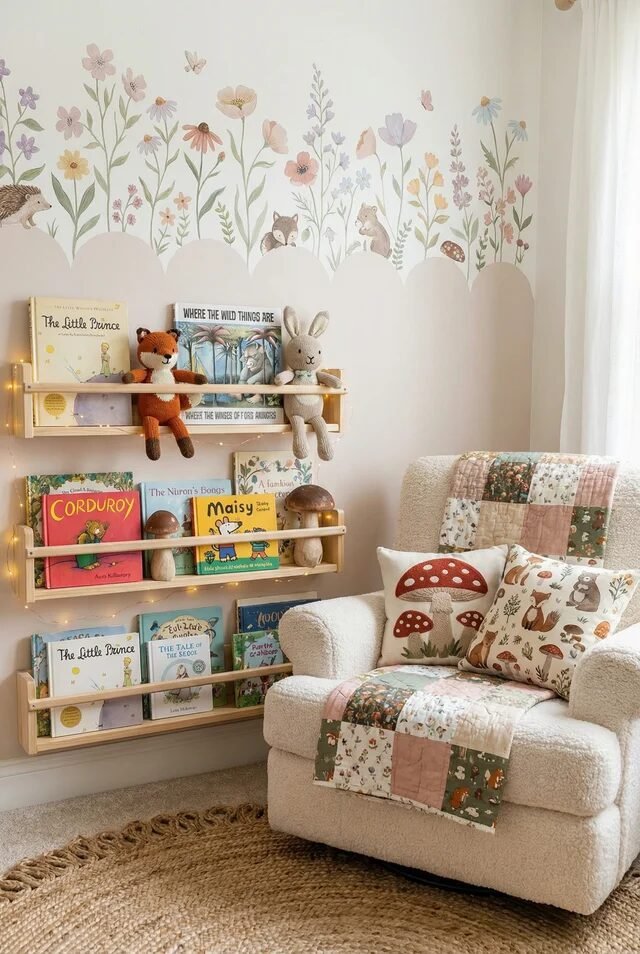
This setup whispers “once upon a time” the second we walk in. The floral mural works because it’s scaled large but painted in muted tones. Soft, desaturated colors keep whimsical themes feeling timeless instead of toddler-only. The scalloped wall detail adds architectural charm without major renovation, which is a design win.
Floating bookshelves at kid height are doing double duty. They create a mini library while keeping covers visible, which encourages reading and doubles as wall art. Styling tip: display books by color family to maintain visual harmony. The plush chair anchors the nook and creates a clear reading zone, which supports functional zoning in smaller rooms.
Warm fairy lights subtly frame the shelves and add depth through gentle glow layering. Lighting in kids’ rooms should feel soft and inviting, not clinical. If we’re recreating this, prioritize texture like woven rugs and quilted throws to balance smooth painted walls. Cozy equals approachable.
Cozy Window Desk and Vintage Charm
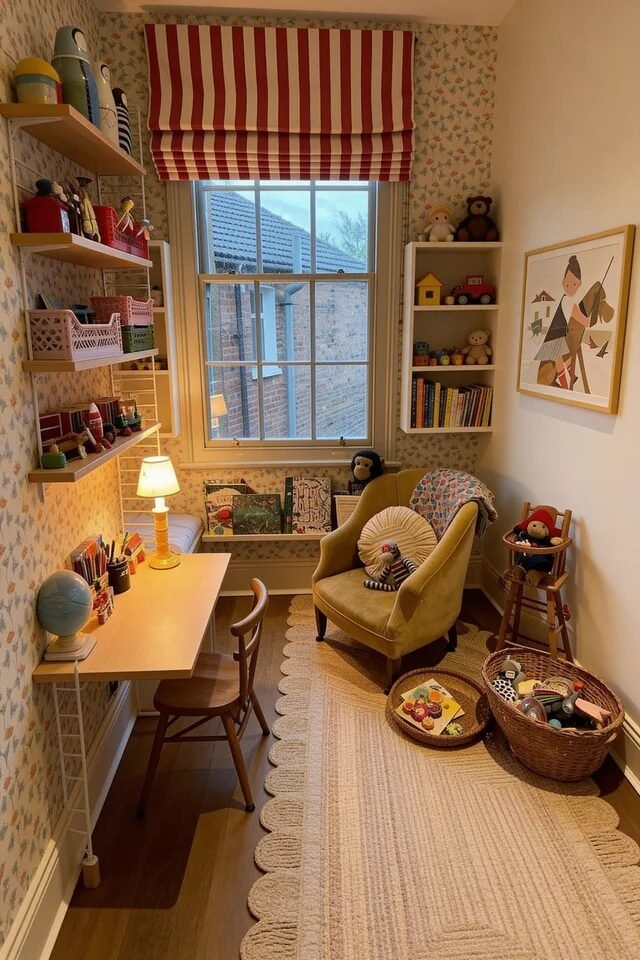
This room is proof that whimsical doesn’t have to scream pastel overload. The floral wallpaper sets the tone, but the structured desk placement under the window keeps things practical. Natural light is the MVP of any creative corner, and positioning the desk here maximizes productivity and mood.
Floating shelves utilize vertical wall space without crowding the floor, which is essential in narrow rooms. Styling rule we love: group small objects in odd numbers to create visual rhythm. Notice how toys, books, and baskets are contained yet visible. That balance between display and storage keeps things playful but organized.
The mustard armchair adds contrast warmth against cooler tones, preventing the palette from feeling flat. A soft rug defines the walkway and improves acoustics, which many people forget about. When recreating this, mix practical furniture with charming accessories so the room evolves with the child. Timeless base, whimsical details.
Balloon Wallpaper and Built-In Bench Magic
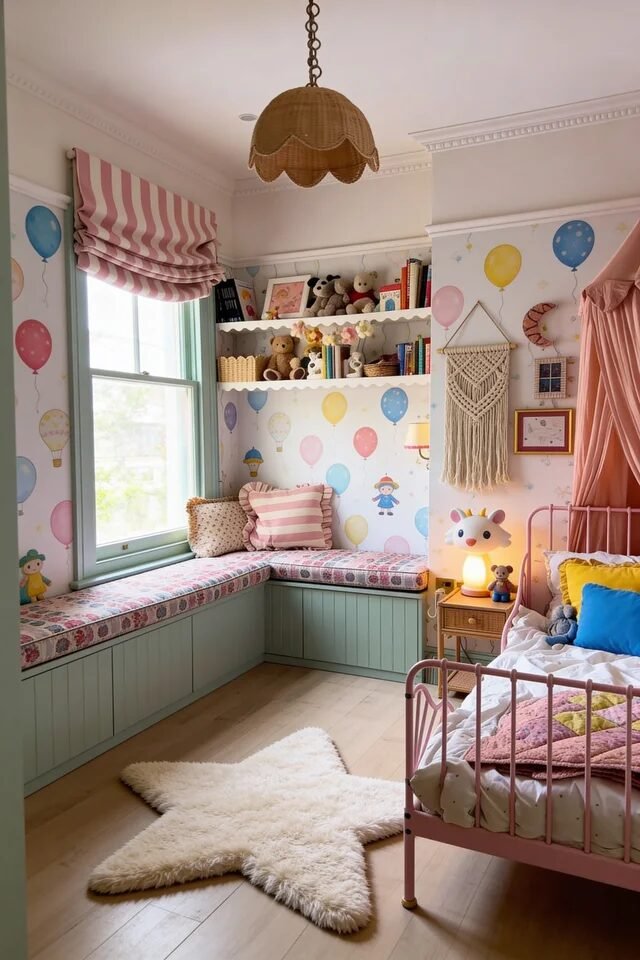
Okay but this is basically Pinterest in physical form. The pastel balloon wallpaper creates repetition, and repetition is what makes bold patterns feel intentional. When a pattern repeats evenly, the brain reads it as cohesive instead of chaotic. The built-in bench under the window maximizes awkward corners and adds hidden storage potential.
Notice how the color palette stays consistent: blush pink, soft mint, creamy neutrals. That limited palette prevents the room from feeling overstimulating. The canopy bed detail introduces vertical softness, which balances the horizontal bench lines.
Layered textiles, like striped cushions and a fluffy star rug, create tactile interest. Texture variation is crucial in whimsical spaces. If we’re recreating this, make sure at least one large surface stays calm, like flooring or trim, so the wallpaper shines without competition. Whimsy needs breathing room to sparkle.
Enchanted Forest Canopy Bed Dream
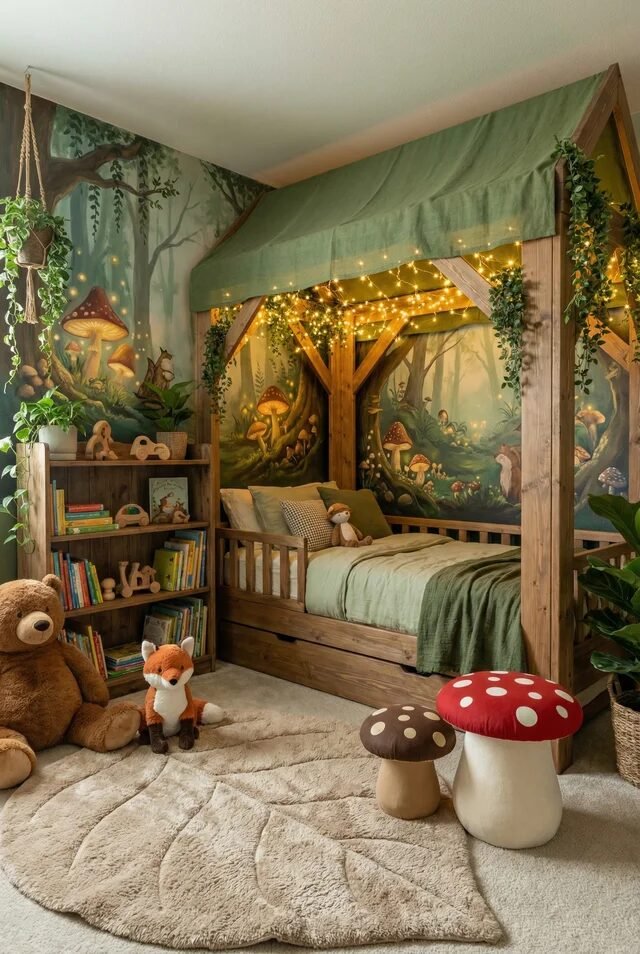
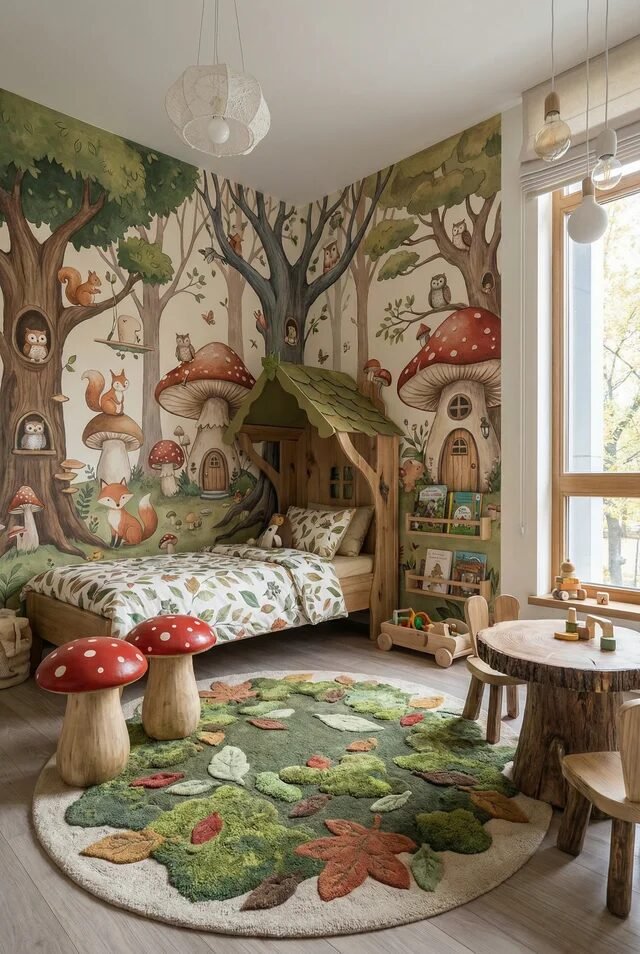
If cottagecore had a childhood bestie, it would look like this. The mural instantly sets narrative context, and story-driven design creates emotional attachment to a space. The wooden canopy structure frames the bed, acting like a stage set. Framing furniture pieces makes them feel intentional and grounded.
Warm string lights layered inside the canopy add depth and glow. Lighting rule: combine overhead, ambient, and accent lighting for dimension. The earthy palette of greens and browns feels calming because it mirrors nature. Biophilic elements, like plants and wood textures, enhance comfort and reduce visual stress.
Mushroom stools and plush animals reinforce the theme without overpowering it. The large textured rug softens acoustics and visually anchors the room. When recreating this look, commit fully to the theme but keep storage streamlined. A strong concept works best when clutter is controlled.
Secret Wardrobe Reading Hideaway Magic
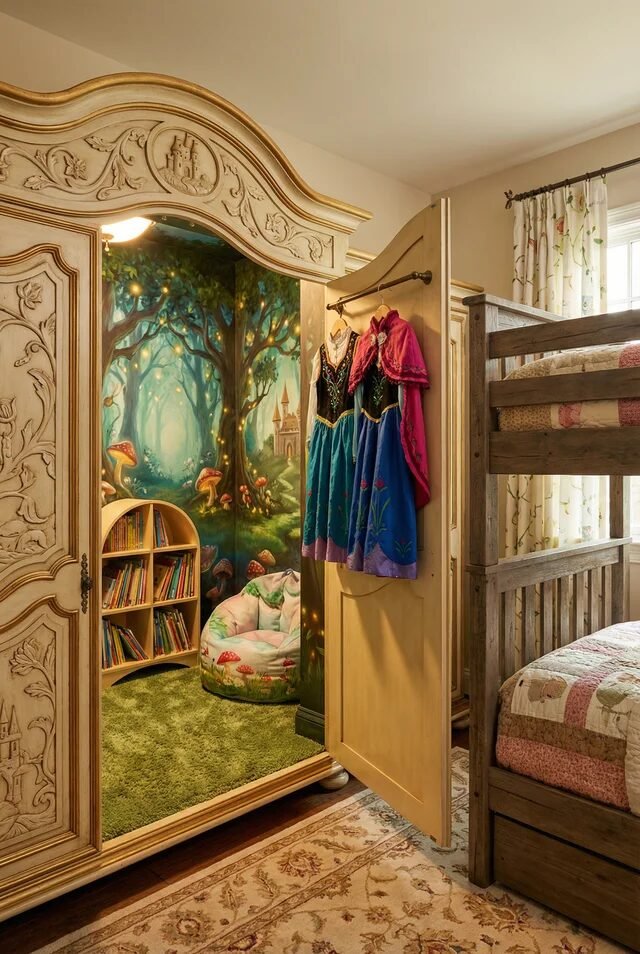
Okay but this is main character energy. Turning a wardrobe into a hidden reading nook works because it creates surprise and depth. When we design with layers and hidden zones, the room instantly feels more magical and immersive. The carved doors frame the mural like a portal, which strengthens the narrative effect.
The forest mural inside adds perspective, making the small nook feel bigger through visual illusion. That’s a classic depth trick: darker tones in the background, lighter tones toward the center. Soft integrated lighting creates glow without harsh shadows, which keeps the space cozy.
If you’re recreating this, prioritize scale. The nook must feel proportional to the child, not oversized. Add a soft rug for acoustics and a low bookshelf for accessibility. Whimsy works best when it’s functional and reachable. Hidden spaces also encourage independent play and quiet reading moments.
Rustic Treehouse Bunk Bed Retreat
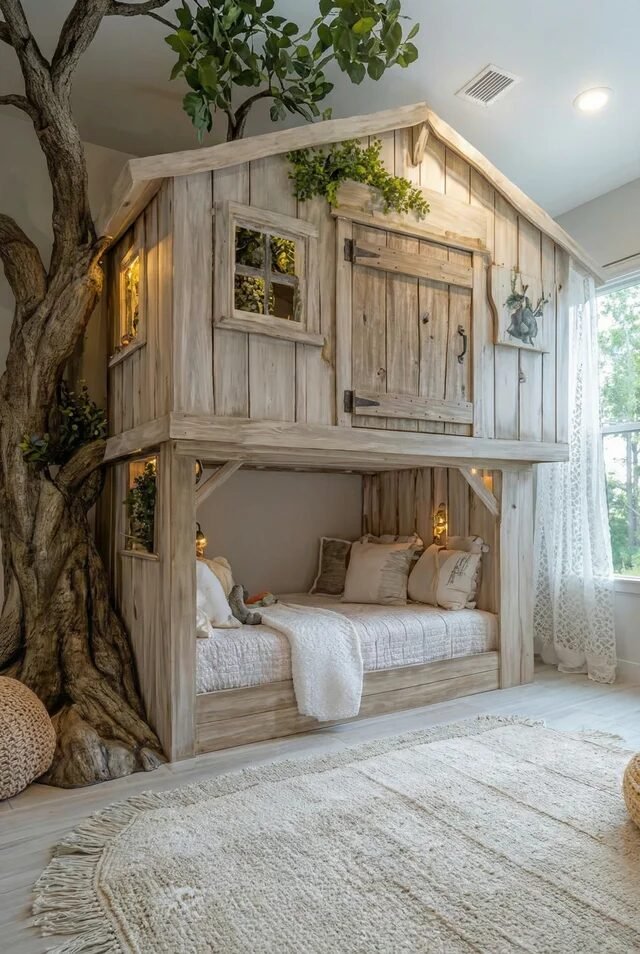
This is basically Airbnb but make it five years old. The tree trunk detail anchors the structure and gives the loft visual weight. Strong vertical elements make elevated beds feel secure instead of floating awkwardly. The neutral wood palette keeps the theme organic and calming.
Notice how the lower bed stays simple while the upper loft carries the “house” drama. That balance prevents design overload. Built-in lighting under the loft creates layered illumination, which is essential for cozy bedtime vibes.
When recreating this, focus on safety proportions. Guardrails, ladder stability, and mattress depth matter just as much as aesthetics. Add greenery sparingly for biophilic warmth. Natural textures like linen, cotton, and raw wood keep the theme authentic instead of theme-park cheesy. Keep décor minimal so the architecture remains the star.
Outer Space Galaxy Accent Wall
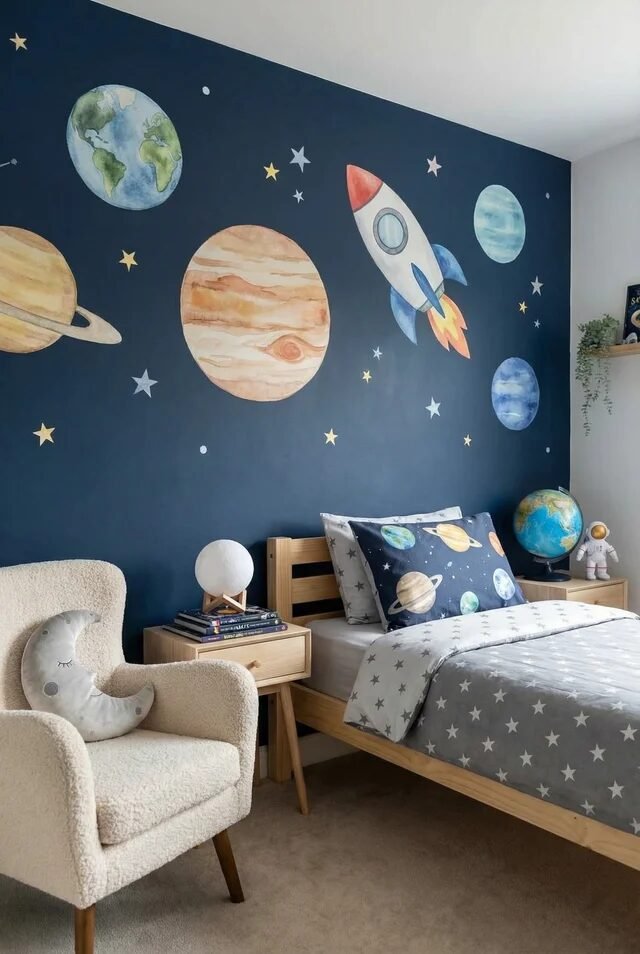
This is how you do themed without going full cartoon chaos. The deep navy wall acts as a grounding base, and dark accent walls actually make colors pop brighter and feel more dimensional. The planets are spaced intentionally, creating visual rhythm across the wall.
Notice how bedding stays neutral with subtle star patterns. That restraint keeps the mural as the focal point. Wood furniture softens the bold backdrop, which prevents the room from feeling cold.
If we’re recreating this, use a single feature wall and keep the remaining walls light for balance. Add spherical lighting to echo planetary shapes. Repetition of shapes strengthens cohesion in themed rooms. Keep accessories limited so the mural can breathe and remain the hero element.
Soft Pink Cottage Loft Bed
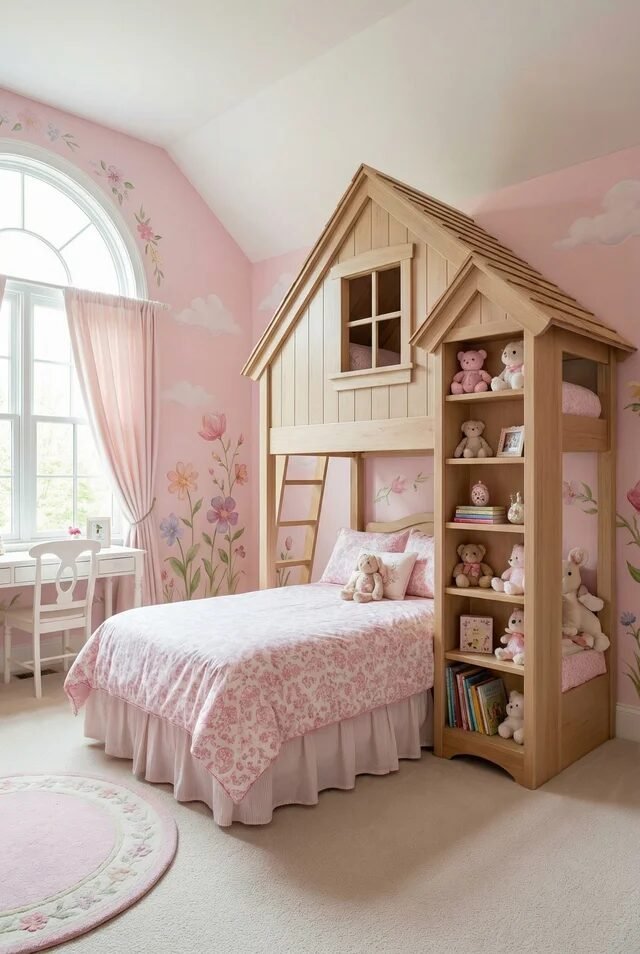
This room feels like a literal fairytale but still polished. The house-shaped loft adds architectural charm, and built-in shelving maximizes vertical space while keeping clutter controlled. That combination of whimsy and storage is elite design thinking.
The pastel pink walls are softened with floral detailing, which adds depth without overwhelming the eye. Notice how the bedding pattern is delicate, not loud. Subtle layering keeps everything cohesive.
When recreating this, stick to one dominant color and vary it in lighter and darker shades for dimension. Add texture through quilts, rugs, and curtains to avoid flatness. Tone-on-tone palettes create calm even in playful spaces. Keep the furniture finish natural wood to balance sweetness with structure.
Attic Woodland Gallery Wall Charm
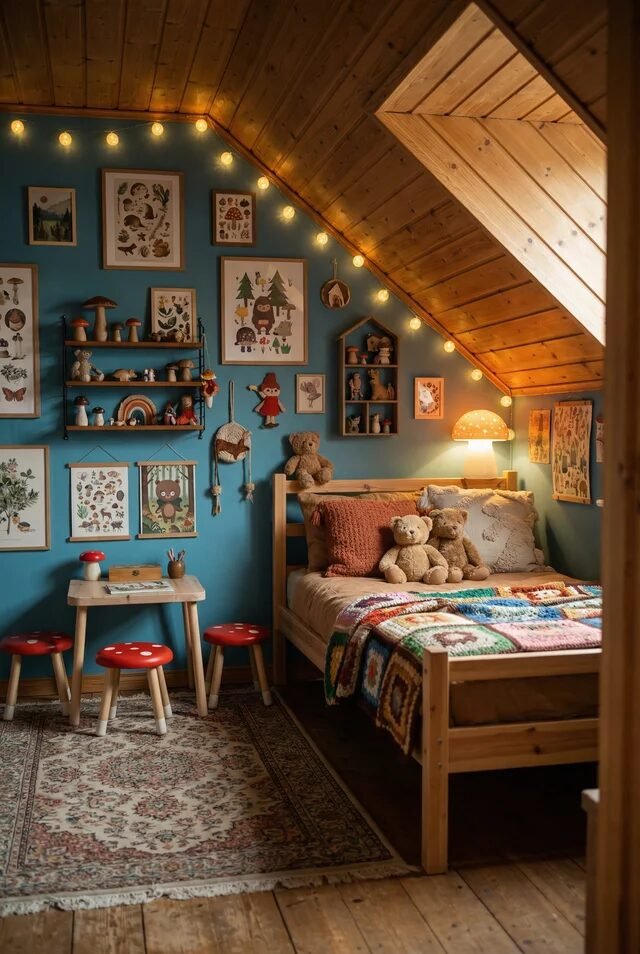
Sloped ceilings can be tricky, but this room uses them as personality. String lights follow the roofline, emphasizing architecture instead of fighting it. When we highlight structural quirks, they become features instead of flaws.
The teal wall acts as a rich backdrop for framed woodland art. Grouping frames tightly creates a gallery effect that feels intentional. Notice how mushroom stools subtly repeat the forest theme without overwhelming the space.
If you’re recreating this, map out your gallery wall on the floor first for spacing. Use consistent frame finishes for cohesion. Layer warm ambient lighting with table lamps to soften angled shadows. Layered lighting is non-negotiable in attic rooms. Keep bedding warm and textured to balance the bold wall color and maintain cozy vibes.
Designing Spaces That Grow With Wonder
A whimsical kids bedroom should feel magical today but adaptable tomorrow. Trends change, favorite characters rotate, and suddenly dinosaurs become astronauts overnight. That is why we design with layers. A timeless base allows playful details to rotate easily. Neutral furniture, quality lighting, and smart layout choices create a flexible framework.
Then we add personality through murals, textiles, wall art, and themed accessories. Those are the elements we can swap as interests shift. Zoning also matters more than people think. A clear sleep area, play corner, and reading nook help children feel secure and focused within their own space.
Texture layering, warm lighting, and thoughtful color repetition keep the room cohesive instead of overstimulating. When we approach whimsical design strategically, we are not just decorating. We are building an environment that nurtures creativity, independence, and joy for years to come.