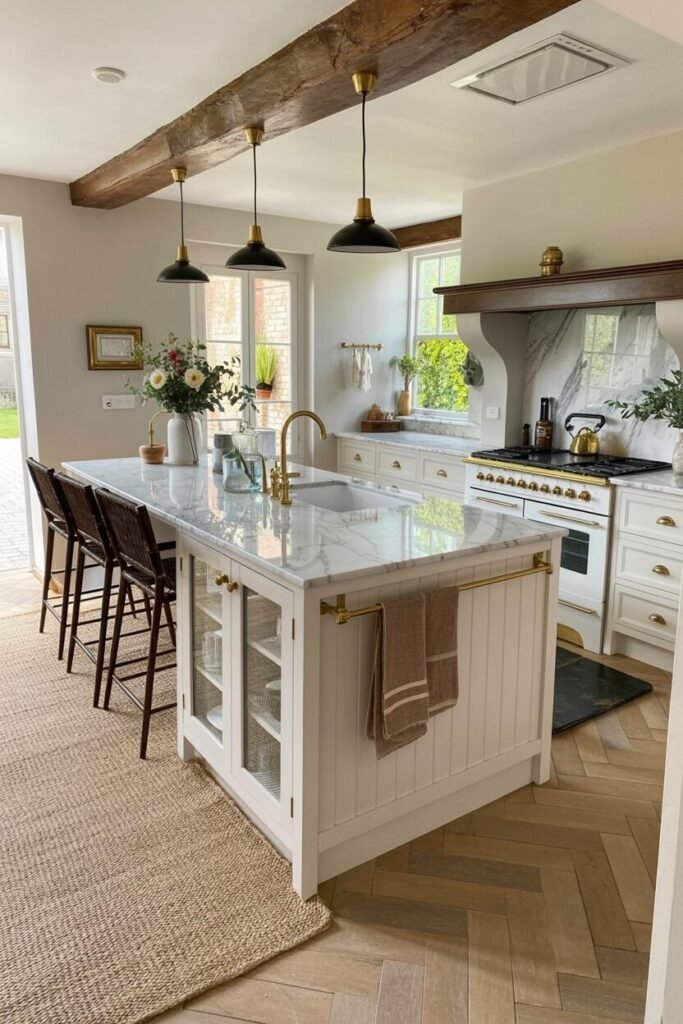

How to Recreate That Pinterest-Perfect Cottage Kitchen Look
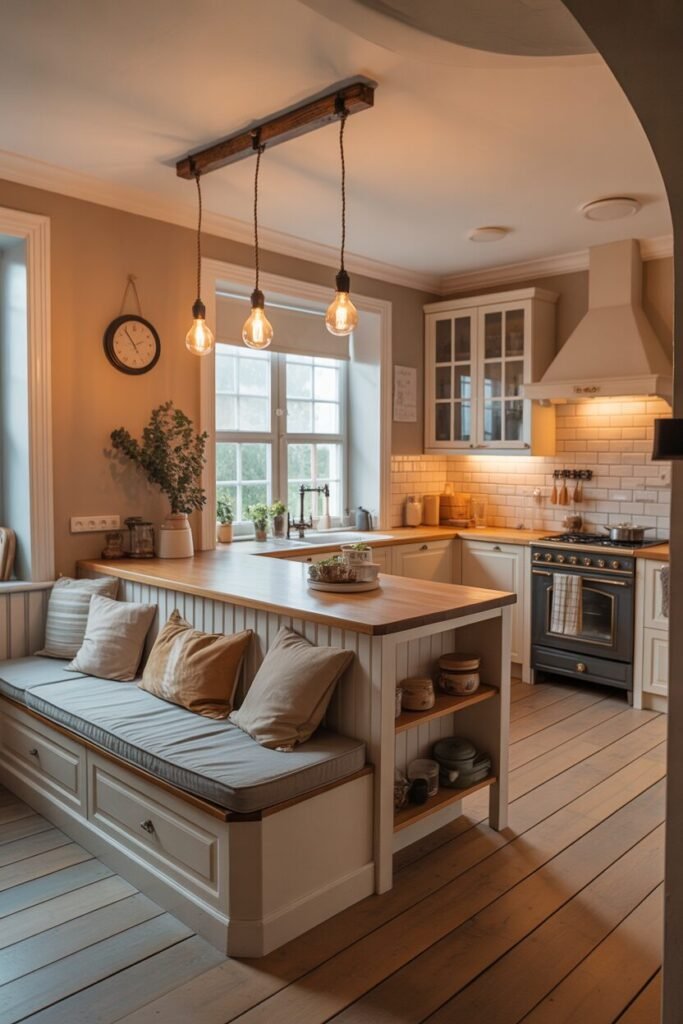
There’s something irresistibly comforting about a (modern) cottage kitchen. It’s a space where vintage charm and modern practicality intertwine, creating an atmosphere that feels both lived-in and lovingly curated. From soft pastel cabinets to rustic wooden beams and sunlit breakfast corners, every element tells a story of warmth and authenticity.
Cottage kitchens invite us to slow down—to enjoy morning coffee by the window or bake something simple on a quiet afternoon. They celebrate imperfection, texture, and character over glossy perfection. Whether you live in the countryside or the heart of the city, it’s possible to bring that same cozy energy into your own home.
The secret lies in the details—colors that soothe, materials that age gracefully, and light that feels natural. These ten cottage kitchen ideas will guide you toward creating a space that isn’t just beautiful to look at, but deeply comforting to live in.
Rustic Charm with Autumn Warmth
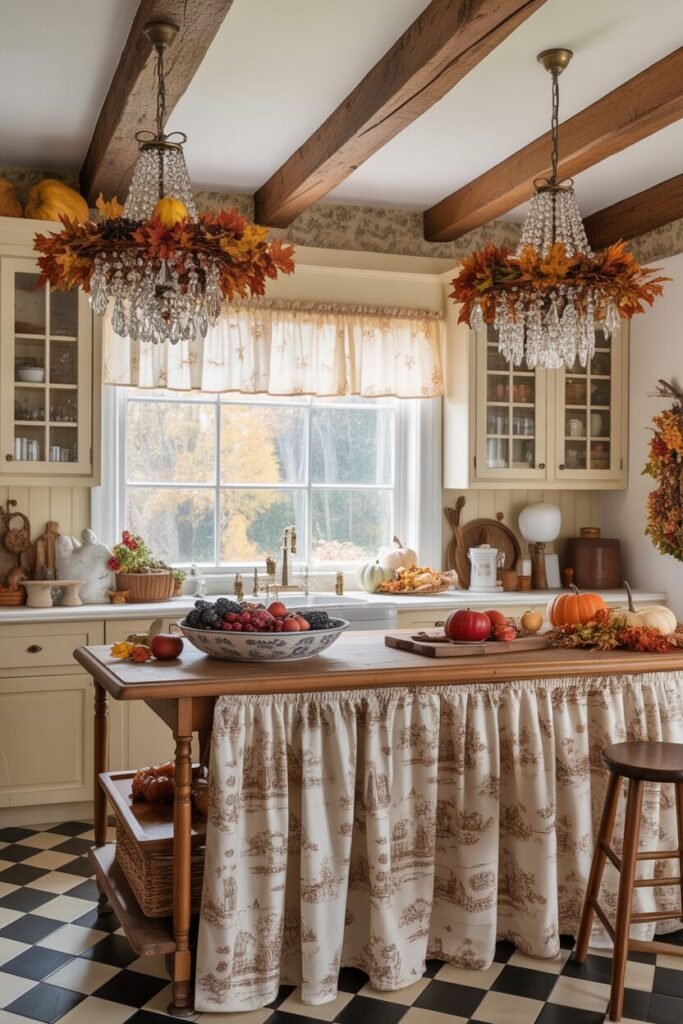
This kitchen is what happens when cottagecore meets vintage luxury, and honestly, we’re obsessed. The wooden beams, toile skirted island, and crystal chandeliers with fall foliage create that perfect “bake apple pie on Sundays” vibe. The real design genius here is in contrast and texture layering.
You’ve got polished glass and raw wood, crisp tiles and soft fabric—all working together for depth and comfort. Pro tip: Always mix at least three textures (wood, fabric, metal) for a lived-in feel that’s still curated. Notice how the black-and-white checkered floor keeps everything grounded, preventing all the warm tones from blending into a visual soup.
To recreate this look, start with a neutral base—cream cabinets, white walls—and let seasonal accents like pumpkins or wreaths bring color. And please, don’t overdo it. Rustic doesn’t mean clutter. It’s about warmth, not chaos. Style tip: Add symmetry through pendant lighting or matching décor pieces to balance that charming “organized mess.”
Brick Walls and Copper Details Magic
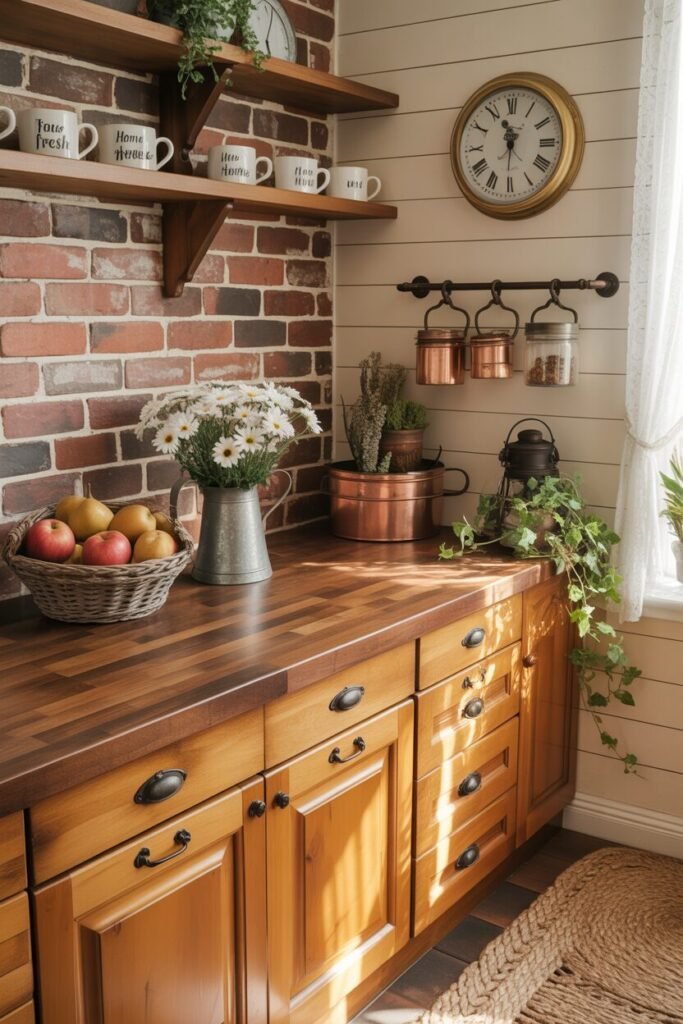
If your dream kitchen looks like a vintage coffee shop tucked inside an old barn, you’re going to love this. The brick backsplash adds texture and visual interest while those copper pans and jars reflect warmth like sunlight in the afternoon. It’s the kind of kitchen that looks even better with time.
Design principle: Patina equals personality. Choose materials that age gracefully—wood counters, unlacquered brass, raw brick. They develop stories with every scratch. The key here is balance: while the brick and copper make the space rich and rustic, the open shelves and neutral mugs keep it fresh.
Want to recreate the look? Stick with earth tones—terracotta, beige, olive—and mix matte finishes with metallics for depth. Pro tip: Always repeat your metal choice in at least three places (like handles, light fixtures, and accessories) for cohesion. And remember, open shelving works best when curated, not cluttered. Stack cups neatly, add a plant or two, and call it artful chaos.
Arched Picture Window Serenity
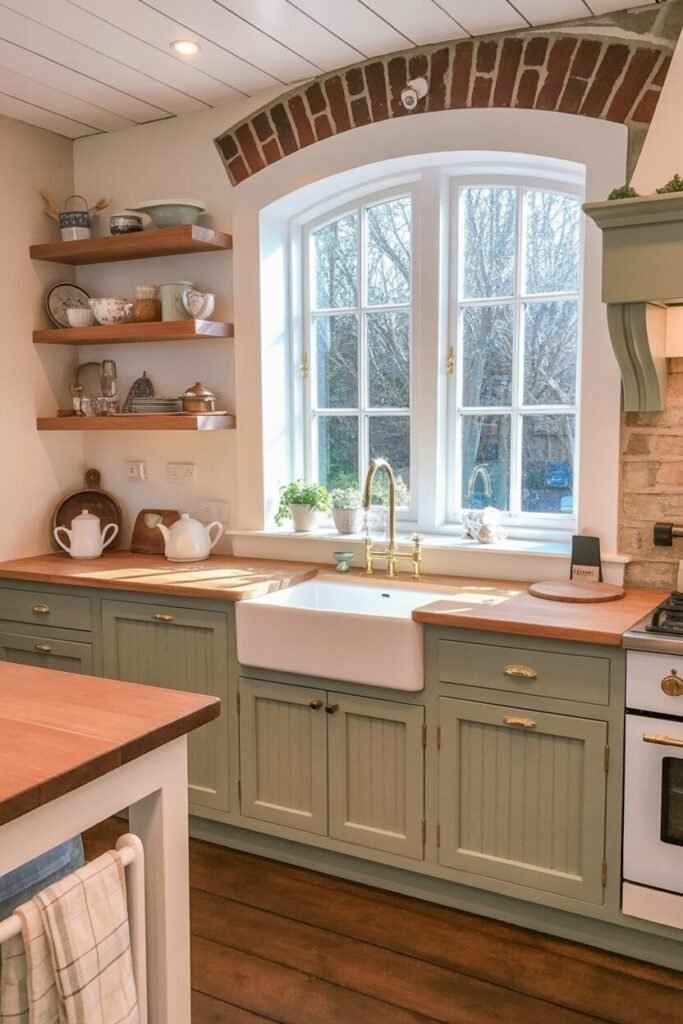
There’s something deeply peaceful about this kitchen, and it all begins with the arched picture window that frames the outside world like art. The sage-green cabinetry complements the natural light streaming through, softening the edges and turning the entire space into a tranquil retreat.
The window’s curved top contrasts beautifully against the linear cabinets and backsplash, adding architectural poetry to the room. Design principle: Let natural light lead the design. Instead of competing with the view, everything here—from the muted color palette to the light wood countertops—enhances it. To recreate this, paint your lower cabinets in a soft sage tone, keep the uppers neutral, and allow your window to be the visual anchor.
Pro tip: Skip heavy curtains—use sheer linen or leave the window bare for uninterrupted daylight. Style tip: Place simple décor near the window—like a clay pot or glass vase—so the sunlight dances through it. This kitchen doesn’t just look calm; it feels like breathing.
Sunshine Yellow with Geometric Pop
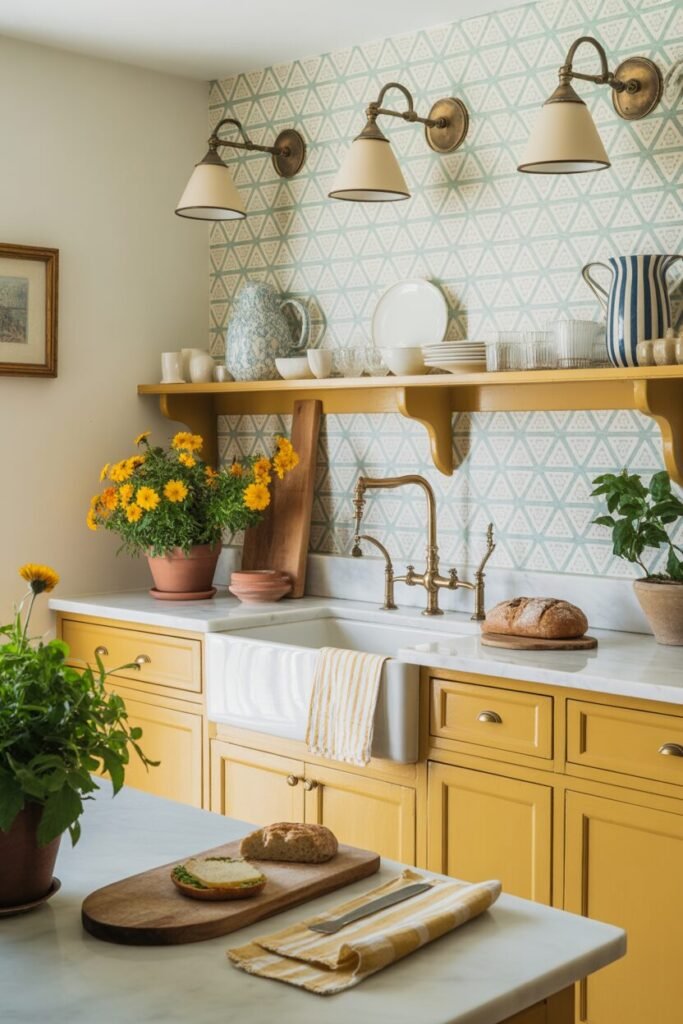
Okay, so this kitchen clearly drinks iced lattes and listens to indie playlists—and we’re obsessed with its energy. The mustard-yellow cabinetry instantly boosts mood, while the geometric backsplash adds modern flair without feeling cold.
The secret to pulling this off? Color proportion and repetition. You can go bold, but balance it with soft neutrals. The marble countertop and white walls create breathing space, while brass fixtures echo the yellow’s warmth for harmony. Design principle: One hero color, two supporting tones. In this case, yellow takes center stage, white calms it, and brass complements it.
Want to recreate it? Keep the upper half of your kitchen (walls, shelves) light and neutral, then anchor the bottom with your color statement. Add accent touches like striped towels or pottery to tie it together. Pro tip: Natural light is everything—yellow thrives in sunlight, not fluorescent bulbs. If your kitchen lacks windows, choose a softer butter tone instead of bold mustard.
French Doors and Natural Light Haven
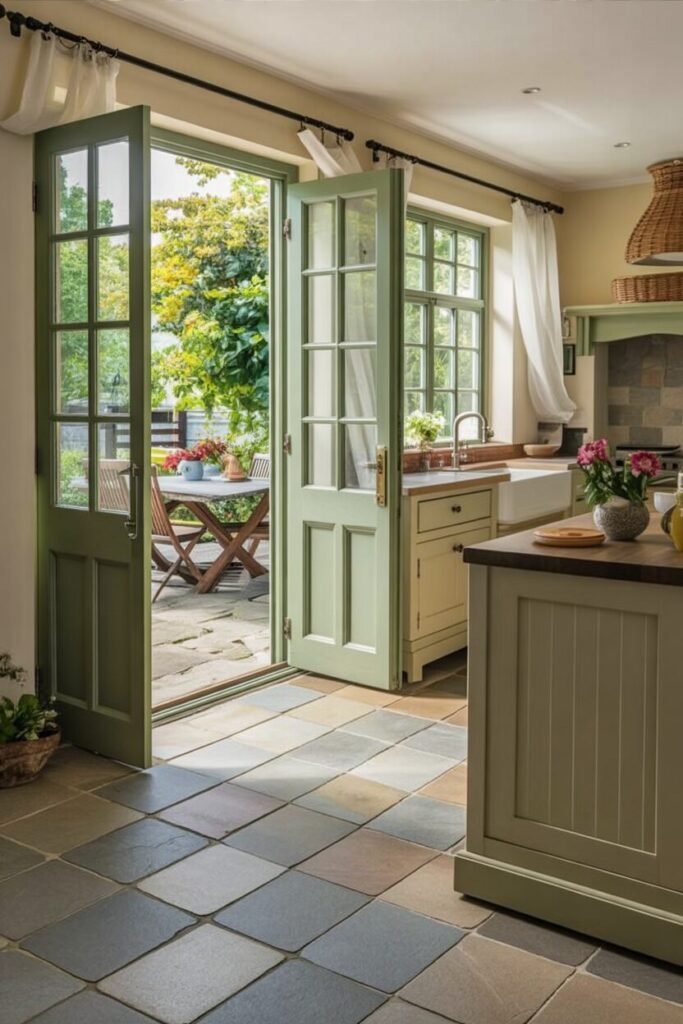
This one’s giving European countryside getaway and honestly, we want to move in. The mint-green French doors, stone floors, and wooden counters make the whole space breathe. It’s all about continuity and connection—linking indoors and outdoors so seamlessly it feels like one open scene.
The trick lies in using similar tones and textures—notice how the green cabinetry echoes the garden view, while the stone tile complements the outdoor patio. Design principle: To create flow, repeat your main color in small elements across both spaces—window frames, textiles, and planters. Keep curtains sheer or linen to soften natural light instead of blocking it.
Pro tip: Don’t underestimate flooring—it’s what visually ties everything together. Opt for stone or slate in neutral shades for that effortless harmony. And yes, add a little imperfection—uneven tile edges or handwoven rugs make the space feel real, not staged. It’s all about blending freshness with nostalgia, like sipping coffee while birds gossip outside.
READ MORE >> “How to Style Your Home the Earthy Cottage Way“
Mint Corner Nook + Sunflower Glow
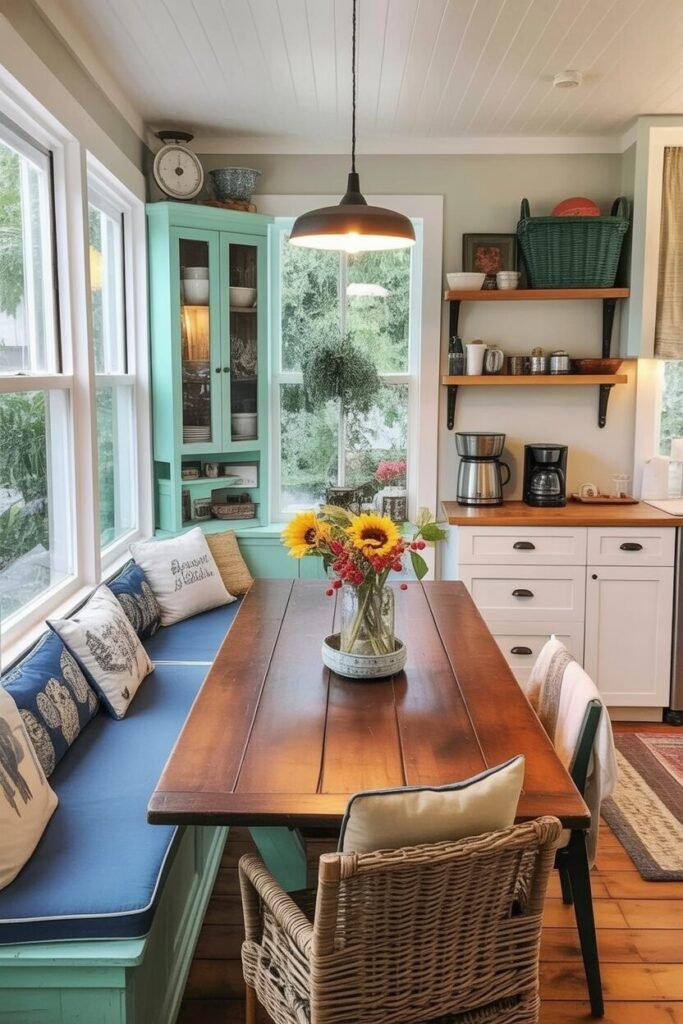
This kitchen corner feels like sunshine bottled up and poured over mint paint. The built-in banquette seating painted in mint green sets a cheerful tone, while the navy cushions and white-framed windows add a crisp coastal balance. The wooden table anchors the look with warmth, making the whole space feel like morning coffee heaven.
The key here is using contrast with purpose—soft pastel cabinetry paired with deep-toned seating for a balanced palette. Design principle: Always introduce a grounding element in bright rooms—wood or rattan works best. The woven chair adds texture while connecting the indoor palette to natural tones outside.
To recreate this, focus on color harmony through accents—flowers, textiles, and even small décor like baskets. Style tip: Keep your lighting low and warm (like this pendant) to make colorful corners feel intimate. And yes, a vase of sunflowers is non-negotiable—it’s the easiest way to turn a simple breakfast nook into a joyful ritual.
Daisies + Blue China Simplicity
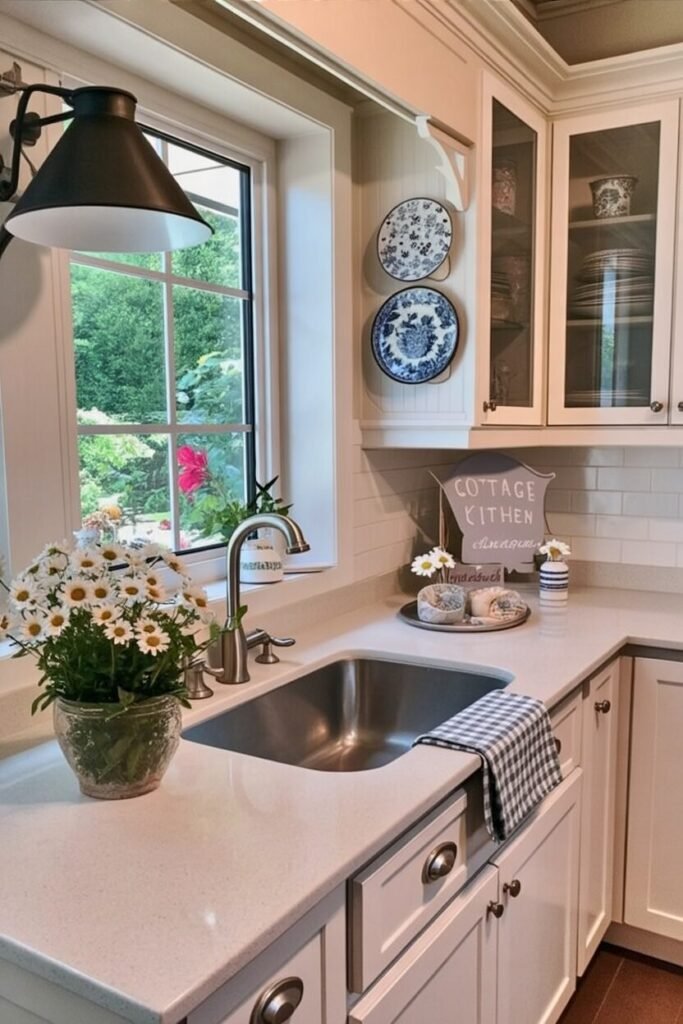
This kitchen captures the magic of English cottage minimalism—bright, uncluttered, yet full of charm. The white cabinets and subway tiles create a clean canvas, while touches of blue-and-white china add that timeless cottage storytelling. It’s cozy but not overdecorated.
The brass faucet and black sconce inject modern balance, proving that vintage and minimal can coexist. Design principle: When working with a mostly white kitchen, use decor as punctuation—each blue plate, flower vase, and gingham towel tells a quiet story. The daisy bouquet softens the lines and adds freshness. To recreate this, think function first—keep counters clear and limit color to small accents.
Pro tip: Pick one repeating motif (like blue florals) and echo it subtly across textiles and ceramics. Simplicity doesn’t mean sterile—it means thoughtful layering. Style tip: Add texture through linen towels, wooden trays, or matte ceramic mugs for a lived-in warmth that feels like summer morning forever.
Classic Farmhouse + Pattern Play
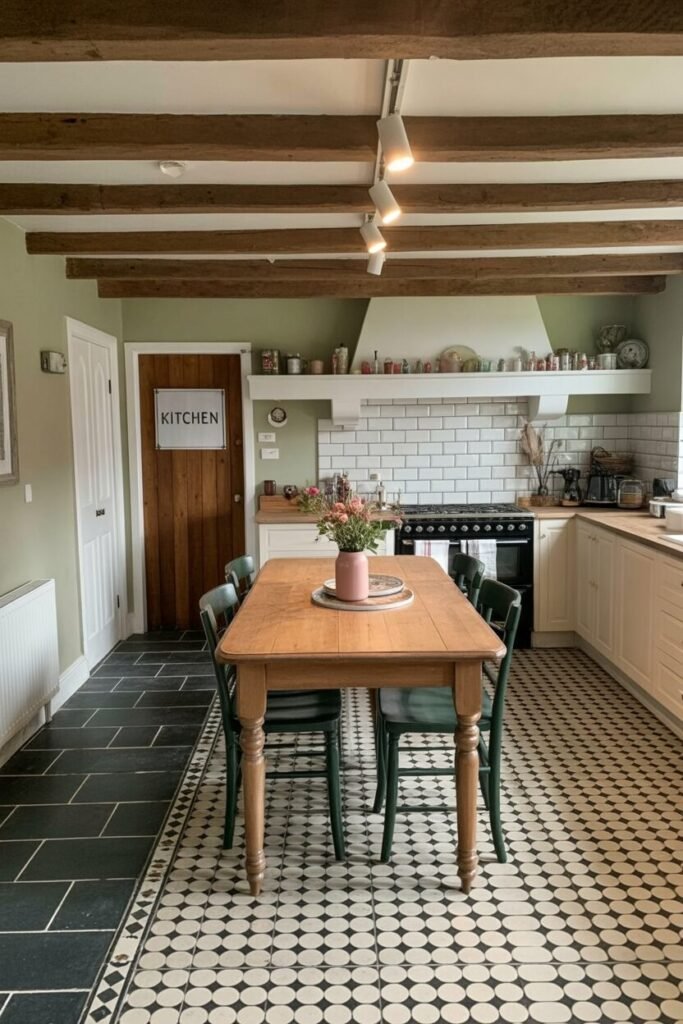
This kitchen balances vintage soul and smart geometry, making it a perfect study in pattern harmony. The checkered floor tiles, white subway backsplash, and wooden beams create layers of nostalgia. The natural wood dining table centers the room, while green chairs introduce that organic pop of life.
Design principle: Mixing patterns works when you keep a consistent undertone—in this case, earthy neutrals and soft greens. The trick is letting one pattern lead (the floor) while the rest stay subtle. The overall feel is cozy yet confident. To recreate this, lean into mixed textures—ceramic, wood, and metal—in natural finishes.
Pro tip: Use black outlines (like grout or frames) to define visual rhythm when mixing busy elements. Style tip: A single centerpiece, such as a flower vase or clay pot, keeps visual focus grounded. This kitchen proves that cottage design can be bold and orderly at once, if you treat every pattern like part of a conversation.
Olive Green Cabinets + Wooden Warmth
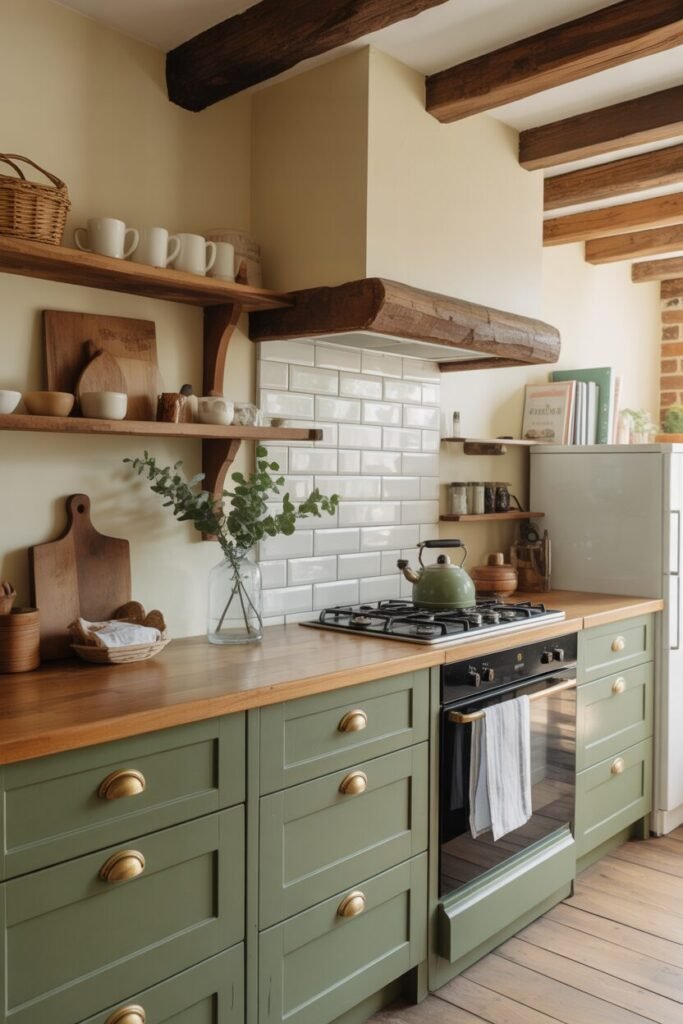
This space nails the old-meets-new cottage aesthetic—olive-green cabinets grounded with brass handles and a wooden countertop that glows under warm light. The open shelving with ceramics and cutting boards adds relaxed charm, while the exposed ceiling beams frame everything beautifully.
The palette—green, cream, and wood—is deeply grounding. Design principle: Pair muted colors with natural textures to create visual balance without overstimulation. Olive green is both earthy and elegant, making it ideal for kitchens that aim for longevity.
To recreate this, focus on timeless materials—solid wood, unlacquered brass, and subway tiles. Pro tip: Keep accessories neutral—think white dishes, glass jars, and linen towels—to let the cabinetry take center stage. Style tip: Always add life through organic touches—a branch of eucalyptus, a basket of lemons, or even a green kettle. This kitchen whispers charm instead of shouting for attention, proving that subtlety is the new luxury in cottage-inspired design.
Blue + Blush Pastel Harmony
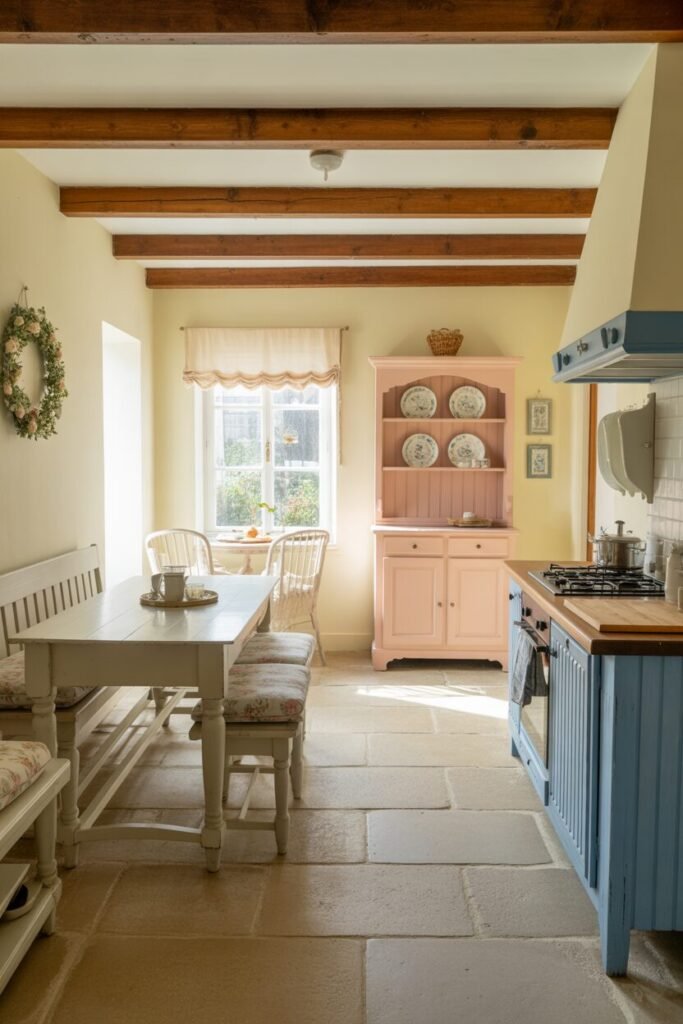
This kitchen is like a soft watercolor painting—powder-blue cabinetry paired with blush-pink shelving and cream walls bathed in sunlight. It’s a reminder that color can be gentle and expressive at once. The beamed ceiling adds a rustic heartbeat that keeps the sweetness grounded.
Design principle: Pastels thrive when you anchor them with neutrals and texture. Here, the stone flooring and wooden worktops prevent the palette from feeling too dainty. The overall result? Warm, whimsical, and deeply comforting. To recreate it, stick to two pastels max, then introduce contrast through natural materials.
Pro tip: Soft daylight enhances pastel tones—avoid harsh LED light. Opt for cream-toned bulbs to keep that morning glow all day. Style tip: Mix eras—vintage furniture, modern light fixtures, and cottage décor—to achieve depth. This kitchen feels like a daydream come true: light, airy, and full of color harmony that soothes the soul while staying effortlessly chic.
READ MORE >> “How to Style Your Home the Earthy Cottage Way“
Design a Kitchen That Feels Like Home
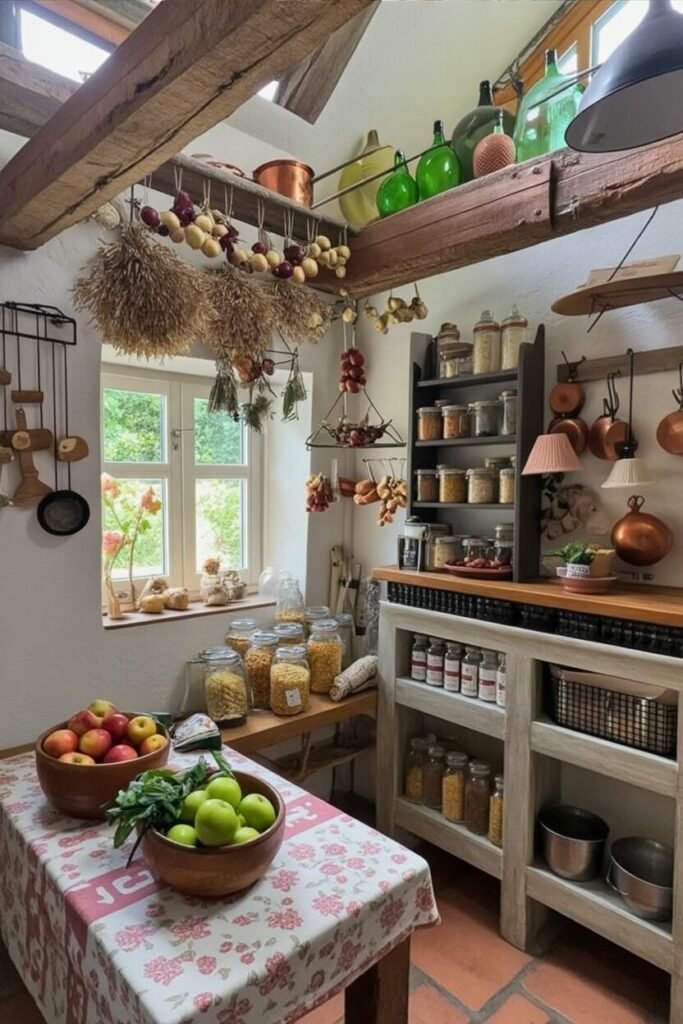
At its heart, a cottage kitchen is more than a design style—it’s a feeling. It’s the scent of fresh bread, the sunlight spilling over painted cabinets, and the quiet joy of gathering around a wooden table. Through these ten ideas, you’ve seen how color, texture, and light can work together to create timeless warmth.
Whether it’s the gentle greens, the blush of pastel pinks, or the charm of open shelving, each element adds a layer of story to your home. Don’t chase trends; instead, choose what feels personal, nostalgic, and real. A true cottage kitchen doesn’t demand perfection—it thrives in authenticity and comfort.
So let your space evolve with time, let it hold memories, and let it remind you every day that beauty often lies in the simplest things. After all, the best kitchens aren’t just styled—they’re lived in.