
Creating Earthy Boho Bedrooms That Feel Effortlessly Alive
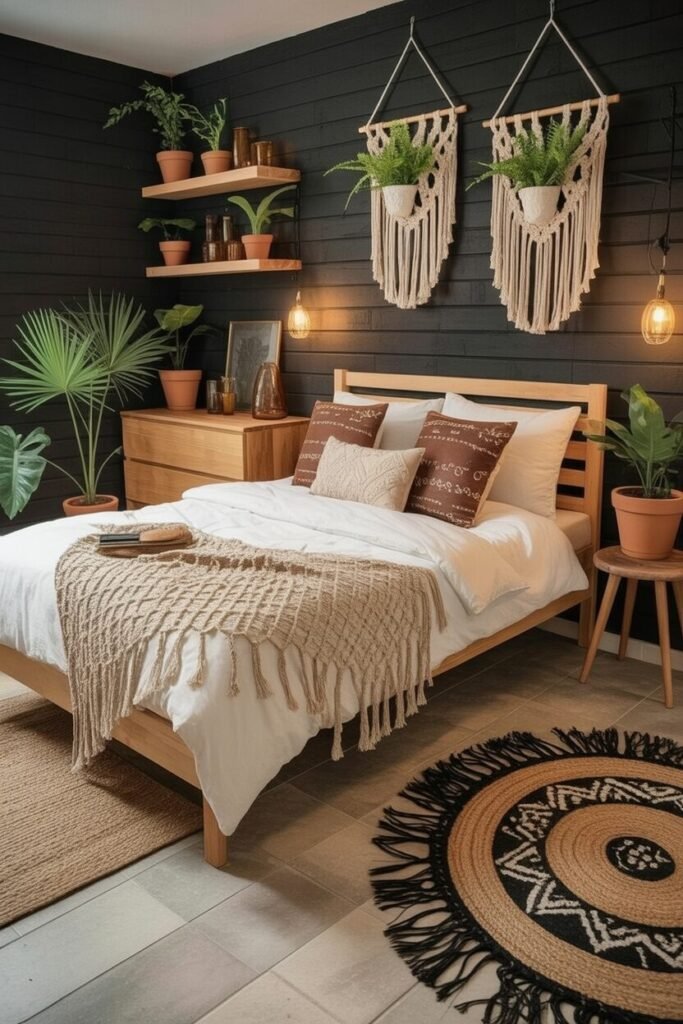
If you’ve ever looked at an earthy boho bedroom and thought, “Wow, that looks like a Pinterest board I could actually nap in,” you’re in the right place. Earthy boho style hits that sweet spot between calm, cozy, and slightly whimsical — the décor version of going to therapy, drinking water, and touching grass.
What makes this style so addictive is how design principles meet good vibes: natural textures, grounding colors, layered lighting, plant life, and materials that actually age well. In this guide, we walk through 10 ideas that break down why these spaces look so peaceful and how you can recreate them without needing a full renovation (or a trust fund).
Think of this as your earthy-boho cheat sheet — where we unpack color psychology, texture hierarchy, vertical balance, and the magic ratio of plants to furniture. Ready? Let’s turn your bedroom into a “soft life but make it stylish” sanctuary.
Soft Neutrals With Textured Layers
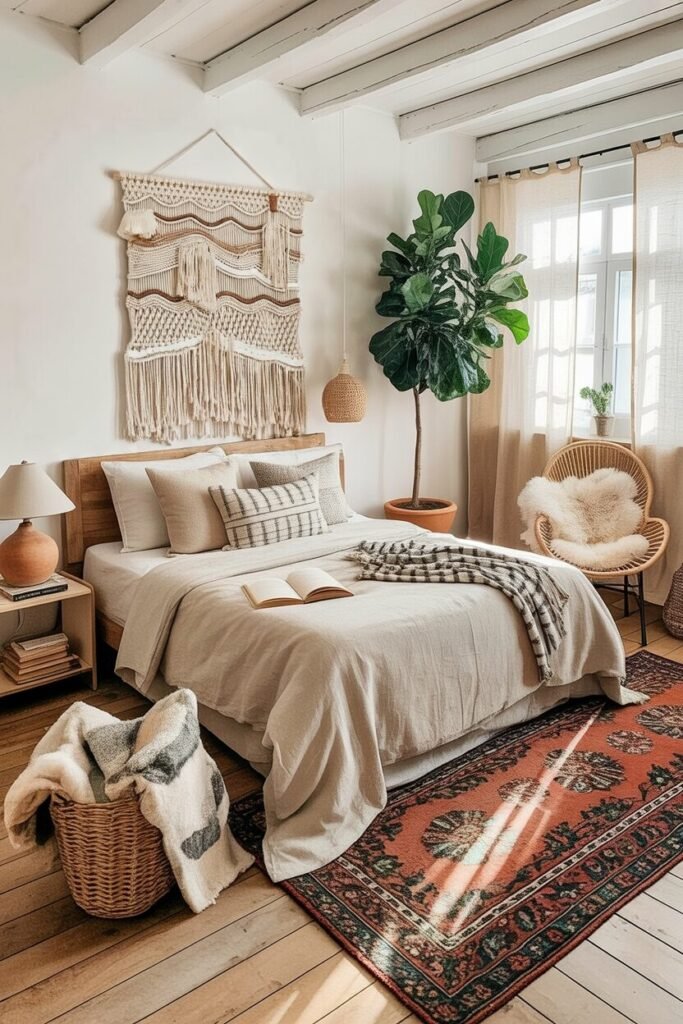
If you’ve ever wanted your bedroom to whisper, “I read self-help books and drink herbal tea,” this soft-neutral earthy boho look is it. The secret sauce behind this aesthetic? Texture > color. When we strip the palette down to creams, oatmeals, and sandy taupes, the only way to avoid a flat, boring room is to mix materials like we’re curating a tactile buffet.
Think linen bedding, nubby throws, raw wood nightstands, and of course a chunky macramé piece anchoring the wall. To recreate this, start with natural light—sheer curtains make the room glow without sacrificing privacy. Then build your “texture pyramid”: lightweight linen at the base, mid-weight woven pillows next, and something extra-chunky draped casually (yes, “casually messy” is a design principle… kind of).
And don’t forget vertical balance: a tall fiddle-leaf fig adds height and breaks up all the horizontals. Pro tip: when styling neutrals, stick to a 3-material rule (linen, rattan, wood) so everything stays cohesive and not “random Pinterest board chaos.”
Warm Layers With Rustic Accents
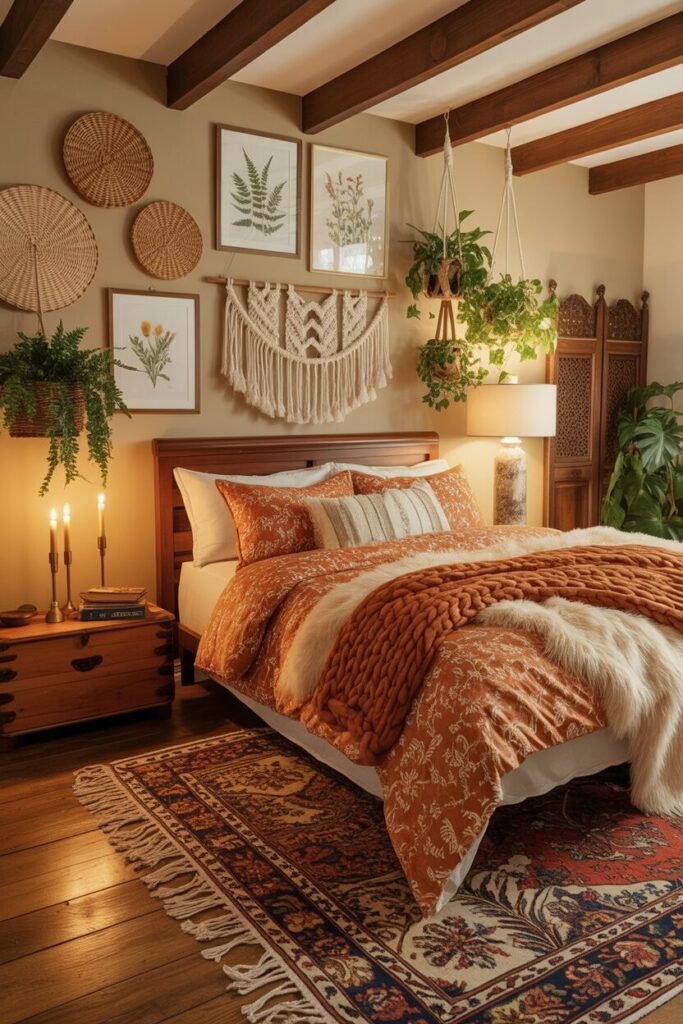
If your love language is “coziness with a side of vintage charm,” this warm and rust-toned bedroom is calling your name. The design principle at work here is warmth through tonal layering—aka using multiple shades of the same hue to make everything feel intentional. Notice how terracotta bedding ties into the rug, the throw, and even the lighting? That’s color echoing, and it’s a total game changer.
To recreate this vibe, bring in structured warmth: a thick knitted throw for texture, botanical prints for visual softness, woven baskets to keep things earthy, and candles for that “I’m mysterious and well-rested” glow. Hanging plants also add a vertical contrast that keeps the space lively.
Important design insight: balance warm colors (rust, cinnamon, clay) with cool grounding tones—like wood flooring or neutral walls—so the room doesn’t turn into a giant paprika shaker. We want cozy, not spicy.
Cozy Jungle Meets Boho Glow
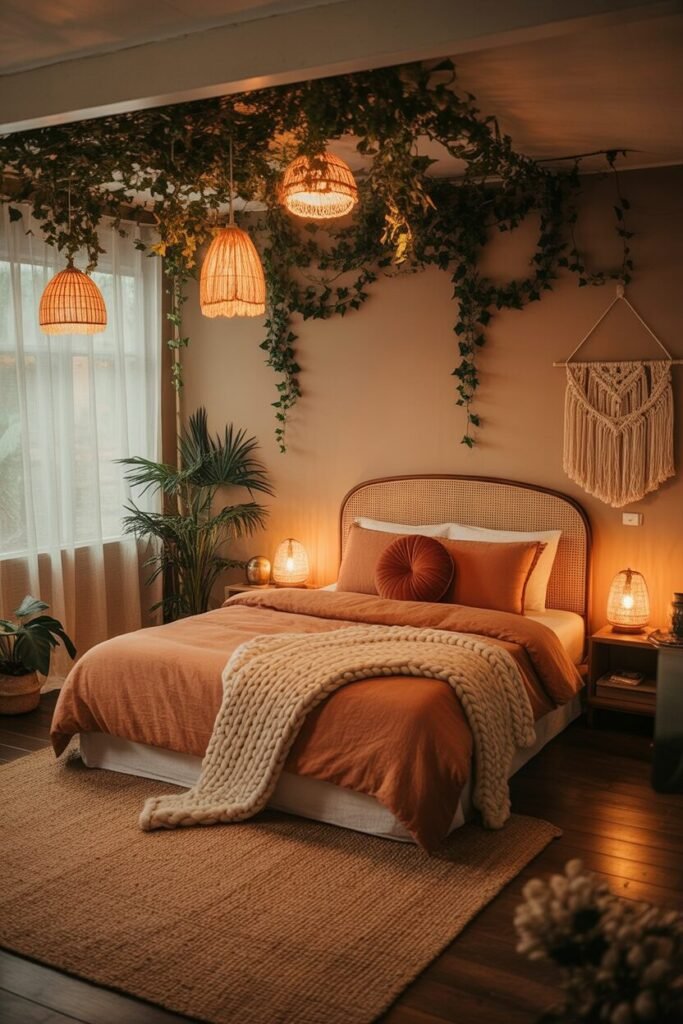
If you’ve ever wanted your bedroom to feel like a Bali Airbnb you found at 2 AM, this idea is your sign. The core principle here is biophilic ambiance—design speak for “plants make everything better.” But it’s not just about scattering plants; it’s about using layered greenery. Ceiling vines create a canopy effect, giving the room instant intimacy without making it feel small.
The warm amber lighting? Total mood setter. Pendant lamps in rattan diffuse light softly, creating that “golden hour even when it’s raining outside” effect. And the earthy rust bedding anchors the look, so the greenery doesn’t steal the whole show.
To recreate: mix three plant placements—ground, mid-level, and overhead—to get that immersive jungle feel. And choose bulbs under 3000K for warm cozy light. Also, use woven textures (rattan headboard, jute rug) to keep the room grounded so it doesn’t feel like a rainforest café.
Bold reminder: lighting + plants = 70% of a boho bedroom’s vibe. The rest is just cute blankets.
Minimalist Boho With Natural Wood
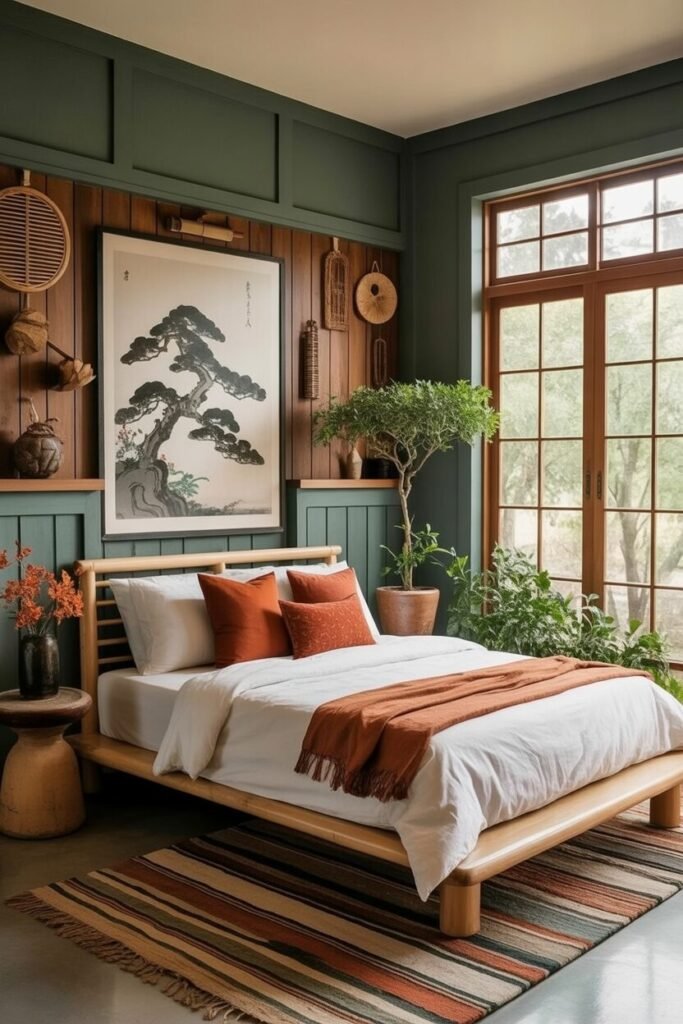
This bedroom is basically what happens when Scandinavian design and boho style fall in love and elope. The key here is intentional minimalism—not the cold, empty kind, but the warm, wood-forward, earthy version. The platform bed with rounded edges creates visual softness, while the horizontal slatted frame brings rhythm and repetition (very good for the design-obsessed mind).
The star of the room, though? Controlled contrast. The deep green paneling and warm terracotta accents create a grounded palette that feels earthy yet modern. Add in a striped rug for subtle movement and indoor greenery for biophilic balance, and we’re golden.
Recreate this by choosing one architectural feature (like a painted accent wall) and treating it as your anchor. Then build everything around natural materials—wood, bamboo, clay. Keep décor low-profile to emphasize clean lines.
Design rule: when mixing Scandi and boho, keep shapes soft but materials natural. It’s all about calm with personality.
Earthy Bookshelf-Rich Boho Comfort
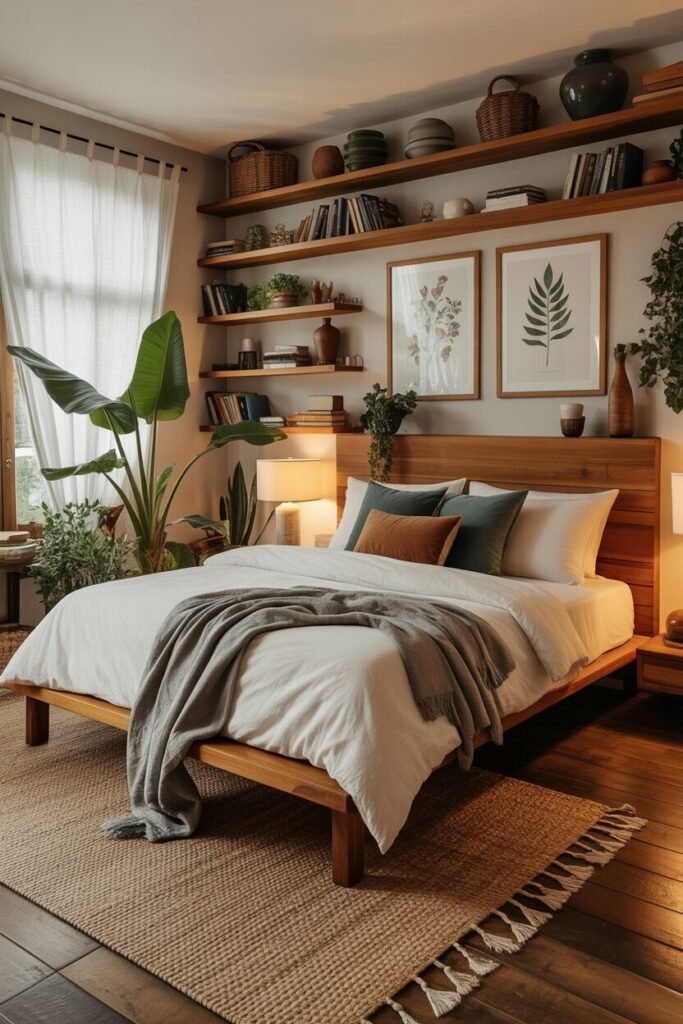
If you want your bedroom to scream “I have a skincare routine AND a library card,” this one’s for you. The design principle here is functional warmth—using décor that’s both useful and aesthetic. Floating wood shelves instantly add vertical interest while letting you display books, ceramics, plants, and random cute objects you swear “spark joy.”
The palette stays earthy with sandy bedding, soft whites, and touches of muted greens and blues. This is a subtle color story: nothing matches perfectly, but everything blends because the undertones are warm.
To recreate this look, use layered lighting: table lamps for intimacy, overhead light for practicality, and warm bulbs everywhere (2700K is your best friend). A jute rug also adds grounding texture to tie the natural materials together.
Helpful insight: if you’re styling shelves, follow the 60-30-10 rule—60% books, 30% décor, 10% plants. It keeps the look curated but not “I just raided the home décor aisle.”
Deep Greens With Warm Glowing Layers
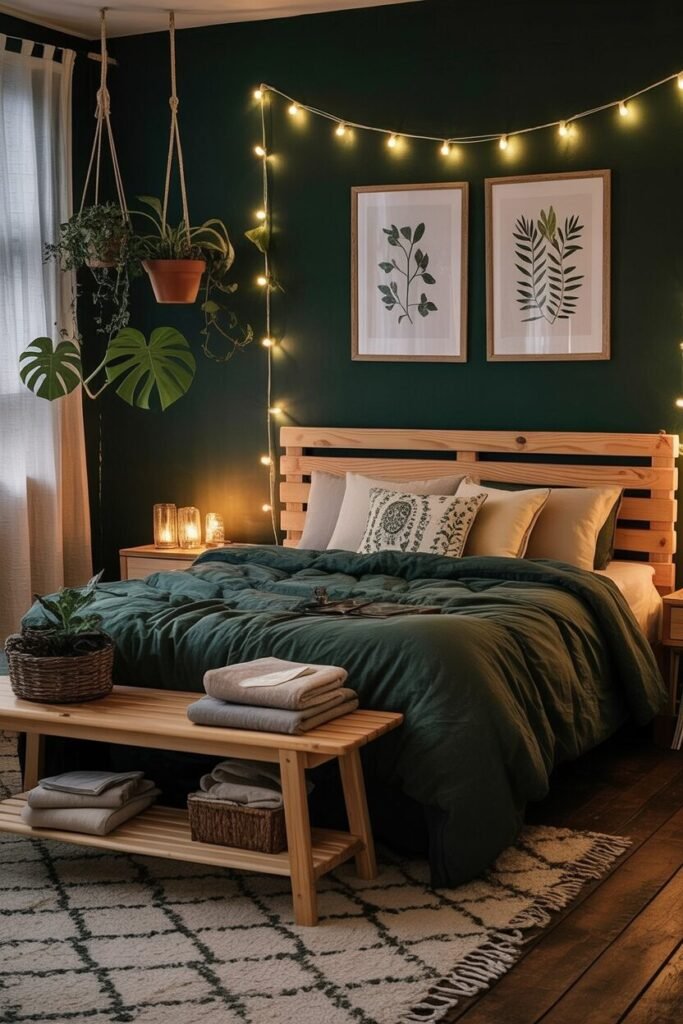
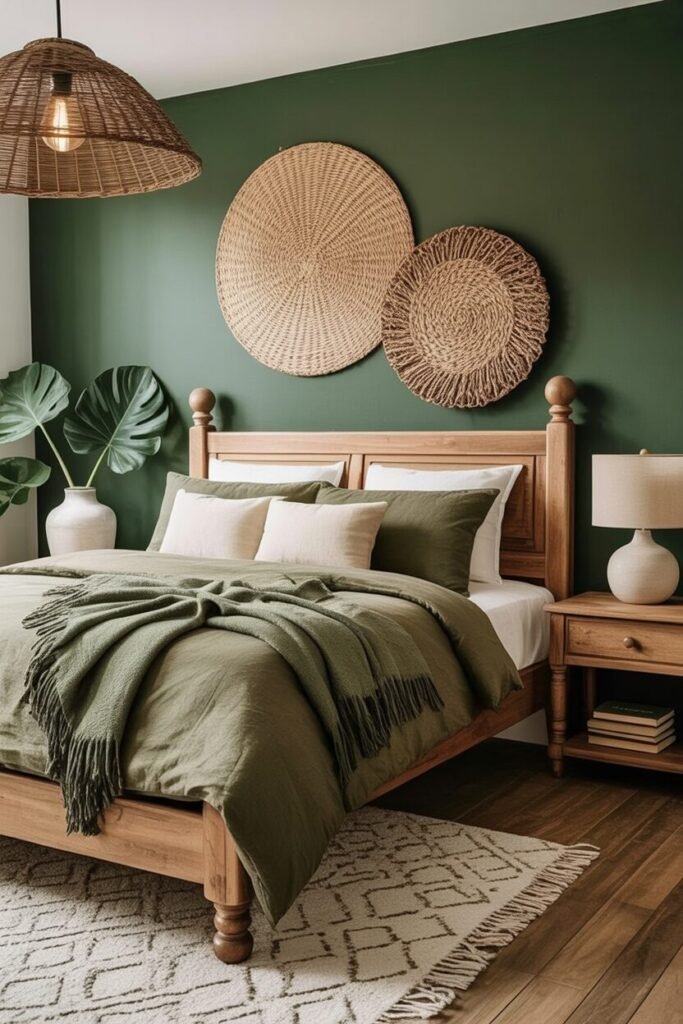
This bedroom is basically the design version of “I’m grounded, hydrated, and emotionally stable.” The deep forest-green wall sets the tone—literally. Darker walls create visual depth, making the room feel cocoon-like and calming, which is peak earthy-boho energy.
To avoid the dark tones feeling heavy, the space introduces warm contrast through natural wood and golden lighting. Those fairy lights? Not just cute—they soften the perimeter of the room, making the walls feel less flat and more atmospheric.
To recreate this look, start by pairing one dark anchor color (like deep green) with light-colored woods for visual balance. Add layered lighting: bedside lamps, string lights, and candles (real or LED—we’re not judging your clumsiness). Plants bring vertical movement and keep the palette connected to nature.
Design tip: Dark walls thrive when paired with light bedding or bright artwork, so don’t be afraid to mix tones. That contrast makes the room look expensive—even if you’re on that “25–35 budgeting era.”
Soft Tan Tones With Organic Textures
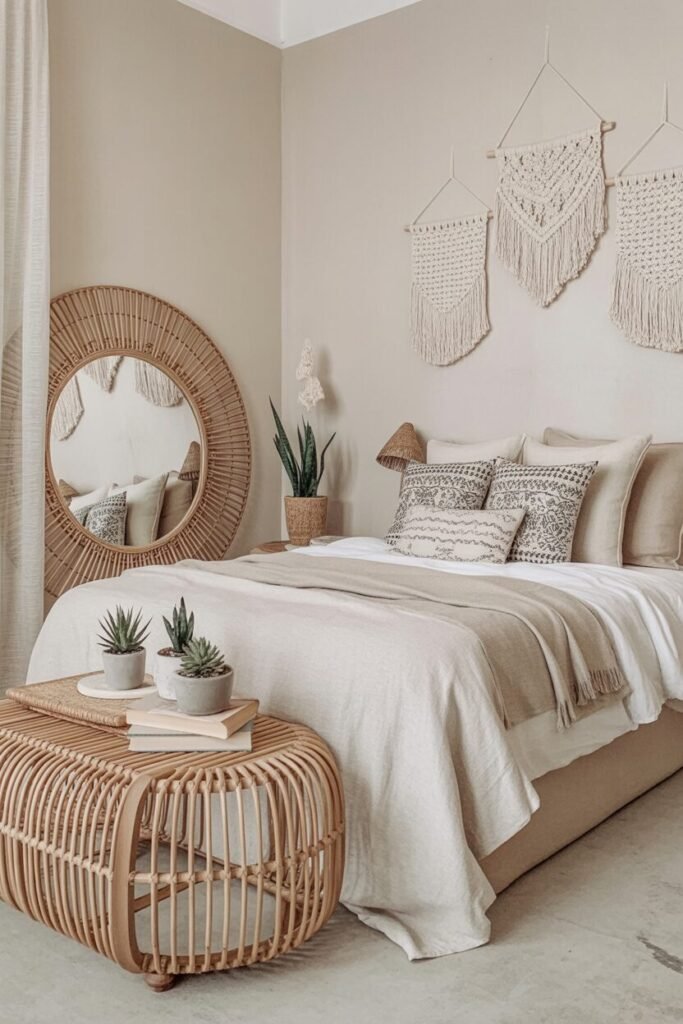
If beige had a main character moment, it would look exactly like this. This bedroom proves that neutral doesn’t mean boring—it means texture becomes the star. The woven rattan mirror, macramé wall hangings, and natural-toned bedding all work together to create gentle layers that feel warm and soothing. This is the perfect vibe for anyone living their “calm girl aesthetic” era.
To recreate, stick to a monochromatic palette but mix materials wildly: linen, rattan, cotton, raffia, and soft knits. When everything shares the same undertone, you can play with shapes and textures without disrupting cohesion. Add subtle greenery (like snake plants or aloe) to break up the tans and keep the room from blending into one big latte.
Pro insight: Keep shapes rounded—mirrors, tables, lamp shades. Round silhouettes soften all the neutrals and make the space feel welcoming, not clinical. Neutral boho thrives on curves + texture more than colors.
Canopy Greens With Soft Ambient Glow
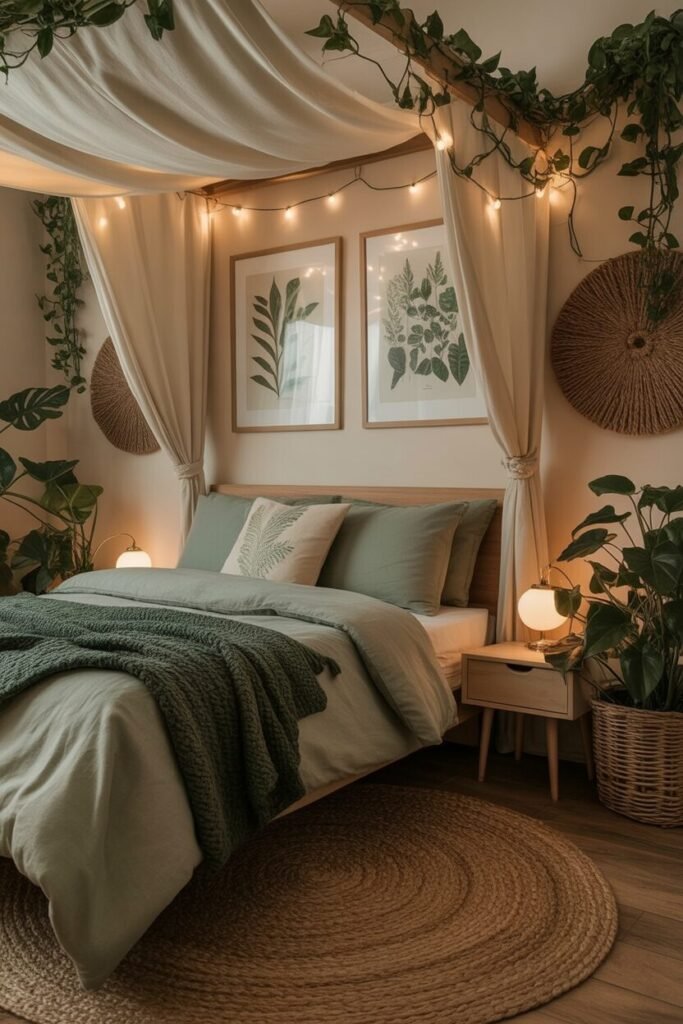
Okay, this bedroom is giving “enchanted forest but make it adulting.” The draped canopy fabric instantly softens the space by adding vertical softness and breaking up hard lines. Combined with trailing vines and layered greenery, the whole setup becomes a masterclass in biophilic design—bringing nature in to lower stress and make your sleep space feel like a spa-adjacent retreat.
The color palette stays muted: sage greens, creams, and soft woods. This lets the canopy become the drama moment without overwhelming the room. The warm string lights create a halo effect that highlights the canopy folds (yes, lighting can be sculptural).
To recreate, choose breathable fabrics (cotton or linen) for your canopy, and let it drop casually for that effortless charm. Mix two plant types with different leaf shapes (round + elongated) to keep the greenery visually interesting.
Key reminder: In canopy-style rooms, lighting placement matters more than brightness. Soft, warm, and scattered wins every time.
Plant-Shelf Heaven With Earthy Warm Contrasts

If your dream is to sleep under a shelf full of thriving plant babies, this one’s for you. The design revolves around elevated greenery—literally. Using a shelf for plants draws the eye upward, making the ceiling feel taller and giving the room a lush, layered look. It’s basically vertical biophilic design for people who ran out of floor space.
The bedding keeps things earthy with sage greens and muted neutrals, while the rust throw creates a bold contrast that warms the whole palette. The jute rug adds grounding texture, preventing the space from feeling too top-heavy with all those plants.
To recreate this setup, pick terra-cotta pots to unify the plant shelf visually. Then balance the vertical greenery with a wide, chunky rug that visually “anchors” the bed zone.
Expert tip: When working with lots of plants, choose one unifying accent color (like rust, mustard, or forest green) so the room feels curated, not like a botanical garage sale.
Light-Filled Minimal Boho With Pops of Terracotta
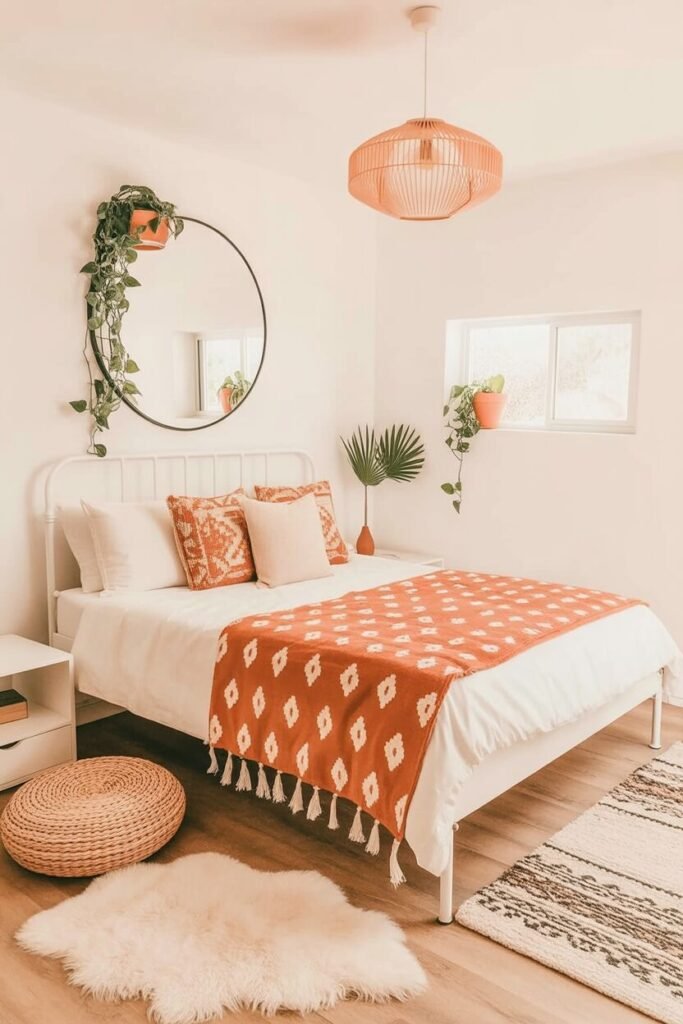
This is the bright, cheerful cousin of the earthy boho family—clean, airy, but still warm thanks to smart pops of terracotta. The white walls make the room feel wider and lighter, which lets the earthy accents shine without overwhelming the space. This is a great reminder that boho doesn’t always mean cluttered—you can go minimal and still cozy.
The trick here is strategic color placement. The patterned throw, cushion covers, lamp shade, and planters all echo the same terracotta tone, creating a color storyline that feels intentional. The mirror adds depth and bounces light around, keeping the room from feeling too small. Meanwhile, the mixed rugs bring texture and warmth to the floor.
To recreate, start with a bright neutral foundation, then pick one earthy accent color and repeat it 3–5 times. Add soft textures like a faux-sheepskin rug or woven pouf for warmth.
Core principle: Minimal boho works best when you use texture as décor and keep your color palette tight but expressive.
Bringing Earthy Boho Style Into Your Real Life
Creating an earthy boho bedroom isn’t about copying a photo — it’s about building a space that feels grounded, warm, and genuinely you. After exploring these 10 ideas, you probably noticed a pattern: it’s all about intentional layering, thoughtful lighting, and mixing natural materials in a way that feels lived-in, not cluttered.
The goal is to give your room that “I care, but I’m also chill about it” energy. Whether you’re leaning into deep greens, terracotta accents, woven textures, or a jungle-level amount of plants, what matters is finding the combo that supports your daily routine and your personal aesthetic.
Use these design principles as your toolbox — play with contrast, maintain visual balance, and let texture do the heavy lifting. At the end of the day, the best earthy boho spaces aren’t perfect; they’re comforting, intentional, and a little bit playful. Basically… your new favorite place to exist.