
Real Reasons Dark Elegant Bedrooms Feel Surprisingly Livable
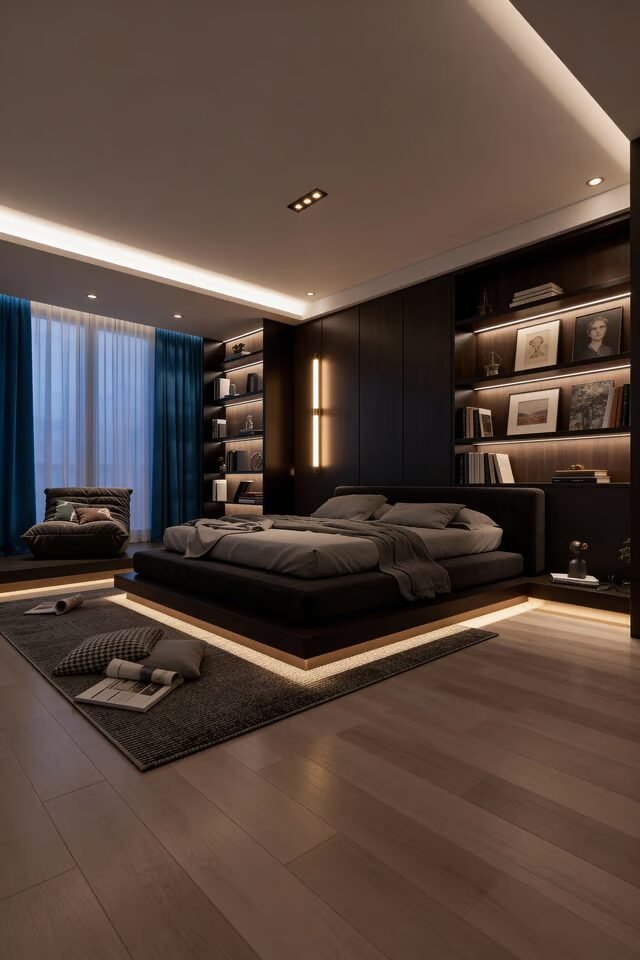
Dark elegant bedrooms often get misunderstood. People think dark equals gloomy, heavy, or risky. In reality, dark bedrooms are all about control, balance, and intention. When done right, darker palettes create calm, depth, and a sense of quiet luxury that lighter rooms sometimes can’t achieve.
The key is understanding that darkness is a backdrop, not the main character. Materials, lighting, and layout do the storytelling. Texture replaces loud color. Lighting replaces contrast. Proportion replaces decoration. We don’t just paint walls dark and hope for the best. We layer light sources, we choose finishes carefully, and we let negative space breathe. Dark rooms work best when every element earns its place.
That’s why symmetry, repetition, and material consistency matter more here than anywhere else. Dark elegance feels expensive because it’s disciplined, not because it’s dramatic. Once you understand the principles, recreating these spaces becomes less intimidating and way more fun.
Moody Black Bedroom With Soft Glow
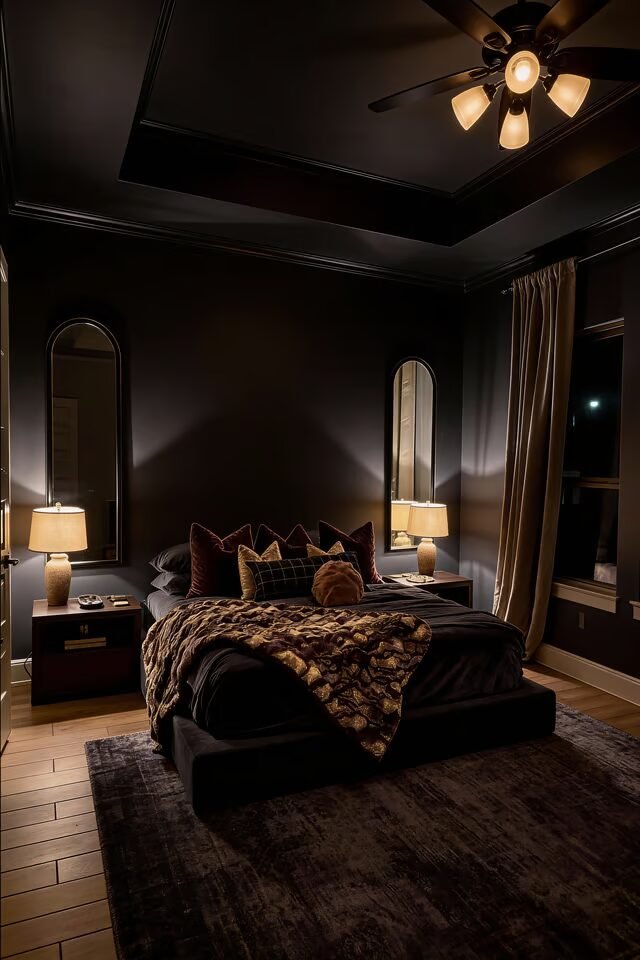
Dark bedrooms work when contrast is intentional, not accidental. In this space, deep charcoal walls absorb light, so the lighting strategy does the heavy lifting. Notice how table lamps sit slightly lower than eye level. That’s not random. Lower light sources create intimacy and prevent dark walls from feeling like a cave.
We’re also seeing symmetry doing emotional labor here. Matching nightstands and lamps visually calm the room, which is crucial when the color palette is bold. Dark colors feel luxurious when the layout feels controlled. Texture is the secret sauce. Matte walls, plush bedding, and a subtle rug stop black from looking flat.
If you recreate this, mix at least three textures before adding any décor. Also, ceiling details matter more in dark rooms. A tray ceiling adds dimension, making the room feel taller and less boxed in. And yes, warm bulbs only. Cool light plus black walls equals interrogation room energy, and we don’t want that.
Modern Dark Bedroom With Open Closet
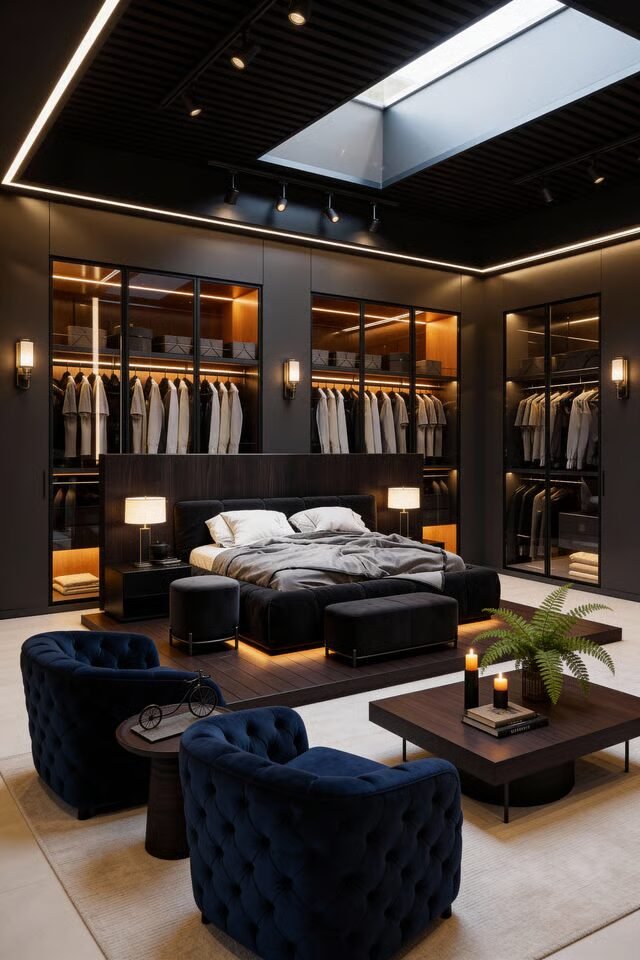
This idea proves that dark elegance isn’t about hiding things, it’s about curating them. An open wardrobe works here because the color palette is disciplined. When everything lives in the same tonal family, visual noise disappears. Dark rooms thrive on visual continuity.
The glass closet doors subtly reflect light, which prevents the space from feeling heavy while still keeping that moody vibe. Notice the lighting layers. Recessed ceiling lights handle function, while integrated wardrobe lighting adds depth and highlights textures. This creates a soft glow that feels expensive without trying too hard.
Furniture placement also matters. The bed stays centered and low, anchoring the room and letting the architecture shine. If you want to recreate this, edit your wardrobe first. An open closet only works when it’s styled like décor. Neutral hangers, limited colors, and intentional spacing turn storage into design. Basically, if Marie Kondo would cry, don’t display it.
Dark Bedroom With Hidden Walk-In
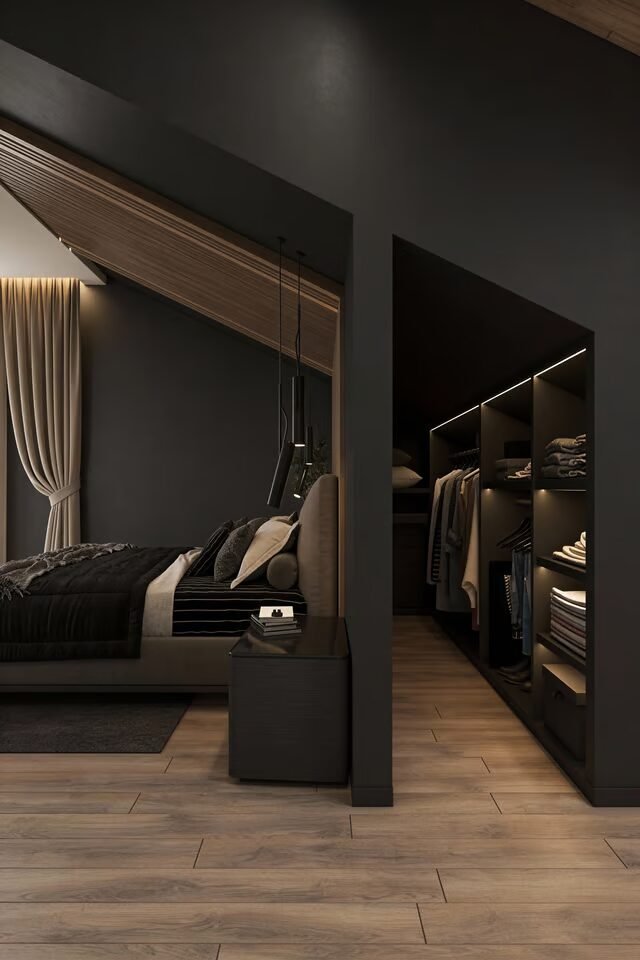
This layout nails the balance between mystery and practicality. The dark palette sets a calm, cocooning mood, while the concealed walk-in closet keeps visual clutter out of sight. Good dark design is about controlling what you see and what you don’t. The doorway blends seamlessly into the wall, which maintains clean lines and lets the bedroom feel larger.
Lighting is doing something smart here. Soft, indirect lighting in the closet contrasts with the dimmer bedroom, guiding movement without breaking the mood. That’s a classic hospitality trick we love stealing. Wood flooring adds warmth and prevents the dark walls from feeling cold or industrial.
If you recreate this, keep materials simple but rich. One strong wood tone is enough. Also, avoid glossy finishes in tight dark spaces. Matte surfaces absorb light more evenly and feel calmer. This kind of bedroom doesn’t shout luxury. It quietly whispers it, which is way cooler.
Dark Bedroom With Layered Lighting
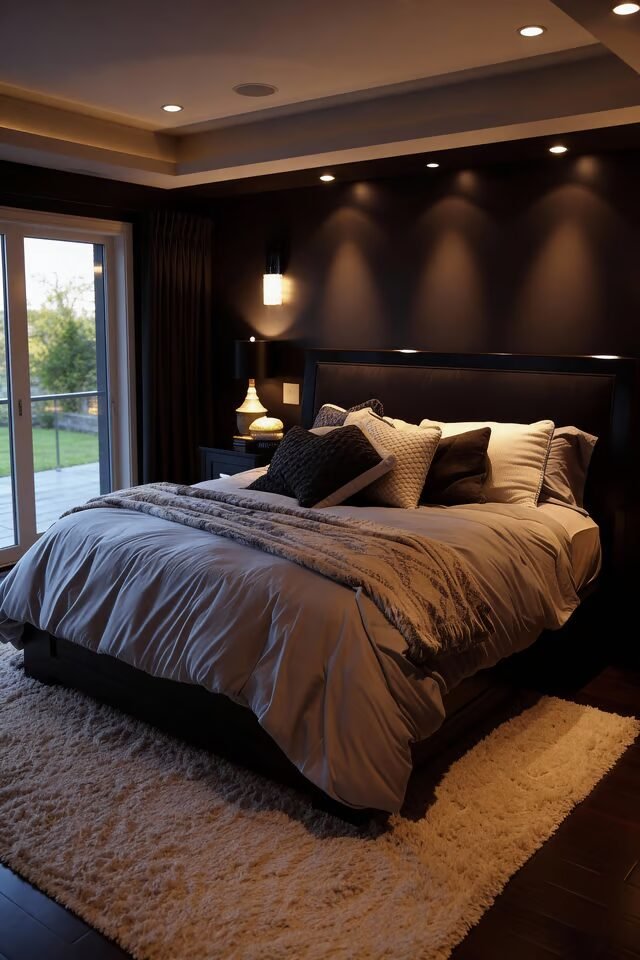
This bedroom shows why layered lighting is non-negotiable in dark spaces. Ceiling spots provide general illumination, wall lights add mood, and bedside lamps handle function. Together, they create flexibility, which is what keeps dark rooms livable.
The color palette stays restrained, but notice how soft textiles do the emotional work. Plush bedding, a thick rug, and upholstered furniture prevent the room from feeling stark. Dark walls act like a backdrop, letting lighter fabrics stand out without screaming for attention.
We also love the headboard choice. A slightly lighter tone breaks up the wall and frames the bed, which becomes the visual anchor. If you’re recreating this, avoid placing all lights on one switch. Separate controls let you shape the atmosphere depending on time and mood. Morning calm, evening cozy, late-night drama. Same room, different energy. That’s how dark elegance stays functional, not just pretty.
Dark Luxury Bedroom With City View
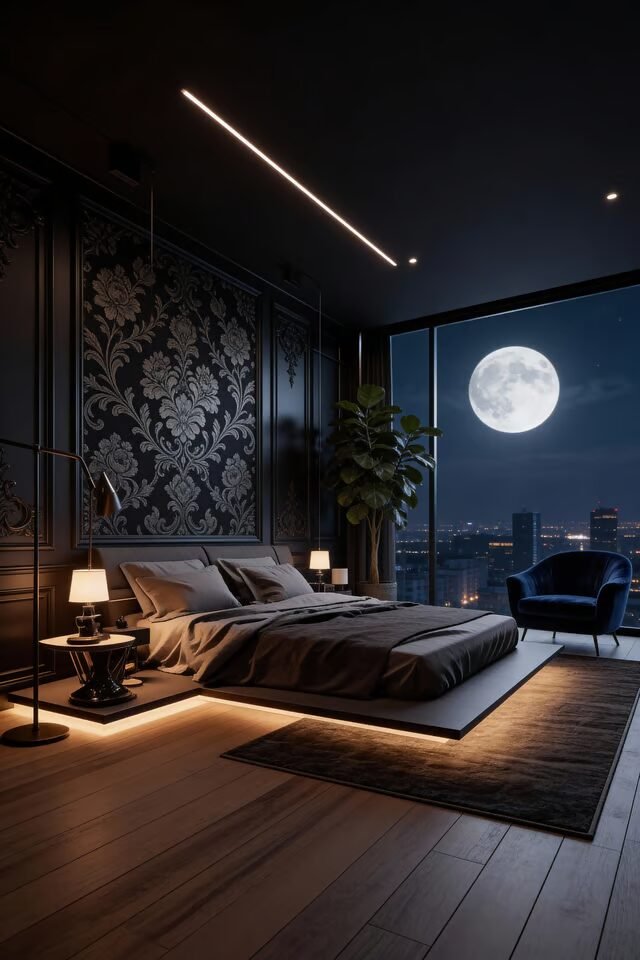
This space proves that dark doesn’t mean closed off. Large windows and a strong exterior view completely change the game. Dark interiors feel powerful when they frame something brighter. The black walls act like a gallery backdrop, making the city skyline and moonlight feel intentional, almost cinematic.
The low platform bed keeps sightlines open, which is key when you’re working with dramatic views. Lighting stays minimal and linear, guiding the eye instead of distracting it. Notice how décor is kept sparse. In dark rooms, fewer objects read as more intentional.
One plant, one chair, a few sculptural lights. That’s it. If you want this look, focus on negative space. Let areas breathe instead of filling every corner. Dark elegance isn’t about adding more, it’s about choosing less, better. When done right, the room feels calm, confident, and slightly mysterious, like it knows something you don’t.
Dark Bedroom With Classic Wall Molding
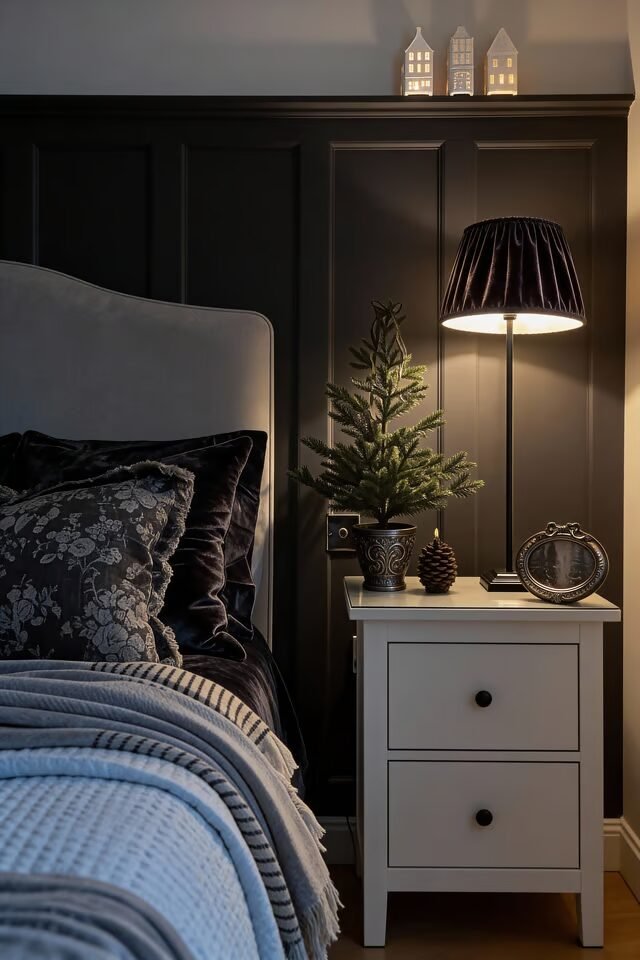
This bedroom proves that dark elegance gets a major upgrade with architectural detail. The wall molding adds rhythm and structure, which keeps dark paint from feeling flat or heavy. Think of it as visual scaffolding for moody color. Without it, dark walls can feel like a void.
With it, they feel intentional and refined. The nightstand styling is doing quiet work too. A small lamp, one plant, and one personal object is all it takes. Dark rooms reward restraint because every object becomes more noticeable. Lighting here stays soft and localized, which keeps shadows gentle and cozy instead of harsh.
If you want to recreate this, choose molding with shallow depth so it casts subtle shadows, not dramatic ones. Also, satin or eggshell paint works better than high-gloss. It reflects just enough light to keep details visible. This is the kind of bedroom that feels calm, classic, and slightly old-soul without looking dated.
Dark Minimal Bedroom With Stone Accent
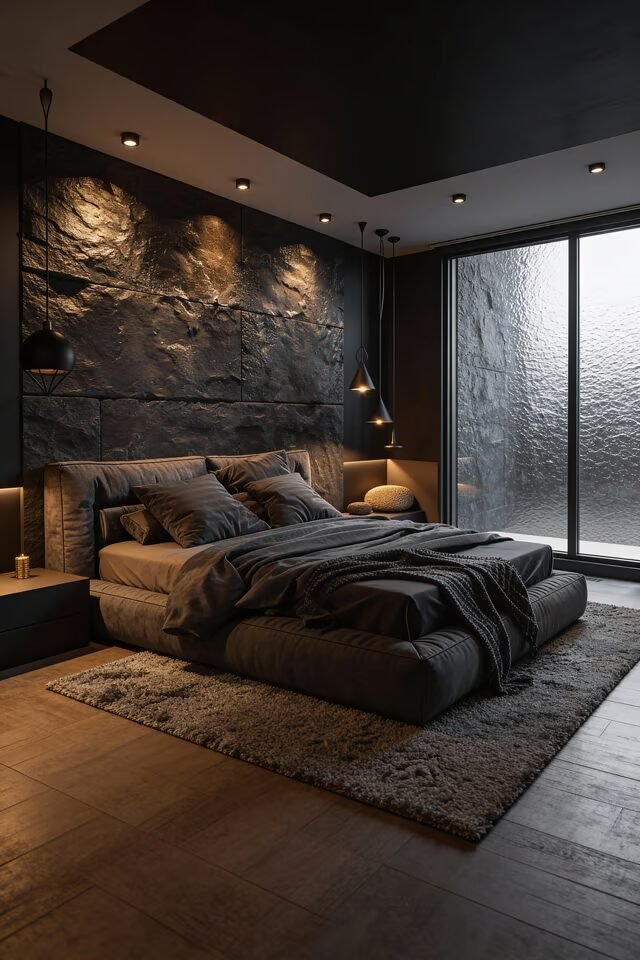
This space shows how texture can replace color in dark design. Instead of relying on contrast, the stone wall adds depth through variation in surface. The result feels grounded and modern, not cold. The bed stays low and oversized, which visually lowers the room and enhances that cocoon-like feeling.
Pendant lights replace table lamps here, freeing up surface space and creating a cleaner silhouette. That’s a smart move in minimalist dark bedrooms where clutter is the enemy. Notice how the palette stays tight: charcoal, warm gray, and muted wood.
When working this dark, material honesty matters more than decoration. If you recreate this, invest in one statement surface and keep everything else simple. Also, indirect lighting along walls or ceilings will soften rough textures so they feel intentional, not aggressive. This room feels calm, heavy in a good way, and incredibly grounding.
Dark Wood Bedroom With Plush Layers
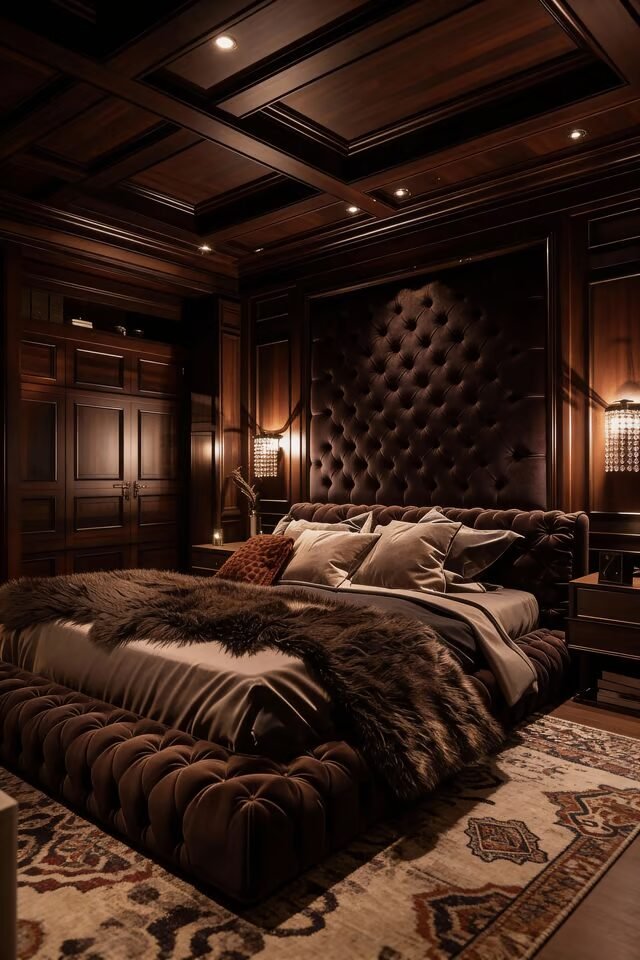
This bedroom leans fully into rich materials and classic luxury. Dark wood paneling wraps the room, creating warmth while still keeping that dramatic tone. Wood is your best friend in dark spaces because it adds depth without needing contrast.
The tufted headboard introduces softness and vertical emphasis, which balances the heavier walls. Layered bedding does serious work here. Multiple neutrals, varied textures, and a touch of fur create visual interest without breaking the palette. In dark bedrooms, texture replaces pattern. Lighting stays warm and symmetrical, reinforcing a hotel-like calm. If you want this look, keep metal finishes muted.
Brass or antique gold works better than chrome, which can feel too sharp. Also, anchor everything with a rug that has subtle patterning. It adds richness underfoot without competing with the room’s main elements. This is dark elegance that feels timeless, not trendy.
Dark Bedroom With Dramatic Feature Wall
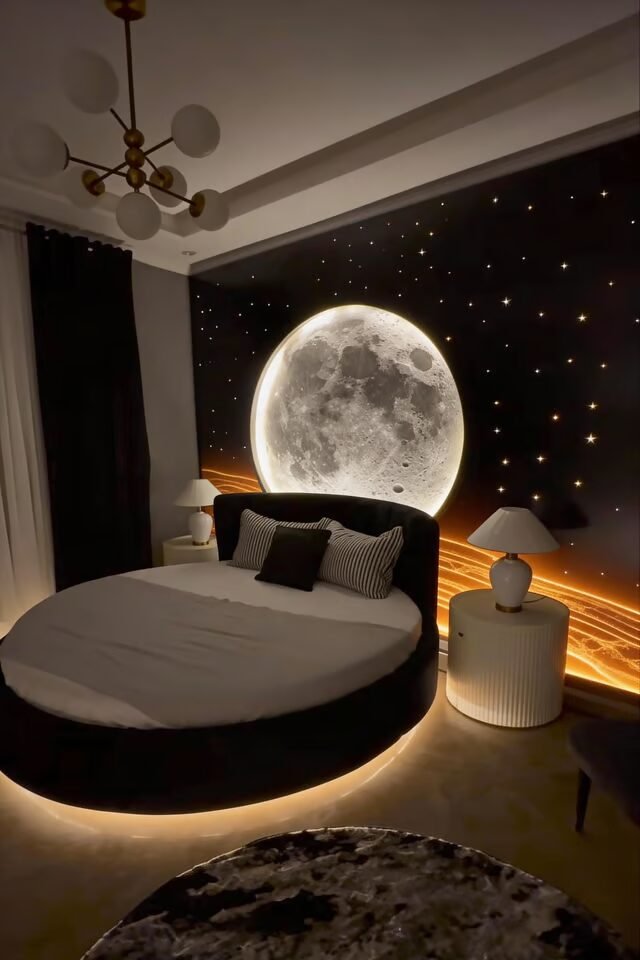
This bedroom shows how one bold visual can define the entire space. The feature wall instantly becomes the focal point, allowing the rest of the room to stay relatively calm. That’s key in dark design. You need one hero moment, not five. The bed’s rounded shape softens the graphic backdrop, creating balance between drama and comfort.
Under-bed lighting adds a floating effect, which prevents the dark palette from feeling heavy at floor level. If you recreate this, keep surrounding walls neutral or softly tinted. Let the feature wall do the talking. Contrast doesn’t always mean light versus dark, sometimes it’s bold versus quiet.
Lighting should be warm and indirect so the feature feels immersive, not overwhelming. This type of bedroom works best when furniture is minimal and silhouettes are simple. The result feels cinematic, playful, and surprisingly relaxing.
Dark Neutral Bedroom With Balanced Contrast
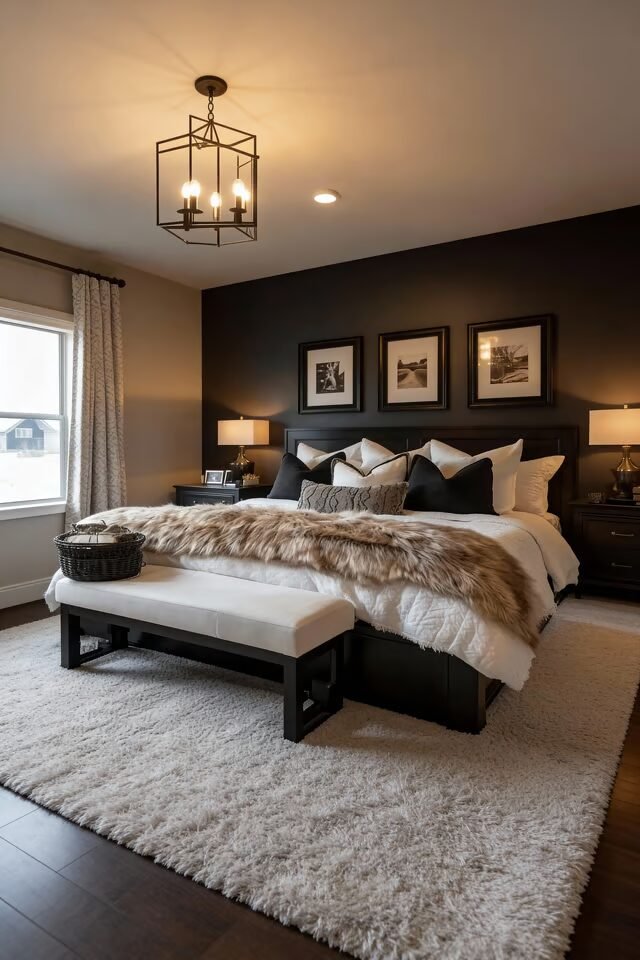
This bedroom nails the sweet spot between moody and approachable. Dark walls ground the space, while light bedding and a soft rug create contrast where it matters most. Contrast should support comfort, not fight it. The bench at the foot of the bed adds structure and keeps the layout feeling intentional.
Lighting stays classic and evenly distributed, which helps dark walls feel welcoming instead of intense. Framed art above the bed breaks up the wall without overpowering it. If you want to recreate this, stick to a tight color palette and vary value instead of hue.
Think dark charcoal, warm beige, and soft cream. This keeps the room calm while still visually interesting. Also, don’t skip window treatments. Fabric softens dark rooms instantly. This bedroom feels polished, livable, and perfect for people who want dark elegance without committing to full drama.
Dark Elegance Works When Design Decisions Feel Intentional
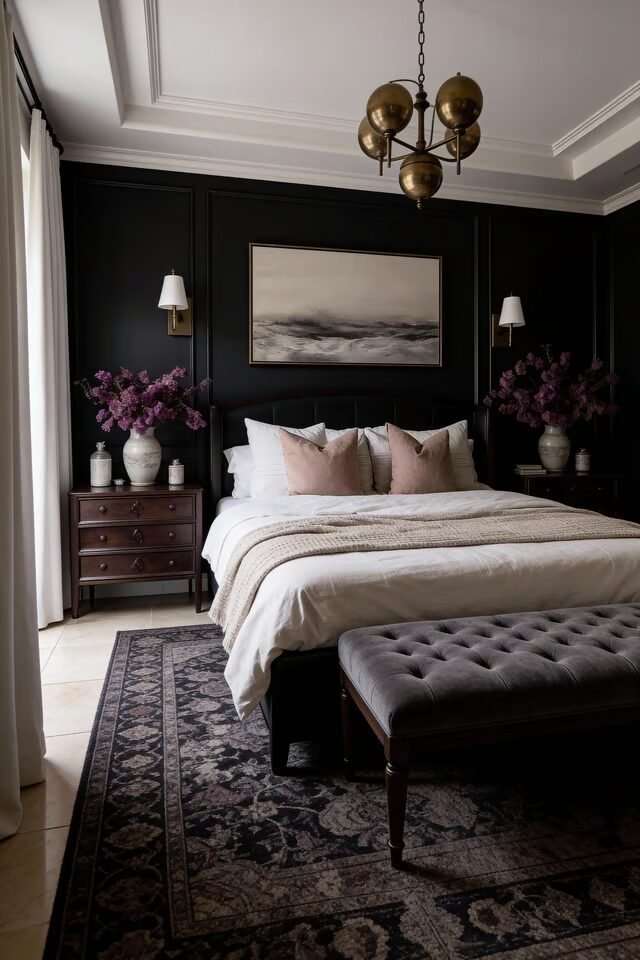
The biggest takeaway from these dark elegant bedroom ideas is this: success comes from clarity, not excess. Dark rooms don’t forgive randomness. Every light, texture, and object needs a reason to exist. When we design with darker tones, we shift focus from decorating to composing.
Lighting becomes emotional, not just functional. Texture becomes visual contrast. Furniture placement becomes structure. Dark elegance isn’t about copying a look, it’s about understanding the logic behind it. Once you get that, you can adapt these ideas to any space, big or small. Start with one strong anchor, whether it’s a wall, a bed, or a material. Build around it slowly. Edit aggressively.
Leave space untouched on purpose. That restraint is what makes dark bedrooms feel calm instead of chaotic. When done right, dark elegance doesn’t overwhelm. It grounds you. And honestly, that’s the kind of bedroom we all deserve to come home to.