
A Guide to Matching Deck Stain Colors with Different Woods
The Color-Stain Mistake Almost Everyone Makes

We’ve lost track of how often we’ve watched owners strain their backs constructing a deck—selecting the appearance, the ideal wood, even the hallowed railing finials—only to cap it off with a stain color that in essence shouts slogans on the deck below reminding one of war. Thisousy aspect about it? You don’t even realize it’s a disaster until the entire thing is dry, closed up tight, and just sittin’ out in the sun heatin’ up like some huge pricey monument to regret.
And the worst part here, everyone: stain ain’t no color. No sir, it’s a black chemical connection ‘tween pigment and wood fiber. And lo and behold? Any wood whatsoever will take on otherworldly undertones, otherworldly absorptions, and ghostly grain patterns that totally dominate what the stain even resembles when it sets.
That otherworldly gray you admired at the job site, used in some Instagram influencer’s filter-perfected picture? On your red-stained cedar, it might very well pull an off-the-face fast one and look unsettlingly purple. And that luxurious walnut brown? All that would be spotty and bluish-green sort in pressure-treated pine. Because, as things turn out, wood is a contrary creature.
Selecting a stain without trying it out on your wood is like applying foundation without having your complexion color matched—sit kind of uncomfortably although you can’t really put your finger on it. But don’t worry about it for real, though. When you get your head around how each of the various types of wood responds (and what color will make it a million bucks), you’ll never be able to imagine deck stain in the same way again, we guarantee it.
We can do that, then. Wood by wood.
1. Cedar
Understanding Cedar’s Red Undertones
Cedar, goodness, just has this internal heat that’s just not to be contained. Depending on how you’re chopping it up, you’ll be looking for those reddish-beige striations or those reddish-browns in the bottom grain—if we’re cutting into Western Red Cedar, at least. I know, I know, I know those reddish undertones are just gorgeous, but they’re really a little bit like that one cousin at Thanksgiving: boisterous and set on being heard.
They don’t dawdle out at the edge humming along—no way. They just just set the mode for whatever reason for any specific color of stain simply by the way announcing itself down the line. Due to cedar being too big a softwood with too big an honorable. amount of dryness, stains just go ahead and get along right away with that base color.
What it does is that even a stain which is seemingly entirely neutral in the can will, all of a sudden and for totally no reason whatsoever, become fuzzy and warm when it encounters cedar. A golden brown warm color will perform some strange somersault and turn orange; a warmth in the taupe will look curiously peachy. It’s why it’s not frivolous, serious business to know these tricks of the undertones. You’re not staining wood, you’re color-coating painted canvas. Deck staining is painting, incidentally.
The secret there? Adding to the red, not battling it. If you can imagine stain as beautiful blending with cedar—and not some whack-job helter-skelter topcoat you drove there—it’ll be decisions that will feel evolved, considered, and just plain not an accident waiting to happen.
Balancing Cedar’s Warmth
Cedar is simply too sweetly deserving, no question. But mess with it or use the wrong color on it, and pink or red undertones can go from country sweet to downright “in-your-face” warp speed. And that’s when stain selection is more about style and less about color fix-it and visual balance.
To dial back the natural warmth of cedar but remain an expression of respect for its own natural beauty, cooler-stained colors like slate gray, dusty taupe, and cool brown are our tricks up our sleeves. Turn them into your own color-correcting fairy godmothers.
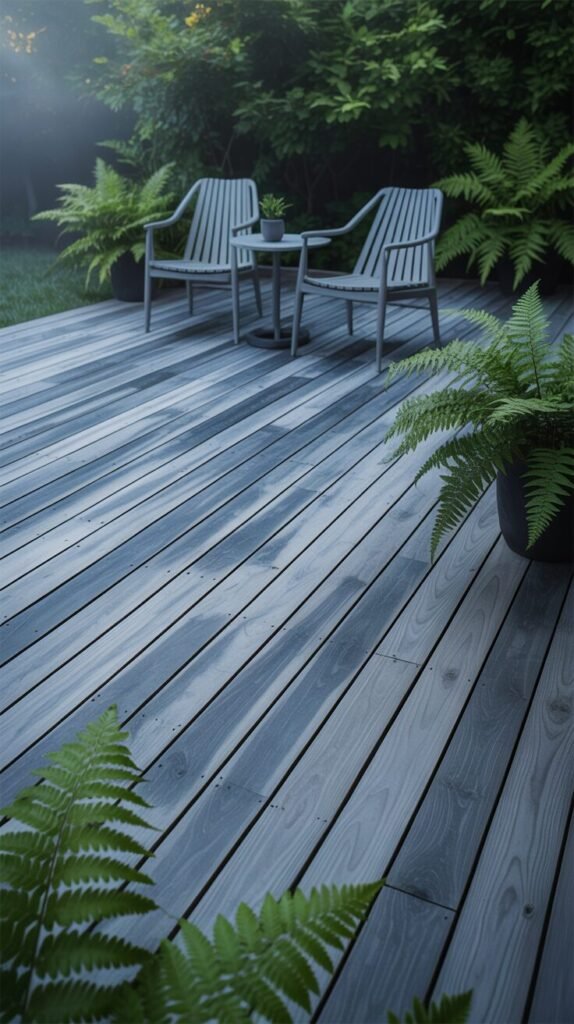
Take slate gray, for instance. It almost unwinds the natural warmth of cedar to a sleek, architectural neutral. Instead of allowing the orange or reddish undertones to get in on the play, slate gray reimagines the deck as resurrection—lightning fast, aerodynamic, and totally serene.
The vertical grain wood is still evident in the picture, shooting up with nearly unheard-of texture, so the entire project isn’t constructed like a sleep-inducing flat wall. This is exactly what homes with black window surrounds, plain siding, or those sunny back-yard idylls where blues are only used to supply contrast.
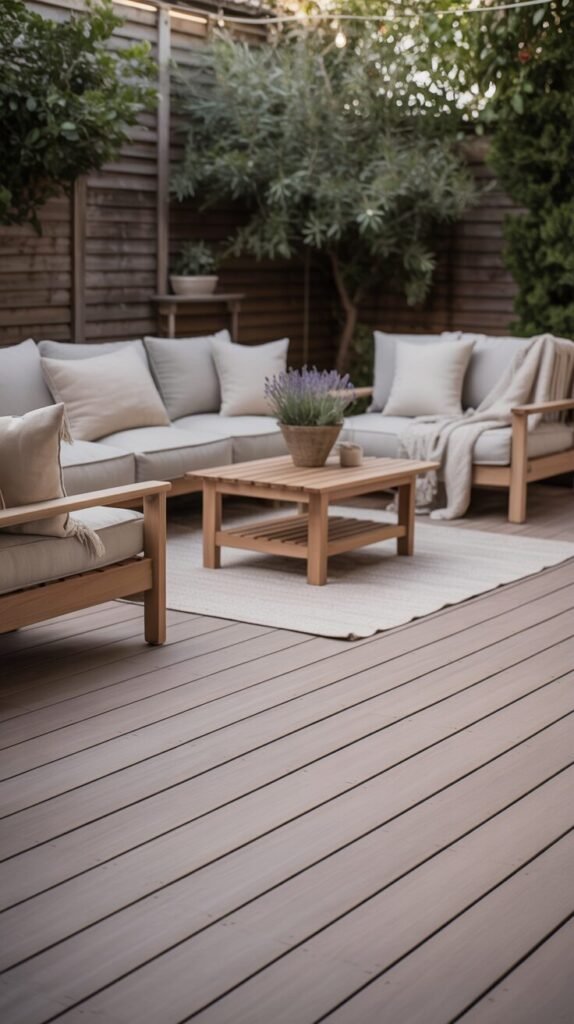
There is weathered taupe too. It gets the cedar warmth without making the deck a walk-in fridge. Call taupe the soul of warm-cool marriage—a restrained, desaturated brown-gray that just yells visual balance. Warm greens and muted accents in the photo almost cancel out the deck’s neutral color to create a rich, fabulously inviting picture. It’s especially nice with those creamy siding houses, natural landscaping, or that oh-so-country farmhouse aesthetic.
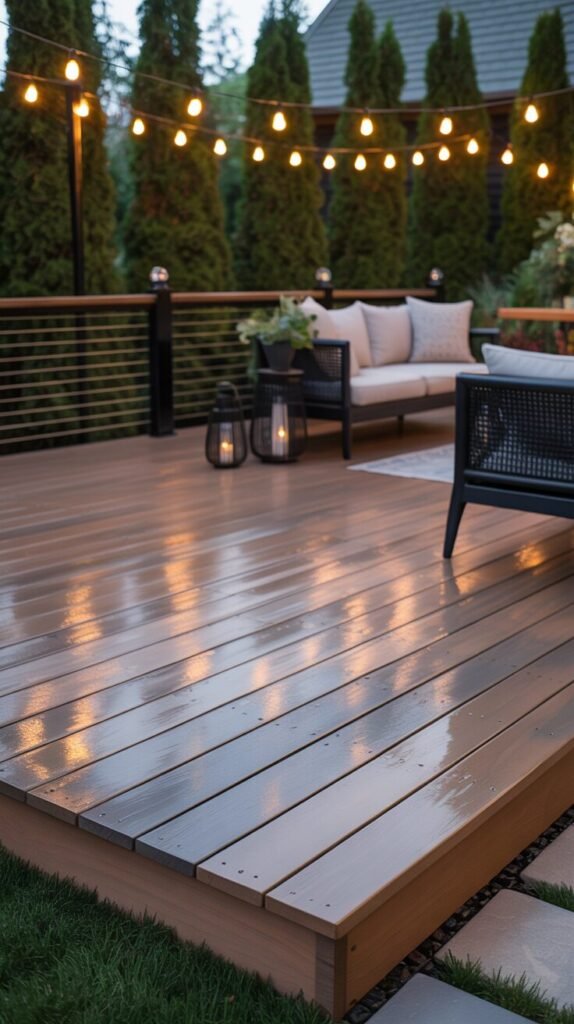
And for those who just can’t seem to leave behind brown’s luscious excess but wouldn’t wager on Armageddon in orange or red, there’s so-called cool brown. Here the brown is grounded firmly in very soft gray undertones, and it has a beautiful but so-slow look. The tone is rich, not rustic—and just so perfect for evening lighting, that soft matte black halo, or border regions that strike a balance between time-worn warmth and jagged lines to perfection. It lets cedar grain be itself, megaphone aside.
What are all three of these stain colors together trying to accomplish? They’re not trying to browbeat cedar’s warmth into submission—but they’re hitting the sweet spot. And when tone and texture are in harmony with each other, the entire deck appears more sophisticated, more considered, and—let’s be honest—more expensive.
Skip the Reds—Go Semi-Transparent Instead
If we stain our cedar, the biggest blunder we have to contend with—over and over and over, ad nauseum, like some depressing refrain—is people being drawn to a reddish-brown warm stain in trying to “let out the natural color.” Sounds like sublime theory, doesn’t it? Reality seems to wipe out the whole tone in pumpkin patch direction.
Cedar, finally reaching its peak, is quite stripy reddish-pink initially. To blend an equal warm finish thereby is to furrow the outcome out coarse grossly orange, sometimes downright coppery earth. Your deck is now coarse instead of gently eloquent. It is like putting up a neon sign in a library.
What it goes along with—is so routinely, seemingly through magic—bluish or mid-transparent stain. It’s the consistent middle-ground item: it preserves the quality grain of the cedar intact without tastefully gelding that inlaid red. Where dense stains will squash cedar to pancake-flat or harden like slapped-on (like a worse-than-despicable spray tan), semi-transparents glide over instead, allowing the grain of the wood to show itself without covering it up entirely, somehow slyly altering its color in far more elegant manner.
The payback is the look that appears to be lifted, fabulous lived-in, and entirely on purpose. Like, you just realized you knew it all along (as, having read this, you most definitely do).
2. Pressure-Treated Pine
Pine Is Thirsty—And Not Always in a Good Way
Pressure-treated pine is the US decking board equivalent of Beyoncé—everywhere and fashionable—but also one of its least divas to stain nice. Why? Pine is horribly thirsty, not in some wishy-washy, “even-sip-of-color” kind of way. No, it just guiggers stain all over unevenly, especially if you’re careless about surface preparation or just slaps it on straight out of the can unconditioned. The nice result? Spotty boards, somewhere-blootty dark blotches, and a freshly back from a dodgy spray tan parlour deck.
The pine timber isn’t so smooth-grained or so tightly as all that sneaky hardwood, and the surface can conceal sneaky resin pockets or water traps—particularly pressure-treated wood. That just just means stain will “dig in” in one location differently than another, which, naturally, just makes any color flaw worse and your level of aptitude at application. It’s just just wood playing tricks on you, saying, “Haha, gotcha!”
To keep this teeny rebellion on a leash, we always, always, always recommend beginning with a wood conditioner and ending with a semi-transparent or gel-type stain where you have so much more wiggle room with the color play. Pine does, in fact, dry out, so get ahead of yourself, and you can willed it to drink well and evenly.
Best Stain Colors for Pine: Think Warm and Grounded
Pressure-treated pine is pretty much the reliable workhorse of the deck world—affordable, easily accessible, and built to last. But here’s the kicker: it’s not exactly a supermodel right out of the gate. Its greenish-yellow tint and uneven grain can make it feel a bit raw and utilitarian unless you’ve got the secret handshake for staining it. And that’s where warm, earthy colors play—inspired, not to hide the pine personality, but to anchor it.
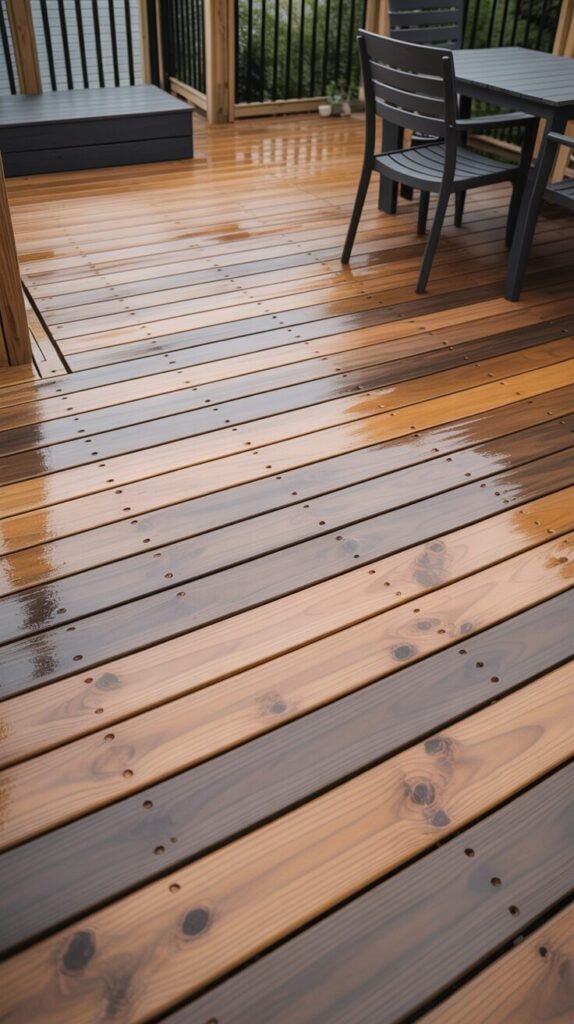
Start with a reliable warm medium brown. Observe how that medium brown stain imparts the warmth of age without being dark or—horror of horrors—red. The wood grain and knots are still visible, but the hues overall are richer, smoother—its color, in other words. It’s a color that sings if your house includes black railings, side paneling of neutral colors, or low-slung curving patio furniture. It’s nice to inform that makes such an uninteresting product so “wonderful” to look at.
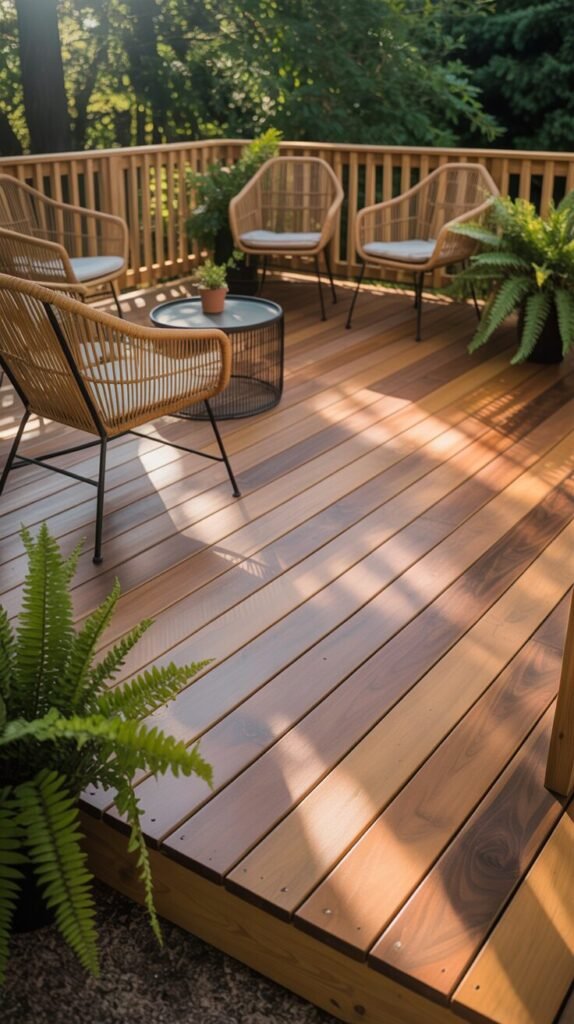
Notice it now with your eye on the chestnut gold deck. That second glance does indeed look that bit brighter, doesn’t it? Chestnut gold did actually highlight pine’s golden undertones, anyway, in sun-bleached and not cringe-brassy meaning.
The color truly springs to life with plenty of leaves or curled up together with woven grain rattan and other woods in warm finish. In the above picture, the high-glossing smooth lines make it appear as new, but that warmth in the middle of it prevents it from being snobbish and, in fact, very pretty.
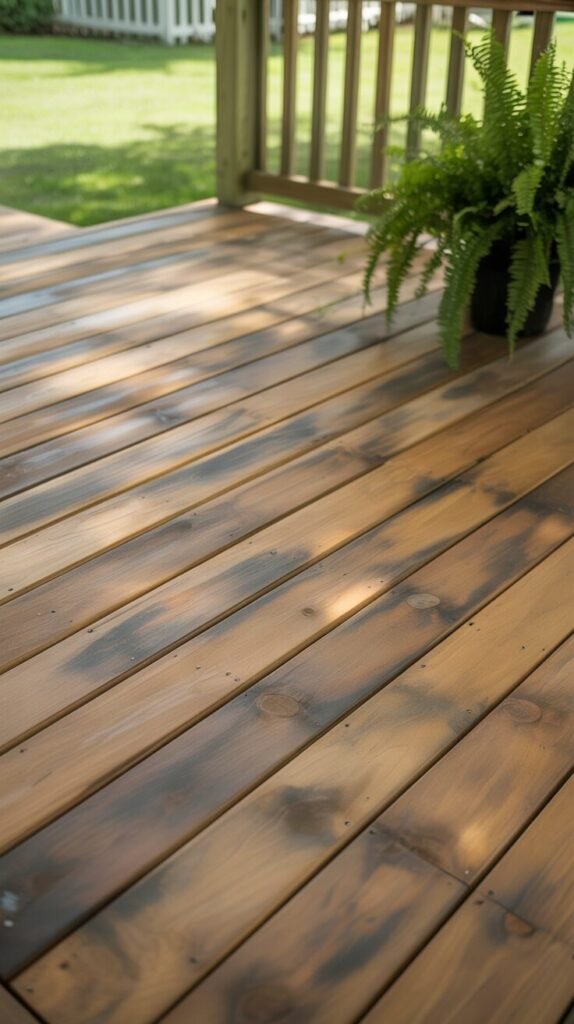
And look at weathered oak, for example. Pine doesn’t necessarily become cool’s coolest winner of cool colors-it pouts-but weathered oak saunters right over the fine line. It gives a smoky easy patina-not technically vintage, not technically muted-but still lets the grain whisper its story. The third-deck photo simply does that: understated matte finish, bluish undertones, and just plain easy classy. The finish is so much tidier with neater lined inside, gray-tinged outside, or for those who wish for a ‘lived-in’ look without emptying their wallet for rustic chic-gone-wild.
What do they share in common? They don’t battle the pine—instead, they finesse it. Each of these stains enables wood to mature sensibly, tempering those annoying green undertones and conditioning in a wise, architectural fashion. Put in correctly, pressure-treated pine isn’t just handsome—it appears as if it was meant to be so. Do your best to visualize that.
Pine Needs Prep—And Not All Colors Play Nice
Pressure-treated pine isn’t quite as bad as it doesn’t ring with that devilish tone of its own that it actually deserves. It’s really the diva of the wood world. Its enormously high rate of absorbency makes it pretty much a standing invitation to blotchy, mottled finishes if you don’t prep. That’s why a wood conditioner—or better still, a gel-based stain—is not on the agenda here, but a firm commandment. These little miracles slow down absorption just long enough for color to move in a smooth grain to grain, as if it whipped those blasted patches of dark and light that appear to afflict pine decks with a curse.
Wait, though: preparation is but half the battle—color choice uses a disproportionately large percentage, too. Some owners, bless them, are simultaneously enamored with gray stains for that so-blingingly hip appearance. But even on pine’s shiny golden undercoat, gray looks tacky after a few backdrafts before you can say “deck disaster.” Rather than sleek and dramatic, you’ll have something soiled, murky, or downright dirty. And all because cool grays and pine’s natural warmth don’t mix, especially when the wood then proceeds to age (or not so well).
If you merely adore muted hues, we implore you: opt for warm grays with taupe or brown undertones, or just venture to earthy middle-tones like golden chestnut, that really do look fine within pine’s natural shade range rather than trying to push it into submission. Your deck (dan your pride) will be grateful.
3. Redwood
Why Redwood’s Grain and Hue Look Stunning Even Bare
Some woods need to be stained just to wake up—like your one friend who needs three cups of coffee before they can get going. Redwood, though, is not one of them in the least. It has its natural color that runs from pale whisper cinnamon to full-bodied, rich brick, with subtle shifts even on the same plank. Pair that with its tight, straight grain and wonderfully smooth texture, and you’ve got a species that feels premium right out of the sawmill. It doesn’t just hold color well—it starts off as a supermodel.
Redwood in the natural world already possesses that designer-upmarket quality about it. That’s why most astute designers just prefer to add to rather than re-design entirely. You don’t have to be showy colour or full coverage—just a stain which graciously accepts what is there.
Semi-clear or clear finishes can be all that is required to deepen the color a bit and bring out the grain a bit without covering it up entirely to allow its own natural glory to shine. With redwood, the issue isn’t covering up imperfections (because, come on, what imperfections?). It’s more about letting a naturally gorgeous material stand on its own for simply being itself.
From Clear to Cinnamon—Colors That Let Redwood Lead
Redwood doesn’t need to cry for attention. In all earnestness, it already softly whispers “luxury” in its reddish-brown natural beauty and breathtaking milled grain. But subjected to the proper stain—laid upon an iron fist within a velvet glove—it can scream its whisper in full-throated outcry.
The challenge with redwood is not to reinvent it, for goodness’ sake, because that would be rude. It is to add to what is already superior. And what that means is embracing stain colors that enhance, not diminish.
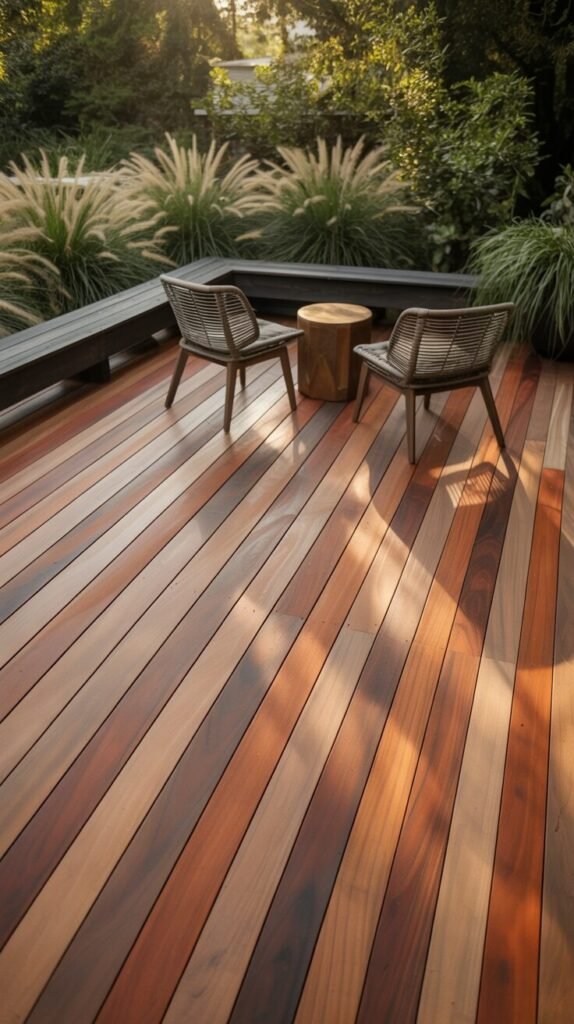
In the picture above, clear oil has finished the boards, and it is pure magic: the color drift, from rust to warm rosewood, is leather-esque artisanal, hand-rubbed. Clear oil does not cover the grain; it makes it visible, like good work of art. If your space is filled with greens or you are working with built-in black benches or stately stone inserts, this appearance is quite grounding and totally timeless.
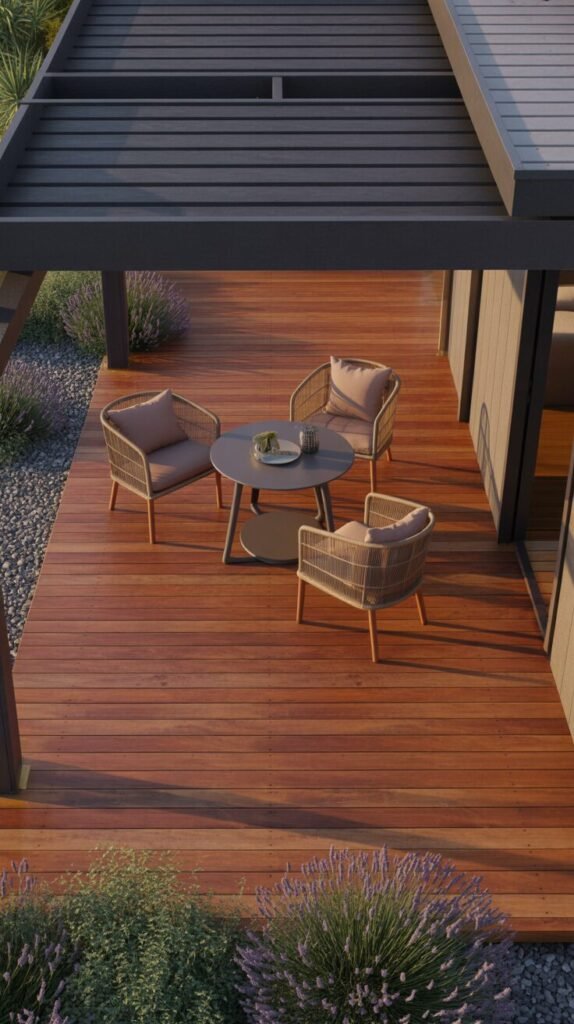
Now view the second photo, in which the deck is painted a pale mahogany. It darkens the redwood a bit—less rich than true mahogany but something to add a sense of formality. It’s a color that looks just beautiful with formal landscaping, peaceful lavender borders, or modern neutral siding. The warmth-precision mix here just shouts high-end, not tacky.
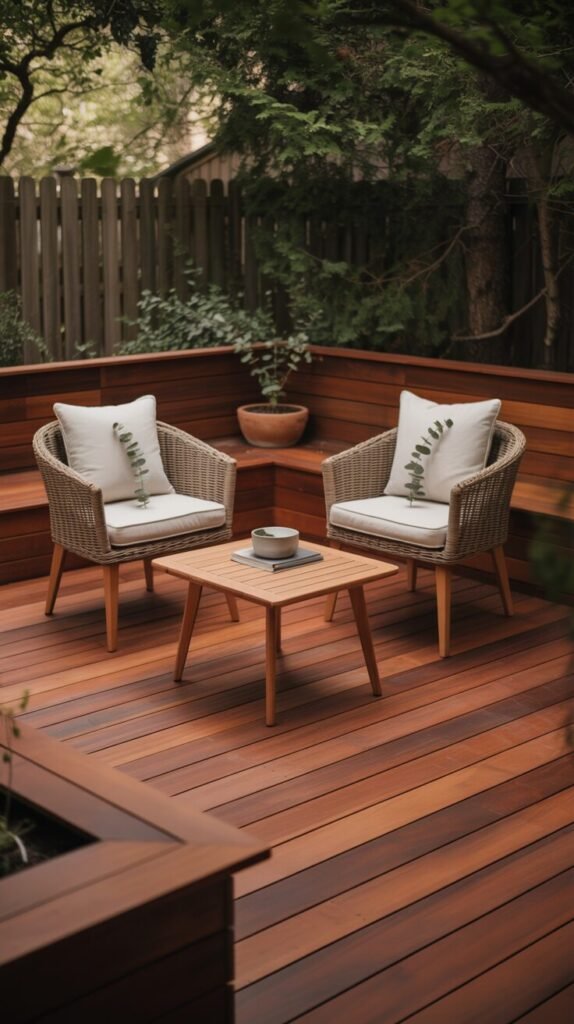
Lastly, but not least, is the third photo and its cinnamon-brown warmth—a finish that somewhat opposes redwood’s natural undertone with something richer and deeper. It’s well-toasted, as a well-proportioned spice in an unconsummated color scheme. With crossed greenery and native wood furniture, the look is rich but not too rich. It’s the sort of tone that will gladly take both dappled light and golden-hour evasiveness in its stride.
The commonality among all of these stain products is restraint. They do not cover redwood but allow it to breathe, much like a really good wine will. If you start with such beautiful material even in its raw state, you simply need to apply the correct finish to bring out the understated elegance. And isn’t that the best?
Protect the Color, Respect the Character
Redwood doesn’t age, it bleaches, like our hopes and dreams after a long week. And although an open oil finish allows all that stunning grain and color to come through, it does leave redwood open to a bit of that ugly UV light. That rich russet glow? Uncoated, it’s prone to “silver out” overnight. That’s why upkeep actually matters—especially if you’ve chosen a clear or lightly tinted stain that doesn’t have much pigment to shield it from relentless sun exposure.
But don’t grab a solid stain, thinking, “Aha! Less to do!”—wait. Seriously, wait. Solid stains won’t behave like an actual preservation. They cover the surface of the wood as a whole, evening it out in texture and effectively muffling the very subtleties that make redwood so unmistakably decadent—its tight grain, nuance color transitions, and organic depth. It’s like covering a masterpiece with a blanket.
On the deck in the photo above, the finish serves to unveil instead of hide. You can see almost every nuance of color, every soothing arc of grain. That transparency is exactly why redwood seems like a material best left in the open, not concealed. So go ahead, then, transparent or semi-transparent. And recoat at will—not because redwood demands you do more, but because it quite frankly has to remain out in the open.
4. Ipe and Tropical Hardwoods
Surface-Rich, But Stain-Resistant
Ipe and tropical hardwoods overall are in a class by themselves—they’re the divas of hardwood. We’re talking tight-grained, naturally oily, and phenomenally luxurious even before any finish has the temerity to set hand on their surface. But the exceedingly high density that allows them such longevity and practically waterproofing also renders them notoriously hard to stain.
Most pigmented stains flat aren’t able to penetrate past the surface. Rather than soaking in like an amazing spa treatment, they simply sit there uncomfortably on top—resulting in streaked coverage, an ongoing sticky sensation, or worse still, premature peeling. It’s essentially wood attempting to say “no” to you. That’s why traditional stains don’t usually fare very well on woods such as ipe.
The wood will not accept; it resists, rather like a recalcitrant toddler. And if you attempt to put color where it simply doesn’t belong, you’re left with hiding the beauty that you’ve paid an extra premium for. The best course of action? Easy, sweetheart. Penetrating oils or clear UV-protectant topcoats that simply enhance the wood’s own natural color without attempting to completely overhaul its personality. With ipe, the surface already has a compelling story—you’re just sealing it in, not attempting to rewrite the entire narrative.
Keep It Subtle: Oils and Tones That Enhance, Not Hide
Dense tropical hardwoods like Ipe and Cumaru don’t need help being beautiful. Seriously, they’re like supermodels who woke up like this. They already come equipped with striking grain patterns and a natural color richness that just screams inherent luxury.
But left alone, they will weather unevenly or tend to incline towards turning a very unappealing silvery shade. So, with oil or stain, the idea is not to alter their lovely character, but to softly improve and protect it. It is polishing a diamond very, very gently.
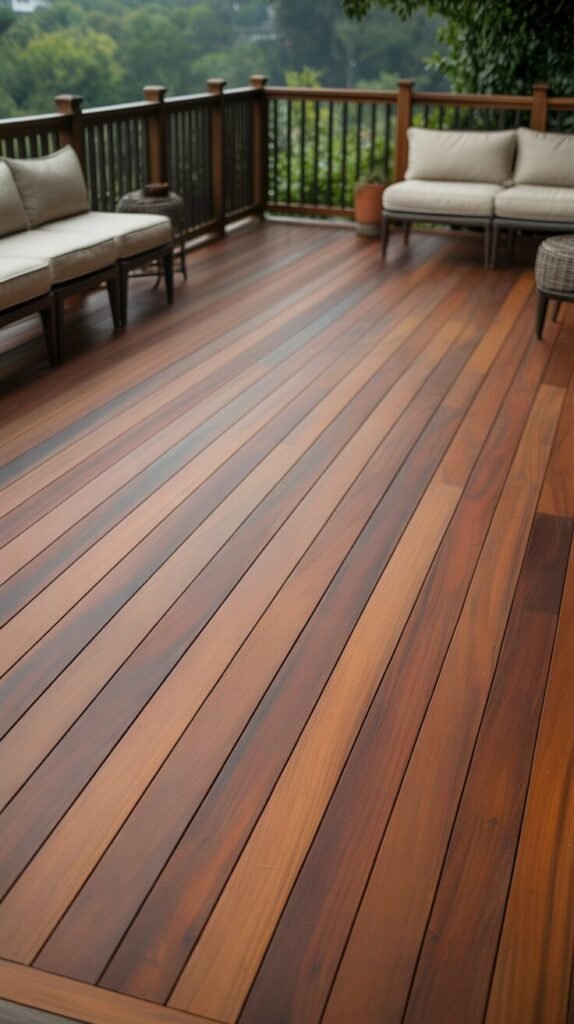
Consider the first deck, for example. Here, a transparent penetrating oil has been used so that the native red-brown and chocolate undertones of the hardwood can shine with unapologetic abandon. The payoff? Warm, sun-kissed surface that’s polished but not suspiciously plastic.
This kind of finish is just perfect for owners who love the natural colors of Ipe and wouldn’t want that glow to be just a summer romance. Because, let’s face it, who wants to re-do everything all over again in the springtime?
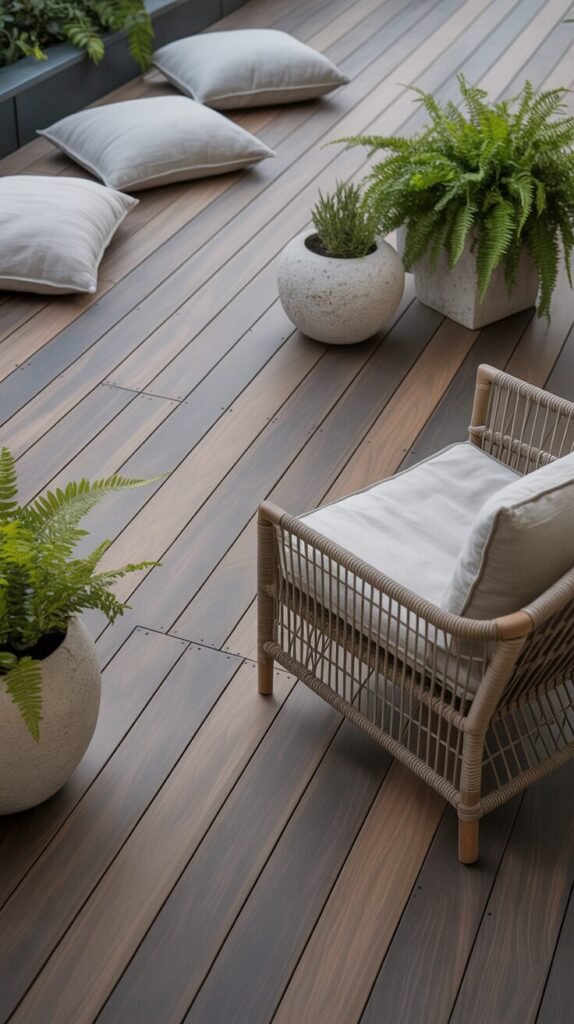
Consider next the driftwood-gray patina of the second level. This is not a color that covers up the wood but rather one that serene-izes it. The color becomes light, weathered grays with hardly any hint of taupe, allowing the warmth to be softened but not crudely camouflaging the grain in the process.
The overall color scheme is one that is coastally chic yet understated to suit today’s outdoor areas filled with sumptuous foliage, pure white planters, and sun-kissed woven texture. It’s a subtle way of allowing hardwood to mellow but still appear downright upscale.

And for an even richer gold look, there’s also the teak-stained oil finish. Here, the wood is denser, oval, and the copper and honey colors retain grain variation. You sense the depth—in not so much color, if you know what I mean, but in movement. Each board has a story to tell, but they’re all tied together with a common softness and sheen. This feels especially divine paired with dense tropical plant material and warm ambient light.
With timbers such as these, restraint is strength. The finest oils are not there to alter the wood. They are there to whisper, in a very soft voice, “Hear this.”
When Aging Is the Upgrade, Not a Flaw
Tropical timbers like Ipe weren’t supposed to be domesticated—and shouldn’t be. While everybody else is racing around staining this wood a deep, dark brown and locking its just-milled glow away for safekeeping, here’s the truth: Ipe likely looks best weathered elegantly to a silvery pale patina. Fine wine, in brief, with the one sole exception being your patio.
That natural “silvering” over time when these beautiful ones are let to be worn by nature with a clean oil as basecoat, or worst horror show case of all, none at all! And not a flaw, but something which makes these woods Timeless, architectural, and earthy. It’s wood’s sense of style in revealing its experience.
And finally, the most widespread do-it-yourself-nowhere-near-right method: attempting to outwit age with thick, gummy finish or solid stain. These woods are too tight to take heavy pigment deeply, and any film-former will simply thrash along on the surface until you can pound out the lunch bucket and cruise down the highway. It’s a fight you just can’t win.
Instead, let the weathering happen. Let the grain gray out and the colors mature with age. Pair it with introspective matte-black metal or bulked-up tropical planting, and the outcome is a deck that looks like it was meant to—naturally, not to some contemporary whim, but to the landscape. Less is more here in this sun-drenched sketch—especially when the wood’s already doing all your heavy lifting for you.
READ MORE >> “Budget-Friendly Deck Skirting That Looks Luxe“
Pick the Stain That Complements, Not Competes
Choosing a gorgeous deck stain is not so much a matter of choosing a gorgeous color—rather a matter of getting to know a beautiful chemistry with the wood itself. Each type has a personality: cedar’s snug embrace, pine’s clumsy nature, redwood’s warm gold, or Ipe’s rugged face. The perfect stain never overpowers such characteristics; instead, it works to uncover them, as a sumptuously chosen mat uncovers the painting. It lets the grain breathe, the undertones share their secrets, and the texture stay fabulously tactile.
No matter if you leave it plain to fight the heat, or go cold to reveal the detail, always make stain supporting actor—never leading man. Because when your finish supports without imitation, your whole deck is held more politely, more authoritatively, and ultimately, more decadently. And that, people, is what makes a surface from just treated… to just styled.