
Before You Decorate Primitive Style, Read This First
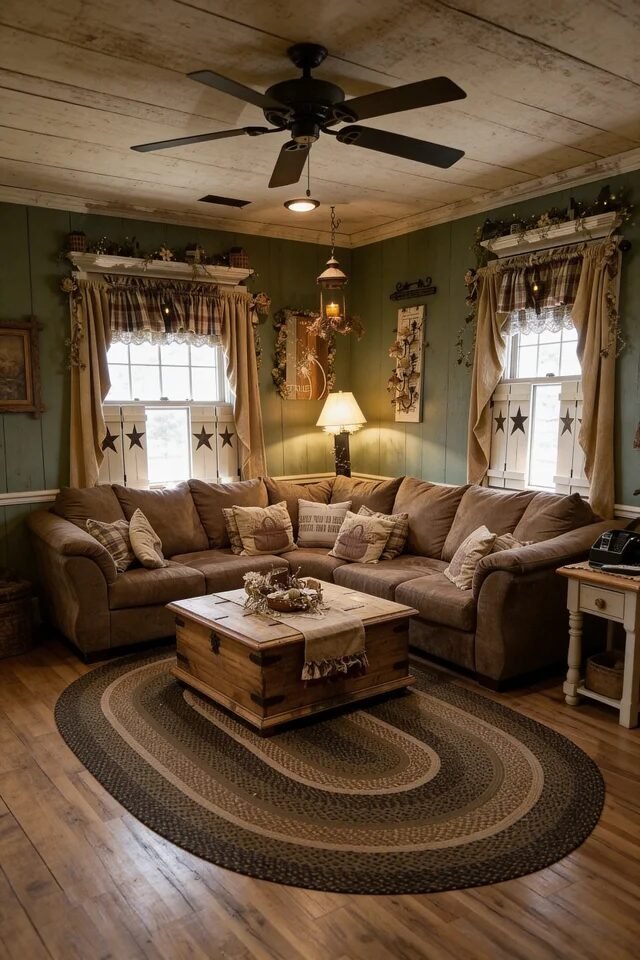
Primitive living rooms are not about perfection, and honestly, that’s why we love them. They celebrate worn wood, time-softened fabrics, and pieces that feel like they’ve lived a life before us. This style is rooted in early American simplicity, but it still works beautifully in modern homes when we apply strong design principles. Primitive design thrives on warmth, balance, and authenticity.
As we build a primitive space, we focus on earthy color palettes, natural materials, and intentional layering. Think deep reds, warm browns, muted greens, and creamy neutrals working together in harmony. Texture is everything. We mix wood, metal, linen, wool, and stone to create visual depth without relying on bold trends. Repetition of color and material keeps the room cohesive instead of chaotic.
Most importantly, primitive living rooms tell a story. We’re not just decorating; we’re curating. Every piece should feel collected, grounded, and meaningful. Cozy isn’t accidental here. It’s designed with purpose.
Cozy Americana Primitive Living Room Charm
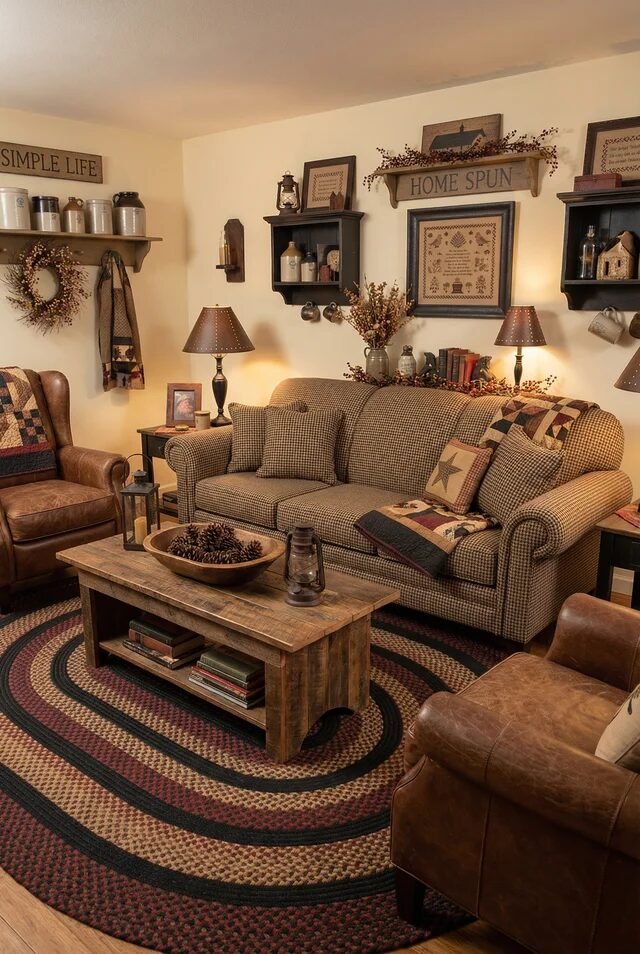
This look is basically a warm hug from 1820, but make it stylish. We’re layering earthy browns, muted reds, and deep greens to create a grounded, cohesive color story. Notice how the plaid sofa, braided rug, and leather chairs all sit within the same warm palette? That’s color harmony doing the heavy lifting. When we recreate this, we want to limit ourselves to three core tones and repeat them across textiles and decor for visual rhythm.
The braided oval rug anchors the seating area and defines the zone, which is crucial in primitive design. Zoning makes the room feel intentional, not cluttered. Keep furniture slightly close together to encourage conversation and intimacy. Primitive style thrives on symmetry too, so matching lamps and balanced wall shelves help stabilize the rustic textures.
Mix rough woods, metal lanterns, and quilted fabrics for layered texture. If it feels too perfect, add something slightly imperfect. Primitive design loves authenticity over polish.
White Brick Hearth With Primitive Warmth
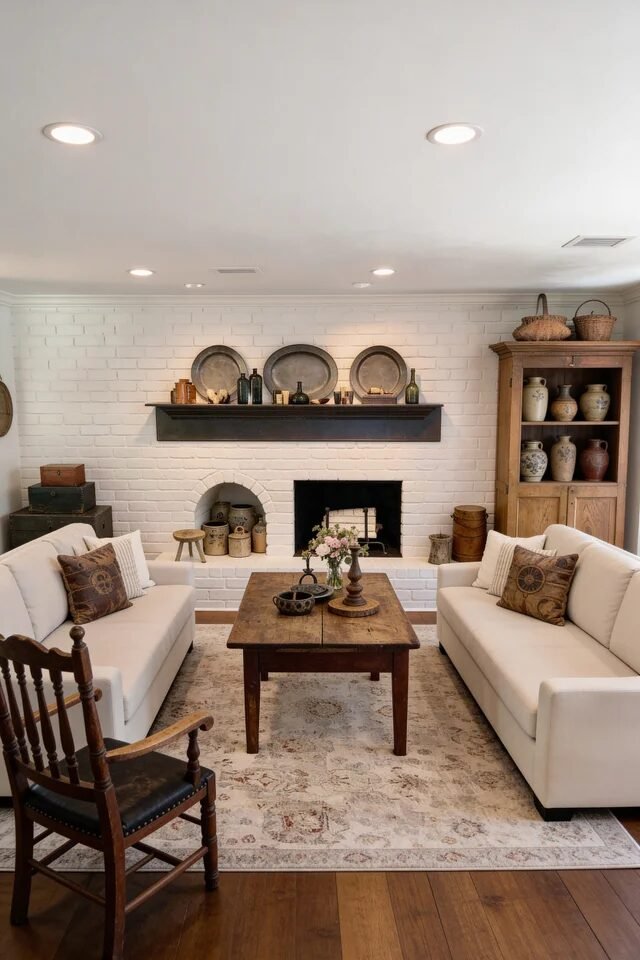
This setup proves primitive doesn’t have to mean dark and heavy. The white brick fireplace acts as a visual reset, letting wood tones and antique pottery shine. Contrast is the secret weapon here. We’re pairing creamy sofas with a rustic coffee table to balance softness and rugged texture. That’s how we keep the space from feeling overly farmhouse or overly formal.
Symmetry again plays a major role. Two matching sofas facing each other create a clean conversational layout, and the centered mantel shelf grounds the wall. When furniture mirrors across a focal point, the room instantly feels calm and structured. The neutral rug underneath softens the wood flooring and prevents visual noise.
Decor on the mantel should follow the rule of odd groupings, mixing varying heights for dimension. Stick to muted ceramics, aged metals, and wood tones to stay authentic. We want curated, not chaotic. Keep negative space around the fireplace so it breathes. Primitive thrives on restraint, not overcrowding.
Rustic Entry Corner With Vintage Accents
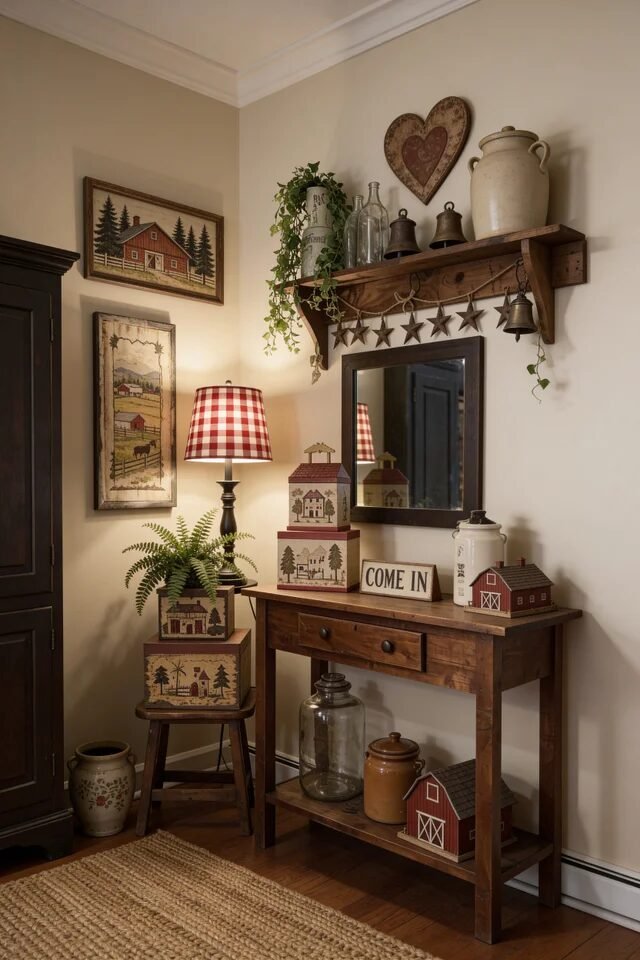
Okay but can we talk about how cute and functional this little corner is? Primitive style loves practical furniture, and a wooden console table with open shelving is both decorative and useful. Function first, beauty second, but we still make it pretty. That’s the mindset.
We’re layering vertically here. Notice the shelf above the mirror, then the mirror, then the table styling. Vertical layering draws the eye upward and makes small spaces feel intentional. The star garland and hanging greenery soften the wood, preventing it from looking too heavy. Always mix hard and soft materials for balance.
The color palette stays warm and neutral with subtle red accents. That consistency keeps everything cohesive. When recreating this look, keep decor grouped in threes and vary heights for depth. Leave some negative space so each piece can shine. Primitive corners work best when they feel collected over time, not purchased in one afternoon.
Exposed Beams And Organic Textures
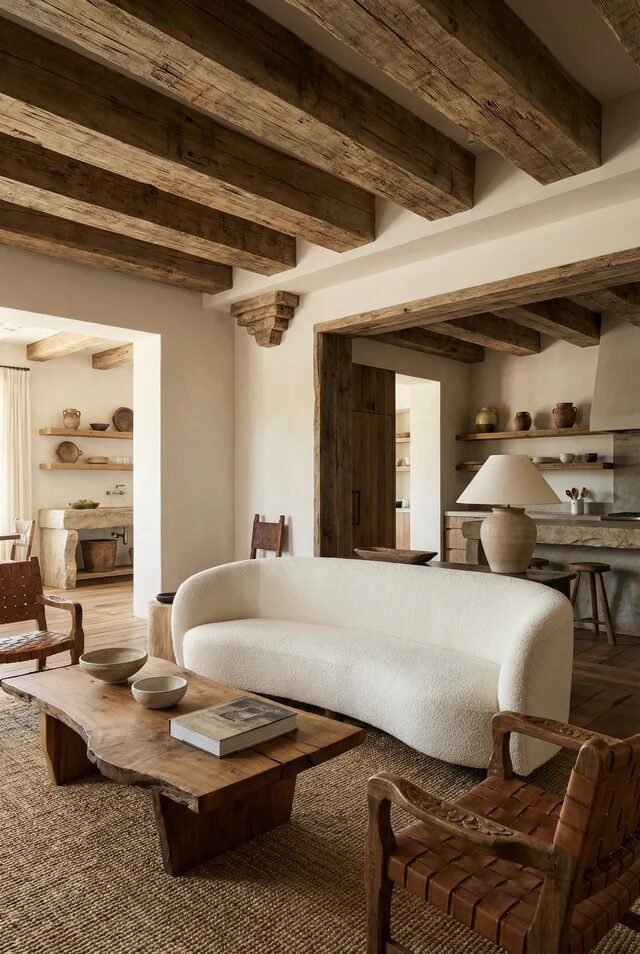
If primitive and modern had a soft aesthetic baby, this would be it. Exposed wood beams instantly create architectural drama, and they define the ceiling plane beautifully. Strong horizontal lines like beams visually widen a room and ground the design. We love that.
The curved neutral sofa contrasts against the rigid beams, creating tension in the best way. That’s a classic design move: pair structured elements with something soft. The low wood coffee table keeps sightlines open, which is essential in beam-heavy spaces. When ceilings are bold, keep furniture visually lighter.
Texture is everything here. Woven rugs, raw wood, linen upholstery, and pottery add depth without relying on bright color. Stick to a limited earthy palette to maintain cohesion. Avoid over-accessorizing. Let materials speak. Primitive minimalism works when every piece feels intentional and grounded. Add ambient lighting to highlight beams at night and amplify that cozy glow.
Gingham Chairs And Colonial Storage Wall
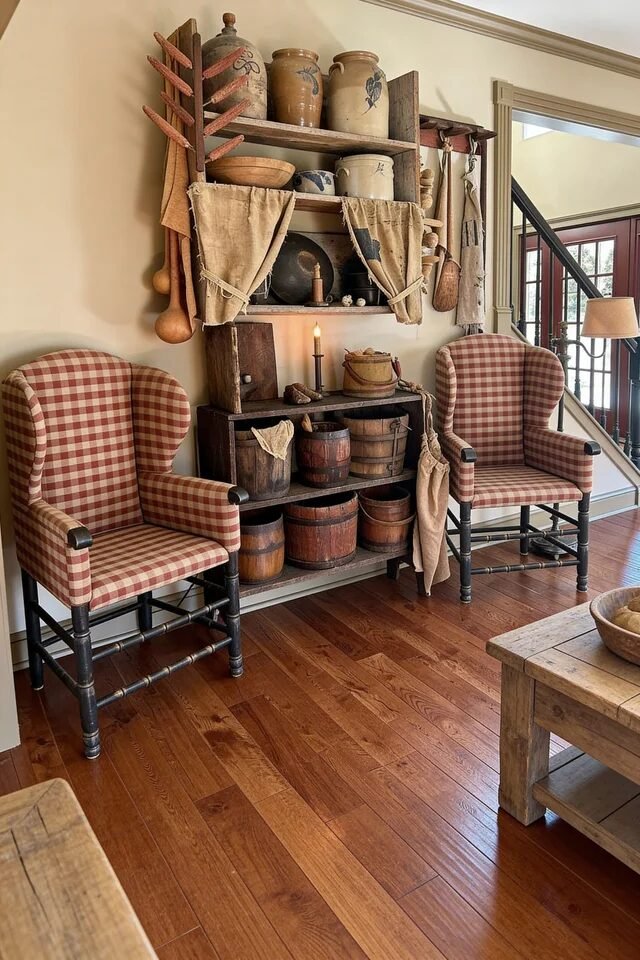
This is primitive storytelling at its finest. The gingham wingback chairs introduce pattern, but because they stay within a muted red tone, they don’t overwhelm. When using pattern, keep the color palette controlled. That’s how we avoid visual chaos.
The shelving unit acts as both storage and display, which is very on-brand for primitive design. Wooden buckets, crocks, and vintage tools create texture variety while staying cohesive in tone. We’re layering vertically again, stacking items by size and weight to keep the bottom visually heavier and the top lighter. Visual weight distribution keeps rustic styling from feeling top-heavy.
The warm hardwood floors reinforce the earthy foundation. When recreating this, keep seating symmetrical to maintain balance. Don’t overcrowd the shelves; give each object breathing room. Primitive style should feel lived-in, not staged. Let imperfection and patina be part of the charm.
Gingham Sofa With Colonial Layers
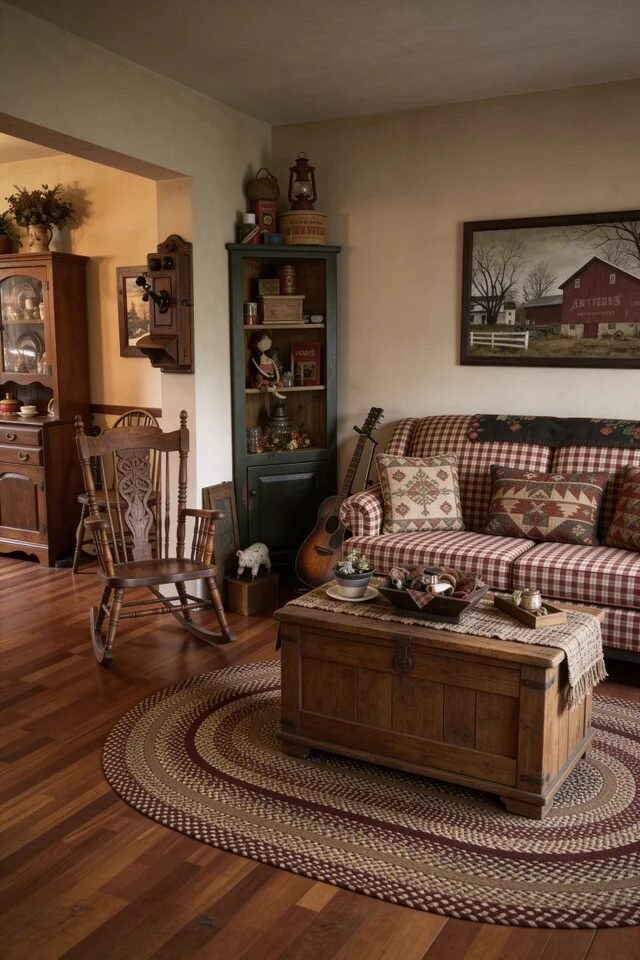
This space is giving cozy colonial core and we’re obsessed. The gingham sofa instantly sets the primitive tone because pattern equals personality. When we use a strong pattern, we keep the surrounding palette muted to avoid visual chaos. Notice how the walls, wood floors, and trunk coffee table stay warm and neutral? That balance keeps the sofa from overwhelming the room.
The oval braided rug defines the seating zone and softens all that wood. Zoning is critical in primitive layouts because open spaces can feel empty fast. A rug should extend at least under the front legs of major seating to anchor the arrangement. The green corner cabinet adds height variation and vertical interest, which prevents the layout from feeling flat.
Decor is curated, not crowded. A guitar, rocking chair, and antique wall phone create storytelling moments. Primitive design thrives on nostalgia. We want pieces that look inherited, not impulse-bought. Keep wood tones cohesive and repeat red accents three times minimum for rhythm.
Warm Panel Walls And Leather Comfort
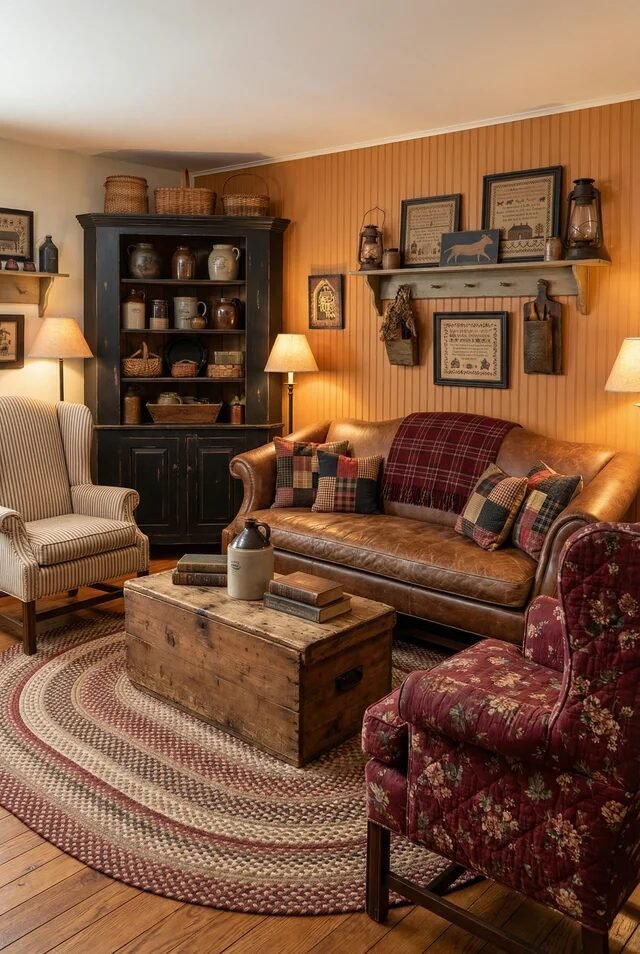
Okay, this one feels like autumn moved in permanently. The vertical paneling creates subtle texture without busy wallpaper. Vertical lines visually lift the ceiling and add architectural depth. If we want primitive but polished, this is the move.
The leather sofa introduces richness and patina, which is key in primitive interiors. Real or faux, the finish should feel slightly worn. That lived-in look adds authenticity. The braided rug again anchors the seating, while plaid pillows repeat the warm red tones for cohesion. Repetition of color across textiles creates harmony and visual flow.
We’re balancing heavy furniture with lighter accents like table lamps and open shelving. Notice how the black cabinet grounds the wall? That’s visual weight distribution working properly. Keep heavier pieces low and wider to stabilize the room.
When styling shelves, mix pottery, baskets, and framed art in odd groupings. Primitive design works best when layered slowly over time, not styled all at once.
Stone Fireplace With Farmhouse Soul
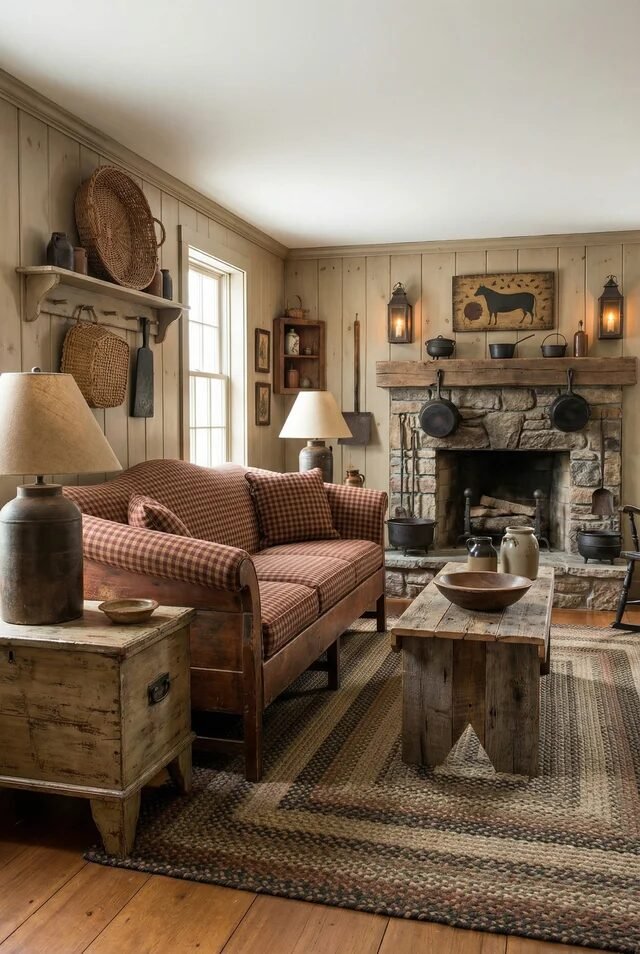
This room is pure hearth-core energy. The stone fireplace acts as the undeniable focal point, and everything else orbits around it. Every primitive living room needs a clear anchor, and a fireplace is design gold. If we don’t have one, we can fake the effect with a large hutch or statement art.
The plaid sofa echoes the earthy tones of the stone, creating palette cohesion. Wood side tables and a rustic coffee table reinforce material consistency. Limiting ourselves to wood, metal, and natural fibers keeps the aesthetic grounded and authentic.
Notice the woven rug layering warmth over hardwood floors. Texture stacking is huge here. Basket decor and hanging cookware add utilitarian charm while filling vertical wall space. We love decor that feels functional.
Lighting is soft and warm, never harsh white. Primitive design thrives under amber bulbs and cozy lamps. Harsh lighting instantly ruins the mood, so always prioritize warm ambiance. Keep layouts symmetrical for calm balance.
Star Accents And Patchwork Personality
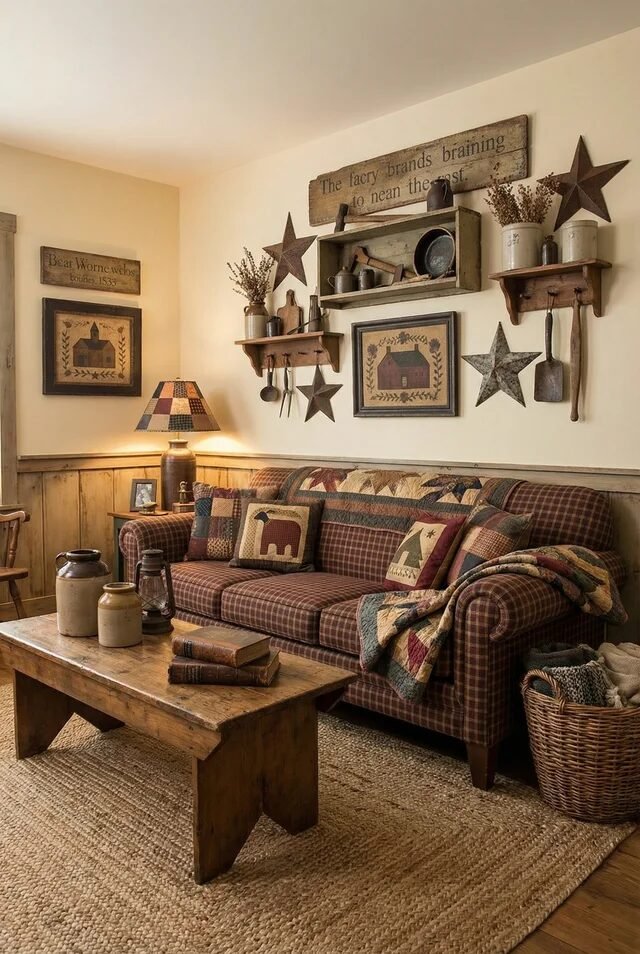
If primitive style had a mascot, it might be the metal star. These wall stars add repetition and rhythm across the upper wall. Repeating shapes creates visual continuity and makes a gallery wall feel intentional. The wood shelves break up blank space while offering layered styling opportunities.
The plaid sofa paired with patchwork pillows introduces pattern mixing. The trick? Keep patterns in the same color family. Reds, browns, and muted greens work together without competing. When mixing patterns, vary scale but unify color. That’s the formula.
Wainscoting on the lower wall visually grounds the space and adds architectural interest. It also protects walls in high-traffic areas, which is practical and very on-theme for primitive design.
The jute rug softens all the wood and metal elements. We love how natural fibers balance heavier furniture. Primitive rooms feel best when rustic materials meet cozy textiles. Always layer throws casually for that lived-in vibe.
Exposed Beams And Heritage Textiles
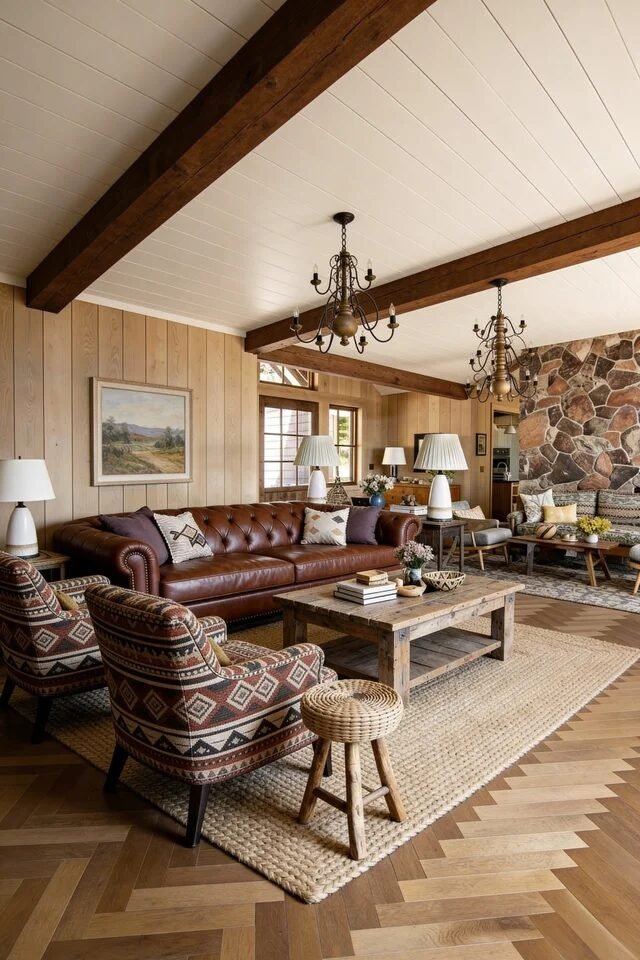
This one is primitive elegance with a little glow-up. Exposed ceiling beams instantly define structure and add rustic authority. Strong ceiling details draw the eye upward and make the room feel architecturally rich. We’re pairing that structure with a classic leather Chesterfield sofa for timeless weight.
The patterned accent chairs introduce heritage-inspired textiles without overwhelming the room. Keep patterns symmetrical across seating for balance. The large area rug anchors the furniture cluster and softens the herringbone flooring. A properly sized rug should frame all primary seating to unify the layout.
Layering is everything here. Wood coffee tables, woven stools, and ceramic lamps add texture variation. Notice how metals appear subtly in the chandelier? Small metallic accents prevent the palette from feeling flat.
We keep the color story warm and neutral with subtle burgundy accents. Primitive sophistication comes from restraint, not excess. Let architectural features shine and decorate with intention.
Simple Materials, Timeless Comfort, Lasting Character
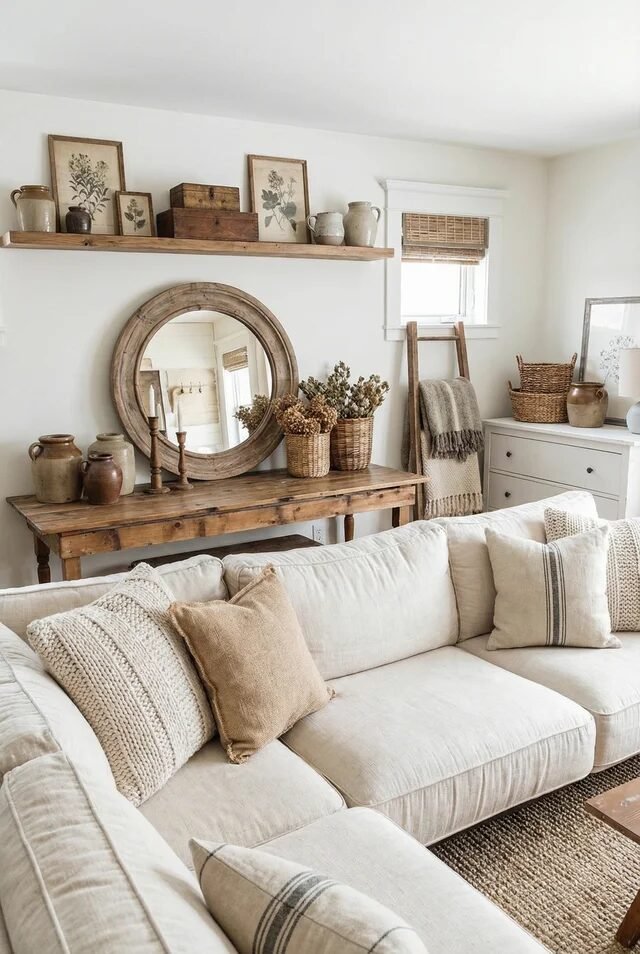
At its core, a primitive living room is about restraint and intention. We don’t overcrowd shelves or chase flashy decor. Instead, we let craftsmanship and texture take center stage. Primitive style proves that simplicity can still feel rich and layered.
When recreating this look, focus on strong focal points like fireplaces, hutches, or architectural beams. Arrange seating to encourage conversation, and always anchor layouts with properly sized rugs. Lighting should stay warm and soft because harsh brightness instantly breaks the mood. Ambient glow is essential for that signature primitive coziness.
Keep patterns within a controlled color family, and balance heavy wooden furniture with softer textiles to avoid visual heaviness. Most importantly, allow imperfection. Slight wear, visible grain, and handmade details are not flaws; they are the charm.
Primitive living rooms are not about trends. They’re about creating spaces that feel grounded, welcoming, and deeply personal. And honestly, that kind of comfort never goes out of style.