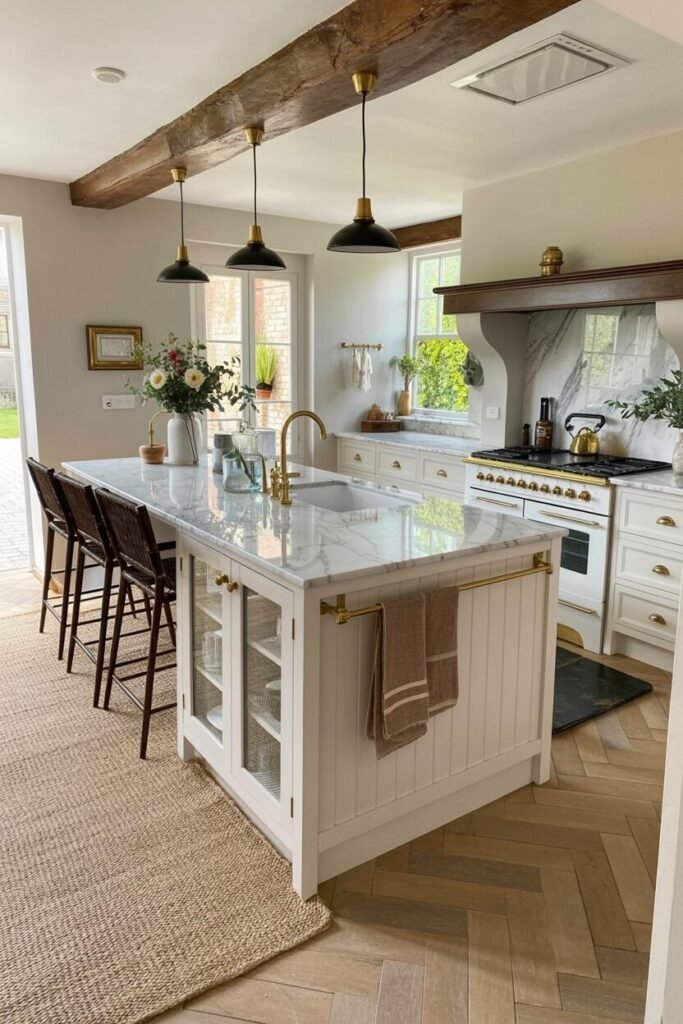

Ways to Make Your Kitchen Smell and Shine Like Tuscany
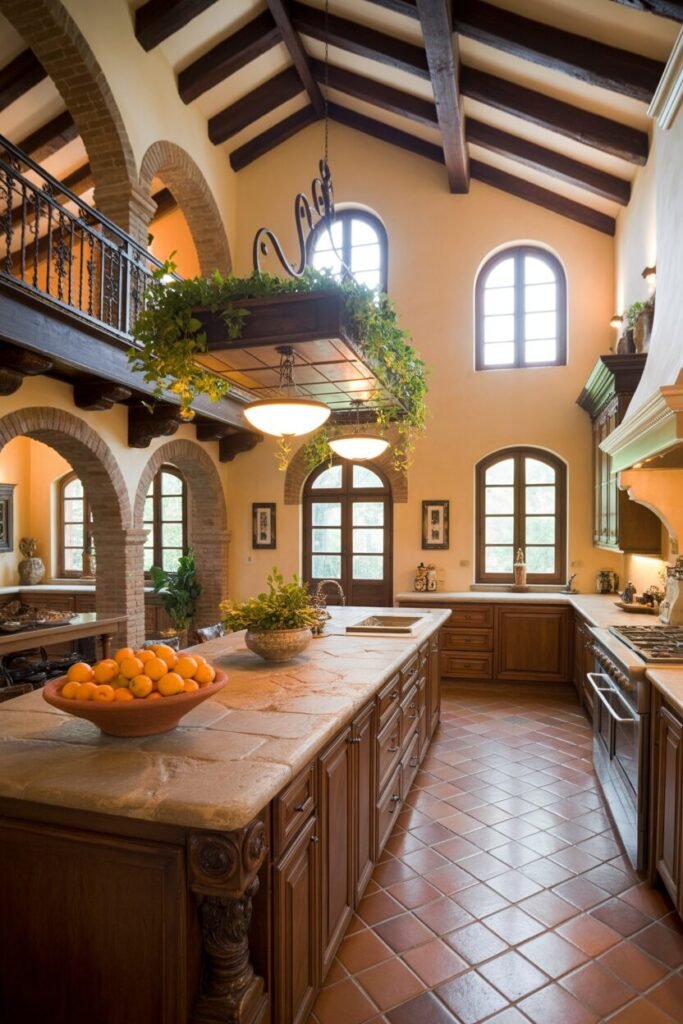
If your kitchen could speak Italian, it would say “Benvenuti!” — because Tuscan design is basically the art of turning ordinary cooking spaces into warm, soul-hugging sanctuaries. Think sunlit tones, rustic wood, aged metals, and the aroma of good olive oil in the air. It’s not just a look — it’s a lifestyle vibe.
What we love most about Tuscan kitchens is how they celebrate imperfection. Nothing’s too polished or too “showroom.” It’s all about character — weathered textures, lived-in warmth, and timeless craftsmanship. Whether you’re adding a stone arch, wrought-iron lighting, or a rustic wine rack, every detail tells a story of easy elegance and slow living.
So grab your espresso (or your wine glass, no judgment), and let’s wander through ideas that will make your kitchen feel like it’s sitting on a hillside in Florence — no passport required.
Elegant Contrast with Tuscan Bar Stools
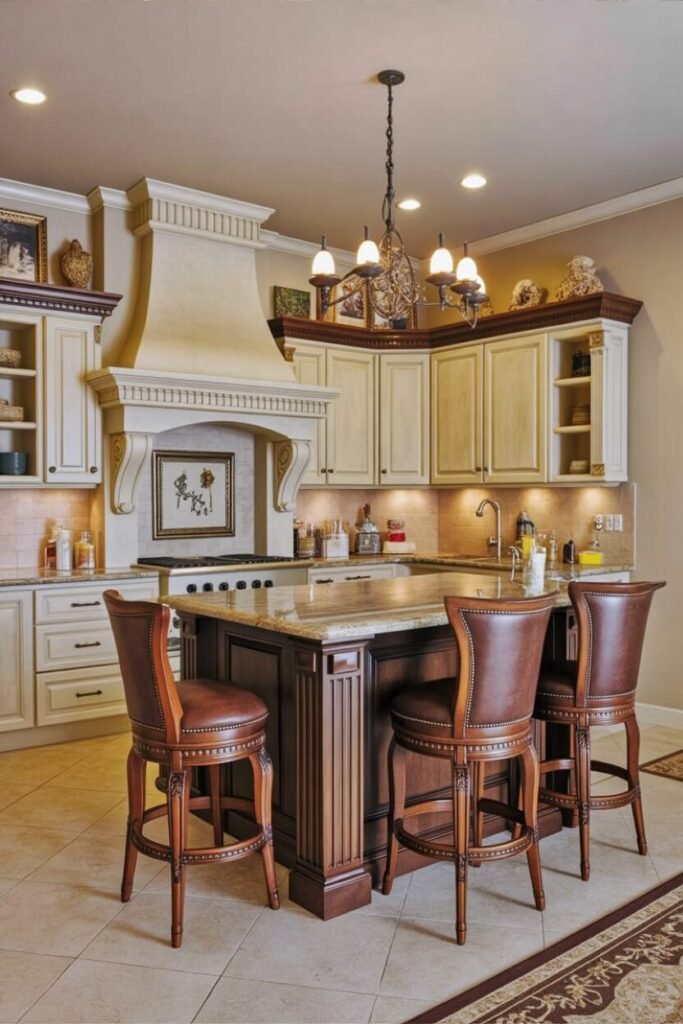
This kitchen is pure balance — old-world soul meets refined comfort. The creamy cabinetry and ornate range hood already set the tone, but those Tuscan-style bar stools are what pull the space together. They bring warmth, grounding the lighter tones with rich wood and buttery leather. It’s like design feng shui, Italian edition.
What makes this combo work is visual weight distribution. The darker island anchors the space, while the lighter walls and cabinets keep it airy. The bar stools (you can find similar ones here on Amazon) introduce curvature and texture, softening the clean lines. Pro tip: when mixing light and dark tones, repeat your darker accent at least twice — think bar stools + rug border or lighting trim — for harmony.
Style tip: choose stools with nailhead trim or carved legs for that authentic Tuscan flavor. It’s a subtle way to say, “Yes, my kitchen has a passport
Shop The Tuscan Bar Stools (Set of 4) Now 👇

Rustic Charm with Stone and Warm Wood
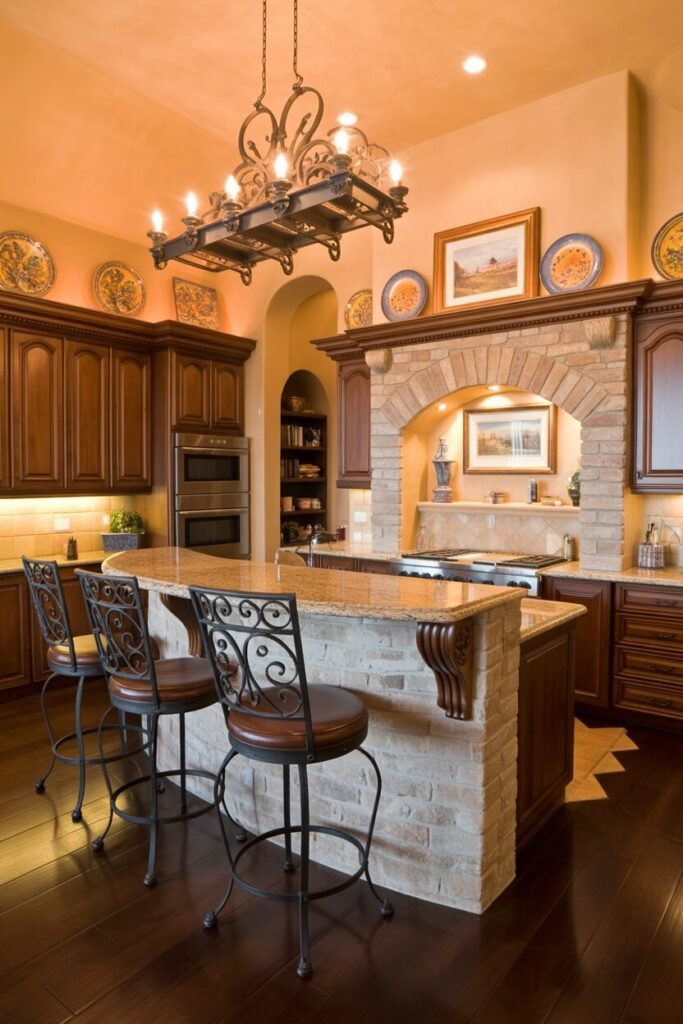
If your goal is to make your kitchen feel like a cozy Tuscan villa where the smell of garlic and olive oil lingers in the air, this is the vibe. The key here is mixing texture and tone — rich wooden cabinetry against rough-cut stone walls creates that earthy, layered look that feels timeless. It’s basically texture therapy for your kitchen.
To nail this, stick to a warm, sun-kissed palette — think ochre, golden beige, and terracotta. These tones mimic the Italian countryside light, instantly adding warmth. Use matte finishes instead of glossy ones — they diffuse light softly, giving that “lived-in luxury” feel. Add wrought iron details, like your pendant lights or bar stools, to introduce contrast and depth.
Pro tip: keep accessories organic — clay pots, herbs in terracotta planters, and woven baskets. The magic of Tuscan design lies in imperfection. It’s less about sleek symmetry and more about charm that whispers, “I’ve been here for generations — and I make amazing pasta.”
Grand Tuscan Light and Airy Drama
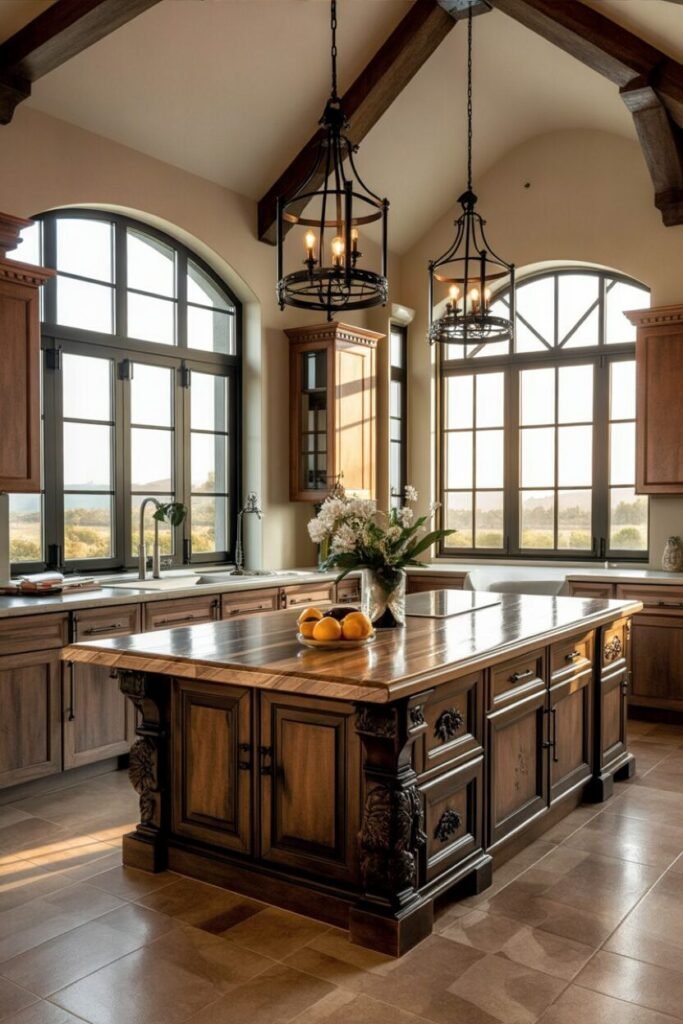
High ceilings, arched windows, and those chandeliers — it’s giving “Italian countryside but make it cinematic.” The iron chandeliers (similar ones here on Amazon) are the real MVPs. They add vertical balance and drama without stealing warmth from the rest of the room. Lighting in Tuscan design is all about layered ambiance — warm, not bright; glowing, not glaring.
To recreate this scene, focus on scale and symmetry. Large fixtures pair beautifully with tall ceilings, but they need matching visual anchors — like a substantial kitchen island or wood beams overhead. Go for wrought iron or aged bronze to keep that rustic integrity alive.
Pro tip: use warm white bulbs (around 2700K) — cooler light will completely flatten the Tuscan glow. Finish the look with natural materials (wood counters, stone floors) and a vase of citrus or flowers for softness. It’s elegant, welcoming, and totally dinner-party ready.
Tuscan Chandelier You May Like 👇

Brick Arches That Make Pasta Taste Better
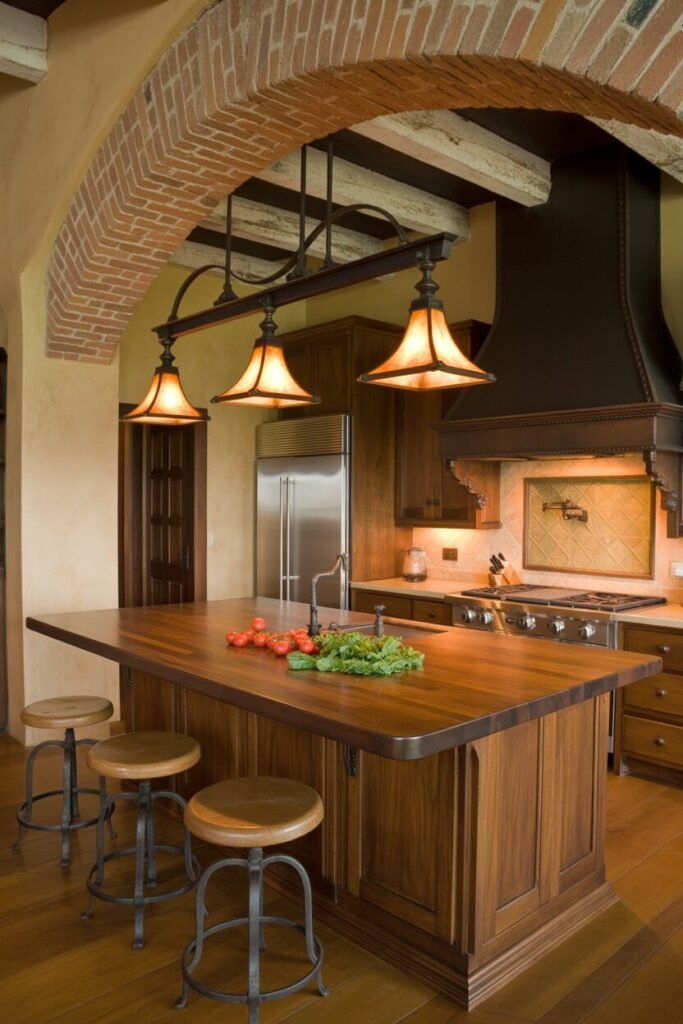
We can’t prove it scientifically, but something about cooking under a brick arch just makes the pasta taste chef’s kiss. This design works because arches are visually grounding — they create natural focal points that make your kitchen feel balanced and intimate, even in large spaces.
To recreate this Tuscan hallmark, opt for handcrafted or reclaimed bricks in warm, irregular tones — the slight imperfections tell a story. Keep your lighting golden and gentle; pendant lamps with bronze or amber shades enhance that glow perfectly. Balance all that rustic energy with smoother materials — maybe polished countertops or sleek bar stools.
Design principle alert: it’s all about contrast with cohesion. You want the charm of old-world materials without overwhelming the eye. Throw in copper cookware, a hanging rack for herbs, and a woven rug underfoot. Suddenly, your kitchen feels like Nonna’s Tuscan retreat — except with Wi-Fi and DoorDash.
READ MORE >> “9+ Farmhouse Laundry Room Ideas That Spark Joy“
Rustic Wine Barrel Vibes for Everyday Use
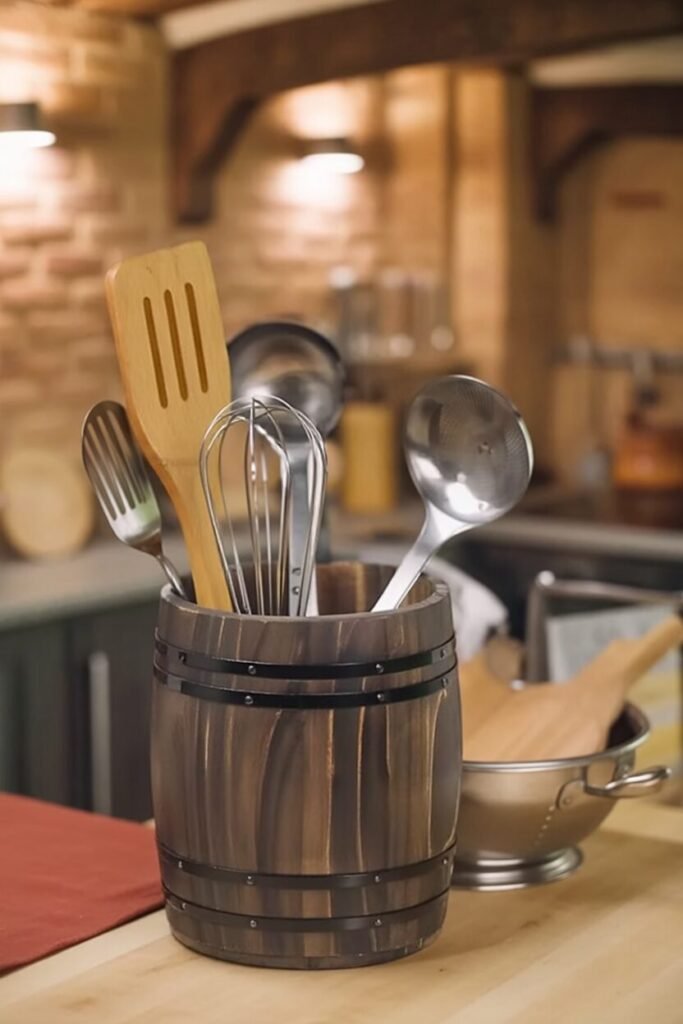
Who said kitchen utensils can’t have style? This wine barrel-style utensil crock (a super close match here on Amazon) is a perfect little nod to Tuscan authenticity. It’s rustic, practical, and adds an instant conversation piece — like “Oh this? Just a mini barrel where I keep my spatulas.”
From a design principle standpoint, this piece nails form-following-function. It ties into the broader Tuscan aesthetic through material continuity — warm woods, aged metal bands, and curved silhouettes that echo old wine cellars. Even small touches like this can make your kitchen feel intentionally designed.
Pro tip: balance rustic textures with clean surroundings. Pair your wine barrel crock with neutral countertops or sleek appliances for visual contrast. Bonus move? Group it with olive oil bottles or a small herb pot to create a micro Tuscan vignette. It’s affordable, stylish, and radiates that “we casually drink wine while cooking” energy we all want.
Get The Wine Barrel Utensil Crock Now 👇

Stone Range Hood Drama
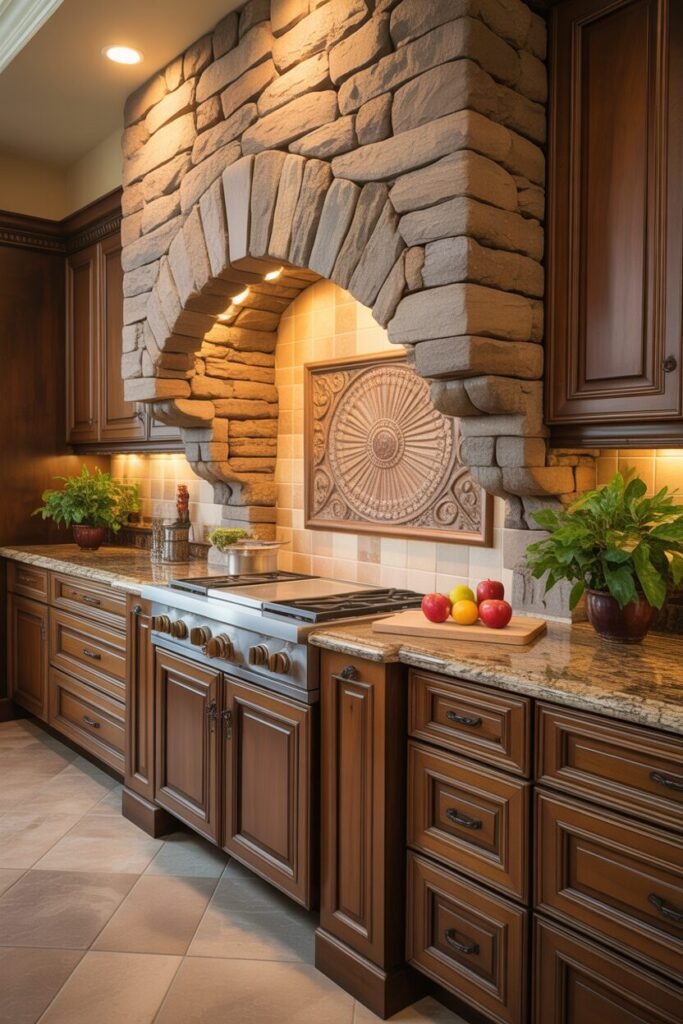
Let’s talk about making your range hood the Beyoncé of your kitchen. This dramatic stone surround isn’t just a statement — it’s an architectural anchor that adds instant gravitas. The idea here is proportion and balance: when your hood is bold, everything else needs to play backup dancer.
Choose chunky natural stone with texture — limestone, sandstone, or even faux stone veneer if you’re on a budget. Pair it with softly detailed cabinetry in warm wood tones to complement without competing. Lighting is crucial here; add small recessed lights under the arch to highlight the stonework’s dimension.
Here’s a sneaky design trick: use repetition. Echo the stone texture elsewhere — maybe in a backsplash accent or flooring. That consistency creates flow and harmony. Finish it off with bronze hardware or aged brass — modern metals can clash here. When done right, this look says “ancient Italian nobility,” not “medieval dungeon.” Big difference.
Patterned Tile Magic Meets Modern Freshness

If you love Tuscan charm but want to keep things airy and modern, this one’s your sweet spot. The patterned backsplash adds Mediterranean character while the clean cabinetry keeps things fresh and unfussy. It’s how you blend traditional soul with contemporary spirit.
When choosing tiles, go for warm neutrals or soft clay tones — terracotta, tan, cream, or dusty blue. Avoid glossy finishes; matte or hand-painted textures feel more artisanal and grounded. Pair with light wood or ivory cabinetry to prevent visual clutter. You want the tile to shine without stealing the whole show.
To keep it feeling authentic, accessorize minimally — maybe a vase of sunflowers, a wooden cutting board, or a vintage ceramic pitcher. And don’t forget lighting! Soft natural light bouncing off those patterned tiles = instant Tuscan sunshine vibes. This is where rustic Italy meets your favorite modern-day brunch aesthetic — charming, cozy, but totally Instagram-ready.
Dramatic Tuscan Elegance with Carved Details
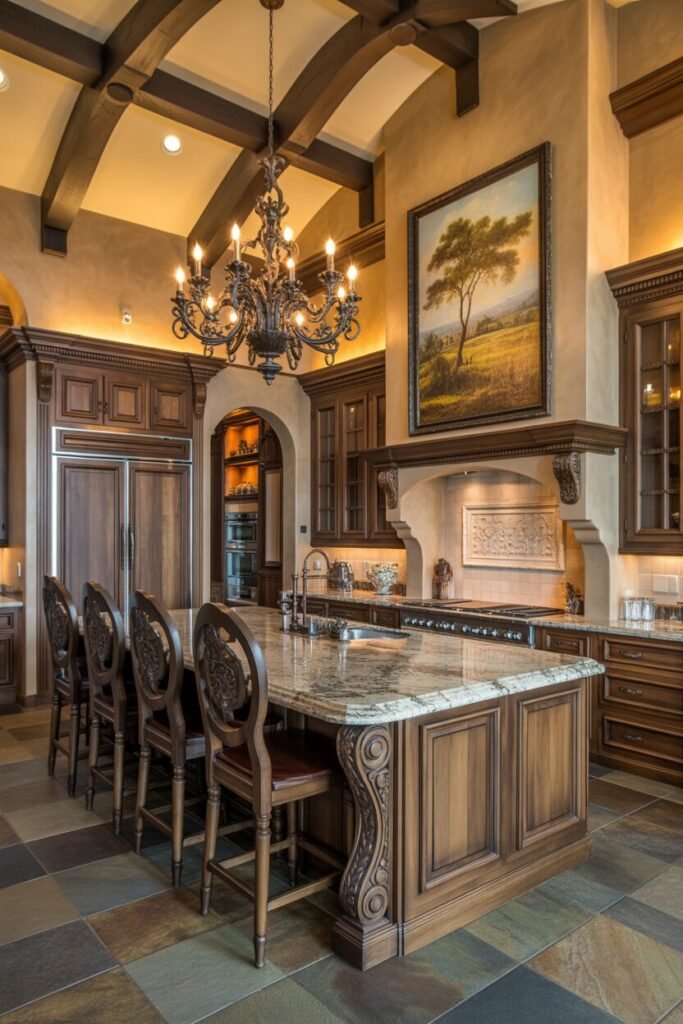
This kitchen screams, “Yes, I own a villa, and no, you can’t borrow sugar.” But underneath the drama is a smart use of symmetry, texture, and scale. The carved wooden island legs and chandelier bring luxurious flair, but everything else stays balanced and warm — that’s the genius of Tuscan design.
To recreate it, start with rich wood cabinetry (walnut or mahogany) and pair it with marble or travertine countertops. The mix of smooth and carved surfaces adds visual rhythm — like design jazz, but make it elegant. Lighting is key: chandeliers or ornate iron fixtures give a formal glow, while under-cabinet lighting keeps the workspace functional.
Want to keep costs sane? Choose one or two statement details — maybe carved corbels or a dramatic pendant — and let the rest breathe. Tuscan elegance isn’t about showing off; it’s about storytelling through craftsmanship. The result feels grand but intimate — like sipping espresso in Florence, only with better Wi-Fi.
Built-In Wine Storage Meets Tuscan Luxury
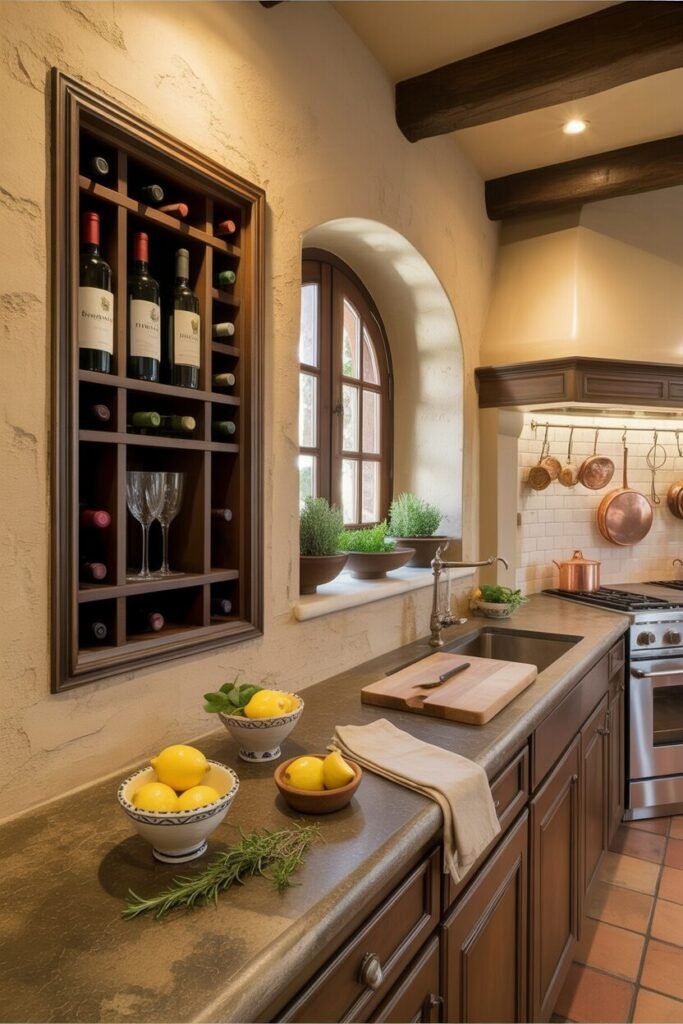
Now this is how you tell guests, “Yes, we take our wine seriously.” A built-in wine rack like this is the ultimate Tuscan flex — functional, beautiful, and perfectly balanced between form and tradition. It’s not just about storing bottles; it’s about celebrating the art of living slowly — which, let’s be honest, is the entire Tuscan aesthetic.
From a design perspective, this works because it adds architectural rhythm. The vertical grid of the rack contrasts beautifully with the organic plaster walls, while the dark wood ties into the cabinetry, creating seamless visual flow. Lighting also plays a huge role here — soft, warm illumination enhances those rich wood tones and makes the entire nook glow like a cozy Italian wine bar.
Pro tip: pair your wine rack with natural materials — stone countertops, aged wood, and a few sprigs of rosemary for scent layering. Add lemons or herbs for contrast, and suddenly your kitchen isn’t just functional — it’s a mini Tuscany tasting room.
Exposed Brick and Farmhouse Sink Romance
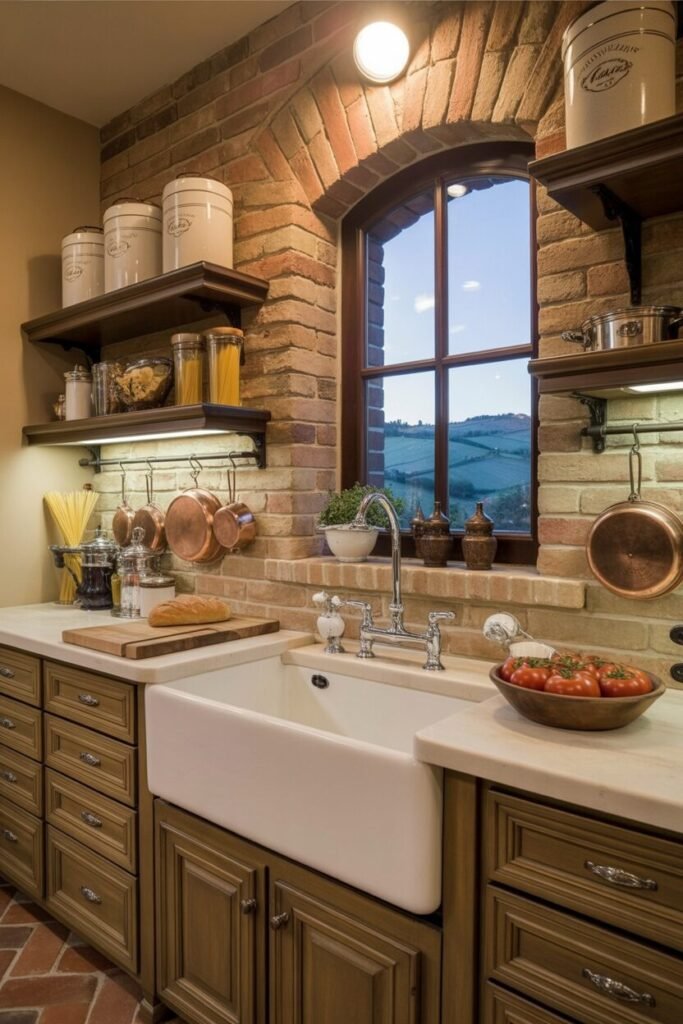
This one feels straight out of an Italian movie scene — all that’s missing is the background accordion music. The star here is the exposed brick wall, which instantly sets a rustic tone. Paired with that deep farmhouse sink, it creates the perfect Tuscan mix of warmth and practicality.
The design principle at play? Texture layering with repetition. Brick brings roughness, the cabinetry adds structure, and the white sink provides contrast — all harmonizing through warm undertones. The arched window keeps things soft and balanced, avoiding the “too heavy” rustic trap.
To recreate this, choose muted earth tones for cabinetry and warm grout for your bricks (trust us, bright white grout kills the vibe). Open shelving is your best friend — it breaks up visual weight and lets you show off copper pots and ceramic jars like kitchen jewelry. The lighting? Keep it amber or soft white to mimic candlelight. Basically, it’s your Tuscan love letter to “home.”
READ MORE >> 9+ Farmhouse Entryways That Make Guests Say “WAIT… I LOVE THIS!”
Design That Ages Like Fine Wine
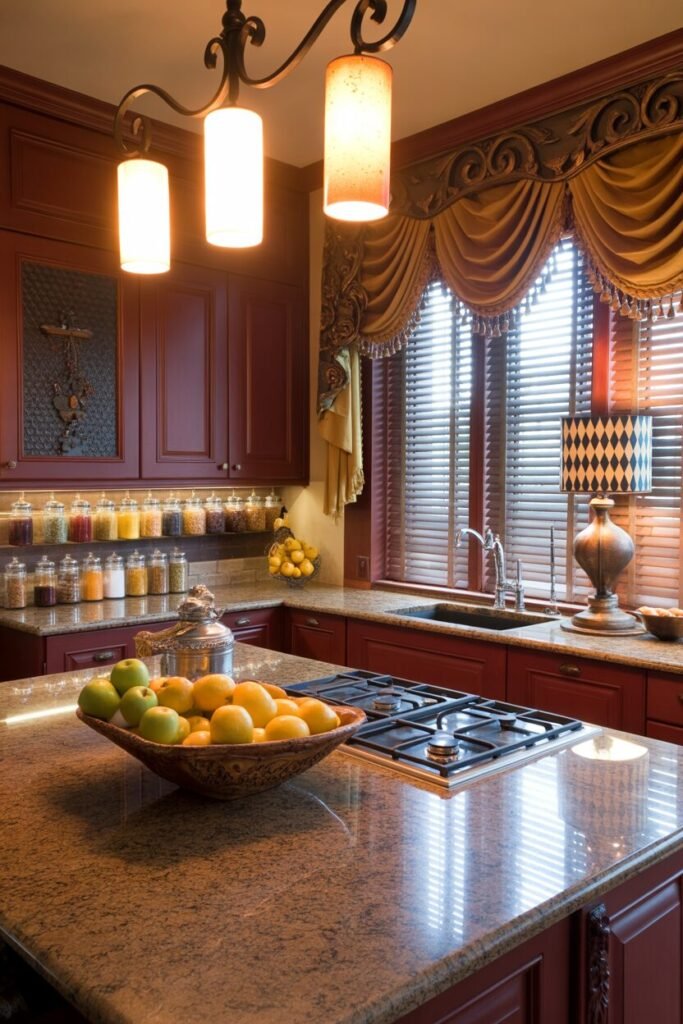
Tuscan design isn’t about chasing trends — it’s about building beauty that lasts. It thrives on timeless materials, layered textures, and a “home is meant to be lived in” philosophy. Every patina, every worn edge, every imperfect brushstroke adds soul. Because let’s be real — perfect is boring, but charming with a story? Chef’s kiss.
If there’s one takeaway from these 10 ideas, it’s this: design for how you live, not just how it looks. Whether it’s a statement chandelier, cozy bar stools, or a stone arch over your stove, each detail creates warmth and invitation.
So next time someone walks into your kitchen and says, “It feels so cozy in here,” just smile and say, “It’s Tuscan — and it’s intentional.” Because that’s the secret: thoughtful design never goes out of style