
The Calm Japandi Bedroom Formula Designers Rarely Explain Clearly
We’re not just designing bedrooms here—we’re curating a whole mood. Modern Japandi bedrooms sit right at that sweet spot between Japanese minimalism and Scandinavian coziness, which basically means clean lines, warm textures, and zero unnecessary chaos. It’s the kind of space that makes you want to romanticize your nighttime routine, even if you’re just scrolling your phone in linen sheets.
What makes this style work so well is its discipline. Every piece has a purpose, every material adds texture, and nothing feels random. Japandi isn’t about having less—it’s about choosing better. Think low-profile furniture, earthy palettes, soft lighting, and natural materials doing all the heavy lifting without screaming for attention.
As we move through these ideas, we’ll notice a pattern: balance over excess, texture over color, and calm over clutter. If it doesn’t add to the feeling of peace, it doesn’t belong. Simple rule, life-changing results.
Sculptural Moon Wall That Steals Focus Effortlessly
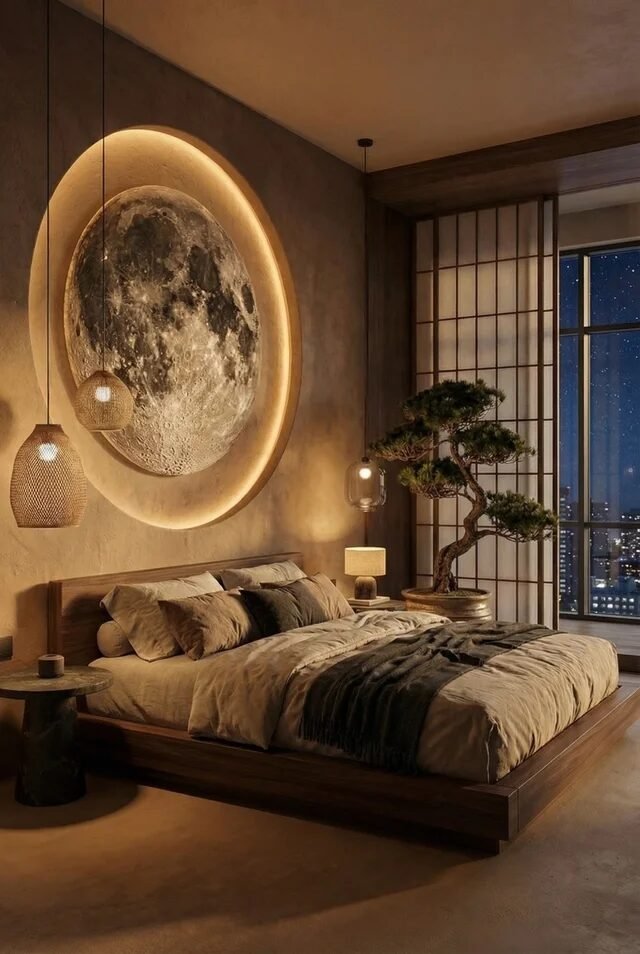
We’re starting strong because this one is pure main-character energy. That oversized moon wall isn’t just decor—it’s a built-in focal point that replaces the need for a headboard entirely. The warm halo lighting softens the contrast between the textured wall and the bed, which is very Japandi: bold statement, calm execution. Notice how everything else stays quiet—low platform bed, muted linens, minimal clutter—so the eye lands exactly where it should.
From a design perspective, this is all about controlled contrast and intentional lighting. The circular shape breaks the room’s hard lines, while the indirect glow adds depth without harsh shadows. If we’re recreating this, LED backlighting is your best friend—warm white only, please. Cool tones will ruin the vibe instantly.
Keep styling grounded. We stick to earthy tones, layered bedding, and just one or two pendant lights for balance. When one element is dramatic, everything else needs to whisper. That’s the rule.
Tropical Minimalism Meets Raw Stone Serenity
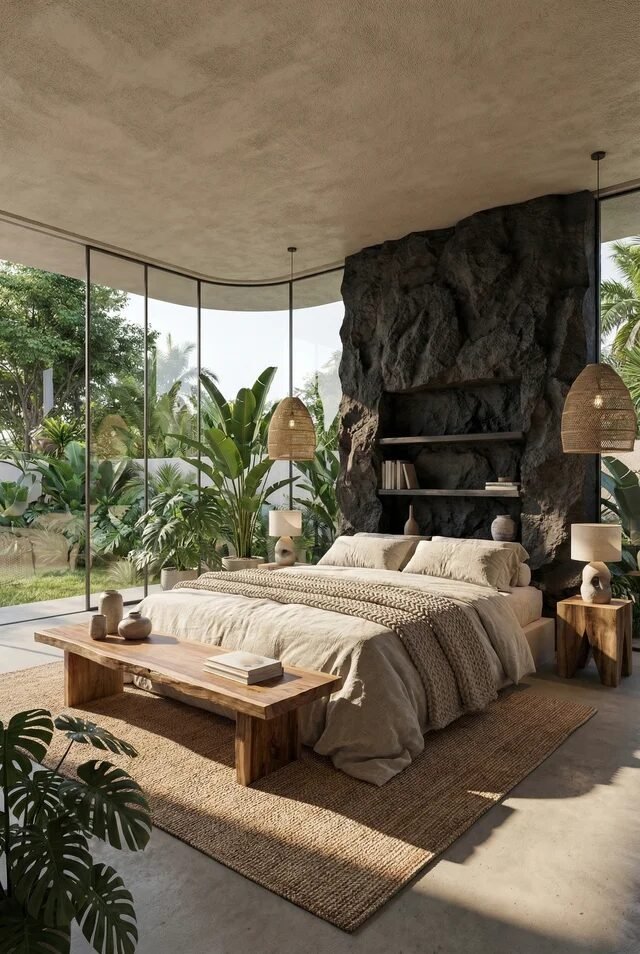
This bedroom is basically what happens when a luxury resort and a zen temple have a very stylish baby. The raw stone wall acts as an organic anchor, grounding the entire space while the glass walls keep things light and breathable. It’s that Japandi balance again—nature meets restraint, but make it architectural.
Let’s talk materials, because that’s the real star here. You’ve got rough stone, smooth concrete, woven textures, and soft linens all coexisting. This layering of textures creates depth without needing bold colors. If you’re recreating this, focus less on decor items and more on material contrast—think jute rugs, unfinished wood, and matte ceramics.
Also, don’t ignore the layout. The low bed and long bench visually stretch the room, making it feel wider and calmer. Japandi spaces always prioritize horizontal flow over vertical clutter. Keep furniture low, lines clean, and let natural light do most of the heavy lifting.
Soft Arch Headboard With Vertical Wood Rhythm
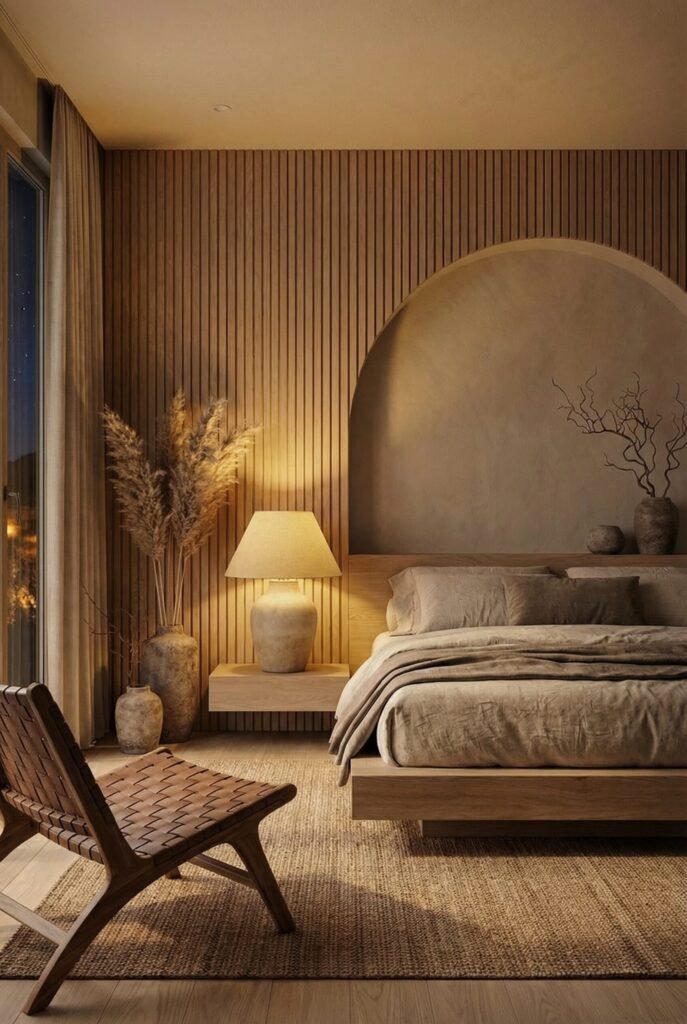
Okay, this one is subtle but dangerously effective. The arch detail behind the bed creates a built-in moment of softness, while the vertical slatted wall adds rhythm and structure. It’s like yin and yang, but for your walls. And somehow, it feels cozy without being heavy.
The key principle here is repetition. Those vertical slats guide the eye upward, making the ceiling feel taller. Then the arch interrupts that pattern just enough to keep things interesting. This is how we create visual movement without clutter. If you’re trying this at home, MDF slat panels are an easy win, and you can DIY an arch with plaster or even paint if you’re feeling brave.
Color-wise, we stay in that warm neutral zone—beige, taupe, soft brown. Add texture through textiles instead of color. When your walls are doing this much work, your decor should relax a little. A woven chair or ceramic lamp is more than enough.
Balanced Symmetry With Warm Minimal Lighting Layers
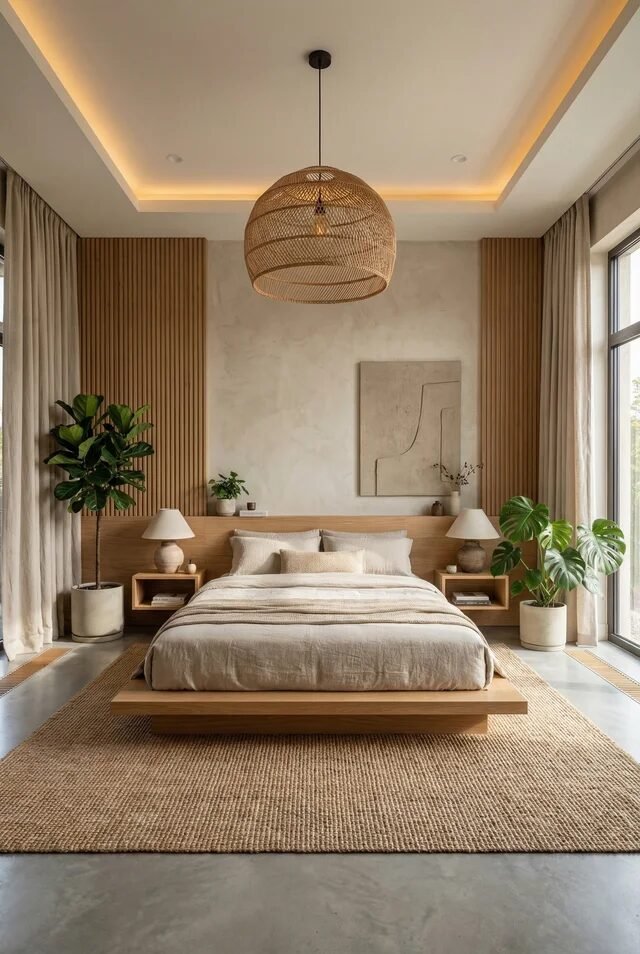
This is Japandi at its most disciplined—and honestly, we love to see it. Everything is symmetrical, but not in a stiff, hotel-room way. The bed sits perfectly centered, flanked by matching nightstands, lamps, and vertical panels. Symmetry here creates instant calm and visual order.
But what really elevates this look is the lighting. You’ve got overhead cove lighting, a central pendant, and soft bedside lamps all working together. Layered lighting is what turns minimalism from cold to cozy. If you only copy one thing from this room, make it that.
Also, notice the spacing. Nothing feels cramped. Japandi design thrives on negative space, so resist the urge to over-style. Keep decor minimal—one artwork, a couple of plants, done. We’re not filling space, we’re curating it. That mindset shift changes everything.
Earthy Night Mood With Textural Warm Glow
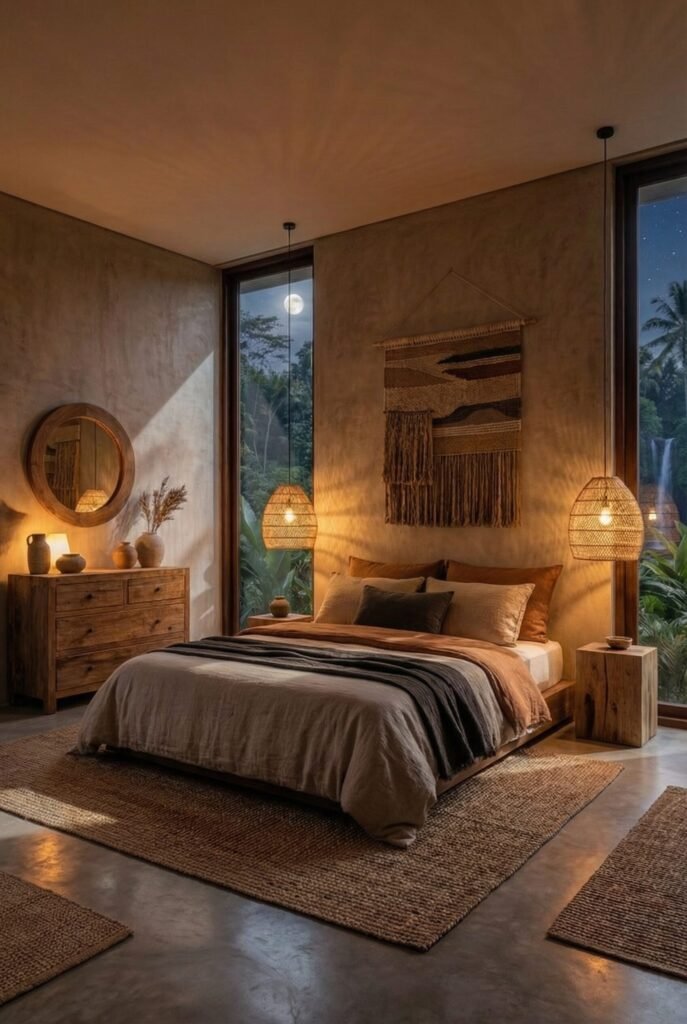
This room is giving soft, moody, “we actually sleep 8 hours” energy. The darker wall tone instantly creates intimacy, while the warm pendant lights add that cozy glow that makes everything feel intentional. Lighting temperature is doing 80% of the emotional work here.
What makes this design work is the layering of tones within the same color family. Browns, beiges, and muted terracotta all blend seamlessly, so nothing feels harsh. Monochromatic palettes in Japandi rely on texture, not contrast. That’s why you see woven rugs, linen bedding, and wall hangings instead of bold colors.
And let’s not ignore the windows—tall, narrow, and perfectly framing the outside greenery. They act like natural artwork. If you can’t replicate the windows, fake it with tall curtains or vertical panels. We’re always trying to elongate the space and soften the edges. Cozy, but still elevated.
Layered Arches That Soften Minimal Japandi Edges
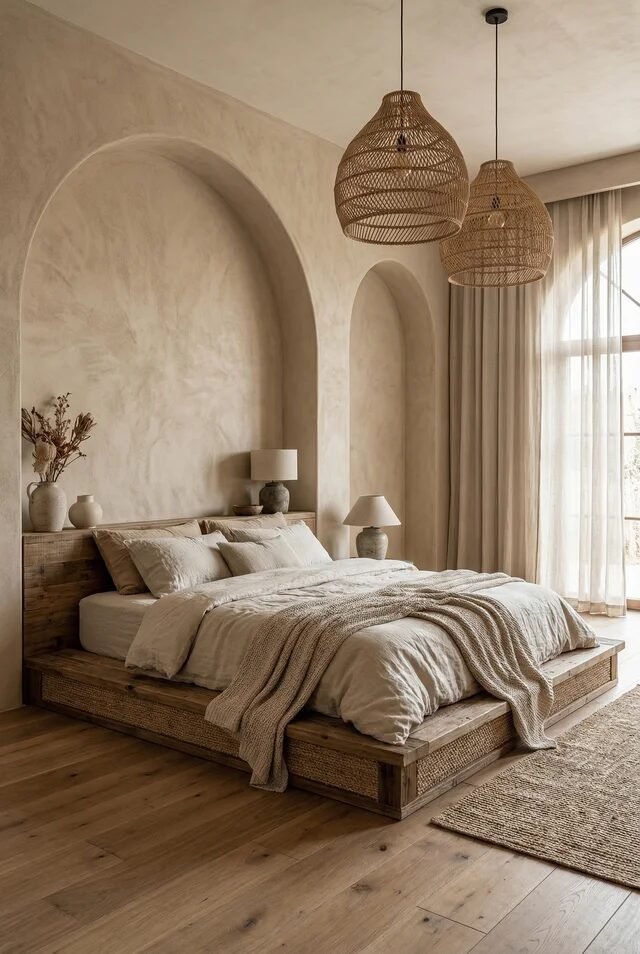
We’re officially in soft-architecture territory, and honestly, we’re obsessed. Those double arches behind the bed instantly create depth without adding clutter, which is peak Japandi behavior. Curves like this break up rigid lines and make a minimal room feel more inviting without sacrificing simplicity. It’s subtle, but it changes everything.
What really works here is tonal consistency. Everything sits in that creamy beige spectrum, so even with architectural detail, nothing feels busy. If we’re recreating this, textured plaster or limewash is your best friend—it adds dimension without needing color contrast. Flat paint? Too boring for this level of softness.
The woven pendants bring in just enough organic texture overhead. Keep them slightly oversized for balance. When your walls are sculptural, your lighting should echo that softness, not compete with it. Think flow, not sharp statements.
Moody Japandi Bedroom With Reflective Balance
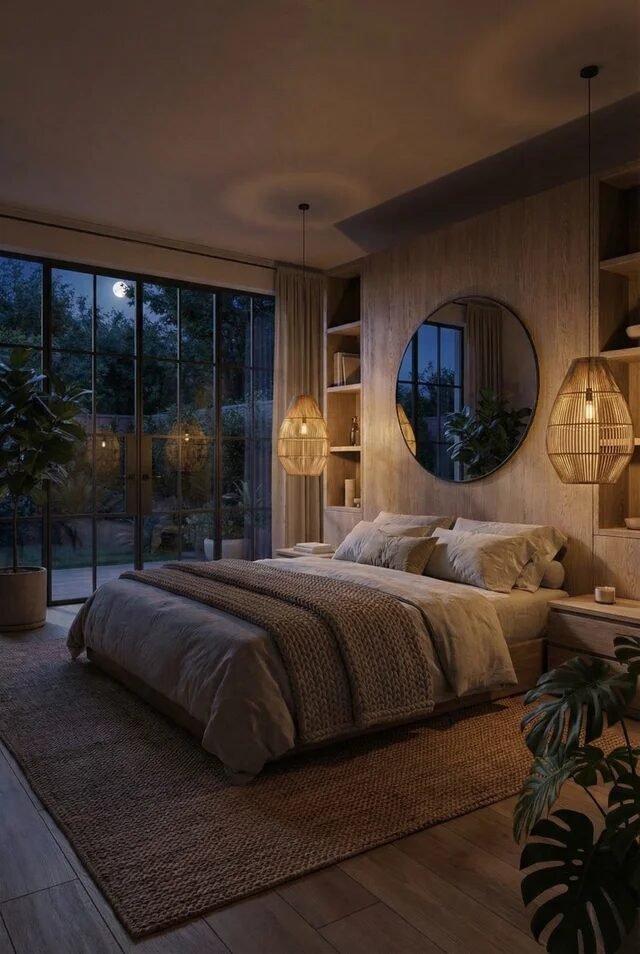
This one is giving calm, cinematic night energy—and we’re here for it. The large round mirror above the bed isn’t just aesthetic, it’s strategic. Mirrors in Japandi design are used to bounce light and visually expand space without adding visual clutter. Plus, that circular shape softens all the straight lines happening in the room.
Lighting is doing some serious heavy lifting here. Warm pendant lights on both sides create symmetry, while the soft glow adds depth to the darker palette. If you want this vibe, layering is key—ambient, task, and accent lighting all working together.
Also, can we talk about the built-in shelving? Functional but still minimal. Japandi isn’t about having less—it’s about hiding more. Keep storage integrated and styled lightly. A few books, a plant, done. We’re not curating a museum, we’re curating calm.
Slatted Wood Wardrobe That Feels Intentional
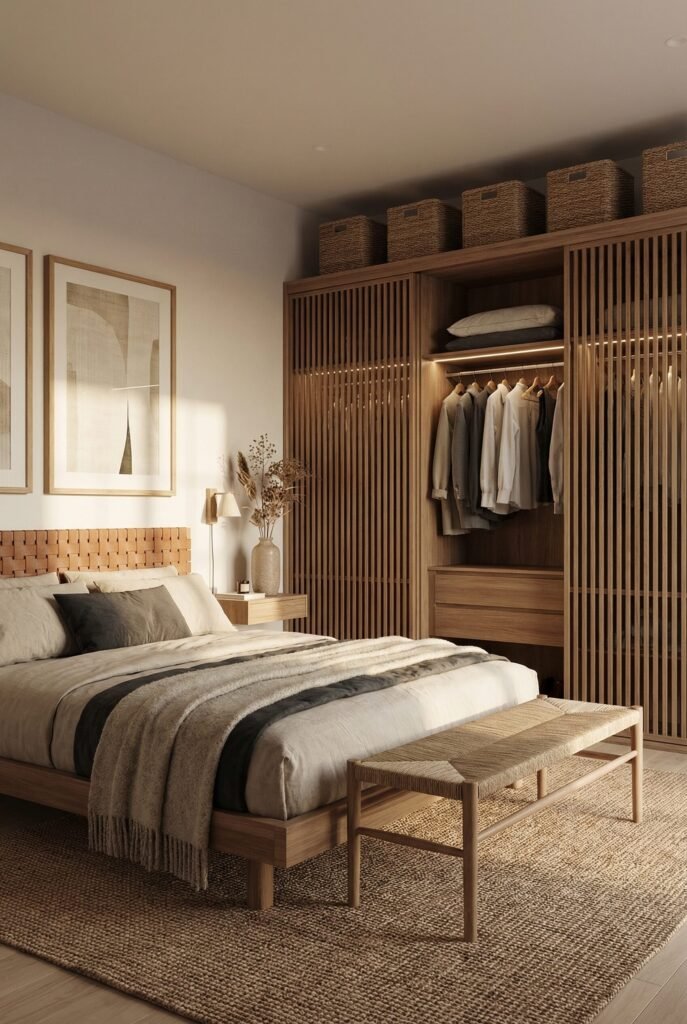
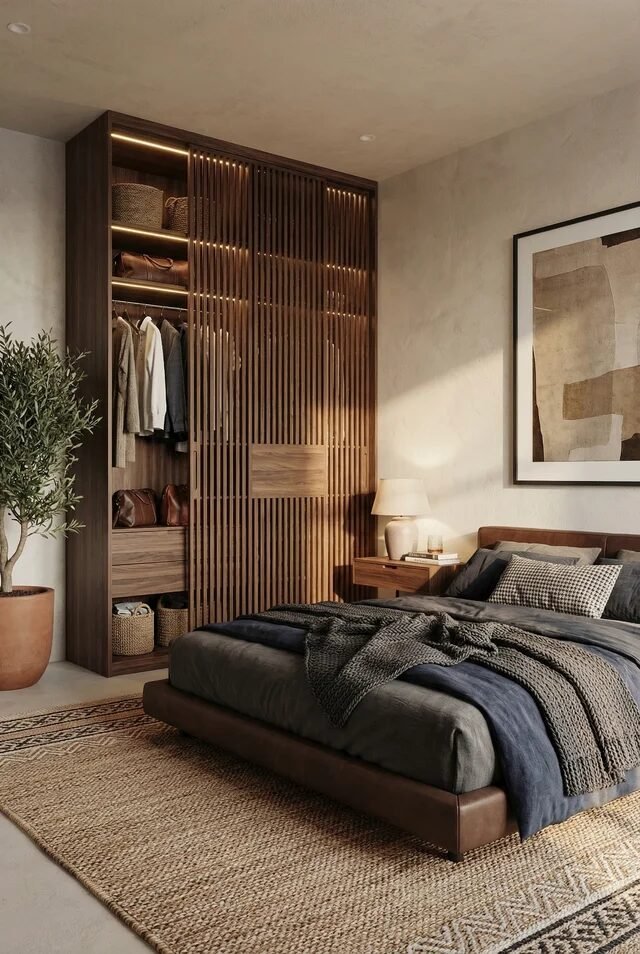
Storage, but make it aesthetic. This slatted wardrobe isn’t just practical—it’s part of the design language. Vertical slats add rhythm and texture while keeping the overall look light and breathable. Solid cabinets would feel heavy here, but this? Airy, structured, and very on-theme.
The trick is consistency. Notice how the wood tones match the bed and bench, creating a seamless visual flow. If you’re mixing woods, keep undertones similar—either all warm or all cool. Clashing wood tones is the fastest way to ruin a Japandi vibe.
Inside, everything is neatly organized, which matters more than we think. Japandi spaces rely on calm visuals, and clutter will break that instantly. Invest in baskets, dividers, and soft lighting inside the wardrobe. Out of sight should still feel intentional. That’s the secret.
Airy Neutral Bedroom With Soft Structural Layers
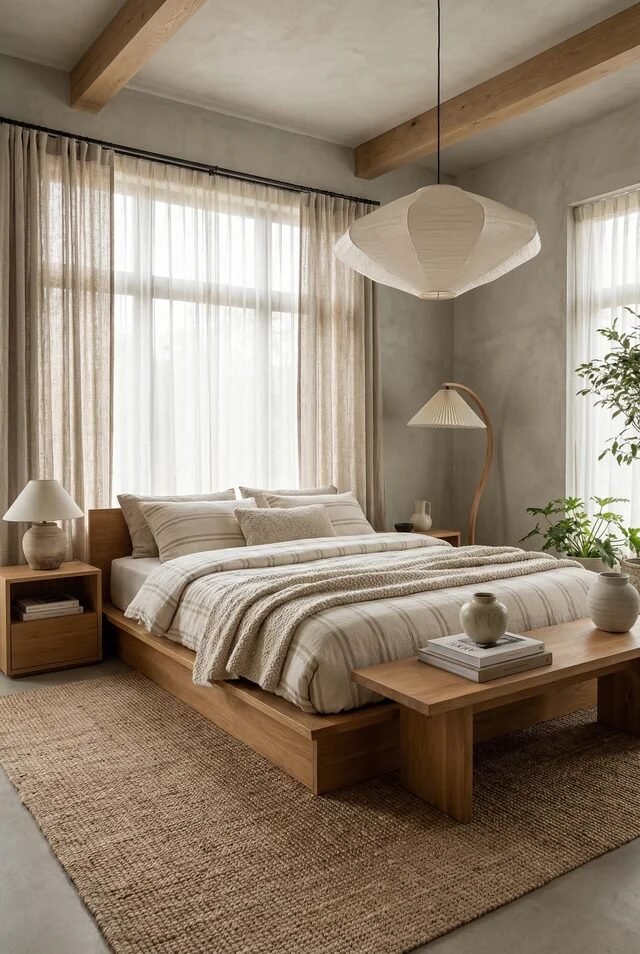
This room feels like a deep breath, and honestly, we need that energy. The combination of sheer curtains, exposed beams, and soft neutral textiles creates a layered but lightweight aesthetic. Nothing feels heavy, even though there’s a lot going on.
Let’s break it down. The bed is low and grounded, the rug defines the zone, and the curtains diffuse natural light beautifully. Layering in Japandi isn’t about stacking decor—it’s about stacking textures and light. Linen, wood, woven fibers, done. No extra fluff needed.
The asymmetrical floor lamp adds just enough visual interest without breaking the calm. If everything is too perfect, it feels staged. We want balance, not perfection. So mix one or two slightly unexpected elements into an otherwise structured space. That’s what makes it feel lived-in, not showroom.
Clean Lines With Subtle Contrast Detailing
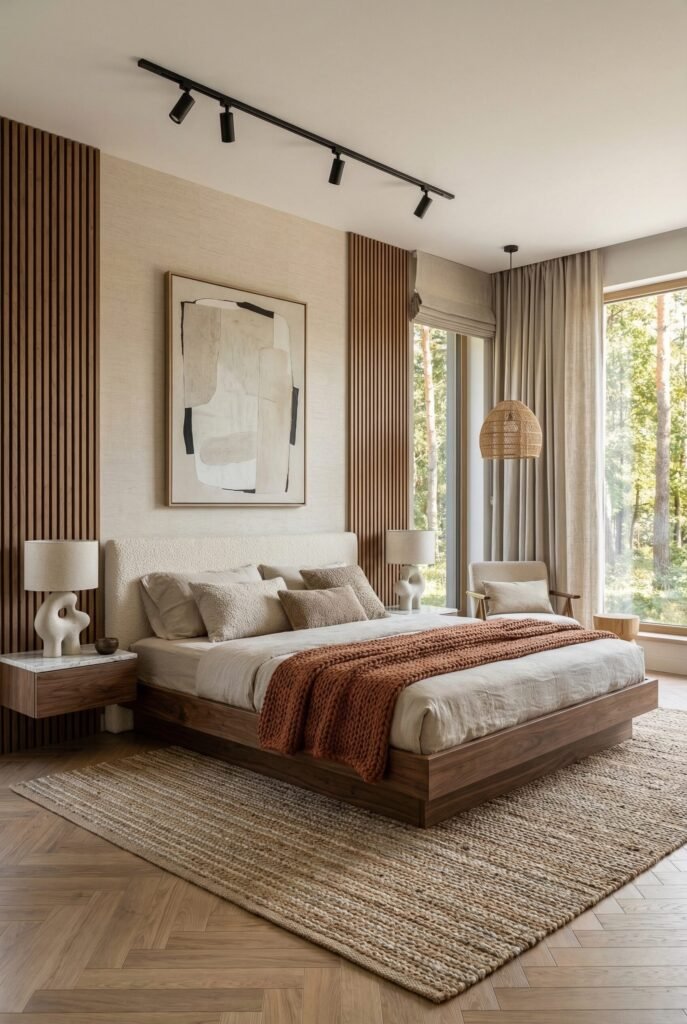
This is Japandi with a little edge, and we’re into it. The vertical wood panels frame the bed, creating a built-in focal zone, while the black track lighting adds contrast without overwhelming the space. Contrast in Japandi should feel intentional, not dramatic. This is exactly that.
The color palette stays neutral, but that rust-toned throw? Perfect. It adds warmth and just enough variation to keep things from feeling flat. If you’re recreating this, stick to one accent color and repeat it subtly. Consistency always beats randomness.
Also, let’s appreciate the proportions. The artwork is sized correctly, the rug anchors the bed, and nothing feels too small or oversized. Scale is low-key one of the most important design principles—and most people ignore it. Get that right, and everything else falls into place.
Designing Bedrooms That Feel Calm Without Trying Too Hard
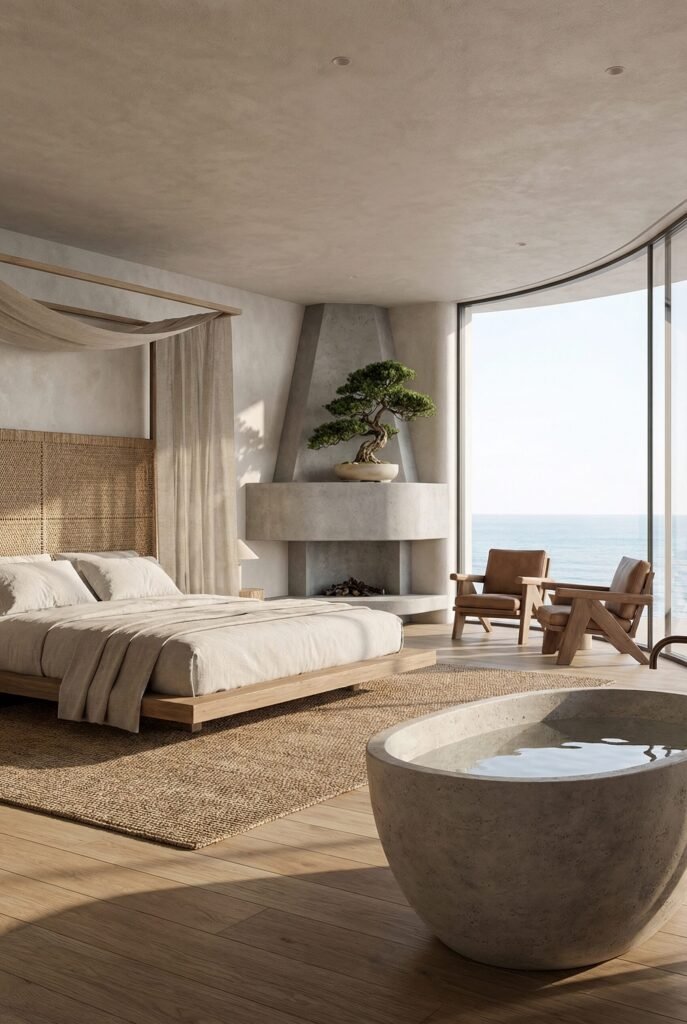
At the end of the day, a modern Japandi bedroom isn’t about chasing trends—it’s about creating a space that actually feels good to exist in. And yes, that sounds obvious, but we’ve all seen rooms that look amazing and feel… stressful. Japandi avoids that by prioritizing flow, proportion, and emotional comfort.
Across these ideas, we’ve seen how small decisions create big impact. Lighting isn’t just functional, it’s atmospheric. Furniture isn’t just placed, it’s aligned. Textures aren’t random, they’re layered with intention. Good design here is quiet, but it’s doing a lot behind the scenes.
If we’re taking anything away, it’s this: slow down the space. Edit more, style less, and let materials speak. The goal isn’t to impress people—it’s to make your bedroom feel like a reset button. And honestly, we all need that.