
Japandi Entryways That Make Minimalism Feel Warmer, Not Colder
First impressions matter, and your entryway? It’s basically your home’s personality test. Japandi design nails that balance between Japanese minimalism and Scandinavian coziness, giving us a space that feels calm, intentional, and low-key luxurious without trying too hard. We’re not just decorating an entry—we’re setting the emotional tone for the entire home.
What makes Japandi entryways so effective is their obsession with balance. Clean lines meet soft textures, light woods contrast with subtle shadows, and every object actually earns its place. This style thrives on restraint, which means editing is just as important as styling. If it doesn’t serve a purpose or add visual calm, it’s out.
We also lean heavily on natural materials, layered neutrals, and thoughtful lighting. Think warm wood, woven textures, soft ceramics, and diffused glow instead of harsh brightness. The goal? A space that feels like a deep exhale the second we walk in. Calm, functional, and effortlessly put together.
Warm Slatted Wood Entryway With Built-In Bench
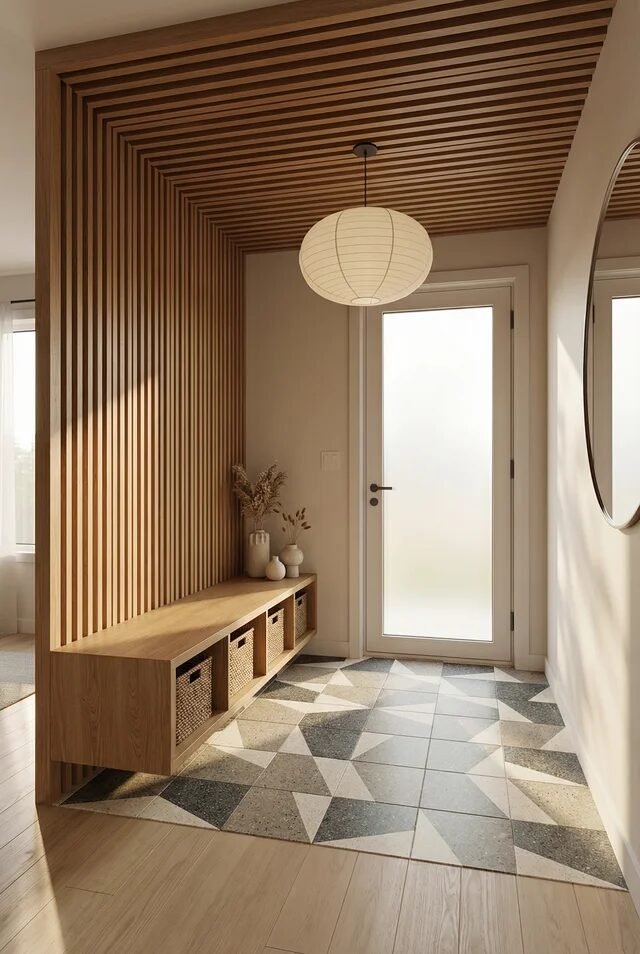
This is that “we just casually designed a Pinterest-perfect entry” moment. The vertical wood slats wrapping from wall to ceiling instantly create a cocoon effect, which is peak Japandi. Vertical lines draw the eye upward, making even small entryways feel taller and more intentional. Pairing that with a floating bench keeps the visual weight low, so the space doesn’t feel cramped.
Now let’s talk function because this isn’t just pretty—it’s low-key genius. The cubbies underneath introduce hidden storage rhythm, and the woven baskets soften all that structured wood. Mixing hard architectural lines with soft, tactile textures is basically Japandi 101. If you’re recreating this, stick to 2–3 materials max: wood, fabric, and maybe ceramic.
Lighting seals the vibe. That paper lantern pendant diffuses light in the softest way possible, preventing harsh shadows on all those slats. Pro tip: always balance strong linear elements with rounded forms so your entryway doesn’t start giving “wood panel office from 2003.”
Rustic Textured Wall With Arched Mirror Moment
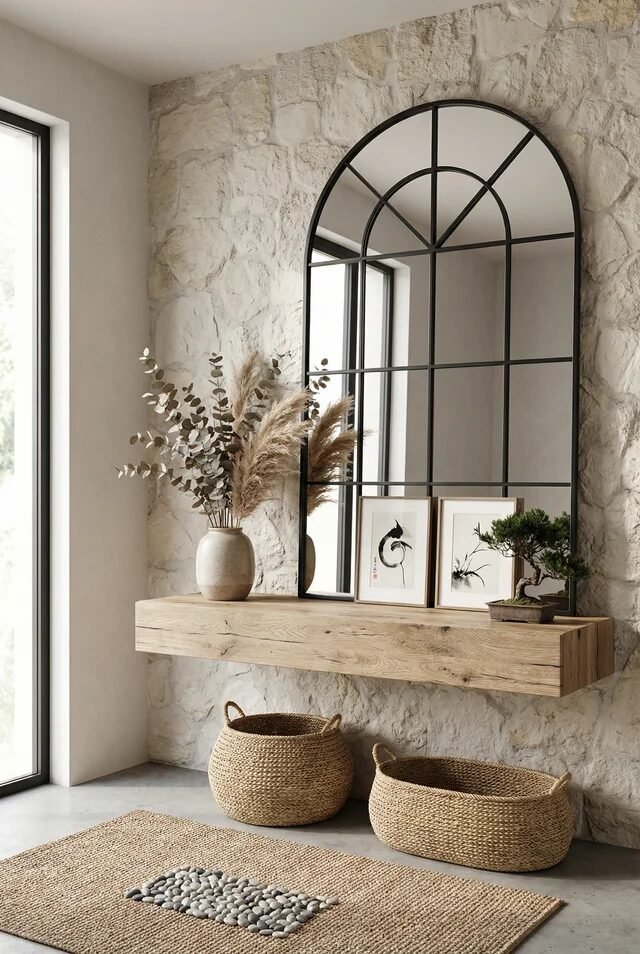
This setup is what happens when minimalism decides to have personality. The rough plastered wall adds organic imperfection, which contrasts beautifully with the clean-lined floating shelf. Japandi thrives on this tension between raw and refined—it’s not supposed to feel too perfect.
The oversized arched mirror is doing a lot of heavy lifting here (in a good way). It reflects light, visually doubles the space, and introduces that soft architectural curve. Curves are essential when your base palette is neutral—they keep everything from feeling flat or boring. Bonus: the black grid frame adds just enough contrast without overpowering the calm vibe.
Styling-wise, we’re keeping it restrained but intentional. A few ceramic pieces, dried stems, and low baskets anchor the space without clutter. If you’re copying this, remember: negative space is part of the design, not something to “fill.” Let your pieces breathe, or the whole serene moment collapses real fast.
Long Japandi Hallway With Layered Lighting Glow
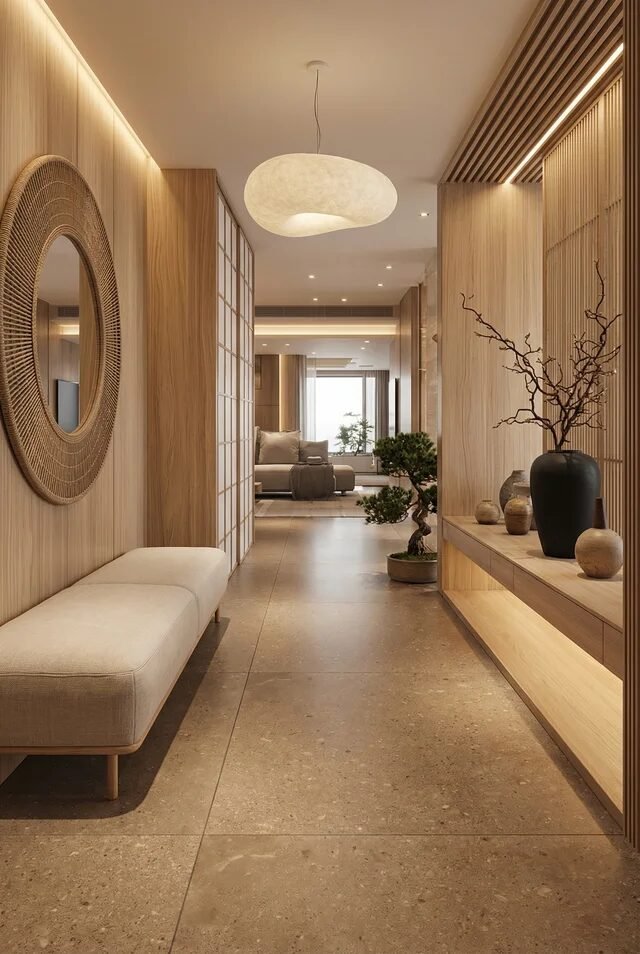
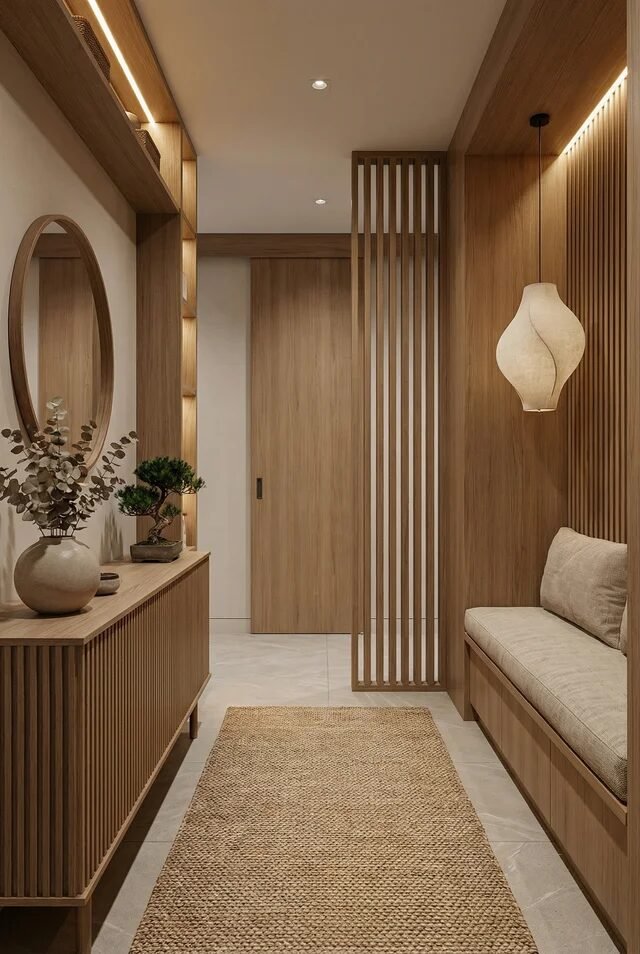
Okay, this is giving luxury spa entrance energy, and we’re not mad about it. The secret sauce here is layering—both in lighting and materials. You’ve got wood slats, smooth walls, stone flooring, and soft textiles all working together. Layering different textures within the same neutral palette creates depth without visual chaos.
The lighting is doing overtime in the best way. Recessed ceiling lights, concealed strip lighting, and a sculptural pendant all contribute to a warm, diffused glow. Good Japandi lighting should feel like a sunset, not a hospital. If your entryway lighting is harsh, we fix that first—no debate.
Let’s not ignore zoning. The bench on one side and display ledge on the other subtly divide the walkway without blocking flow. That’s key. A well-designed entry guides movement while still feeling calm and uncluttered. Add a small bonsai or branch arrangement, and suddenly you’re entering your home like it’s a curated experience.
Minimal Japandi Entry With Floating Shelf Hooks
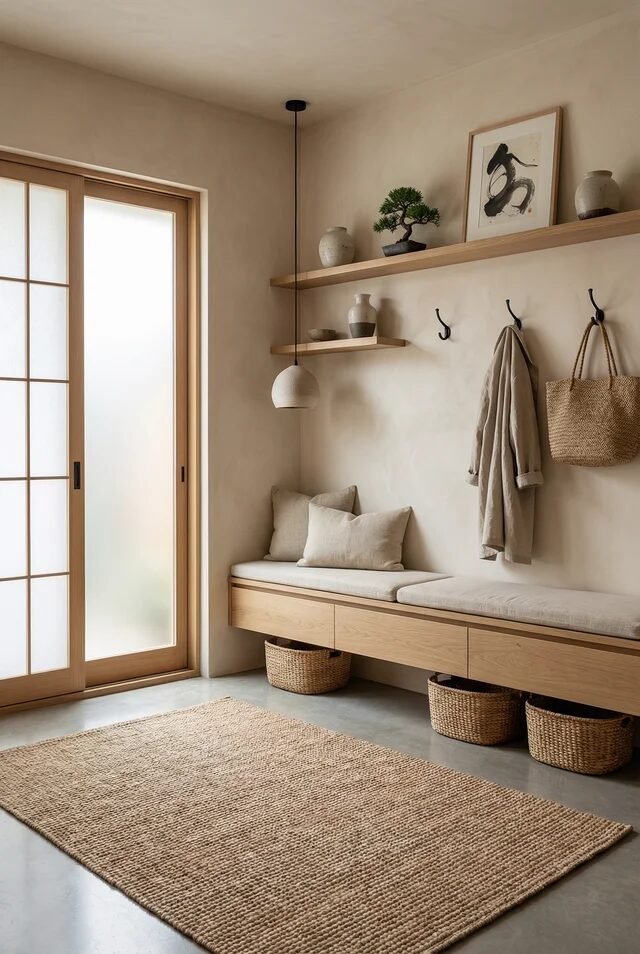
This one is for us who want aesthetic but also need a place to throw our bag immediately. The composition is super balanced: horizontal bench, floating shelves above, and evenly spaced hooks. Repeating lines and spacing creates visual harmony, which is why this setup feels so satisfying.
The neutral palette is doing its quiet luxury thing—soft beige walls, light wood, and muted textiles. But the real trick is layering heights. You’ve got low seating, mid-level hooks, and higher shelves. Varying vertical placement keeps the wall from feeling flat or one-dimensional.
Also, can we appreciate the practicality? Hooks for grab-and-go items, baskets for hidden clutter, and a cushioned bench for comfort. If you’re recreating this, keep your styling tight: a small artwork, a couple of ceramics, maybe a plant. Edit aggressively—Japandi is about intentional living, not displaying your entire personality at the door.
Soft Minimal Bench Nook With Slatted Accent
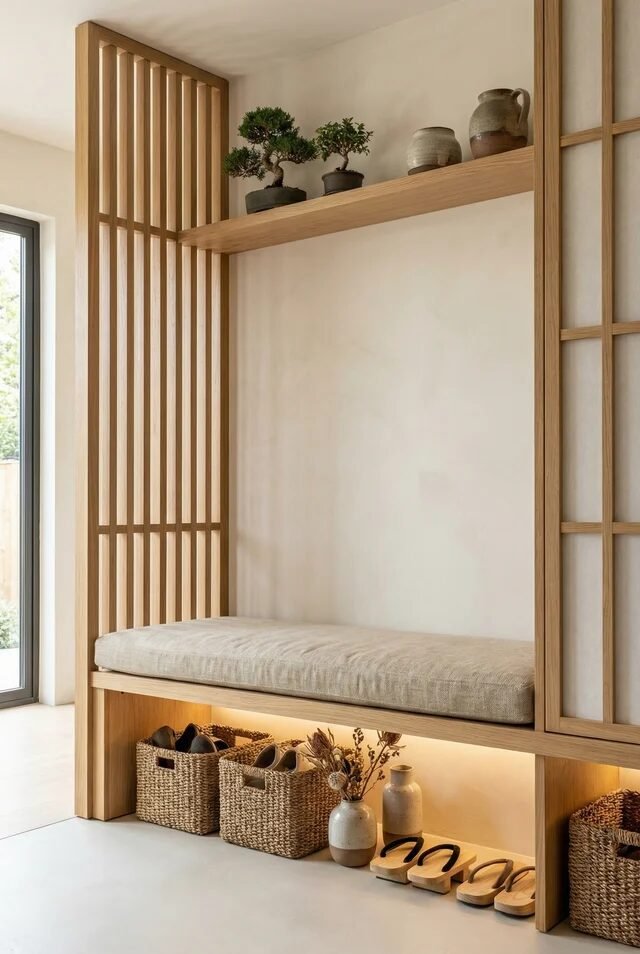
This is the quiet corner that somehow steals the whole show. The partial slatted divider adds structure without fully closing off the space, which is perfect for maintaining openness. Semi-open partitions are a Japandi staple—they define zones while keeping airflow and light intact.
The bench design is doing double duty: seating on top, storage below, and even a soft underglow for added warmth. That subtle lighting underneath? Elite. Indirect lighting adds depth and makes the space feel more elevated without trying too hard.
Styling stays minimal but grounded—woven baskets, neutral cushions, and a few earthy decor pieces. If you’re recreating this look, focus on proportions. Keep the bench height comfortable, align the shelf above with the slats, and don’t overcrowd. When everything is aligned and scaled correctly, the space feels calm almost automatically—and that’s the whole Japandi goal.
Arched Minimal Entryway With Soft Neutral Layers
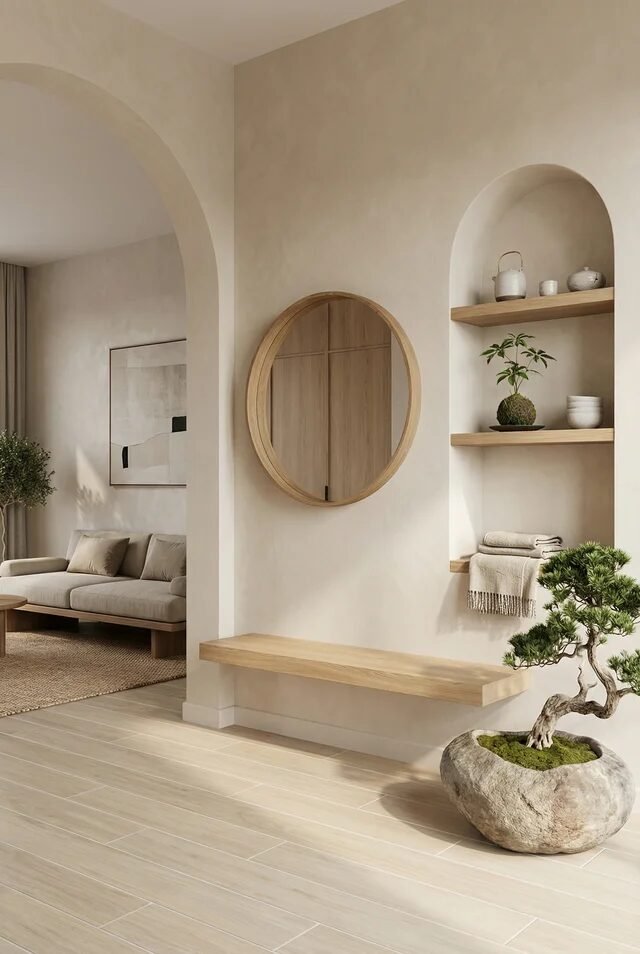
This entryway is basically whispering “relax, we’ve got our life together.” The soft arches instantly create a sense of flow, guiding your eye from one zone to another without harsh breaks. Arches are key in Japandi because they soften structure and make transitions feel natural, not forced. Paired with the round mirror, we get that curve-on-curve harmony that feels super intentional.
The palette is doing heavy lifting too. Warm beige walls, pale wood, and muted decor create a tonal layering effect instead of contrast. When working with neutrals, variation in tone replaces the need for bold color. That’s why nothing feels flat even though everything is technically “the same color.”
Styling stays minimal but grounded—bonsai, ceramics, folded textiles. If we’re recreating this, keep decor low and sculptural. Think in shapes, not objects. And don’t skip the negative space—this look collapses real fast if we start over-decorating like it’s a clearance sale.
Vertical Slat Wall With Floating Cushion Bench
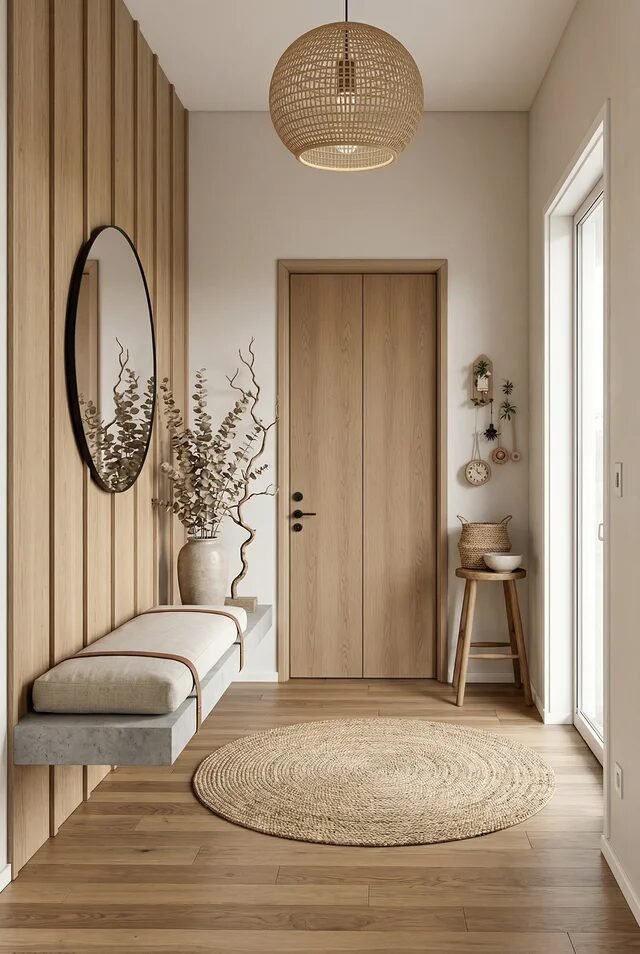
This one is giving clean, calm, and just a little bit “we meditate now.” The vertical slat wall creates rhythm and repetition, which makes the space feel structured without being busy. Repetition is one of the easiest ways to create visual calm—it tells the eye exactly what to expect.
The floating bench is clutch here. By lifting it off the floor, the space feels lighter and more open, especially in narrow entryways. Add a slim cushion, and suddenly it’s functional without adding bulk. Japandi always balances form and function—if it’s pretty but useless, it’s not making the cut.
Let’s talk styling restraint. A single vase with branches, a round mirror, and a woven rug—done. If you’re recreating this, resist the urge to “add just one more thing.” Overstyling breaks the rhythm and kills the calm instantly. Also, keep your materials consistent—too many finishes and we lose the whole vibe.
Japandi Console Styling With Organic Mirror Shape
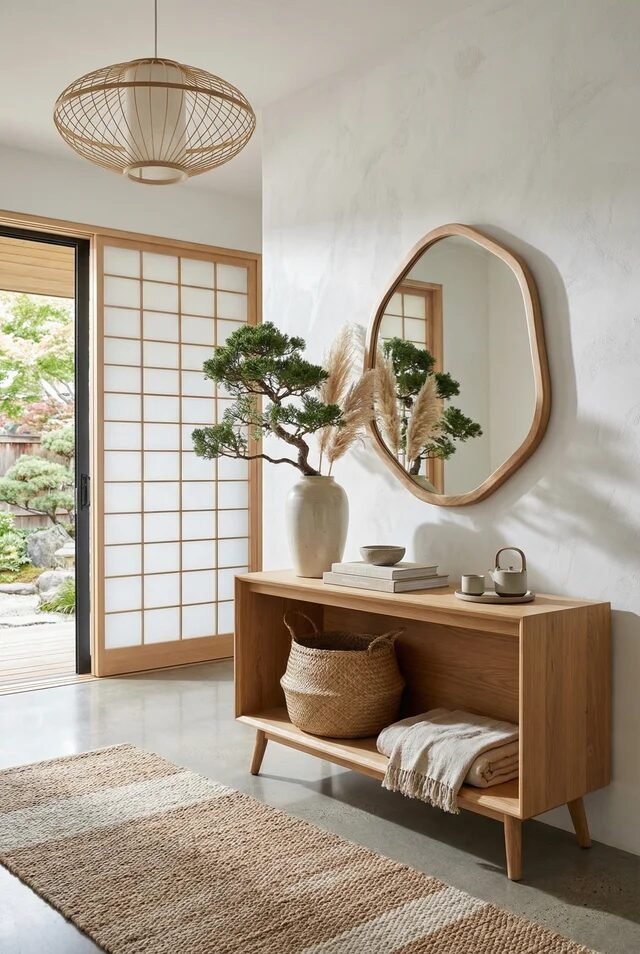
This setup is what happens when symmetry takes a day off—but still looks put together. The asymmetrical mirror adds a natural, organic feel that contrasts with the clean lines of the console. Breaking symmetry intentionally creates interest without creating chaos.
The console itself is doing quiet work. Open shelving keeps things airy, while still giving us storage for baskets and textiles. Open storage works best when what’s inside is curated—otherwise it just becomes visible clutter. Stick to similar tones and materials so everything feels cohesive.
And can we appreciate the layering moment? A vase with greenery, a few stacked books, maybe a small tray—it’s casual but controlled. If you’re copying this, remember: group decor in odd numbers and vary heights slightly for that effortless look. It’s giving “I didn’t try,” but we definitely did.
Full Wall Storage Bench With Hidden Organization
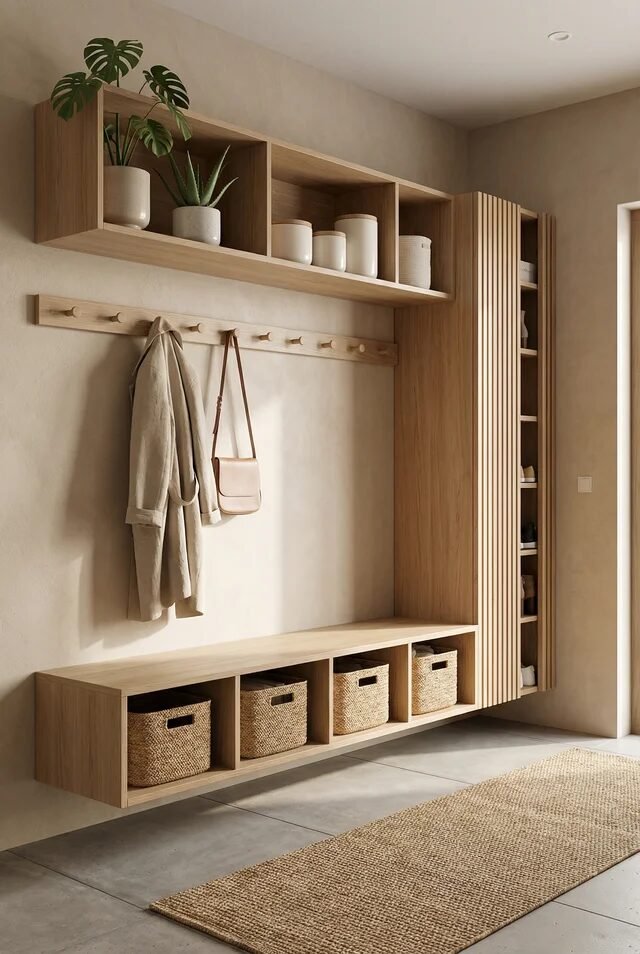
Okay, this is for the “we need storage but also want aesthetic” crowd. The full wall unit maximizes vertical space, which is crucial in entryways where square footage is limited. When floor space is tight, we go vertical—that’s non-negotiable.
The design is super intentional. Closed baskets below hide everyday chaos, while open cubbies above display curated pieces. Hooks in the middle? Perfect for grab-and-go items. Zoning your storage (hidden, semi-open, open) keeps the space functional without looking messy.
Material consistency is what keeps this from feeling overwhelming. Everything stays within a warm wood and neutral palette, so even a large unit feels cohesive. If we’re recreating this, measure carefully and keep proportions balanced. Oversized storage can dominate a space if it’s not scaled correctly—Japandi is calm, not bulky.
Dark Wood Console With Soft Neutral Contrast
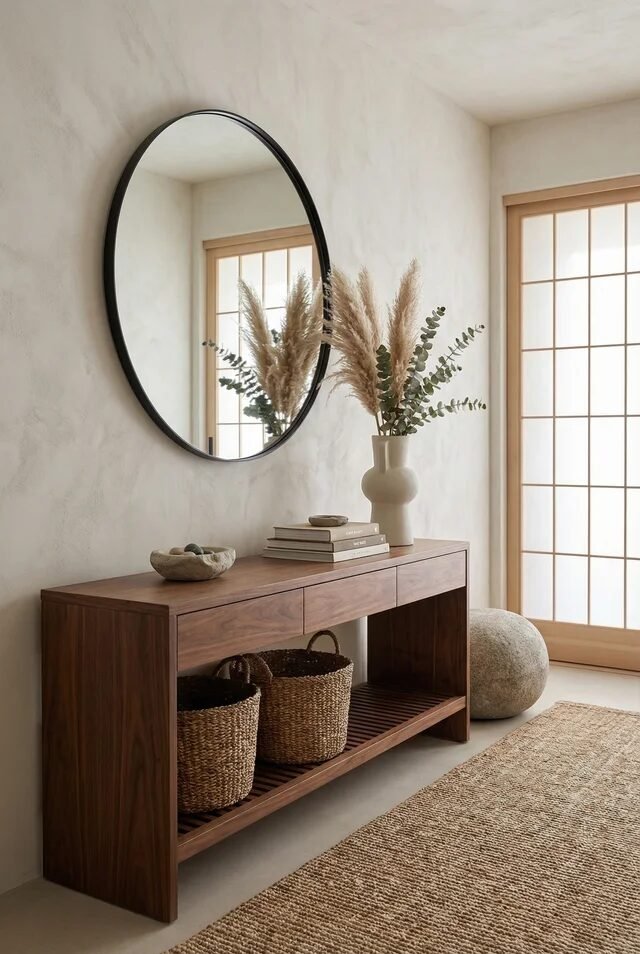
This one is a little moodier, and honestly, we love that for us. The darker wood console anchors the space, creating contrast against the soft, light walls. Contrast is essential in Japandi—it adds depth so the space doesn’t feel washed out.
The round mirror above softens that heavier base, keeping the composition balanced. Then we layer in textures: woven baskets, dried stems, matte ceramics. Texture replaces color in Japandi, so mixing materials is how we keep things interesting.
If you’re recreating this, focus on balance. Dark furniture works best when paired with lighter surroundings and minimal clutter. Let the statement piece breathe—don’t compete with it. And keep your styling intentional: a few well-chosen items will always beat a crowded console trying too hard.
Calm, Functional, Beautiful—Your Entryway Finally Gets It
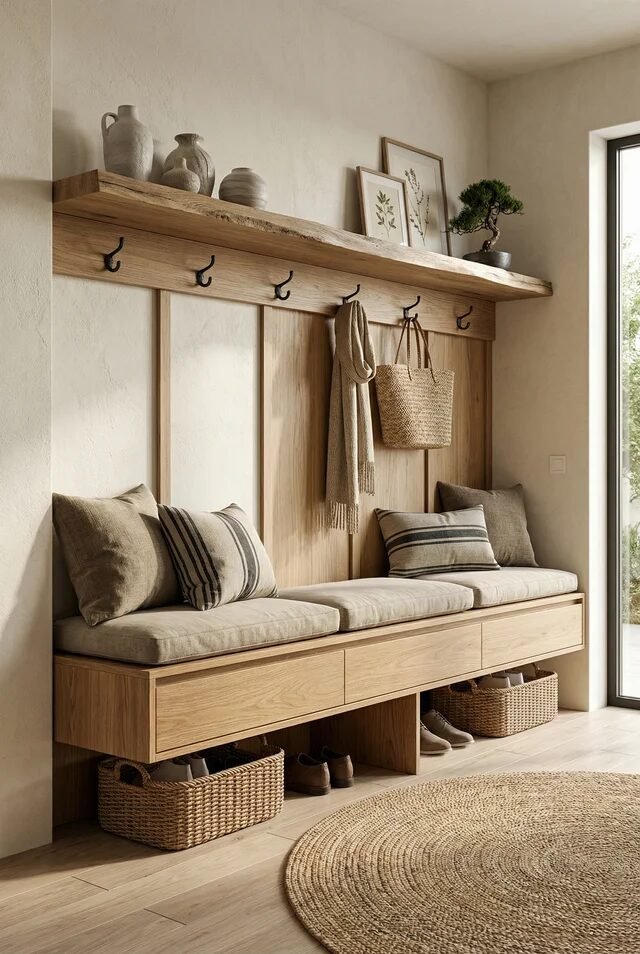
After all these ideas, one thing is clear: Japandi isn’t about copying a look—it’s about understanding a feeling. Every successful entryway we’ve seen works because it balances beauty with purpose. Seating isn’t just cute, it’s usable. Storage isn’t hidden randomly, it’s intentionally zoned. Good design here means every detail quietly supports your daily routine.
The magic really comes down to consistency. Stick to a tight palette, repeat materials, and layer textures instead of colors. When everything feels connected, the space instantly looks more elevated—even if the pieces are simple. That’s the Japandi cheat code.
And let’s be honest, the real flex is how calm everything feels. No chaos, no visual noise, no overstyling spirals. Just a space that works, looks good, and doesn’t stress us out. If your entryway feels like a reset button, you’ve absolutely nailed it.