
Why These Japandi Kitchens Feel So Calm (And How to Steal It)
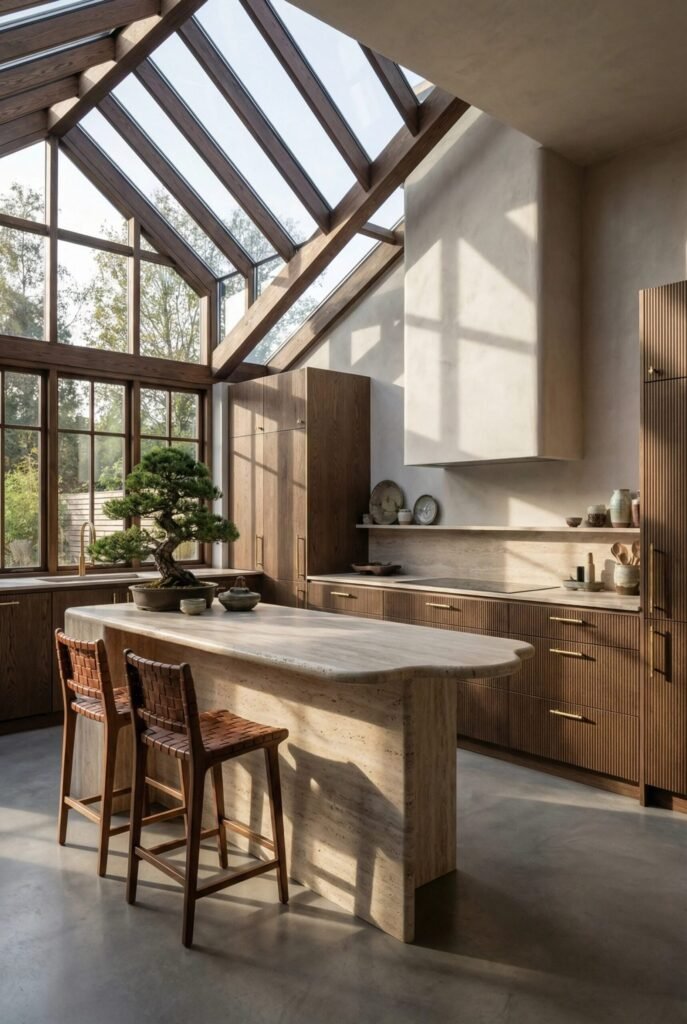
Japandi kitchens aren’t just about looking aesthetic on Pinterest—they’re about creating a space that actually feels good to exist in daily. We’re blending Japanese restraint with Scandinavian comfort, which basically means clean lines softened by warmth, not cold minimalism that feels intimidating. It’s intentional, but never try-hard.
Across these ideas, we keep seeing the same quiet rules show up: natural materials, muted palettes, and thoughtful spacing. Wood tones bring warmth, stone adds grounding, and soft lighting ties everything together. The real goal isn’t perfection—it’s balance between function and feeling. If a kitchen looks beautiful but isn’t practical, Japandi would politely say… no thanks.
As we explore these designs, notice how everything has room to breathe. That’s not accidental. Negative space, texture layering, and subtle contrast are doing most of the heavy lifting here, not excessive decor. It’s less stuff, more intention—and honestly, that’s the upgrade we all need.
Seamless Indoor Outdoor Japandi Kitchen
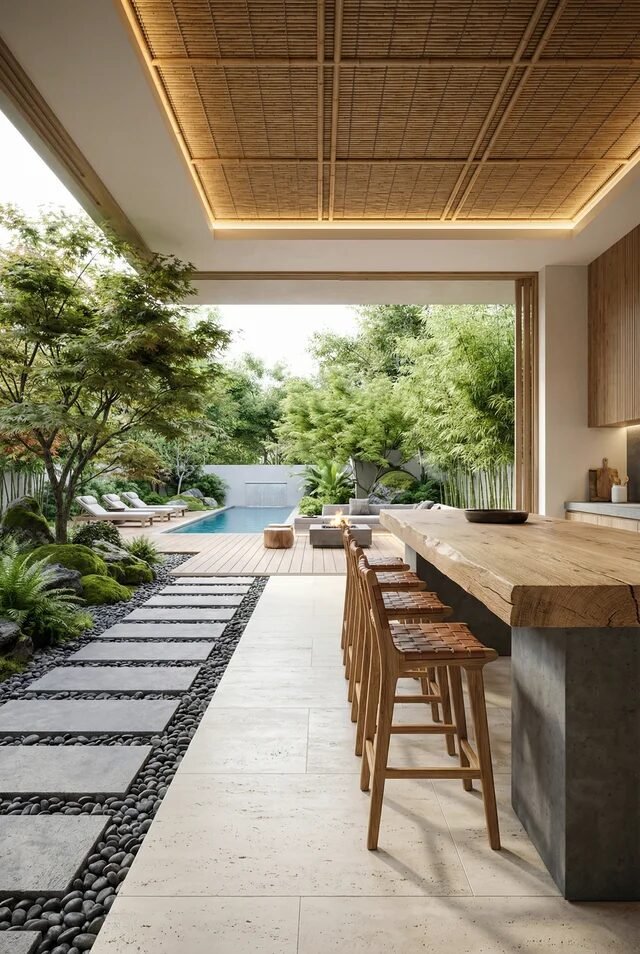
This setup is basically what happens when a kitchen decides it wants a spa day. The open transition between indoor prep space and outdoor greenery creates a visual extension that makes the kitchen feel twice its size without adding square footage. We’re working with sightlines here—notice how the stone path, deck, and pool all align in clean, horizontal layers. That’s intentional. It calms the eye and keeps everything feeling ridiculously curated.
Material-wise, this is Japandi gold. Warm wood, raw stone, and soft greenery create a balanced contrast between structured surfaces and organic elements. If we’re recreating this, don’t overthink the palette. Stick to 3–4 tones max and let texture do the talking. The woven ceiling detail? That’s your “quiet luxury” moment.
Pro tip: blur boundaries. Use similar flooring tones inside and out, and keep furniture low-profile. The goal is flow, not friction—and yes, your kitchen will suddenly feel like a boutique resort.
Sculptural Concrete Island Meets Warm Wood Minimalism
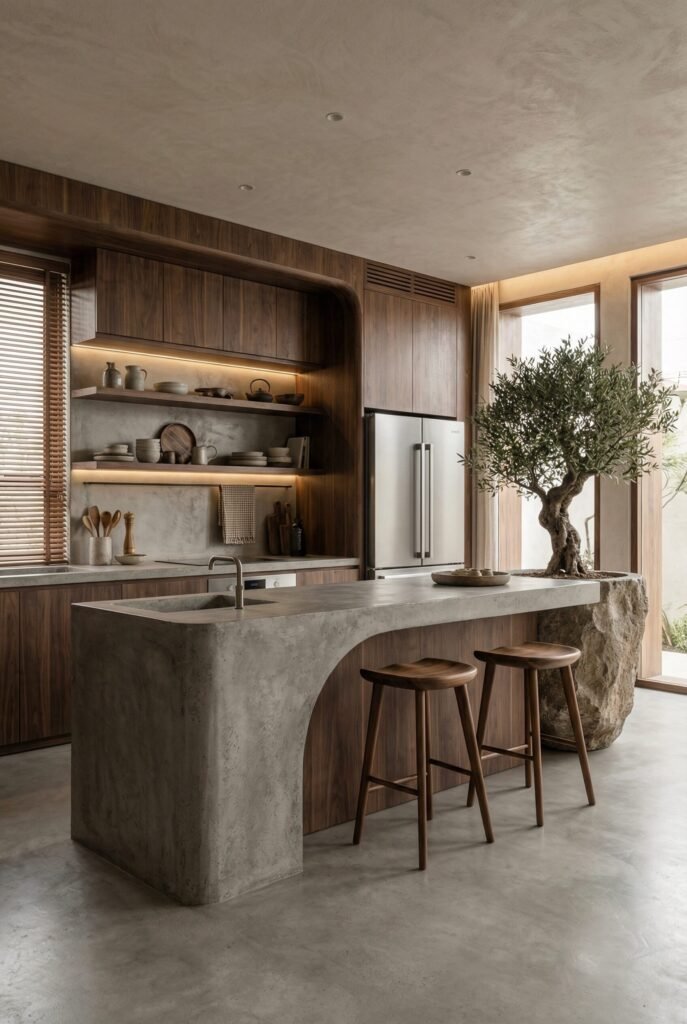
Okay, this island is not just an island—it’s a main character. The curved concrete base softens what could’ve been a cold, industrial vibe, making it feel intentional, sculptural, and very Pinterest-core without trying too hard. Pairing it with flat-panel wood cabinetry keeps everything grounded and warm, which is key in Japandi design.
Let’s talk balance. You’ve got heavy (concrete) versus light (wood grain), matte versus subtle sheen, and straight lines contrasted with curves. This push-and-pull is exactly what keeps minimal spaces from feeling boring. If we’re copying this look, don’t skip the under-cabinet lighting—it adds depth and makes the materials glow instead of sit flat.
And that olive tree moment? Genius. Bringing in a single organic focal point adds life without clutter. Rule of thumb: one statement piece beats ten small decorations every time. Clean, calm, and just a little dramatic.
Light Wood Kitchen With Soft Scandinavian Warmth
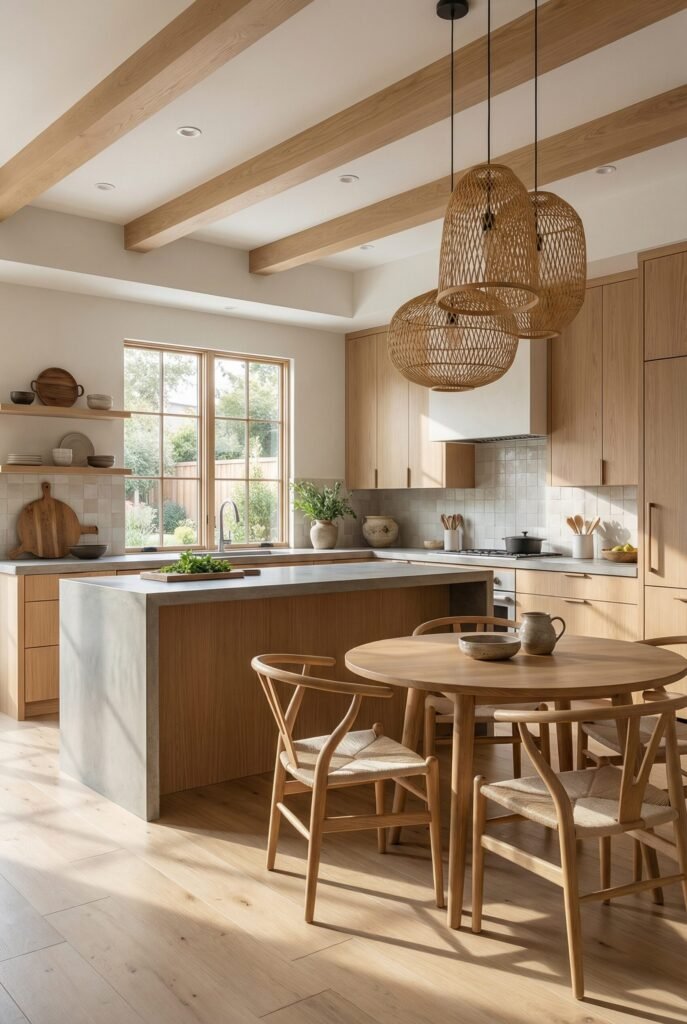
This one is for the “we want minimal but not cold” crowd. The light wood cabinetry, paired with soft white walls and natural light, creates a bright, breathable space that still feels cozy instead of clinical. It’s giving Scandinavian energy, but grounded with Japandi restraint.
The exposed beams are doing more than just looking cute—they visually frame the ceiling and add rhythm. Meanwhile, the woven pendant lights introduce texture right at eye level. Layering happens vertically here, not just across surfaces, which is a trick we should absolutely steal.
If you’re recreating this, focus on consistency. Match wood tones (or stay very close), avoid high-contrast hardware, and keep decor minimal but tactile—think ceramics, linen, soft curves. The magic is in subtle variation, not loud statements. It’s calm, cohesive, and honestly… kind of addictive to look at.
Cozy Corner Kitchen With Built In Seating Nook
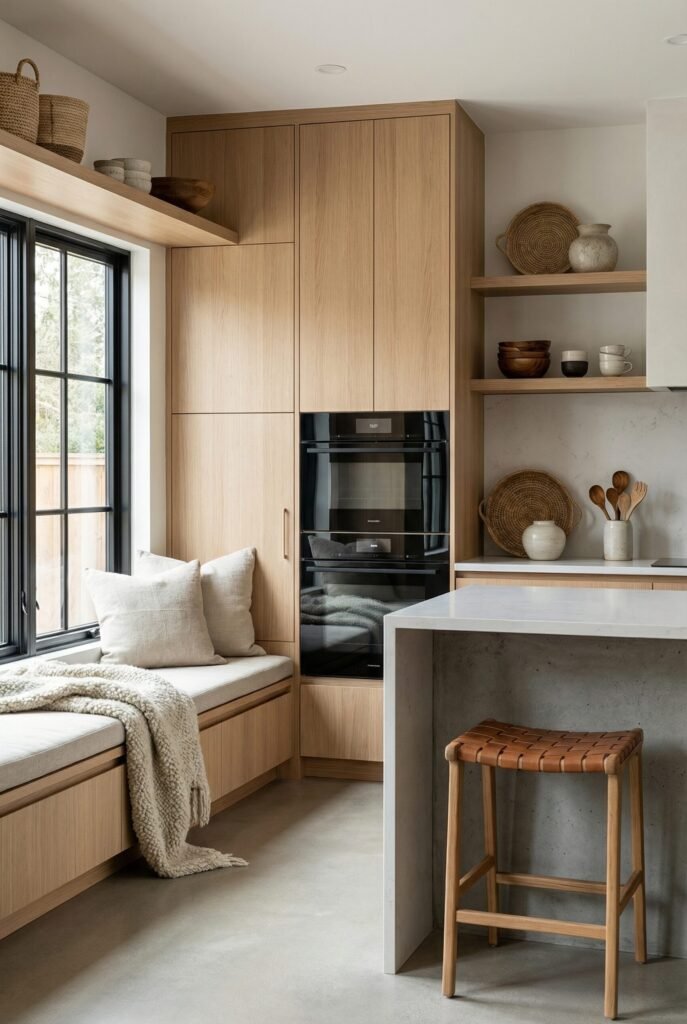
This is where functionality meets “I accidentally made a café at home.” The built-in bench transforms an unused corner into a multi-functional zone that blends dining, lounging, and storage in one clean move. And because everything is integrated, it keeps the visual clutter basically nonexistent.
The design trick here is continuity. The cabinetry, shelving, and bench all share the same wood tone, creating a seamless wraparound effect. This makes the space feel custom-built and way more expensive than it probably is. Add soft textiles—like that throw and neutral cushions—and suddenly it’s not just practical, it’s inviting.
If we’re doing this at home, prioritize proportions. Keep the bench depth comfortable (not too shallow), and balance it with open shelving to avoid heaviness. Closed storage below, open styling above—that’s the sweet spot. Bonus: it’s the perfect coffee scrolling corner.
Warm Slatted Wood Kitchen With Ambient Lighting Glow
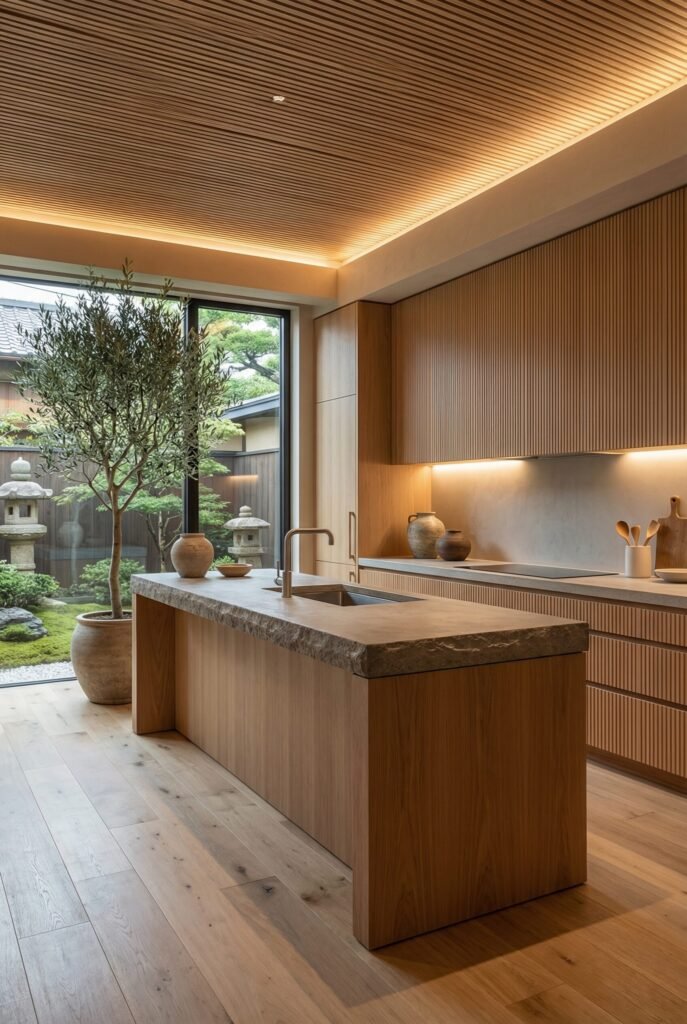
This kitchen is basically mood lighting in architectural form. The vertical slatted wood panels add texture without clutter, while the hidden LED strips create that soft, diffused glow that makes everything look instantly elevated (and yes, more expensive). Lighting here isn’t just functional—it’s emotional.
The key principle is layering light, not blasting it. You’ve got ceiling cove lighting, under-cabinet glow, and natural light from the window. This combination reduces harsh shadows and creates depth, which is essential in minimalist spaces. Without it, everything would fall flat.
When recreating, focus on warm tones—both in wood and lighting temperature. Stick to 2700K–3000K lighting for that cozy vibe. And keep decor minimal but intentional: ceramics, a single plant, maybe one statement vase. In Japandi design, restraint isn’t boring—it’s the whole flex.
Slatted Ceiling Kitchen With Warm Ambient Lighting Layers
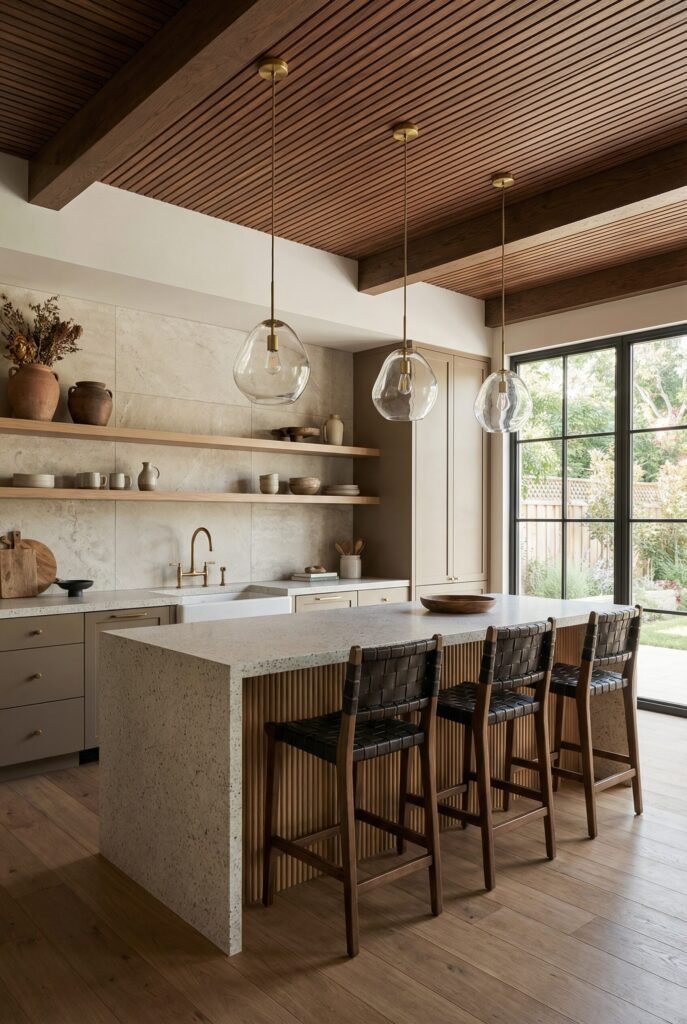
This kitchen is doing the most… in the quietest way possible. The slatted wood ceiling instantly draws the eye upward, creating a layered vertical dimension that makes the space feel taller and more architectural. Combined with those soft globe pendants, we get a perfect mix of structure and softness—very Japandi, very intentional.
The palette stays grounded in warm neutrals, but the real magic is in repetition. You’ve got slats on the ceiling, subtle linear textures on the island, and horizontal shelving to balance it out. Repeating patterns like this creates rhythm, which keeps minimalist spaces from feeling flat or lifeless.
If we’re recreating this look, don’t skip lighting placement. Keep pendants evenly spaced and aligned with the island for visual order. Consistency is what makes it feel expensive, not the materials themselves. And yes, dimmable lighting = instant mood control.
Curved Minimal Island With Textured Tile Detailing
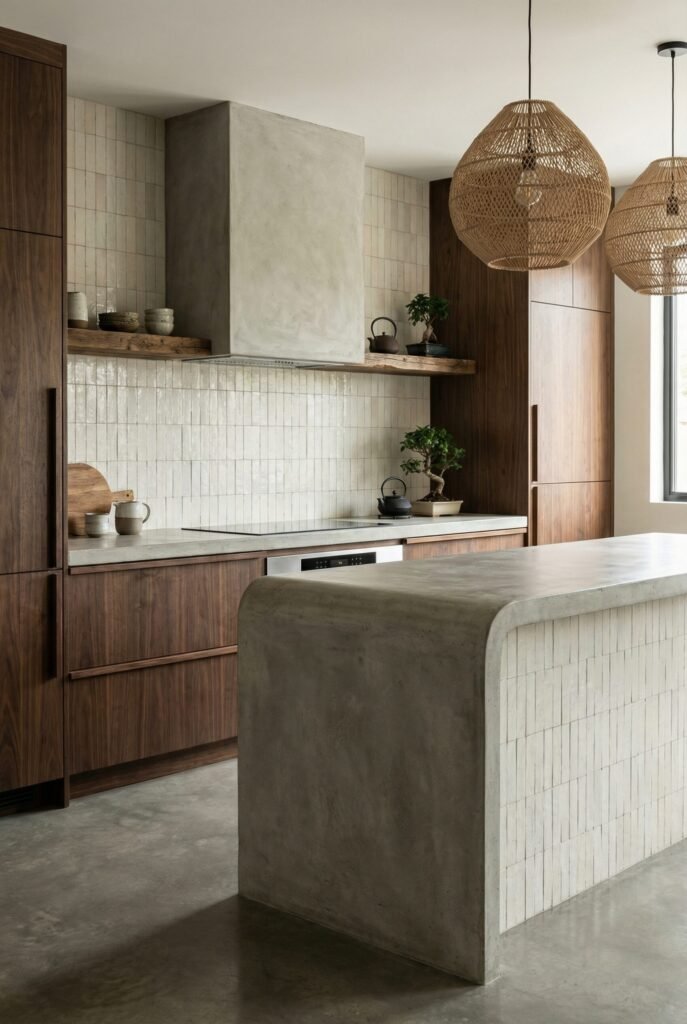
This one feels soft, sculptural, and just slightly artsy (in a cool way, not a “we tried too hard” way). The curved island edges break away from rigid geometry, making the space feel more relaxed and organic. In Japandi design, softening hard lines is key to creating a calming environment.
Now let’s talk texture. That tiled island front paired with smooth plaster and wood cabinetry creates a layered material story. Nothing is shouting, but everything is contributing. This is how you add depth without adding clutter—through contrast in finishes, not objects.
If we’re copying this vibe, focus on transitions. Make sure materials flow naturally into each other without harsh breaks. And keep decor minimal—maybe a small plant or ceramic piece. The island is already the star, so let it have its main character moment.
Compact Japandi Pantry With Open Shelf Styling
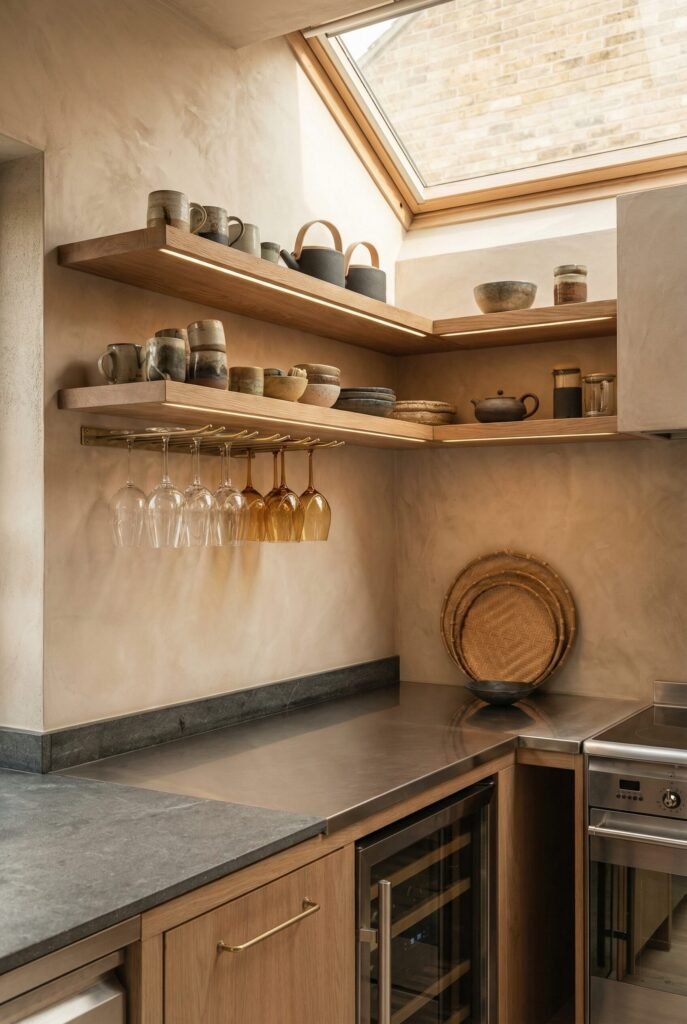
Small space? No problem. This corner setup proves that even the tiniest kitchen zones can feel curated. The open shelving keeps everything accessible while also acting as decor. Function meets aesthetic here, and honestly, we love to see it.
The key principle is intentional styling. Notice how items are grouped—ceramics with ceramics, glassware neatly hung, everything spaced out. Negative space is just as important as the objects themselves, otherwise it quickly turns into visual chaos (aka not Japandi at all).
If we’re recreating this, limit your color palette and stick to earthy tones. Install warm under-shelf lighting to highlight textures and create depth. And please, no random clutter—every item should feel like it earned its spot. Yes, even your favorite mug.
Bright Japandi Kitchen With Statement Paper Pendants
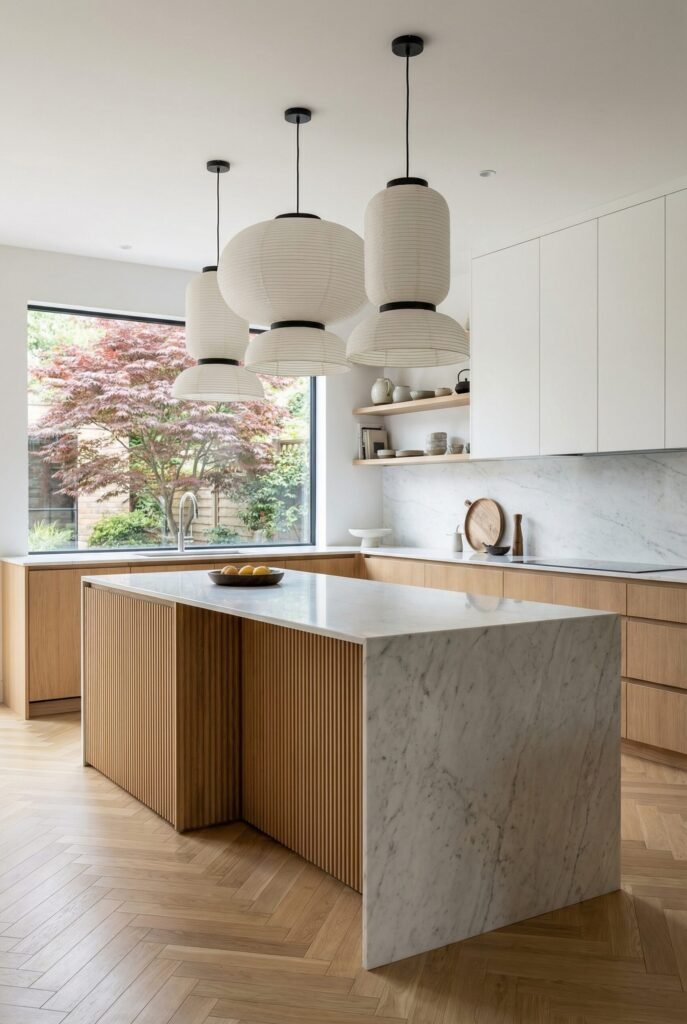
This kitchen said “light and airy” and actually meant it. The oversized paper lantern pendants bring softness and volume without heaviness, creating a floating visual effect that keeps the space feeling open and calm. It’s minimal, but definitely not boring.
What’s working here is contrast done gently. Light wood cabinetry, white upper units, and marble surfaces blend seamlessly, while the ribbed island adds just enough texture. Subtle contrast is the Japandi sweet spot—nothing too stark, nothing too flat.
If we’re recreating this look, scale matters. Go bigger with lighting than you think, especially in open kitchens. And keep surfaces clean—just a few curated pieces max. The vibe is “effortlessly styled,” even if we absolutely overthought every detail behind the scenes.
Mixed Wood Tones Kitchen With Graphic Panel Details
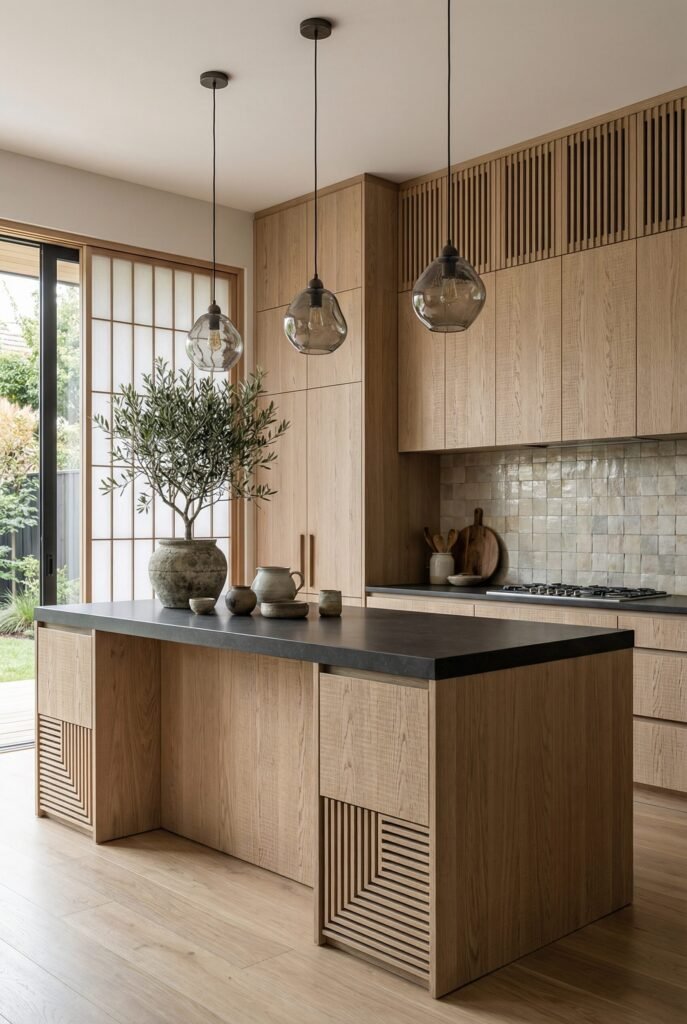
This one is for anyone scared of mixing woods—don’t be. When done right, it adds depth instead of chaos. The combination of light and medium wood tones here creates a layered, dimensional look that still feels cohesive because the undertones match.
The geometric panel detailing on the island is the standout moment. It adds visual interest without needing extra decor. This is a great trick: let your cabinetry do the styling so your countertops can stay clean and minimal.
If we’re trying this at home, keep contrast controlled. Stick within a similar color temperature and repeat tones across the space to tie everything together. Add one organic element, like that olive tree, for softness. Balance structure with nature—that’s the Japandi formula we’re not gatekeeping.
Designing Kitchens That Feel Effortless Yet Intentionally Styled
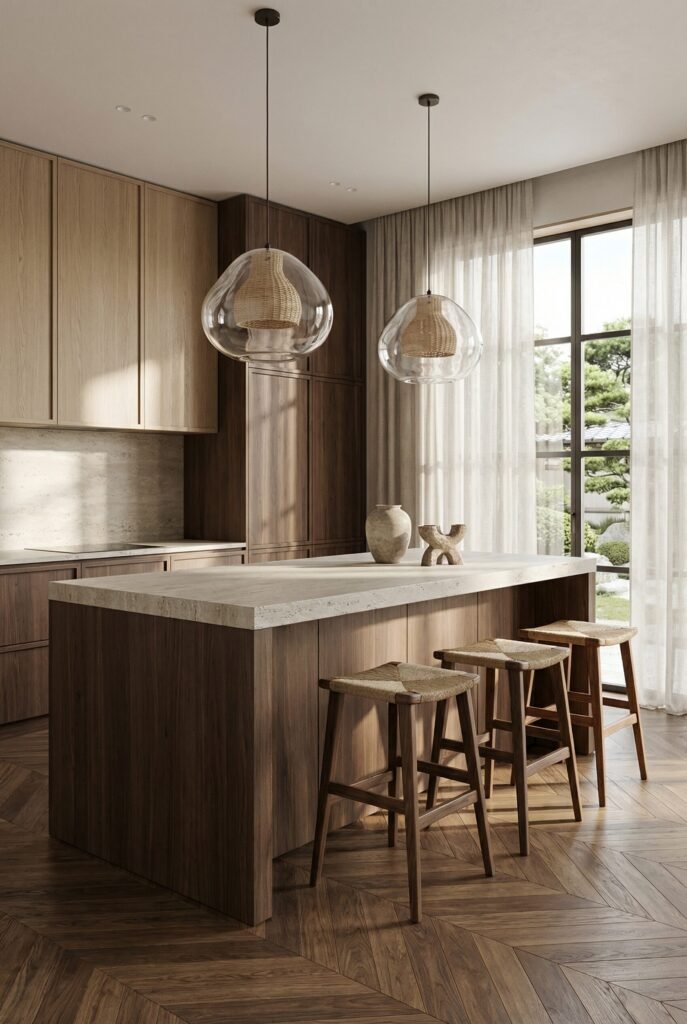
After going through all these kitchens, one thing is very clear: Japandi design is low-key strict, just in a very chill way. It rewards consistency, balance, and restraint. We’re not throwing in random decor or mixing five styles “just because.” Every choice should feel calm, cohesive, and slightly edited down.
What makes these kitchens work isn’t just the materials—it’s how they interact. Warm wood softens stone, lighting creates depth, and organic elements bring life into structured spaces. That push-and-pull between natural and minimal is what keeps everything from feeling flat or sterile. It’s subtle, but it matters.
If we’re recreating this at home, start simple. Choose a tight palette, invest in good lighting, and let textures do the talking. Japandi isn’t about doing more—it’s about doing less, but doing it better. And honestly? That mindset shift might be the most valuable design tip of all.