
Small Barn House Inspiration: Exterior Ideas That Create Big Impact
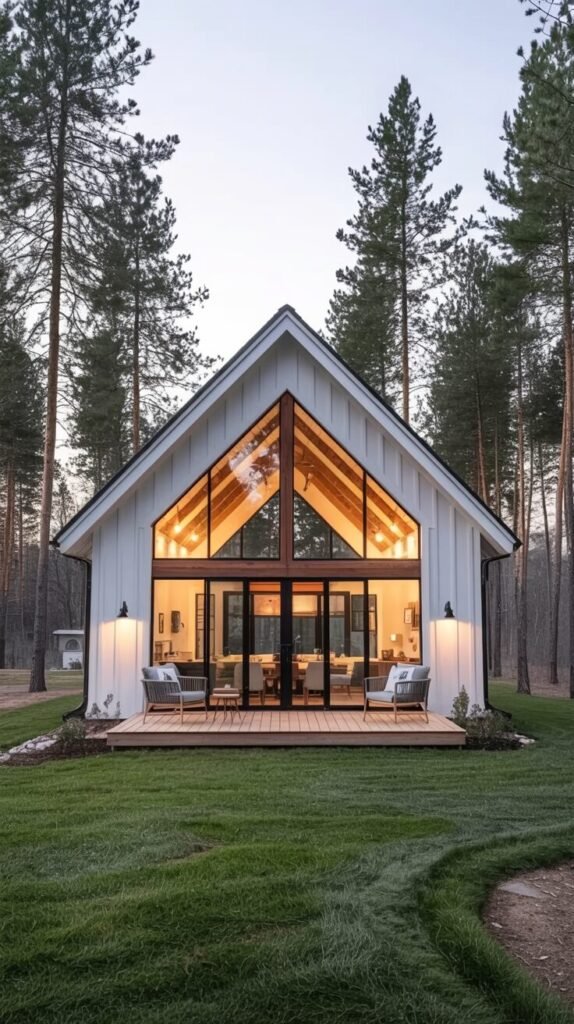
When those tiny barn houses get it right, they don’t merely “borrow” from barndominium chic; they really capture its awesomeness and discard all the stuffy stuff. That teeny footprint means every single design choice has to truly count, unlike those McMansions where they just fling things against the wall.
We’re talking about the mischievous slope of the roof, the rhythmic thud of the siding, and the nicely proportioned peek-a-boo of the windows. It’s not about putting on gaudy trimmings (thank heaven), but of attaining pure lucidity and a killer arrangement. These houses employ their massive chunkiness, lovely materials, and skinny edge to look earthy, architecturally substantial, despite being pretty much a glorified shed.
And here’s the kicker, the delectable irony: being constrained is a golden chance. In this post, we’re gonna dissect how those classic barn-style rules magically translate into small-scale exteriors that feel absolutely expansive, completely intentional, and undeniably, unapologetically barn. This isn’t your grandma’s dusty “rustic nostalgia” trip. Oh no, this is about strategic spatial wizardry, flawless balance, and divine light—all conspiring to make a small footprint feel like it was designed by a god (or at least someone with excellent taste).
Composing the Façade—How to Frame a Small House Beautifully
Centered Symmetry vs Intentional Asymmetry
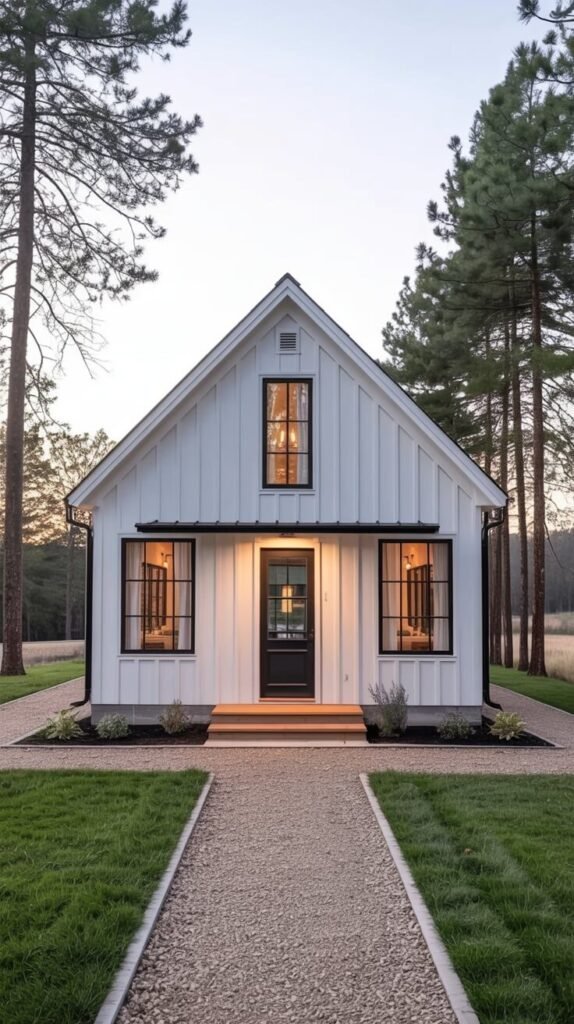
How a facade is put together—whether playing it straight and symmetrical or a bit nutty with asymmetry—can totally change the emotional vibe of a little house. Centered symmetry? That’s for the serene, orderly crowd who dig old-school charm. It’s basically placing all your design elements along a perfectly straight, middle line, giving the house that timeless, balanced look, as if it just stepped out of a geometry textbook.
Intentional asymmetry is where you intentionally shift things off-center for drama and visual interest. In dollhouse architecture, where every inch is basically gold, deciding between these two isn’t so much what’s cute—it’s what story you want your house to tell. Do you want it to whisper “formal and composed” quietly, or shout “relaxed and utterly expressive”? Choices, choices, my friend.
In the first picture, the symmetry is so horribly glaring and intentional, it might as well be screaming “perfectionist lives here.” The door is situated, like, right in the middle between two identical windows, and even the top gable window is going along with the central axis bit. Heck, even the landscaping and gravel walkway are mirroring one another.
This has plenty to do with architectural seriousness and finesse of the visual variety. The house thus appears to be dignified in a subtle way although it is tiny. It’s a masterstroke to achieve formality without appearing to be a junk drawer of the visual variety.
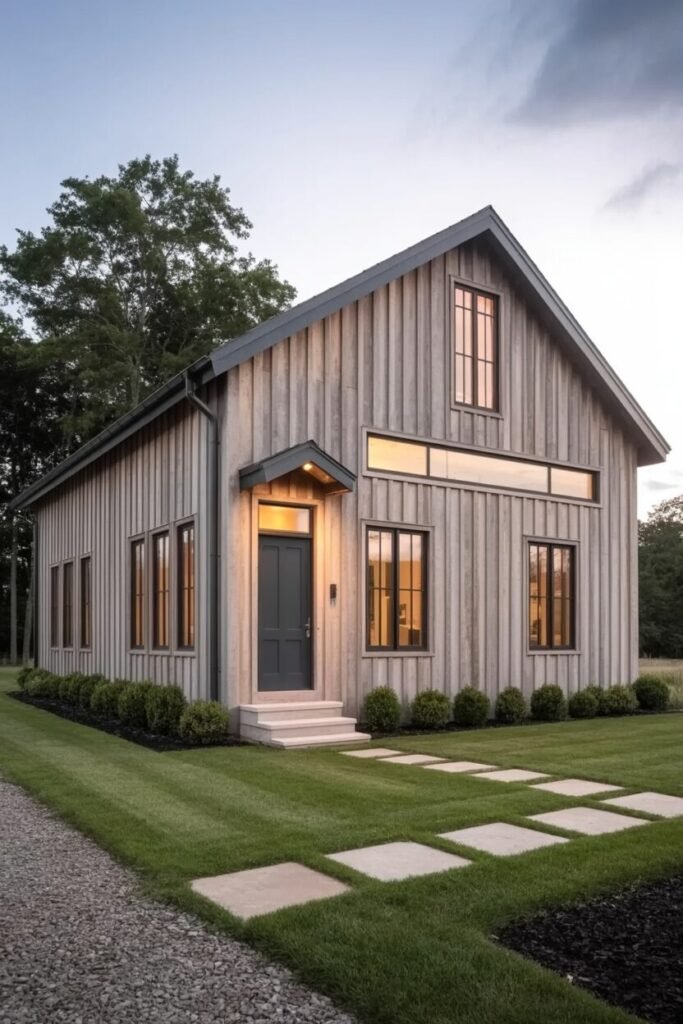
The second house, with its bold character, takes a more assertive approach—it subtly shifts the front door off to one side, offering little on the opposite end aside from a sleek, horizontally stretched clerestory window. This asymmetry is artfully balanced through thoughtful window proportions and material choices, creating a rhythm that feels intentional and refined—far from anything haphazard.
It gently dares your eye to move across the facade instead of following a predictable vertical path. For a small barn house with a hint of cool confidence, this design adds charm, energy, and a quietly rebellious nod to the unexpected.
Framing the Entrance: Doors, Porches, and Overhangs
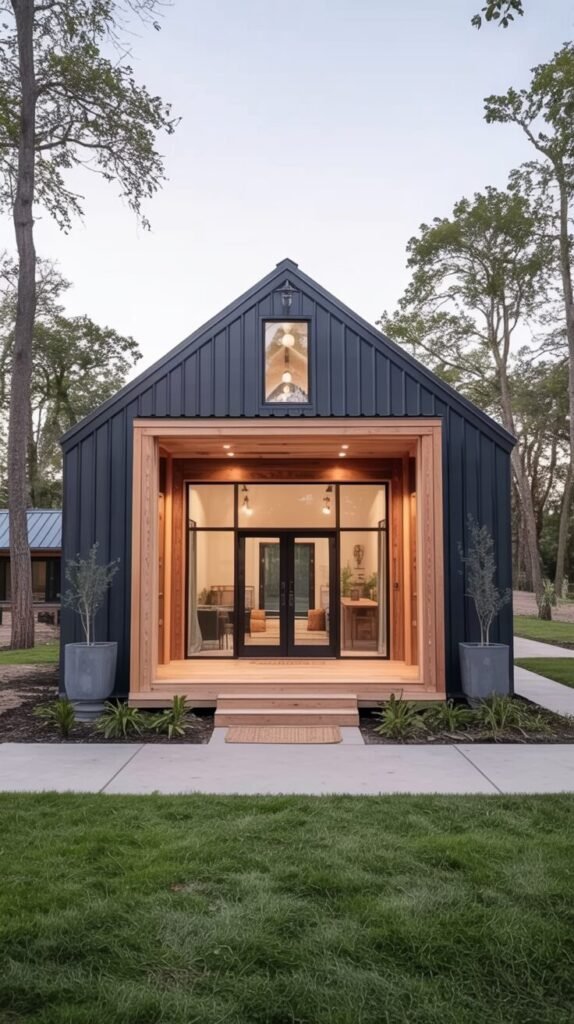
A front door is so much more than a fashionable hole you walk through—it’s the house hello of the home, welcoming you before you even ring the bell. On these lovable miniature-scale barn homes, where the front of the home is actually a postage stamp, how you frame the front door is an ultimate superpower for creating maximum design punch. Miniature umbrellas on overhangs create shelter and depth; miniature waiting rooms on porches offer a moment to linger; and the correct door selection? That’s your undisputed anchor.
All these elements collaborate to give the height some much-needed order, guide your eye, delineate spatial rhythm, and add to overall scale. A good entrance doesn’t just bring you in functionally, but with its mere presence and tone. It’s where proportion, material, and sheer intention party.
In the first photo, the entrance is hidden away deep within a sleek wooden entrance, creating this cool boxy surround that is contrasted in terms of definition with the black cladding. The pure thickness of the overhang creates luxurious shadow play and visuality and that glass doorway surrounded by black delivers openness without sacrificing altogether the composition. The broad steps and exquisitely symmetrical planters anchor the frame and lead your eye so seamlessly from the vista to the door. It’s contemporary, naturally, but not so austere it’ll numb your face off—fastidious, but somehow still welcoming.
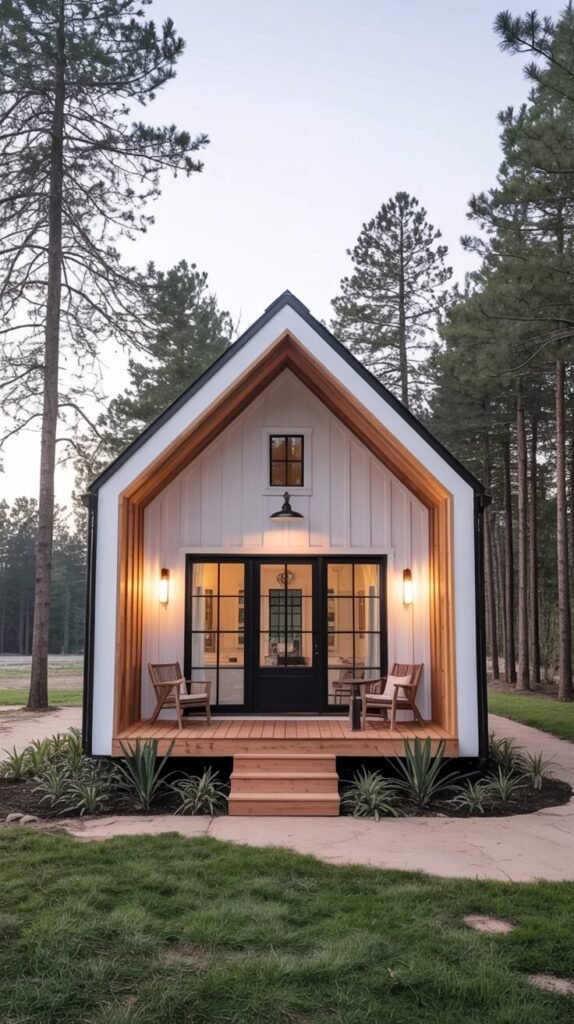
The other is much less informal in nature, using an overhanging gable to dig out a porch that’s more than a stylistic nicety—it’s a genuine functional outdoor space. The black door is flanked by sconces and glass panels symmetrically, but it’s that beautiful soffit of wood below the gable that breaks up the height and finishes off the entire volume.
Seating on each side of the door almost shout “come sit a spell,” inviting room beyond mere destination, destination still to remain a little while. The building here exquisitely blends function and feeling—quaking balancing act of protection, proportion, and welcoming.
The Power of Form—Why the Barn Shape Still Works
The Gable Roof and Vertical Dominance
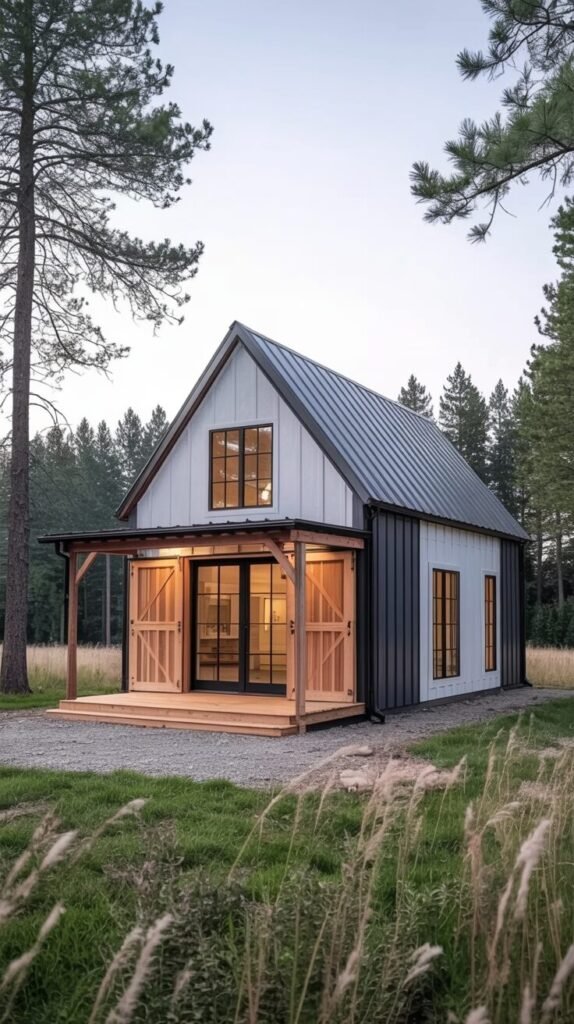
A gabled roof is not just a nostalgic stylistic reference to barns—it’s a dead-straight vertical line. That cold wedge of angle is brilliance, pushing your eye upwards and creating the illusion of height and solidity even in houses literally teeny square-footage-wise (aka teensies). That visual exaggeration not only makes the house look taller, it anchors the building firmly in the ground and nevertheless somehow infills it with a lovely sense of lightness.
The gable shape is also a superhero battle weather: pattering rain and snow like a pro, with storage space in the attic (hello, storage!) or dramatic vaulted ceilings, and opening up to breezy symmetry that is just serene to look at. Toss it with vertical thrills like massive windows or siding lines, and that roof angle quite out-awkwards the architectural swagger of a house a mile away.
In the example above, the gable roof holds firm like a definitive boss, compositionally demanding presence. Not only does its close-up angle dictate the shape, it’s just good sense to offer a middle top window getting away with the front facade geometry. The vertical projecting metal cladding and the porch columns in concert with it fall hand-in-glove with the roofline to lead the eye upward, announcing proportion and hierarchy. Even the hanging barn doors are lines of repeat rise, thus giving this perpetual visual movement from bottom to ridge.
Simplified Massing: Less Complexity, More Clarity
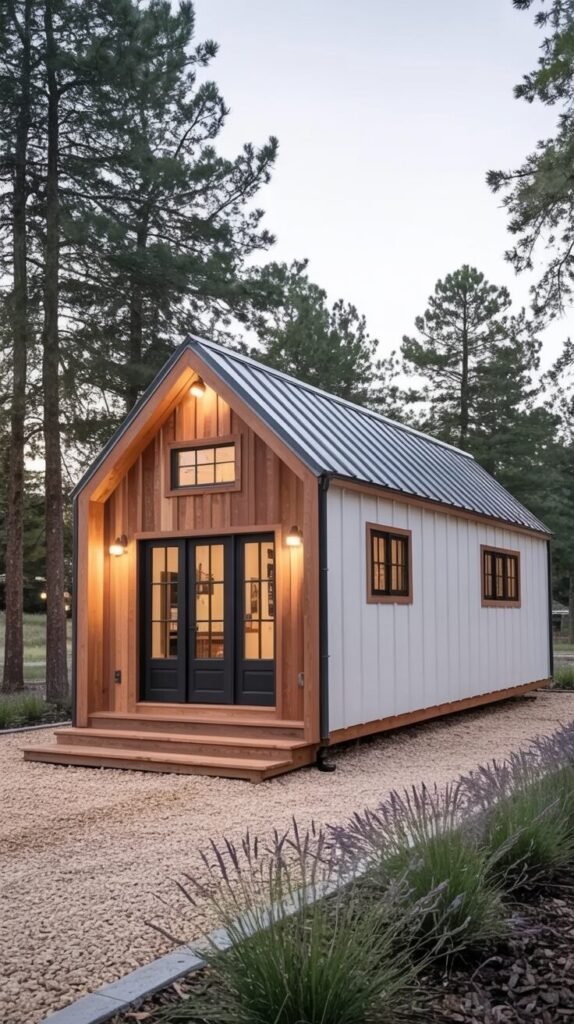
Streamlined massing isn’t minimalist chic that resounds “I’m too sophisticated for mess” — it’s homely ideals, homely existence. Paring the house down to a single, comprehensible volume is to have a homely home sound ring sweetly true to soil and gravitas. Generosity of form makes material, proportion, and rhythm ring sweetly unencumbered, unhindered short, bludgeon-fashioned, by frivolous ornamentation (perhaps a gratuitous turret).
In barn house design, the motto is one large handsome box cooled by one ridge and no neat ugly breaking or bulge anywhere. The benefit? A home that is not only less expensive and more financially prudent to build (hurray!), but simpler to enjoy and admire. In small-scale design, simplicity never appears stodgy and gloomy-it appears spacious, rich, and shiny clean.
The first photograph does this maxim so well that it is downright boastful. The house is one unbroken shape: a rectangle capped by a boastful gabled roof. No sides sloping, no winking wings—but one unbroken open plane. The new departure from warm rich cedar to white subsidiary siding just reinforces, rather than disappoints, the shape. Even the steps are retroussed, not forward swung of mass construction itself as in moorish style, and that does serve to convey its austerity without sacrificing an echo of personality.
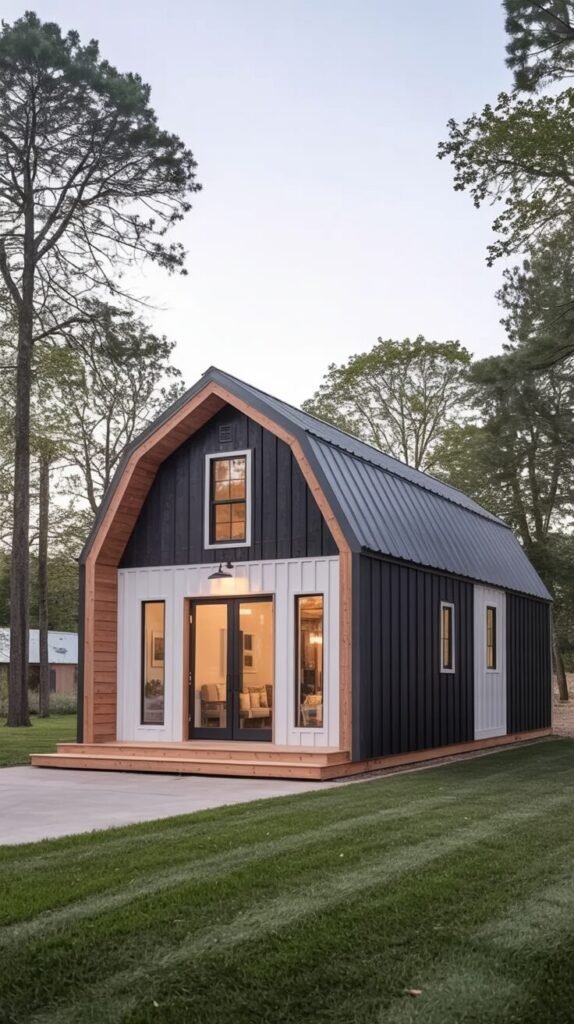
This second example demonstrates how the gambrel roof (the top-hatted one) can get along quite well by itself on its own with less massing. The house remains one clean, solid volume—there is no fragmentation to be seen there. That soft overframe along the gable edge is actually more an outline than a cut-off, adding contrast without subdividing the whole mass in two.
The front elevation is simply plane and symmetrical, doors and windows so tastefully arranged emitting that great sense of order. The massing here is reeking with confidence and weight, becoming more detailed without so much as a hint of losing any of its architecture personality. Your house is playing games.
Materiality That Elevates—Choosing the Right Texture and Tone
Wood, Metal, and the Balance of Warmth vs Modern
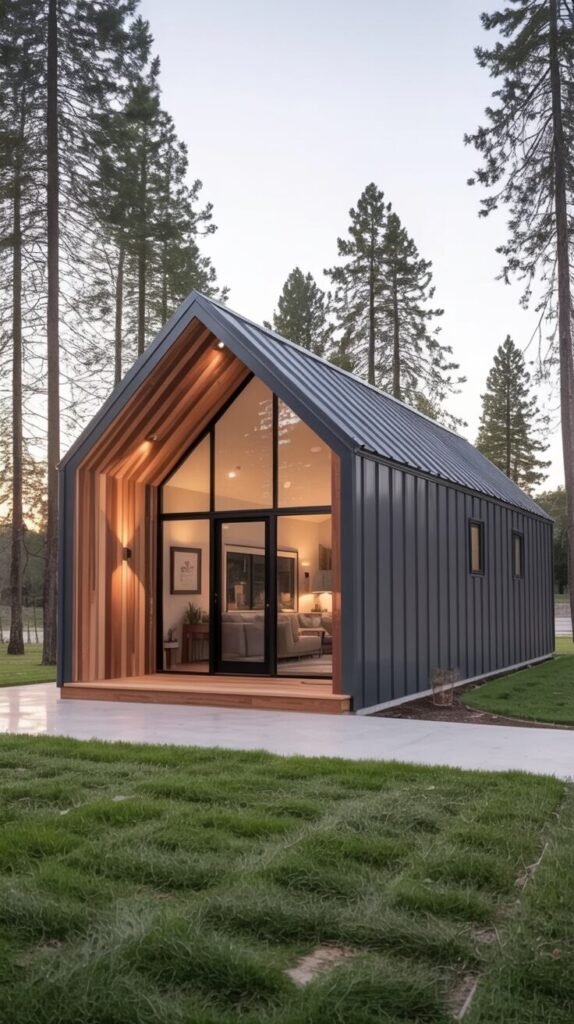
The finish you go with isn’t this surface sheen thing—They’re a whole attitude, honey. The secret with small barn houses is getting that perfect medium between warm and new so you don’t end up with this cold, hospital front or actually the complete and total hoarder’s heaven. Wood gives you warmth, texture, and this earthy, organic homiest of sensations. Metal gives you sleekness, heaviness, and this fantastic modern shape.
Where they overlap, they make nice contrast and hierarchy—where some move forward and the rest retreat because they must. It’s contrast that’s endearing: reserve the metal for the chill structural exterior; reserve the wood for detailing those beautiful zones of overlap—porches, fronts, or soffits. The house is sensually tactile and lived-in but ordered and proportionate.
In the first photo, the matte black standing seam metal siding hugs the building like a cozy sweater—smoothe, unblemished, and in place now. But it’s close wood that wraps around the front and soffit like a soft lining, bending around the turn and laying out a comfortable mat on the face of things for your eyes to come to rest on.
Its jarring combination of matte black and rich, amber-colored wood is intentional. It immobilizes your eye, assuming depth, as it soaks in architectural serenity. Light itself is a deeply serene backdrop for illusion, casting golden, seductive dawns on those rugged, silky surfaces.

The second example is the same approach with the opposite general stress. All this lower facade here is clad in natural cedar siding, grounding the house and sealing it up very tightly. The contrasting detail is light gray metal siding on the gable and the roof—just not to overwhelm the cedar but to point the eye up ever so slightly and to continue the overall visual weight.
Overall effect gobsmackingly even color scheme: warm and cozy but still knife-sharp and for a good reason. At least reminding us that materials needn’t always only creep up into the oblivion of each other. They simply need to be able to speak in lovely progression, just so.
Vertical vs Horizontal Cladding—What It Does to Perception
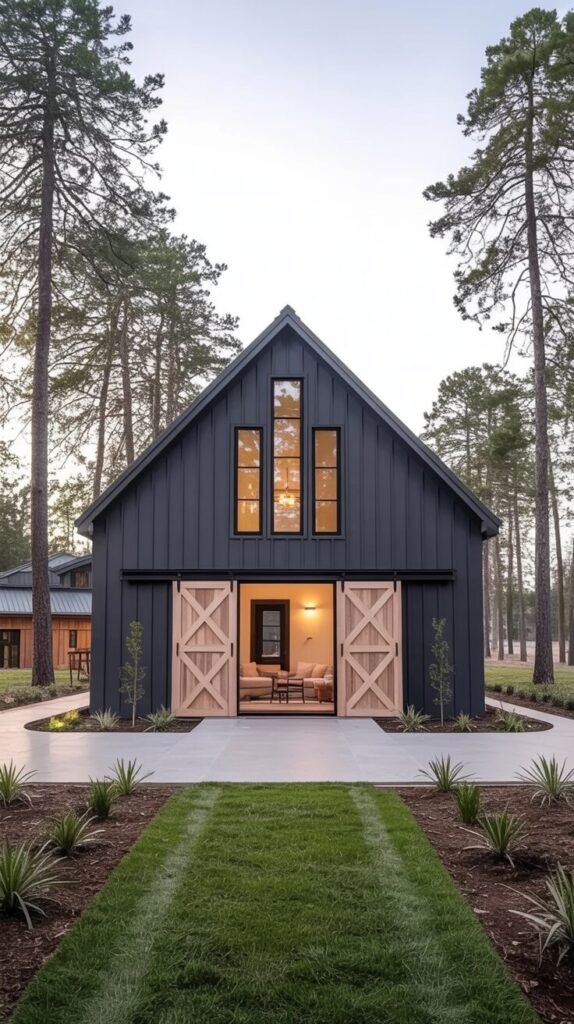
Vertical vs. Horizontal Cladding—What It Does to Perception Where your cladding attaches is more than merely a matter of surface texture choice—it’s the choice of the actual manner in which your eye is perceiving space shape. Vertical cladding, for example, actually pushes your eye upwards, to accentuate height and achieve the illusion of visual rise that so-elegant and architectural.
It’s particularly genius on thin-footprint homes, where you so badly want to elongate the outline instead of reducing it to a pancake. Horizontal cladding, in contrast, yells “width!” and “grounding!”—and gets your house to look more laid-back, vintage-cool. It’s not purely beautiful; it’s all about perception, controlling how others see your house. Each and every line that makes rhythm, shadow, and scale. And in houses under 1,000 square feet, impression is just about everything.
Architectural pinstripes are the metal siding in vertical stripes in the first photo. Black seams contemptuously accentuate the house’s top gable and that operatic stack of double-height windows, exact verticality at work. The lines nearly salute your eye with a high-five as they graze it from the green landscaping up to the roof, the building nigh on being pulled out. Even tall thin windows are dancing this beat, creating a small barn house elegant and dramatic. A small house can be dramatic, nobody knew?

Horizontal siding provides a more subdued and traditional look on the second model. The lines draw out the form, pushing it into the earth and creating the proportions broader to the eye. This orientation makes the porch rail, awning, and outsprung roofline stronger, all of which share the same side-to-side rhythm.
It is a wonderful thing when little house need to be spacious, cozy, and inviting, a big embrace. The house is high-gabled, yes, but the house itself is not looming but inviting, as if to invite the pedestrian to walk along the side of the building with open, untroubled eyes, not merely gawk up at it.
READ MORE >> “Beautiful Outdoor Kitchen Designs to Transform Your Backyard“
Light and Shadow Play—Designing for Movement, Not Just Structure
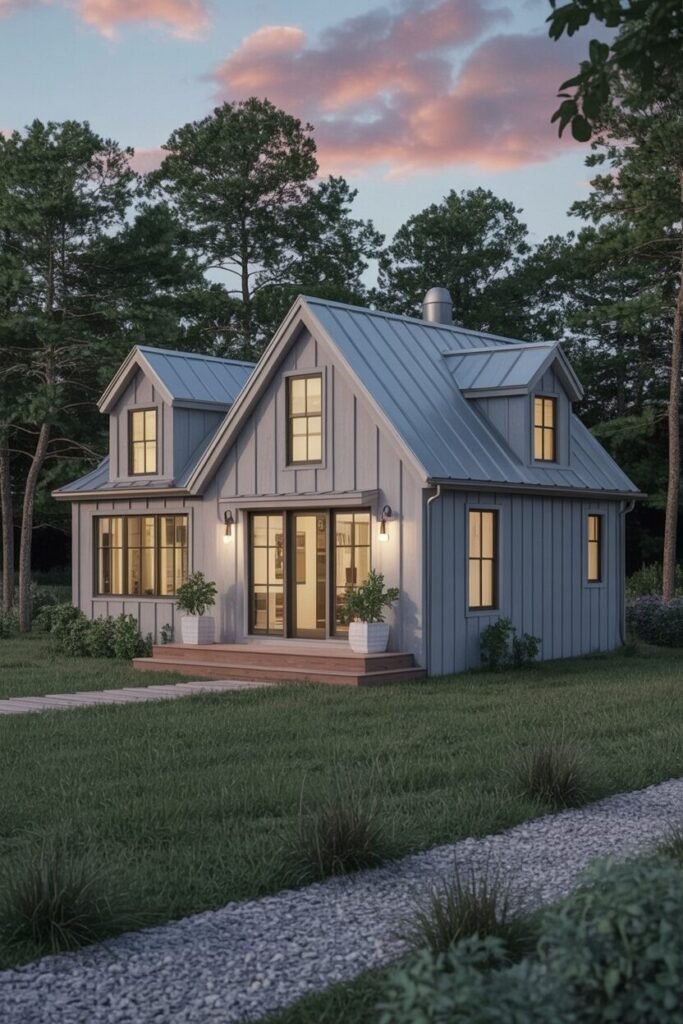
A wee barn house doesn’t require grandeur; it requires sense. One wee little gable, groove, and teeny-tiny weensy crevice adds up to that much more when the square footage is close-fitting not skinny pants. That’s why design concepts aren’t necessarily some artsy-fartsy looks—rather, they’re actually structural sense in Sunday best.
From the way cladding gracefully distorts your gaze to the way symmetry (or rather, asymmetry played for fun) insists on being felt, and the way a doorway sets atmosphere before the door even has the elegance to open—this, my friends, is visual weight anatomy.
If you go at every façade detail with sensitivity and consideration, even the most mundane forms can be richly textured, deplorably livable, and flat-out timelessness. Because effect in master design isn’t quantified in solid feet (oh, sweetie!)-it’s quantified in attention. And little barns? Oh, they are so full of wallop for all their weight, you’d have to be heartless.