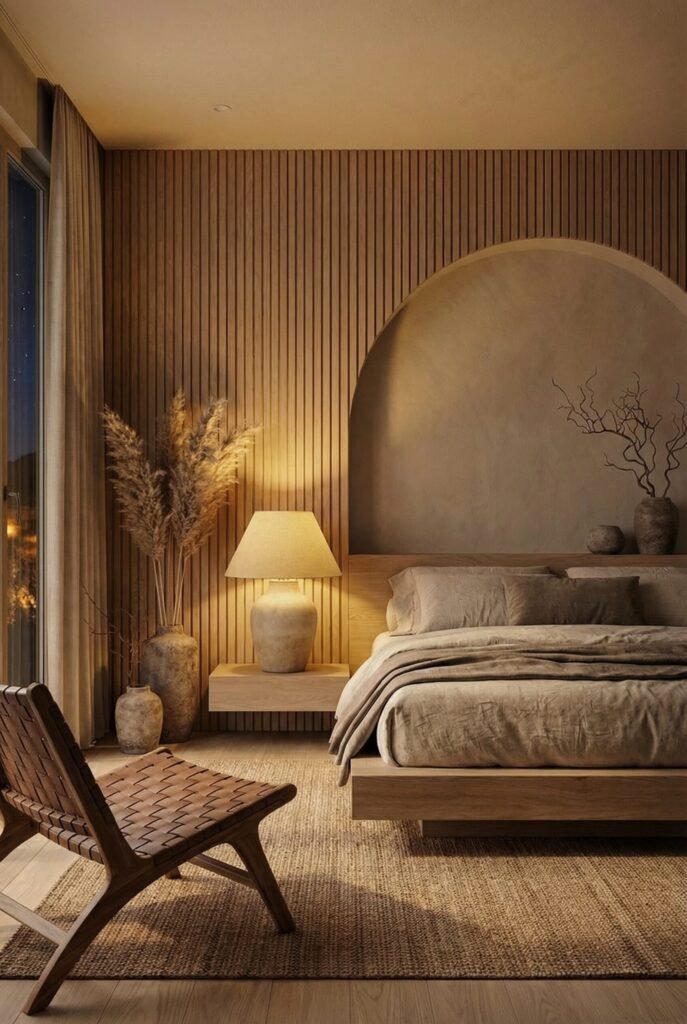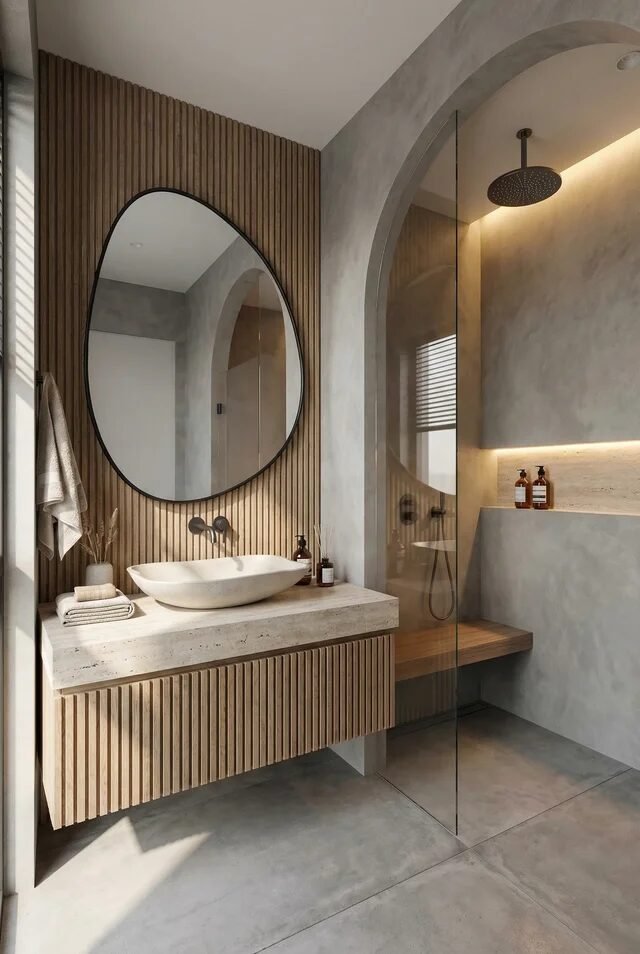

What No One Tells You About Pulling Off Japandi Style Living Room
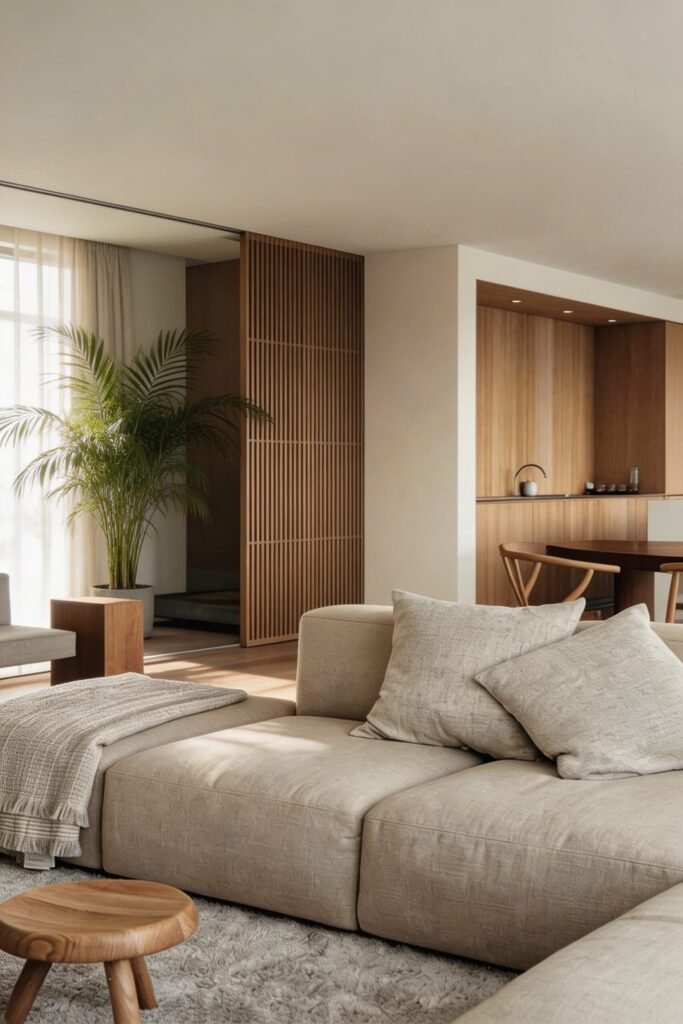
Let’s be honest—most living rooms try way too hard. Modern Japandi is the exact opposite. It’s that effortlessly cool friend who doesn’t need to raise their voice to get attention. This style blends Japanese minimalism with Scandinavian warmth, creating spaces that feel calm, intentional, and actually livable. No clutter, no chaos, just thoughtful design that makes you exhale the second you walk in.
What makes Japandi work is its obsession with balance. Clean lines meet soft textures, neutral palettes meet natural materials, and everything has a purpose. We’re not just decorating—we’re editing. If it doesn’t add function or feeling, it’s out. That’s the mindset shift.
As we go through these ideas, notice how each space uses restraint as a superpower. It’s not about having less—it’s about choosing better. And yes, your living room can look this good without feeling like a museum.
Floor-to-Ceiling Calm With Garden-Framed Living Design
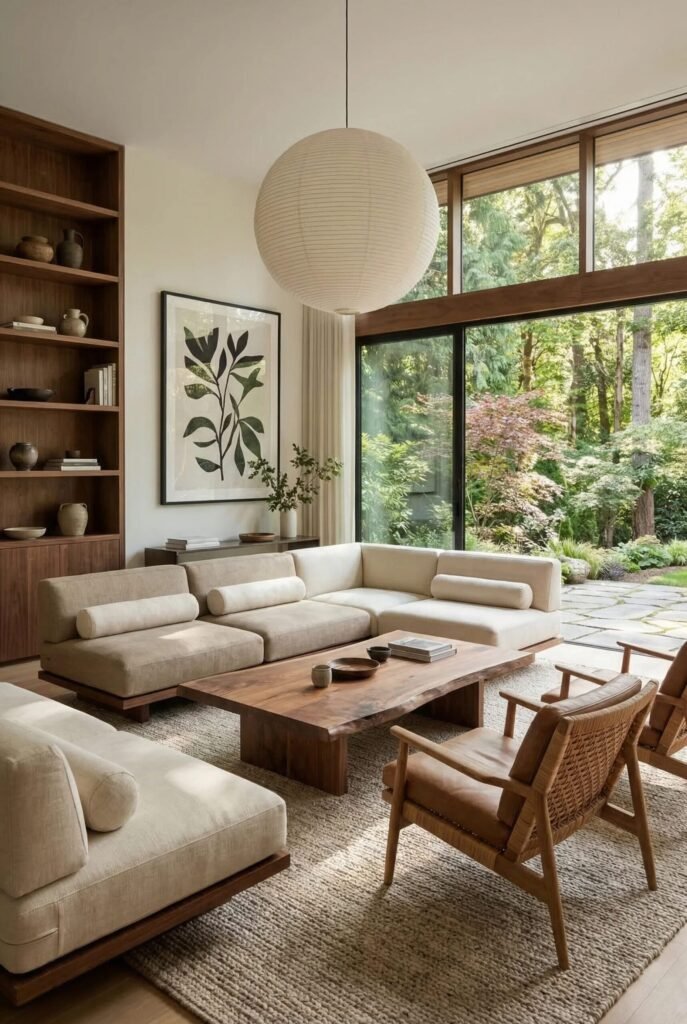
This is Japandi at its most peaceful main character energy. The entire layout leans into openness, where the sofa sits low and grounded, allowing the outdoor greenery to act as a living artwork. The key principle here is visual continuity—your indoor palette should echo what’s happening outside. Think warm woods, soft beige upholstery, and minimal contrast so nothing fights the view.
Notice how the furniture hugs the perimeter instead of cluttering the center. That’s intentional. We’re creating negative space so the room can breathe (yes, rooms need oxygen too). Low-profile furniture is a Japandi staple because it visually expands vertical space, especially with tall windows like this.
If we’re recreating this, keep decor minimal but intentional—one oversized paper lantern, one botanical print, one sculptural coffee table. Done. Add sheer curtains for softness, and suddenly your living room feels like a quiet retreat instead of a furniture showroom.
Warm Ambient Lighting That Feels Like A Hug
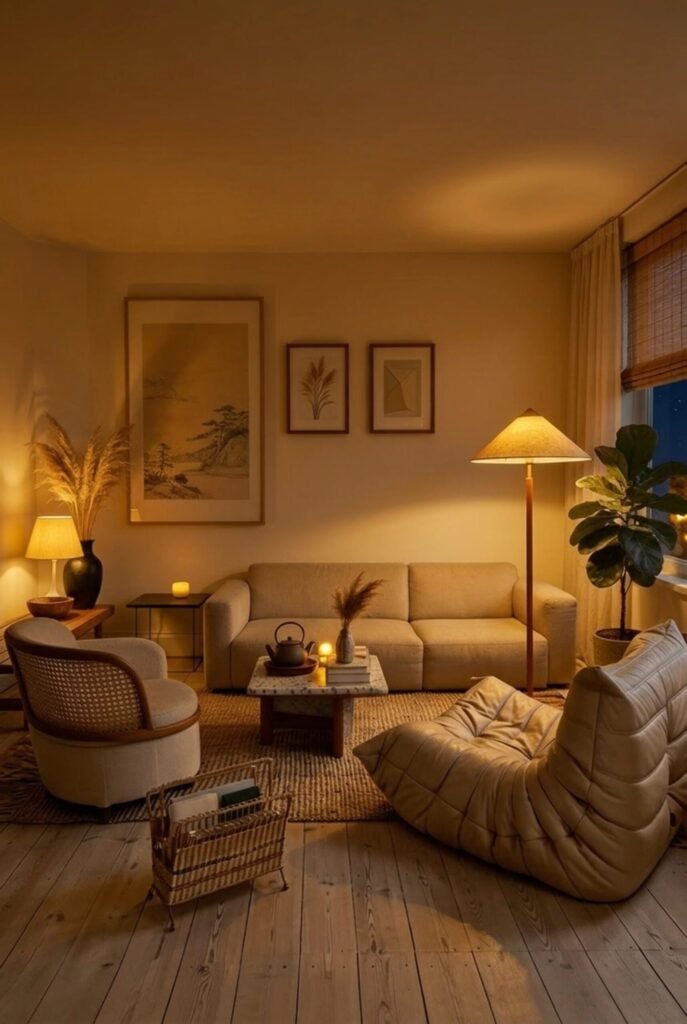
Okay but this lighting? It’s not just lighting—it’s a whole personality. This space leans heavily into layered warmth, using table lamps, candles, and soft bulbs to create depth. Japandi lighting isn’t about brightness, it’s about mood control. If your room feels like a hospital, we’ve already lost.
The color temperature here sits in that golden, cozy zone. Pair that with matte textures—linen sofas, woven rugs—and suddenly everything absorbs light instead of reflecting it harshly. This is what makes the room feel calm instead of chaotic.
If we’re copying this vibe, ditch overhead lighting as your main source. Use at least three light sources at different heights. Bonus points for warm-toned lampshades and organic shapes. And yes, candles are basically non-negotiable here—they add movement, which keeps the space from feeling flat.
Cozy Japandi Evenings With Sculptural Soft Seating
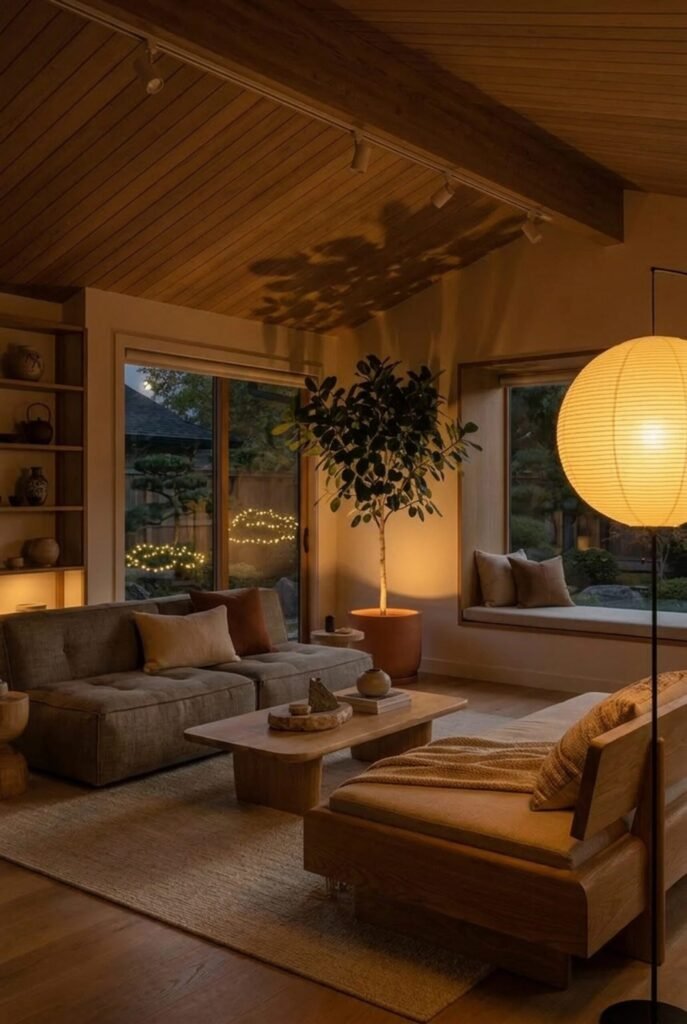
This one feels like a Pinterest save you actually come back to. The combination of a low sofa, soft lounge chair, and warm wood ceiling creates that wrapped in calm effect. The design principle here is layering comfort without visual heaviness.
Look at how everything sits low and slightly spaced apart. That’s not random. Spacing between furniture pieces creates visual rhythm, which is why the room feels balanced instead of cramped. Even the tree adds vertical softness without overwhelming the layout.
To recreate this, mix structured and relaxed seating. A firm sofa + a slouchy chair = instant depth. Keep your palette tight—warm beige, soft brown, muted greens—and let texture do the talking. Add one oversized pendant or floor lamp for a focal point, and we’re done. It’s giving cozy, but like… curated cozy.
Textured Feature Wall Meets Soft Curved Sofa
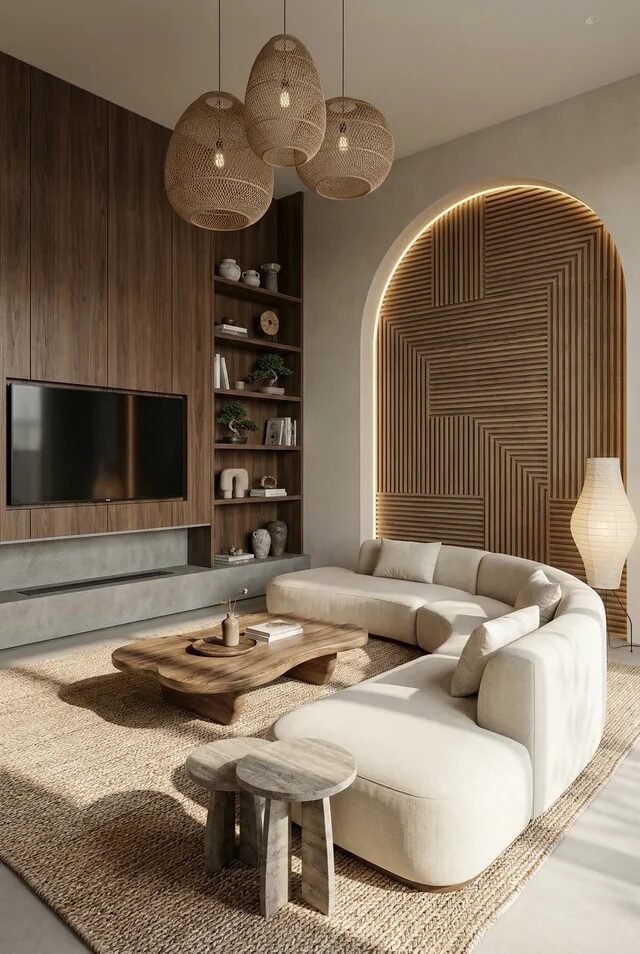
This is where Japandi gets a little bold—but still whispers, not screams. That curved sofa paired with the geometric wood wall? Chef’s kiss. The contrast between soft curves and structured lines creates visual tension—in a good way.
The arch detail adds a subtle architectural moment without needing extra decor. That’s the trick: let built-in features do the heavy lifting so styling can stay minimal. Notice how the palette is still super controlled—creams, warm wood, and soft shadows.
If we’re recreating this, focus on one statement element only. Either a textured wall, a curved sofa, or dramatic lighting—not all three fighting each other. Keep the rest understated. Add a chunky rug and low coffee table to anchor everything, and suddenly your living room looks like it has a design degree.
Airy Wood-Beam Living Room With Organic Layers
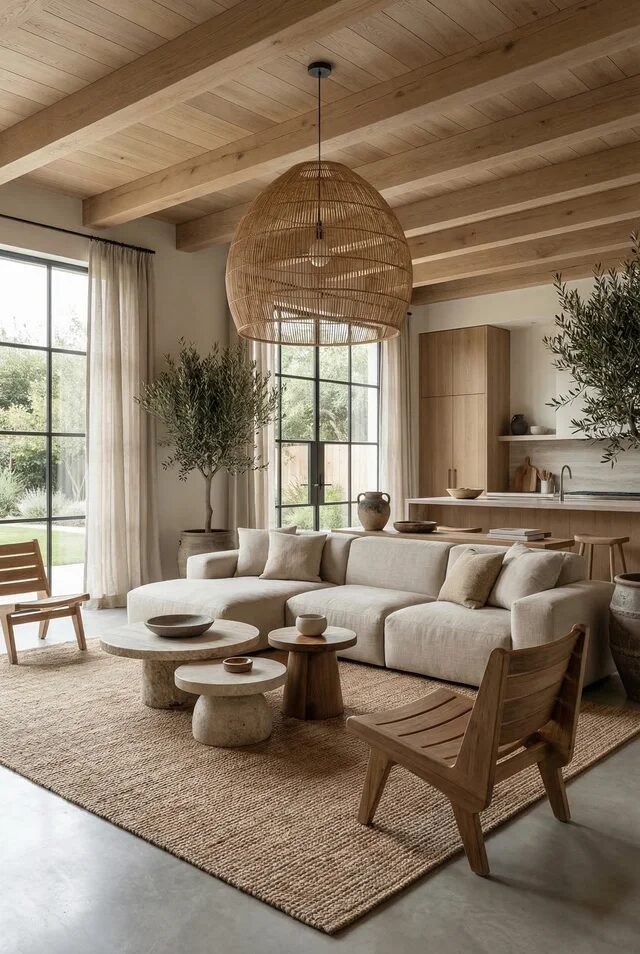
This one is basically Japandi meets soft rustic, and we’re not mad about it. The exposed beams bring structure, while everything underneath stays light and breathable. This balance between architectural weight and soft decor is what makes the space feel grounded but not heavy.
The furniture layout is intentionally relaxed—rounded tables, slightly angled chairs, nothing too rigid. Organic shapes help soften strong lines like beams and windows, which keeps the room from feeling too “boxy.”
If we’re recreating this, start with a neutral base (cream sofa, natural rug), then layer in wood tones gradually. Don’t match everything perfectly—variation is what makes it feel real. Add greenery for life, and keep accessories minimal but tactile. Think ceramics, linen, unfinished wood. It’s calm, but never boring—which is kind of the Japandi dream.
Soft Stone Texture Balanced With Minimal Warm Styling
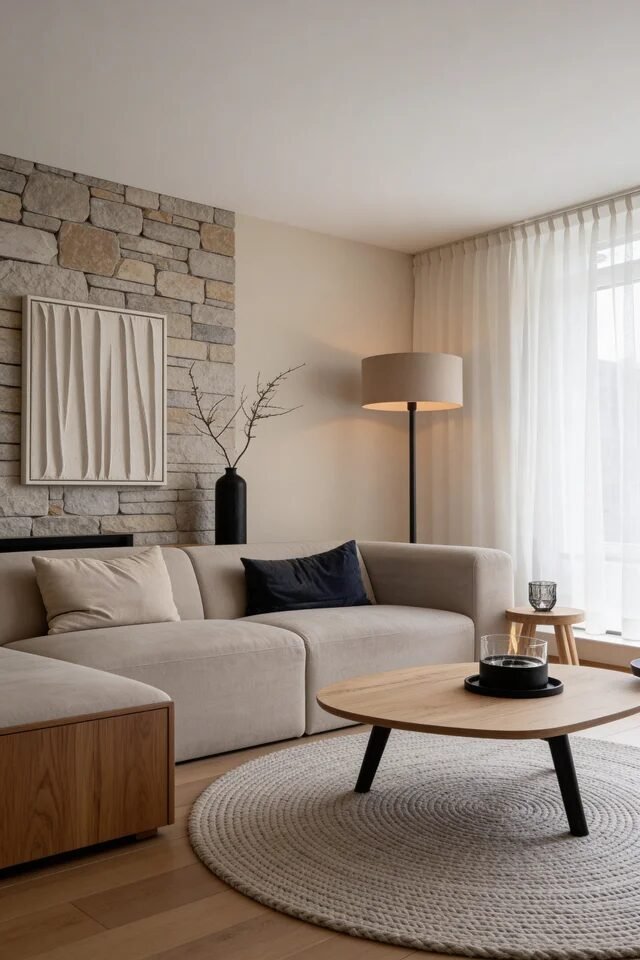
This space is giving “effortless calm” but let’s be honest—there’s strategy behind it. The stone wall instantly adds texture and weight, so everything else intentionally softens it. That’s the core principle: balance heavy materials with light, quiet elements. The neutral sofa, sheer curtains, and simple decor prevent the room from feeling visually loud.
Notice how the color palette stays extremely disciplined—beige, soft brown, a hint of black. That tiny contrast from the dark vase and pillow? Not random. Small contrast moments anchor the space without overwhelming it.
If we’re recreating this, keep your statement wall as the star and dial everything else down. Use rounded shapes like that circular rug and curved coffee table to soften the stone’s rigidity. And please, resist over-decorating—this look thrives on restraint, not “just one more throw pillow.”
Curved Japandi Seating That Feels Effortlessly Social
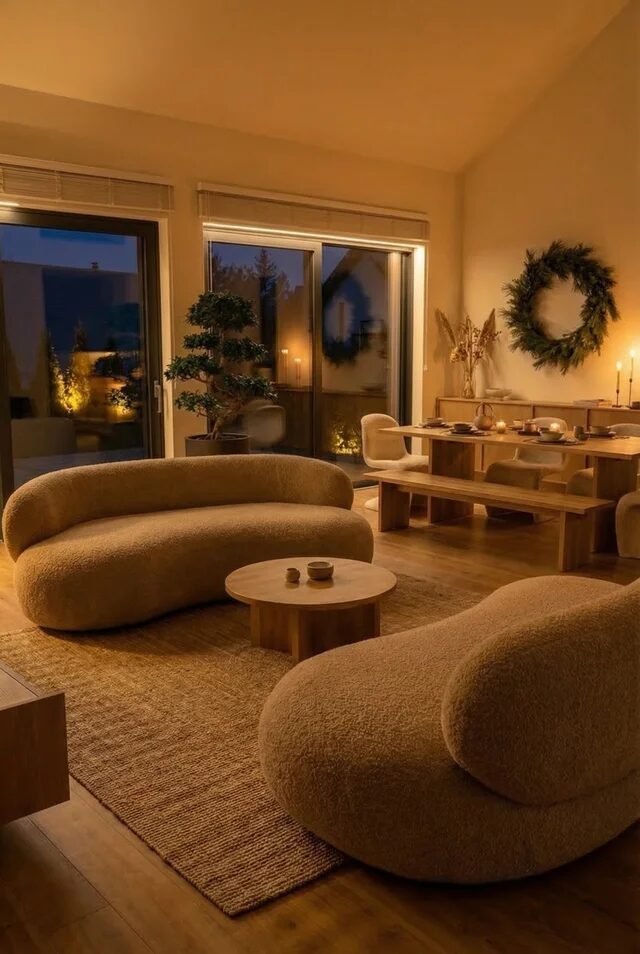
This layout is low-key genius. Instead of a traditional sofa setup, we get these soft, curved pieces that feel almost conversational. The design principle here is flow—curves naturally guide movement and make spaces feel more inviting. It’s less formal, more “stay a while.”
The lighting is doing a lot of emotional heavy lifting too. That warm glow wrapping the entire room? It creates cohesion between the living and dining areas. Consistent lighting temperature is what makes open spaces feel intentional instead of chaotic.
If we’re copying this, prioritize rounded furniture and keep everything low to the ground. Add a textured rug to anchor the layout, and keep decor centered and minimal. Bonus tip: this setup works best when you leave breathing space around furniture—crowding curves completely ruins the vibe.
Vertical Slatted Wall Creates Calm Structured Focal Point
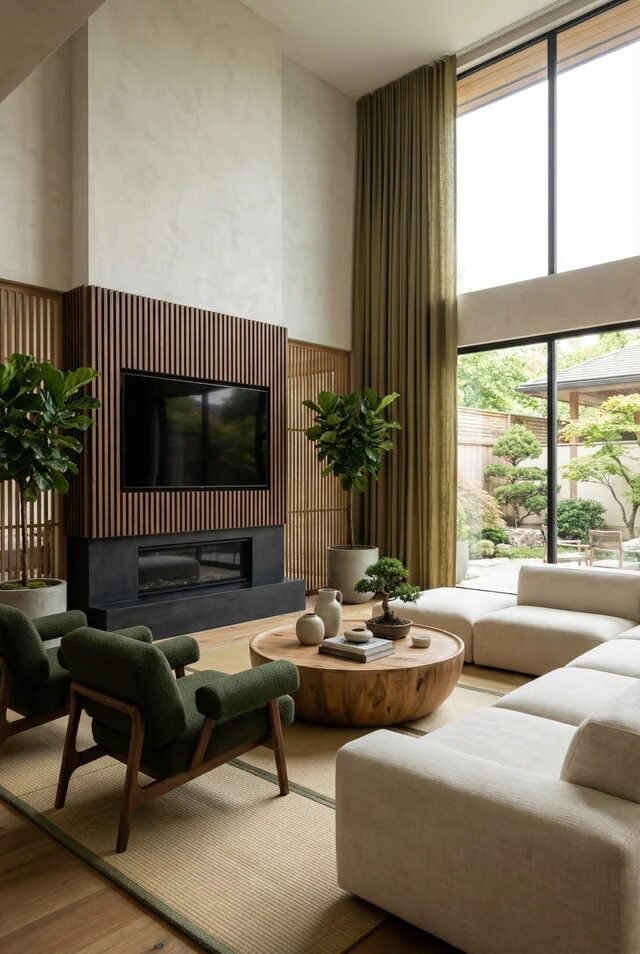
Okay this one is for the “we want modern but not cold” crowd. The vertical slat wall adds rhythm and structure without feeling harsh. Repetition in design (like these evenly spaced slats) creates visual calm—it’s basically organized beauty.
The tall windows and curtains stretch the room vertically, making everything feel grand but still soft. And notice the mix of furniture—structured chairs, plush sofa, organic coffee table. This contrast keeps the room from feeling one-note.
If we’re recreating this, commit to one strong architectural feature like the slat wall. Then balance it with softer elements—linen upholstery, plants, rounded decor. Keep your color palette grounded in nature (greens, warm woods, creams). It’s giving elevated, but still livable.
Sunken Platform Living Room With Intentional Zoning
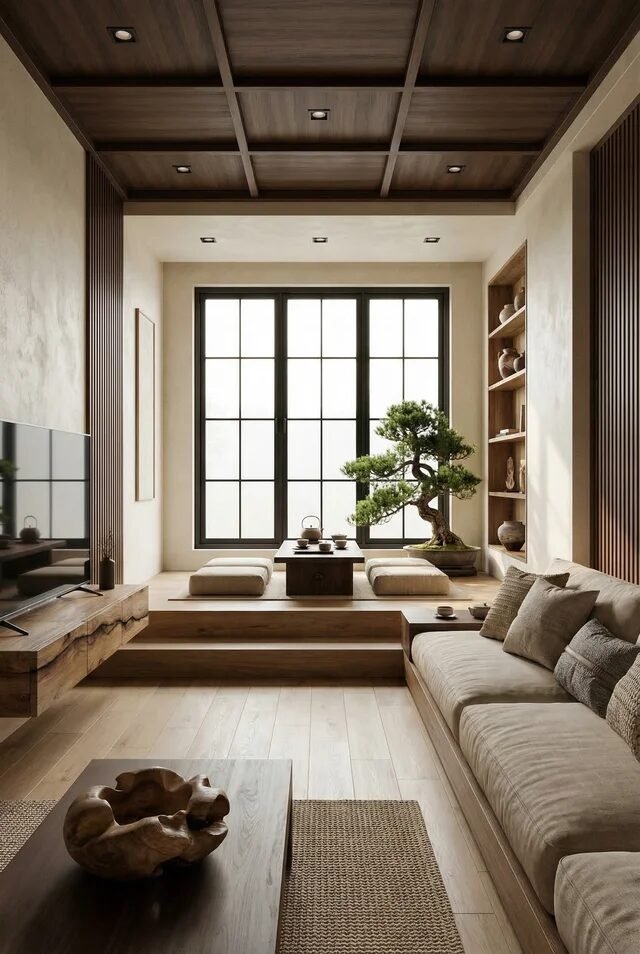
This setup is straight-up architectural storytelling. The raised platform defines the living zone without needing walls. Zoning through levels is one of the most underrated design tricks—it separates spaces while keeping everything visually connected.
The low seating reinforces that grounded Japandi feel, while the symmetrical layout brings order. Symmetry here isn’t strict, but it’s enough to make the room feel stable and calm. Even the bonsai placement acts like a quiet focal point.
If we’re recreating this, focus on defining zones first—platform, rug, or even ceiling detail. Keep furniture low and aligned with the architecture. And don’t overfill the space. Japandi isn’t about how much you can fit—it’s about how little you can get away with while still feeling complete.
Warm Japandi Lighting With Traditional Zen Influence
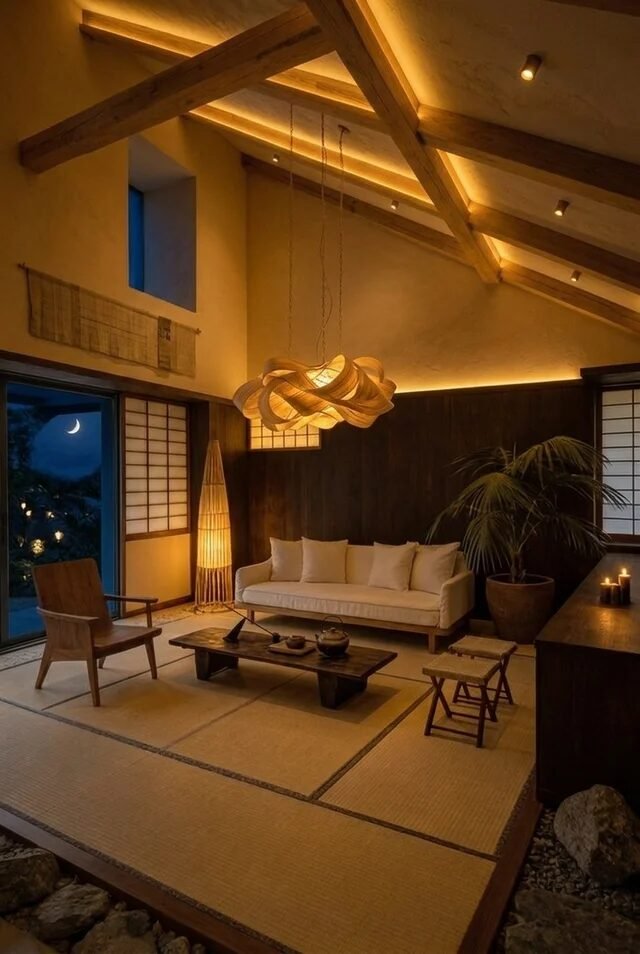
This is where Japandi leans fully into its Japanese roots—and honestly, it’s a vibe. Tatami flooring, low furniture, and warm layered lighting create that grounded, almost meditative feel. The key principle here is sensory design—this room isn’t just seen, it’s felt.
The lighting is layered from above, below, and within. That ceiling glow plus sculptural pendant? It creates depth without clutter. Indirect lighting is what gives Japandi interiors that soft, diffused atmosphere.
If we’re recreating this, start with a low foundation—floor seating or low sofas. Use natural materials like wood, linen, and paper. Keep your color palette warm and muted. And most importantly, avoid harsh lighting at all costs. If your room feels like a spa you accidentally fell asleep in? Perfect, we nailed it.
Design Less But Better For A Calmer Home
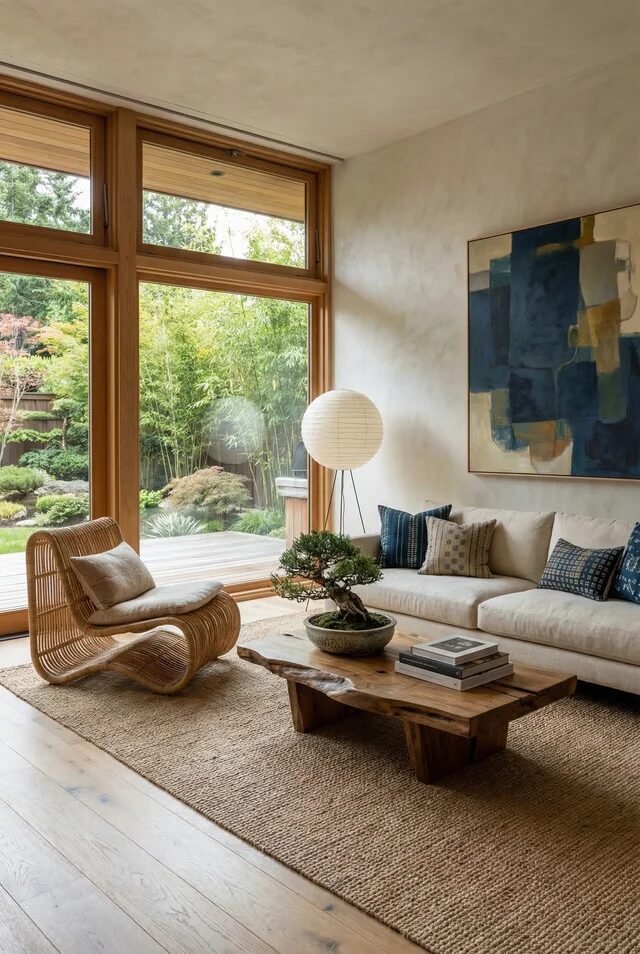
Here’s the quiet truth about Modern Japandi: it’s not a style you copy—it’s a mindset you adopt. Once you understand the rhythm of it, everything starts to click. It’s about creating spaces that feel grounded, balanced, and just a little bit intentional in every corner. Not perfect, not staged—just right.
The magic really comes from consistency. When your materials, colors, and shapes all speak the same language, the room feels cohesive without trying. We’re layering warmth, not stuff. Think natural wood, soft textiles, muted tones, and lighting that feels like a gentle glow instead of a spotlight.
So if you’re taking anything from this, let it be this: slow down your styling process. Choose pieces you actually love, give them space to breathe, and trust the simplicity. Because sometimes, the most beautiful rooms are the ones that stop trying so hard.