
Inside the Farmhouse Cottage Kitchen: The Design Secrets That Make “Cozy” Look Effortless
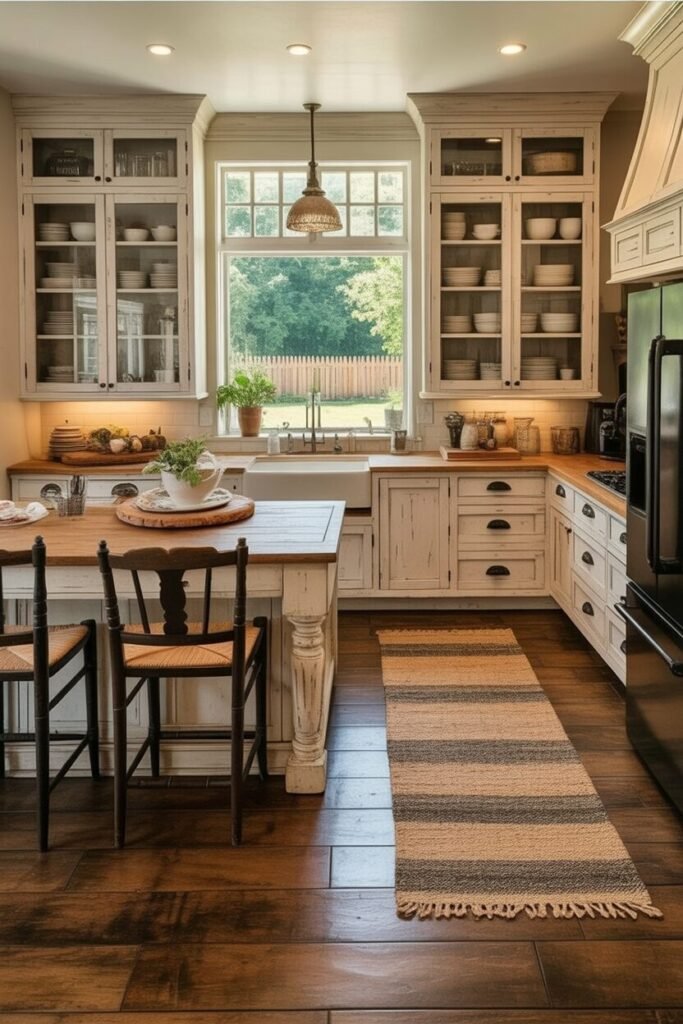
A farmhouse cottage kitchen is basically the design equivalent of a warm hug, fresh bread, and a Pinterest board come to life. It blends rustic textures, soft colors, and those charming little details that make a space feel lived-in rather than showroom-perfect.
In this guide, we explore ten ideas that show how layering materials, balancing tones, and using natural light can completely shift the mood of your kitchen. What we’re really doing here is learning how to shape atmosphere—because cottage style isn’t just décor, it’s a whole personality.
We lean into texture repetition, warm woods, muted palettes, and storytelling objects to build a kitchen that feels slow, soft, sentimental, and yes, very Instagrammable. Whether you’re working with a tiny nook or a full renovation moment, these principles help us recreate that effortlessly charming farmhouse look without needing a barn or a bakery inside your home.
Cozy Macramé Magic Above the Table
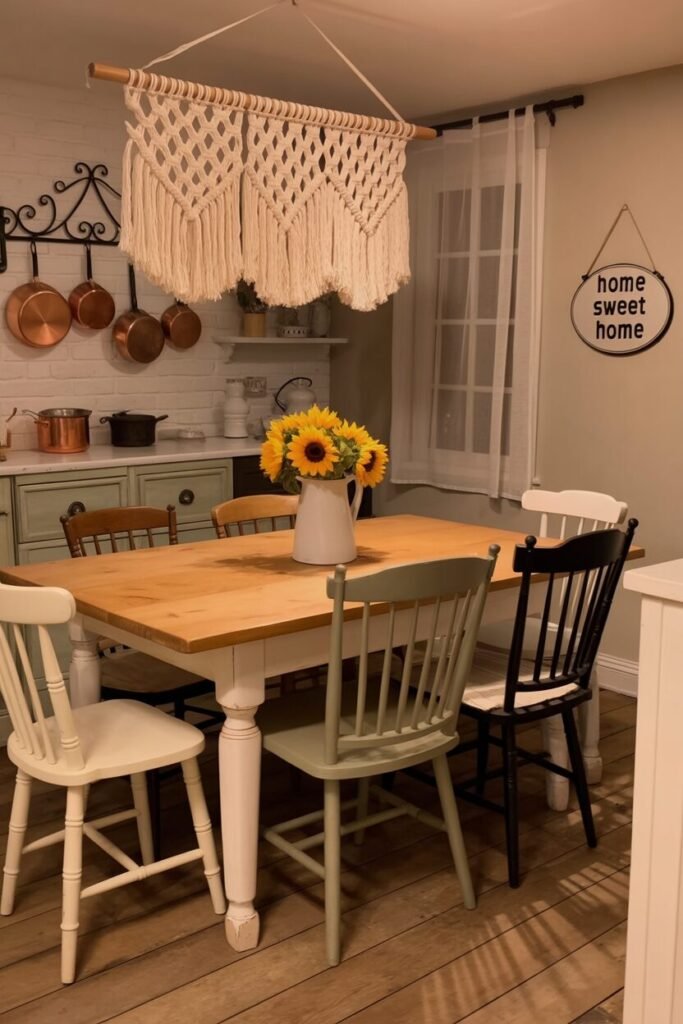
This idea goes all-in on that warm-hug farmhouse charm, and honestly, the oversized macramé hanging above the table is doing 80% of the emotional labor. What makes this space work so well is the balance of texture and tone. When we recreate it, we want to think in layers.
The creamy macramé softens the stronger lines of the wooden table and the mismatched chairs, creating that intentionally-unintentional cottage look we all pretend we didn’t study for hours on Pinterest. The copper pans on the wall introduce warmth that subtly echoes the tabletop, which is important because design cohesion is mostly about repeating colors and textures across the room.
If you’re trying this at home, keep the palette tight: warm whites, natural wood, and one or two accent metals. Add a simple vase of sunflowers or wildflowers to break up the neutrals. The trick is making everything feel lived-in, not staged—so we let imperfect finishes, soft lighting, and tactile materials do their thing.
Window Bench Bliss with Storage Style
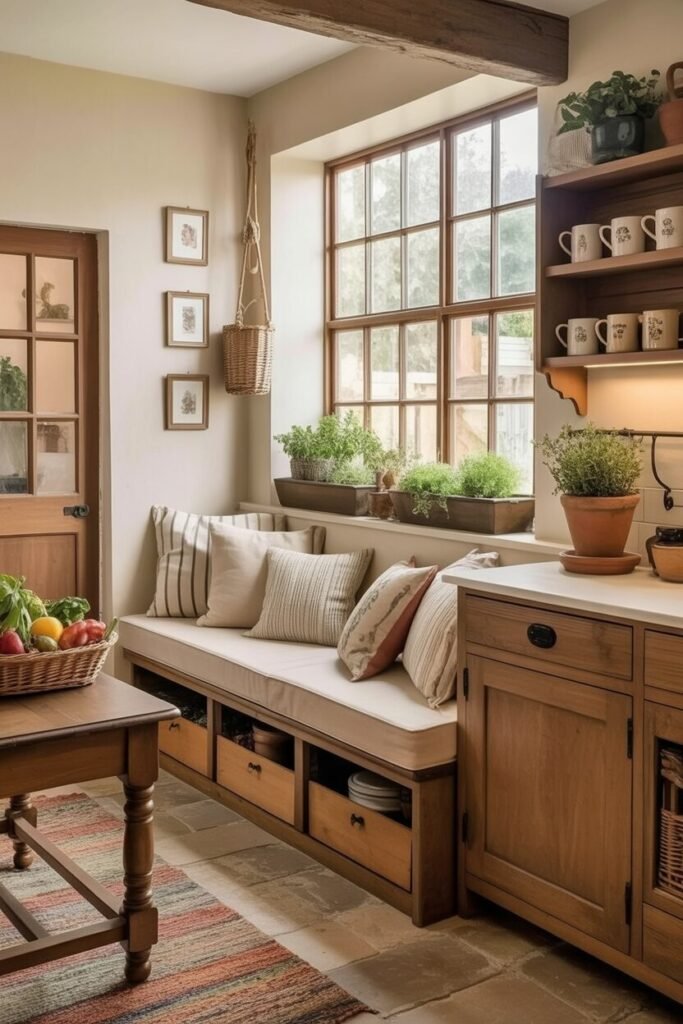
This kitchen idea is the definition of “cute but practical,” because who doesn’t want a window seat that also hides your secret stash of random kitchen gadgets? The design hinges on using vertical light and horizontal coziness together. The big window floods the space with natural light, and light is basically free interior design—use it like a styling tool.
The bench cushions in muted creams and stripes add softness, while the wooden cabinetry grounds everything in classic cottage warmth. When recreating this, it’s smart to build storage under the bench because it keeps clutter out of sight and maintains that airy feel.
We also love how herbs sit along the sill; living greenery instantly pushes a kitchen into cottage territory. Keep your textiles neutral and layered, choose woods with warm undertones, and let the sunlight be the star. The goal is simple: a spot that feels like brunch, a nap, and an Instagram moment all at once.
Brick-Backed Cottage Prep Zone
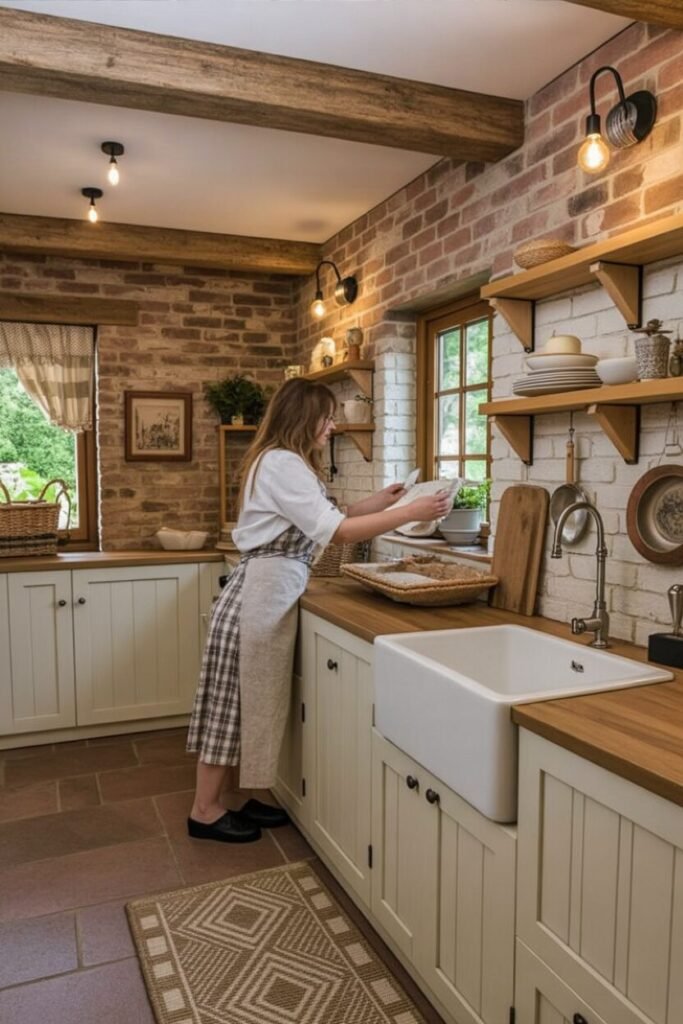
This idea leans hard into rustic authenticity, and it works because the materials feel unpolished in the best way. The brick walls add visual texture that instantly gives the kitchen personality. When we recreate this, we want to mix natural materials intentionally—brick, wood, metal—because cottage design thrives on tactile contrast.
The farmhouse sink and butcher countertops soften the heavier brick backdrop, while open shelves break up the vertical weight so the room doesn’t feel like a medieval tavern. Warm lighting from vintage-style sconces brings the whole palette together and prevents the brick from looking too cold. To nail this aesthetic, pick materials with soul: reclaimed wood, matte finishes, vintage hooks.
Style the shelves with neutral ceramics and woven baskets to introduce softness. The key is celebrating imperfections. Let the edges be uneven, the textures rough, and the lighting warm. This is the kind of kitchen where bread dough rises, tea brews slowly, and everything feels effortlessly grounded.
Soft Neutrals with Classic Farmhouse Shelving
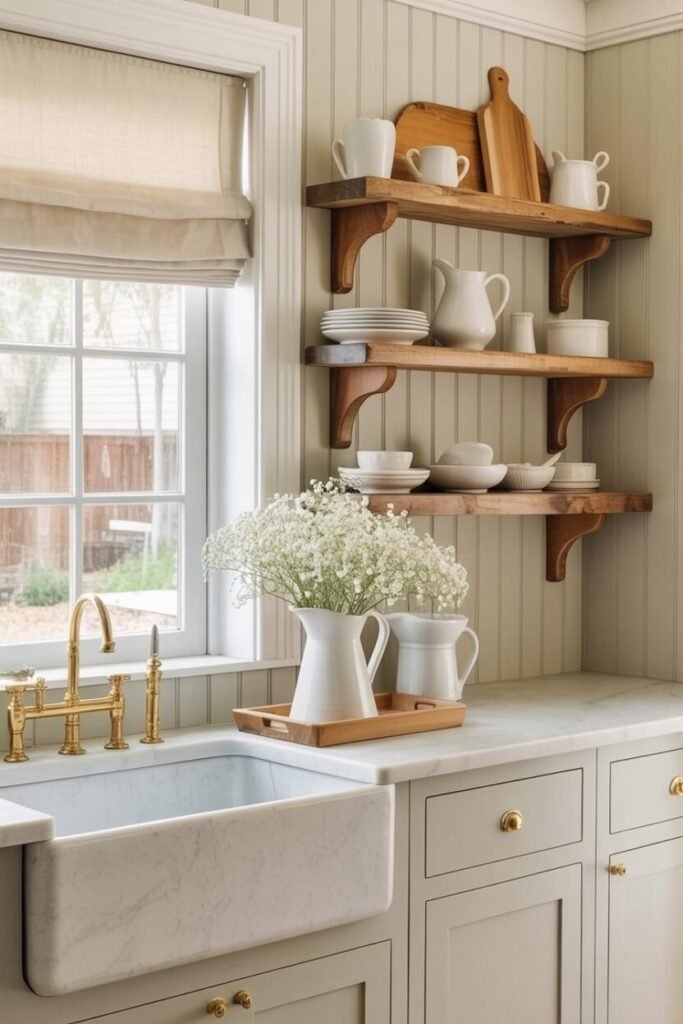
This space proves that neutrals don’t have to be boring—they just have to be layered smartly. The beadboard walls add subtle vertical movement, and the warm wooden shelves contrast beautifully with the soft gray cabinets. What makes this idea work is repetition: the white ceramics tie directly to the pale countertops and farmhouse sink, creating harmony without even trying.
When we recreate it, we want to think about how shapes and colors echo each other across the room, because that’s what keeps a neutral palette from falling flat. Choose ceramics in matte finishes, vary the heights on your shelves, and introduce natural elements like baby’s breath to soften the cleaner lines.
Brass fixtures add warmth while keeping things elevated. This look works best when the room feels lightly curated but not stiff—avoid overloading shelves or over-styling counters. The goal is quiet charm, a space that feels like morning light, fresh coffee, and soft ambience.
Stone-Framed Sink with Earthy Warmth
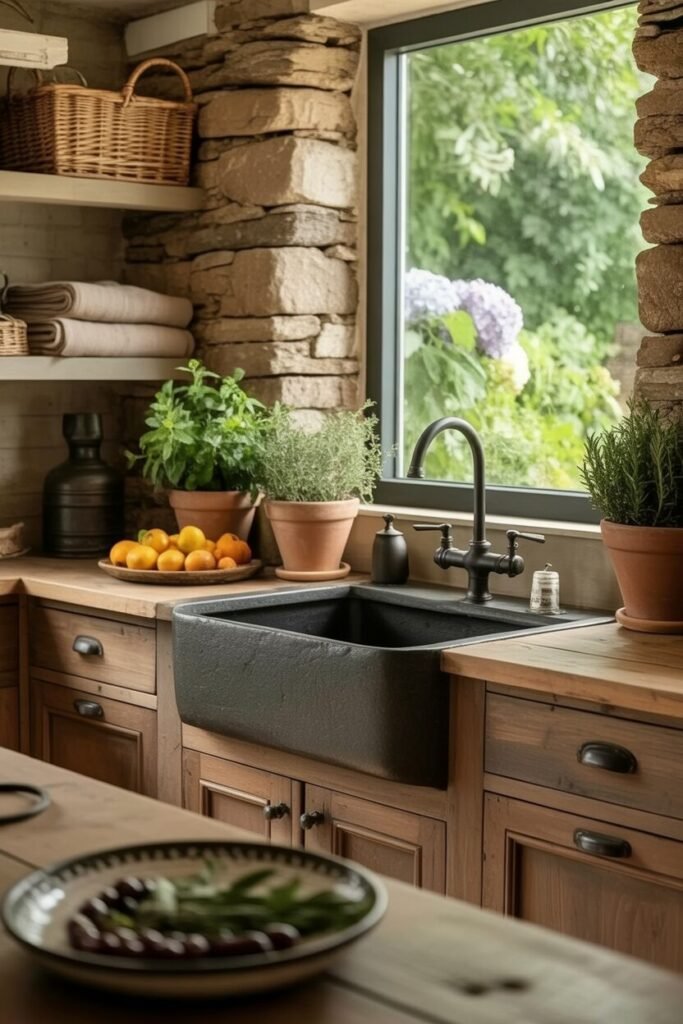
This kitchen idea hits different because it brings literal nature inside. The stone wall is the statement piece, and it works because everything else in the room stays tonal and grounded. When we recreate this, we want to lean into organic textures that feel hand-touched, like unfinished wood, matte black fixtures, and terracotta pots.
The black farmhouse sink adds dramatic contrast that prevents the room from skewing too rustic. Plants and fresh fruit add life, which is essential when you’re working with heavy natural elements—the greenery keeps it from feeling cave-like.
The key principle here is balance: rough stone needs soft textiles, warm wood needs cool black accents, and compact shelving keeps the visual weight from building too much on one side. This space proves that cottage design doesn’t have to be pastel or delicate; it can be earthy, bold, and deeply serene. Think forest retreat meets farmers-market glow.
Modern Farmhouse Island with Warm Wood Tones
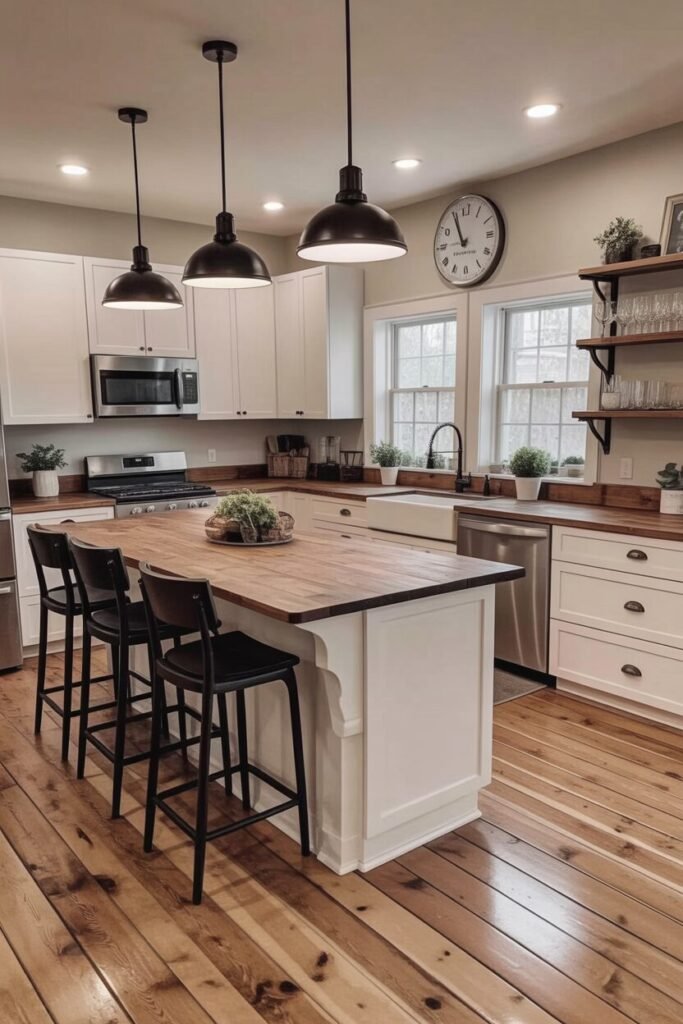
This kitchen idea blends traditional farmhouse details with modern lines, and it’s the island that really drives the design. The butcher-block top introduces warmth that plays beautifully against the crisp white cabinetry. When we recreate this, we want to pay attention to tone harmony—wood tones should echo each other subtly, even if they’re not identical.
The dark metal stools and pendant lights bring contrast, which keeps the palette from looking too safe. The open shelving introduces breathing room on the walls, and plants add softness to break up the linear shapes. Stainless appliances prevent the space from feeling overly vintage, making it perfect for someone who wants cottage charm without giving up modern function.
To nail this look, keep your lines clean, your palette neutral, and your styling minimal but intentional. It’s cozy but contemporary, warm but structured, and feels like the kind of kitchen where the island becomes the social headquarters of the entire house.
Cottage-Core Cozy Cooking Corner
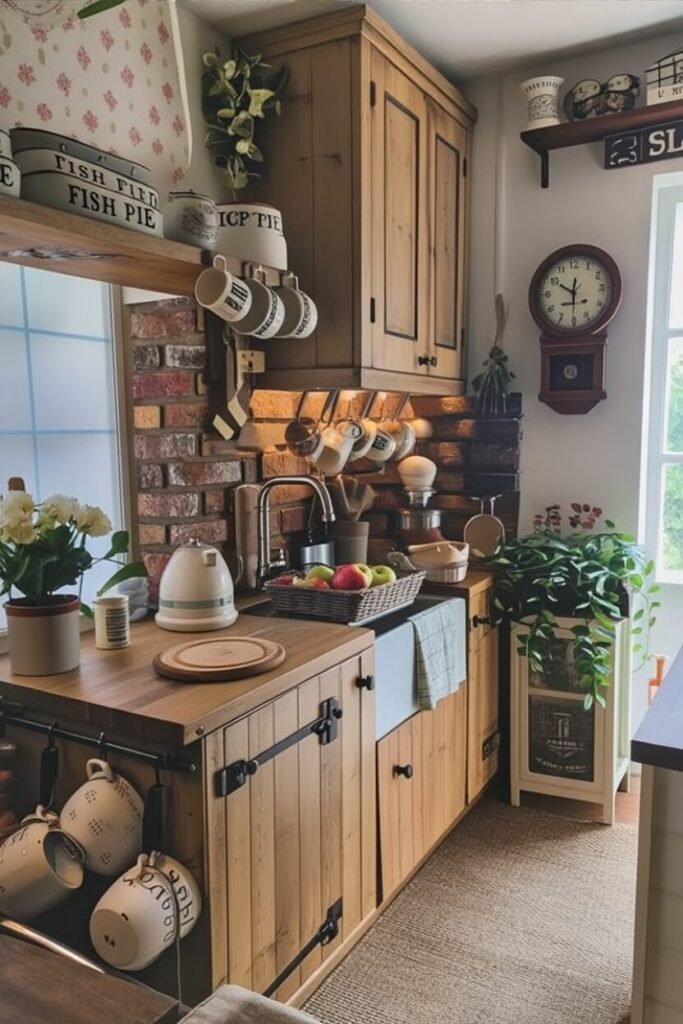
This idea leans full cottagecore, and honestly, we love the commitment. There’s pattern, wood grain, vintage mugs, plants—yet it doesn’t feel chaotic because the palette stays warm and cohesive. When we recreate it, we want to think in terms of visual rhythm, meaning how the eye bounces across repeated elements like wood tones and rounded shapes.
The brick backdrop adds authenticity, while the mugs and accessories make the space feel truly lived-in. The key is mixing nostalgia with practicality: hooks for mugs, baskets for produce, and layered textiles to soften the harder materials. Keep everything within the same warm spectrum—creams, honey woods, soft florals—so the abundance still feels curated.
You don’t have to match anything perfectly; cottage kitchens thrive on “perfectly mismatched,” which makes decorating easier and way more fun. This is the look for anyone who wants their kitchen to feel like a warm hug with a side of apple pie energy.
Light and Bright Traditional Farmhouse Charm
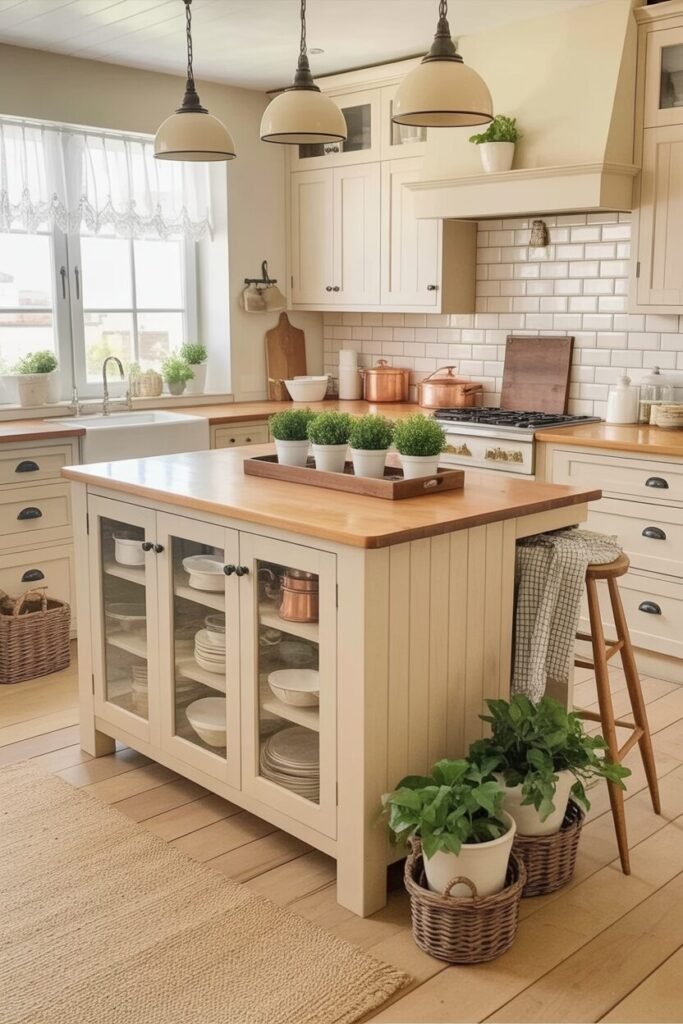
This kitchen idea feels like a sunny morning, which is exactly why it works so well. The white cabinetry paired with soft cream tones creates a bright backdrop that makes the wood countertops pop. Glass-front cabinets on the island keep the room feeling open and let dishes become decor.
When we recreate this, it’s crucial to spread brightness evenly—light color palettes rely on consistent reflection, so windows, soft textiles, and light countertops all team up. Green plants add organic contrast and make the space feel cheerful. The trick is keeping clutter low; farmhouse can be detailed, but this version thrives on clean surfaces and intentional styling.
Choose a few meaningful pieces, stick to a warm neutral palette, and let natural light do the heavy lifting. This is the kind of kitchen that feels both polished and homey, like a magazine spread that still smells like freshly baked bread.
Blue Cabinet Cottage Refresh
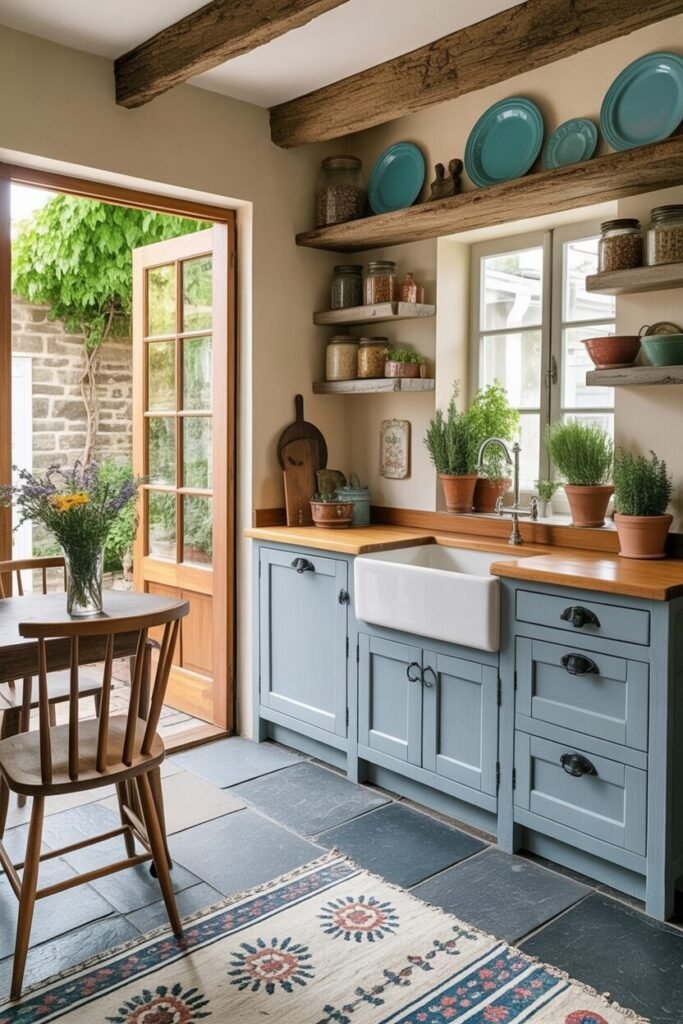
This idea introduces color in the softest, most cottage-friendly way. The blue cabinets are the star, but they work because everything else stays muted: warm woods, creamy walls, natural stone flooring. When we recreate this look, we want to pick a blue with gray undertones because muted colors behave like neutrals, giving flexibility for decor.
The open shelves showcase earthy jars and herbs, creating visual texture without overwhelming the space. The wood countertop bridges the color palette by connecting the natural and painted elements. A patterned rug brings charm and softens the stone floor.
To recreate, mix soft color with natural texture; let greenery bring life; keep hardware simple and vintage-inspired. This is cottage done effortlessly—lived-in, charming, fresh, and full of personality without shouting for attention.
Gingham-Trimmed Sweet Cottage Corner

This kitchen idea is peak countryside charm, and the gingham curtain is doing a lot of aesthetic heavy lifting. Paired with creamy cabinetry and soft wood counters, the pattern adds nostalgia without feeling outdated. When we recreate this look, it’s important to focus on soft contrast, mixing warm whites with natural wood and adding tiny pops of color through textiles or accessories.
The bar-height counter adds dimension and creates a cozy eat-in moment, which is great for small kitchens. The styling stays playful: floral cushions, soft pink accents, woven baskets. The key here is embracing warmth—choose warm-tone bulbs, soft fabrics, and gentle curves in your decor.
Cottage design thrives when everything feels touchable. This idea is perfect for someone who wants a kitchen that feels sweet, sunlit, and a little bit storybook in the best way.
Where Farmhouse Warmth Wraps Up the Story Beautifully
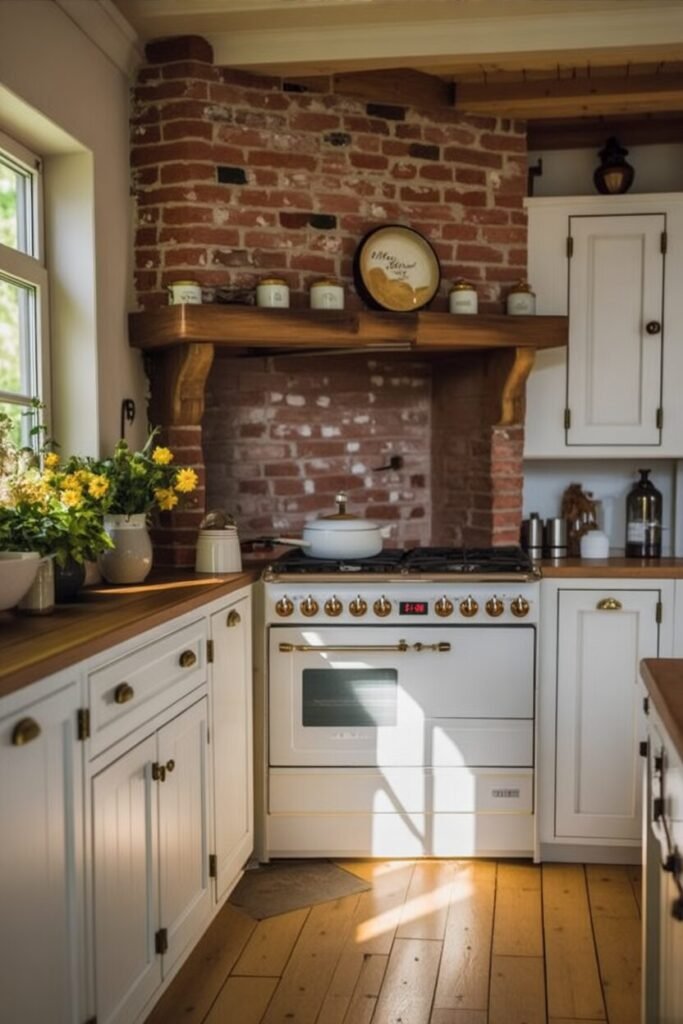
As we close out these ideas, the biggest takeaway is that farmhouse cottage style thrives on intention, not perfection. It’s about mixing tactile materials, embracing soft light, and letting pieces with real character anchor the room. If you walk into your kitchen and it feels like you could sip tea, bake something questionable, and tell a long story to a friend—then you nailed it.
The secret sauce is consistency in tone, contrast used gently, and decor that supports function while still feeling adorable. We want kitchens that stay warm through seasonal trends, feel grounded even when life gets chaotic, and remind us that home is supposed to be lived in, not curated to death. If you’re ready for more ideas, mood boards, or styling advice, just say the word—I’m always down to cottage-fy your world even further.