
How Cottagecore Living Rooms Stay Cozy Without Looking Busy
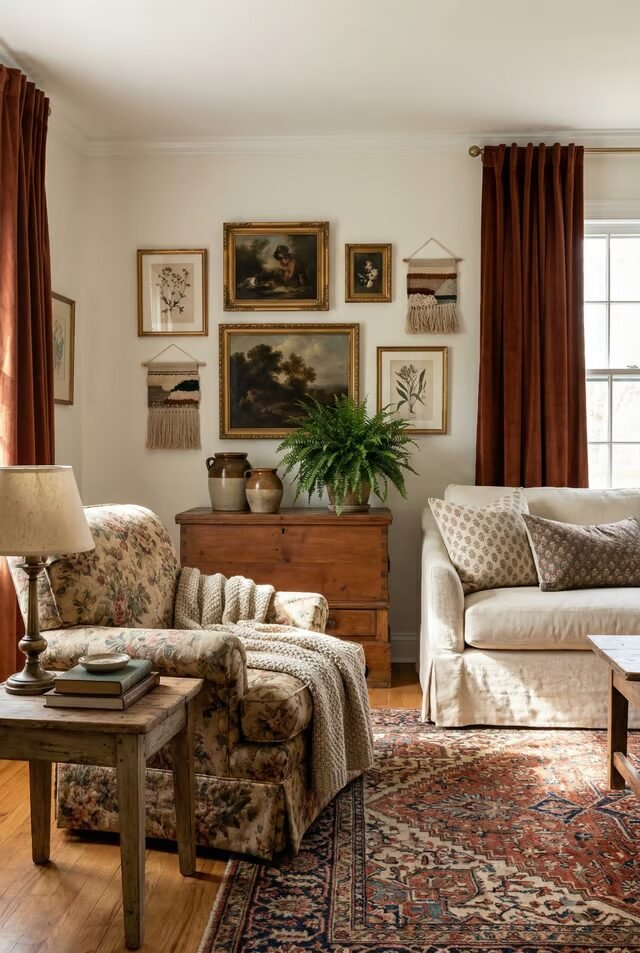
Cottagecore living rooms aren’t about copying a look, they’re about building a feeling. A space that feels warm, grounded, and gently imperfect. The goal isn’t perfection, it’s comfort with intention. That’s why cottagecore leans heavily on natural materials, layered textures, and pieces that look like they’ve lived a life before landing in your home.
Think stone fireplaces, worn wood, soft upholstery, books you actually read, and textiles you want to touch. Good cottagecore design balances softness with structure. Too much softness and the room feels sleepy, too much structure and it loses charm.
Light plays a massive role too. Natural light keeps all those textures from feeling heavy, while warm lamps create intimacy once the sun goes down. What makes cottagecore timeless is that it’s not trend-driven. It’s rooted in comfort, memory, and slowness. If a room makes you want to sit down, stay longer, and exhale, you’re doing it right.
A Fireplace That Sets Everything
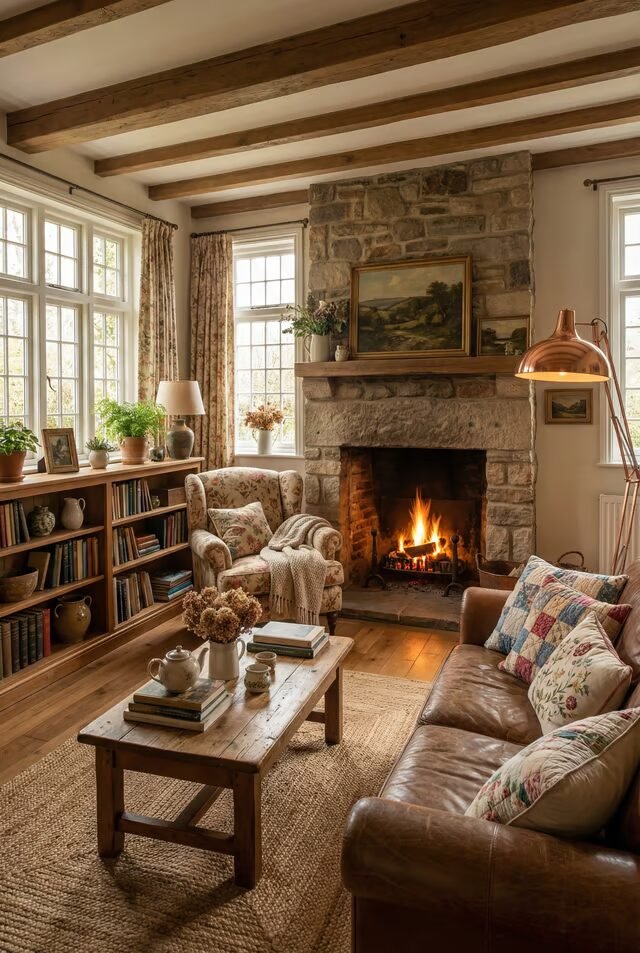
This cottagecore living room works because the fireplace is treated as the emotional anchor, not just a heat source. When one element feels grounded, the entire room relaxes. The stone texture introduces visual weight, which balances out all the soft textiles around it. That’s a key cottagecore principle: contrast rough with gentle so nothing feels overly precious.
Exposed ceiling beams echo the fireplace’s rustic vibe, creating repetition that makes the room feel intentional instead of accidental. We also see warm wood floors doing quiet heavy lifting, grounding floral patterns so they don’t drift into “grandma overload.” Lighting matters here more than people admit. The fire provides flickering, low-temperature light that softens the space instantly.
If you’re recreating this without a real fireplace, fake it with layered lighting: one warm floor lamp, one table lamp, zero overhead drama. Cottagecore isn’t about clutter, it’s about controlled coziness. Keep furniture low, textures layered, and colors muted so the room hugs you back.
Soft Seating With Storybook Charm
This seating moment nails cottagecore because it feels collected, not styled. The armchair’s floral upholstery introduces pattern, but the scale is small enough to stay calm rather than loud. Pattern works best in cottagecore when it whispers, not shouts.
Surrounding it with neutral wood tones and soft textiles keeps the eye moving gently instead of bouncing everywhere. The bookshelves matter more than the chair itself. Vertical storage creates visual structure, which stops the room from feeling overly soft or sleepy. We love how plants are placed at different heights, adding organic movement that mirrors nature rather than symmetry.
That’s a huge decor principle here: asymmetry equals authenticity. The coffee table stays simple and sturdy, acting as a visual pause between textures. If you’re recreating this, focus less on matching furniture and more on matching moods. Cottagecore rooms succeed when everything feels like it belongs emotionally, not visually. Choose pieces that feel lived-in, slightly imperfect, and comfortable enough to stay longer than planned.
Green Walls Done the Cozy Way
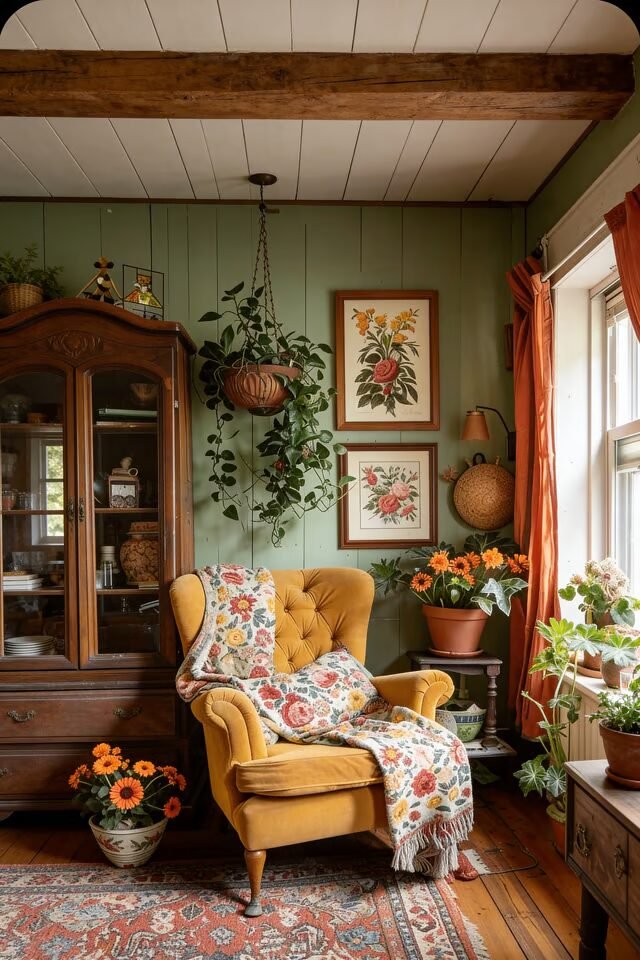
Green walls are risky, but this room proves they’re elite when done right. The muted sage tone keeps things earthy instead of bold, which is essential for cottagecore balance. Color in cottagecore should feel borrowed from nature, not picked from a paint trend.
The warm wood furniture prevents the green from feeling cold, while florals repeat the color story softly through textiles and art. Notice how the hanging plant pulls the eye upward, making the ceiling feel taller without trying. Vertical movement is a sneaky design trick we fully support. The mustard chair acts as a warm accent, adding contrast without breaking harmony.
If you’re recreating this look, limit yourself to one strong color and support it with neutrals everywhere else. Too many statement colors kill the calm. Let plants, vintage frames, and textured fabrics do the talking. Cottagecore isn’t maximalism, it’s intentional softness with a backbone.
Symmetry Makes Cozy Feel Calm
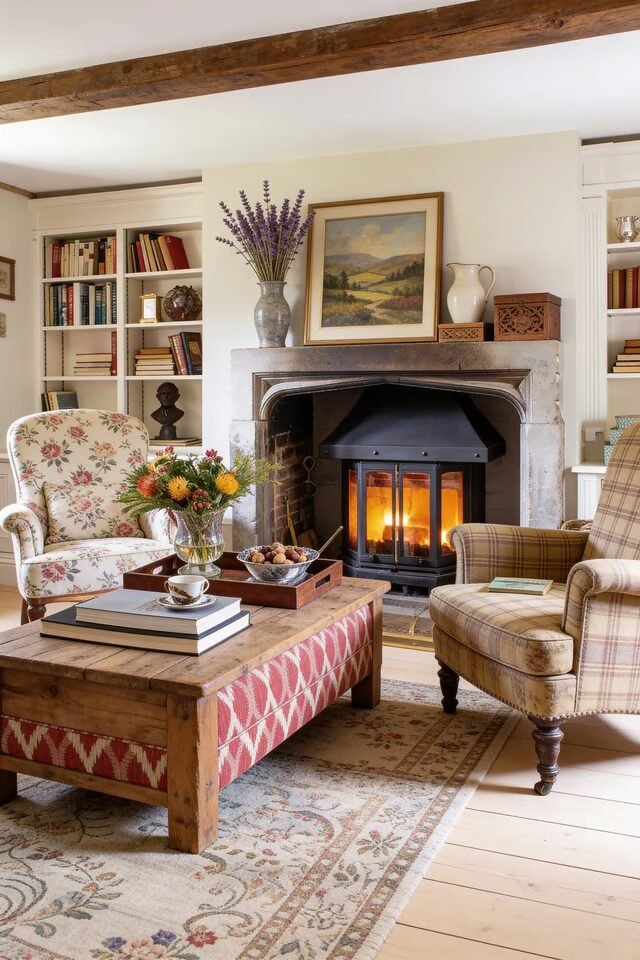
This living room feels peaceful because symmetry is doing most of the work. Matching armchairs, balanced shelving, and a centered fireplace create visual order, which is crucial when using patterns and textures. When the layout feels stable, you can decorate more freely.
The plaid and floral fabrics coexist because they share a similar color temperature, not because they match perfectly. That’s a big lesson. The coffee table’s chunky proportions ground the space, preventing the room from floating into visual fluff. Built-in shelves frame the fireplace like a portrait, subtly telling your eyes where to rest.
Lighting stays warm and layered, avoiding harsh contrasts that would break the mood. If you want to recreate this, start with symmetry first, then layer personality second. Cottagecore isn’t random, it’s relaxed order. Once the structure is solid, even busy patterns feel calm and welcoming.
Sunlit Florals That Feel Airy
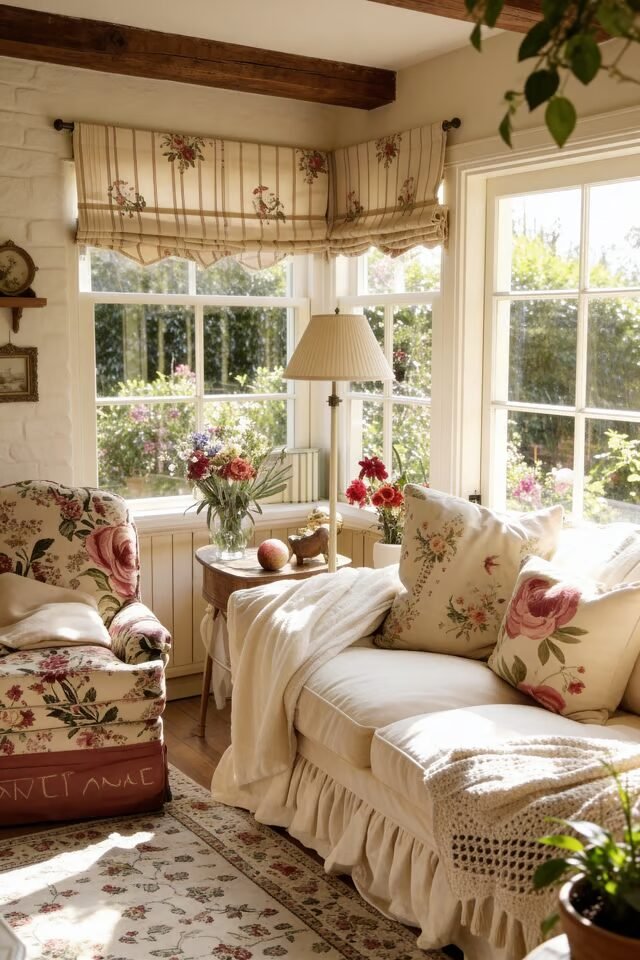
Natural light is the real hero in this cottagecore setup. Sheer daylight softens every floral pattern, preventing the room from feeling crowded or overly sweet. Light is what keeps cottagecore from turning heavy. The white slipcovered sofa acts as a visual reset, letting patterned pillows shine without overwhelming the space.
Window treatments stay minimal and romantic, framing the view instead of blocking it. That’s intentional. Cottagecore loves connection to outdoors, even if it’s just a small garden view. Rounded furniture edges echo softness and make the room feel gentle and welcoming.
If you’re recreating this, prioritize light colors near windows and heavier textures farther away. Brightness should flow, not stop. Layer florals with solids, add natural fibers, and let sunlight do half the styling work. When in doubt, remove one pillow. Trust us.
Winter Cabin Energy Done Right
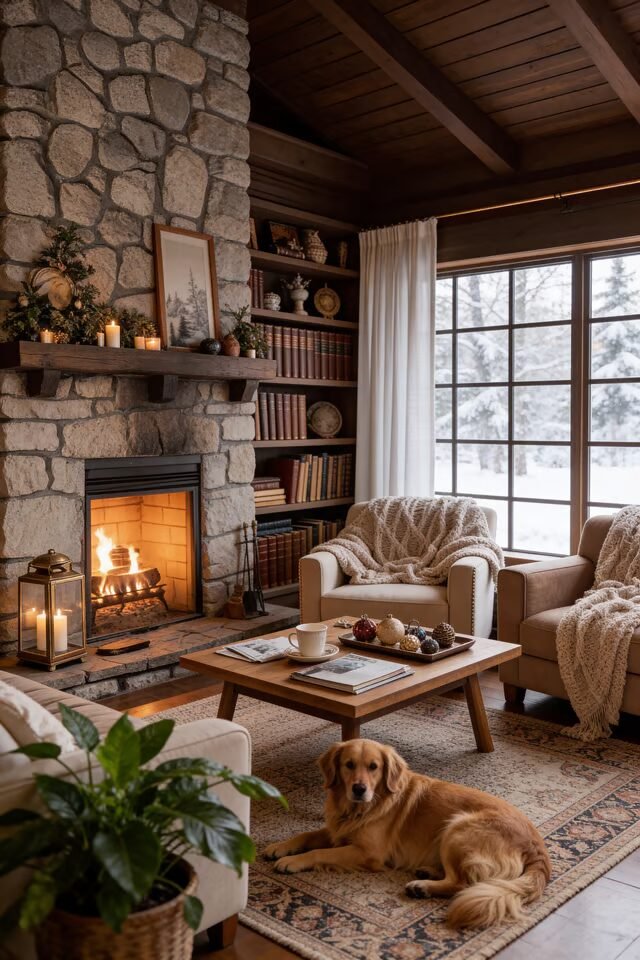
This living room leans hard into cabin cottagecore, and honestly, it works because of restraint. Stone, wood, and textiles are doing all the talking here. The fireplace becomes the gravity center, pulling furniture inward so the room feels intimate, not scattered.
Built-in shelves wrap the space emotionally, creating enclosure that instantly boosts coziness. That’s a classic spatial principle: enclosure equals comfort. Neutral upholstery keeps the room calm, while chunky knit throws add softness without visual noise. We love how the window stays mostly uncovered. Natural light balances the heavy materials so the room doesn’t feel dark or closed off.
The coffee table stays low and simple, letting the textures above it shine. Even the rug matters here. Its subtle pattern anchors everything without competing. If you’re recreating this, commit fully to warm neutrals and layer texture instead of color. Cottagecore isn’t about variety, it’s about depth. Fewer elements, richer materials, and lighting that feels like a warm hug.
Warm Textures Over Trendy Decor
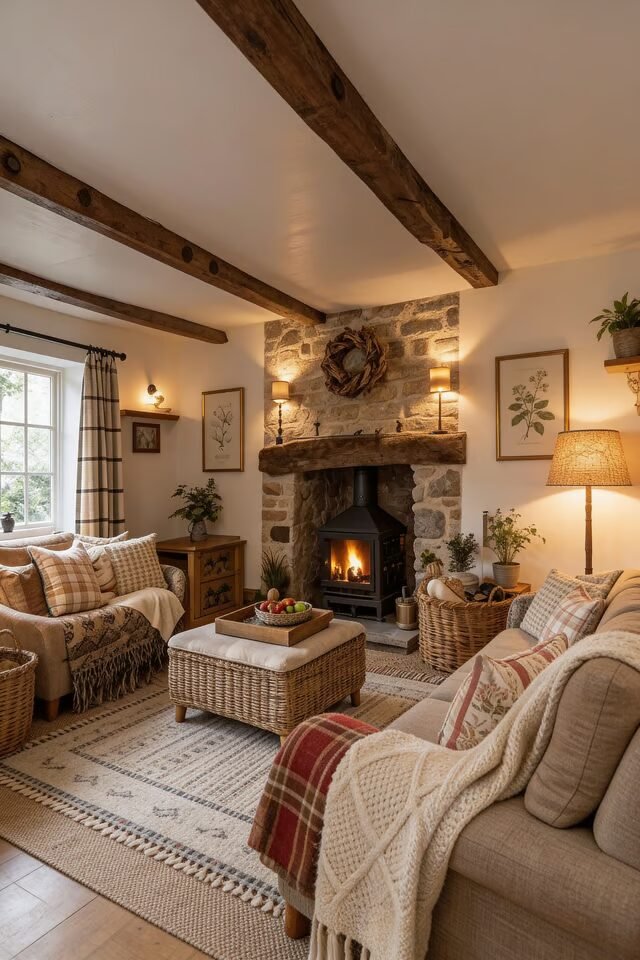
This space proves that texture will always outlive trends. Woven baskets, knit throws, stone, wood, and linen work together to create warmth without visual chaos. Texture replaces color as the main design driver, which is peak cottagecore behavior.
The fireplace is framed by symmetry, calming the eye and giving structure to all the softness. Sofas face inward, encouraging conversation and that “stay a little longer” feeling. Notice how patterns stay subtle and repetitive. Plaids, checks, and neutrals echo each other instead of competing. That repetition is key for cohesion. Lighting is layered gently, with lamps doing the heavy lifting instead of overhead lights.
If you want to recreate this, choose one texture per surface: rough walls, soft seating, woven accents. Overloading one surface ruins the balance. Cottagecore works best when every material has breathing room. Think slow, cozy, intentional, and slightly imperfect in the best way.
Bookshelves That Feel Collected
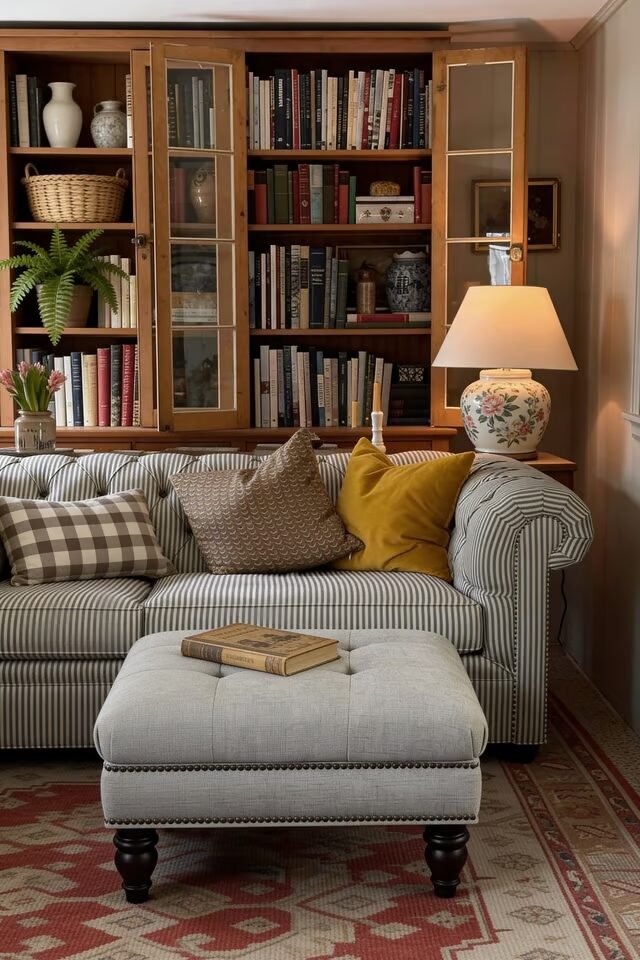
Bookshelves like this don’t feel styled, and that’s exactly why they work. The mix of books, ceramics, baskets, and plants creates visual rhythm without looking curated to death. The principle here is balance through variation. Tall shelves ground the space, while the striped sofa adds softness and approachability.
Pattern is controlled and repetitive, which keeps it calm. The ottoman acts as a flexible anchor, bridging seating and movement. Lighting stays warm and localized, drawing attention to textures rather than shiny surfaces. Glass cabinet doors soften visual clutter while still letting personality show.
If you’re recreating this look, avoid filling shelves evenly. Leave gaps. Let objects breathe. Cottagecore shelves should feel like a life in progress, not a showroom. Use books as texture, not decoration. Vary heights, stack horizontally, and let one or two accent pillows quietly steal the spotlight.
Light Neutrals With Rustic Balance
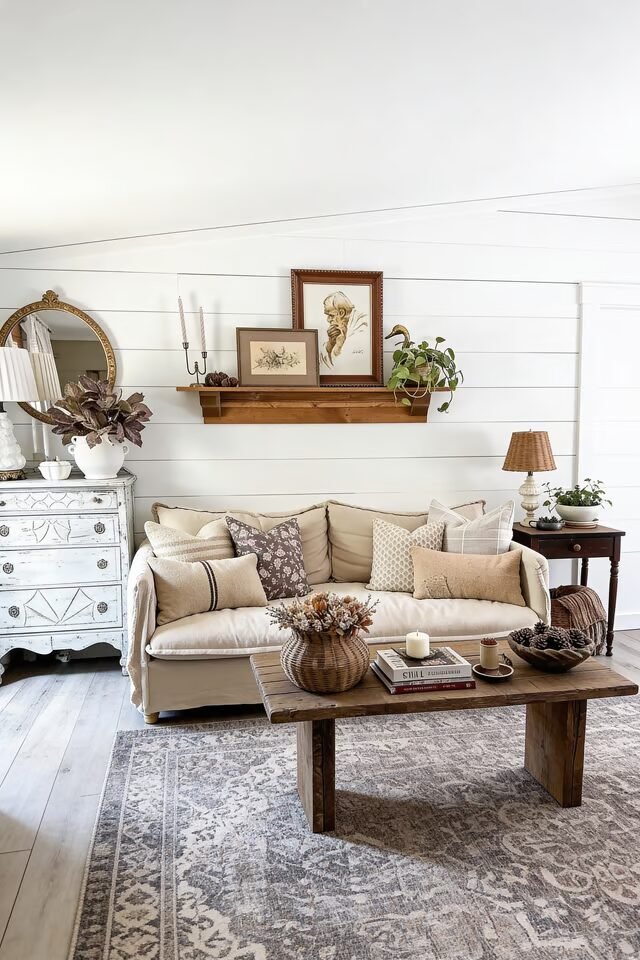
This room feels airy but grounded, which is a tricky balance to pull off. Light walls and upholstery keep things fresh, while rustic wood elements add weight and warmth. Contrast is doing the real work here. Shiplap adds subtle texture without stealing attention, acting as a calm backdrop for layered decor.
The sofa stays simple, letting pillows introduce softness through pattern and fabric instead of color. The coffee table is intentionally rough, anchoring the room so it doesn’t float away visually. Wall decor stays minimal and meaningful, reinforcing that cottagecore values story over spectacle.
If you’re recreating this, resist the urge to overdecorate white spaces. Negative space is part of the aesthetic. Add warmth through materials, not clutter. Let wood, linen, and handmade pieces quietly do their thing while the room breathes naturally.
Vintage Details Make It Timeless
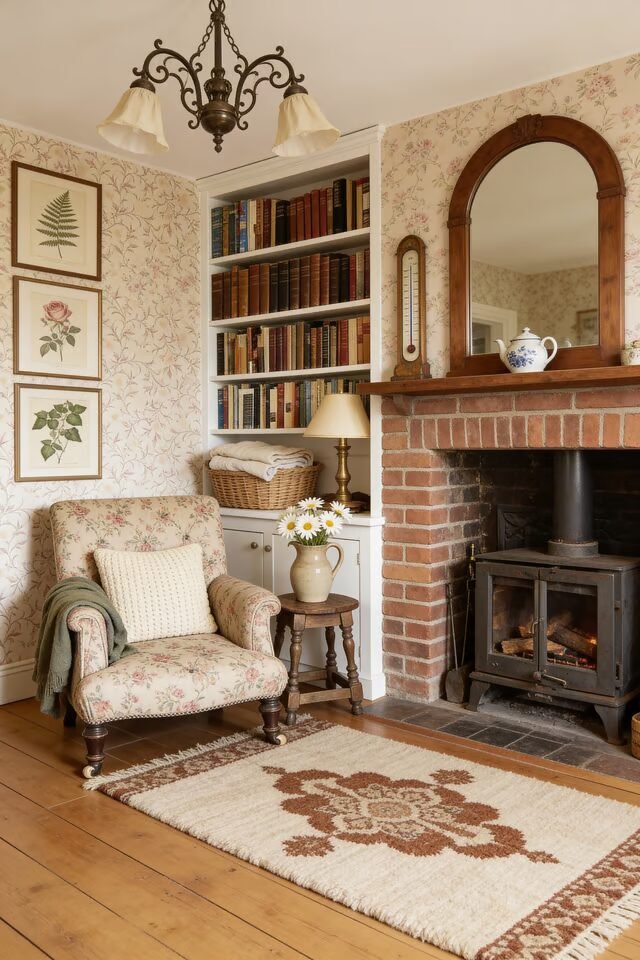
This living room feels timeless because it prioritizes heritage over trends. Floral wallpaper sets a gentle mood, while built-in shelves and a brick fireplace provide structure. Pattern works here because it’s supported by solid architecture. The armchair’s curved lines soften the room, preventing it from feeling rigid or formal.
Wood floors add warmth and continuity, grounding the softer elements above. Decor stays meaningful and restrained, with vintage art and functional pieces doing double duty. Lighting is warm and diffused, enhancing textures instead of spotlighting objects.
If you want to recreate this, commit to one dominant pattern and keep everything else quiet. Too many patterns dilute the charm. Cottagecore shines when each element feels chosen over time, not bought all at once. Think inherited, found, loved, and slightly worn. That’s where the magic lives.
Cozy Isn’t Random, It’s Thoughtfully Layered Design
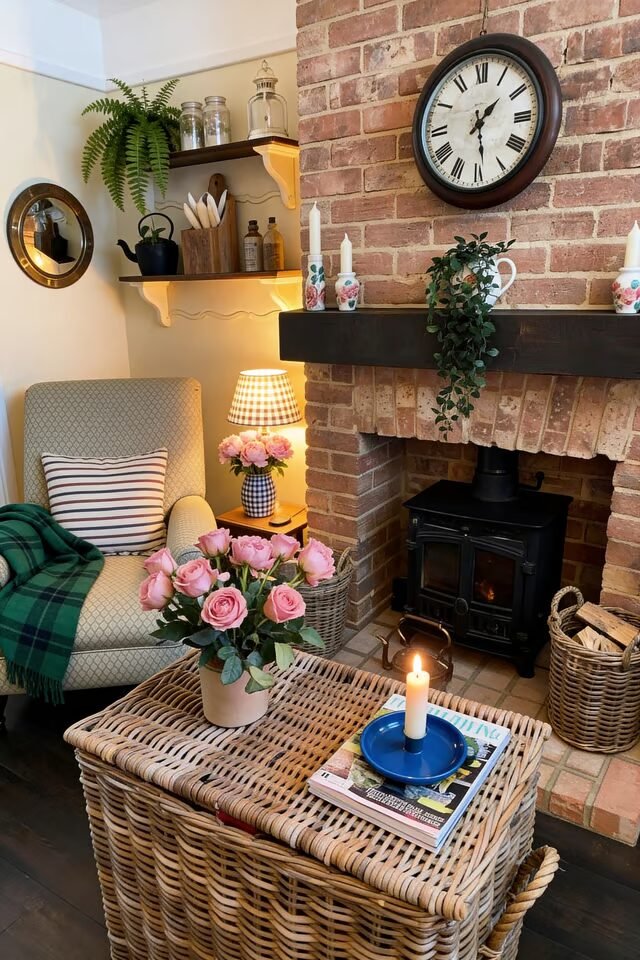
A great cottagecore living room might look effortless, but behind that softness is a lot of smart design thinking. Every cozy space still needs balance, repetition, and restraint. Cottagecore works best when each element has a reason to exist. Fireplaces anchor rooms emotionally, rugs ground furniture visually, and lighting sets the mood more than any decor piece ever could.
Mixing patterns only works when colors stay within the same warm family. Neutrals aren’t boring here, they’re the glue holding everything together. Vintage details add character, but they shine brightest when paired with simple, functional layouts.
If you’re recreating these ideas, start with layout and materials before decor. Choose comfort first, aesthetics second. Let your space evolve slowly instead of styling everything at once. Cottagecore isn’t about filling space, it’s about making space feel safe. When a room feels calm, inviting, and human, you’ve nailed it.