
Birdcages in Decor Feel Random Until You Do These
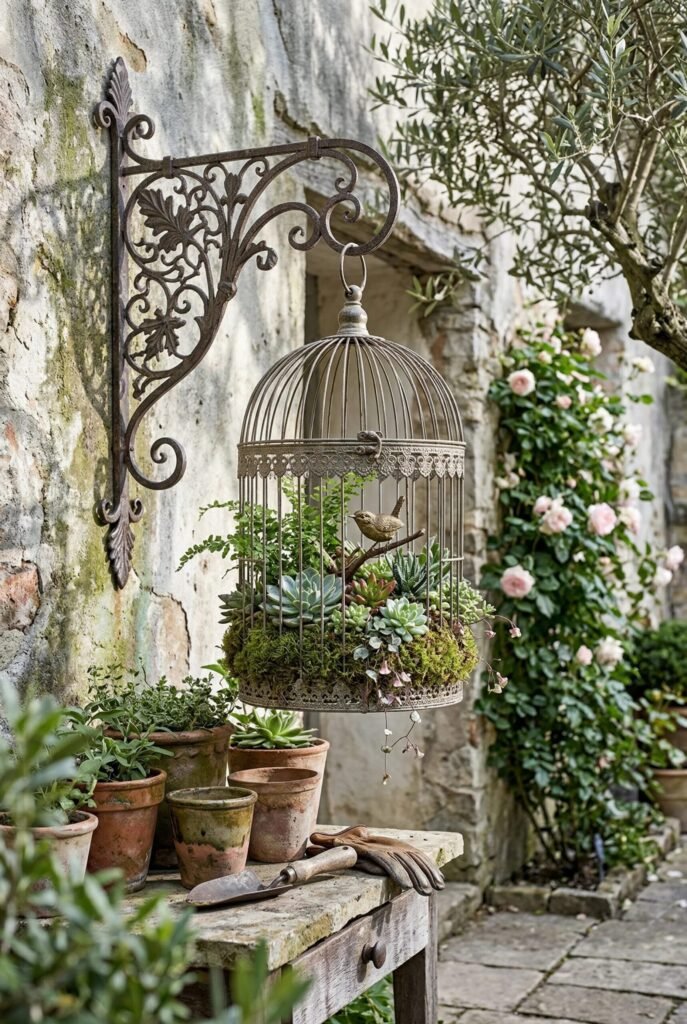
Let’s be honest—birdcages are no longer about birds. They’ve fully rebranded into one of the most versatile decor pieces we can play with, and honestly, we’re here for it. What makes birdcage decor so addictive is how it naturally creates a “frame,” giving structure to whatever we style inside. It’s basically built-in composition, and that’s a design cheat code we love.
Across all these ideas, the real magic comes from how we balance structure with softness. Metal cages bring shape and definition, while florals, lights, and textures soften the look and make it feel alive. This contrast—hard versus organic—is what keeps birdcage decor visually interesting instead of predictable.
Whether we go whimsical, romantic, or slightly dramatic, birdcages let us tell mini stories in small spaces. And the best part? They’re flexible enough to evolve with seasons, moods, and whatever aesthetic phase we’re currently in.
Whimsical Hanging Birdcage Planter With Fairy Lights
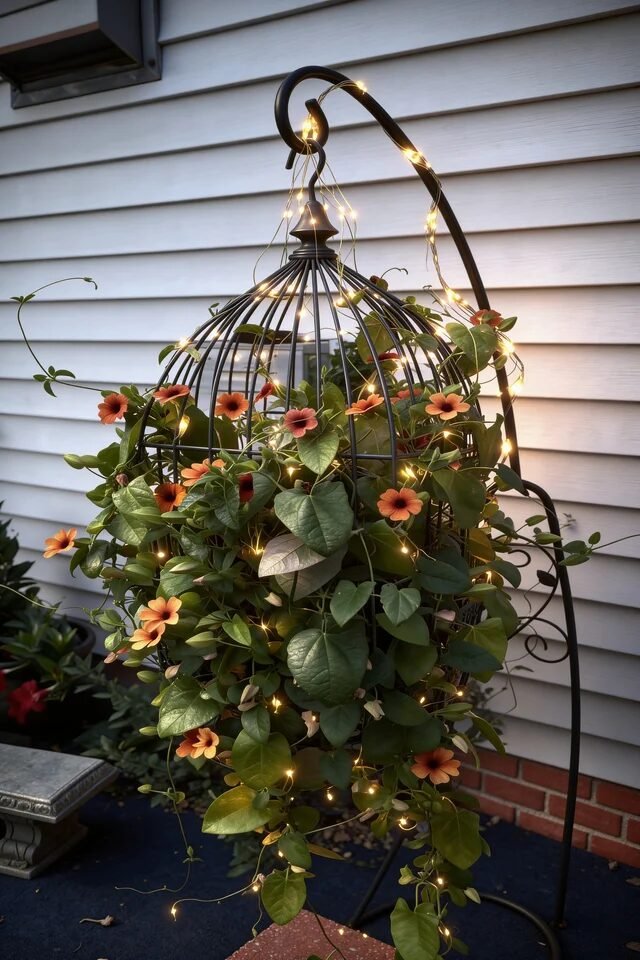
This one is basically cottagecore flirting with Pinterest perfection, and honestly, we’re not mad about it. The magic here comes from layering—lush trailing greenery, soft blooms, and those warm fairy lights that instantly romanticize everything. The key design principle is vertical abundance, where the eye moves naturally from top hook to cascading vines, creating that effortless “it just grew like this” illusion. Spoiler: it didn’t.
To recreate it, we want to mix at least two leaf shapes and one pop-color flower for contrast. The cage structure acts as a frame, so avoid overstuffing the center—let the plants spill outward instead. Think balance, not chaos, even if the vibe says otherwise.
Lighting is the real main character here. Wrap lights loosely (not tightly—this isn’t a hostage situation), so they highlight curves instead of flattening the shape. This works best near entryways or patios where dusk lighting can do its thing.
Vintage Gold Birdcage Floral Centerpiece Display
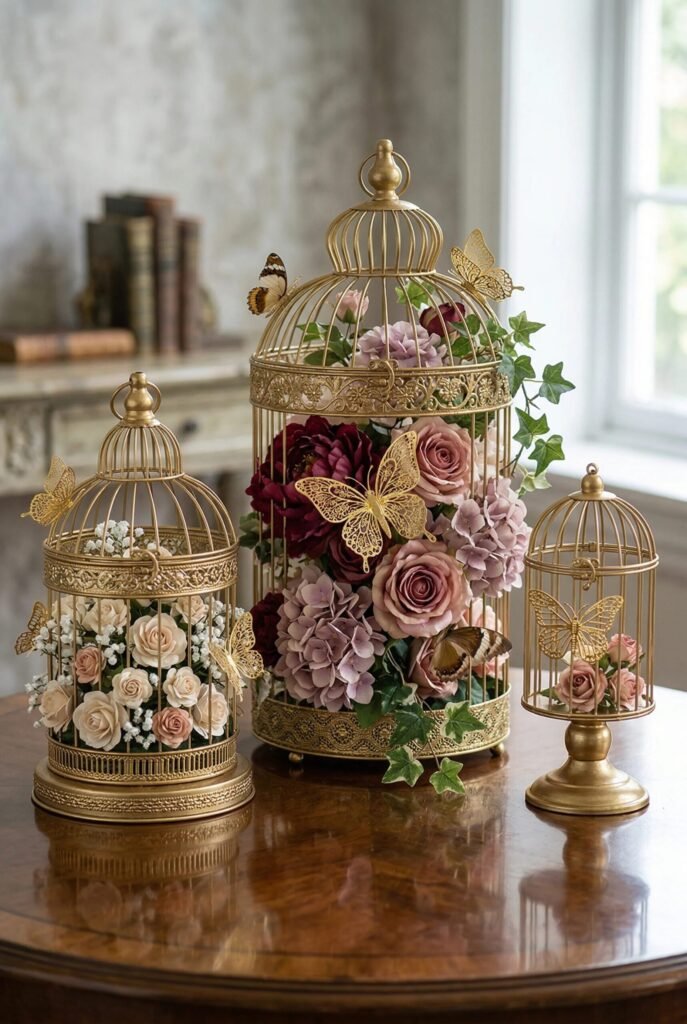
This setup is giving elegant brunch host who casually says, “Oh this? I just threw it together.” Meanwhile, it’s actually a masterclass in symmetry and color harmony. The trio of cages creates a visual rhythm, while the gold finish adds warmth and cohesion. Repetition + variation is the real design trick here.
We want to keep the floral palette tight—dusty pinks, creams, maybe a muted berry tone—so it feels curated, not chaotic. Each cage should feel slightly different in scale or fill, but still part of the same story. Consistency in color, variety in composition—that’s the sweet spot.
Butterfly accents? Optional, but they do add movement and softness. Place this on a wood table to ground the look, because without contrast, gold can feel a little too… wedding centerpiece from 2012.
Rustic Pedestal Birdcage With Garden Scene
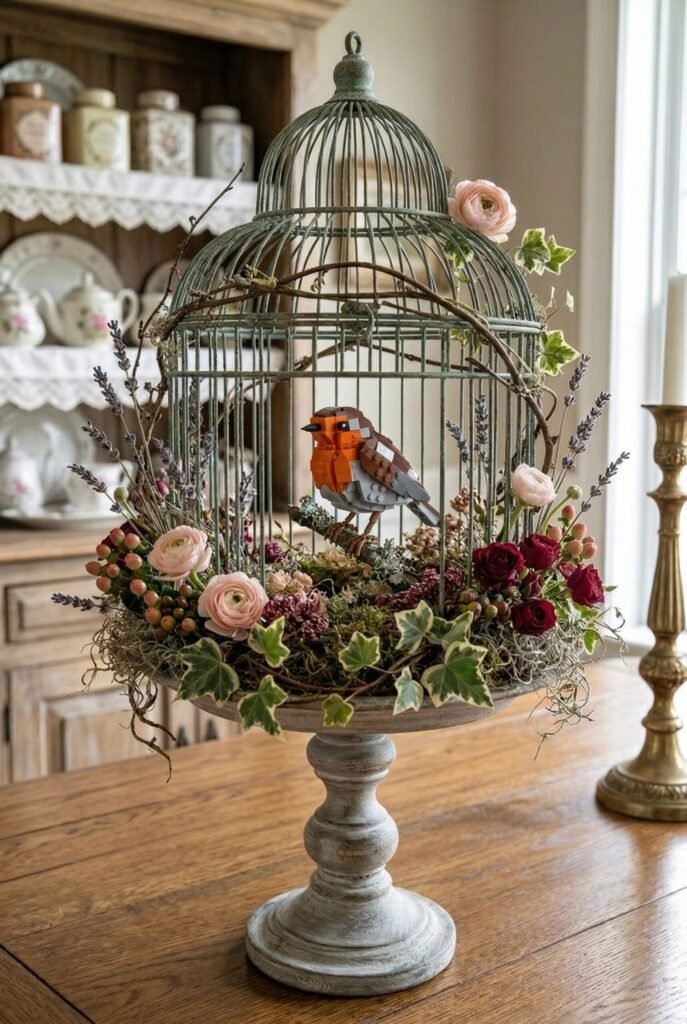
Okay, this one is basically storytelling but make it decor. Instead of just “putting flowers in a cage,” we’re creating a whole tiny world. The pedestal base elevates it—literally and visually—making it feel important, like yes, this deserves attention. Height variation is doing a lot of heavy lifting here.
Inside, we layer textures: moss, twigs, florals, and a focal element (that cute bird). The principle here is depth—foreground, midground, background—even in a small space. That’s what makes it feel rich instead of cluttered.
When styling, don’t center everything too perfectly. Let branches lean, let florals spill slightly asymmetrical. It creates that organic, “found in nature” vibe. This works beautifully on dining tables or consoles where you want a soft focal point without going full maximalist chaos.
Outdoor Wall Mounted Birdcage Garden Cluster
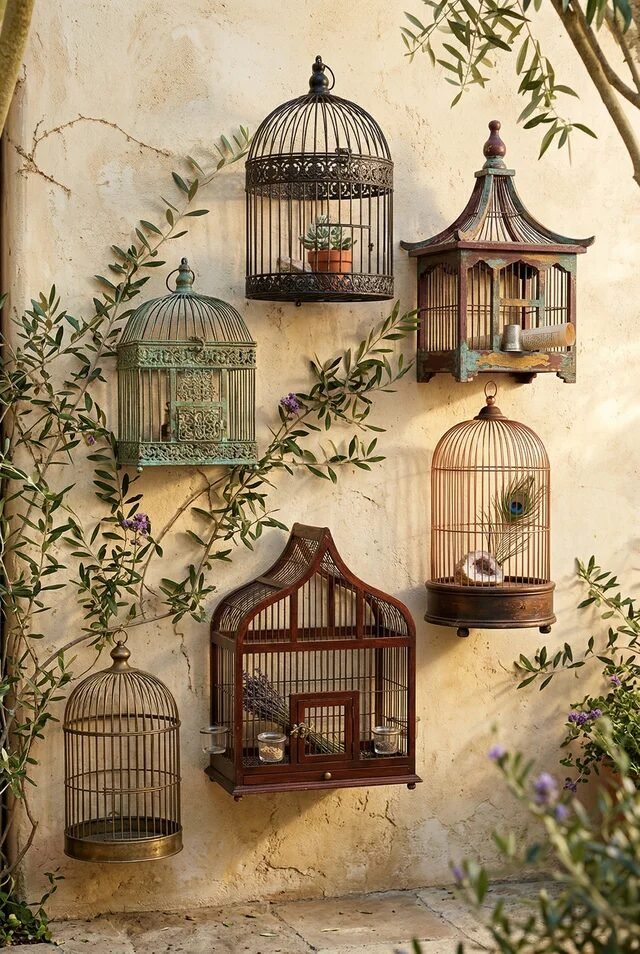
If your wall is looking a little “I forgot about this space,” this is your fix. Grouping multiple birdcages turns a flat surface into a layered installation. This is all about composition and spacing—aka gallery wall rules, but make it garden.
We want variation in size, shape, and finish, but keep a unifying element like patina tones or plant types. Space them unevenly on purpose—too symmetrical and it starts looking like a retail display. Controlled asymmetry feels more natural and visually interesting.
Add climbing greenery around the cages to soften edges and tie everything together. And yes, some cages can stay partially empty—that negative space keeps the whole thing from feeling overcrowded. This setup thrives in outdoor patios or sunlit walls where shadows can play along.
Miniature Garden Diorama Inside Birdcage
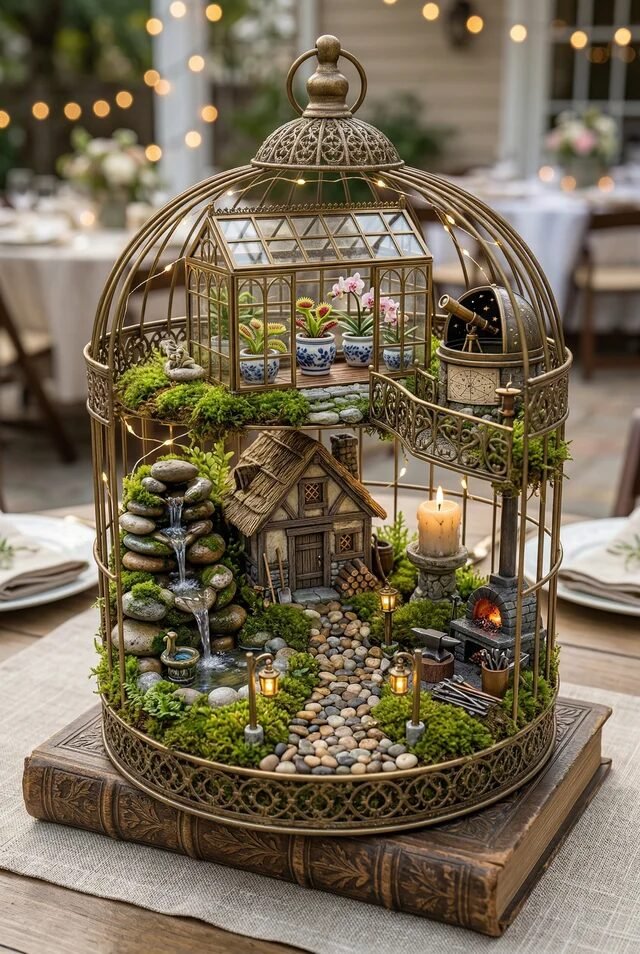
This is where we fully lean into main character energy. A tiny house, little pathways, soft lighting—it’s basically a whole fantasy world contained in metal bars. And surprisingly, it’s not just cute—it’s smart design. We’re using zoning in miniature form, dividing space into sections that guide the eye.
Start with a base layer like moss or pebbles, then build upward with structures and greenery. Scale is everything here—too many large elements and it loses the illusion. Keep proportions believable, even if it’s whimsical.
Lighting again makes the difference. Small warm lights create depth and highlight focal points like the house or waterfall. Place it on stacked books or a tray so it feels intentional, not random. Honestly, this one is less decor and more conversation starter—and we love that for us.
Maximalist Birdcage Habitat With Layered Perches
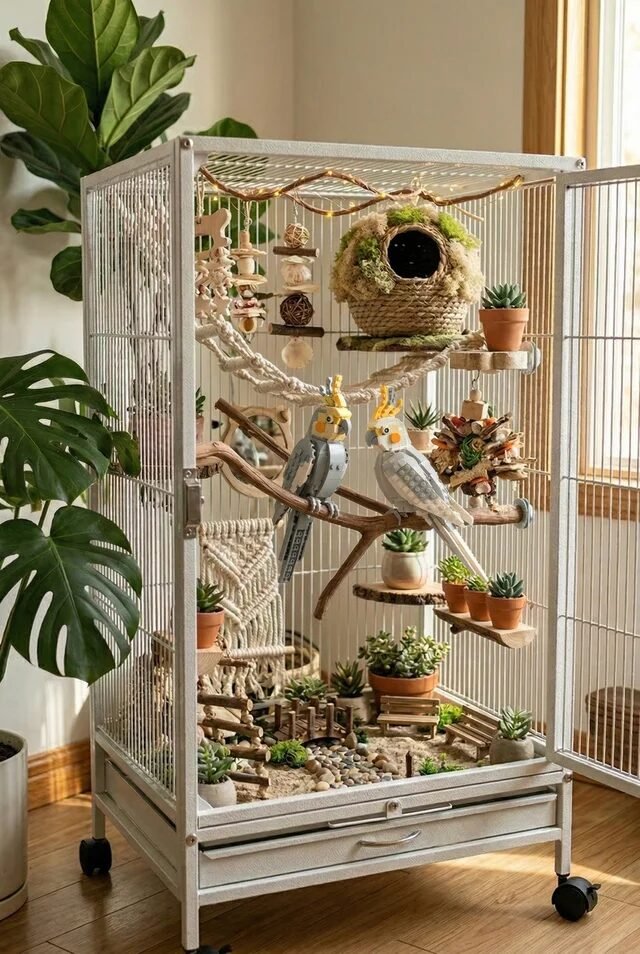
This one said “why be minimal when we can build a tiny luxury condo?” and honestly… valid. The beauty here is in intentional layering—multiple levels, textures, and functional zones that feel cohesive instead of chaotic. We’re working with vertical zoning, meaning every level has a purpose, from perches to decor moments.
To recreate this, start with a strong base layout: large branch centerpiece, then build outward with smaller shelves and hanging elements. Keep materials consistent—wood, rope, neutral tones—so even with a lot going on, it still feels calm. Too many random materials = instant visual clutter.
Balance is everything. If one side feels heavy with plants or objects, counter it on the other side. And yes, leave breathing room. Not every inch needs to be filled—we’re decorating, not playing decor Tetris.
Moody Gothic Birdcage With Autumn Storytelling
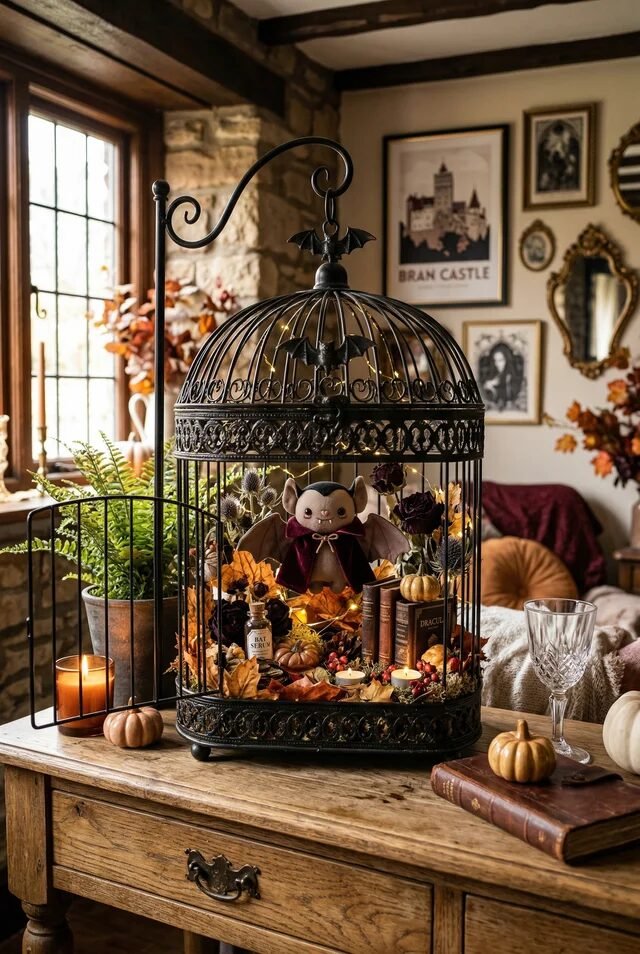
This is giving spooky season but make it aesthetic and slightly dramatic. The dark metal cage instantly sets the tone, while warm autumn colors soften it so it doesn’t feel like we summoned something accidentally. Contrast is the star here—dark structure, warm interior.
Inside, we’re telling a story. Books, mini pumpkins, dried florals—it’s curated chaos, but still curated. The trick is grouping items in clusters instead of scattering them randomly. Think mini vignettes within the cage, not a flat layout.
Lighting matters more than you think. Warm fairy lights or tiny candles create depth and highlight key pieces. Place this near a textured backdrop (wood, stone, or layered decor) so the moody vibe feels intentional, not just “we forgot to turn on the lights.”
Butterfly Garden Birdcage With Living Texture
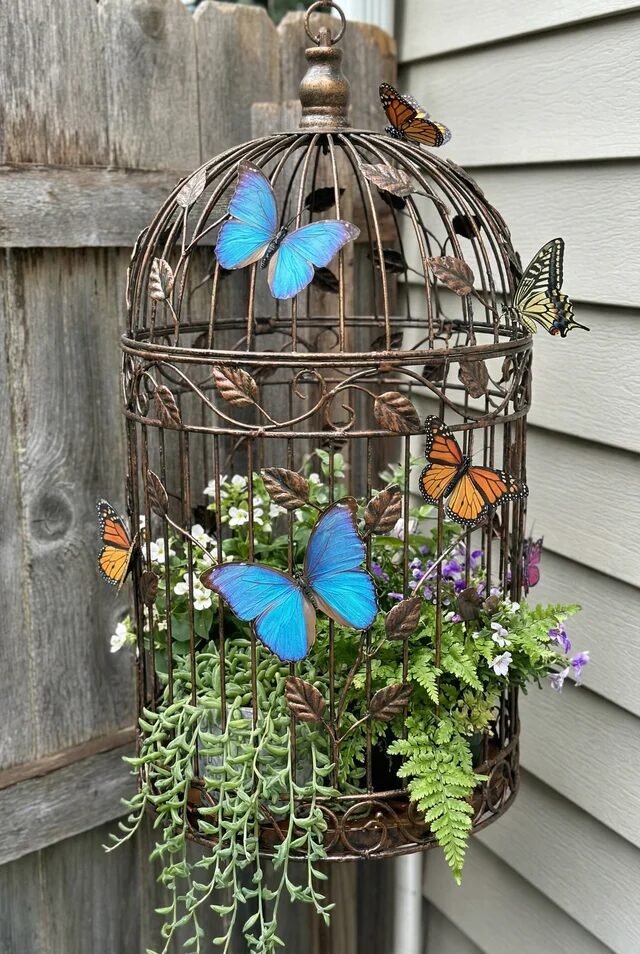
If you want something that feels alive without being high-maintenance, this is your moment. The combination of trailing succulents, soft greenery, and butterfly accents creates movement even when nothing is moving. We’re playing with visual motion and organic flow here.
Start with cascading plants at the bottom—this anchors the look. Then layer lighter, airier foliage toward the top. Butterflies should be placed asymmetrically, like they just landed mid-flight. Perfect symmetry would ruin the illusion instantly.
Color contrast is subtle but important. Greens dominate, so pops of blue and orange from the butterflies become focal points. This works beautifully outdoors where natural light enhances textures, making everything feel a little more magical without trying too hard.
Asymmetrical Floral Explosion Birdcage Arrangement
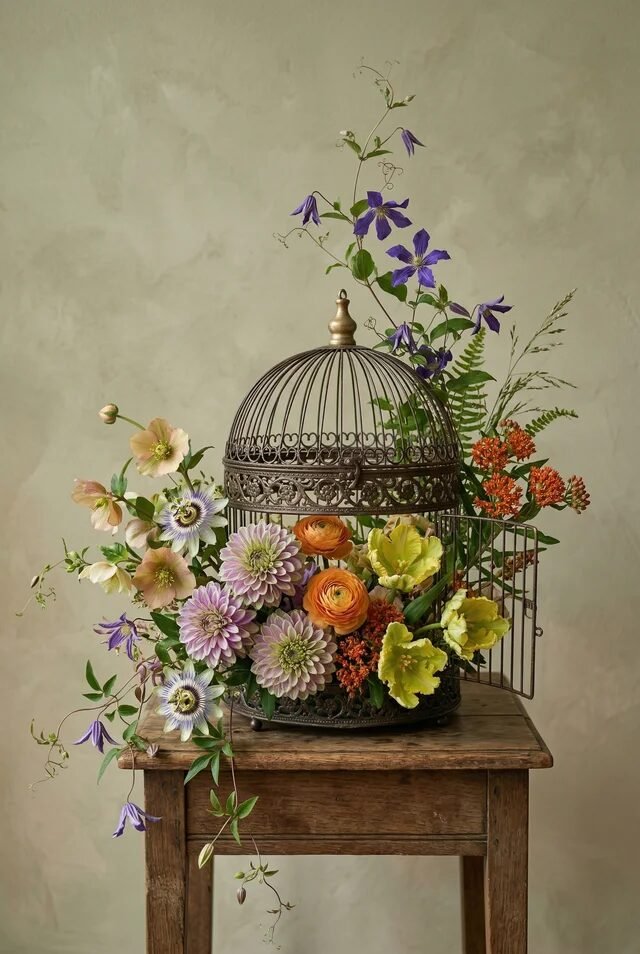
This one said “rules are optional,” but plot twist—they’re not, we’re just bending them strategically. The floral arrangement spills dramatically out of the cage, creating a strong directional flow. Asymmetry is the main character, but it still needs balance.
When recreating, choose a dominant direction (left, right, or upward) and commit. Use larger blooms as anchors, then layer smaller florals and greenery to guide the eye outward. We’re creating movement, not mess.
Color-wise, mix warm and cool tones but keep them slightly muted so they don’t fight each other. Place this against a simple background so the arrangement can shine—because if the backdrop is busy too, suddenly it’s giving visual overload and we didn’t sign up for that.
Soft Romantic Birdcage Table Centerpiece Styling
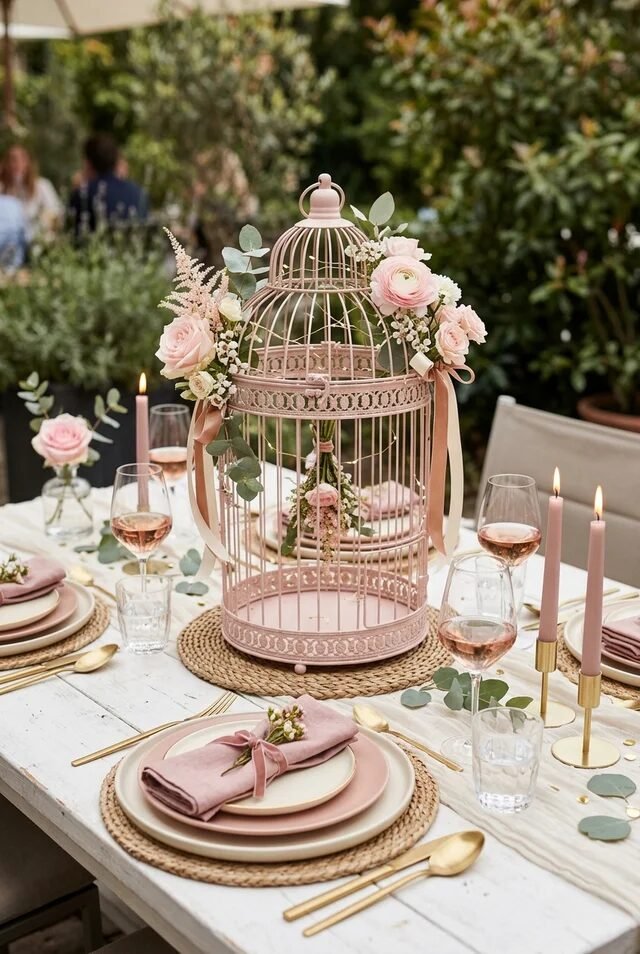
This is what happens when elegance meets “we actually planned this.” Soft blush tones, delicate florals, and coordinated table settings create a cohesive scene that feels intentional but not stiff. Color harmony is doing all the heavy lifting here.
Start with a limited palette—blush pink, soft green, maybe a hint of gold—and repeat it across the table. The birdcage acts as the focal point, so keep surrounding decor slightly quieter. If everything screams, nothing gets heard.
Layer textures subtly: linen napkins, glassware, woven placemats. These add depth without overwhelming the softness of the palette. This setup thrives in outdoor or well-lit spaces where natural light enhances the romantic vibe. Honestly, it’s giving “effortless host energy,” even if we definitely tried.
Small Decorative Cages With Big Visual Impact Energy
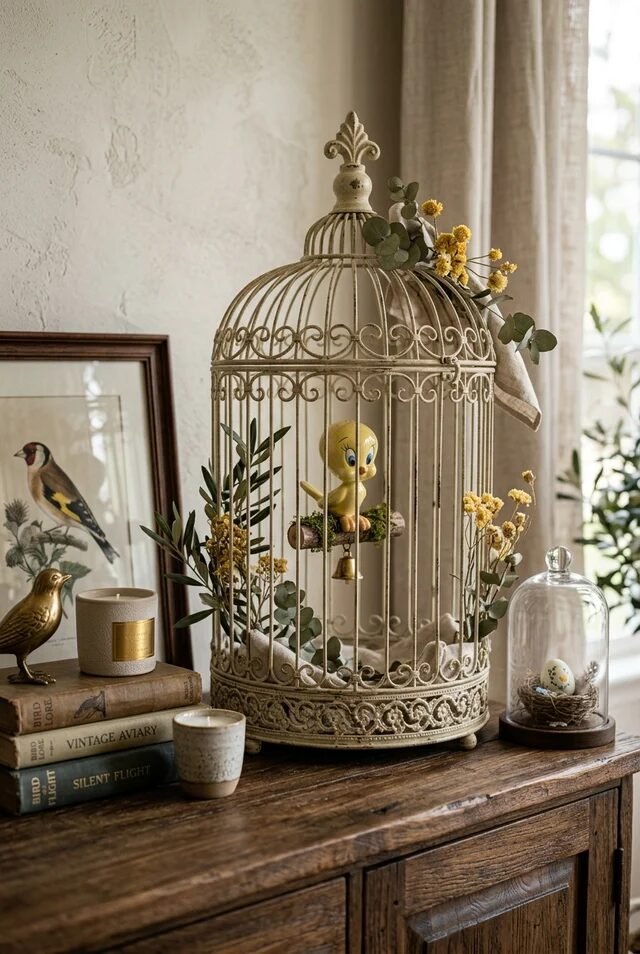
If there’s one thing we’ve learned, it’s that birdcage decor is less about the cage itself and more about how we style the space around and within it. These pieces work best when we treat them like focal points, not afterthoughts. Placement, scale, and surrounding elements matter just as much as what goes inside.
The strongest designs always come back to a few core principles: layering for depth, contrast for interest, and intentional imbalance to keep things feeling natural. When we mix heights, textures, and tones thoughtfully, even the smallest cage can feel like a full design moment.
At the end of the day, birdcage decor gives us freedom to experiment without committing to permanent changes. We can go seasonal, playful, elegant, or even a little chaotic—in a good way. And honestly, that kind of flexibility? That’s what makes it worth styling again and again.