
Japandi Bathrooms Aren’t Minimal—They’re Just Edited Better
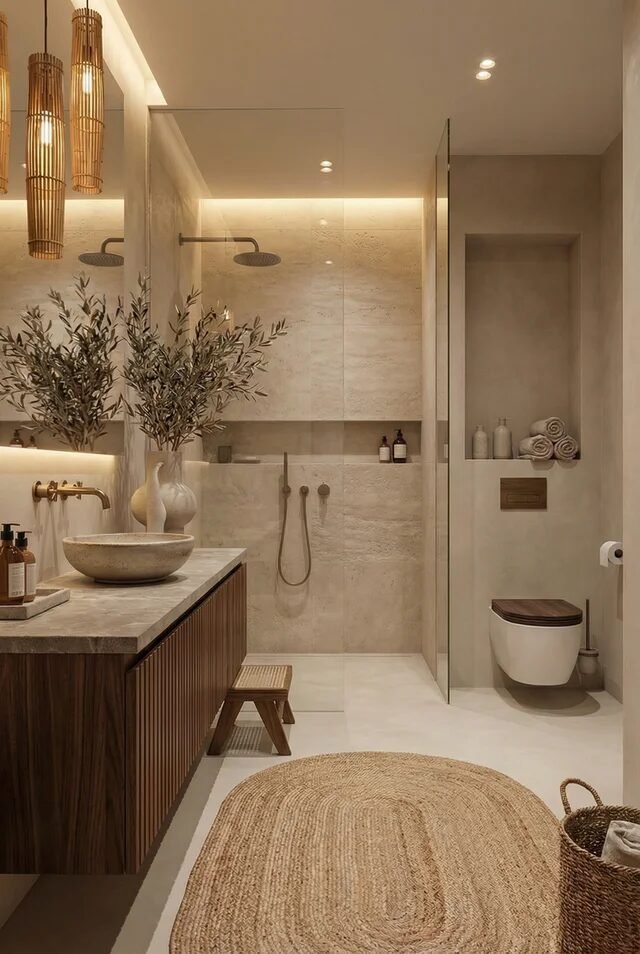
Japandi bathrooms are having a moment—and honestly, we get it. They’re not just pretty spaces; they’re intentional, calming environments that make daily routines feel a little less chaotic and a lot more grounding. At its core, Japandi design blends Scandinavian functionality with Japanese minimalism, creating spaces that feel both warm and uncluttered. It’s that perfect middle ground between cozy and clean.
What makes this style stand out is how it treats every element as part of a bigger visual story. Materials matter, lighting matters, even empty space matters. Negative space isn’t “empty”—it’s a design tool that allows the room to breathe. That’s why Japandi bathrooms often feel so peaceful without trying too hard.
As we move through these ideas, we’ll notice one consistent theme: less noise, more intention. Because in Japandi design, we’re not adding more—we’re choosing better.
Sculptural Wood Storage Meets Spa Simplicity
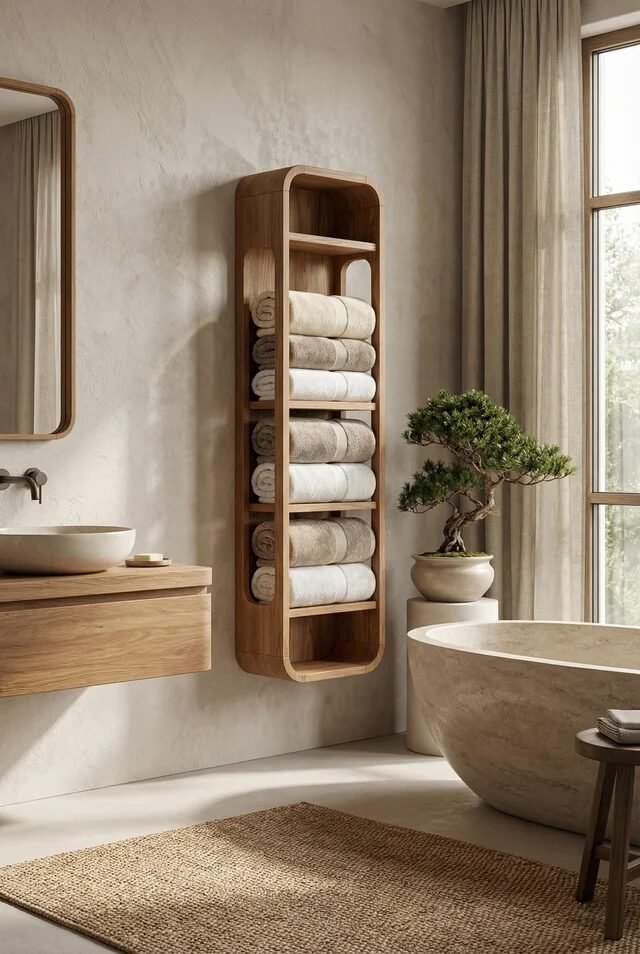
This bathroom is basically proof that storage can be hot. That vertical wooden shelf isn’t just practical, it’s acting like a design feature that pulls the eye upward, making the whole space feel taller and calmer. In Japandi design, verticality is a quiet trick to create elegance without clutter. We’re keeping everything intentional—rolled towels double as texture, not mess.
Material-wise, this space leans hard into warmth. The soft beige plaster walls, pale wood vanity, and neutral textiles create that signature Japandi balance between Scandinavian lightness and Japanese calm. The key principle here is tonal layering—staying within one palette but varying textures to avoid flatness. That’s why it feels rich, not boring.
If we’re recreating this, skip bulky cabinets and go for open, sculptural storage. Keep your color palette tight (think 3–4 tones max), and let materials do the talking. Bonus tip: rolled towels > folded towels. Always. It’s giving boutique hotel, not laundry day.
Warm Ambient Lighting Creates Zen Bathroom Mood
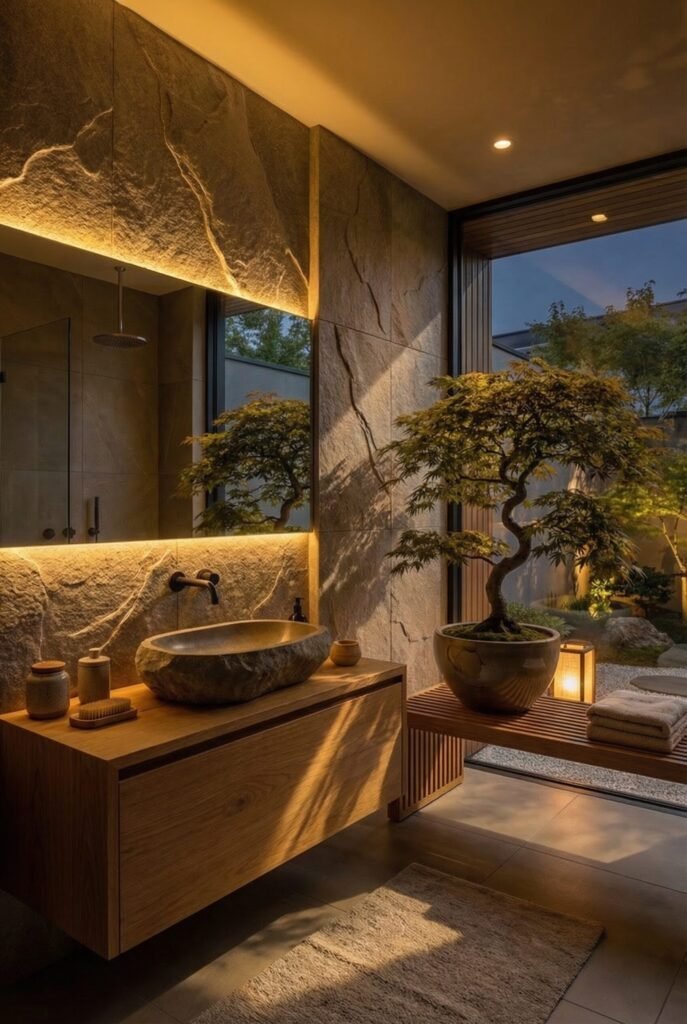
Okay but lighting is doing everything here. That soft glow bouncing off textured stone walls? Instant spa energy. Japandi bathrooms rely heavily on indirect lighting to create calm, not harsh visibility. We’re not interrogating ourselves in the mirror—we’re vibing.
The design leans into contrast, but in a very controlled way. Dark stone walls, warm wood vanity, and golden lighting create depth without chaos. This is contrast done softly—no stark black-and-white drama, just warm vs cool balance. The bonsai moment adds that organic, slightly poetic touch that keeps it from feeling too modern.
If we’re stealing this look (and we should), invest in hidden LED strips behind mirrors or under shelves. Warm temperature only—none of that blue hospital lighting, please. Add one organic element like a plant or stone basin to ground the space. Suddenly your bathroom feels like a retreat, not a chore zone.
Soft Arches And Slatted Wood Balance
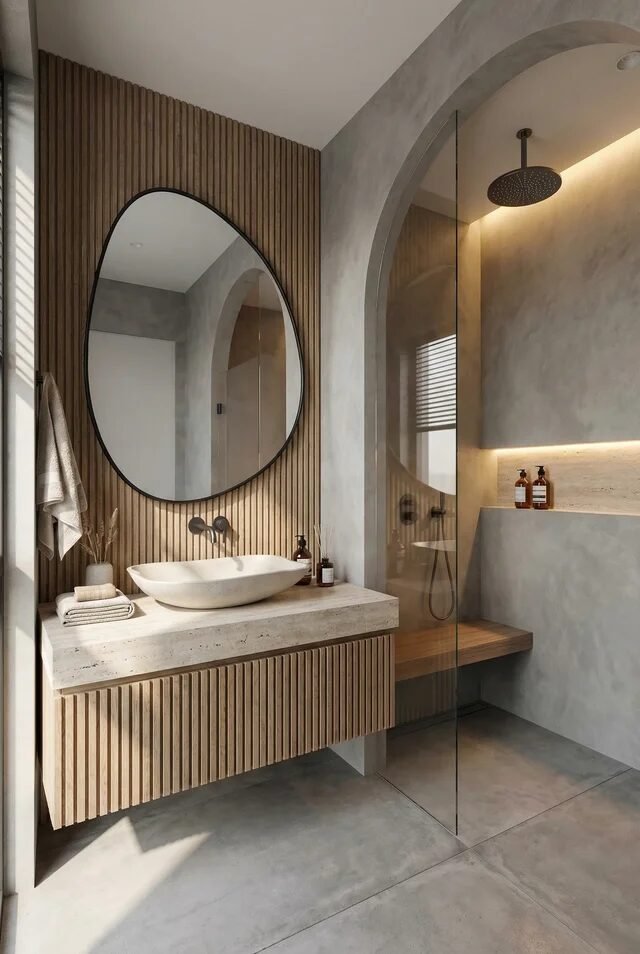
This one is quietly architectural, and we love that for us. The curved arch paired with vertical wood slats creates this subtle push-pull between softness and structure. Japandi thrives on this balance—organic shapes meeting clean lines. It’s giving calm, but with personality.
The vanity design is doing something really smart. The fluted wood texture adds depth while keeping the palette minimal, and the round mirror echoes the arch so everything feels cohesive. Repetition of shapes is a low-key designer trick that makes a space feel intentional. Nothing here is random, even if it looks effortless.
To recreate this vibe, we can start small. Swap a standard mirror for a rounded one, or add fluted panels to a vanity or wall section. Stick to matte finishes and neutral tones to keep things grounded. And if you can add an arch somewhere? Congrats, you’ve officially elevated the whole room.
Skylit Bathtub Nook With Natural Layers
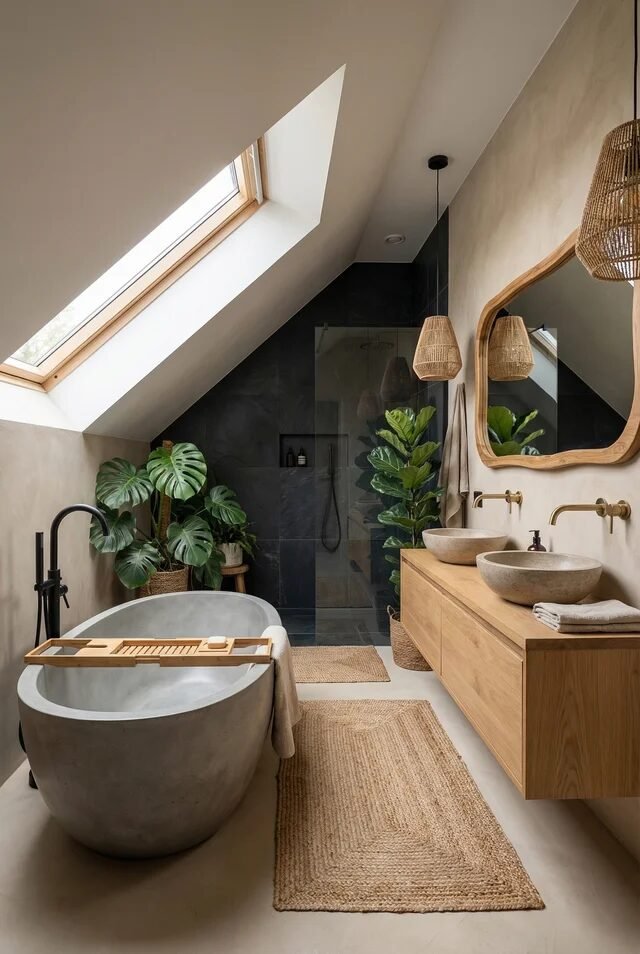
This bathroom is basically a love letter to natural light. That skylight transforms the entire space, making textures and tones feel alive throughout the day. Japandi design prioritizes light as a material, not just a function. We’re not just lighting the room—we’re shaping the mood.
There’s also a beautiful zoning happening here. The bathtub sits in its own little moment, separated visually by darker tiles in the shower area. Zoning helps small or awkward spaces feel organized without adding physical barriers. It’s subtle, but it changes everything.
If we’re working with limited space, this is gold. Use rugs, lighting, or material changes to define areas instead of walls. Add plants for that organic softness—big leafy ones work best here. And if you can’t install a skylight, fake it with layered lighting. We’re chasing the glow, not the construction bill.
Woven Textures And Hidden Storage Elegance
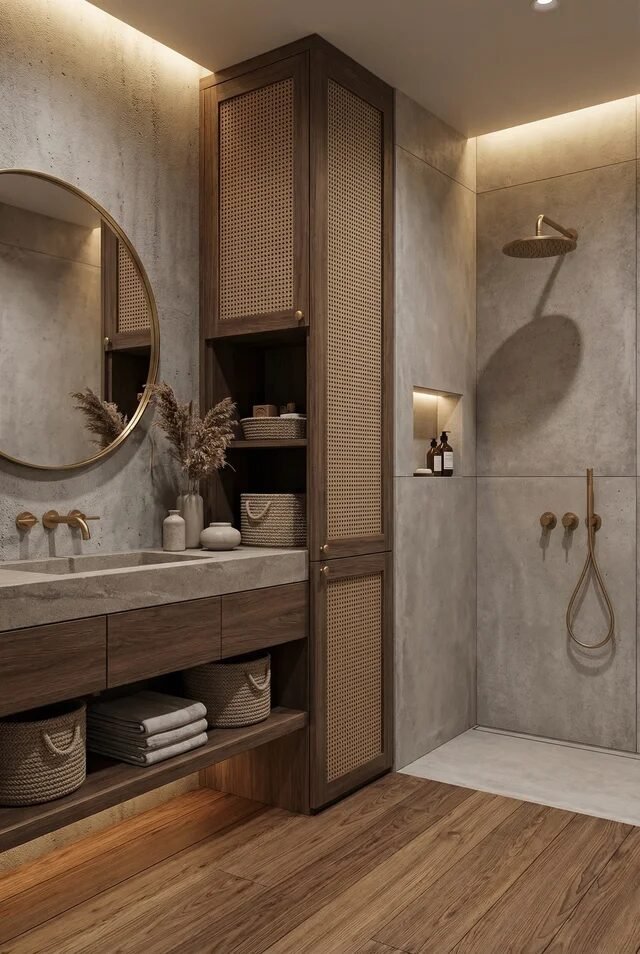
This bathroom said “storage, but make it aesthetic,” and honestly… nailed it. The woven cabinet panels add texture without overwhelming the space, while still hiding all the chaos we don’t want to see. Japandi is all about visual calm, and concealed storage is a major part of that.
The mix of materials here is super intentional. Smooth concrete walls, warm wood cabinetry, soft woven textures—it’s a perfect example of contrast through texture, not color. When you limit your color palette, texture becomes your main design tool. That’s why it feels layered instead of flat.
If we’re recreating this, think baskets, cane panels, or textured cabinet fronts. Keep your hardware minimal (or invisible), and let the materials shine. Also, under-vanity storage? Underrated. It keeps things functional without breaking the visual flow. Clean, warm, and just a little bit fancy—exactly the Japandi sweet spot.
Layered Wood Slats And Stone Contrast
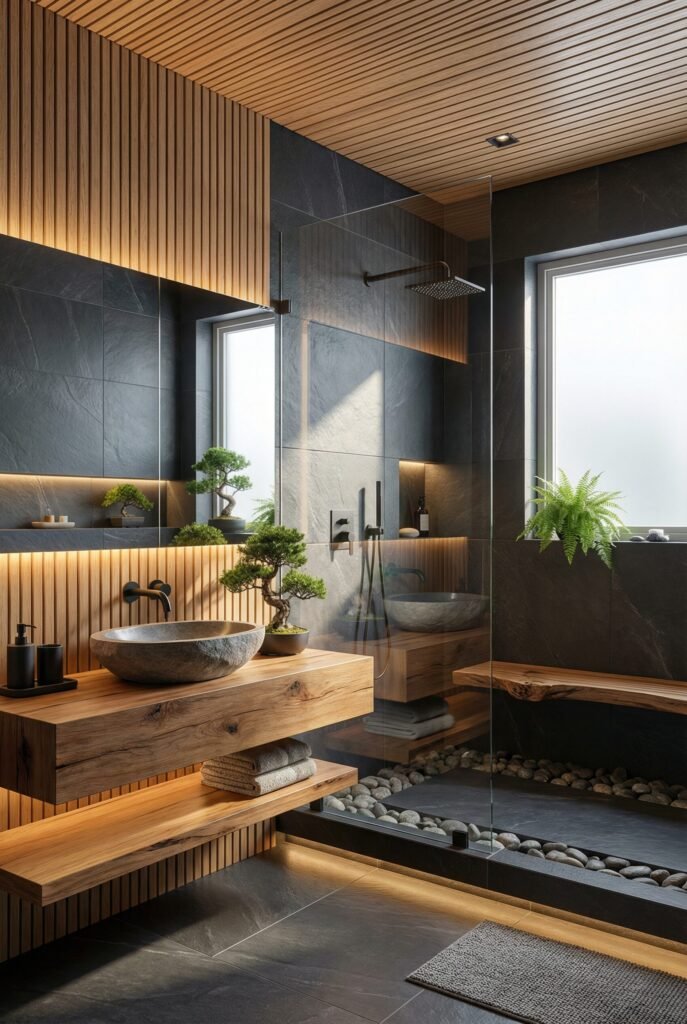
This space is doing that moody Japandi thing so well it almost feels illegal. The vertical wood slats wrapping the walls and ceiling create a cocoon effect, while the dark stone tiles ground everything with depth. This is a masterclass in contrast through materials—not color chaos. We’re balancing warm wood against cool stone, and it just works.
The floating vanity keeps things visually light, which is crucial when you’re working with darker tones. Notice how the pebble detail in the shower subtly adds texture without stealing attention. Layering textures at different scales (large slabs, fine slats, small stones) is what makes this space feel rich, not overwhelming.
If we’re recreating this, commit to one dominant material (like wood slats) and let everything else support it. Keep fixtures matte black for cohesion, and don’t skip integrated lighting—it’s what turns this from “nice bathroom” into “quiet luxury spa.”
Indoor Outdoor Flow With Minimal Palette
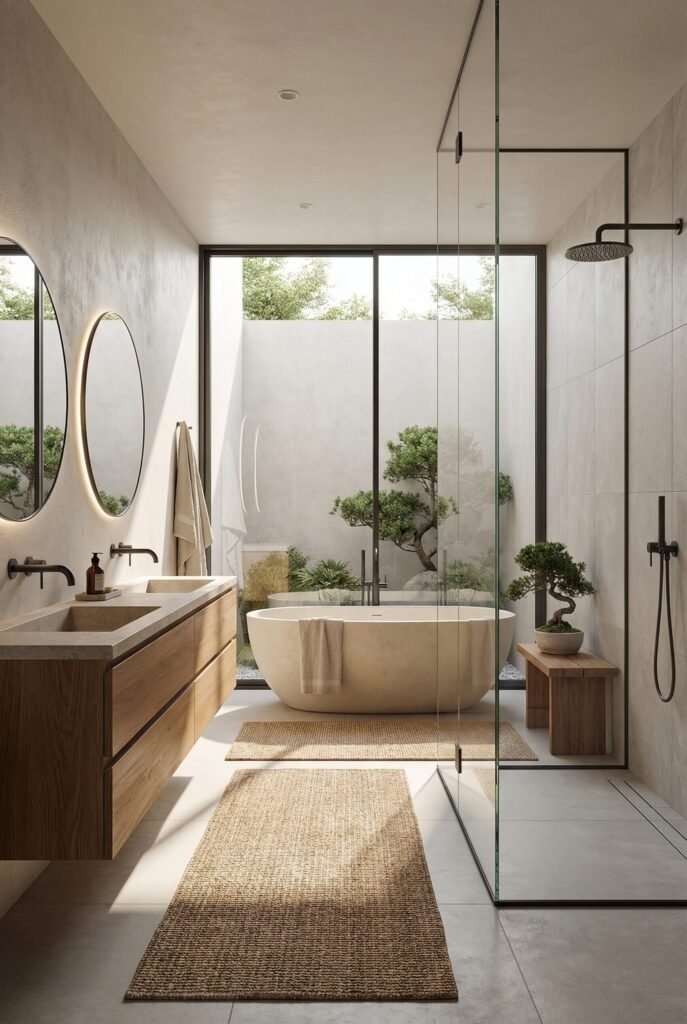
This one is basically a deep breath in design form. The full-height glass opening creates that seamless indoor-outdoor connection, which is a huge Japandi signature. Blurring boundaries with nature instantly elevates calm and makes the space feel bigger than it is. Also, yes—we’re absolutely romanticizing bath time now.
The palette is super restrained—soft beige, warm wood, muted greens—and that’s exactly why it feels so serene. The freestanding tub becomes the focal point simply because nothing else is fighting for attention. Japandi design often relies on subtraction, not addition. Less stuff, more impact.
If you can’t knock down walls (same), fake the effect with large windows, sheer curtains, or even nature-inspired art. Keep your decor minimal and intentional. One plant, one statement piece, and clean lines everywhere. Suddenly your bathroom feels like a boutique retreat, not just where you rush through mornings.
Soft Beige Layers With Subtle Symmetry
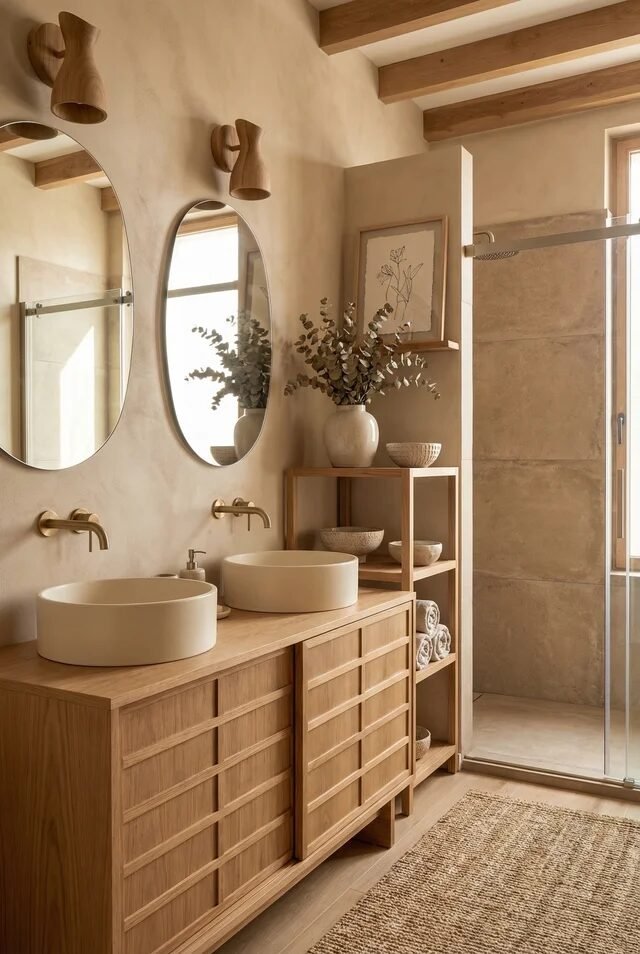
This bathroom is giving “calm but curated,” and we’re obsessed. The double sinks create natural symmetry, but it’s softened by organic shapes like those rounded mirrors and vessels. Perfect symmetry can feel stiff, so Japandi often softens it with curves and imperfect textures. It’s balanced, but not robotic.
The color palette stays firmly in that warm beige family, but notice how it doesn’t feel flat. That’s because of material variation—wood grain, plaster walls, ceramic finishes. When you limit color, texture becomes your personality. It’s like wearing an all-neutral outfit but mixing linen, wool, and silk.
To recreate this, start with a neutral base and build layers slowly. Choose two or three materials and repeat them across the space for cohesion. And don’t overcrowd your vanity—leave breathing room. Japandi isn’t about showing everything you own, it’s about editing like a pro.
Rustic Minimalism With Earthy Japandi Warmth
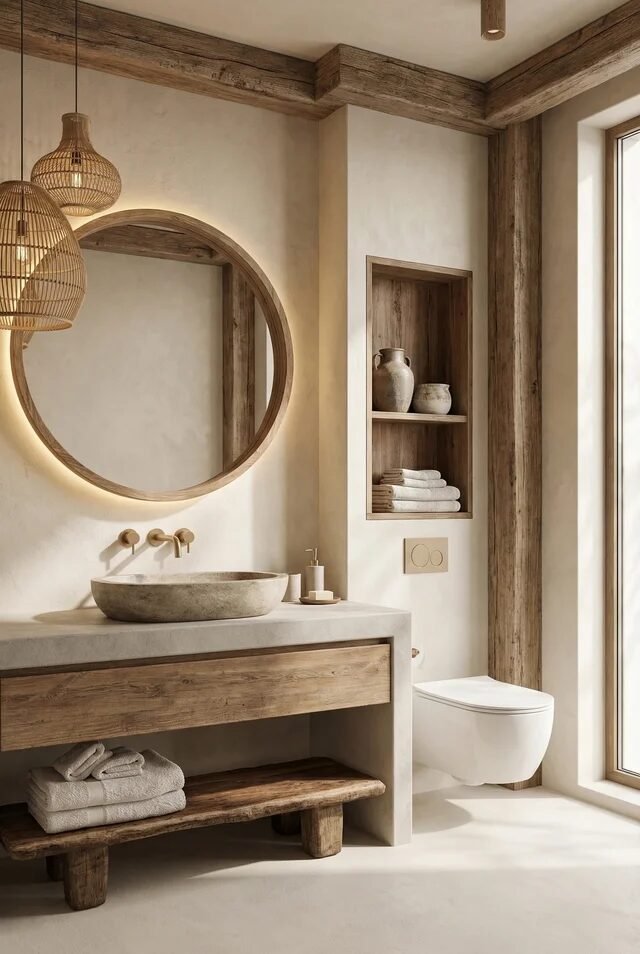
This one leans a little more rustic, and honestly? It’s kind of perfect. The chunky wood beams and raw textures bring in that wabi-sabi vibe—celebrating imperfection and natural aging. Japandi doesn’t mean sleek and sterile; it means intentional and grounded.
The floating concrete vanity paired with a stone basin creates this beautiful tension between heavy and light. Then you’ve got the round mirror and woven lighting softening everything. Balancing visual weight is key—mix something solid with something airy so the space doesn’t feel dense.
If we’re recreating this look, don’t be afraid of slightly rough finishes. Opt for matte, imperfect materials over polished ones. Add open shelving or niches for practical styling, but keep it minimal. Think fewer items, better choices. It’s giving earthy, calm, and just a little bit poetic.
Ambient Lighting And Open Zen Layout
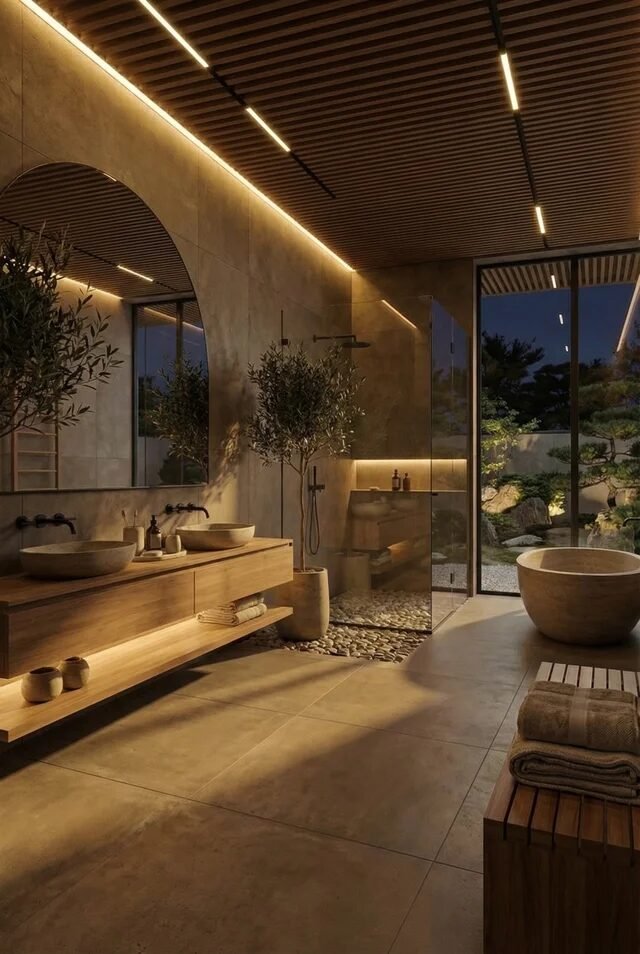
This bathroom is straight-up cinematic. The warm ambient lighting paired with that open layout creates a flow that feels almost meditative. Lighting here isn’t just functional—it’s guiding how we experience the space. We’re moving through glow, not glare.
The layout is intentionally open, with glass partitions and low visual barriers keeping everything connected. The stone, wood, and greenery combo hits that Japandi sweet spot again. Consistency in materials across zones helps the space feel unified, even when it’s large.
If you want this vibe, focus on lighting layers first—ceiling strips, under-vanity glow, maybe a soft wall wash. Keep your layout as open as possible and avoid heavy dividers. Add one or two organic elements like a tree or stones to ground it. Suddenly your bathroom isn’t just functional—it’s an experience.
Simple Materials Thoughtfully Styled For Everyday Calm
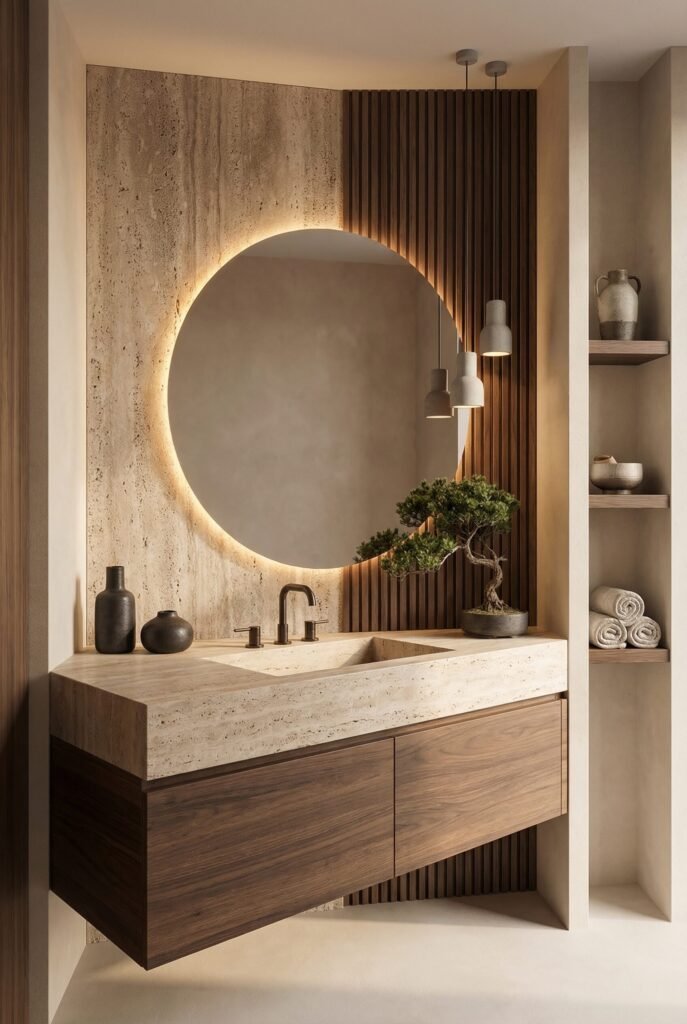
If there’s one thing Japandi bathrooms teach us, it’s restraint—but make it beautiful. We’re not chasing trends here; we’re building spaces that feel timeless, grounded, and genuinely livable. The magic happens when natural materials, soft lighting, and thoughtful layouts come together in quiet harmony. Nothing screams for attention, yet everything feels considered.
A big takeaway? It’s all about balance. Warm woods soften cooler stone, clean lines are paired with organic shapes, and minimal decor is layered with texture to avoid that “empty showroom” vibe. When done right, simplicity doesn’t feel boring—it feels elevated. That’s the difference.
So whether we’re updating a full bathroom or just swapping a few elements, the goal stays the same: create a space that supports calm, not clutter. Because at the end of the day, a Japandi bathroom isn’t just a design choice—it’s a lifestyle upgrade we didn’t know we needed.