
The Backyard Corner Most People Ignore (And Why It Deserves Better Design)
Every backyard seems to have that one weird corner. You know the one. It’s where the fence lines meet, the grass struggles a little, and somehow nothing ever quite happens there. But here’s the fun design secret we’ve learned: back corner yards are actually one of the most powerful opportunities in outdoor design. When used intentionally, they can become cozy retreats, garden highlights, or even entertaining zones.
Corners naturally create boundaries, which is exactly what designers love when creating outdoor “rooms.” Instead of thinking of a corner as leftover space, we can treat it like a built-in frame waiting for a purpose. Defined corners help anchor focal points such as fire pits, pergolas, water features, or lush garden beds. Because two fences already form a backdrop, the area instantly feels structured.
Throughout these ideas, we’ll explore how thoughtful layering, lighting, seating, and landscaping can transform neglected corners into standout features. Sometimes the smallest corner ends up becoming the most loved space in the entire yard.
Pergola Corner Lounge Wrapped in Living Green
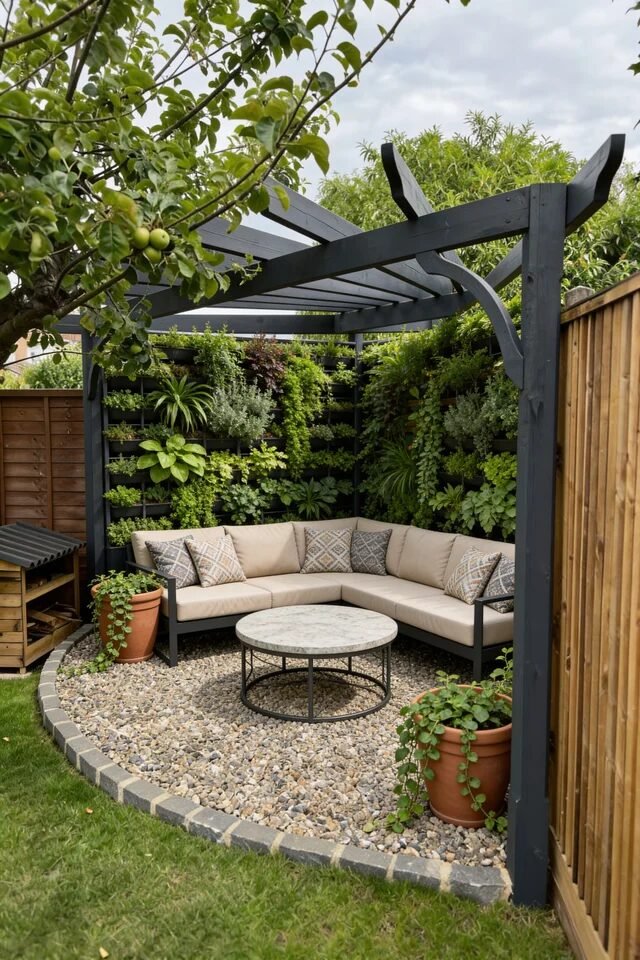
A neglected backyard corner suddenly becomes premium real estate when we introduce vertical layering and a defined overhead structure. This pergola instantly frames the space, giving the seating area a sense of intention rather than “we just placed furniture in the corner and hoped for the best.” The dark structure contrasts beautifully with the greenery, which is a classic design trick: dark frames make plants visually pop while also grounding the space.
What really makes this idea work is the vertical garden wall. Instead of spreading plants across the yard, we stack them upward, which increases visual density without eating up floor space. Vertical gardens also create natural privacy, turning the corner into a cozy outdoor room rather than a forgotten boundary zone. If recreating this, mix trailing plants with fuller foliage so the wall looks lush rather than flat.
Finally, the curved sectional and circular coffee table soften the hard angles of the corner. When designing tight outdoor spaces, round elements help balance rigid lines from fences and pergolas. Add gravel underfoot for drainage and texture, and suddenly that awkward backyard corner feels like a boutique garden lounge.
Compact Outdoor Kitchen Tucked Into Backyard Corner
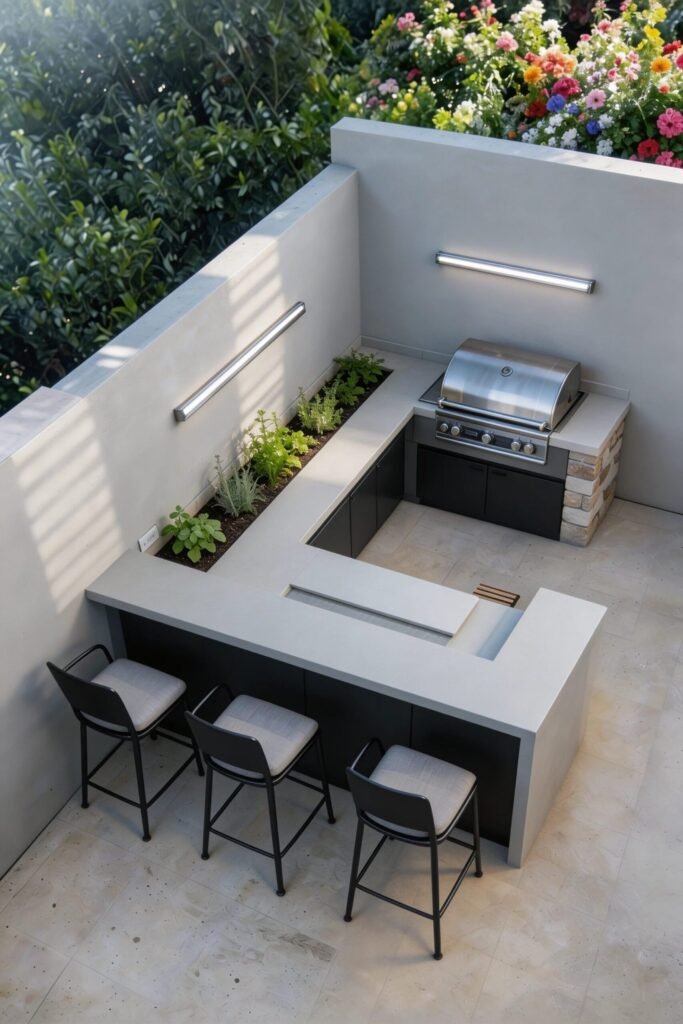
Backyard corners are secretly perfect for outdoor kitchens because they already provide two natural walls for zoning and structure. This L-shaped layout takes advantage of that by building the counters directly into the corner, which keeps the footprint compact while maximizing prep space. Corner layouts naturally encourage efficient workflow—prep, cook, serve—without wasting movement.
Notice the clean minimalist palette: pale counters, matte black cabinetry, and stainless appliances. This works because outdoor kitchens benefit from high contrast materials that resist visual clutter and weather wear. The built-in herb planter is also doing double duty here. It adds greenery while placing fresh ingredients within arm’s reach—practical design disguised as decor.
The bar seating along the outer edge is the social anchor. Instead of guests hovering awkwardly behind the grill, they sit across the counter where conversation flows easily. When designing outdoor kitchens, always separate the cooking zone from the social zone. That simple shift turns the space from “grilling station” into a backyard entertaining hub.
Cozy Fire Pit Corner With Built-In Seating

Some backyard corners practically beg for a fire pit, and this one leans fully into symmetry and warmth as the main design language. The L-shaped built-in bench wraps the corner, creating an intentional gathering zone instead of random scattered chairs. Built-in seating also visually anchors the space, making the fire pit feel integrated rather than temporary.
Lighting is doing a lot of heavy lifting here. The subtle strip lighting beneath the bench and along the fire pit border creates a glow effect that defines the zone after sunset. This is a classic outdoor design principle: layered lighting turns simple backyard features into nighttime focal points. Without it, the area would disappear into darkness.
The gravel fire pit base and grassy border introduce contrast in texture. Hardscape meets softscape, which keeps the space from feeling too rigid. Whenever we design fire pit areas, mixing materials—stone, wood, grass—creates visual depth while improving drainage and safety. Add cozy pillows and suddenly this corner becomes the backyard’s unofficial storytelling headquarters.
Curved Tropical Plant Bed Backyard Corner

A corner landscape bed works best when it avoids stiff geometry, which is why the curved edge here feels so natural. Curved borders guide the eye smoothly across the yard instead of abruptly stopping at the fence line. That simple landscaping trick makes the entire backyard appear larger and more organic.
Plant selection also follows the rule of layered heights. Tall palms establish the backdrop, mid-height shrubs fill the middle layer, and spiky agaves or grasses add sculptural accents in front. Good landscape design always builds depth from back to front, like a theater stage for plants. This prevents the corner from looking flat or cluttered.
The dark mulch is a subtle but powerful choice. Not only does it retain moisture, but it also creates strong contrast against the greenery. Dark ground cover works like a visual shadow, helping plants stand out more dramatically. Add a few low landscape lights and suddenly the corner becomes a nighttime feature instead of just a daytime garden.
Storybook Garden Corner With Cozy Lighting
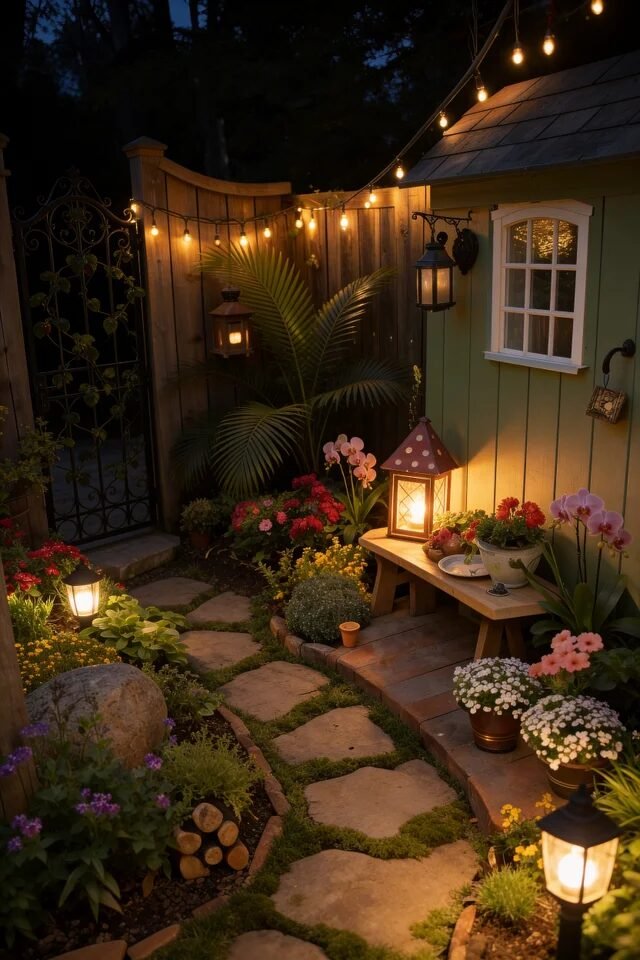
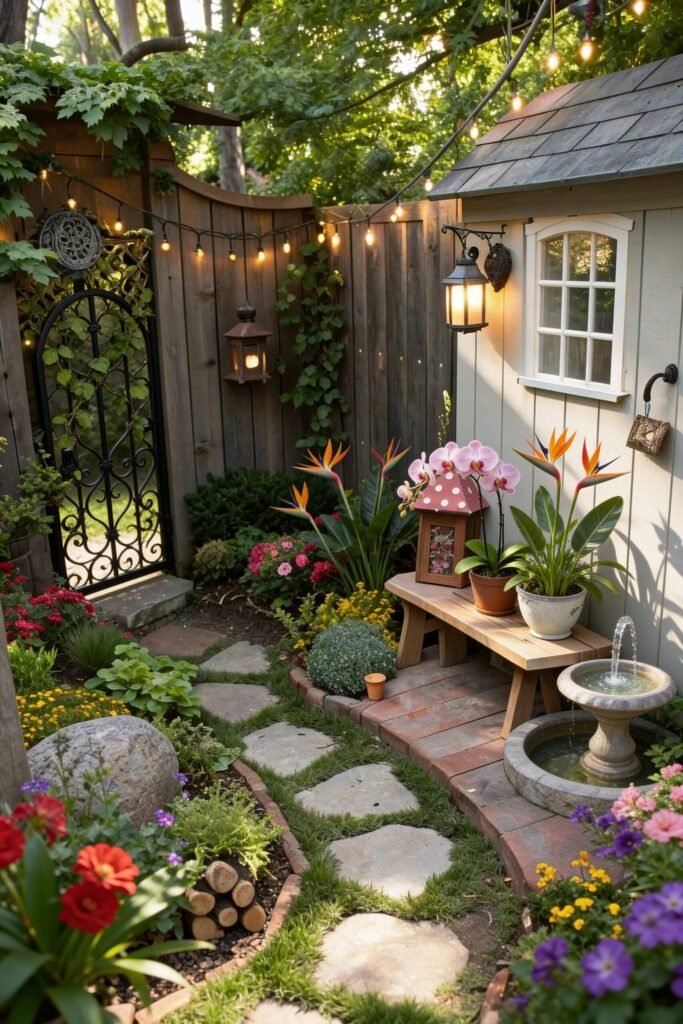
Some backyard corners are perfect for practical things like grills or seating, and others deserve to feel straight out of a fairy tale. This tiny garden nook works because the design focuses on intimacy and layered lighting rather than size. The winding stone path pulls us into the space, which is a classic landscape trick: curved pathways create curiosity and visual movement.
The lighting design deserves a standing ovation. String lights overhead, lanterns on the ground, and warm wall sconces create three separate lighting layers. Layered lighting is the secret ingredient for cozy outdoor spaces because it eliminates harsh shadows and adds visual depth.
What really sells the storybook vibe is the mix of textures—wood fencing, soft plants, stone pavers, and small decorative lanterns. None of these elements are expensive individually, but together they create atmosphere. Outdoor corners become magical when we design for mood, not just function. Add a bench, a few flowers, and suddenly the backyard has its own little secret garden.
Relaxing Hammock Retreat in Shaded Corner

Sometimes the best backyard corner upgrade is also the simplest: a hammock and a little intention. This setup works because it embraces shade, texture, and softness, turning an otherwise unused corner into a mini relaxation zone. The tree acts as a natural anchor point while the hammock stand stabilizes the design visually. When we design corner spaces, anchoring furniture to something structural helps the layout feel deliberate rather than temporary.
The gravel base is doing more than just looking cute. Gravel improves drainage, reduces mud, and creates a low-maintenance surface that contrasts nicely with the surrounding grass. Notice the stepping stones leading toward the hammock. Pathways guide movement and subtly invite people into the space, which is a small design trick that makes corners feel intentional.
The lantern cluster adds warm metallic contrast against the neutral tones. Mixing natural materials like rope, wood, and stone creates visual harmony, especially in relaxed outdoor areas. Add a small side table for drinks and suddenly that forgotten backyard corner becomes everyone’s favorite nap spot.
Garden Arbor Focal Point for Backyard Corner
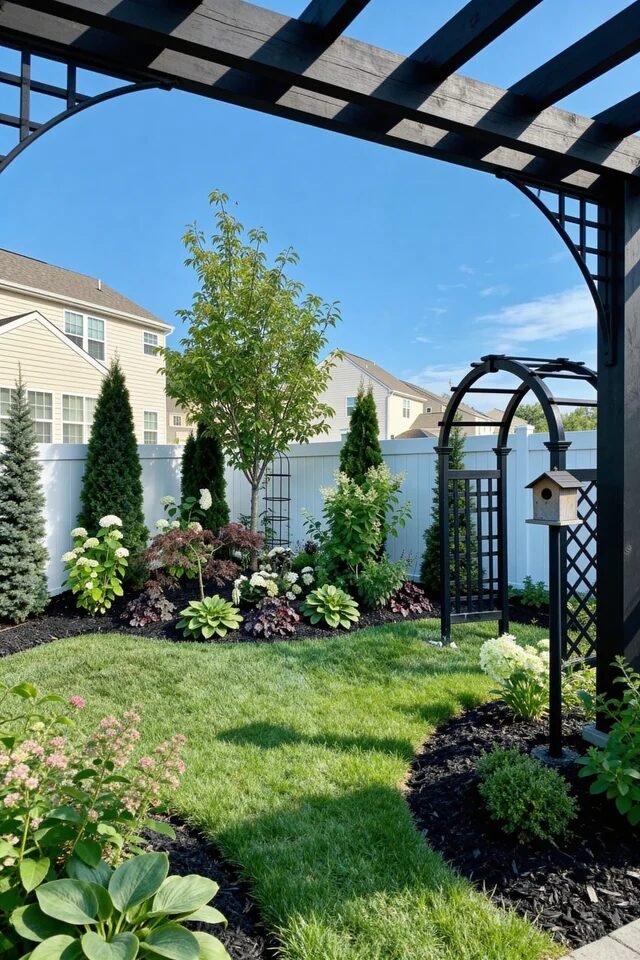
Backyard corners often feel visually empty, which is exactly why adding a structure like an arbor works so well. The arch immediately becomes a vertical focal point that draws the eye upward, balancing the horizontal lines of the fence and lawn. Design-wise, this is a classic trick: introduce height where a space feels flat.
The planting layout follows a layered composition strategy. Tall columnar evergreens establish the background, mid-height shrubs fill the middle zone, and smaller perennials soften the front edge. Layered planting prevents corners from looking sparse while still keeping the design organized and readable.
The dark arbor contrasts beautifully with the greenery and pale fence behind it. That contrast matters more than people realize. Strong color contrast ensures structures stand out instead of blending into the landscape. Add a climbing plant like clematis or roses and the arbor will slowly evolve into a living architectural feature that makes the backyard feel curated instead of accidental.
Elegant Stone Arch Seating Garden Nook
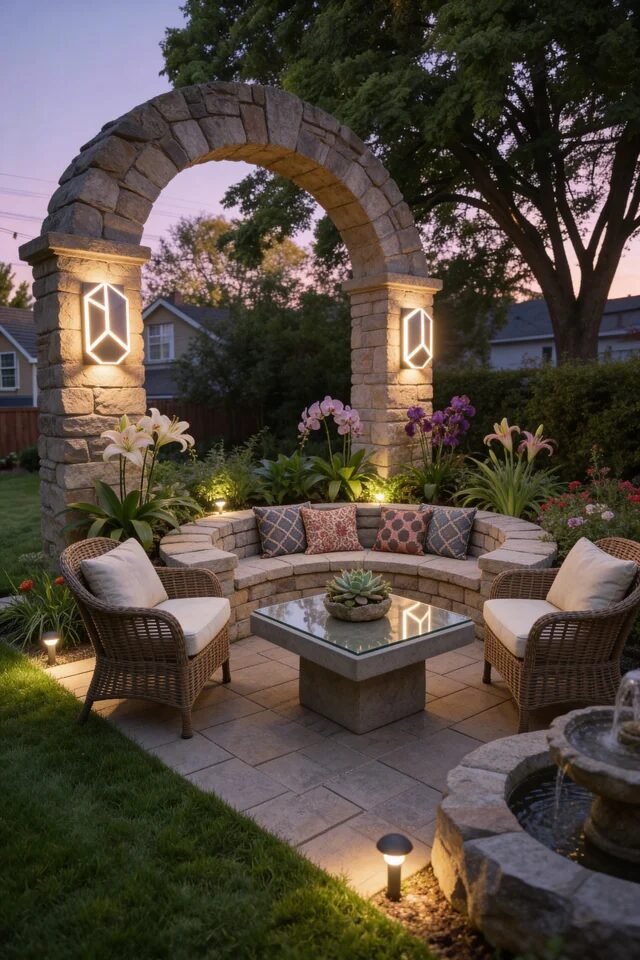
If a backyard corner feels underwhelming, architectural elements can instantly elevate it. This stone arch transforms the space into a focal garden moment while also creating a subtle outdoor “room.” Arches naturally frame spaces, which gives seating areas a sense of enclosure and purpose.
The curved built-in bench mirrors the shape of the arch, which is a smart design move. Repeating shapes creates visual harmony and makes the layout feel intentional rather than random. Whenever we repeat curves or materials in a design, the space automatically feels more cohesive and professionally planned.
Lighting plays a starring role here too. The modern sconces on the stone arch provide vertical glow while the small landscape lights highlight plants and pathways below. Layered lighting is essential for outdoor spaces because it defines zones after sunset. Add textured cushions and flowering plants around the seating area and suddenly this backyard corner feels like a boutique garden lounge.
Serene Backyard Corner Koi Pond Oasis
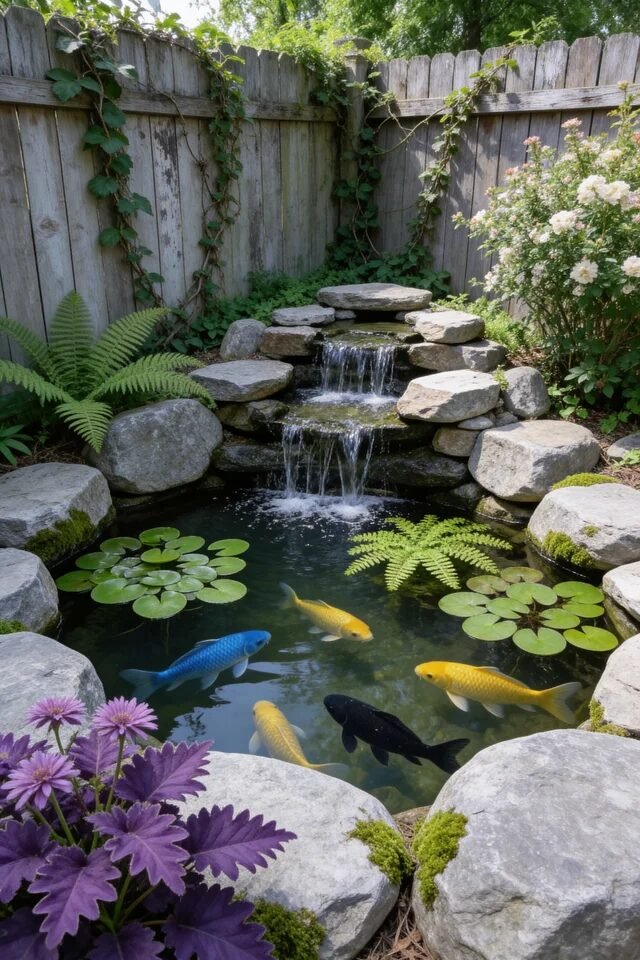
Water features are one of the most powerful ways to transform a backyard corner because they introduce motion, sound, and reflection all at once. This koi pond works beautifully thanks to natural stone layering that mimics a miniature landscape waterfall. Instead of looking artificial, the rocks create a believable ecosystem.
The cascading waterfall also serves a practical function. Moving water improves oxygen levels for fish while preventing stagnation. Functional features that also enhance aesthetics are the gold standard in landscape design. The lily pads and aquatic plants soften the edges of the pond, which helps it blend naturally with the surrounding garden.
Plant placement around the pond follows a framing technique. Ferns, shrubs, and climbing vines draw attention inward toward the water. Framing focal points with greenery makes the feature feel more dramatic and intentional. Add subtle lighting beneath the water or behind the waterfall and the corner instantly becomes a peaceful nighttime highlight.
Curved Flower Bed Softening Backyard Corner

Sometimes the smartest backyard corner upgrade isn’t dramatic at all—it’s simply better planting design. This curved flower bed works because it replaces harsh corner angles with a flowing organic shape. Curved borders naturally guide the eye through a landscape, making yards appear larger and more relaxed.
The plant selection follows the classic “thriller, filler, spiller” principle often used in professional landscaping. Tall ornamental grasses act as the thriller, mid-height flowering plants fill the body of the bed, and low purple blooms create a soft border along the edge. Layering plants by height ensures every variety remains visible instead of competing for attention.
Color balance also plays an important role here. The mix of soft greens, lavender tones, and pale yellow flowers creates a calm palette that complements the neutral house wall. Consistent color palettes prevent garden beds from feeling chaotic. With proper spacing and mulch to unify the bed, this once-empty corner quietly becomes a polished landscape feature.
Small Backyard Corners Can Deliver Surprisingly Big Impact
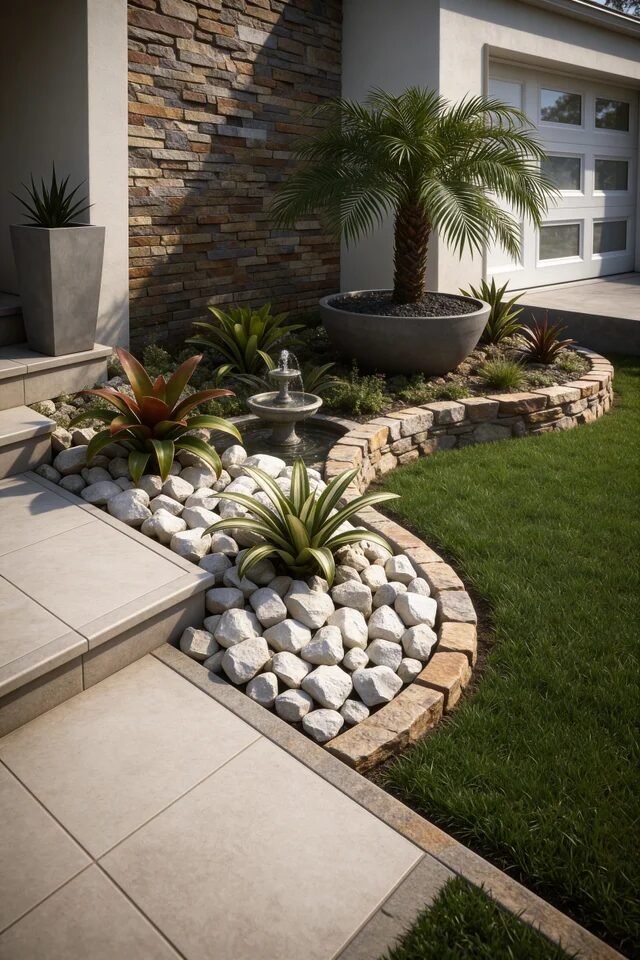
Once we stop ignoring backyard corners, something interesting happens—they start becoming the most memorable parts of the yard. Whether it’s a hammock retreat, a cozy fire pit, a sculptural garden bed, or even a peaceful koi pond, corner spaces thrive when they are given a clear purpose and thoughtful design structure.
The key is treating the corner as a defined zone rather than leftover land. Structural elements like pergolas, arches, benches, or vertical gardens help frame the area and give it visual weight. Meanwhile, curved borders, layered plants, and warm lighting soften the geometry and make the space feel welcoming. Great corner design balances structure and softness so the space feels intentional, not accidental.
The best part? Most corner upgrades don’t require massive renovations. With the right combination of seating, plants, textures, and lighting, a forgotten backyard corner can quietly become the coziest and most charming destination in your entire outdoor space.