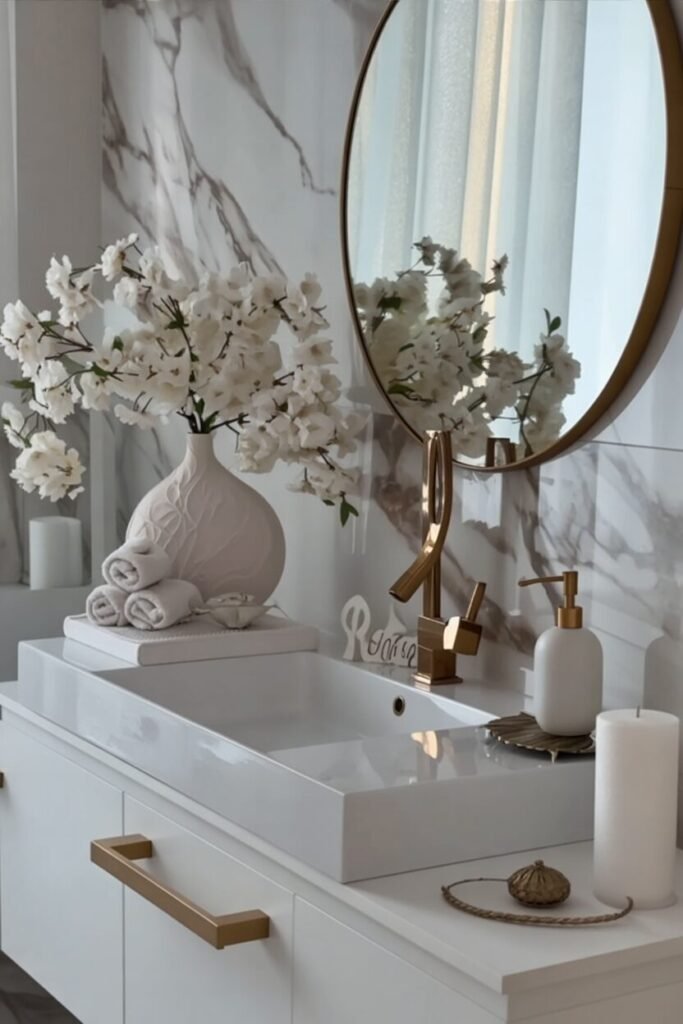

The Design Science Behind Black-and-White Bathrooms That Always Impress
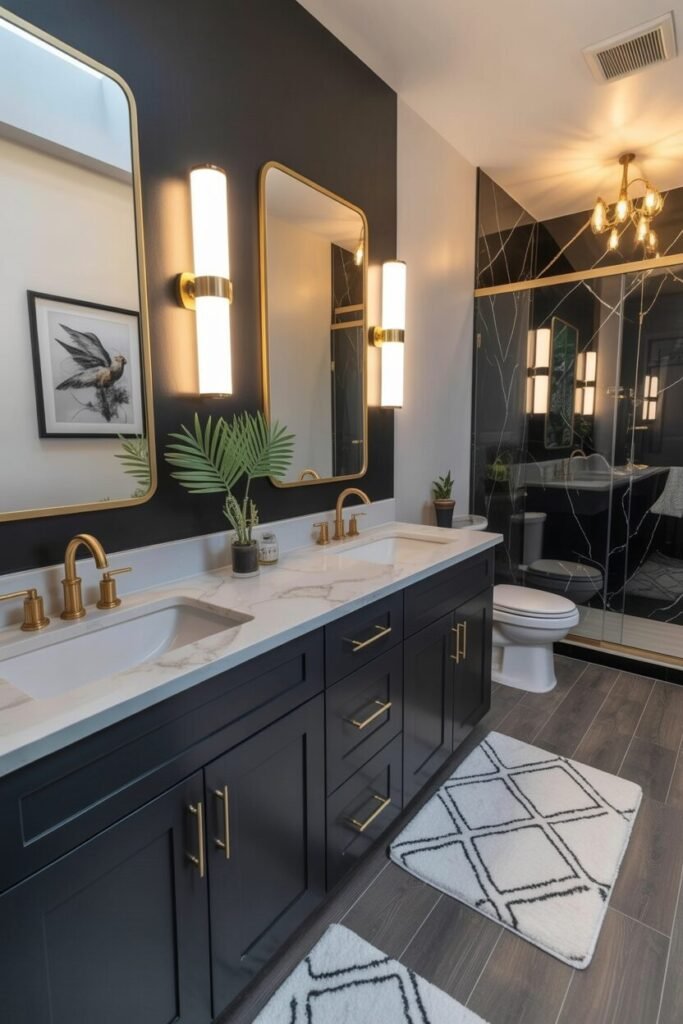
Black and white bathrooms have this magical ability to look both timeless and incredibly on-trend—like the bathroom equivalent of that one friend who always looks effortlessly good. The trick behind their appeal comes down to high contrast, which instantly sharpens lines, highlights textures, and makes even small spaces feel intentional.
In design terms, black and white acts as the perfect “blank canvas” for layering: metal finishes, natural textures, bold patterns, or sculptural fixtures. We can go vintage, modern, industrial, glam, or minimal—this palette does not gatekeep.
What we love most is how lighting, grout color, and tile scale can completely change the vibe. Want modern? Clean lines + matte black fixtures. Want classic? Subway tiles + warm metals. Want bold? Patterned floors + graphic rugs. Black and white bathrooms are basically choose-your-own-aesthetic adventures, and the possibilities are endless.
Herringbone Walls With Patterned Floor Magic
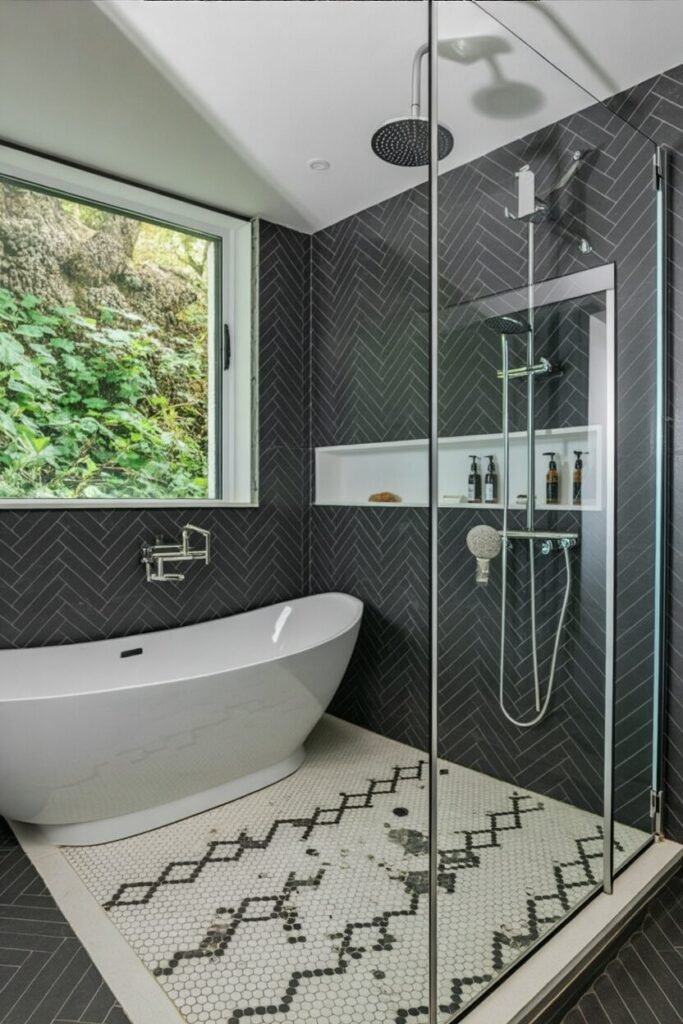
This bathroom is basically the Pinterest definition of “doing the most but in a quiet luxury way.” The drama comes from two different tile directions: herringbone on the walls + a patterned mosaic on the floor. This is a masterclass in mixed pattern design—the trick is choosing patterns that differ in scale. Large herringbone = big visual strokes. Tiny hex mosaic = small detail work. When these two work together, they create dimension instead of chaos.
We also have a freestanding tub inside a fully tiled wet room, which is an architect’s favorite move for making a bathroom feel spa-level. If you want to recreate this, remember: keep your wall tile dark so the tub pops like a sculpture. And please, choose grout intentionally—light grout outlines the herringbone beautifully.
Add a large window (if possible) or at least a big mirror to bring balance to the darker palette. This idea proves black-and-white doesn’t have to be cold—it can be nature-adjacent and super relaxing.
Classic Monochrome With Luxe Traditional Details
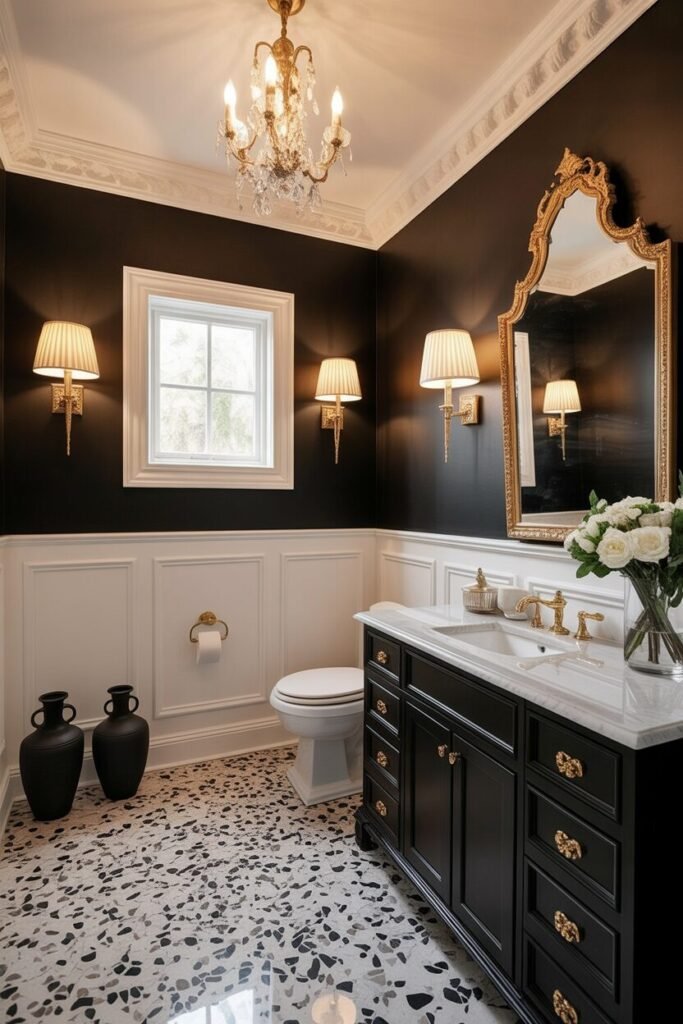
This bathroom proves black and white doesn’t have to scream modern—it can absolutely be bougie, traditional, and very “old money aesthetic.” The key design principle here is layered contrast. Deep black upper walls pair with crisp wainscoting, creating a super structured visual base. This kind of “high dark, low light” arrangement instantly adds elegance because it frames the room like a portrait.
The ornate gold mirror and crystal chandelier? They’re doing heavy lifting. They introduce texture, reflection, and warm sparkle, which prevents the palette from feeling flat. If you want to recreate this look, focus on mixed finishes: matte black walls, glossy terrazzo floor tiles, polished gold fixtures. Mixing textures = deeper dimension.
We also love how the sconces bring symmetry around the mirror—symmetry = instant luxury. Add a floral arrangement or two matte black vases for balance, and boom—your powder room feels like it belongs in a Regency-era mansion (minus the drama and corsets).
Minimalist Floating Vanity With Soft Geometry
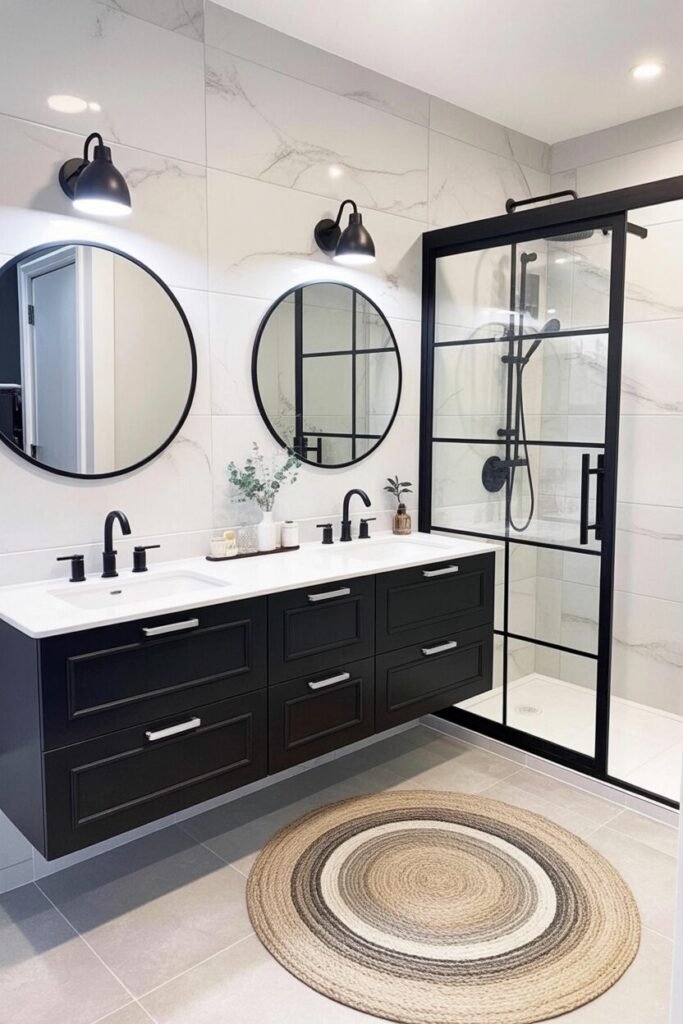
This bathroom is pure modern serenity with a “I do Pilates and drink iced matcha” vibe. The key move here is the floating black vanity, which instantly makes the room look bigger by exposing the floor beneath. It’s a classic space-expanding technique, especially powerful in black-and-white bathrooms since shadows read cleaner.
The round mirrors balance the sharp lines from the rectangular cabinets and grid shower door. In design terms, this is called softening the geometry—mixing curves and angles helps the space feel friendlier and less sterile. The matte black finishes give cohesion so nothing visually “shouts,” even though the palette is high-contrast.
If you’re recreating this: stick to three finishes max (matte black, white, soft nickel if needed). Add a textured rug to warm things up and break the strict minimalism. And please—a pro tip—keep your grout lines thin for big tile walls like this. Thick grout ruins the sleek vibe, and we don’t accept that kind of chaos here.
Vintage Drama Meets Modern Color Blocking

This look is for people who love a little drama (in design, not relationships). The core trick here is color blocking: dark glossy green tile below + neutral cream wall above + black vanity anchoring it all. The black vanity keeps the palette from going “Christmas,” while the green tile adds depth and richness most black-and-white bathrooms lack.
The checkerboard floor? Absolutely iconic. It gives strong visual rhythm and emphasizes the bathroom’s long layout—a smart trick for small or narrow spaces. The crystal lighting + pink pendant add layers of personality. This is a great example of mixing eras intentionally—classic base elements with playful statement lighting.
If you want this vibe: choose green tiles with slight sheen to catch light and keep things fresh. Add one quirky pendant or art piece so it doesn’t feel too formal. And remember, when mixing patterns (tiles + rug), keep colors cohesive. Black, white, and one accent color = foolproof.
Industrial Subway Tile With Vintage Brass Accents
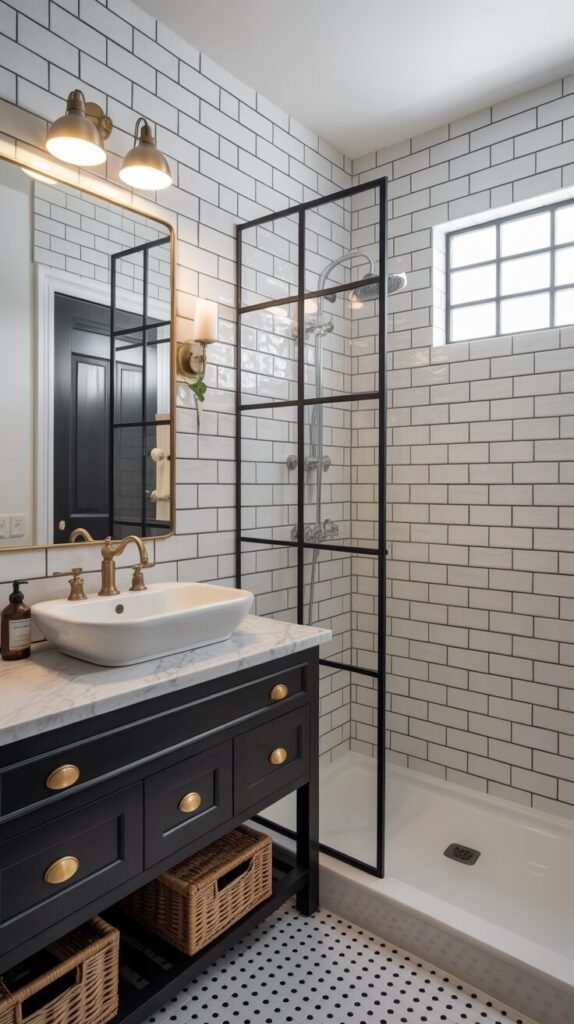
This one is what happens when a classic subway-tile bathroom goes to Paris for the summer and comes back with confidence. The white subway tiles feel timeless, but the black grid shower panel adds instant structure and architectural presence. This is a great example of contrast-as-framing—the black lines make the white tiles look 10x brighter.
The vanity brings in warm brass, which prevents the black-and-white palette from feeling harsh. Mixing warm metal + cool metal is totally allowed—just keep brass as the “main character” and let black hardware be the supporting cast. The small penny-tile floor adds a subtle vintage vibe while keeping the pattern scale tiny enough not to compete with the subway walls.
If you’re recreating this: choose beveled tiles for extra shadow and texture, and make sure your lighting is warm-toned so your brass doesn’t look dull. Add woven baskets for softness—they give warmth without breaking the monochrome.
Bold Modern Grid Shower With Hex Tile Magic

This bathroom goes full architectural with its black framed shower grid—basically giving your shower its own picture frame moment. This is a major lesson in structural contrast: the strong black lines guide the eye and make the white subway tile look brighter and sharper.
The black hexagon floor tile introduces softer geometry so the space doesn’t feel too rigid. Hex tiles are secretly amazing because they naturally create visual movement, breaking up the typical straight-line layout seen in monochrome bathrooms. Plus, black floors = practicality win (they hide dust until you emotionally recover enough to clean).
The floating wood vanity adds warmth so the room doesn’t feel like a photography studio. This is a classic principle: mix warm material (wood) with high-contrast palettes to avoid coldness. If you’re recreating it, keep your grout white or light gray so the wall pattern stays clean. Add one plant to soften all the straight lines, and boom—architectural minimalism achieved.
Elegant Vintage Monochrome With Sculptural Details
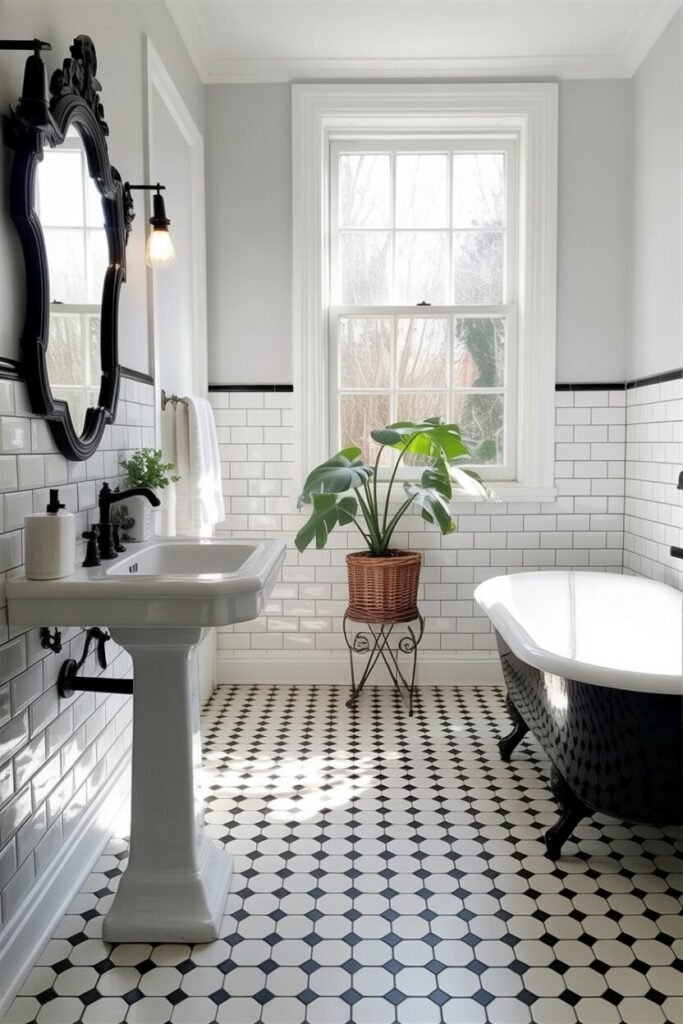
This bathroom is giving “Victorian elegance but make it 2025.” The hero here is the black clawfoot tub, which becomes a sculptural anchor against the bright white walls and octagon floor tiles. The design principle at play is anchoring through contrast: one strong black piece balances an otherwise light room.
The pedestal sink maintains the vintage theme while leaving the floor visually open (AKA: small-space cheat code). Black trim on the tile wainscoting creates a horizontal visual line that makes the room feel wider—yes, we love tricking the eyes.
The ornate black mirror adds drama without overwhelming the space because it ties back to the tub. For anyone recreating this look, the rule is: keep your palette simple but your silhouette bold. Choose classic shapes (clawfoot tub, pedestal sink, decorative mirror), then keep everything else streamlined.
Add a plant for softness—green leaves break up the monochrome just enough to keep the room alive instead of museum-like.
Cozy Monochrome With Patterned Textiles
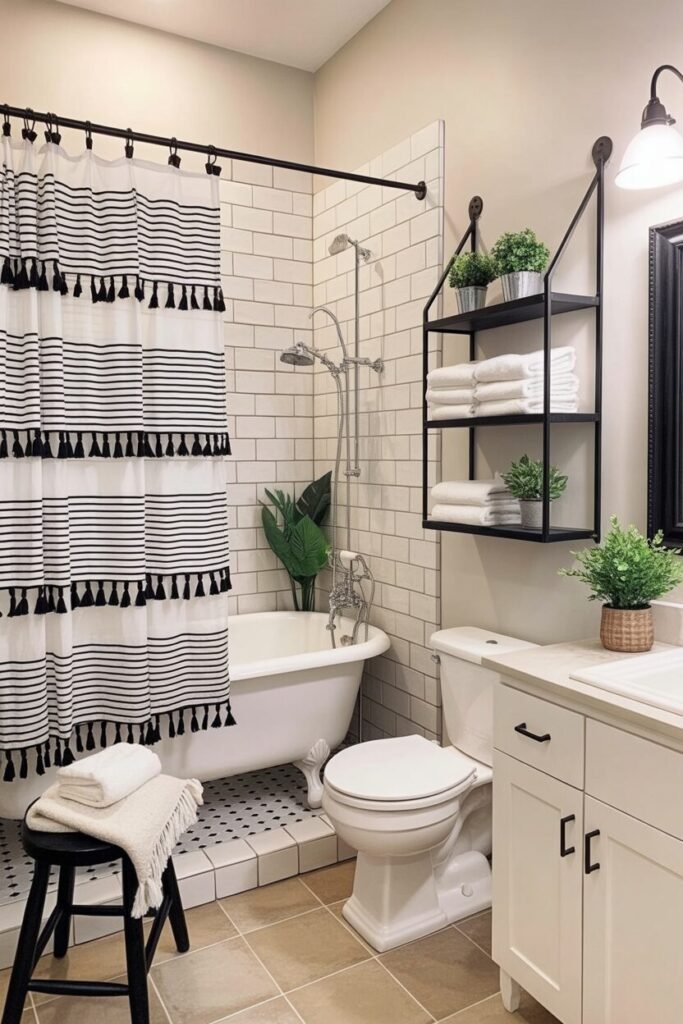
This idea proves you don’t need a full renovation to achieve black-and-white bathroom magic—sometimes you just need a show-stealing shower curtain. The striped tassel curtain introduces pattern, movement, and texture, instantly making the space feel curated. This is a great example of decor-driven monochrome design instead of tile-heavy design.
The clawfoot tub, subway tile, and warm beige walls stay neutral so the textiles and black metal shelving can take the spotlight. That balance is important—let one element lead the aesthetic while the rest play support roles. The shelving adds vertical height and gives eye-level contrast, which helps the room feel taller.
If you’re recreating this, focus on layering: textiles, greenery, wood stool, and matte black accents. Layering soft + hard materials is how we keep black-and-white bathrooms from looking too sterile. And yes, you absolutely can mix warm tan tile floors with black-and-white décor—it makes the space feel cozy instead of graphic.
Modern Subway Tile With Bold Graphic Rug
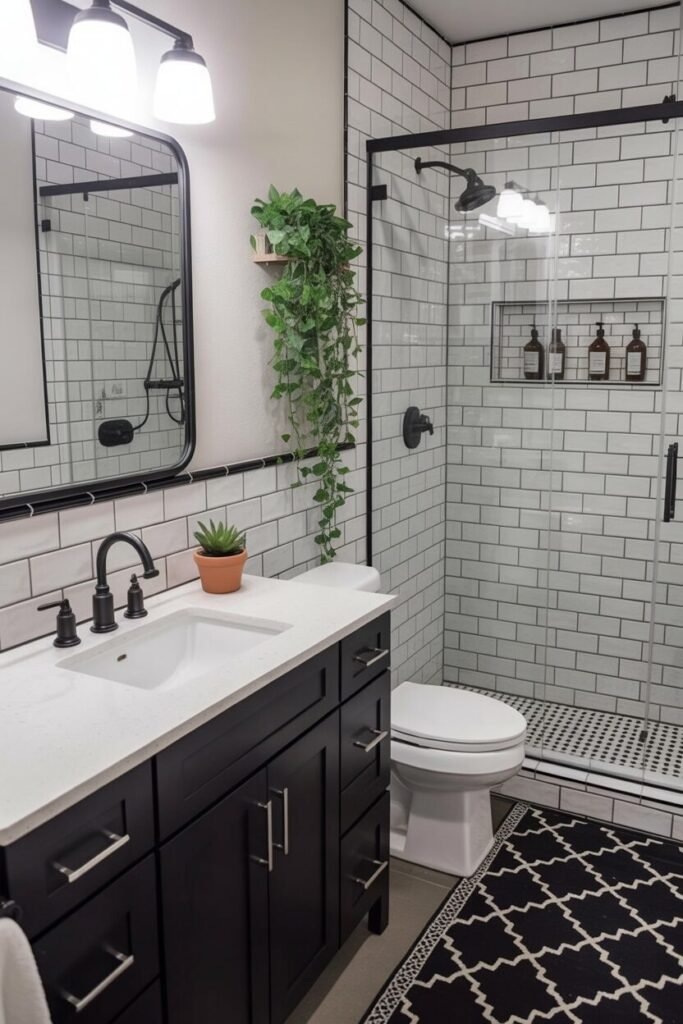
This bathroom is such a vibe—like the love child of a minimalist architect and someone who’s very emotionally attached to their patterned rugs. The backbone of the design is classic white subway tile with sleek black grout. This creates strong linear rhythm, which is perfect if you want your bathroom to feel crisp, structured, and clean (even on days when… it isn’t). The black vanity anchors the lower half of the room, giving weight and balance to the bright tile walls.
But the real moment? The bold black-and-white rug. This is a masterclass in using textiles to inject personality without overwhelming the space. Rugs break up the straight lines, soften the palette, and make monochrome bathrooms feel warmer. Plus, the organic vine plant introduces vertical softness, preventing the room from looking too rectangular or too rigid.
If you’re recreating this look, don’t skip the shower niche detail—the mini hex floor tile ties the whole palette together. And yes, mixing matte black fixtures with chrome handles works as long as each finish appears at least twice for visual consistency. Clean, graphic, cozy—chef’s kiss.
Dramatic Niche Lighting With High Contrast Tiles
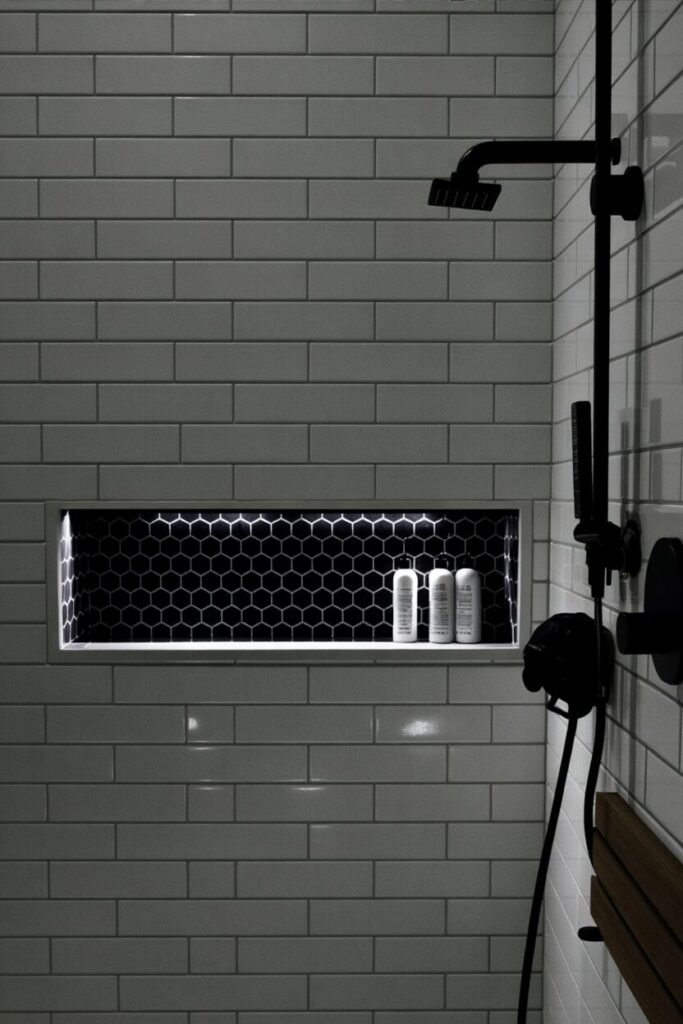
If bathrooms could smolder, this one definitely would. This idea is all about moody contrast and strategic lighting. The white subway tiles give a classic foundation, but the real moment is the black hex-tile shower niche with LED lighting. This is a brilliant design principle: use lighting to turn practical features into focal points.
The niche glows like a mini art display, highlighting textures you wouldn’t normally notice. Black fixtures keep the look cohesive and graphic, especially against the bright tile. This is a great strategy if you want a bold look without darkening your whole bathroom.
When recreating this: choose matte black fixtures for a clean, modern silhouette, and make sure your LED niche lighting is warm or neutral—not cool blue. Cool light can make your black tile look dusty or flat. Add a wooden bench or warm-toned detail to keep the space from feeling too severe.
This is the perfect idea for anyone who loves a little bathroom drama but still wants a clean, timeless base.
Timeless Contrast Interiors That Elevate Every Bathroom Style
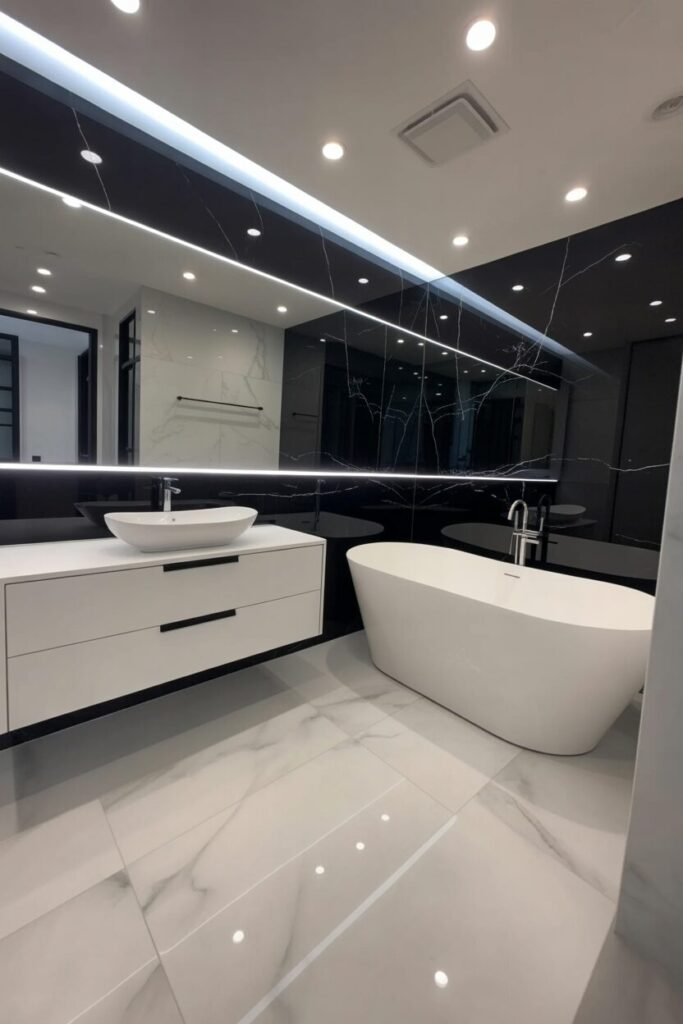
One of the best things about black and white bathrooms is how incredibly enduring they are—these spaces don’t age, they evolve. As long as you understand a few key design principles, your bathroom will stay stylish for years without needing constant remodels.
The real secret? Balancing warmth and contrast. A monochrome palette can feel cold if everything is hard and shiny, so we introduce softness through textiles, greenery, wood accents, or ambient lighting. These small touches warm up the crisp contrast. We also love using pattern and shape to add personality—think hex tiles, checkerboard floors, curved mirrors, or fluted vanities.
Black-and-white thrives when there’s a mix of geometry to keep the eye moving. And remember: fixtures matter! Matte black, brass, or chrome can each shift the mood dramatically. At the end of the day, this palette is both forgiving and customizable, making it perfect for anyone who wants a bathroom that looks intentional, chic, and incredibly put-together.