
Elegant Dining Rooms That Still Feel Comfortable to Live In
Elegant dining rooms aren’t about chasing trends or copying luxury hotel vibes piece by piece. They’re about intention, balance, and confidence in design choices. When a dining room feels elegant, it usually means every element knows its role. Lighting sets the mood, furniture defines comfort, and materials quietly communicate quality. We’re not aiming for perfection here, we’re aiming for cohesion.
Across these ideas, you’ll notice a common thread. Elegant spaces rely on strong anchors like statement lighting, well-proportioned tables, or architectural details that ground the room. From there, everything else supports that anchor instead of competing with it. Elegance is clarity, not clutter. Color palettes stay controlled, textures do the talking, and spacing is treated as a design tool.
If you’re recreating any of these looks, focus less on copying decor and more on understanding why it works. When the design logic clicks, elegance stops feeling intimidating and starts feeling totally doable.
Timeless Brass Chandelier Meets Modern Calm
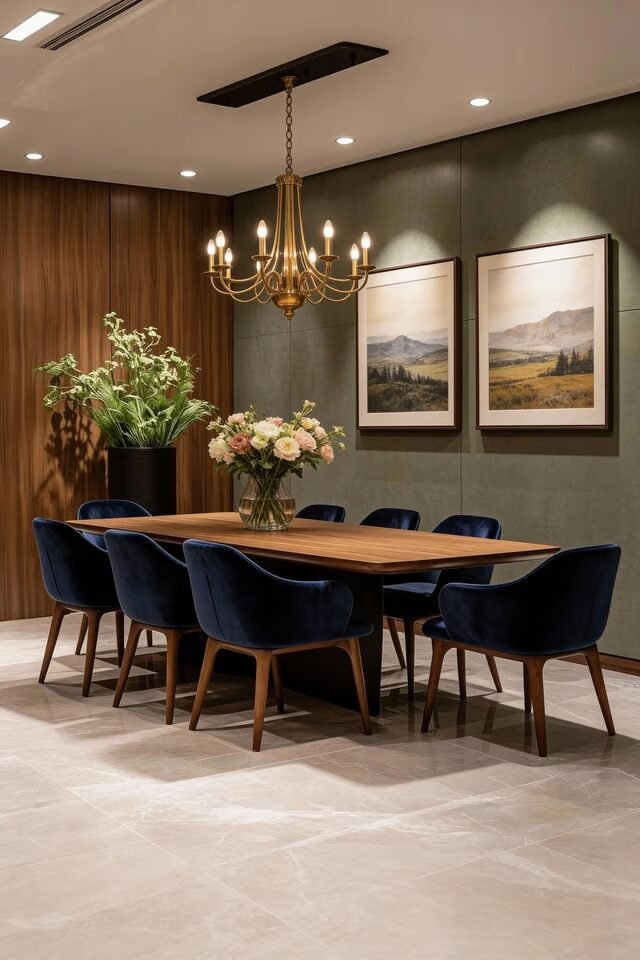
This idea proves that elegance doesn’t have to feel stiff or museum-quiet. The core design principle here is contrast with control. We’re mixing a classic brass chandelier with clean-lined furniture and muted wall tones so the space feels intentional, not try-hard. The chandelier becomes the visual anchor, while everything else quietly supports it. Think of it like the main character energy in a TikTok fit check.
To recreate this look, we focus on hierarchy. One hero element, then calm supporting pieces. Keep the dining table simple in shape and finish so it doesn’t fight the lighting. Upholstered chairs in a deep, soft color add comfort while grounding the shine above. Wall art stays minimal and evenly spaced to maintain rhythm and balance.
Lighting temperature matters more than people think. Warm bulbs soften the brass and make the room feel inviting, not formal. If the light feels cozy at night, the design is already winning. Finish with greenery to break the metal-and-wood combo and add life. Elegant doesn’t mean cold. It means confident and composed.
Sculptural Lighting With Soft Neutral Layers
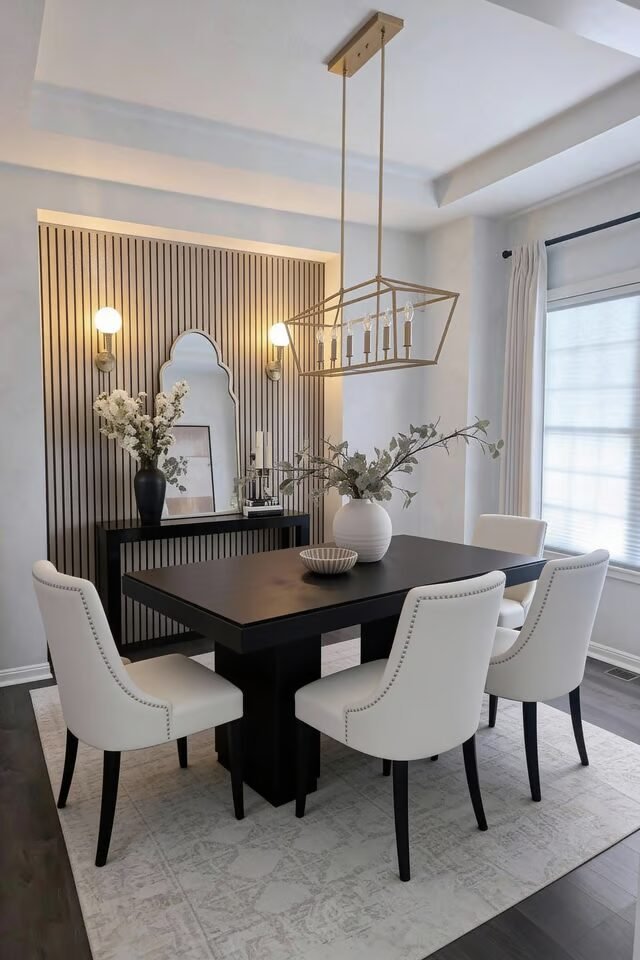
This dining room leans into elegance through form, not excess. The geometric pendant light sets a modern tone, while the neutral palette keeps everything breathable. We’re seeing a strong example of repetition and alignment here. Vertical slat walls echo the pendant’s structure, creating visual flow without shouting for attention.
When recreating this look, start with a tight color range. Soft whites, warm greige, and light wood help the room feel calm and high-end. The table is bold but simple, which is key. A chunky table works best when the surrounding elements are visually light. That’s why the chairs feel airy despite their upholstered look.
Symmetry plays a quiet but powerful role. Matching wall sconces and evenly spaced decor pieces bring order to the space. Add texture through fabric, rugs, and subtle wall treatments rather than bold colors. This keeps the room elegant but approachable. The takeaway? Modern elegance is about restraint done on purpose, not minimalism for the sake of it.
Classic Elegance With Fresh Color Balance
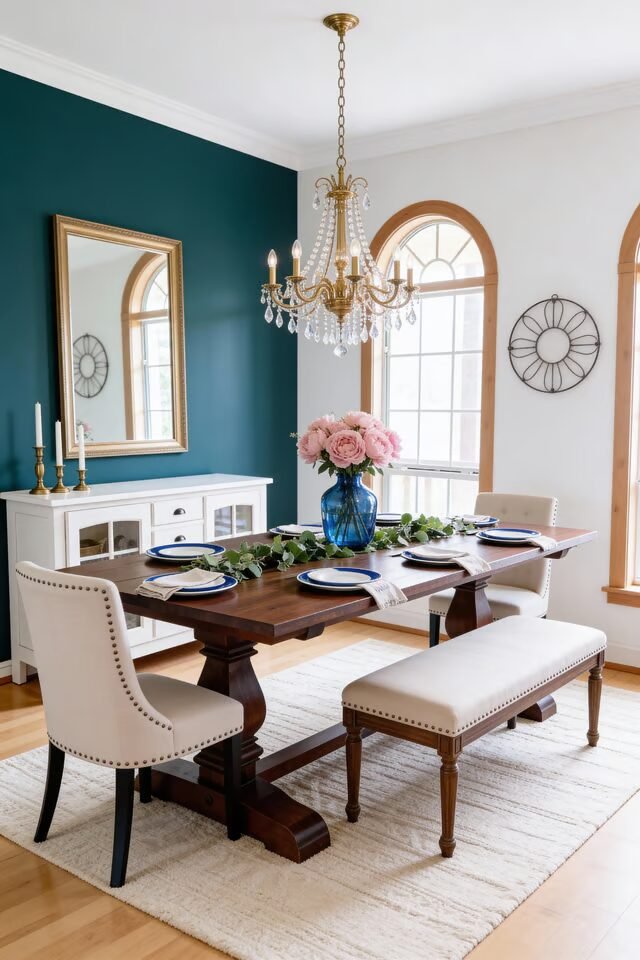
This idea shows how to make traditional design feel current instead of dated. The key principle here is color anchoring. That deep teal wall gives the room personality, while the rest of the palette stays light and classic. The result feels elegant, but also very “yes, we actually live here.”
To recreate this, choose one strong color and let it lead. Everything else should support it. The chandelier, mirror, and furniture have classic silhouettes, which helps the bold wall color feel grounded. Traditional shapes love modern confidence. The wooden table adds warmth, while the light upholstery keeps things from feeling heavy.
Notice how the decor is intentional but not crowded. Negative space around the furniture allows each piece to breathe. Natural light from the arched windows balances the darker wall, keeping the room from feeling enclosed. Add a simple floral centerpiece for softness and movement. This space works because it respects tradition while refusing to feel boring.
Soft Arches And Luxury Visual Flow
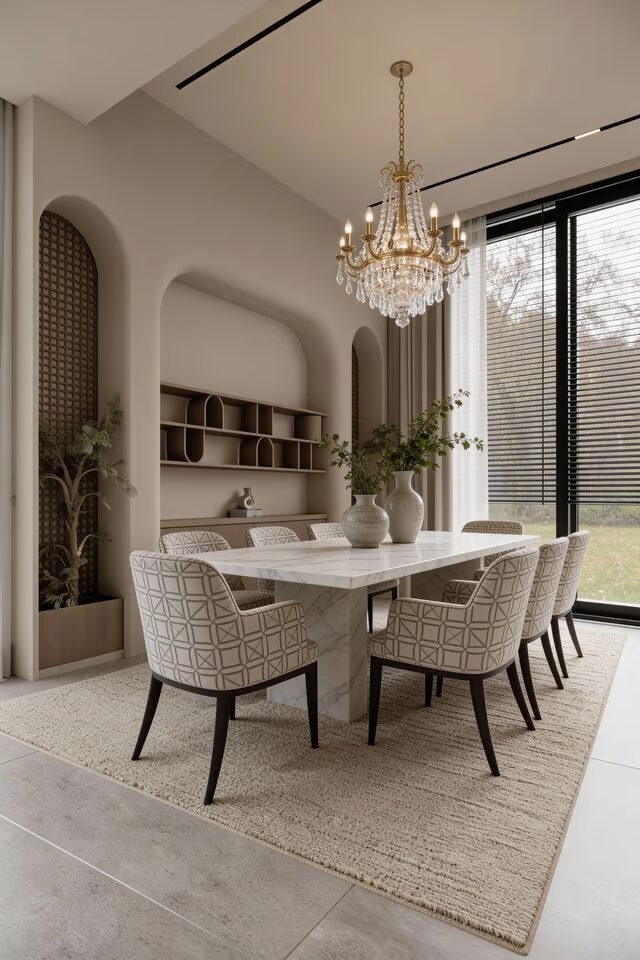
This dining room is elegance through architectural rhythm. The arches instantly soften the space, guiding your eye naturally around the room. Paired with a crystal chandelier, the look feels refined but not intimidating. We’re seeing a strong lesson in flow here, where structure does half the styling work.
If you want to recreate this, focus on shapes first. Curves balance out the sharp edges of a marble table and straight-lined chairs. Mixing curves and straight lines keeps a space visually comfortable. Stick to a restrained palette so the architecture stays in focus. Neutral fabrics with subtle patterns add depth without stealing attention.
Lighting is layered but purposeful. The chandelier adds drama, while natural light keeps things grounded and livable. Furniture placement stays centered to reinforce symmetry and calm. This is the kind of room that feels expensive without screaming it. Elegant dining rooms don’t overload details. They let proportions, spacing, and light do the heavy lifting.
Formal Dining With Balanced Ornamentation
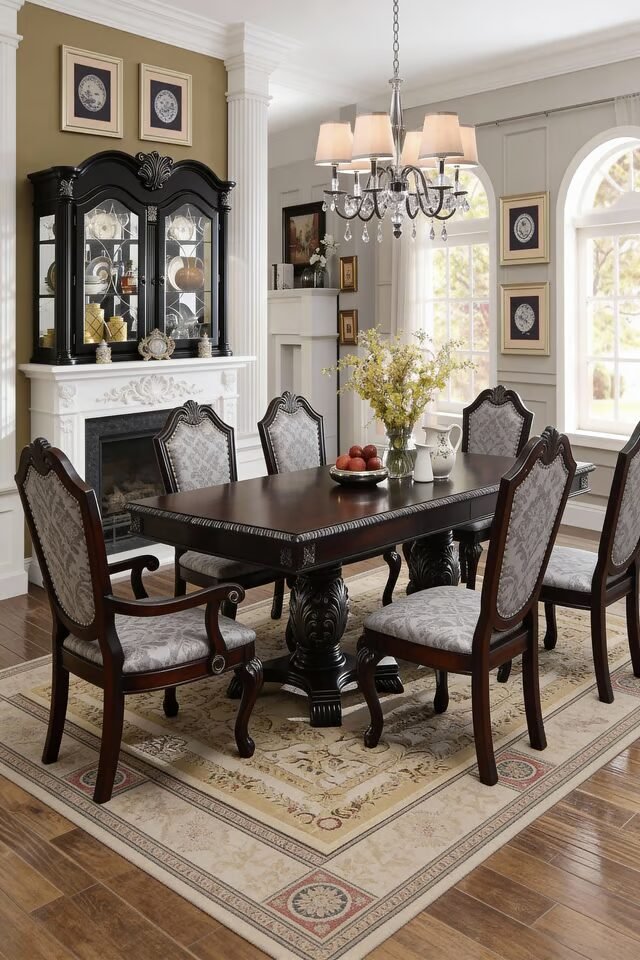
This final idea leans fully into classic elegance, but it works because of controlled ornamentation. Yes, the furniture is detailed. Yes, the chandelier sparkles. But everything follows the same visual language, which keeps the room cohesive instead of chaotic.
To recreate this look, consistency is your best friend. Stick to similar wood tones and repeating motifs. The carved table base and chair details speak to each other, creating harmony. Ornate pieces need breathing room, so avoid overcrowding the space with extra decor. The rug grounds the furniture while adding softness underfoot.
Symmetry again plays a huge role. Matching chairs, balanced wall art, and evenly spaced lighting make the room feel composed. Natural light prevents the darker furniture from feeling heavy. This style proves that elegance isn’t about being old-fashioned. It’s about intention, proportion, and knowing when to stop. Classic, but never stuck in the past.
Warm Mediterranean Layers With Intimate Lighting
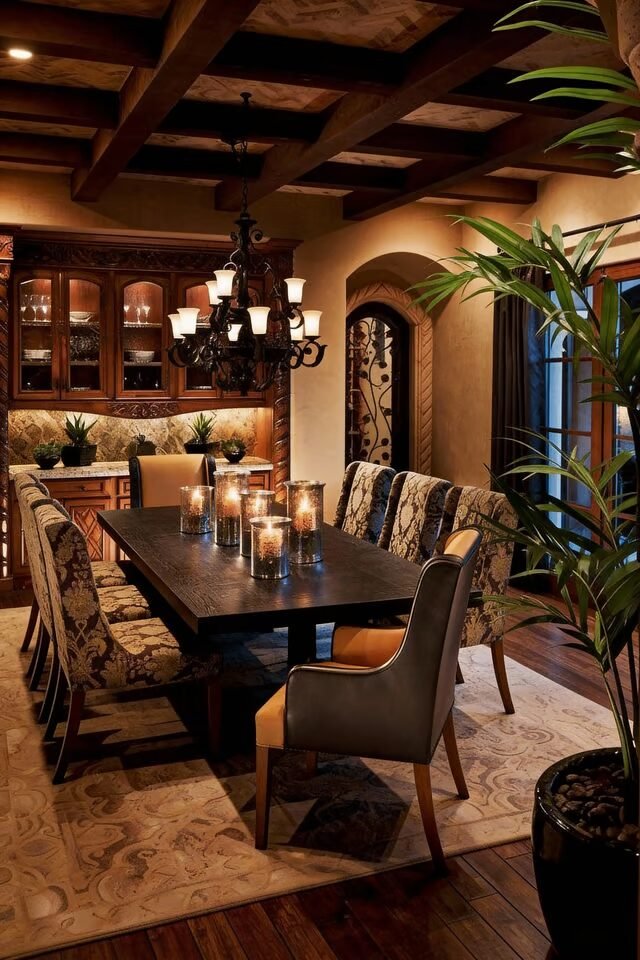
This dining room leans into elegance by embracing warmth, texture, and enclosure. The coffered ceiling and darker wood tones create a grounded envelope, making the space feel intimate instead of oversized. This is a great example of how elegance doesn’t always mean bright and airy. Sometimes it’s about mood. The chandelier sits lower on purpose, pulling the eye down and reinforcing a cozy dining zone.
To recreate this look, start with layered materials. Wood beams, patterned upholstery, and textured rugs work together to add depth. When everything has texture, you don’t need loud colors. Stick to a warm, earthy palette so the lighting can do its thing. Candlelight here isn’t just decor, it’s functional ambiance that softens shadows and enhances warmth.
Furniture choices matter. Chairs with arms and plush upholstery signal comfort and encourage longer meals. Add greenery to balance the heaviness and keep the space feeling alive. This design proves that elegance can be moody, inviting, and very “stay for dessert” energy.
Traditional Wood Details With Airy Balance
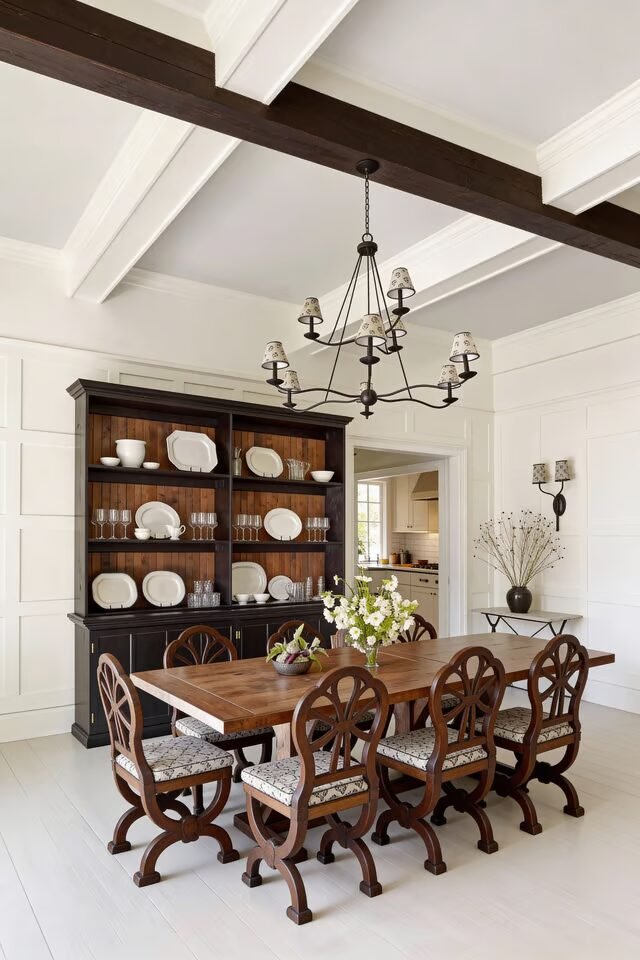
This dining room nails classic elegance without visual heaviness, and that’s not easy. The dark wood furniture is balanced by light walls, white floors, and open shelving. The result feels grounded but fresh. We’re seeing a smart use of contrast here, where darker elements are intentionally framed by lighter surroundings.
If you want to recreate this, control the ratio. Let darker furniture be the focal point, but surround it with reflective or light surfaces. Heavy furniture needs visual breathing room. The open hutch works because it displays light-colored dishes, breaking up the mass and adding rhythm.
Exposed beams add architectural interest while reinforcing the traditional vibe. Keep accessories minimal and curated to avoid clutter. The chandelier’s open design keeps the ceiling from feeling weighed down. This space teaches us that elegance isn’t about avoiding dark wood. It’s about pairing it with enough light so everything feels intentional and balanced.
Soft Neutrals With Refined Symmetry
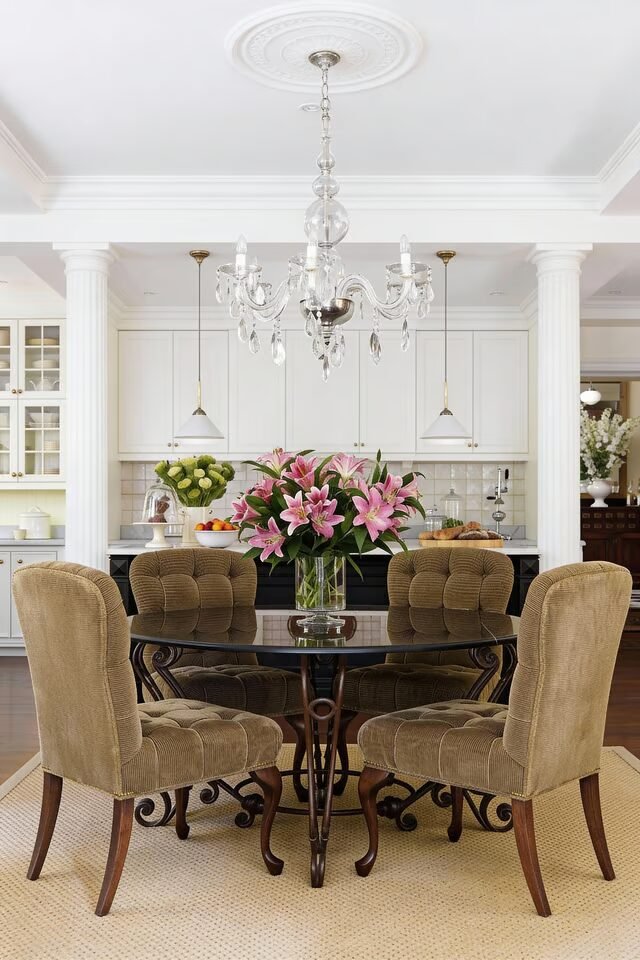
This dining area shows how elegance thrives on symmetry and softness. Everything feels calm, centered, and gently layered. The round table encourages conversation, while the upholstered chairs add comfort without sacrificing style. This is elegance that feels social, not stiff.
To recreate this look, start with symmetry. Matching chairs, centered lighting, and evenly spaced architectural details instantly create order. Our brains love balance, even if we don’t realize it. The neutral palette keeps the space serene, letting textures like fabric and glass add interest.
Notice how the chandelier adds sparkle without overpowering the room. That’s key. Statement lighting works best when the rest of the space stays quiet. Fresh florals bring life and color, preventing the room from feeling flat. This design proves that you don’t need bold colors to make an impact. Thoughtful proportions and repetition do the heavy lifting.
High Gloss Luxury With Modern Glam
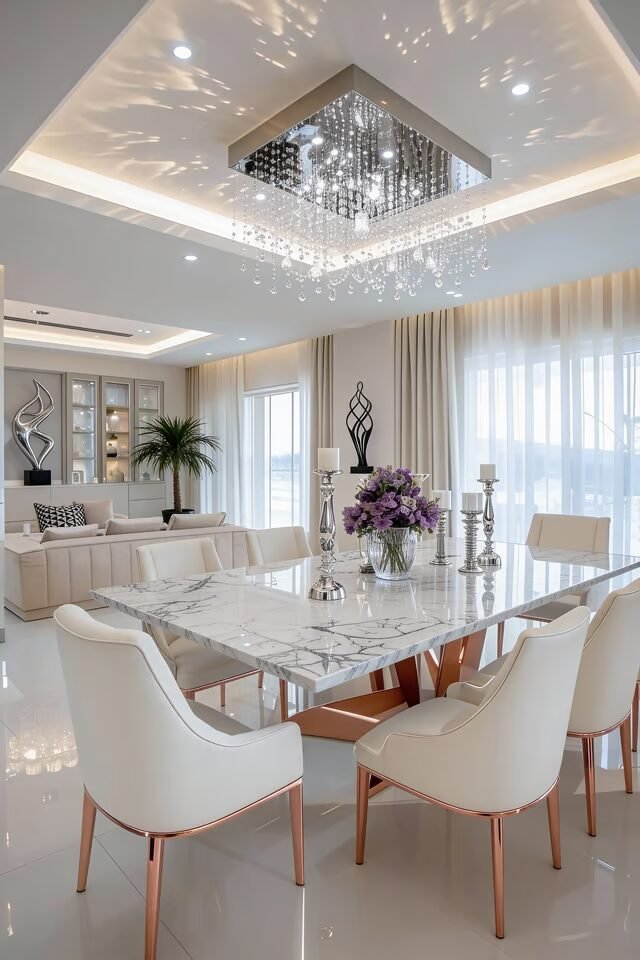
This dining room is all about polish, reflection, and controlled drama. The glossy surfaces bounce light around, instantly making the space feel larger and more luxurious. The crystal ceiling fixture acts like functional jewelry, adding sparkle without clutter.
To recreate this, focus on finishes. High-gloss tables, metallic chair legs, and reflective decor amplify light. Shine works best when paired with clean lines. Keep furniture shapes simple so the materials can stand out. The neutral color palette prevents the glam from feeling over-the-top.
Lighting layers are essential here. Recessed lights provide even brightness, while the chandelier adds drama and depth. Upholstered chairs soften all the hard surfaces, keeping the room comfortable. This style works because it balances luxury with restraint. Modern glam isn’t about excess. It’s about precision, reflection, and knowing exactly where to stop.
Understated Elegance With Sculptural Accents
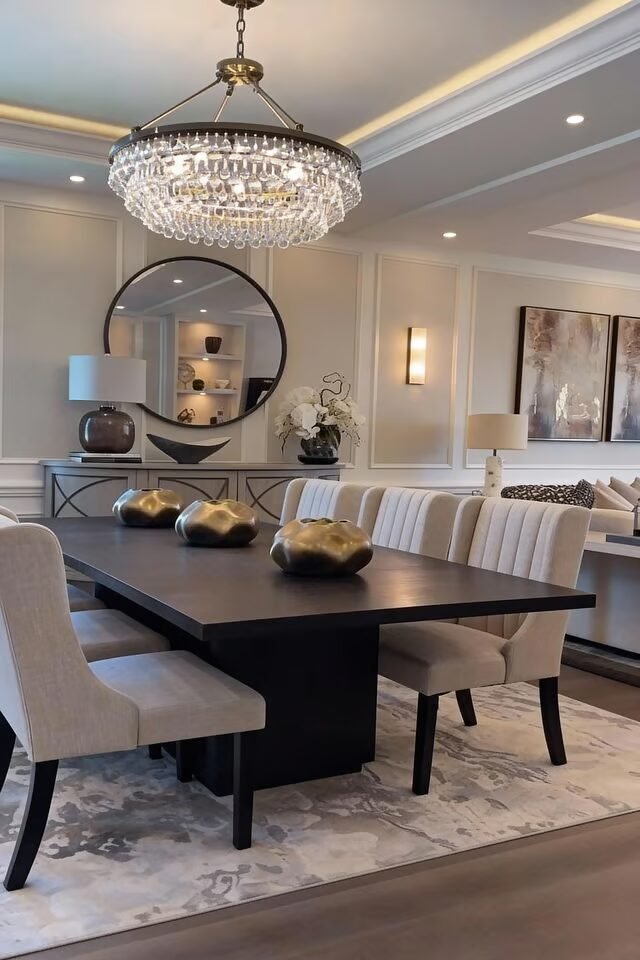
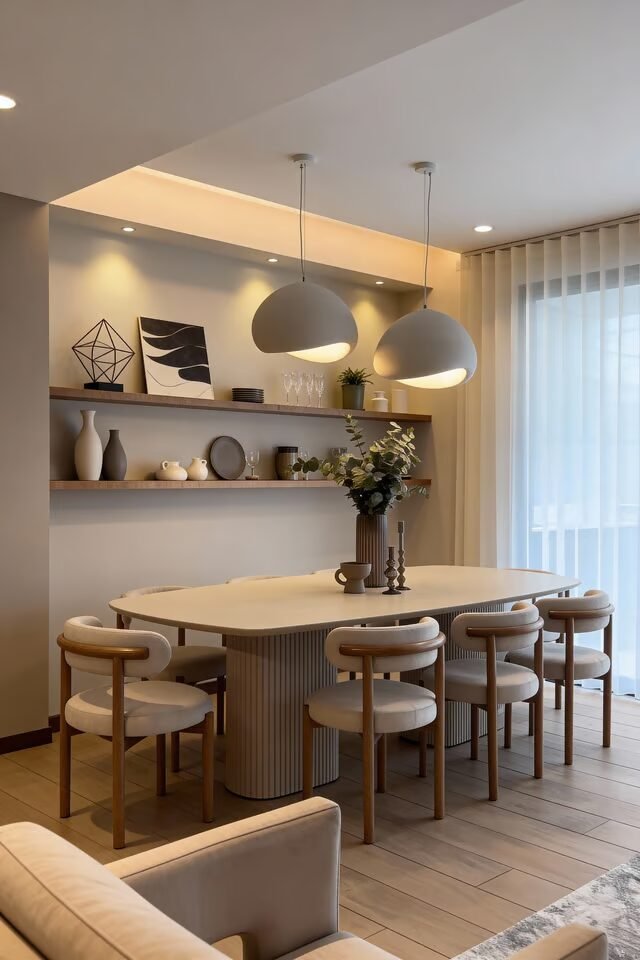
This dining room proves that elegance can feel quiet, refined, and effortlessly expensive. The design relies on sculptural forms rather than bold colors or heavy ornamentation. Everything feels intentional, from the curved chandelier to the smooth table silhouette.
To recreate this look, focus on form and spacing. Choose furniture with clean lines and subtle curves. Negative space is part of the design, not leftover emptiness. The neutral palette allows materials and shapes to take center stage without distraction.
Soft lighting keeps the mood relaxed while highlighting textures. Wall molding adds architectural interest without stealing focus. Decorative objects are minimal but impactful, acting as visual punctuation instead of noise. This space works because it understands restraint. Elegant dining rooms don’t try to impress loudly. They impress quietly, through proportion, calm repetition, and thoughtful detail placement
Designing An Elegant Dining Room With Lasting Impact
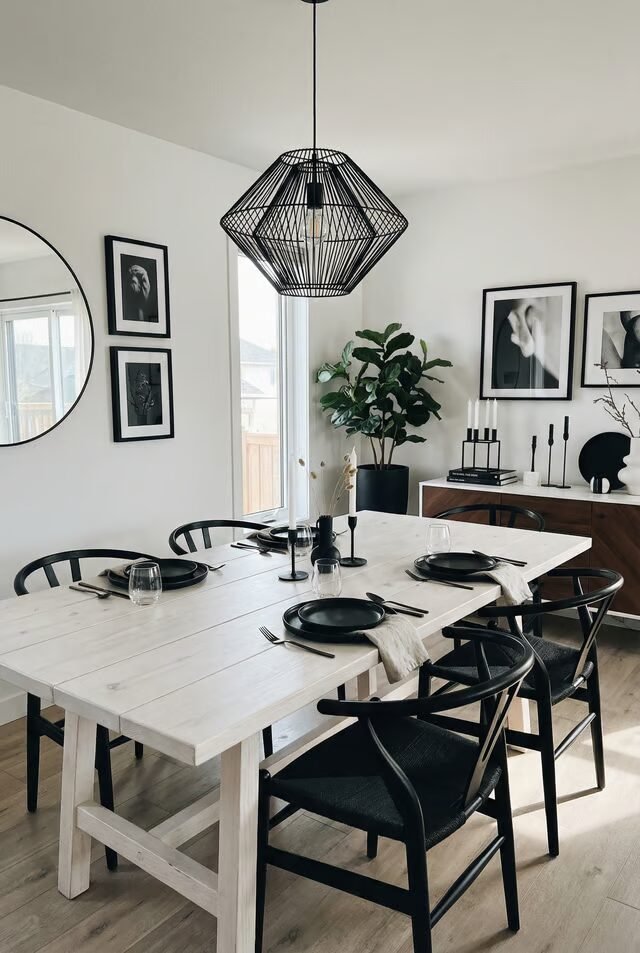
The secret to an elegant dining room isn’t expensive furniture or dramatic decor. It’s knowing when to stop. The best spaces feel calm because nothing is trying too hard. Every successful elegant dining room follows a few quiet rules. Proportion comes first, lighting creates atmosphere, and materials add depth without overwhelming the space.
What we love about these ideas is how adaptable they are. Whether the style leans classic, modern, or somewhere in between, the principles stay the same. One strong focal point beats five average ones every time. Thoughtful symmetry, intentional contrast, and layered lighting do most of the heavy lifting.
When designing your own dining room, trust restraint. Leave room for breathing space, let textures shine, and choose pieces that feel good to live with, not just good to photograph. Elegance isn’t about impressing guests for one night. It’s about creating a space that feels timeless, comfortable, and confidently put together every single day.