
Decks That Make Your Backyard Feel Like A Designed Space
Decks aren’t just outdoor flooring anymore, they’re social stages, relaxation zones, and design statements all rolled into one. The best deck ideas start with understanding how people actually use the space, not just how it looks in photos. Whether it’s a pergola-covered dining area, a fire pit lounge, or a multi-level layout, great decks always follow a few core principles.
Clear zoning creates comfort, lighting builds mood, and material consistency keeps everything visually calm. When we design decks, we think in layers: structure first, then flow, then personality. Railings guide the eye, steps create rhythm, and furniture scale determines whether a space feels welcoming or cramped.
Even small design moves, like contrasting stair treads or integrated lighting, can dramatically elevate the experience. The goal isn’t perfection, it’s intention. A well-designed deck feels effortless because every choice has a reason. When design supports how you relax, gather, and move, your deck stops being an add-on and starts feeling like a natural extension of your home.
Warm Wood Pergola Dining Deck
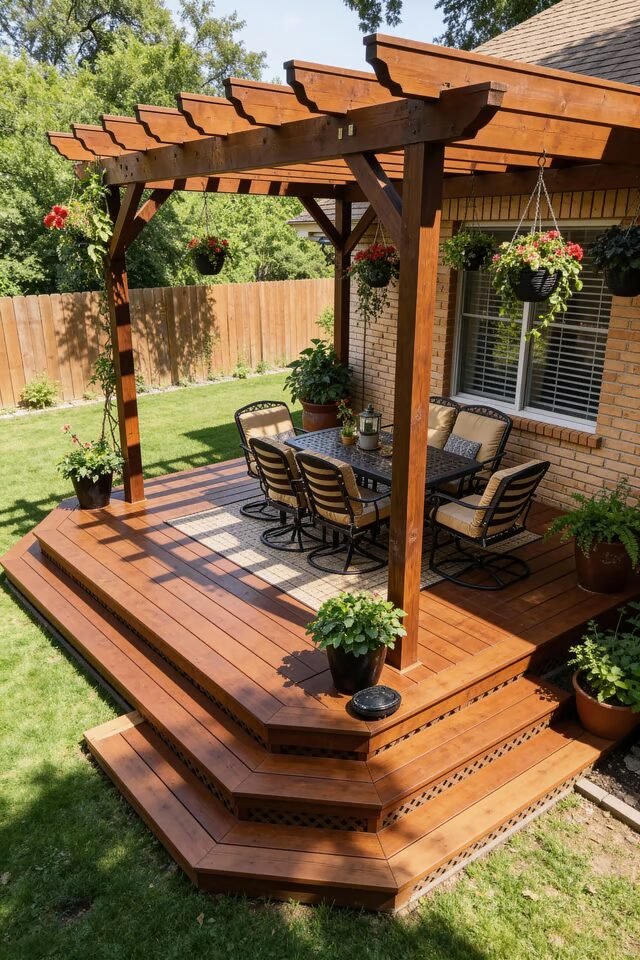
This deck nails the structure-meets-softness balance, and that’s the real design win here. The pergola isn’t just decorative; it creates a visual ceiling that defines the dining zone, making the deck feel like an outdoor room instead of “table on wood planks.”
We love how the warm-toned stain visually connects the deck floor, pergola beams, and steps into one cohesive story. That’s color continuity doing heavy lifting. Notice the stepped platform edges too. Levels naturally guide movement and make the deck feel intentional, not accidental. For recreating this look, keep furniture slightly smaller than indoor dining sets so circulation stays airy.
Hanging plants at beam height soften all that wood and pull the eye upward, which visually increases height. Pro tip: use outdoor rugs to anchor the dining area and prevent the space from feeling floaty. And yes, straight lines everywhere work here because the greenery brings in organic contrast.
Design rule we swear by: when your structure is strong, let decor stay simple. Your future dinner parties will thank you, and so will your knees when guests don’t trip over random furniture chaos.
Lantern Lit Evening Deck Walkway
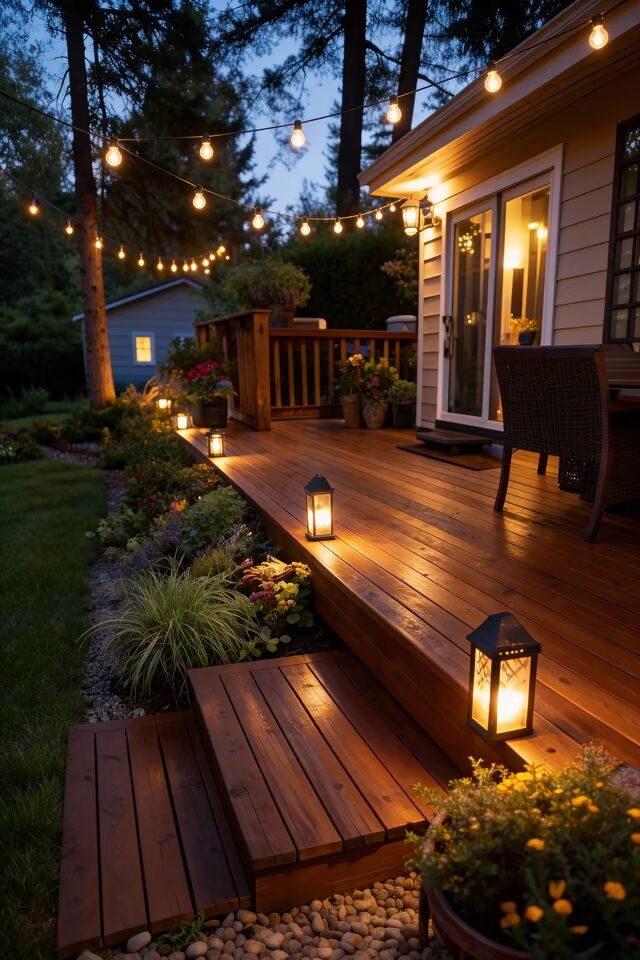
This deck proves that lighting is basically magic with a wiring budget. The layout itself is simple, but the layered lighting strategy makes it feel cinematic. Path lighting at floor level guides movement while string lights create atmosphere overhead. That’s a classic top-bottom lighting combo designers love.
The wood tone leans warm, which reflects light beautifully at night instead of absorbing it. If you’re recreating this look, space lanterns evenly to avoid visual clutter while still maintaining rhythm. Plants along the edge soften the linear deck lines and create a gentle transition into the yard. Another key detail: the deck boards run lengthwise, visually elongating the space and making it feel larger than it is.
Smart, right? Keep furniture minimal so the lighting remains the star. Design insight we live by: when lighting is strong, everything else can chill. This is the kind of deck that turns “just stepping outside” into a whole vibe moment, pajamas absolutely allowed.
Multi Level Deck With Pergolas
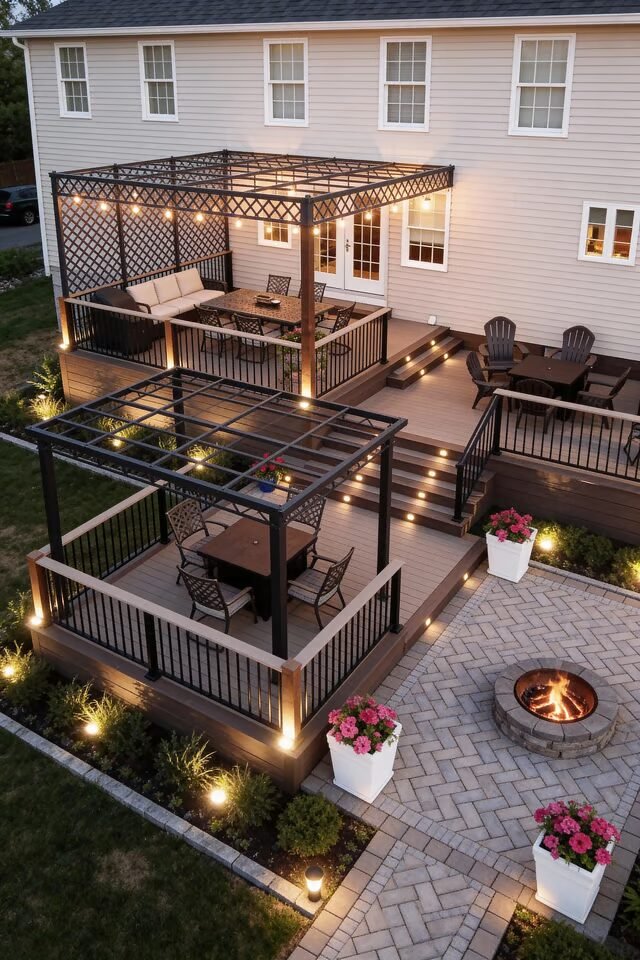
This deck is basically zoning done right, and we’re obsessed. Multiple levels create distinct areas without walls, which keeps everything open but purposeful. Design principle alert: changes in elevation signal function. Dining up top, lounging below, and a fire pit grounding the whole scene visually.
The repeated pergola structures create rhythm and tie the zones together, so nothing feels random. Notice how railing styles stay consistent throughout; that continuity prevents visual noise. If you want to recreate this, keep materials limited. Same decking color, same metal finish, same lighting temperature. That’s how complex layouts stay calm.
Built-in lighting on steps isn’t just pretty; it’s a safety upgrade that feels luxe. Good design always works harder than it looks. Balance furniture scale to each level so nothing feels crowded or underwhelming. This deck works because it respects flow, hierarchy, and human behavior. Basically, it’s proof that your backyard can have a floor plan, and yes, it should.
Modern Painted Deck Railing Detail
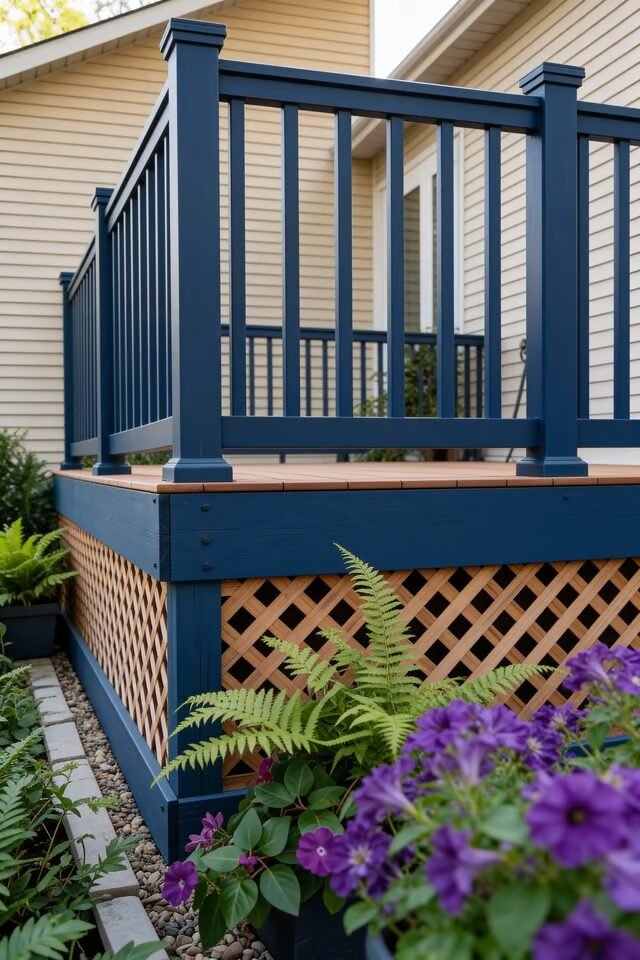
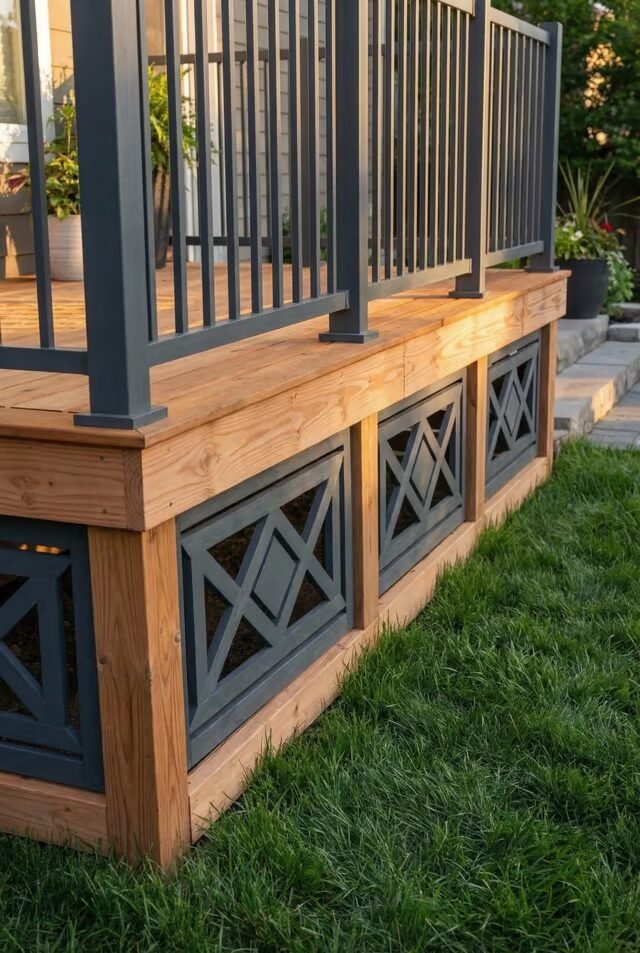
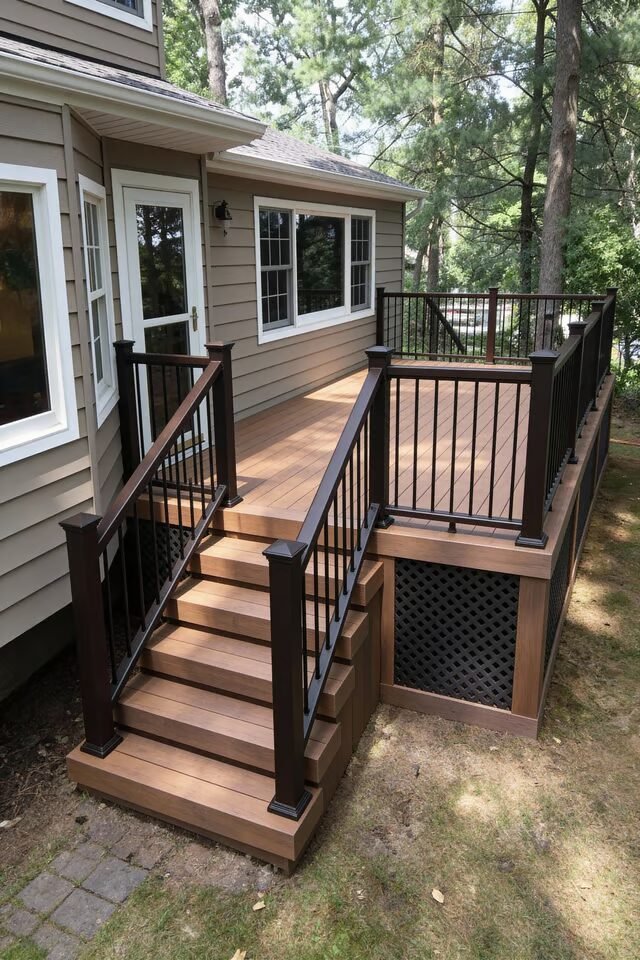
This idea shows how small design decisions can seriously elevate a deck. The bold railing color creates contrast against the neutral house siding, framing the deck like a feature instead of a background element. Contrast is what makes details visible.
The clean vertical balusters keep the look modern and visually light, while the lattice skirt adds texture without stealing attention. If you’re recreating this, choose a railing color that appears elsewhere, maybe in planters or cushions, for cohesion. The wood lattice underneath is genius because it hides the structure while allowing airflow. Plants at the base soften all those straight lines and introduce organic movement.
We always say: architecture feels warmer when greenery is involved. Keep the deck surface simple so the railing can shine. This is a great reminder that you don’t always need more decor; sometimes you just need better color decisions. Minimal effort, maximum “wow, this feels designed” energy.
Covered Deck With Layered Steps
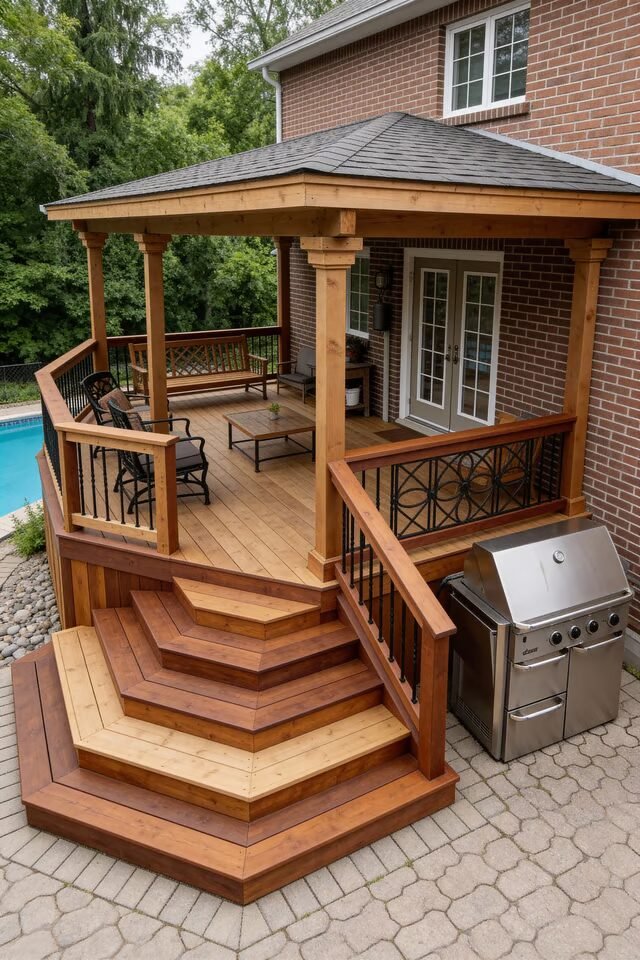
This deck understands arrival moments, and yes, that matters more than people think. The wide, tiered steps don’t just solve height differences, they create a visual transition from yard to deck that feels intentional and welcoming. That’s classic spatial hierarchy at work.
Notice how two wood tones are used on the steps. Contrast helps define edges and improves depth perception, which is both beautiful and practical. The covered roof structure anchors the deck to the house, making it feel like a true extension rather than an add-on. When recreating this, keep railing details slightly decorative but not dominant, so they frame the space without stealing attention.
Furniture placement stays inward-facing, reinforcing the deck as a destination, not a hallway. The grill is tucked to the side, which is smart zoning and keeps social areas smoke-free. Good deck design always separates movement zones from lounging zones. Add warm lighting on risers for safety and drama. This is the kind of deck that quietly feels expensive, even before anyone notices why.
Modern Pergola With Integrated Lighting
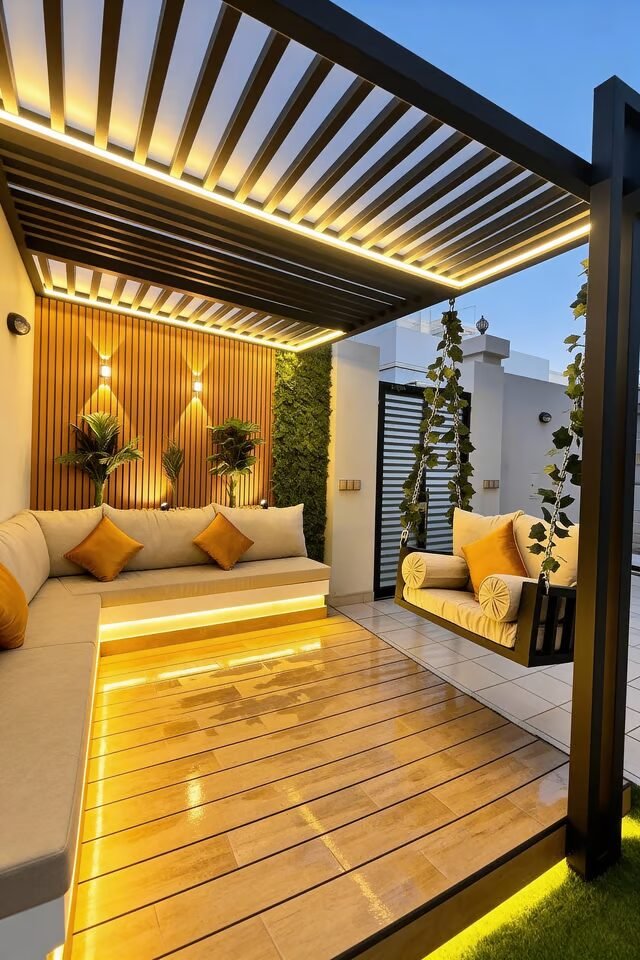
This deck is what happens when lighting design and architecture actually talk to each other. The sleek pergola creates a strong linear grid, and the integrated LED strips emphasize those lines instead of hiding them. Design principle we love: highlight structure, don’t fight it.
Warm light underneath benches creates a floating effect that visually lifts the furniture off the floor. That’s how small decks feel bigger without changing dimensions. If you’re recreating this, keep your color palette tight. Neutrals plus one warm accent color is enough.
Vertical wood slats add texture and rhythm, preventing the space from feeling too minimal or cold. The swing chair introduces movement, which balances all the straight lines beautifully. Another smart move is using indirect lighting instead of harsh overhead fixtures.
Indirect light feels expensive because it mimics hotel and resort design. This deck works because every element has a job. Nothing is random, nothing is loud, and yet it still feels cozy and social. Modern, but not trying too hard.
Dramatic Black Multi Level Deck
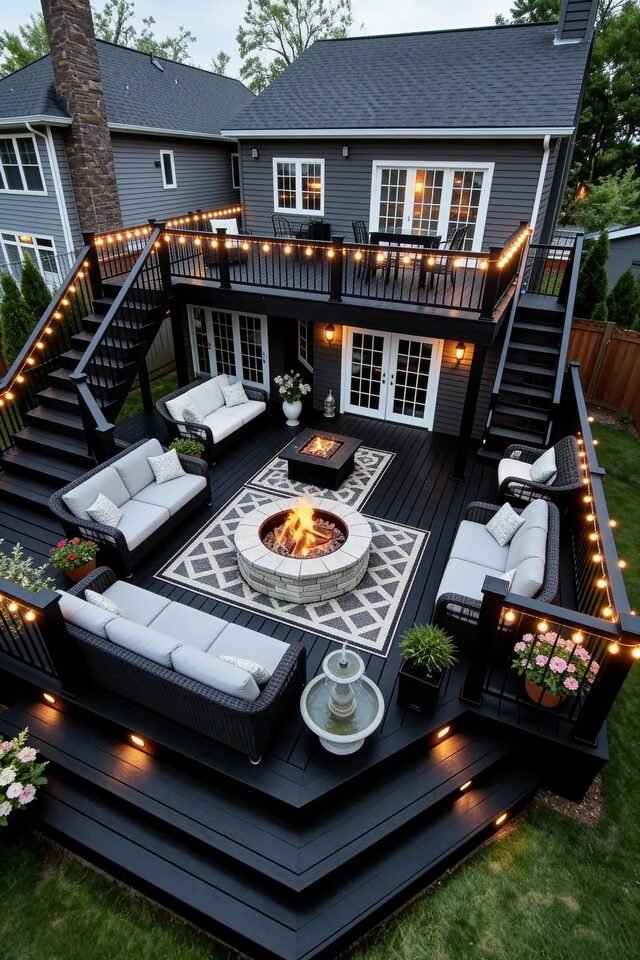
This deck proves that dark colors aren’t scary when used correctly. The black decking creates a bold base that instantly makes furniture and lighting pop. High contrast equals high impact, and this deck fully commits. Multiple levels help break up the dark surface, preventing it from feeling flat or heavy.
Notice how rugs are used to define seating zones and add softness against the bold floor. That’s a crucial balance move. String lights outline the railings, visually tracing the deck’s geometry and guiding the eye through the space. If you’re recreating this, choose furniture with lighter upholstery to avoid visual overload.
Repetition of shapes, like square fire features and symmetrical seating, keeps everything calm and intentional. Dark decks work best when the layout is disciplined. Built-in lighting on steps adds safety and drama without clutter. This deck feels moody, upscale, and very “stay out until midnight talking about life,” which is honestly the goal.
Functional Storage Skirt Deck Design
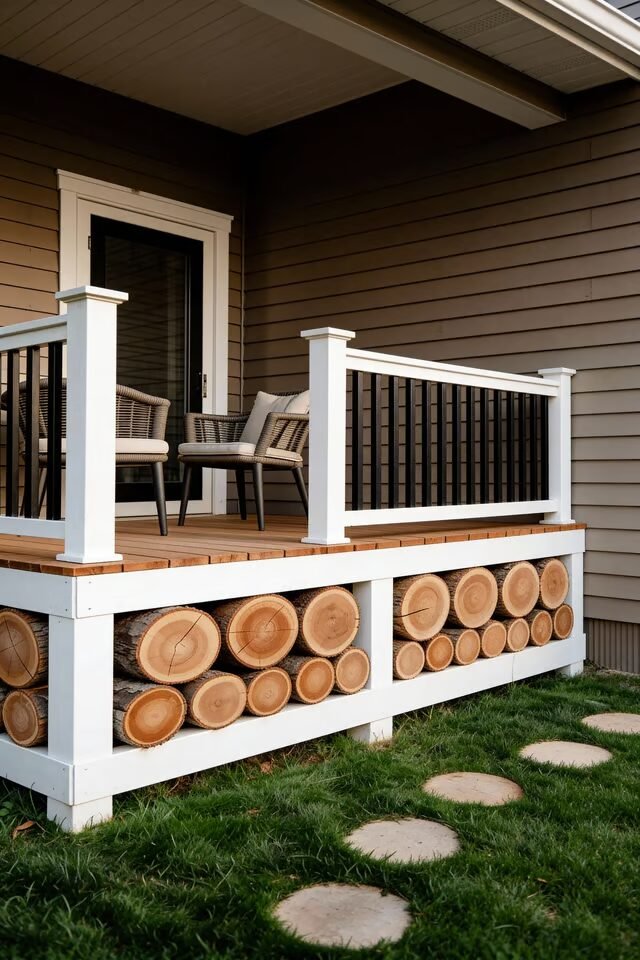
This deck is a masterclass in making boring things look intentional. The under-deck storage uses stacked logs as a design feature instead of something to hide. When function becomes decor, you’ve won. The clean white framing creates contrast against the natural wood textures, making the whole deck feel curated instead of cluttered.
Railings stay simple so the focus remains on materials rather than details. If you want to recreate this, consistency is key. Keep all stored items similar in size and color so it reads as pattern, not mess. The deck height is modest, which keeps proportions friendly and approachable.
Furniture is lightweight and minimal, reinforcing the deck’s role as a quiet retreat rather than a party zone. Design insight we swear by: visual order creates mental calm. This deck works because it respects scale, embraces honesty in materials, and proves storage doesn’t have to look like a compromise. Practical can still be Pinterest-worthy.
Two Story Deck With Defined Zones
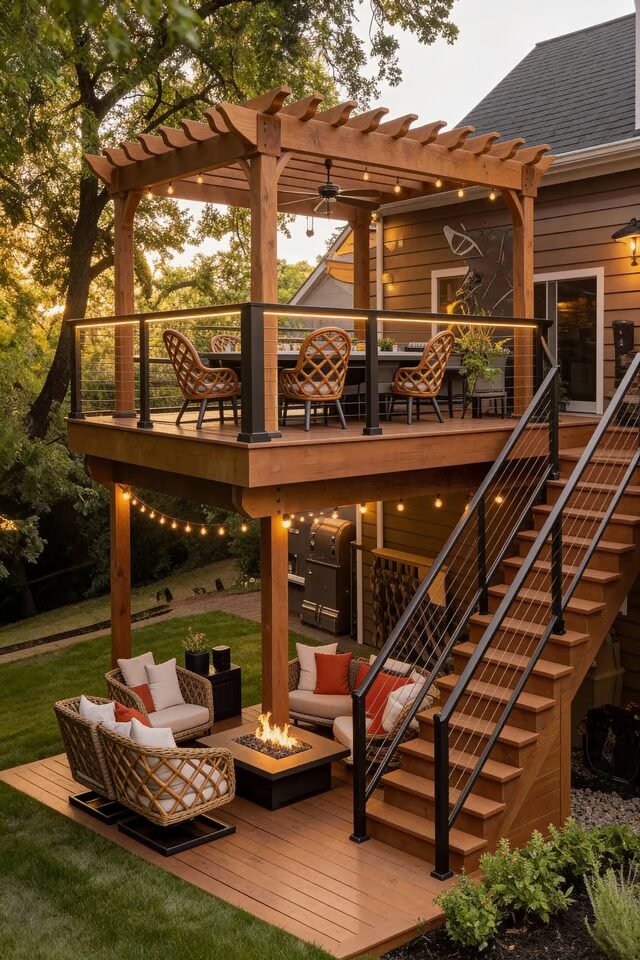
This deck is basically outdoor architecture done right. The two-story layout uses vertical space to separate activities without losing connection. Vertical zoning is a cheat code for small yards. The upper deck works as dining and viewing, while the lower level becomes a cozy lounge anchored by a fire feature.
Railings stay visually open, which maintains sightlines and prevents the structure from feeling bulky. Warm lighting under the upper deck ceiling creates intimacy below, even though it’s technically shaded. If you’re recreating this, match materials across both levels to maintain cohesion. Same wood tone, same railing style, same lighting temperature.
Furniture scale changes by zone, which is smart and intentional. Good design responds to how people actually use space. This deck feels layered, social, and flexible without feeling chaotic. It’s proof that with the right planning, your backyard can function like a well-designed home floor plan, just with better air and fewer walls.
Designing Decks That Stay Functional And Feel Timeless
A deck should age gracefully, both visually and emotionally. Trends come and go, but good design principles always stick. The most successful deck ideas balance beauty with usability, making sure spaces work just as well on a quiet morning as they do during a full-on weekend gathering.
Lighting should guide movement, not blind guests. Furniture should invite conversation, not block circulation. Materials should be durable, but also warm enough to feel inviting. We always say that decks succeed when they respect human behavior.
People gather around warmth, gravitate toward defined zones, and feel more relaxed in spaces that feel organized. That’s why thoughtful layouts, consistent finishes, and intentional focal points matter so much. When form supports function, comfort follows naturally. No matter your deck size or style, designing with clarity, balance, and purpose ensures the space won’t just look good for photos, but will actually be used, loved, and lived in for years to come.