
Inside the Japandi Dining Rooms That Always Feel Put Together
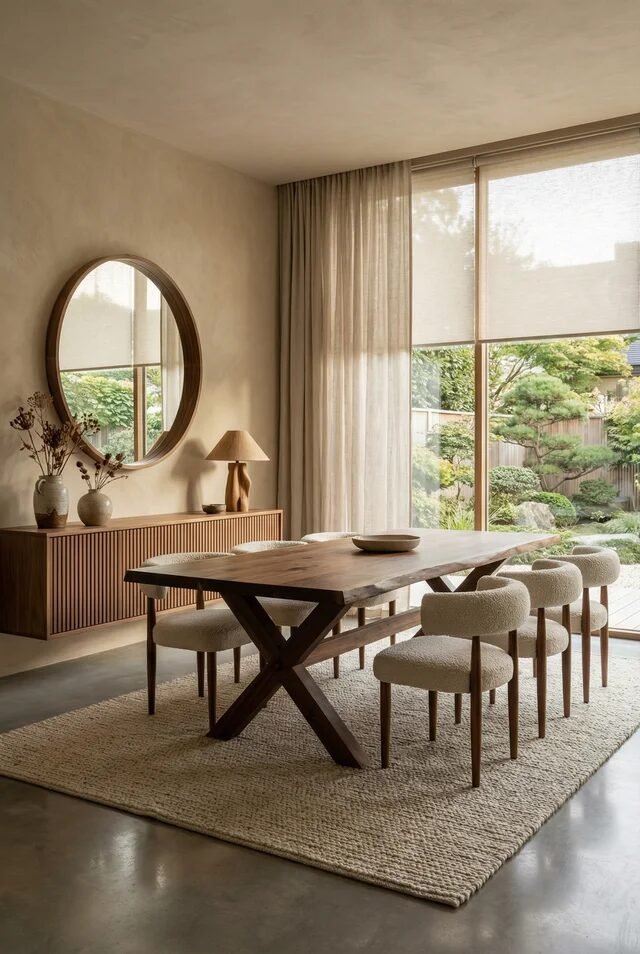
Japandi dining rooms aren’t just about looking pretty—they’re about creating a space that feels effortlessly balanced every single day. Think less chaos, more calm. We’re blending Japanese minimalism with Scandinavian warmth, which basically means clean lines, natural materials, and a vibe that says “we have our life together” (even if we absolutely don’t). The magic of Japandi lies in restraint—every piece has a purpose, and nothing is just there for decoration.
What really makes these spaces work is the harmony between function and feeling. We’re choosing warm woods, soft textiles, and muted palettes to create a grounded, cozy atmosphere without visual overload. Lighting stays soft, shapes stay organic, and clutter? Not invited. It’s not about having less—it’s about choosing better and styling smarter.
As we explore these ideas, notice how balance, texture, and intentional design choices come together. That’s the real Japandi flex.
Warm Wood Layers With Soft Textural Contrast
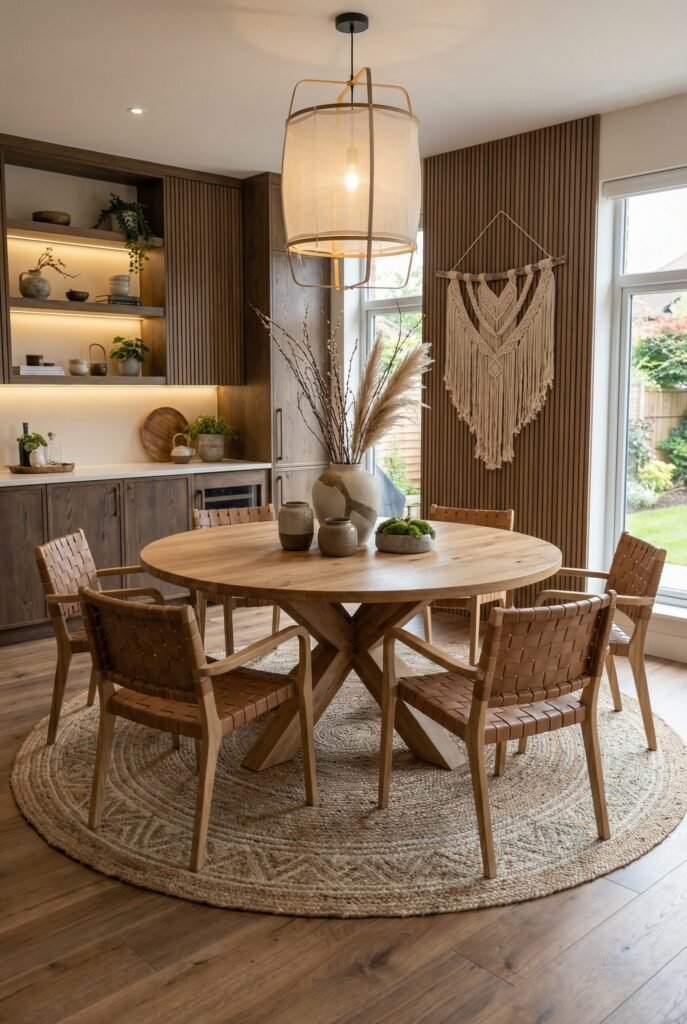
This space is basically Japandi doing its favorite thing: calming you down without trying too hard. The vertical wood slat wall instantly creates rhythm and height, while the round table softens everything so it doesn’t feel too rigid. This is a perfect example of balancing linear structure with organic shapes, which is a core Japandi move we should absolutely steal.
Notice how the woven chairs, jute rug, and matte ceramics all live in the same warm-neutral family but vary in texture. That’s not accidental. When your color palette is restrained, texture becomes your main storytelling tool. We’re layering smooth, rough, soft, and structured surfaces so the room feels rich without adding visual noise.
If we’re recreating this, keep your woods within the same undertone (no random orange vs gray fights). Add one statement pendant to anchor the table visually. Bonus tip: round rugs under round tables = instant cohesion and zero awkward edges. Yes, it’s that simple.
Minimal Japandi Dining With Sculptural Simplicity
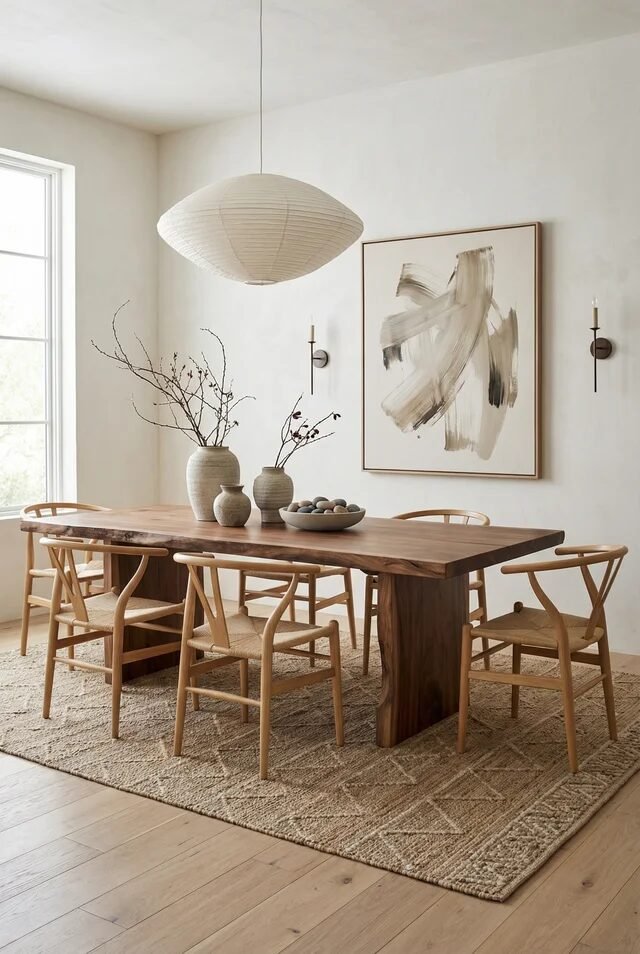
This one is for the “we hate clutter but still want personality” crowd. The chunky wood table acts as a grounding element, while the chairs stay visually lightweight. That contrast in visual weight is what keeps the room from feeling either empty or heavy.
The palette leans almost monochrome, but the variation in wood grain and subtle decor keeps it alive. The oversized paper pendant? Iconic. It diffuses light softly, which is key in Japandi—no harsh lighting allowed, we’re not in a dentist’s office. The abstract artwork adds just enough movement without breaking the calm.
To recreate this, think in layers of restraint. Limit decor to a few intentional pieces (ceramic vases, branches, maybe a bowl). Negative space is not “empty”—it’s breathing room for your design. And please, resist the urge to over-style. Japandi will humble you real quick if you do.
Elevated Natural Dining With Statement Lighting Moment
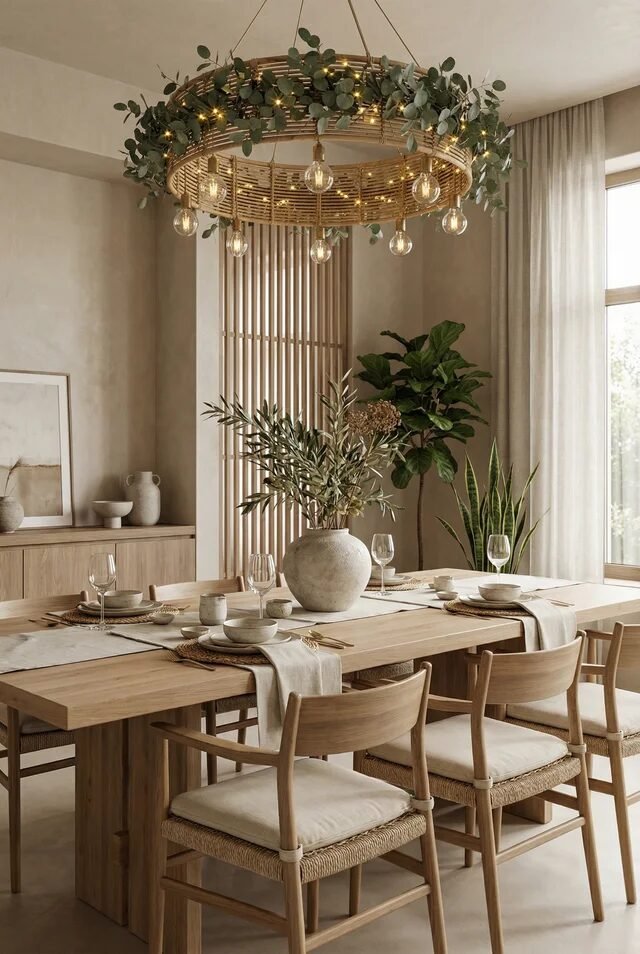
Okay but this lighting? She’s the main character. The circular fixture wrapped in greenery and warm bulbs creates a focal point that pulls your eyes upward. This is how you use vertical layering to make a dining space feel immersive, not just functional.
The rest of the room supports that moment beautifully. Soft textiles, light wood tones, and greenery keep everything cohesive. The styling on the table is minimal but intentional. Japandi isn’t about having less—it’s about choosing better. Every object here earns its place.
If we’re copying this vibe, invest in one standout feature (usually lighting) and keep everything else calm. Mix natural elements like linen runners, ceramic pieces, and plants to soften the space. And pro tip: warm lighting temperature (2700K-ish) is non-negotiable if we want that cozy glow. Cool lighting will ruin the entire mood. No exceptions.
Modern Japandi With Bold Contrast And Curves
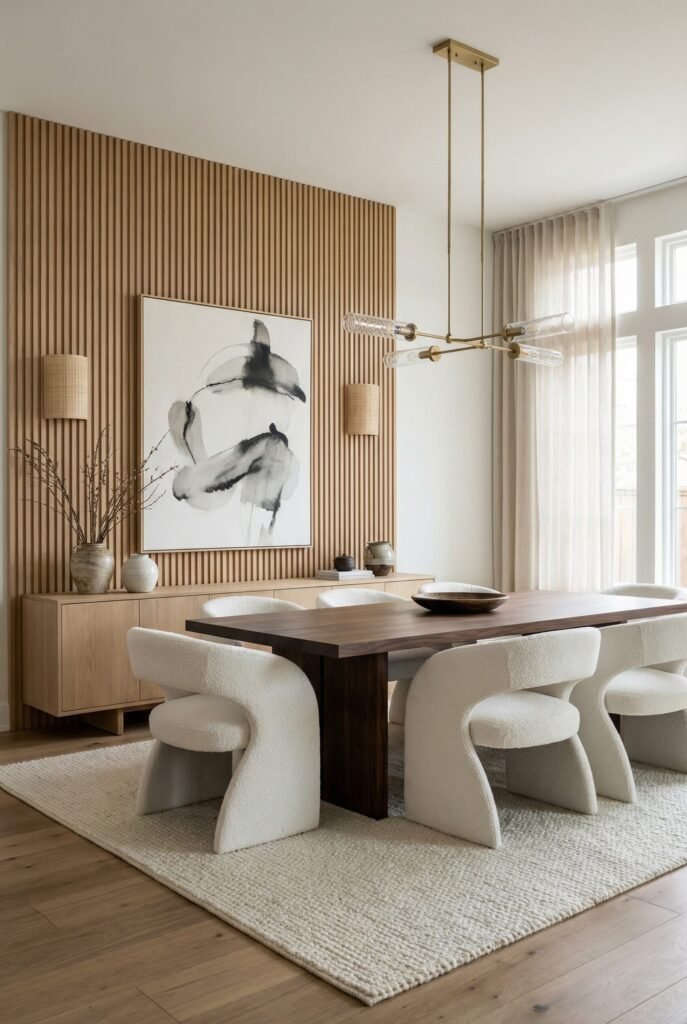
This is Japandi with a slightly dramatic side, and honestly, we’re into it. The dark wood table grounds the room, while those curved boucle chairs soften the entire composition. Contrast here isn’t loud—it’s controlled and intentional, which is why it still feels calm.
The slatted wood panel behind the artwork adds vertical texture, but the large-scale art keeps it from feeling busy. And let’s talk about those chairs again. Curves are doing a lot of emotional work here—they make the space feel inviting instead of formal. Japandi loves a good soft edge moment.
If we’re recreating this, focus on balancing contrast. Pair one darker element with lighter surroundings so nothing feels heavy. Keep your palette tight (think cream, oak, walnut, black accents). And don’t underestimate sculptural furniture—it doubles as decor without adding clutter. Functional and aesthetic? We love that.
Airy Japandi Dining With Architectural Warmth
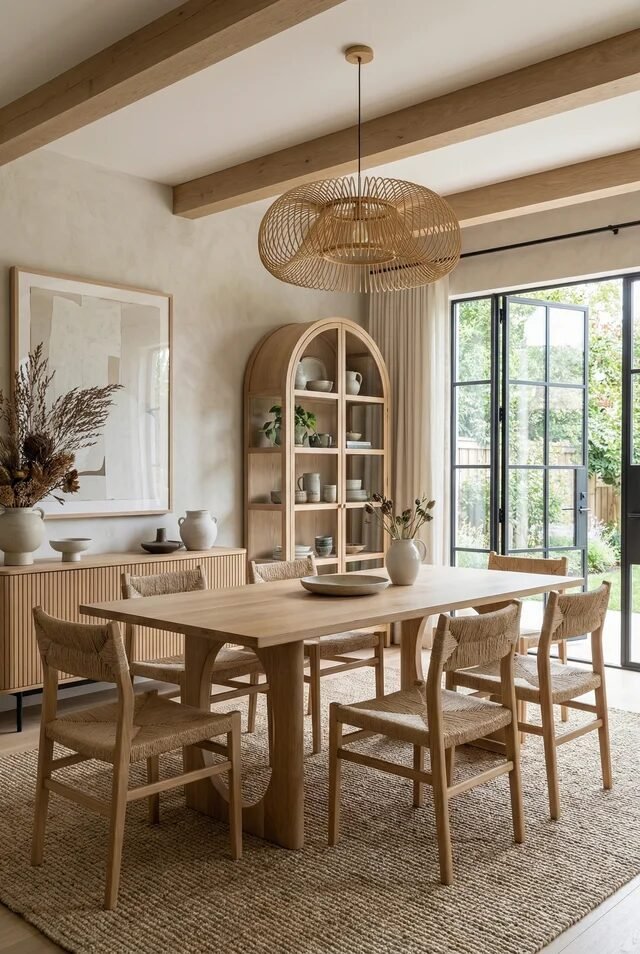
This one feels like a deep breath, and that’s not by accident. The exposed beams draw the eye upward, creating volume, while the arched cabinet adds a soft architectural detail that breaks up all the straight lines. This is layering structure with softness, and it’s chef’s kiss.
The palette stays warm and consistent, but the mix of materials—wood, woven textures, linen—keeps it from feeling flat. Natural light plays a huge role here too. Japandi spaces thrive on light, so we want to enhance it, not block it. Sheer curtains are doing exactly that.
To get this look, prioritize architectural features first (beams, arches, built-ins if possible). Then layer in simple furniture with clean lines. Keep decor minimal but meaningful. And always let natural light be part of your design strategy—it’s basically free luxury.
Deep Green Cabinetry Meets Soft Japandi Warmth
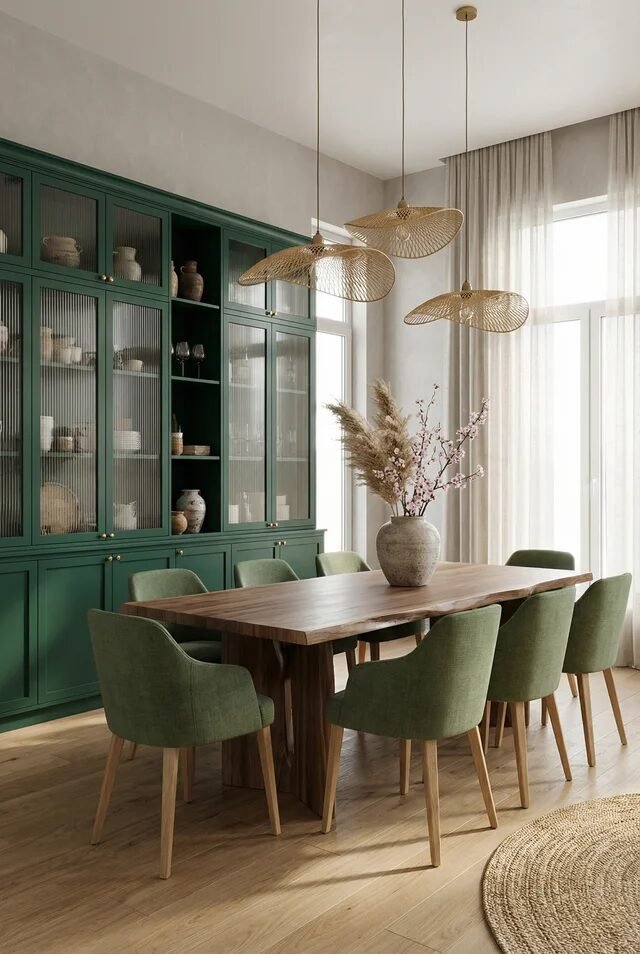
This is where Japandi takes a bold little detour—and honestly, we love that for it. The deep green built-in instantly anchors the room, acting as both storage and a full-on visual statement. Color blocking like this works because everything else stays calm and neutral, letting that green breathe instead of compete.
The wood table and muted green chairs echo the palette without matching too perfectly (because matchy-matchy is not the vibe). Notice how the woven pendant lights soften the heaviness of the cabinetry. This is all about balancing visual weight—dark = grounded, light = airy.
If we’re recreating this, commit to one bold color and repeat it subtly across the room. Keep materials natural to maintain that Japandi calm. And please, use glass-front cabinets strategically. They break up solid mass and prevent your storage wall from looking like a giant green brick.
Cozy Japandi Dining Nook With Built-In Seating
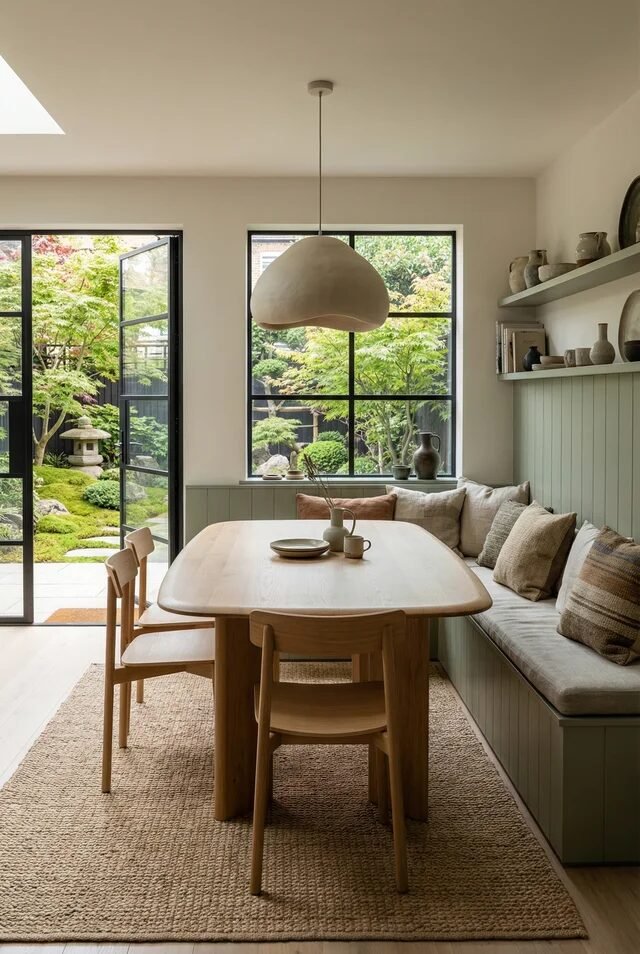
Small space? No problem. This setup is proof that Japandi thrives in cozy corners. The built-in bench maximizes seating while keeping the layout visually clean. This is zoning at its finest—we’re defining a dining area without walls or clutter.
The soft green paneling wraps the nook, creating a cocoon effect that feels intentional and calming. Paired with neutral cushions and a sculptural pendant, the space feels layered but not overwhelming. Built-ins are basically the secret weapon of small-space design—they save space and look custom (because they are).
If we’re trying this at home, prioritize comfort. Add varied cushions for texture and back support. Keep the table rounded or softened at the edges to improve flow. And always align your pendant light with the table center—crooked lighting is a crime we will not commit.
Light Filled Dining With Organic Woven Accents
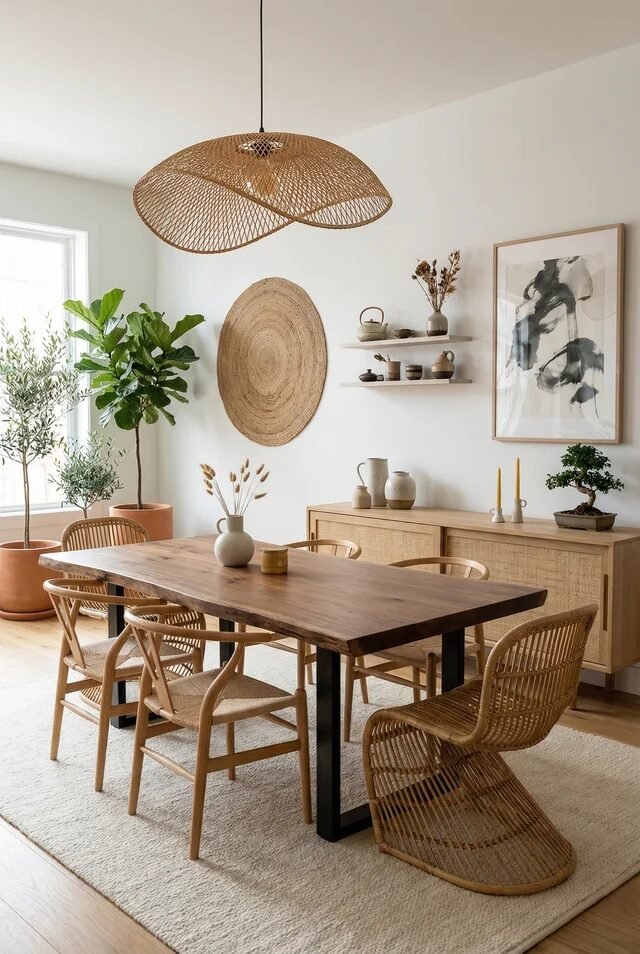
This one feels like a Pinterest board came to life in the best way. Natural light floods the room, and everything else just supports it. The woven pendant and chairs introduce texture, while the plants bring in that soft, lived-in energy. Japandi loves nature, and this is how we subtly invite it in.
The black metal table legs are a small but important detail. They ground the space and add contrast without overwhelming the softness. Meanwhile, the wall decor stays minimal but intentional. We’re creating visual interest through composition, not clutter.
To recreate this, mix materials strategically—wood, rattan, ceramics, and a hint of metal. Keep your palette warm and neutral. And don’t forget plants. Even one well-placed plant can shift the entire mood from “nice” to “we live here and we’re thriving.”
Sculptural Walls And Soft Minimal Dining Harmony
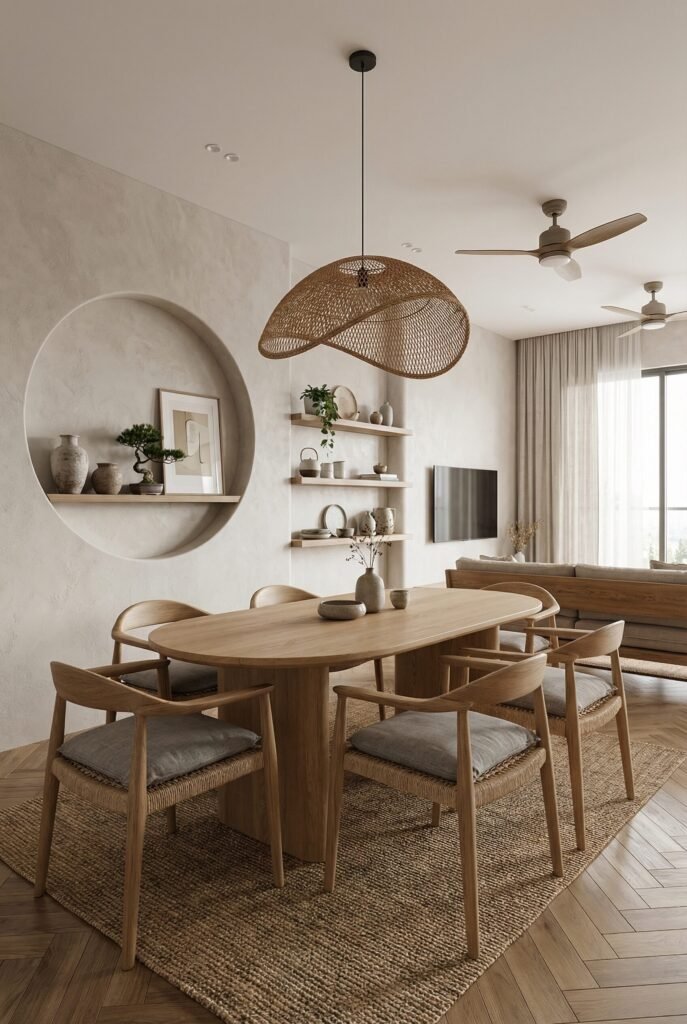
Okay, this wall niche? Main character energy. It adds depth and architectural interest without needing extra decor. This is a perfect example of built-in design doing the heavy lifting so styling can stay minimal.
The oval table mirrors the softness of the curved niche, creating a cohesive visual flow. Nothing feels harsh or abrupt. Even the shelving is styled with restraint. Japandi is all about editing—just because you can style it doesn’t mean you should.
If we want this look, think curves first. Incorporate rounded furniture, arched details, or even circular decor. Stick to a tonal palette and layer textures instead of colors. And remember, negative space isn’t empty—it’s intentional calm. If it feels slightly “underdone,” you’re probably doing it right.
Symmetrical Japandi Dining With Layered Wood Textures
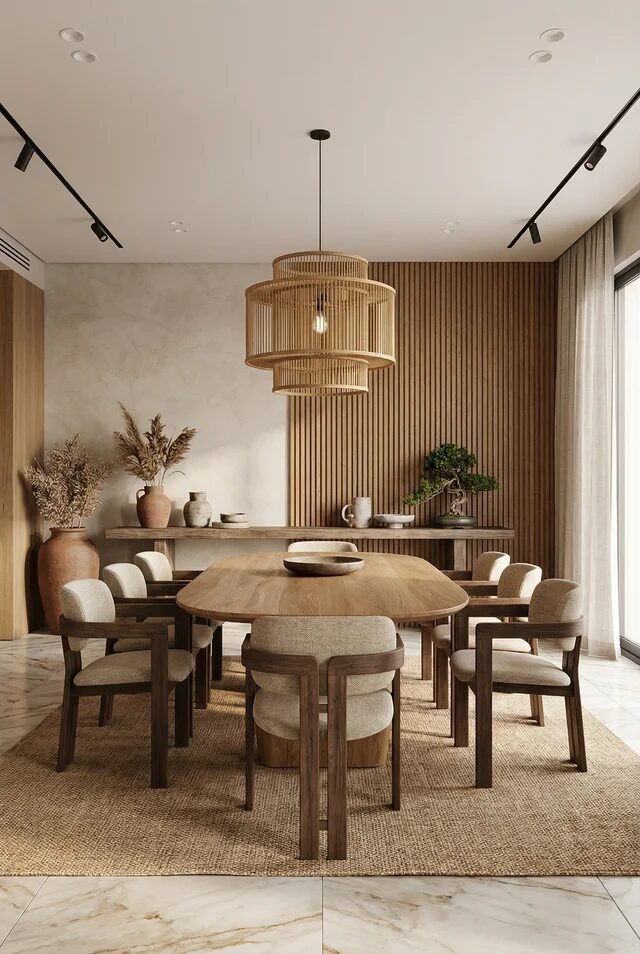
This space is giving structure, balance, and quiet luxury all at once. The symmetry is subtle but powerful—the table centered, chairs evenly spaced, lighting aligned. Symmetry creates instant calm because our brains love order (even if our lives are chaotic).
The vertical slat wall adds texture and rhythm, while the layered wood tones keep things warm and cohesive. Notice how the rug defines the dining zone without interrupting the flow. This is spatial layering done right—each element has a role, and nothing feels random.
To recreate this, start with a strong layout. Center your table and build around it. Repeat materials and tones for cohesion. And invest in one standout light fixture. Lighting is not just functional—it’s the jewelry of your room, so choose wisely.
Designing Dining Spaces That Feel Calm And Collected
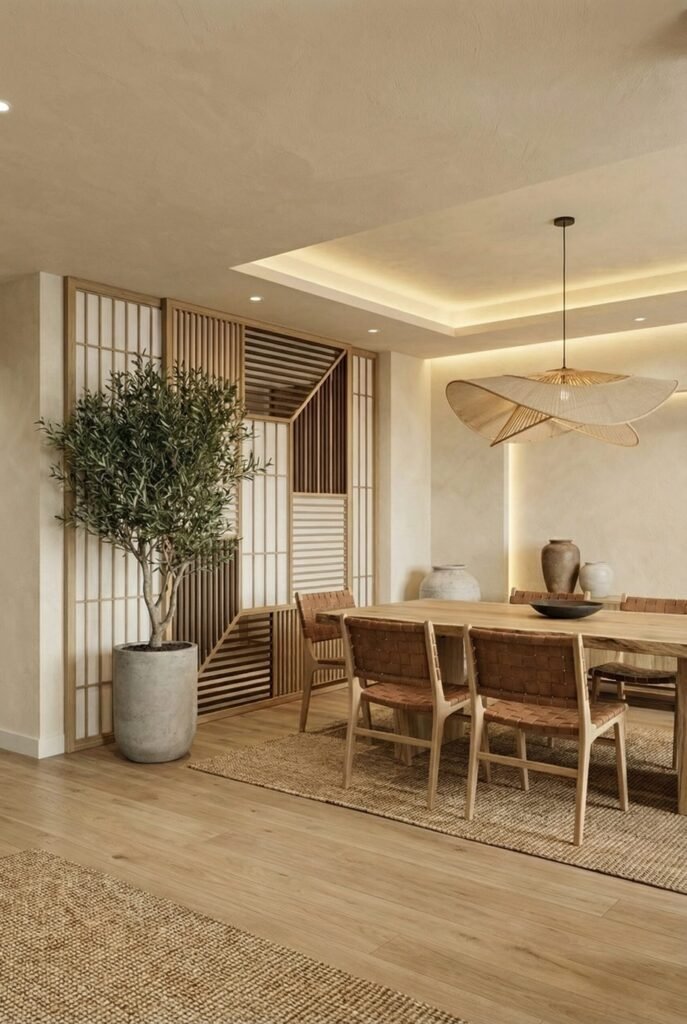
At the end of the day, a Japandi dining room isn’t about chasing trends—it’s about building a space that actually supports how we live. It’s where slow mornings, casual dinners, and “just one more coffee” moments happen. And that only works when the design feels calm, functional, and easy to maintain. If a space looks good but feels stressful to use, we’ve completely missed the point.
The real takeaway here is learning how to edit. Keep your palette cohesive, mix textures instead of colors, and let statement pieces do the talking. Whether it’s a sculptural light, a solid wood table, or a beautifully styled shelf, we’re focusing on quality over quantity. Japandi isn’t minimal for the sake of it—it’s intentional so your space works harder while looking softer.
So as we recreate these ideas, remember: calm is designed, not accidental.