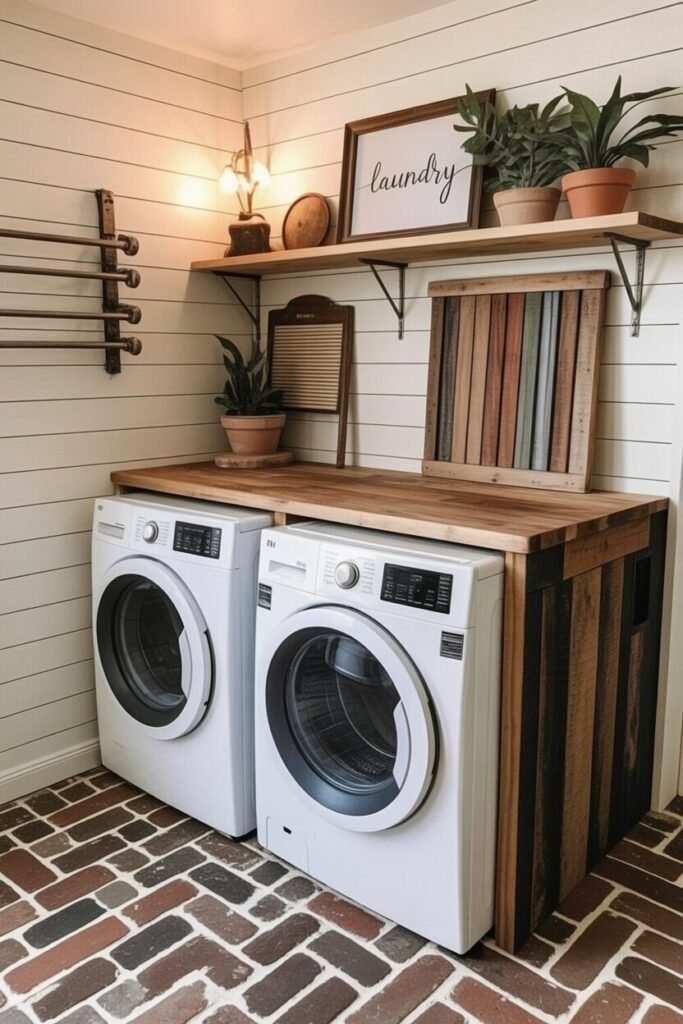

Basement Laundry Rooms That Quietly Fix Everyday Home Chaos

Basement laundry rooms are often treated as purely functional spaces, but smart design proves they can be both hardworking and genuinely enjoyable. When we rethink basements as flexible living zones rather than forgotten utility areas, laundry suddenly feels less like a chore and more like part of daily flow.
The key lies in combining function-first layouts with warmth-driven design principles. Good lighting compensates for limited natural light, thoughtful storage prevents clutter from spreading, and material choices like wood, textiles, and matte finishes soften the industrial feel basements naturally have.
Across these ideas, we see how zoning, vertical storage, and intentional color palettes transform underground rooms into spaces that feel considered and complete. Whether your basement is compact, unfinished, or surprisingly spacious, the right design decisions can dramatically shift how it’s used and perceived. A well-designed basement laundry room doesn’t just improve efficiency, it improves how the home feels as a whole.
Cozy Hanging Rail Basement Laundry

Basement laundry rooms often feel cold and purely utilitarian, but this idea flips that script completely. The hanging rail instantly turns the space into a functional mudroom–laundry hybrid, allowing clothes to air dry naturally while keeping daily outfits visible and wrinkle-free.
This design follows the principle of vertical zoning, using wall height instead of floor space, which is critical in basements that feel narrow. Warm wood tones on the worktable and shelves balance out the mechanical presence of the washer and dryer, creating visual warmth that basements usually lack.
Soft lighting, especially a chandelier or warm pendant, adds a residential feel that tricks the brain into forgetting this is a basement at all. We love how open shelving keeps essentials accessible without visual heaviness. To recreate this look, prioritize breathable materials like wood, rattan, and cotton.
Avoid glossy finishes because matte textures absorb light better in low-ceiling basements. When a basement laundry feels cozy, chores stop feeling like punishment.
Built-In Closet Style Laundry Nook

This basement laundry combo proves that enclosed spaces don’t have to feel claustrophobic. By framing the washer and dryer inside a closet-style niche, the design uses architectural boundaries to create calm visual order. Design-wise, this follows the principle of containment, which helps busy utility zones feel intentional rather than chaotic.
Wood cabinetry adds warmth, while open shelves above maintain accessibility and prevent the area from feeling boxed in. Integrated lighting is doing serious heavy lifting here, illuminating every shelf layer so the basement never feels dim or forgotten. We especially love the horizontal shelf alignment, which visually widens the space.
Storage baskets unify the look while hiding mess, a key strategy in basement environments where visual noise feels amplified. To recreate this, stick to a consistent material palette and repeat shapes for cohesion. A basement laundry that looks custom-built instantly upgrades the perceived value of the home.
Industrial Rustic Basement Laundry Setup

This basement laundry room leans unapologetically into its raw bones, and that’s exactly why it works. Exposed brick, visible ductwork, and industrial lighting embrace the basement’s unfinished nature instead of fighting it. This approach follows the honesty principle in design, where materials are shown as they are, not disguised.
Warm wood elements balance the hardness of metal and brick, preventing the space from feeling cold or echoey. Pegboards and open shelving introduce vertical organization while keeping tools and laundry supplies within reach. We love how layered lighting softens the industrial vibe, especially warm bulbs against textured surfaces.
To recreate this look, focus on contrast rather than perfection. Let rough textures coexist with refined elements like farmhouse sinks or brass hardware. Basements shine when we stop pretending they’re upstairs rooms and design them authentically.
Bright Farmhouse Basement Laundry Combo

Basements don’t get much daylight, so this design compensates brilliantly through color and reflectivity. White cabinetry, light walls, and soft wood accents work together to bounce light around the room. This follows the reflectance principle, essential for underground spaces.
The long countertop provides continuous workflow, making laundry feel smoother and less fragmented. Open shelves add personality without visual clutter, while woven baskets soften the hard edges of appliances. We love how the rug anchors the space, adding warmth and absorbing sound, which is crucial in echo-prone basements.
To recreate this look, choose warm whites instead of stark ones to avoid a sterile feel. Add organic textures like linen, jute, or unfinished wood. A bright basement laundry changes the emotional experience of everyday routines.
Sliding Barn Door Basement Laundry

Sliding barn doors are not just aesthetic here, they’re strategic. In basements where swing doors eat up precious clearance, sliding doors preserve circulation while adding character. This design applies the principle of spatial efficiency, maximizing usable square footage without sacrificing style.
White brick walls reflect light, while the reclaimed wood door introduces texture and contrast. Built-in benches and under-seat storage transform the laundry zone into a full mudroom moment. We love how symmetry keeps the space visually calm despite strong materials.
To recreate this, ensure hardware is matte black or aged metal to ground the look. Keep the palette tight so the barn door remains the star. When form solves function, the result always feels intentional and high-end.
Vintage Utility Basement Laundry Space

This basement laundry combo leans into vintage utility charm without sacrificing modern efficiency. The space feels grounded and nostalgic, yet still highly functional for everyday use. Exposed shelving, classic cabinetry, and simple hardware create a timeless foundation that works especially well in basements, where overly modern finishes can feel disconnected.
This design follows the principle of functional nostalgia, meaning style choices are emotionally familiar while layouts remain practical. Warm wood tones soften concrete and masonry surfaces, helping the basement feel intentional rather than leftover space. We love how open shelves encourage mindful organization, forcing you to edit what’s visible instead of hiding clutter behind doors.
Vintage-inspired signage and jars add personality, but nothing feels decorative for decoration’s sake. To recreate this look, stick to neutral colors and let patina do the storytelling. Avoid overly glossy finishes and prioritize texture instead. When a basement laundry feels honest and lived-in, it becomes a space you actually enjoy using.
Scandinavian-Inspired Basement Laundry Room

Scandinavian design is almost tailor-made for basement laundry rooms, and this space proves why. Light colors, simple forms, and natural materials counteract the underground feeling that basements often suffer from. This layout follows the principle of visual breathing room, where negative space is treated as a design feature, not wasted area.
Pale cabinetry reflects available light, while warm wood countertops keep the room from feeling sterile. We love how storage is streamlined and intuitive, making daily routines feel calmer and faster. Minimal decor isn’t about emptiness here, it’s about clarity.
Every object has a role, which prevents visual noise from overwhelming the space. To recreate this, choose warm whites instead of cool grays and avoid high-contrast patterns. Soft lighting is essential to maintain balance. A Scandinavian basement laundry works because it reduces friction, both visually and emotionally.
Moody Blue Basement Laundry Zone

Dark colors in basements are often avoided, but this moody blue laundry room proves they can work beautifully with the right balance. Deep wall tones add depth and intimacy, transforming the basement from an afterthought into a designed destination.
This space applies the contrast principle, pairing dark walls with warm wood shelving and light-colored textiles to prevent heaviness. Open shelving keeps the room visually open, while repetition of materials maintains cohesion. We love how warm lighting softens shadows, ensuring the space feels cozy rather than cave-like. Dark palettes also hide wear and imperfections, a smart move for hardworking laundry zones.
To recreate this look, avoid cool lighting temperatures and introduce texture through baskets or folded linens. Keep decor minimal so the color remains intentional. When darkness is balanced with warmth, basement laundry rooms feel elevated and surprisingly inviting.
Compact Utility Basement Laundry Corner

This compact basement laundry corner proves that limited space doesn’t mean limited function. Every inch is thoughtfully used, creating a layout that works harder without feeling crowded. The core principle here is modular efficiency, where furniture and storage adapt instead of dominating the room.
Compact appliances reduce footprint, while vertical shelving maximizes wall height. We love the use of rolling laundry sorters, which add flexibility and allow the layout to evolve over time. Light finishes keep the corner from visually shrinking, an essential strategy in basements with low ceilings.
Nothing feels permanent or rigid, which is exactly what small spaces need. To recreate this setup, choose pieces that can move or stack and avoid bulky cabinetry. Focus on clear pathways and practical reach zones. A successful basement laundry corner isn’t about size, it’s about smart decisions.
Warm Minimal Basement Laundry Room

Minimalism can feel cold in basements, but this warm minimal laundry room avoids that trap entirely. Neutral tones, subtle textures, and intentional lighting work together to create a calm, welcoming environment. This design follows the warmth-through-restraint principle, where fewer elements are used, but each one carries more visual weight.
Clean cabinetry reduces clutter, while woven baskets and wood accents add softness. We love how the layout encourages smooth movement, making laundry tasks feel less fragmented. There’s no excess decor, yet the space never feels empty.
To recreate this look, edit aggressively and invest in quality finishes rather than quantity. Choose warm lighting and avoid high-contrast color schemes. When minimalism is paired with warmth, basement laundry rooms feel refined instead of sterile.
When Basement Laundry Design Meets Real Everyday Life

Great basement laundry rooms aren’t about perfection, they’re about alignment with real habits. The best designs work quietly in the background, supporting daily routines without demanding attention. Across these ideas, we see a shared philosophy: layouts that reduce friction, storage that adapts over time, and aesthetics that bring warmth to an otherwise utilitarian zone.
Design principles like contrast, visual balance, and material honesty play a huge role in making basements feel intentional. When lighting is layered properly and textures are chosen thoughtfully, even underground spaces can feel inviting.
We also see how blending laundry with mudroom or utility functions maximizes square footage without sacrificing comfort. In the end, the goal isn’t to hide the laundry room, but to integrate it seamlessly into the home’s rhythm. A basement laundry that’s designed with care becomes a space you rely on, not avoid.