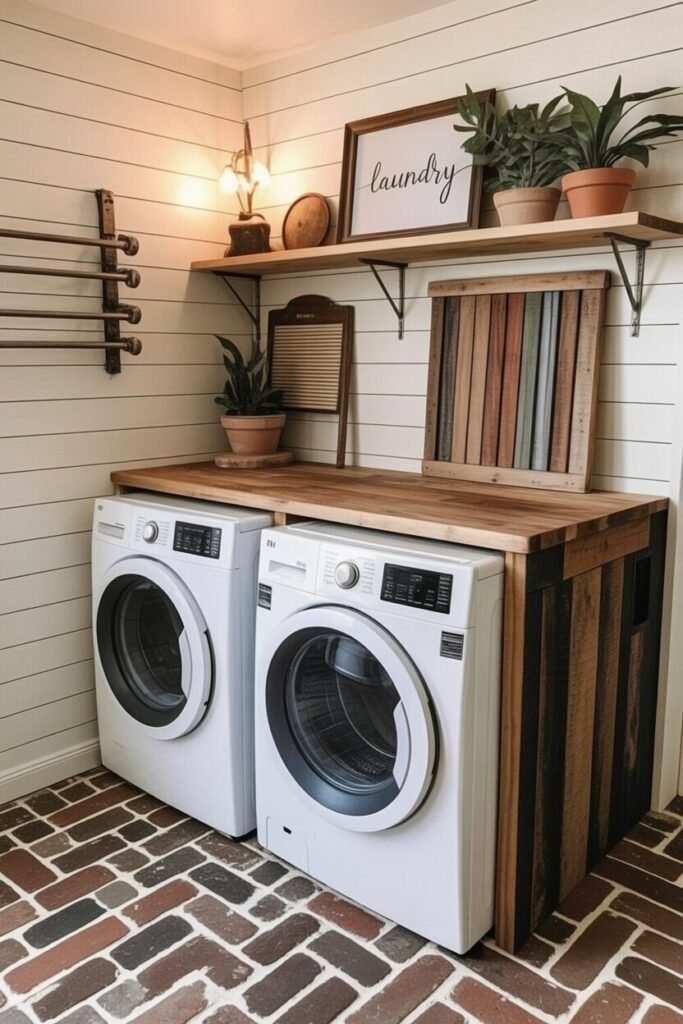

What Designers Know About Laundry Closets Most Homes Miss
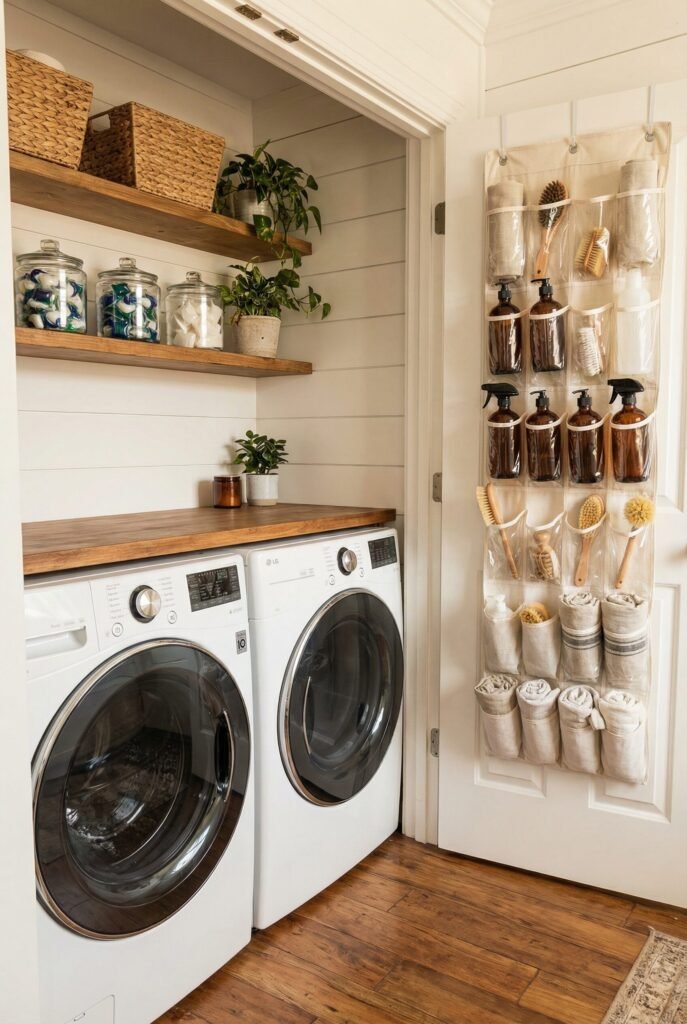
Laundry closets are no longer just about hiding machines behind doors. Today, they’re about designing smarter routines, calmer visuals, and better daily flow. A well-designed laundry closet follows the same principles as any great interior: clear zoning, intentional storage, and visual balance. When appliances, shelves, and folding areas are planned together, the space stops feeling like an afterthought.
Good laundry closet design reduces friction, meaning fewer steps, less mess, and less mental load during repetitive chores. Lighting plays a bigger role than most people realize, helping the space feel welcoming instead of purely functional. Materials matter too. Warm wood tones, soft neutrals, and consistent textures instantly elevate even the smallest closet.
We also see how doors, whether sliding, bifold, or fully concealed, shape how the space interacts with the rest of the home. When design aligns with routine, laundry becomes quieter, smoother, and surprisingly satisfying. These ideas prove that even the most compact closets can work harder and look better at the same time.
Slim Pull-Out Storage Laundry Closet

This laundry closet proves that slim storage can still feel premium and intentional. The tall pull-out shelving uses vertical zoning, a key design principle when floor space is tight. By separating supplies into visual layers, we reduce clutter noise and make everything easier to grab.
Warm wood cabinetry instantly softens the utilitarian nature of laundry tasks, while integrated lighting improves visibility and creates a high-end feel. Notice how glass jars and woven baskets keep the palette cohesive, which is crucial for small enclosed spaces. When items share color and texture, the closet feels calmer and larger. The pull-out drying rack is a smart functional upgrade, allowing airflow without sacrificing square footage.
We also love how closed cabinets at the top hide visual mess, while open shelves below keep daily essentials within reach. For recreation, choose soft-close hardware and concealed rails to maintain a clean look. Add LED strips with warm temperature to avoid harsh shadows and elevate the entire experience effortlessly.
Under-Stair Laundry Closet Conversion
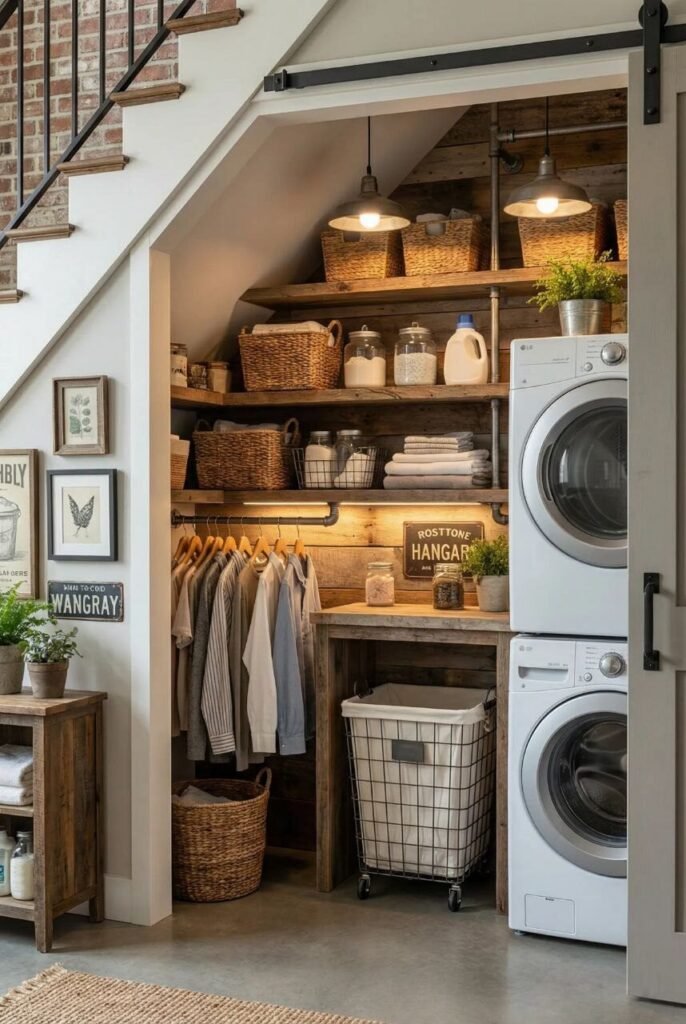
This under-stair laundry closet turns awkward architecture into a functional design win. The key principle here is adaptive zoning, where storage, hanging, and washing coexist without competing visually. By following the slope of the stairs, the shelving feels intentional instead of forced. Exposed wood textures paired with warm lighting create a cozy, lifestyle-driven mood, which helps laundry feel less like a chore.
Open shelving keeps frequently used items accessible, while baskets maintain visual order. The hanging rod doubles as an air-dry zone, reducing reliance on dryers and preserving fabric quality. We also love how the rolling laundry cart introduces mobility, making sorting and transport easier. To recreate this, balance rustic materials with clean lines so the space does not feel heavy.
Use consistent basket sizes to avoid visual chaos. Proper task lighting under shelves is essential here, especially in deeper closets with limited natural light and ensures every corner feels intentional, practical, and visually calming for everyday laundry routines at home daily.
Glass Sliding Door Laundry Closet
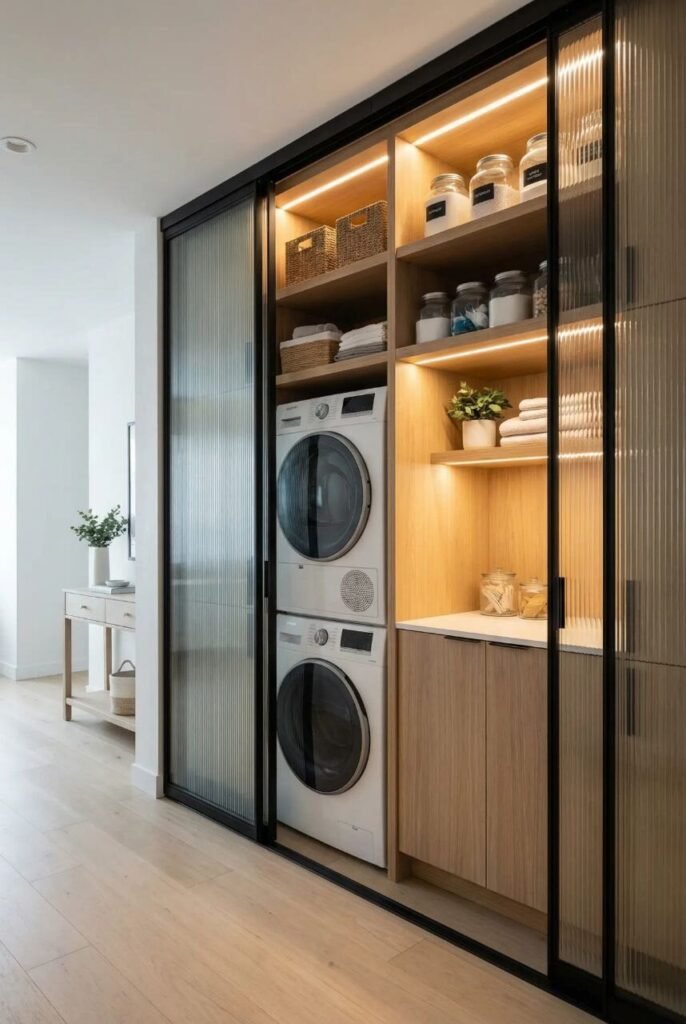
This modern laundry closet uses translucent sliding doors to balance privacy and openness. The design principle at play is visual permeability, allowing light to pass through while softening visual clutter. Ribbed glass panels make appliances feel architectural instead of purely functional, instantly elevating the space.
Built-in shelving with warm backlighting creates depth and highlights organization without overwhelming the eye. We see a clear hierarchy: machines sit low for stability, daily items live at eye level, and rarely used supplies stay above. This vertical logic keeps the closet efficient and visually calm. The sliding doors are also a spatial win, eliminating swing clearance in narrow hallways.
To recreate this look, stick to a limited material palette and repeat finishes for cohesion. Choose warm lighting temperatures to counterbalance the sleek lines and prevent a cold feel. When design and function align this closely, even laundry feels intentionally designed and surprisingly satisfying.
Rustic Barn Door Laundry Closet
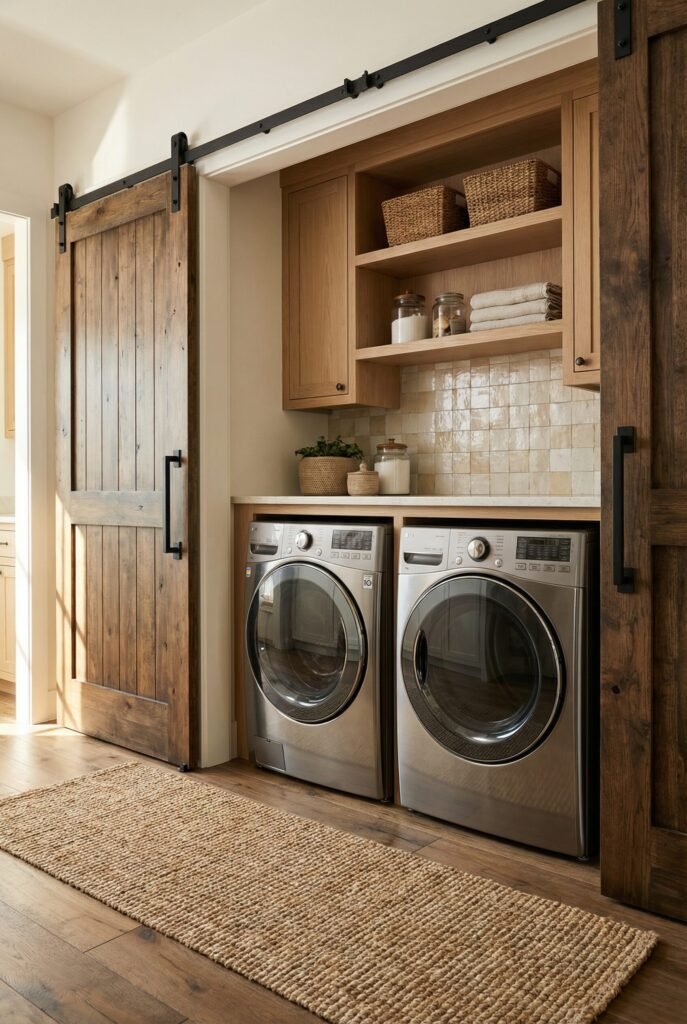
This rustic laundry closet proves that hidden utility can still feel design-forward. The barn door introduces texture and movement while keeping appliances out of sight when not in use. The core principle here is visual concealment paired with warmth, using natural wood to soften hard machinery.
Matching cabinetry and backsplash tones help the washer and dryer visually disappear, which is key in shared living zones. Upper cabinets provide closed storage to reduce visual noise, while a simple open shelf keeps daily items accessible. We love how symmetry anchors the layout, making the closet feel intentional rather than tucked away.
To recreate this, ensure the door hardware feels substantial and proportional to the opening. Warm neutral tiles prevent the space from feeling heavy. A runner rug adds softness underfoot and subtly defines the laundry zone. When storage is balanced with breathing room, the closet feels calm, functional, and timeless.
Boho Styled Laundry Closet Retreat
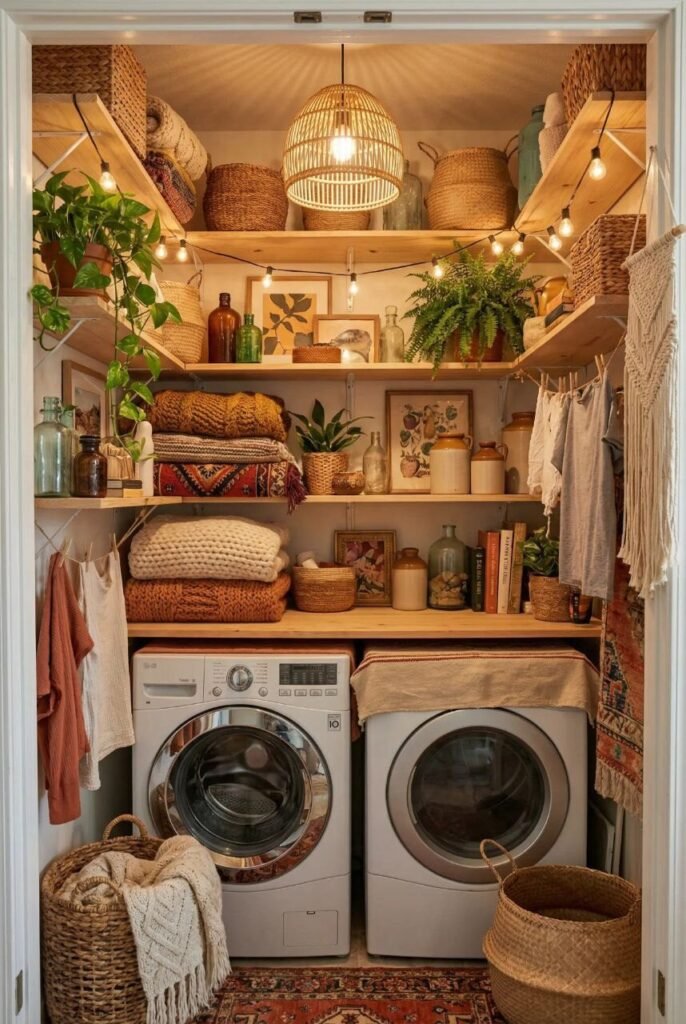
This boho laundry closet turns routine chores into a cozy ritual. The design leans heavily on layered textures, which is a powerful principle for making small spaces feel inviting. Woven baskets, plants, and warm lighting create emotional comfort, transforming the closet into a lifestyle space rather than pure utility.
Open shelving encourages intentional styling, while consistent natural materials prevent visual clutter. We see smart vertical organization, keeping machines grounded and decor lighter above. Hanging textiles soften hard lines and subtly improve acoustics. To recreate this look, limit your color palette and let texture do the heavy lifting. Use warm bulbs to enhance wood tones and avoid stark contrast.
Functional items double as decor, which keeps the closet Pinterest-worthy without sacrificing practicality. When a laundry closet feels personal and warm, it stops feeling hidden and starts feeling genuinely enjoyable.
Integrated Folding Table Laundry Closet
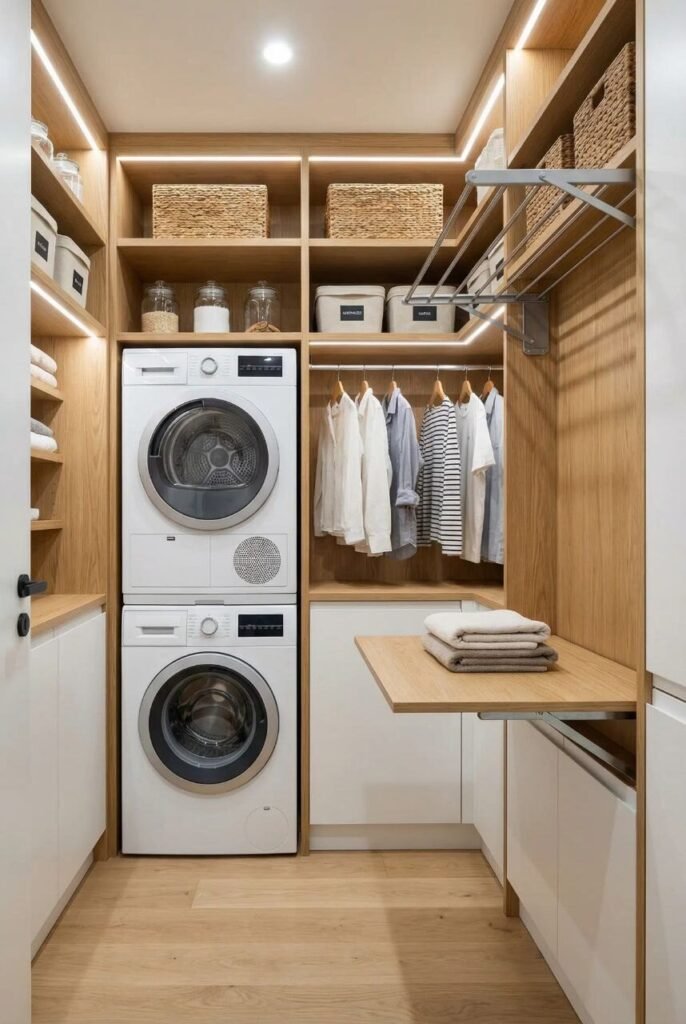
This laundry closet is a masterclass in ergonomic design and workflow efficiency. The built-in folding table follows the principle of task adjacency, meaning washing, drying, folding, and hanging happen in one smooth sequence without wasted movement.
By integrating the folding surface directly into the cabinetry, the space avoids looking temporary or cluttered, which is a common issue in small laundry zones. Warm wood finishes paired with soft LED strip lighting create visual continuity and reduce eye fatigue. The hanging rail above is perfectly placed for post-dryer garments, minimizing wrinkles and saving time. Vertical shelving keeps storage proportional, while consistent basket sizing maintains visual order.
We love how the cabinetry fully encloses the appliances, making the closet feel like furniture rather than utility. To recreate this, prioritize knee clearance and table height comfort. When function is planned this precisely, even daily laundry feels calm, efficient, and strangely satisfying.
Disappearing Laundry Closet Cube
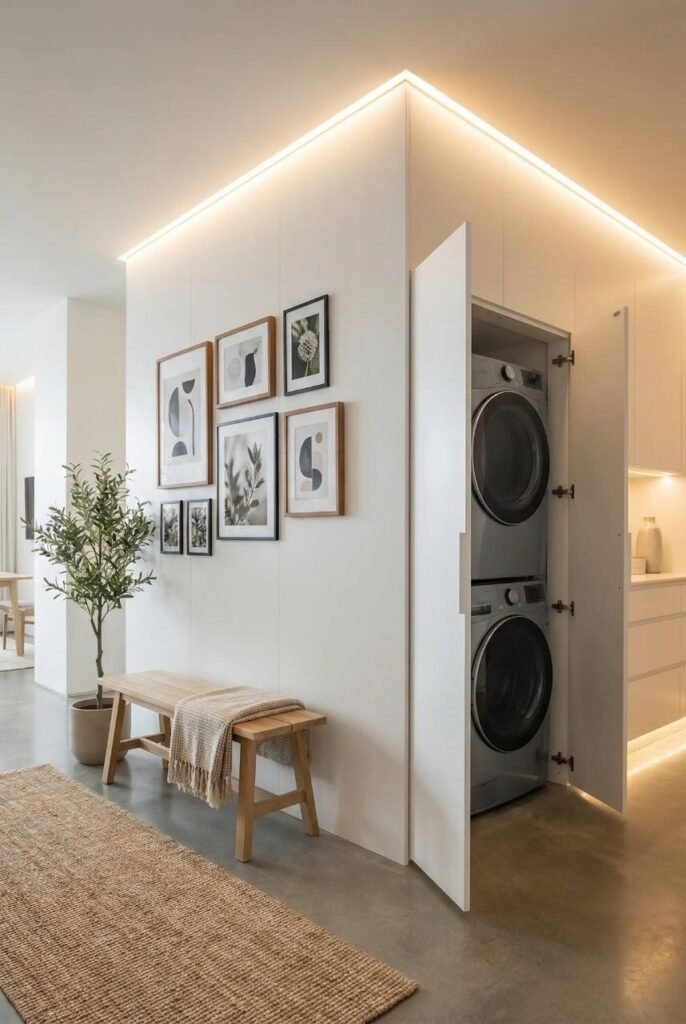
This laundry closet uses architectural concealment to blend seamlessly into the living space. The core design principle here is visual integration, where utility zones visually disappear when not in use. Flush panels and hidden hardware allow the closet to read as a sculptural volume, not a service area.
Integrated LED lighting along the ceiling edges adds depth and softens the structure, preventing it from feeling bulky. Inside, stacked machines maximize vertical efficiency, while clean interior finishes keep the experience minimal and calm. We love how artwork and a bench outside the closet psychologically reframe the space as part of the home, not a backstage zone.
To recreate this, use the same wall color and material as surrounding areas. Choose push-latch doors to avoid visual interruptions. When laundry hides this well, it stops feeling like a chore zone and starts feeling intentionally designed into everyday life.
Soft Neutral Sliding Door Closet
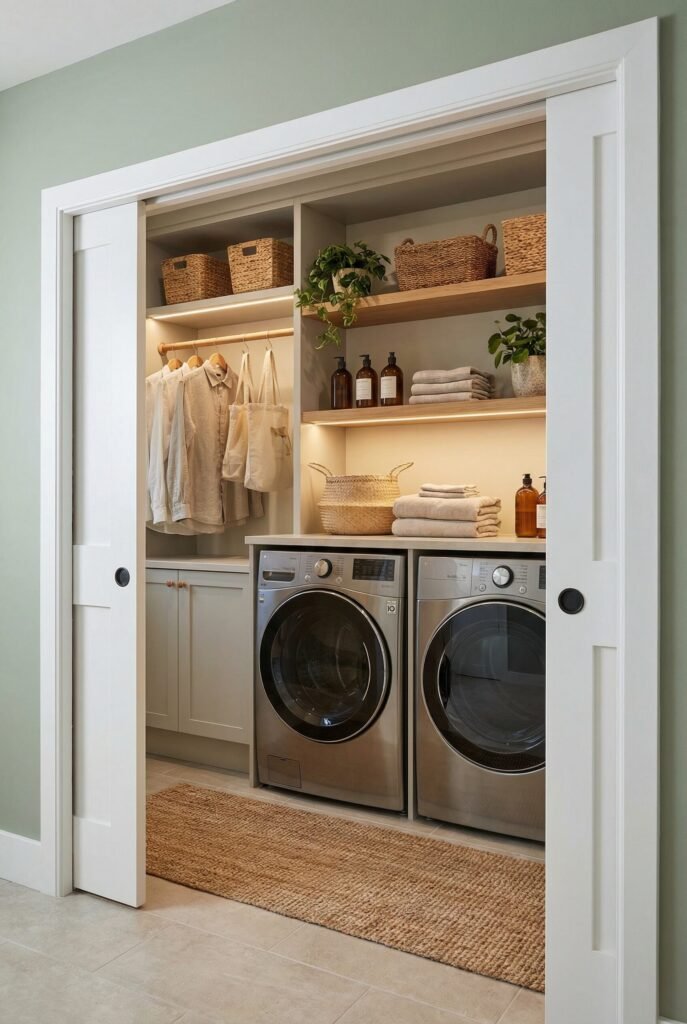
This laundry closet leans into balance and harmony through soft neutrals and symmetry. Sliding doors follow the principle of spatial efficiency, removing swing clearance while keeping the facade clean. Warm lighting layered under shelves adds depth and prevents the closet from feeling flat or clinical, which is crucial in enclosed spaces.
The side-by-side washer and dryer layout creates visual grounding, while open shelving above keeps essentials accessible. Hanging space to the side introduces flexibility for air drying and staging outfits. We love how natural textures like baskets and folded linens keep the look relaxed yet intentional.
To recreate this, stick to a limited color palette and repeat materials for cohesion. Ensure lighting temperature stays warm to complement soft finishes. When design feels calm and predictable, laundry becomes part of the home rhythm rather than a visual interruption.
Practical Bifold Door Laundry Closet

This laundry closet is all about clarity and accessibility, which are often underestimated design luxuries. Bifold doors open wide, offering full visibility without occupying too much floor space. The core design principle here is visibility control, where every item has a clear home and is instantly readable.
Open shelving combined with labeled containers reduces decision fatigue, especially during repetitive daily routines. Stacked machines free up horizontal space, allowing side shelving to handle detergents, tools, and folded linens efficiently. Wire baskets improve airflow and keep contents visible, preventing forgotten supplies from hiding in the back. We love how the layout balances openness with structure, making the closet feel practical without becoming visually chaotic.
To recreate this, measure your actual products before planning shelf heights. Avoid overdecorating and let function lead the layout. When everything is easy to see and easy to reach, the laundry closet becomes dependable, intuitive, and surprisingly satisfying to use every day.
Full-Height Cabinet Laundry Wall
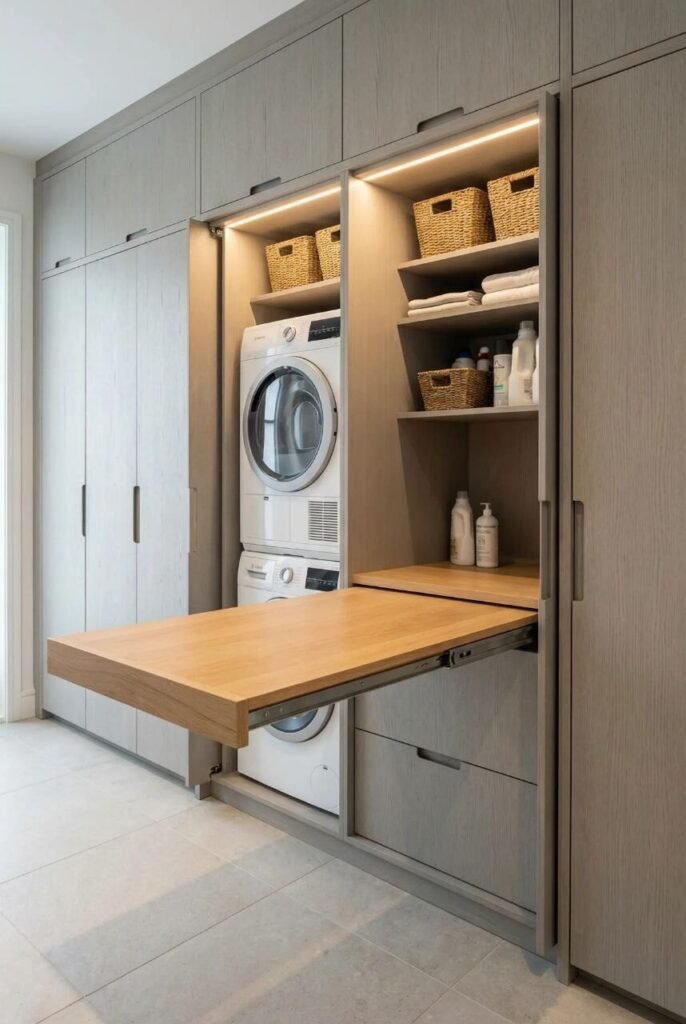
This laundry closet turns storage into architecture by using full-height cabinetry. The key design principle here is vertical continuity, which visually stretches the space and makes the closet feel intentional rather than added on. Tall cabinets hide visual clutter while reinforcing a clean, built-in look, perfect for modern or minimal homes.
The pull-out folding surface is a smart space-saving move, offering functionality only when needed. Appliances sit neatly within a cabinet grid, creating visual rhythm and balance. Soft interior lighting improves task visibility while adding warmth, preventing the space from feeling heavy or boxed in.
We love how the design transitions from closed storage to open shelving, allowing both concealment and accessibility. To recreate this look, align cabinet lines precisely and keep hardware consistent. Add warm wood accents to soften large surfaces. When storage is this intentional, the laundry closet feels less like utility and more like thoughtful interior design.
Design It Right, Laundry Stops Feeling Like Chores
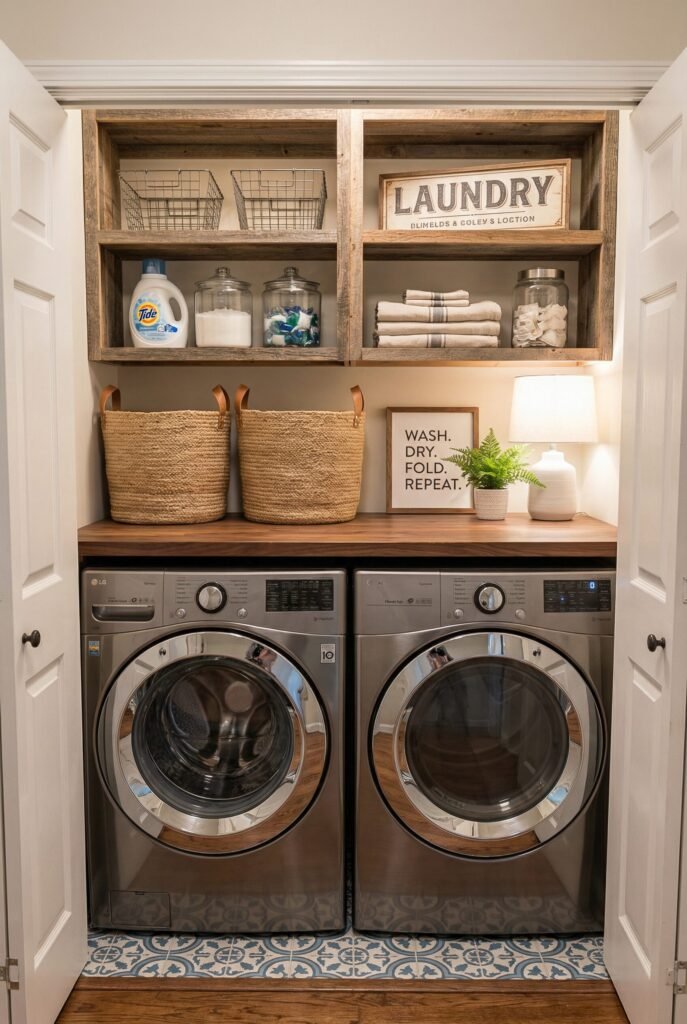
The best laundry closets succeed because they respect both function and emotion. When storage is logical and surfaces are easy to use, daily routines feel lighter and more controlled. Design isn’t about adding more, but about removing friction, visual noise, and unnecessary movement. From pull-out folding tables to integrated lighting and thoughtful door choices, every detail shapes how the space is experienced.
A good laundry closet blends into the home when closed and works efficiently when open. We see that vertical storage, consistent materials, and smart lighting can transform even the smallest footprint. Most importantly, these designs show that laundry doesn’t need a full room to feel intentional. With the right planning, a closet can deliver comfort, efficiency, and visual calm.
When utility spaces are designed with the same care as living areas, they stop feeling hidden and start feeling essential. That’s when laundry design quietly improves everyday life, one load at a time.