
The Design Ideas Behind Farmhouse Kitchens That Feel Truly Rustic

Rustic farmhouse kitchen ideas are not about chasing trends, they are about creating spaces that feel lived-in, grounded, and emotionally warm. This style works because it prioritizes texture over perfection and function over flash. Natural wood, stone, brick, and aged metals form a visual language that feels honest and timeless.
We’re not trying to impress guests with glossy finishes here, we’re inviting them to stay longer. The farmhouse kitchen thrives on balance, mixing rough surfaces with softer elements so the room feels cozy, not heavy. Design principles like material repetition, warm lighting, and generous proportions are what make rustic kitchens successful.
When done right, every surface tells a story, and every imperfection adds character. Rustic farmhouse kitchens succeed because they design for people, not photos. If your kitchen feels welcoming at any hour of the day, you’re already doing it right.
Exposed Beams, Brick, And Warm Wood Balance

This rustic farmhouse kitchen idea proves that structure can be decor when you let materials speak. Exposed wooden beams visually ground the ceiling, lowering perceived height and instantly making the space feel warmer and more human. Brick walls add texture variation, which is a core rustic principle because flat, perfect surfaces kill soul fast.
The creamy cabinetry acts as a visual buffer so the room doesn’t feel too heavy or medieval, and that balance is key. We love how the wood countertop repeats the beam tone, creating material rhythm that guides the eye naturally around the room. The farmhouse sink anchors the composition with a soft, nostalgic focal point while still being ultra functional.
If you want to recreate this look, focus on contrast, not clutter. Limit yourself to three main materials, wood, brick, and a light neutral, then repeat them intentionally. Rustic isn’t messy, it’s curated imperfection with a clear design hierarchy.
Moody Dark Cabinets With Hearth Centerpiece

This kitchen leans into rustic drama, and honestly, it works because the design principles are tight. Dark cabinetry absorbs light, which immediately creates intimacy, but the real hero is the fireplace acting as a visual and emotional anchor. Fire introduces movement and warmth, balancing the heaviness of dark wood and brick.
Open shelving above the hearth follows the principle of lived-in layering, displaying ceramics that soften hard architectural lines. The oversized island reinforces farmhouse proportions, because rustic kitchens thrive on scale that feels generous, not dainty. We also notice how lighting is kept warm and low, which prevents harsh reflections on dark surfaces.
If you want this look without feeling gloomy, remember this rule: dark works when texture is rich. Mix matte finishes, aged wood, and rough brick so light has places to land gently instead of bouncing aggressively.
Cast Iron Wall As Functional Art

This rustic farmhouse kitchen idea nails the concept of decor that earns its place. Hanging cast iron skillets isn’t just aesthetic, it’s practical storage turned into a statement wall. The reclaimed wood backdrop adds vertical texture, which visually stretches the space upward while grounding it in warmth.
White cabinetry frames the display so the black iron pops without overwhelming the room. This is a perfect example of contrast control, where light surfaces support dark accents instead of competing with them. The farmhouse sign below subtly reinforces theme without screaming it, which we fully support.
If you recreate this, keep spacing intentional because symmetry here prevents visual chaos. Rustic design thrives when repetition feels calm, not random. Use similar shapes, tones, and finishes so the wall reads curated rather than cluttered.
Butcher Block Sink Ledge Styling

This close-up proves that rustic farmhouse kitchens shine in the details. The thick butcher block counter introduces natural grain variation, which instantly softens the geometry of cabinetry. Pairing it with a farmhouse sink creates a tactile moment where function meets beauty.
Brass fixtures add warmth and age gracefully, aligning with the rustic principle of materials that look better over time. The herbs near the window are not just decor, they reinforce biophilic design, subtly connecting the kitchen to nature. We love how the edge of the counter feels imperfect, because those small irregularities sell authenticity.
If you’re recreating this look, focus on touchable materials. Rustic kitchens should feel good under your hands, not just look good in photos. Choose finishes that invite daily use, scratches included.
Copper Accents And Stone Texture Harmony

This kitchen uses stone walls to establish an earthy foundation, then layers warmth through copper cookware and wood surfaces. Stone provides visual weight, so open shelving keeps the room breathable and prevents it from feeling boxed in.
Copper introduces reflective warmth, which balances the matte textures of stone and wood beautifully. The farmhouse sink again anchors the space, acting as a nostalgic focal point without overpowering the layout. Notice how everything is kept within a tight color range, creams, browns, and soft metallics, which creates cohesion.
Rustic design works best when the palette is restrained. If you want this vibe, resist adding trendy colors. Let texture do the talking instead, because texture ages better than color trends ever will.
Soft Stone Walls With Light Cabinetry

This rustic farmhouse kitchen leans lighter but stays grounded through material choice. The stone wall brings historical character, while the soft neutral cabinets keep the space feeling open and modern.
This contrast is intentional and smart. Heavy textures live on the vertical plane, while smoother finishes dominate the base, preventing visual overload. Open shelves break up the stone and introduce functional styling moments.
We love how wood countertops tie everything together, acting as a warm bridge between stone and paint. If you’re recreating this, remember that rustic doesn’t have to mean dark. Light rustic kitchens work when textures are layered thoughtfully. Keep finishes matte and natural so the space feels calm, not clinical.
Woven Pendants And Reclaimed Wood Island

This rustic farmhouse kitchen nails atmosphere through lighting and proportion. The woven pendant lights introduce softness overhead, which balances the weight of stone walls and thick wood beams.
The island becomes a true centerpiece thanks to reclaimed wood, offering visual texture and practical storage below. Repetition of natural materials creates a cohesive story, from the shelves to the countertops. We love how the color palette stays grounded in neutrals, allowing texture to take center stage.
Good rustic design feels collected, not decorated. If you recreate this look, prioritize lighting that casts warm shadows. Rustic kitchens thrive on glow, not glare, so skip cool LEDs and embrace warmth.
Open Shelving With Aged Wood Cabinets

This kitchen embraces rustic honesty through visible wear and material authenticity. Aged wood cabinetry shows grain, knots, and imperfections, which instantly adds character.
Open shelving keeps the space visually light while showcasing everyday items as decor. Brick walls reinforce texture and history, grounding the room emotionally. The farmhouse sink remains the quiet hero, anchoring the composition and reinforcing function-first design. We appreciate how nothing feels overly polished, because rustic charm lives in restraint.
If you want this look, avoid high-gloss finishes. Choose materials that wear gracefully and tell a story over time.
Simple Farm Table Island With Storage
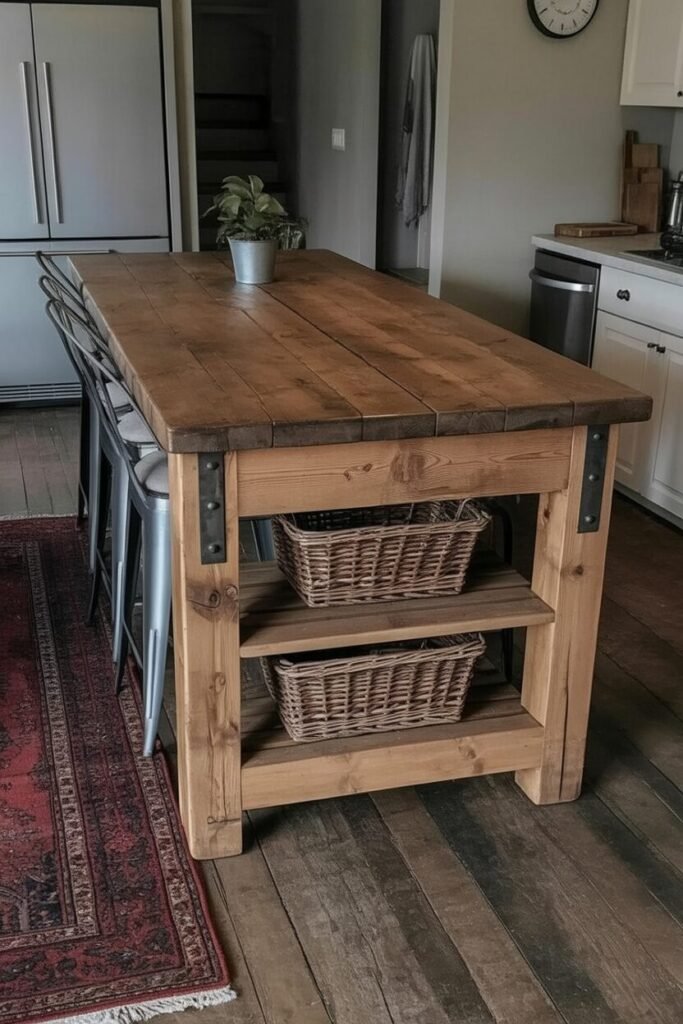
This rustic farmhouse kitchen idea proves that simplicity can still feel intentional. The farm table-style island introduces flexibility, making the kitchen feel less built-in and more lived-in.
Open shelving underneath keeps storage accessible and visually light. Wood tones dominate, but neutral surroundings prevent the space from feeling heavy. This layout supports the farmhouse principle of multi-functional furniture.
If you recreate this, prioritize scale. The island should feel substantial without blocking flow. Rustic kitchens should support movement and gathering, not just aesthetics.
Modern Rustic With Warm Wood Countertops

This kitchen blends rustic warmth with modern structure, and the balance is excellent. The clean cabinetry provides order, while the thick wood countertop introduces organic contrast.
Glass pendant lights soften the space and add visual rhythm above the island. Open shelving prevents the room from feeling too formal and keeps the farmhouse spirit alive. We love how the wood grain becomes the star, proving that rustic doesn’t require excess.
If you want this look, let one material shine and keep everything else supportive. Simplicity is the secret weapon of timeless rustic design.
Bringing Rustic Farmhouse Style Into Real Life Homes

A rustic farmhouse kitchen isn’t built overnight, and honestly, that’s the beauty of it. This style evolves through intentional choices, layered textures, and pieces that earn their place over time. We always recommend focusing on core elements first, natural materials, warm lighting, and practical layouts that support daily life.
Once those foundations are set, decor becomes effortless instead of forced. Open shelving, worn wood, and handmade accents work best when they feel collected, not staged. Rustic farmhouse design should grow with you, not feel finished on day one. Let your kitchen age, let it gather stories, and let it change naturally.
When form follows function and warmth leads every decision, your kitchen becomes more than a workspace. It becomes the heart of the home, exactly as rustic farmhouse kitchens are meant to be.