
Designing a Home Office That Doesn’t Drain Your Energy

A home office isn’t just a desk with Wi-Fi, it’s a system that quietly decides how focused, calm, or drained we feel every single day. The best home office setups work because they follow design principles, not trends. Light placement controls energy.
Material choices affect mood. Layout determines whether we flow or fidget. When we design intentionally, productivity becomes a side effect, not a struggle. A good setup balances function and personality so the space feels supportive instead of demanding. That’s why lighting layers matter more than decor overload, and why storage should reduce decisions, not add clutter.
We don’t need Pinterest perfection; we need clarity, comfort, and a setup that adapts to real workdays. Your home office should make focus feel natural, not forced. When design works quietly in the background, we stop fighting our environment and start working with it. That’s the difference between a space that looks good and one that actually works.
Warm Wood Minimalist Tech Desk

This home office setup proves that tech-heavy doesn’t have to feel cold or soulless. The design principle doing most of the work here is material balance. Warm wood surfaces soften the visual weight of large screens and hardware, while white cabinetry keeps everything from feeling visually crowded.
We also see horizontal layering, where shelves, desk, and monitor align in clean lines that calm the eye. That curved monitor isn’t just a flex, it supports ergonomic viewing angles, reducing neck strain during long work sessions. Lighting is another quiet hero.
The warm desk lamp and subtle backlighting create task lighting without glare, which is key for productivity and mood. Decor stays intentional: a single leather chair adds texture contrast, while minimal accessories prevent visual noise.
If you want to recreate this look, keep your palette tight, mix soft and structured materials, and remember this rule: your desk should feel supportive, not demanding. We design spaces to work with us, not stare us down while deadlines pile up.
Green Calm Modern Workspace
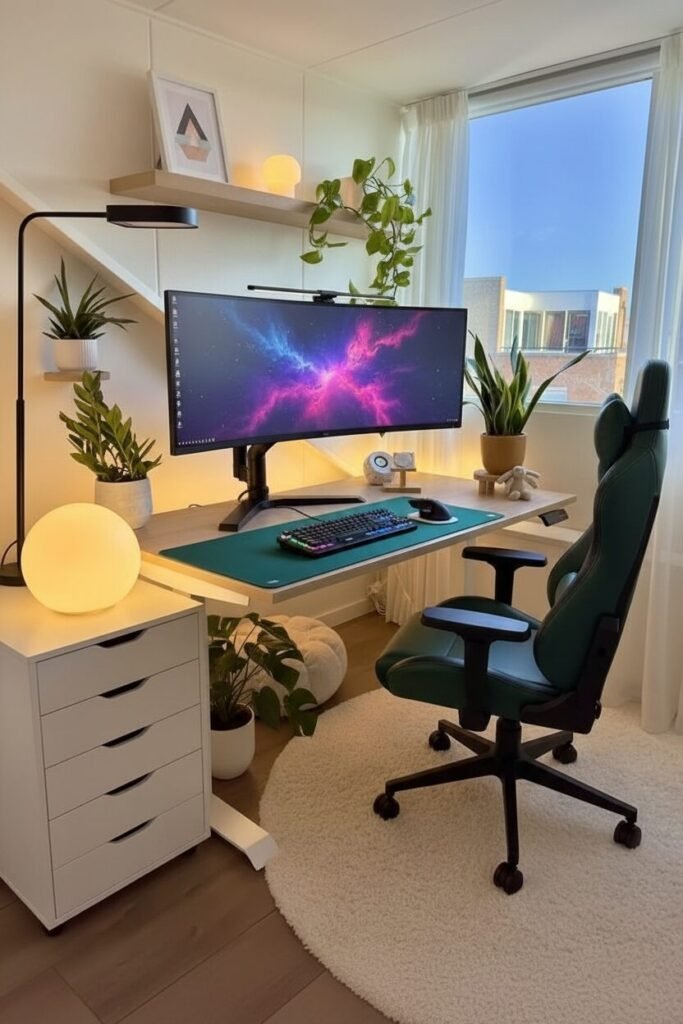
This setup nails the concept of biophilic design, which is just a fancy way of saying “plants make us better humans.” Natural light floods the room, bouncing off light wood and white surfaces to create high visual clarity, meaning your brain doesn’t feel overstimulated before your first coffee.
The green chair isn’t random; it anchors the color story and visually connects with the plants, creating color harmony. Notice how storage stays low and open, which keeps the space feeling breathable instead of boxed in. The desk placement near the window follows positive light orientation, reducing eye strain and boosting energy levels naturally.
Even the rounded rug softens the room by breaking rigid lines, a subtle but powerful decor principle. If you’re recreating this, don’t overdo the greenery. One strong plant cluster works better than many tiny distractions. We’re designing calm focus here, not a jungle documentary.
Cozy Boho Creative Nook

This home office leans into layered texture, which is why it feels cozy instead of cluttered. Woven baskets, rattan seating, wood surfaces, and soft textiles create depth without relying on bold colors. The wall shelving follows vertical zoning, separating work essentials from decor so your desk stays functional while the walls do the styling work.
Art placement matters here too. Framed prints at eye level establish visual grounding, keeping the space from feeling top-heavy. Plants trail naturally, adding movement that contrasts with the structured desk. This setup works because nothing is fighting for attention.
Everything belongs to the same relaxed rhythm. If you want to recreate this vibe, commit fully to natural materials and keep your color palette earthy and restrained. Cozy doesn’t mean messy; it means intentionally soft. We’re building a space that feels like a gentle hug, not a chaotic Pinterest board explosion.
Sophisticated Built-In Library Office

This is a masterclass in architectural anchoring. Built-in shelves frame the desk, making it feel permanent, intentional, and high-end. The symmetrical layout supports visual order, which subconsciously boosts focus and authority. Books aren’t just storage here; they create texture and rhythm, especially when styled in similar tones.
Lighting is layered perfectly, with overhead, shelf, and ambient sources working together to eliminate harsh shadows. The desk’s clean lines contrast with the plush ottoman, applying soft-versus-structured balance. Even the ceiling beams add depth, guiding the eye horizontally and reinforcing scale.
To recreate this look without custom millwork, mimic the symmetry with matching bookcases and warm lighting. A space that looks established makes you feel established. We’re not just designing an office; we’re designing confidence.
Moody Modern Executive Corner

This home office setup leans hard into controlled darkness, and that’s exactly why it feels powerful instead of depressing. The main design principle at play here is contrast management. Dark wood cabinetry and deep tones create visual intimacy, while warm LED lighting prevents the space from collapsing into a cave.
We see intentional zoning through the L-shaped desk, which supports workflow separation between deep-focus tasks and quick-access work. That’s not aesthetic fluff, that’s productivity strategy. The overhead ring light isn’t just dramatic, it provides even ambient illumination, eliminating harsh shadows that mess with your eyes after long hours.
Shelving is enclosed and curated, reducing visual noise and decision fatigue. If you want to recreate this look, lighting comes first, decor second. Mood without proper lighting is just darkness, and we don’t work well when we feel like Batman at 2 a.m. Design the atmosphere, then layer function into it. That’s how moody becomes magnetic, not miserable.
Airy Farmhouse-Inspired Office

This workspace proves that calm doesn’t mean boring, it means visually breathable. The key principle here is negative space, where empty areas are just as important as the filled ones. Light walls reflect natural daylight, making the room feel larger and mentally lighter.
The solid wood desk acts as a grounding anchor, preventing the space from floating away into “too soft” territory. Open shelving keeps storage accessible while also allowing styling to feel relaxed, not forced. Natural textures like woven baskets and soft textiles introduce warmth without visual clutter. Window placement supports circadian-friendly lighting, meaning your energy naturally shifts throughout the day without harsh artificial intervention.
To recreate this setup, focus on proportion. Large furniture paired with light colors feels intentional, not heavy. We’re designing a workspace that invites focus gently, not one that screams productivity like a motivational poster from 2012.
Modern Neutral Floating Desk
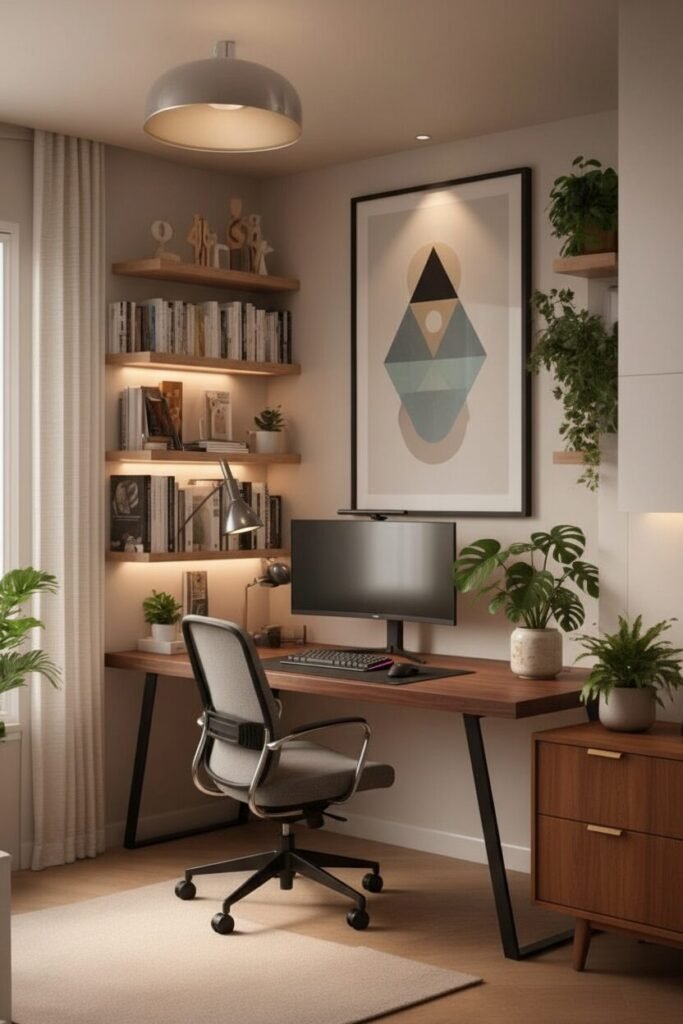
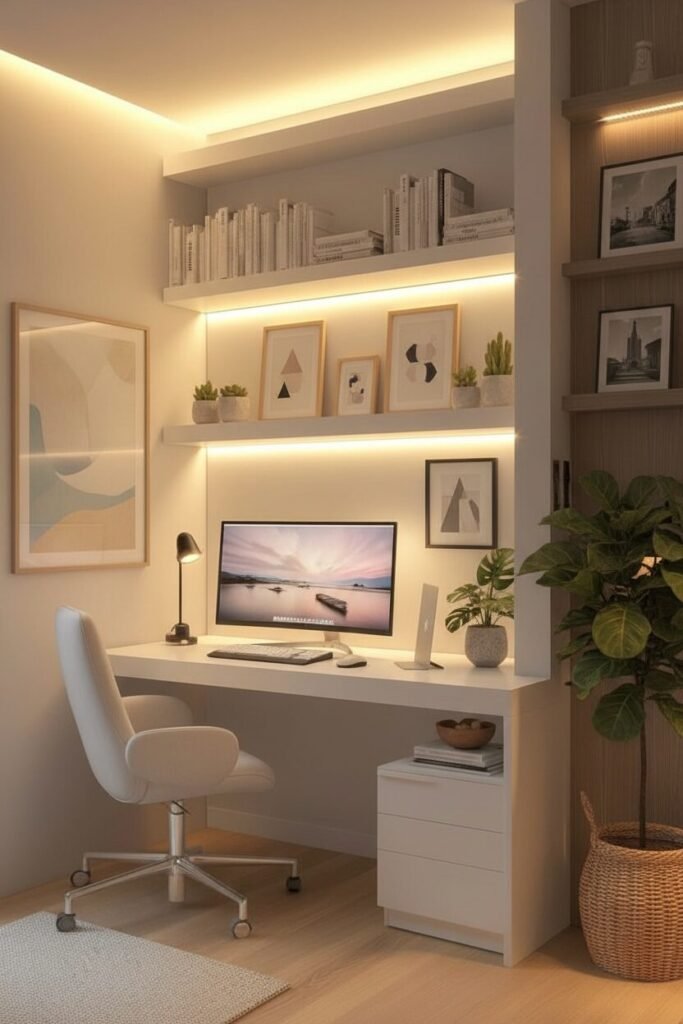
This setup looks effortless, but it’s actually doing a lot of heavy lifting through visual lightness. The floating desk illusion reduces perceived weight, making the room feel more open even if the square footage is limited. Built-in shelving creates vertical structure while keeping the floor visually clear, which supports spatial efficiency.
Warm LED strip lighting adds depth and dimension, preventing flat white surfaces from feeling sterile. Artwork follows consistent spacing and scale, which reinforces visual calm and cohesion. The curved chair balances the desk’s sharp geometry, applying soft-versus-structured contrast that keeps the space approachable.
If you want to recreate this look, restraint is non-negotiable. Minimalism only works when everything earns its place. We’re not removing personality, we’re refining it. When every object has intention, the room starts working for us instead of demanding attention.
Soft Contemporary Home Workspace
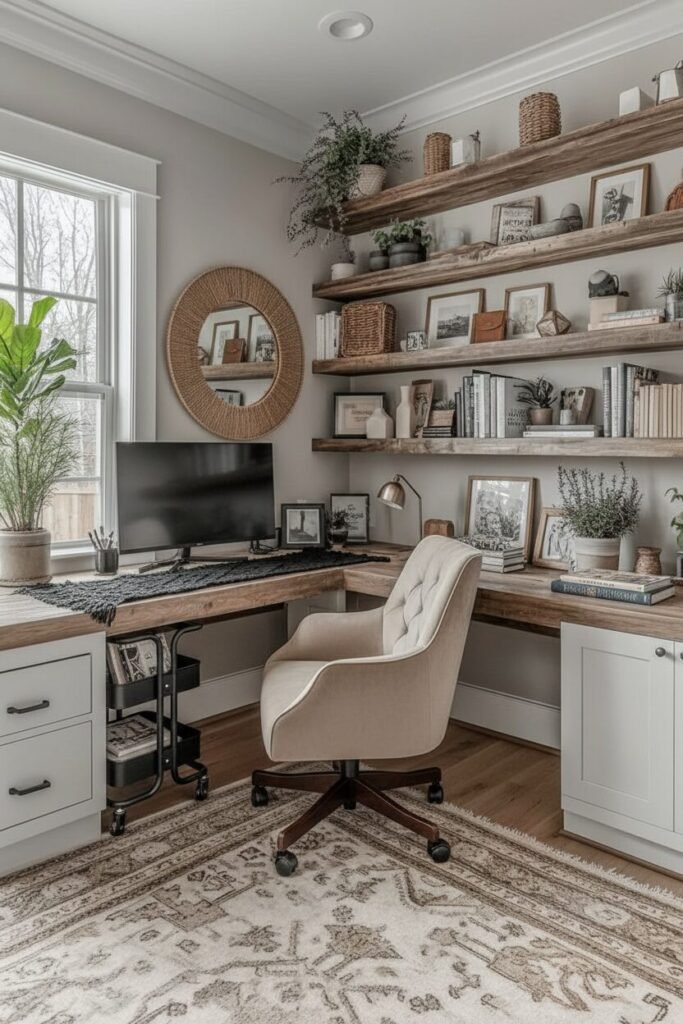
This office hits the sweet spot between comfort and clarity by embracing warm minimalism. Neutral tones reduce visual fatigue, while subtle wood accents prevent the space from feeling clinical. The shelving layout is asymmetrical but balanced, creating movement without chaos. Plants introduce organic contrast, softening straight lines and adding life to the composition.
Lighting is layered carefully, combining task, ambient, and accent sources to reduce eye strain during long sessions. Desk decor stays restrained, which supports cognitive focus by minimizing distractions. If you’re recreating this setup, consistency matters more than quantity.
Repeating one accent material throughout the room creates quiet cohesion. We’re not chasing trends here; we’re building a workspace that still feels good after month six, when the novelty wears off and the real work begins.
Rustic Farmhouse Corner Desk
This workspace succeeds because it tells a story, and that story is intentional imperfection. Weathered wood surfaces add character and authenticity, making the space feel lived-in rather than staged. The corner desk layout maximizes usable surface area while maintaining openness, a smart application of spatial efficiency.
Open shelving keeps essentials within reach and encourages thoughtful styling instead of overdecorating. The round mirror expands visual depth and bounces natural light, preventing the corner from feeling boxed in. Textiles and neutral tones soften the overall composition, creating balance between rustic charm and modern function.
To recreate this look, don’t over-polish. Farmhouse works best when it feels honest, not overly curated. We’re designing warmth that ages gracefully, not something that looks tired the moment trends shift.
Botanical Desk Sanctuary

This setup is a full embrace of biophilic design, where nature becomes an active part of the workspace instead of background decor. Plants surround the desk intentionally, creating a visual cocoon that reduces stress and boosts creative thinking.
Wood surfaces ground the greenery, preventing the space from feeling chaotic or overgrown. Neutral walls act as a calm backdrop, letting the plants do the talking without shouting. Lighting is layered to support both work tasks and plant health, which is an underrated but crucial detail.
Desk accessories stay minimal, ensuring the greenery remains the focal point. If you want to recreate this, plant scale matters. One confident plant makes a stronger impact than several awkward fillers. We’re designing a workspace that breathes with us, not one that competes for attention.
Build A Workspace That Grows With You

A strong home office setup isn’t static, it evolves with how we work, think, and create. What matters most is flexibility. Furniture should support posture, lighting should adapt to different tasks, and decor should inspire without distracting. As our routines shift, the space should respond, not resist.
That’s why modular layouts, layered lighting, and thoughtful material choices outperform trendy aesthetics every time. We design offices to reduce friction, not impress guests who never sit there. Comfort is a productivity tool, not a luxury. When the space feels aligned with us, work becomes smoother and less exhausting.
The goal isn’t to copy a look, but to understand the logic behind it so we can recreate what actually fits our lifestyle. A well-designed home office doesn’t just help us work better today, it supports how we’ll work tomorrow.