
Dining Nook Design Inspo That Looks Custom, Not Costly
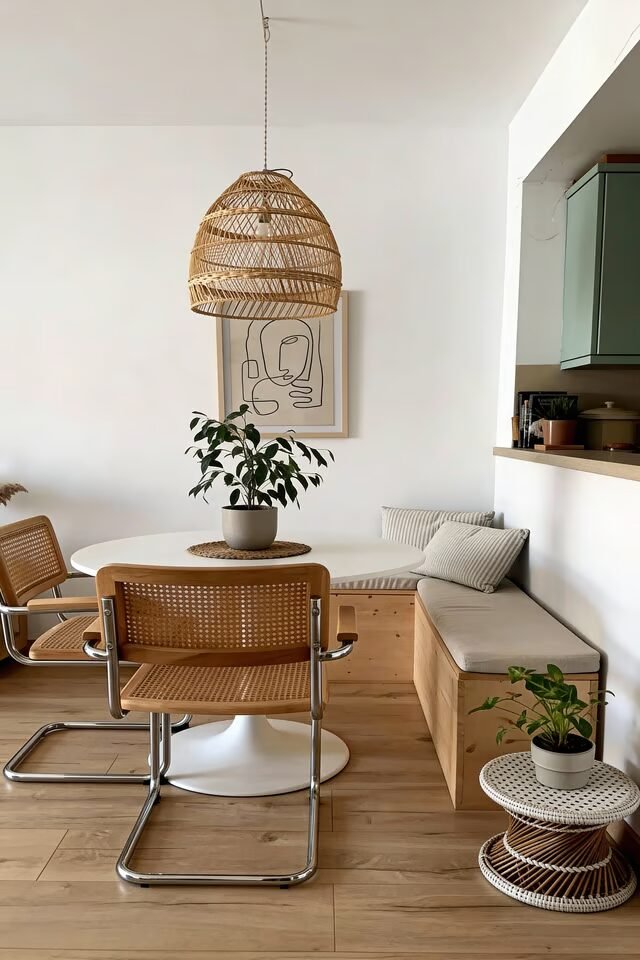
Dining nooks are proof that great design doesn’t need a huge footprint. They sit at the intersection of function, comfort, and personality, which is why they’ve become such a favorite for modern homes. A well-designed dining nook isn’t just about squeezing in a table; it’s about shaping an experience.
Built-in seating defines the zone and makes it feel intentional rather than leftover. Curves soften tight layouts, while straight lines bring structure and order. Material choices matter more here because everything is close-up and constantly used. Wood adds warmth, upholstery adds comfort, and lighting sets the mood faster than any decor piece.
We also love how dining nooks invite layering, from cushions to art to textures, without overwhelming the space. Good dining nooks balance coziness with clarity, so the area feels welcoming but never cluttered. When designed right, a nook becomes more than a place to eat. It becomes where mornings start slow, conversations last longer, and everyday life feels just a little more special.
Built-In Bench With Secret Storage
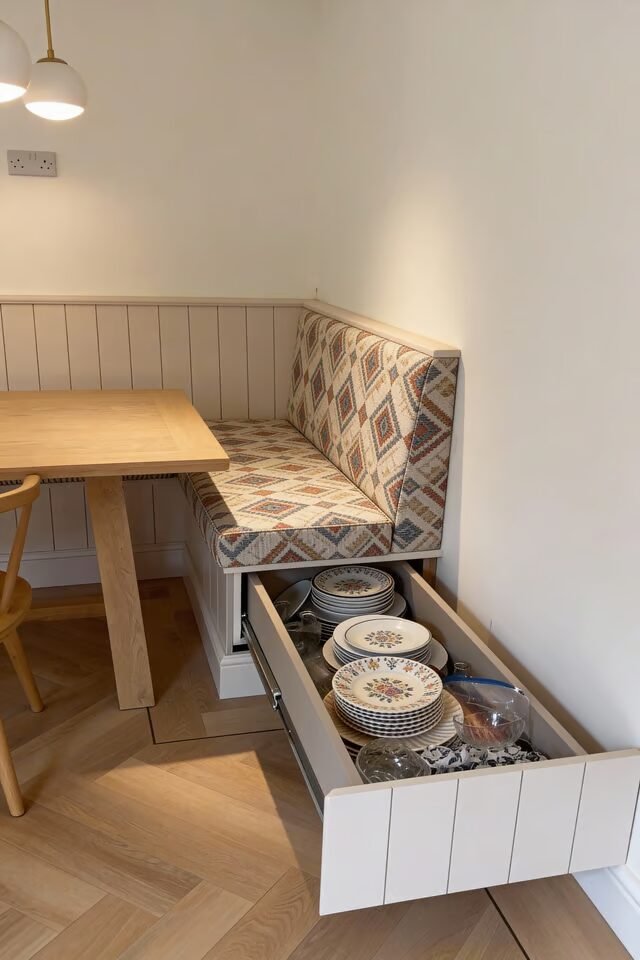
This dining nook proves that good design always works double duty. A built-in bench instantly defines the nook as a “destination,” not leftover space, which is a core spatial-design principle. The hidden drawer underneath is the real hero, though. Storage integrated into seating keeps visual clutter low, helping the room feel calmer and more intentional.
We love how the upholstery introduces pattern without overwhelming the space, because the palette stays soft and neutral. That balance follows the rule of controlled contrast: texture and pattern shine best when color stays quiet. When recreating this look, prioritize seat height and depth first, because comfort beats aesthetics every time. A too-shallow bench turns cozy dreams into back pain reality.
Use wall paneling to visually anchor the bench and make it feel custom, even on a budget. Built-ins trick the brain into seeing higher-end design, which is always a win. Bonus tip: warm lighting above keeps the nook feeling inviting, not cafeteria vibes, ever.
Warm Corner Nook With Open Shelves
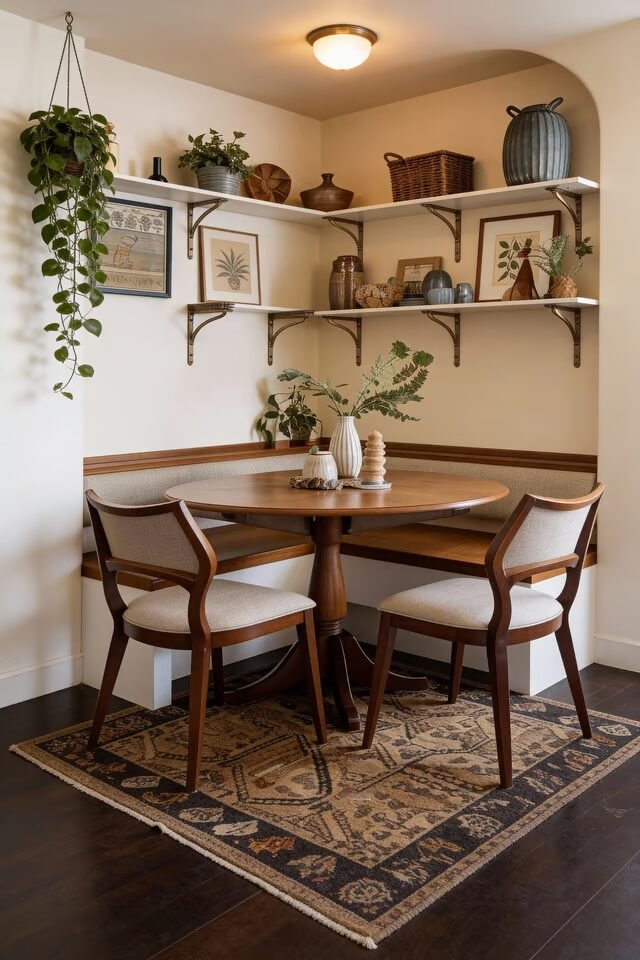
This setup nails the principle of layered vertical interest, which is huge for small dining nooks. Open shelves draw the eye upward, making the nook feel taller and more styled without adding bulk. The key here is restraint. Styling shelves isn’t about filling space; it’s about rhythm.
Notice the mix of plants, framed art, and earthy ceramics. That variety creates visual movement while staying cohesive through a warm, muted color palette. We also love how the round table softens the corner, because curved shapes counterbalance hard walls and tight angles.
That’s basic but powerful form psychology at work. To recreate this, keep shelf depth slim so the nook doesn’t feel crowded. Negative space is doing as much work as the decor itself. Finish it off with a rug to anchor everything and subtly separate the dining zone from the rest of the room, without building walls.
Sunlit Bay Window Dining Nook
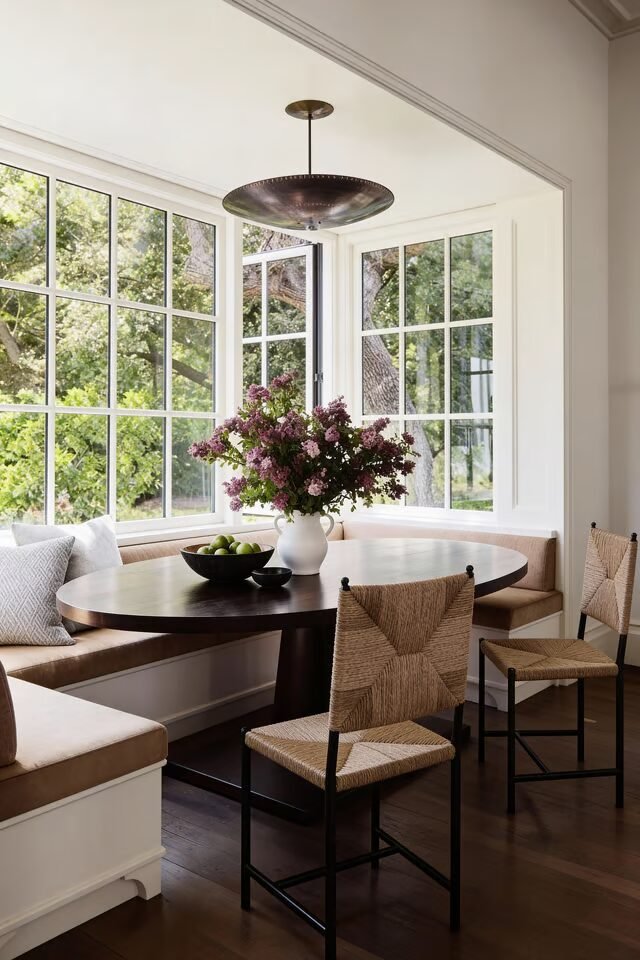
Natural light is doing heavy lifting here, and yes, that counts as a design strategy. A bay window nook works because it follows the principle of designing around existing architecture instead of fighting it. Built-in seating maximizes usable space while keeping sightlines open, which helps the room feel expansive.
The round pedestal table is a smart choice, too. No legs at the corners means easier movement and better flow, especially in tight zones. We love how neutral cushions allow the greenery outside to become part of the decor, basically free artwork from nature.
When recreating this look, prioritize symmetry. Matching cushions and consistent trim keep the nook feeling calm, not chaotic. Light-colored upholstery reflects daylight, making the space brighter all day long. Add a single statement pendant overhead to visually “claim” the nook and make it feel intentional, not accidental.
Elegant Nook With Upholstered Backrest
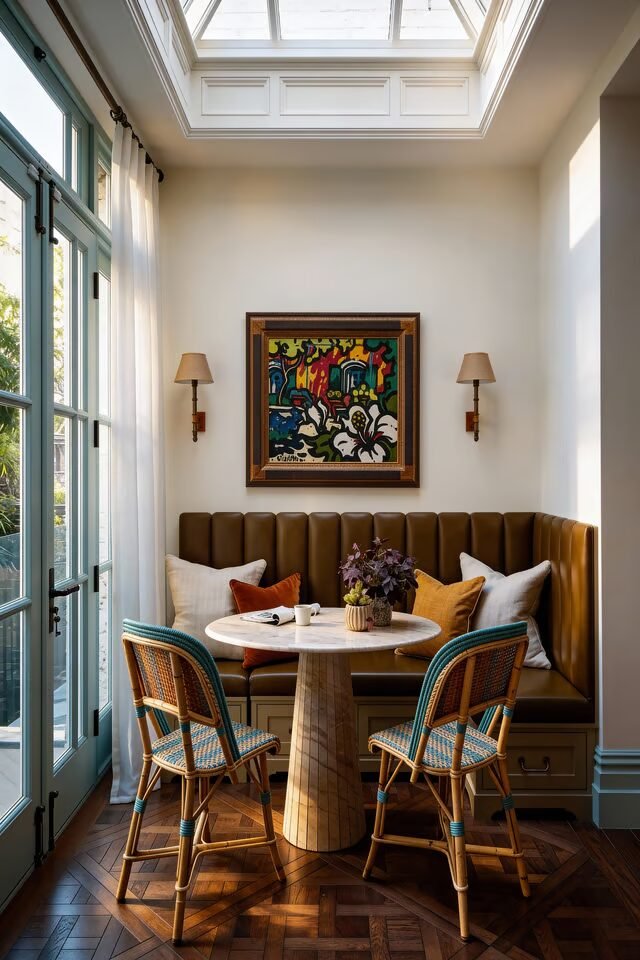
This dining nook leans into hotel-inspired comfort, and that’s not an accident. Upholstered backs instantly elevate the space, adding softness where hard surfaces usually dominate. From a design standpoint, this follows the principle of tactile contrast: leather against wood, smooth table against woven chairs.
That contrast creates depth without needing bold colors. We also love the centered artwork, which acts as a visual anchor and gives the nook a clear focal point. When recreating this, keep proportions tight. The bench height should align closely with the chair seat height to maintain visual harmony.
Consistency in scale is what makes a nook feel polished, not pieced together. A pedestal table keeps legroom generous and makes the space feel less cramped. Finish with warm accent pillows to soften the structure and make the nook feel like a place you’d actually linger, not just eat fast and leave.
Minimal Curved Nook With Soft Neutrals
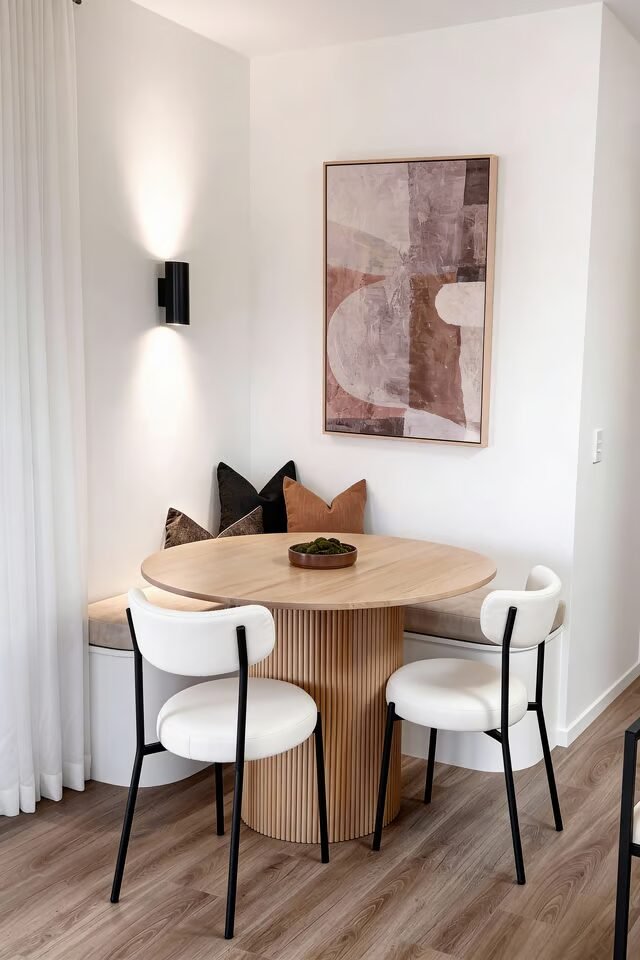
This nook is proof that minimal doesn’t mean boring. The curved banquette immediately softens the geometry of the room, which is a classic interior design trick for making compact spaces feel more inviting. Curves naturally guide movement and create a sense of flow, which is why this nook feels calm and intentional.
The neutral palette works because it’s layered, not flat. Light wood, creamy upholstery, and subtle wall art create depth through tone rather than color. We love how the fluted table base adds texture without visual noise. When recreating this idea, focus on material quality first.
Minimal spaces expose bad finishes fast. Texture replaces decoration in clean designs, so every surface matters. Keep accessories sparse and meaningful, and use warm lighting to avoid a sterile look. The result feels modern, cozy, and effortlessly grown-up, not showroom stiff.
Rustic Beam Ceiling Dining Nook
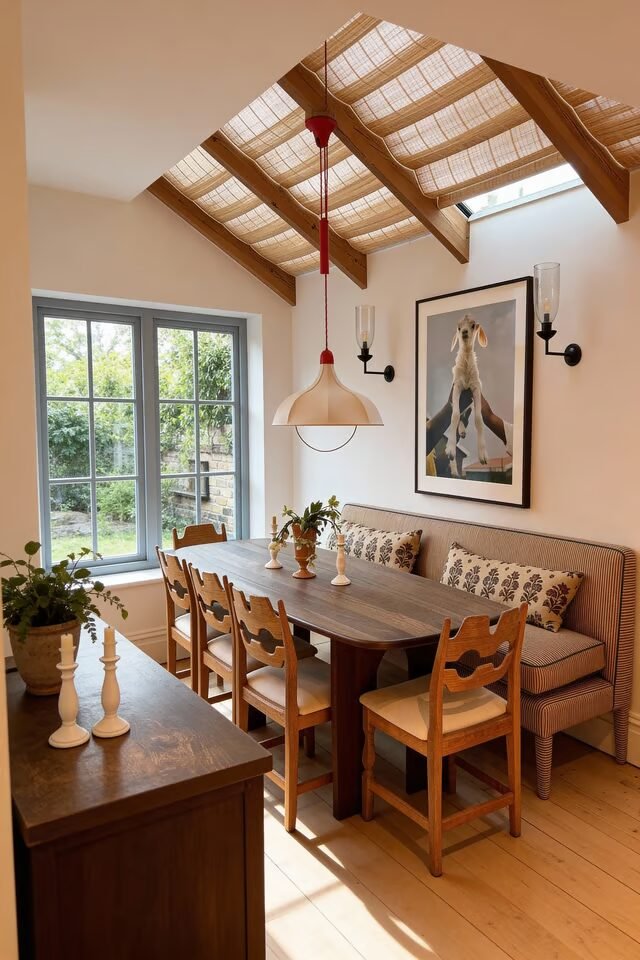
This dining nook proves that architecture is the first layer of decor, not an afterthought. Exposed beams instantly create warmth and visual rhythm overhead, which helps the space feel grounded and intentional. From a design perspective, this is about celebrating structure instead of hiding it.
The wood tones repeat across ceiling, table, and chairs, creating cohesion through material consistency. That repetition is why the room feels calm instead of busy. The upholstered bench softens all that wood and introduces comfort, following the balance principle of hard versus soft surfaces.
When recreating this look, pay attention to scale. A chunky table pairs better with substantial beams, while thin furniture would feel visually lost. Warm lighting is non-negotiable here, because it enhances the natural grain and avoids cabin vibes. Finish with simple art and minimal accessories so the architecture stays the star, not the background noise.
Classic Panelled Nook With Soft Seating
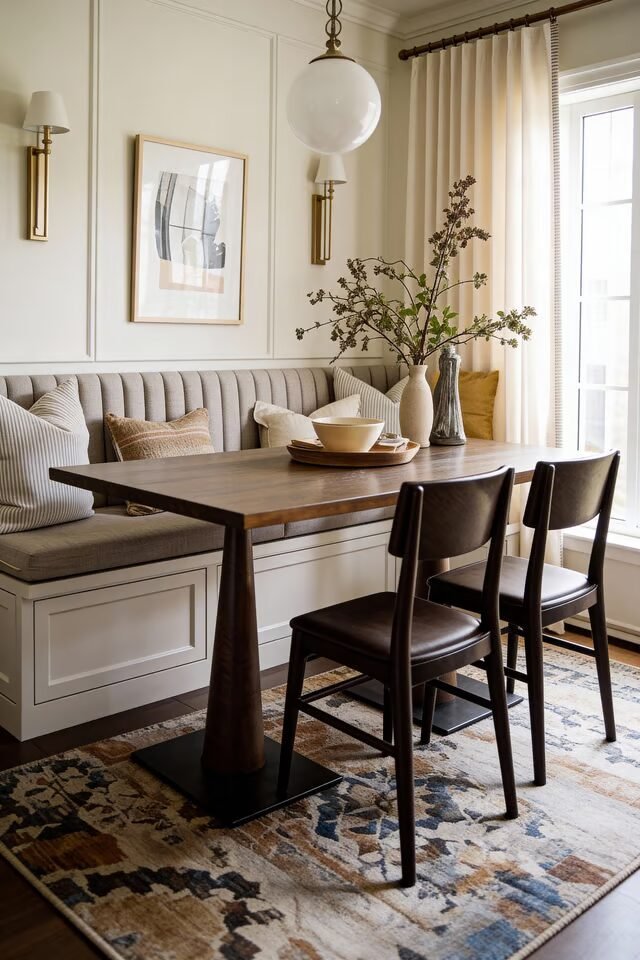
This nook is a masterclass in quiet luxury through proportion and detailing. Panelled walls add depth without loud pattern, which makes the space feel elevated and timeless. The built-in banquette keeps the footprint efficient while offering plush comfort, proving that practical can still be polished.
From a design principle standpoint, symmetry is doing a lot of work here. Even spacing, balanced cushions, and centered lighting create a sense of calm that feels instantly upscale. We also love how the table base stays slim, allowing visual breathing room under the surface.
When recreating this look, keep the color palette tight. Neutrals layered in different textures read richer than mixing too many shades. Trim and millwork are visual shortcuts to custom design, even in small spaces. Add a rug to ground the nook and soften acoustics, because cozy should also sound cozy.
Playful Vintage Nook With Pattern
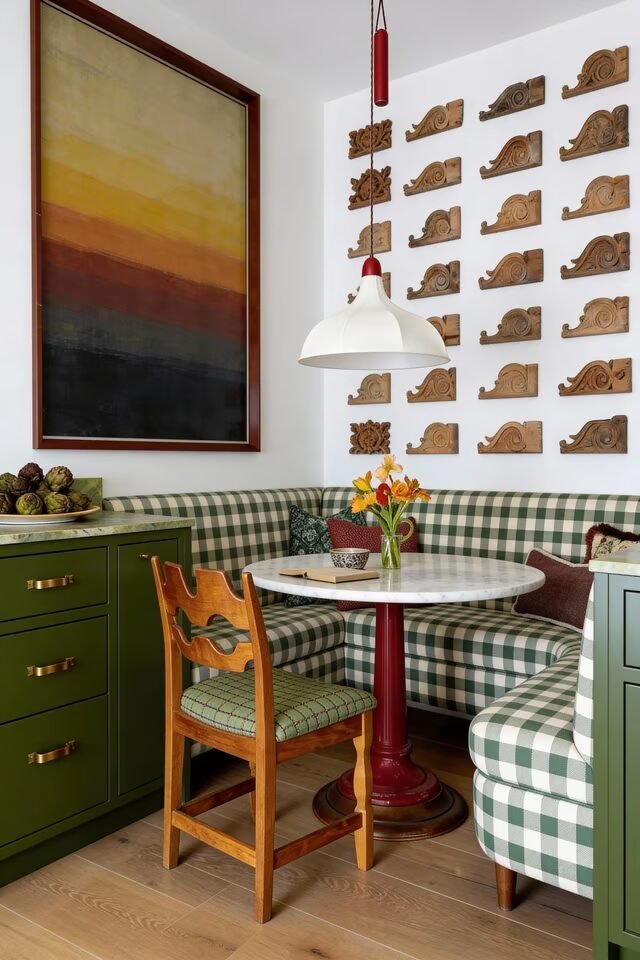
This dining nook leans all the way into personality, and honestly, we respect it. The bold checkered upholstery works because it’s anchored by classic shapes and a limited color palette. That’s the principle of controlled chaos in action. Pattern feels intentional when everything else stays consistent.
The curved seating creates intimacy, which is perfect for a nook meant for lingering, not rushing meals. We also love the gallery-style wall, because repetition of similar objects creates visual order, even when each piece is unique. When recreating this idea, choose one hero pattern and let it lead.
Too many competing patterns turn charm into clutter real fast. Balance boldness with grounding elements like wood floors and simple lighting. This approach keeps the space playful but grown-up, like vintage charm with modern boundaries, not a themed restaurant situation.
Casual Family Nook With Personality
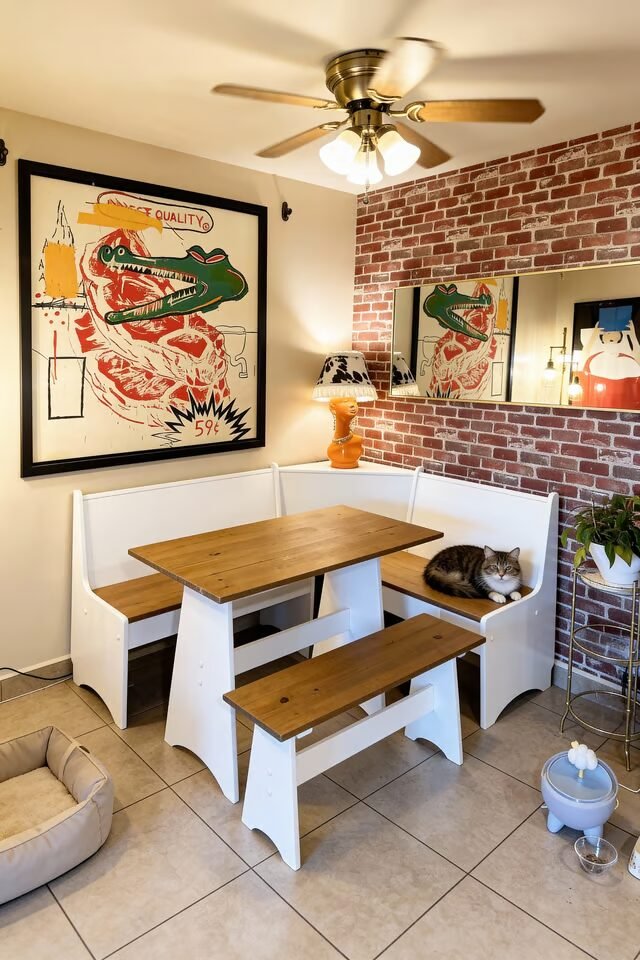
This nook proves that function-first design can still be fun. The bench seating maximizes capacity, making it ideal for families, pets, and everyday chaos. From a design standpoint, straight lines and simple forms keep the layout efficient, while art and texture bring personality.
The brick wall adds visual weight and texture, creating contrast against the clean white seating. That contrast is key to keeping the space from feeling flat. When recreating this, durability should guide your choices. Easy-clean finishes, sturdy tables, and wipeable surfaces matter more than perfection.
Design that survives real life always wins long-term. Layer in humor through artwork or accessories instead of structural elements, so the base stays timeless. Good lighting keeps the nook welcoming, and a mix of open and closed surfaces helps the space feel lived-in, not messy.
Modern Green Nook With Soft Curves
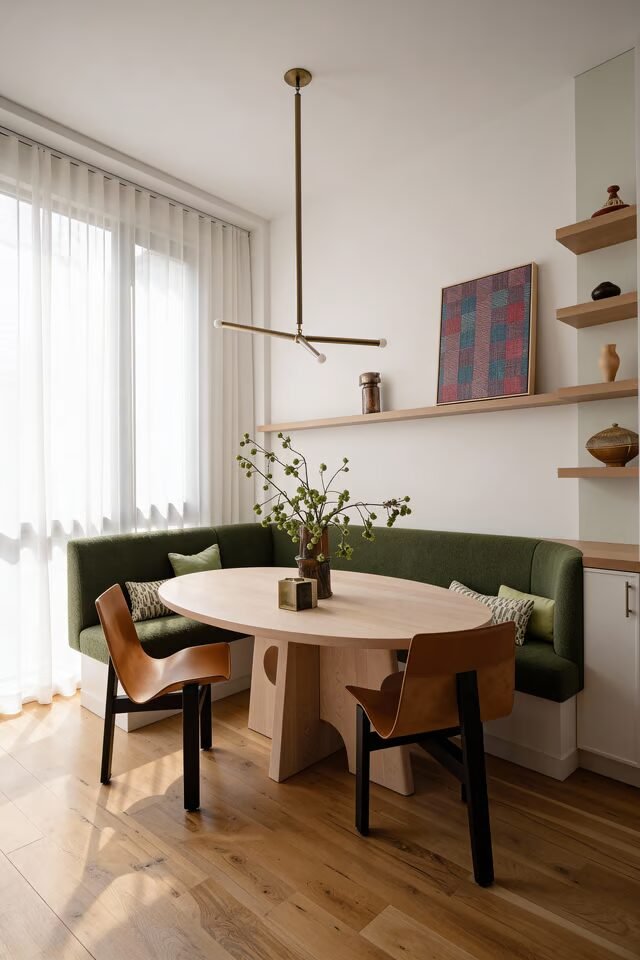
This dining nook is all about calm through color and shape. The curved banquette immediately softens the room, which helps create a relaxed, almost lounge-like vibe. Green upholstery works because it connects to nature while staying neutral enough for daily use.
From a design principle angle, this space nails balance. Rounded seating, a solid table base, and lightweight chairs keep visual weight evenly distributed. The floating shelves add function without overcrowding the walls, which is crucial in compact dining areas. When recreating this look, focus on transitions.
Curves should repeat at least twice, like in seating and table edges, to feel intentional. Consistency in form is what makes modern spaces feel thoughtful, not random. Finish with warm wood tones and soft lighting to prevent the palette from feeling too cool or sterile.
Designing Dining Nooks That Feel Effortlessly Intentional
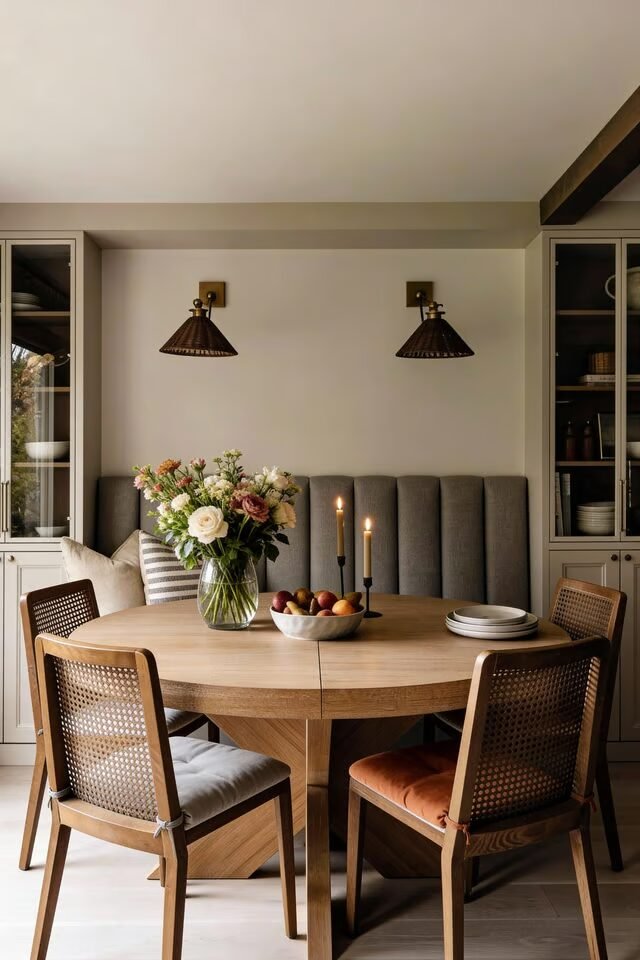
The best dining nooks don’t scream for attention, they quietly make sense. That’s because strong design principles are doing the work behind the scenes. Proportion keeps seating comfortable. Balance makes bold choices feel grounded. Repetition creates harmony between furniture, finishes, and architecture.
When recreating dining nook ideas, it’s tempting to copy the look without understanding the logic, but that’s where things fall apart. Instead, focus on why each element exists. Built-ins save space and anchor the layout. Pedestal tables improve flow. Soft materials counter hard surfaces. Intentional design always prioritizes how a space is used, not just how it looks. Lighting should define the nook, not flatten it.
Decor should support the mood, not compete with it. We believe dining nooks work best when they feel personal but restrained, cozy yet polished. Get the fundamentals right, and your dining nook won’t just look good in photos, it’ll actually work beautifully in real life.