
Deck Privacy Isn’t Just Practical It Quietly Shapes The Entire Vibe
We don’t always talk about it, but privacy is kind of the thing that makes a deck actually usable. Without it, you’re just… sitting outside with an audience you didn’t invite. And while fences technically solve that problem, they don’t always solve the vibe. That’s where design steps in and says, “we can do better.”
What we’re really after is that sweet spot between feeling tucked away and still connected to the outdoors. Good deck privacy isn’t about blocking everything—it’s about controlling what you see and how the space feels. That’s why layered greenery, patterned panels, and filtered light show up again and again. They soften boundaries instead of just building them.
As we’ve seen, the best setups don’t rely on one trick. They combine structure, texture, and lighting in a way that feels intentional but not overdone. Because let’s be honest, we’re not trying to build a fortress. We’re just trying to sip our coffee in peace… with a little aesthetic on the side.
Layered Planter Walls That Feel Alive
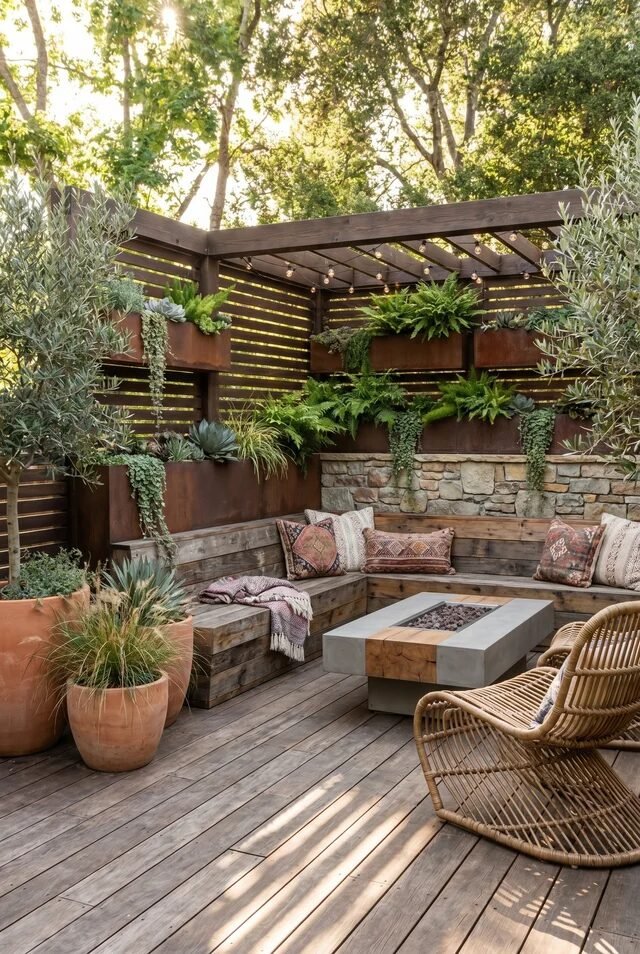
There’s something quietly luxurious about turning your privacy wall into a living, breathing moment. Instead of treating the fence like a barrier, this setup softens it with layered planters that almost spill into the space. The mix of structured wood slats and slightly unruly greenery hits that sweet spot between polished and effortless. It’s giving “we have our life together,” but like… in a chill way.
From a design perspective, this works because of vertical layering and depth. The horizontal slats create rhythm, while the staggered planters break repetition just enough to keep things interesting. The real magic is contrast—clean lines paired with organic, slightly wild foliage. It keeps the space from feeling too rigid or overly designed.
If we’re recreating this, go for tiered metal or wood planters and mix textures—ferns, trailing vines, maybe a little succulent moment. Keep the color palette grounded so the greenery can shine. And please, don’t over-style it. Let it feel a little imperfect. That’s the whole point.
Lattice Screens With Climbing Greenery
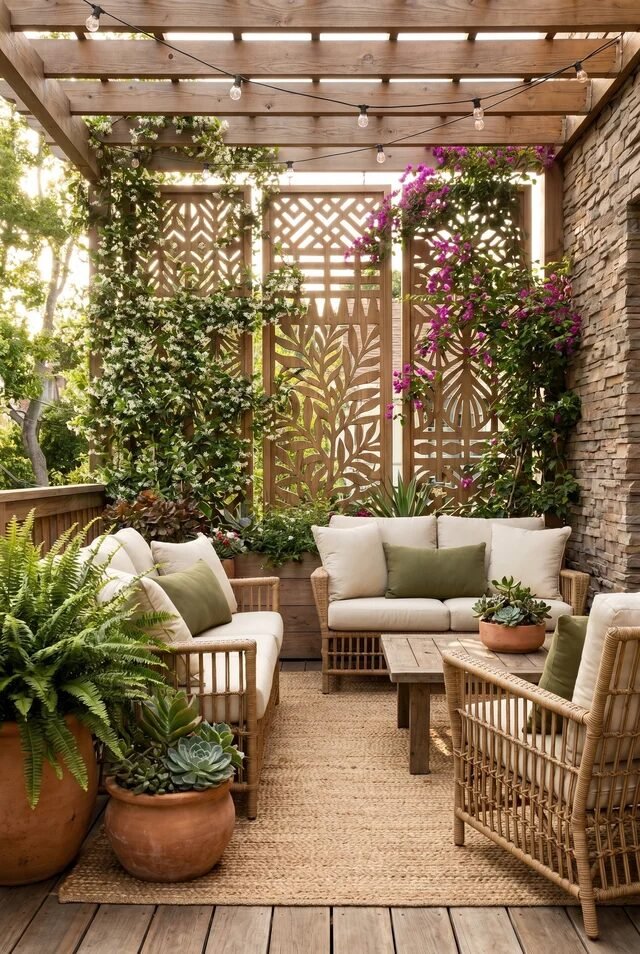
Okay, this is where privacy meets “rom-com garden energy,” and honestly, we’re not mad about it. Lattice panels already soften a space visually, but once you add climbing plants? It becomes a whole vibe. The filtered light, the shadows, the soft greenery—it’s low-key dreamy without trying too hard.
Design-wise, this setup leans heavily on permeability. The lattice lets light and air pass through, which keeps the deck from feeling boxed in. That semi-transparent privacy is key—it protects your space without killing the openness. Add climbing florals, and suddenly you’ve introduced vertical movement that draws the eye upward (aka, instant height illusion).
To pull this off, choose fast-growing climbers like jasmine or bougainvillea if you want that lush look sooner rather than later. Keep your furniture neutral so the greenery stays the main character. And give the plants time—this is not an overnight glow-up, but when it hits? Worth it.
Decorative Panels That Double As Art
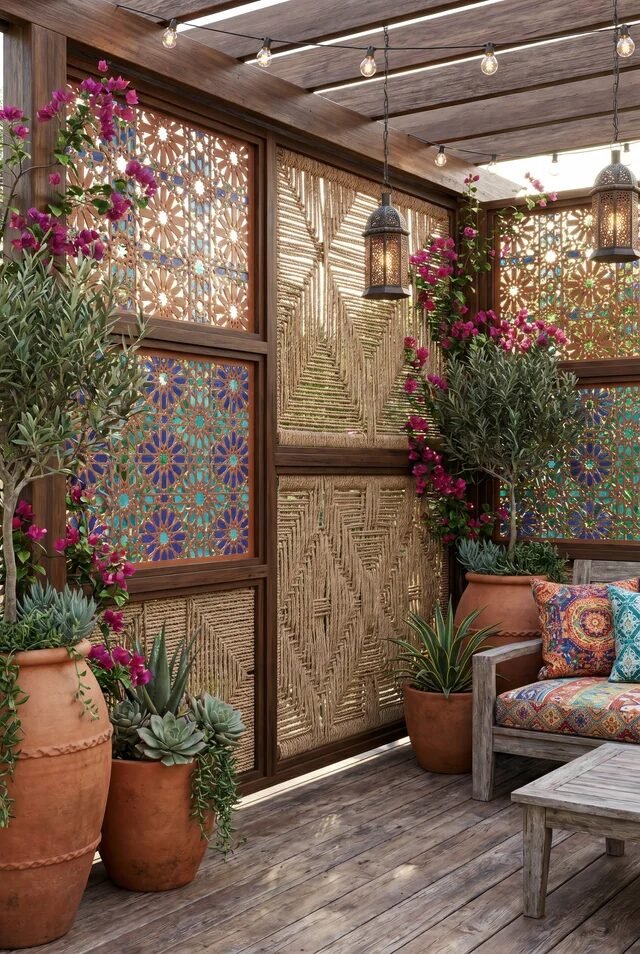
Now this… this is for when we want privacy but also want to be a little extra about it. Decorative panels turn your deck wall into a statement piece, not just a background player. The intricate patterns instantly elevate the space, and suddenly your outdoor area feels curated, not accidental.
The design principle doing the heavy lifting here is visual layering. You’ve got the patterned screen, then the shadows it casts, then whatever texture sits behind it. It’s depth on depth, which makes even a small deck feel way more dynamic. Plus, the geometric patterns bring structure that balances out the softness of plants and textiles.
If we’re recreating this, pick panels with a pattern that matches your vibe—more organic for boho, more geometric for modern. Backlighting is a game-changer here, especially at night. And don’t overcrowd the space. The panels are already doing a lot, so let them have their main character moment.
Pergola Slats With Built-In Warm Glow
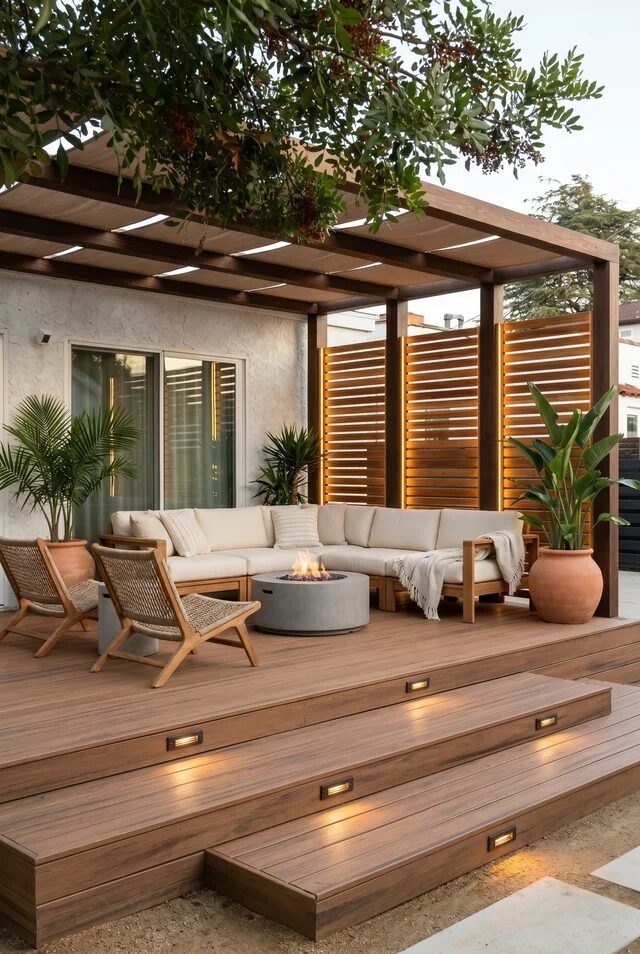
This setup is basically the outdoor equivalent of good lighting in a restaurant. You don’t fully notice it at first, but it makes everything look better. The pergola slats create partial coverage, while integrated lighting adds warmth that feels intentional, not like an afterthought.
What’s happening design-wise is a mix of overhead zoning and directional light. The slats guide your eye across the space, while the glow from behind the panels adds depth and softness. Lighting here isn’t just functional—it’s shaping the entire mood of the deck. And honestly, that’s what takes it from “nice” to “we’re staying out here all night.”
To recreate, focus on warm LED strips or subtle recessed lighting behind slats. Keep your furniture low-profile so the architecture can shine. And if you’re adding plants, go for structured ones to match the clean lines. It’s minimal, but in that expensive-looking way.
Statement Privacy Walls With Personality
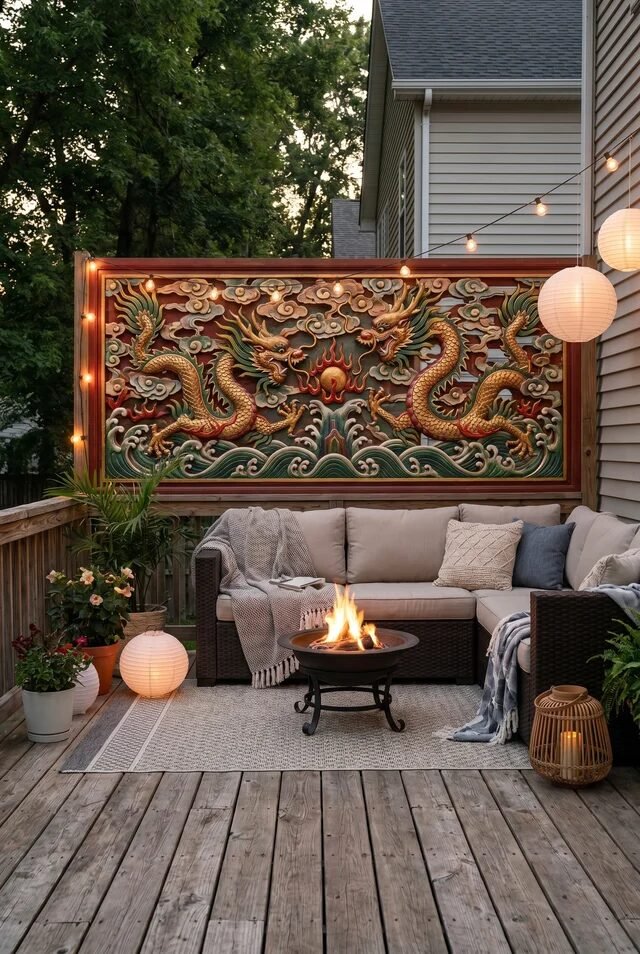
And then… there’s this. A privacy wall that said, “why be subtle when we can be iconic?” This kind of bold panel instantly becomes the focal point, and everything else just supports it. It’s not for the faint of heart, but when done right, it’s unforgettable.
The key principle here is focal dominance. Instead of blending the wall into the background, you’re making it the star. Everything else—furniture, lighting, even color palette—needs to play slightly quieter to let the statement piece breathe. That balance is what keeps it from tipping into chaos.
If we’re trying this, pick one strong visual element—carved wood, mural, sculptural panel—and commit. Keep the surrounding tones neutral and layer in soft lighting to highlight the texture. And maybe don’t add five other bold things. One is enough. We’re going for curated, not chaotic Pinterest board energy.
Laser Cut Panels With Soft Shadows
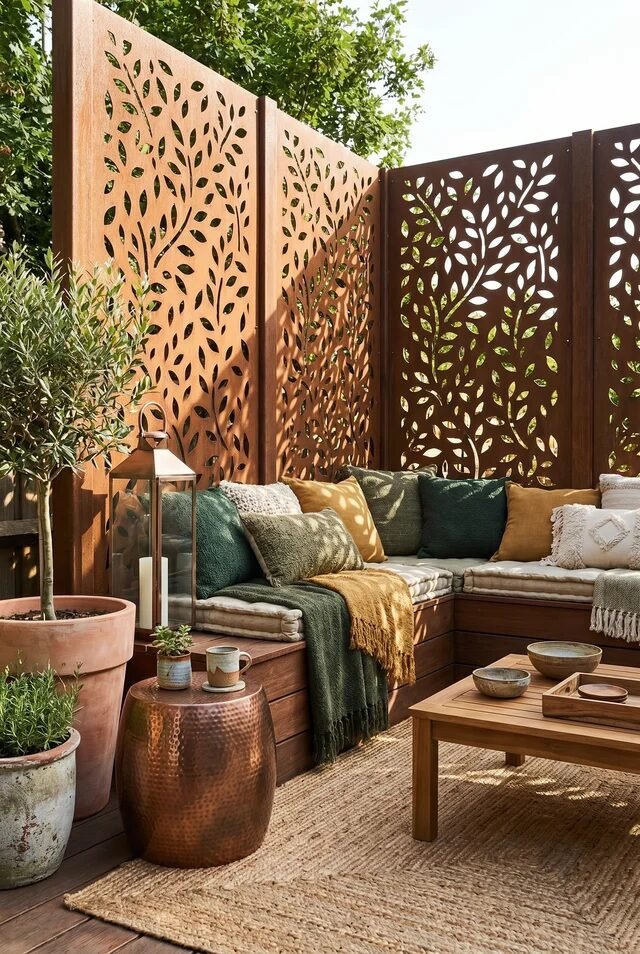
This is one of those designs that quietly flexes without screaming for attention. Laser-cut panels give you privacy, but they also play with light in a way that feels… kind of magical? The leaf patterns cast shadows throughout the day, so your deck is basically changing moods like it has its own personality.
From a design standpoint, this works because of pattern repetition and light diffusion. The cutouts soften harsh sunlight while still letting it pass through. That balance between solid and open space is what keeps it from feeling heavy or boxed in. Plus, the organic pattern makes everything feel a little more relaxed and less “constructed.”
If we’re recreating this, go for powder-coated metal or weathered steel panels for durability. Keep your cushions and textiles in earthy tones so everything feels cohesive. And let the shadows do their thing—no need to over-layer decor here. She’s already doing enough.
Chevron Wood Fences With Green Walls
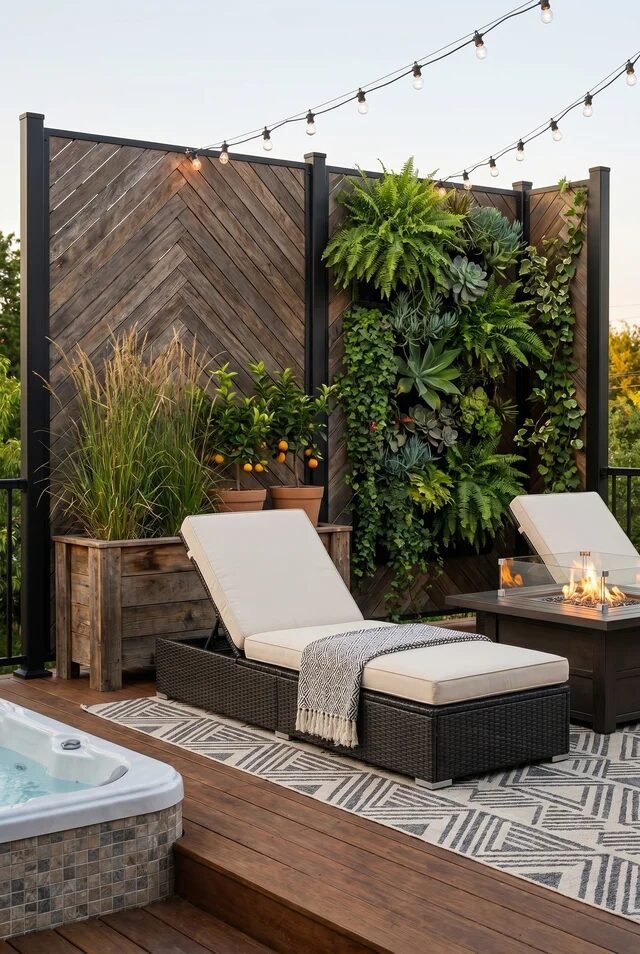
We love a design that multitasks. This one gives you full privacy with the chevron wood panels, then casually adds a vertical garden like it’s no big deal. It’s structured, but not stiff. Clean, but still alive. Basically, the kind of balance we all want but rarely achieve.
The chevron pattern introduces movement, which is key when you’re working with large solid surfaces. Without it, the fence could feel flat. That directional pattern guides the eye upward and outward, making the space feel bigger than it actually is. The greenery softens the geometry, so it doesn’t feel too sharp or aggressive.
If you’re trying this, keep the wood tones consistent and frame them with darker posts for contrast. Add a modular vertical garden system so you can switch plants out seasonally (because commitment is hard, we get it). And don’t skip lighting—it makes the textures pop at night.
Geometric Slat Walls With Built-In Planters
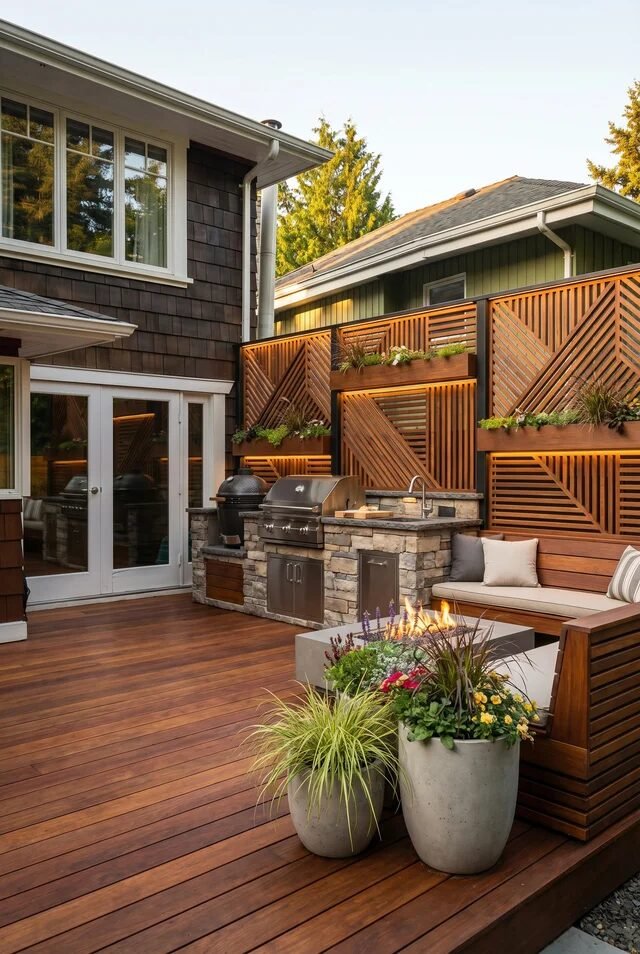
Okay, this one feels a little more elevated, like your deck suddenly decided to get into architecture. The mix of horizontal, vertical, and diagonal slats creates a layered look that feels intentional, not random. Add built-in planters, and now it’s giving designer energy without trying too hard.
What’s happening here is controlled asymmetry. The different slat directions break predictability, which keeps your eye moving across the wall. That variation creates visual interest without needing bold colors or extra decor. The built-in planters anchor everything, so it doesn’t feel chaotic.
To recreate, plan your layout first—this is not a “wing it and hope for the best” situation. Stick to a limited color palette, ideally warm woods and neutral tones. And choose plants with different heights and textures to echo the wall’s structure. It’s a little extra work, but the payoff? Chef’s kiss.
Pergola Privacy Screens Under String Lights
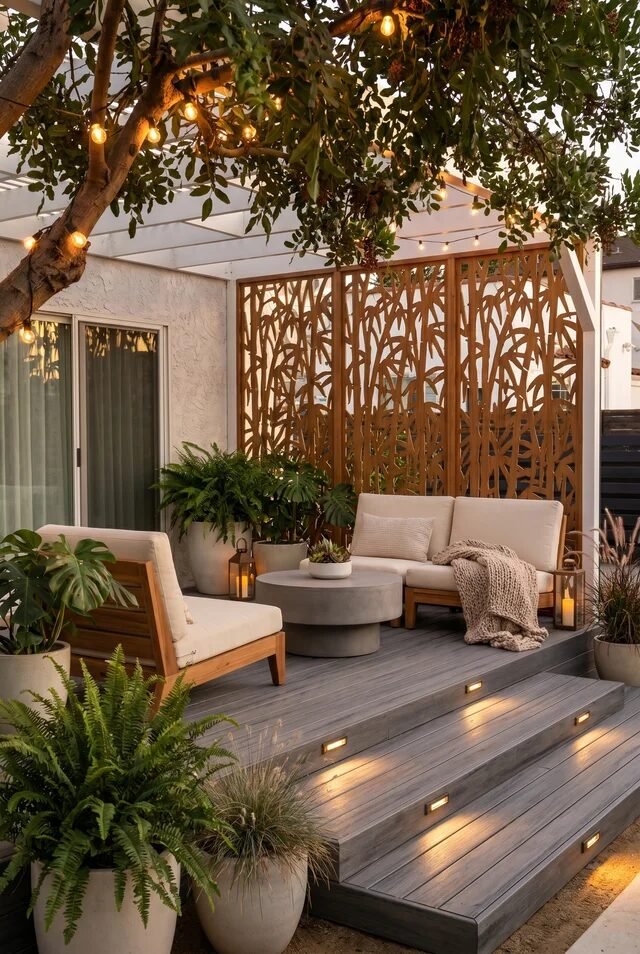
This setup is basically the outdoor equivalent of soft-filter lighting. Between the pergola structure, partial privacy screens, and string lights overhead, everything feels warm, cozy, and just a little bit romantic. Like… accidentally hosting a Pinterest-worthy evening.
The design principle here is layering zones. The pergola defines the ceiling, the screens define the edges, and the lighting ties it all together. It creates a sense of enclosure without fully closing the space off. That’s what makes it feel intimate but still breathable.
If we’re recreating this, focus on warm lighting—nothing too bright or clinical. Keep your furniture low and cozy, with soft textiles that invite people to stay longer than planned. And if you can, position it near greenery so the whole setup feels tucked away. Main character energy, but chill.
Patterned Screens With Cozy Lounge Styling
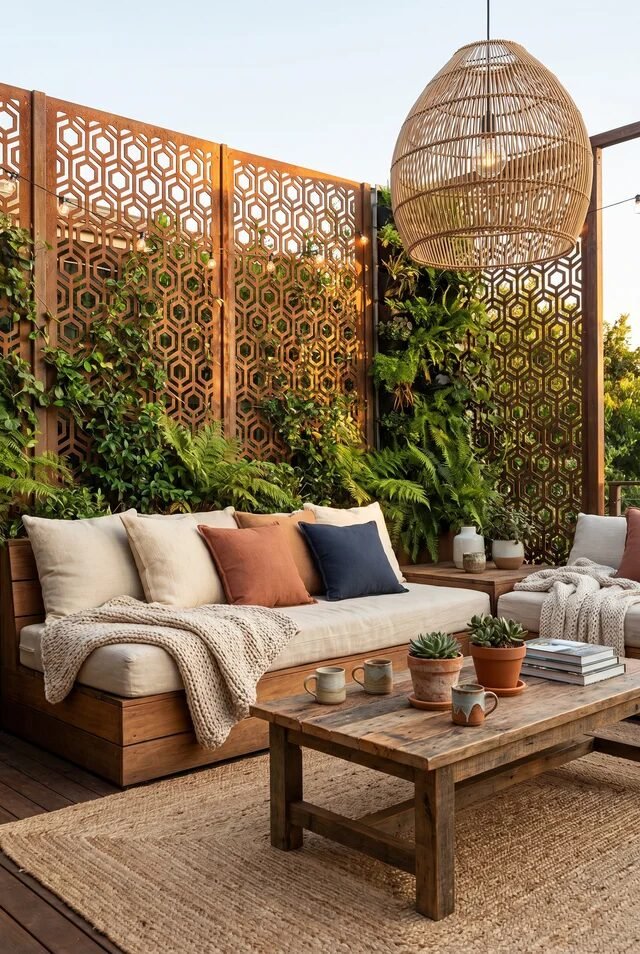
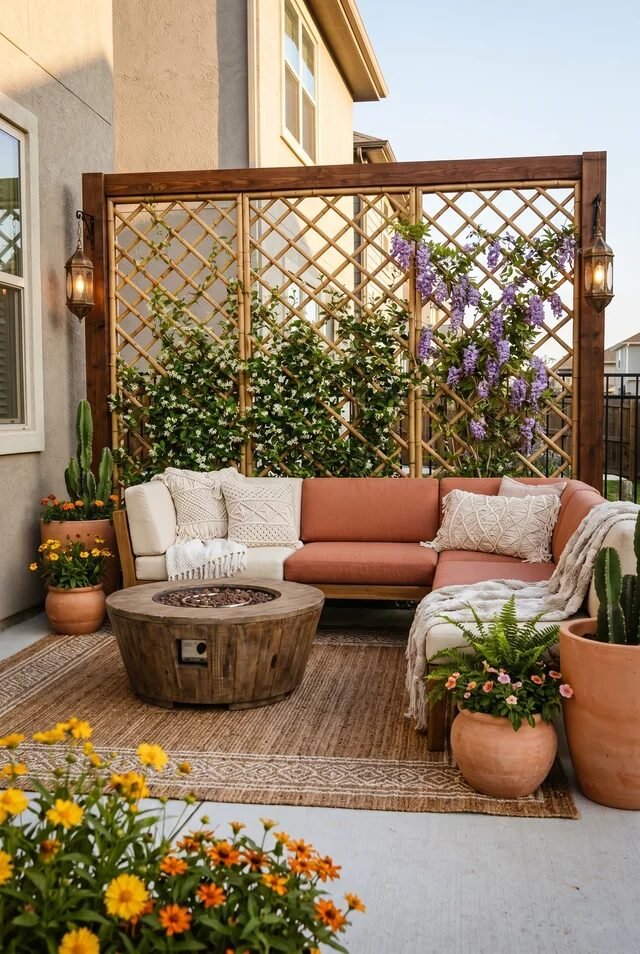
This one is giving “we accidentally spent six hours outside” energy. Patterned screens add privacy, but paired with soft seating, layered rugs, and warm lighting, it turns into a full-on outdoor living room. It’s relaxed, but still styled enough to feel intentional.
The magic here is in the layering of textures. You’ve got wood, woven rugs, soft cushions, and greenery all working together. That mix creates depth and comfort, which is what makes a space feel truly inviting—not just pretty. The patterned screens add structure so it doesn’t feel too soft or undefined.
To recreate, start with a neutral base—think beige cushions, wood tones, natural fibers. Then layer in a few accent colors through pillows or throws. Keep your lighting warm and low, and don’t forget plants. Honestly, the goal is simple: make it somewhere you’d cancel plans for.
Designing Deck Privacy That Actually Feels Good
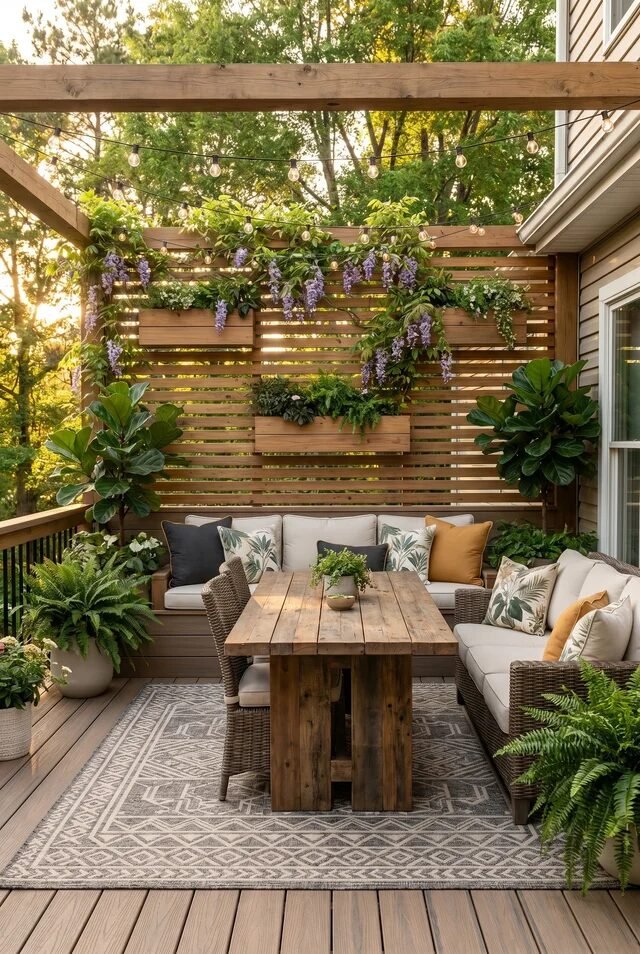
At this point, we’ve probably realized something slightly inconvenient: privacy alone isn’t enough. A tall wall might block your neighbors, sure, but if it feels heavy or awkward, we’re not exactly rushing outside to enjoy it. The goal isn’t just coverage—it’s comfort.
What makes these ideas work is how they layer function with feeling. You’ve got panels that double as art, greenery that softens structure, and lighting that quietly changes everything after sunset. When privacy elements also contribute to mood, that’s when a deck starts to feel like an extension of your home—not just an add-on. And yes, we love that for us.
If we’re pulling one takeaway from all this, it’s to think beyond “just a fence.” Mix materials, play with light, let plants do their thing. And maybe trust your instincts a little more than the rules. Because the best outdoor spaces? They feel personal, slightly imperfect, and very lived-in—in the best way.