
Why Tartan Might Be the Only Christmas Pattern Your Home Actually Needs
Every December the same five decorating moves get recycled across every feed: garland on the mantel, a tree that looks like everyone else’s tree, a wreath from the same three suppliers. Tartan is the one pattern that keeps a room from blending into that pile. It carries history, strong graphic lines that read from across a space, and a color story already built from red, green, navy, and gold.
What separates a home that pulls this off from one that tosses a plaid blanket somewhere is restraint. The rooms that do it well aren’t drowning in pattern. One or two tartan pieces anchor a space full of leather, brass, pine, and candlelight, so the plaid reads as structure, not noise.
We pulled together spaces that use tartan in genuinely different ways, from full dining rooms to a single ribbon on a porch column, so you can see how far one pattern stretches without repeating itself.
A Table Setting With Real Backbone
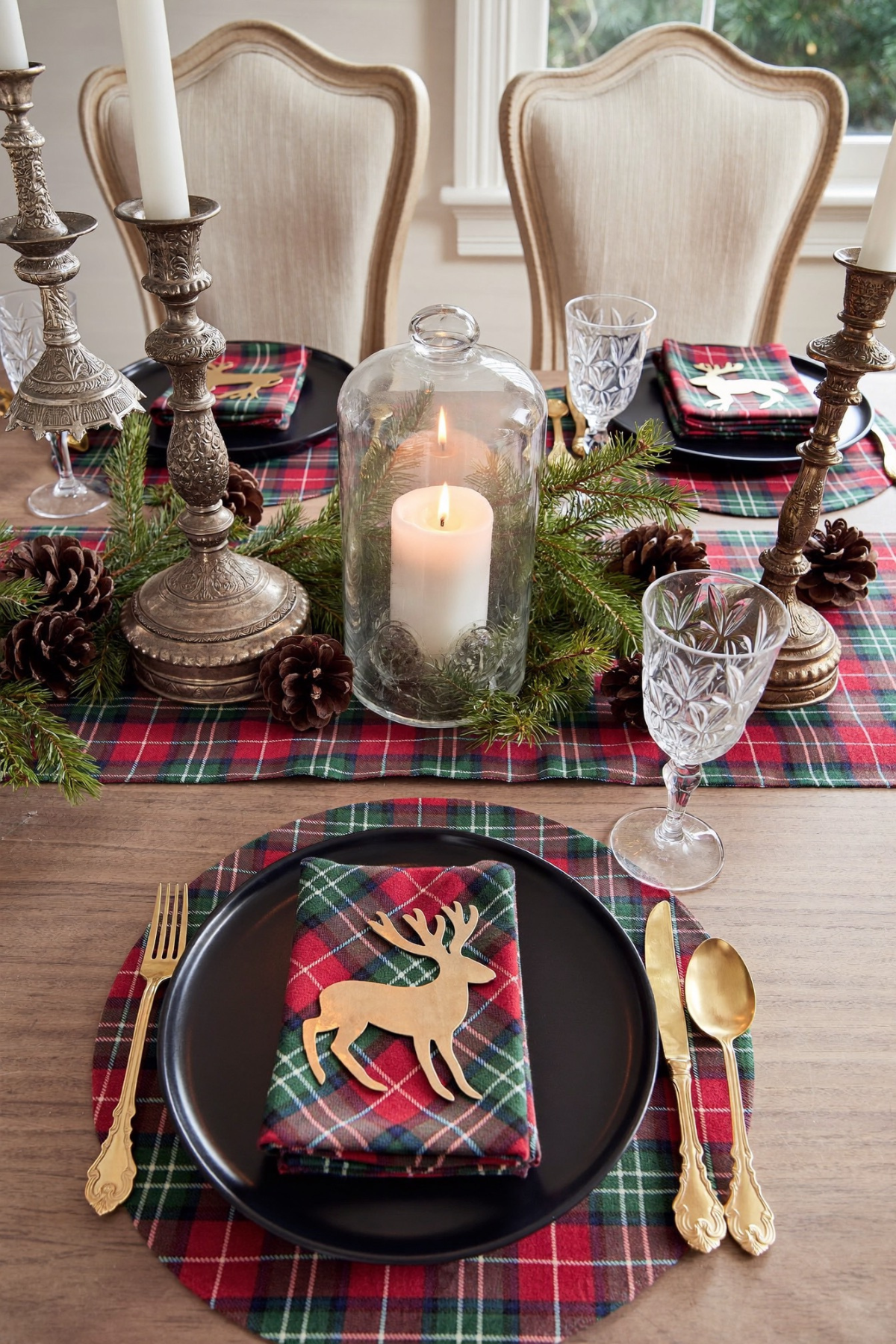
Black chargers are doing more work at this table than almost anything else on it. Plaid gets busy fast, and a dark, matte base plate gives your eye somewhere to land before it moves on to the folded napkin and the little brass reindeer standing guard over dinner. Without that pause, the whole setting would read as one loud blur.
Layering is the real lesson here, not the plaid itself. The placemat, the napkin, and the table runner all share the same tartan, but they’re not competing because they’re doing one job together instead of three separate ones. A pair of ornate antique candlesticks and a glass cloche over a pillar candle add height without adding a second pattern to compete with the first.
One fabric, repeated at a few different scales, reads as put-together instead of thrown together at the last minute. If you’re building this at home, buy more of the same tartan than you think you need, and spend your remaining budget on metal and greenery instead of a second print.
Antlers, Copper, and a Deep Wall
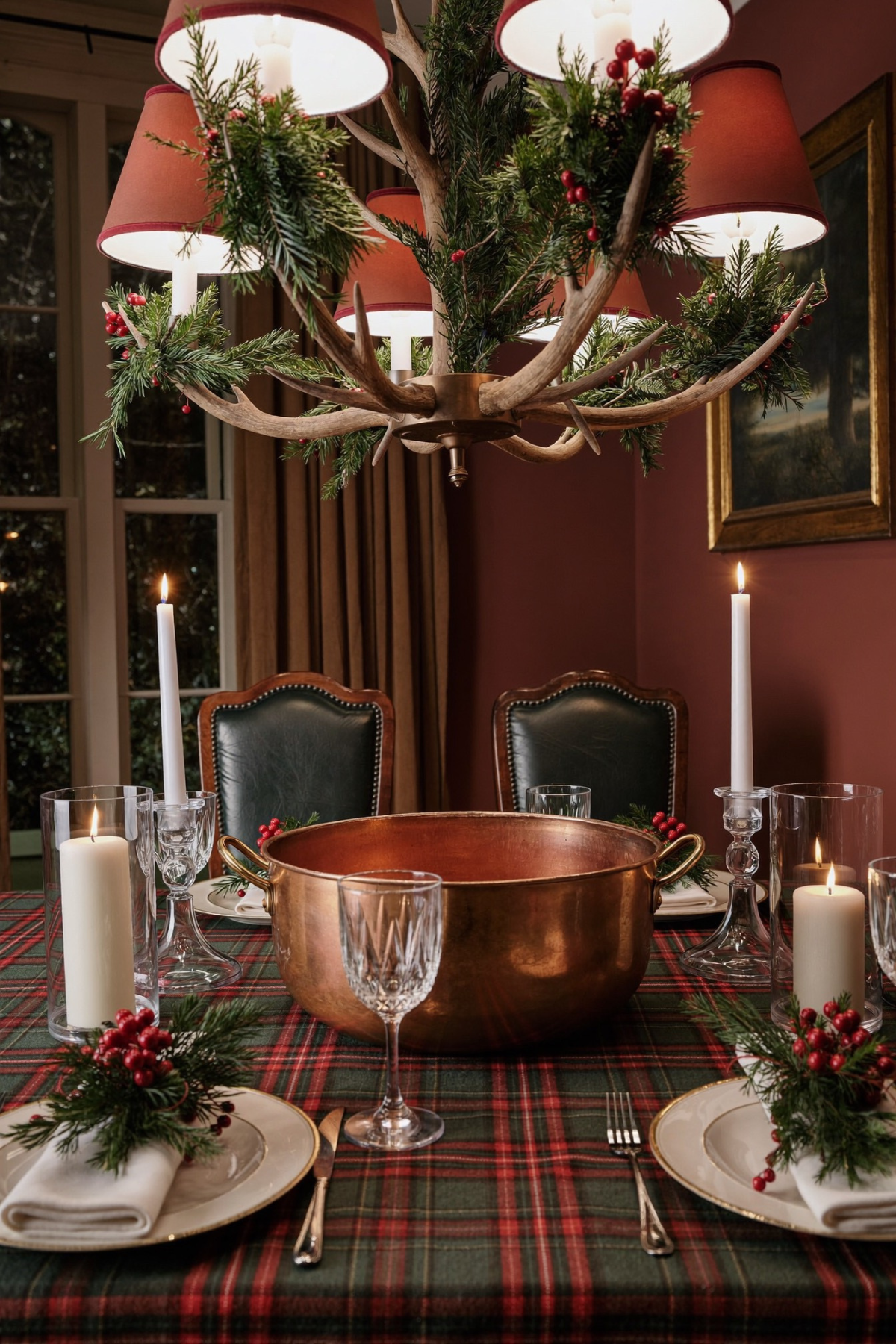
A rust-colored wall does something a lot of Christmas rooms skip entirely: it lets red and green settle down instead of fighting for attention. Against that backdrop, an antler chandelier wrapped in pine and berries feels less like a hunting-lodge cliche and more like the room’s natural centerpiece, especially once the red lampshades pick up the candlelight below.
The copper vessel in the middle of the table is doing quiet work too. Instead of a floral centerpiece that has to be maintained all night, a single oversized metal bowl holds its shape and its shine, and it gives the eye a resting spot between the tartan tablecloth and all those glowing tapers.
Green leather dining chairs are the detail people miss when they try to copy this look. Swapping in one unexpected material, like leather seating instead of upholstered fabric, keeps a heavily patterned room from feeling like a themed party. Skip the copper if you don’t own it, but keep something metal and substantial in the center.
A Kitchen Island That Announces Itself
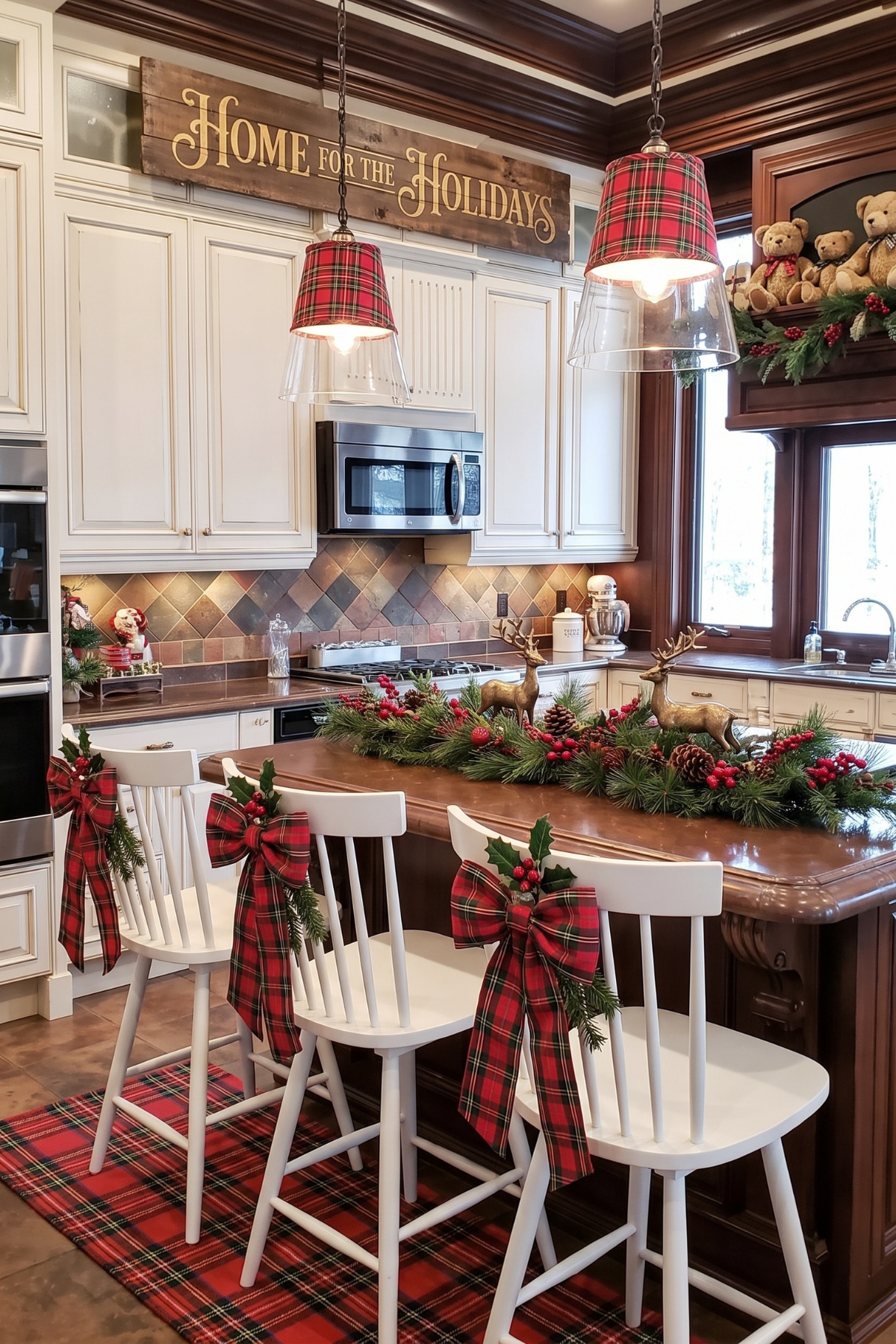
Hang a sign that says something and people will actually read it. That wood plank reading Home for the Holidays above this island is doing half the emotional labor of the whole kitchen, and it means the rest of the decorating can stay fairly simple by comparison.
The tartan pendant lampshades are the unexpected move. Swapping a plain shade for a plaid one over an island is a small change with an outsized payoff, since it’s visible from every angle of an open kitchen and doesn’t require touching the cabinets or countertops at all. Brass reindeer figurines and a low garland of berries down the center of the island keep the surface from feeling bare.
A tartan bow tied to the back of a plain white chair turns a stool into a decoration without anyone having to buy new furniture. Add a matching runner underfoot and the whole kitchen feels dressed without a single wall being touched.
A Staircase That Pulls You Upward
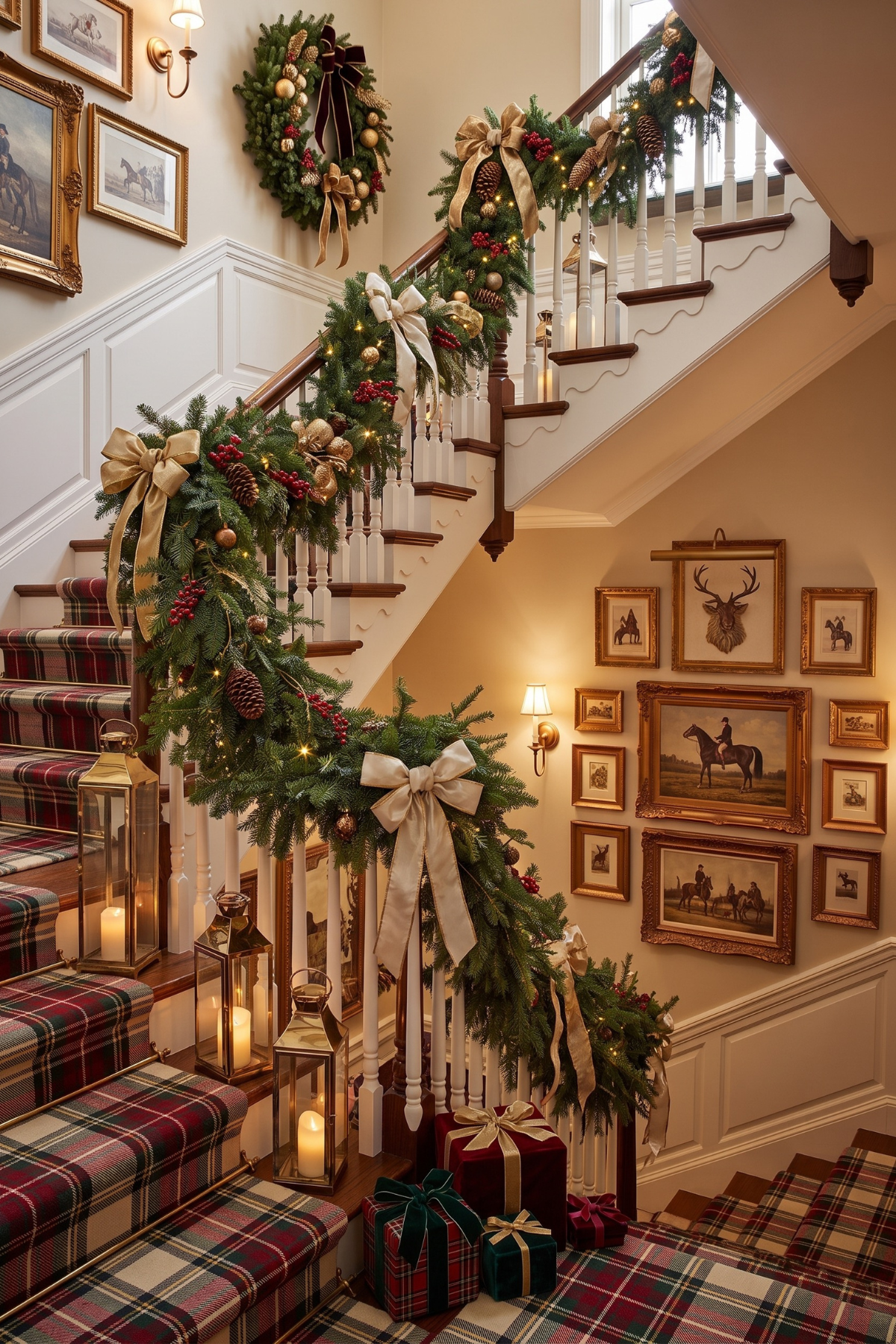
Good garland has movement, not just volume. Along this banister, the pine swags swell and dip instead of running in one flat line, so your eye actually follows the stairs upward instead of stopping at the first step. Gold ribbon bows mark the turns like punctuation, telling you where to look next.
The tartan stair runner is what makes the whole thing feel finished rather than seasonal. Because the plaid repeats step after step, it reads as a permanent design choice the rest of the year would also support, not a decoration draped over something plain. That’s a useful trick if you want Christmas decor that doesn’t look like a costume change.
Lanterns with real candles tucked along the base of the stairs add warmth that string lights can’t fake. Wrapped gifts stacked at the bottom of a staircase do more visual work than an entire extra tree would. If you’re recreating this, spend money on a good runner before you spend it on garland.
A Den That Multiplies Its Light
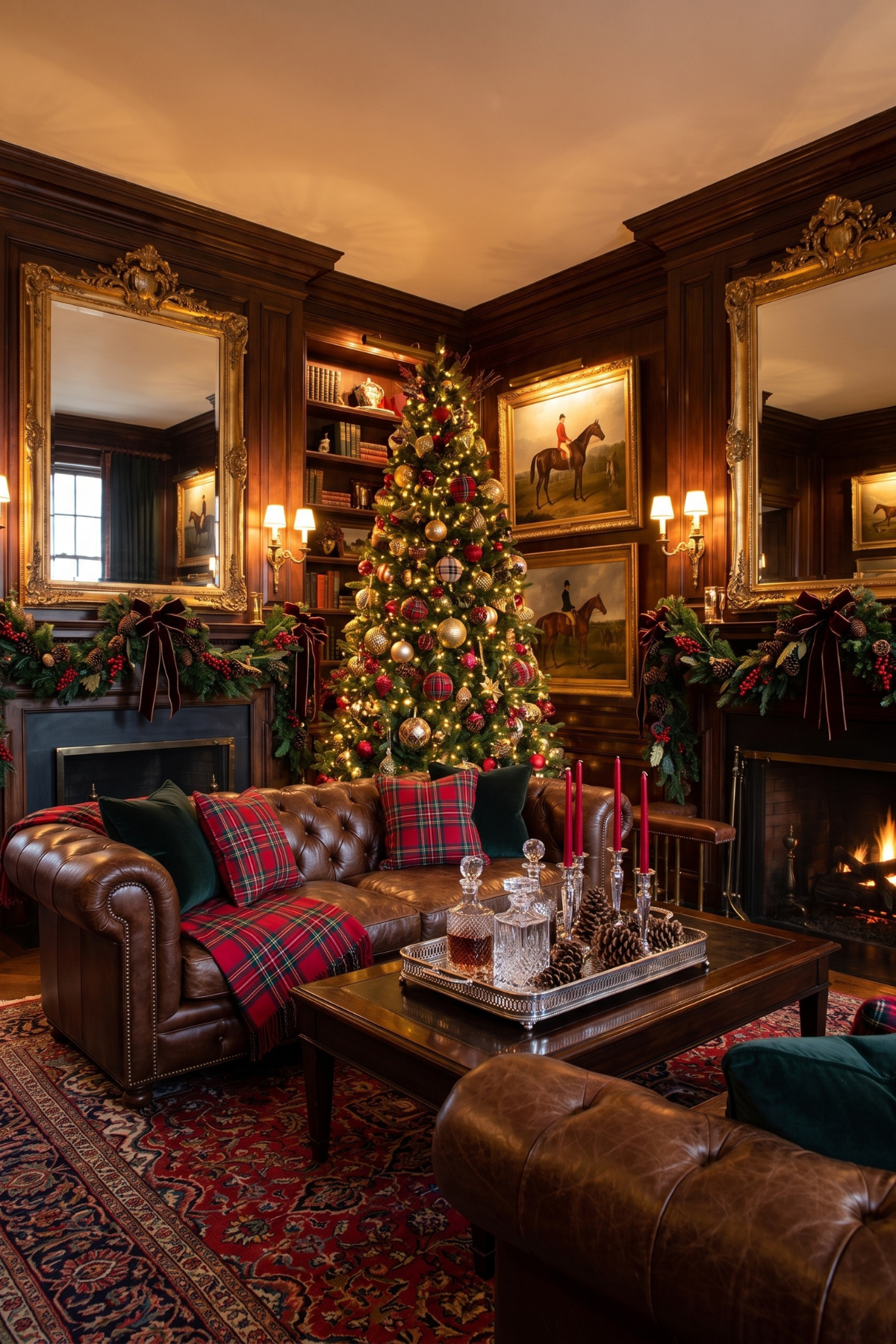
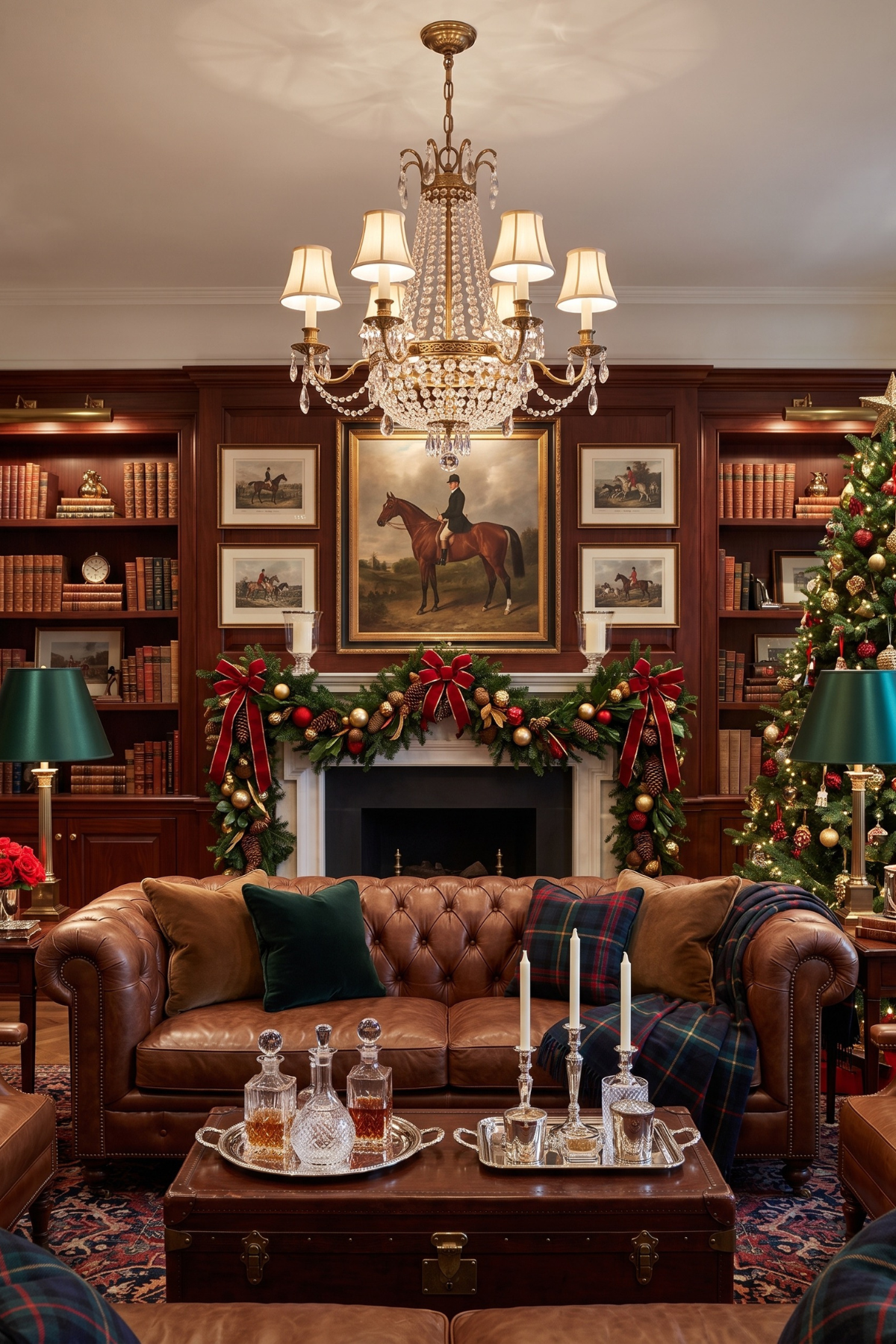
Large gilt mirrors on either side of a fireplace are an old trick, but this room proves it still works. Every candle, every string of tree lights, every flame in the fireplace gets reflected and multiplied, so a fairly modest amount of actual lighting reads as a fully lit room by the time it bounces around.
The tree itself sits between two equestrian oil paintings instead of in a corner by itself, which keeps it from becoming the only thing you look at. Ribbon woven through the branches in the same red and green as the tartan pillows ties the whole seating area back to the tree without anyone having to say so.
Tartan pillows paired with plain green velvet ones, rather than tartan on every cushion, keep a wood-paneled room from tipping into costume territory. A silver tray of decanters on the coffee table finishes the look with almost no additional decorating required, since bar glassware already photographs like a still life.
Two Bows, One Entire Porch
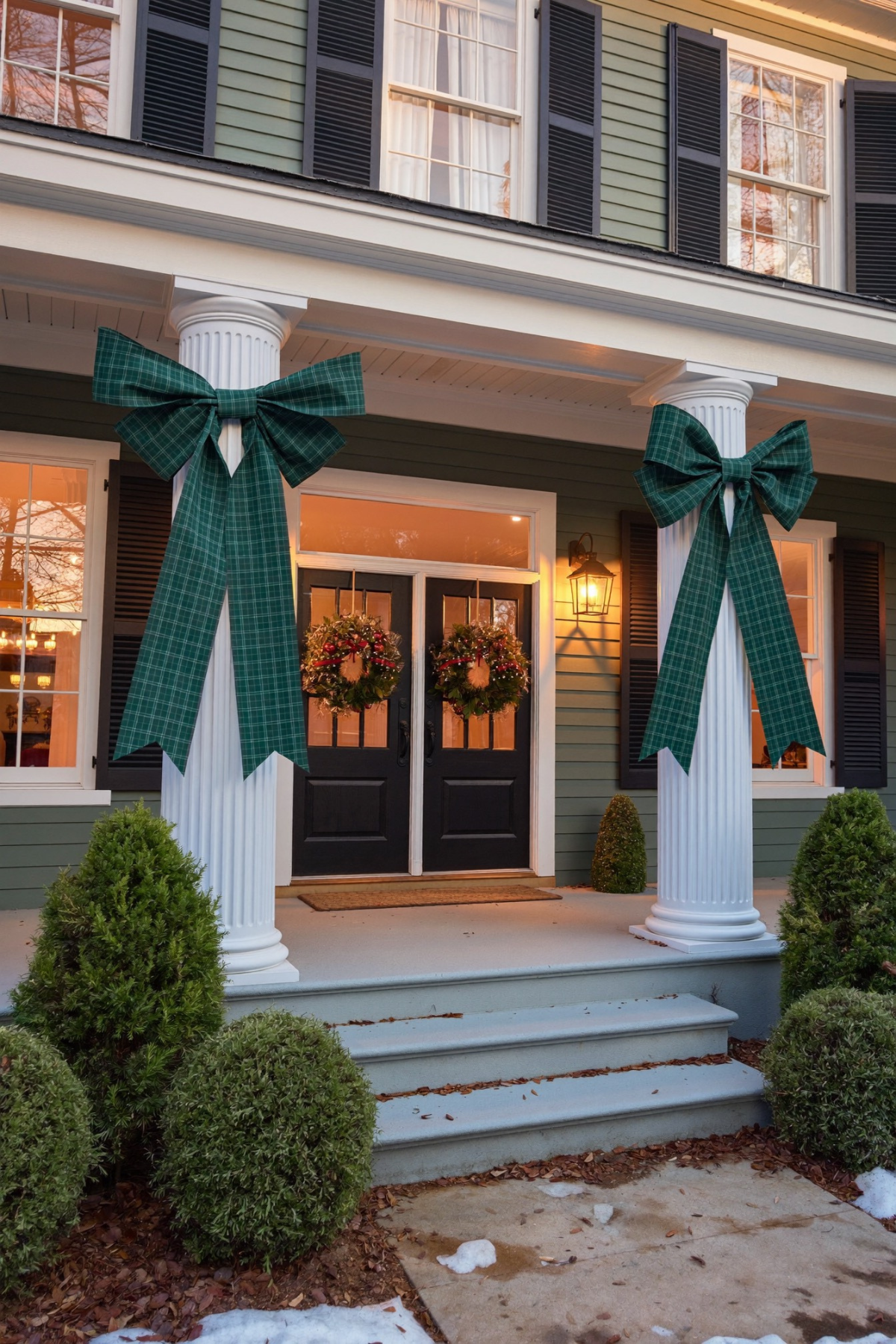
Scale is the entire idea behind this porch. Two oversized tartan bows tied around plain white columns do more for curb appeal than a dozen small decorations scattered across the same space would, because size reads from the street in a way that detail simply doesn’t.
The green plaid also does something clever against sage-green siding: it matches the house instead of fighting it, so the decoration looks like it belongs to the architecture rather than sitting on top of it. Twin wreaths on the double doors keep the entry symmetrical without needing to be identical in every detail.
If you’re trying this at home, buy ribbon by the yard rather than a pre-made bow, since an oversized, hand-tied bow almost always reads better than a smaller retail one photographed up close. A single warm porch light left on after dark does the rest of the job for free.
A Bathroom That Skipped Nothing
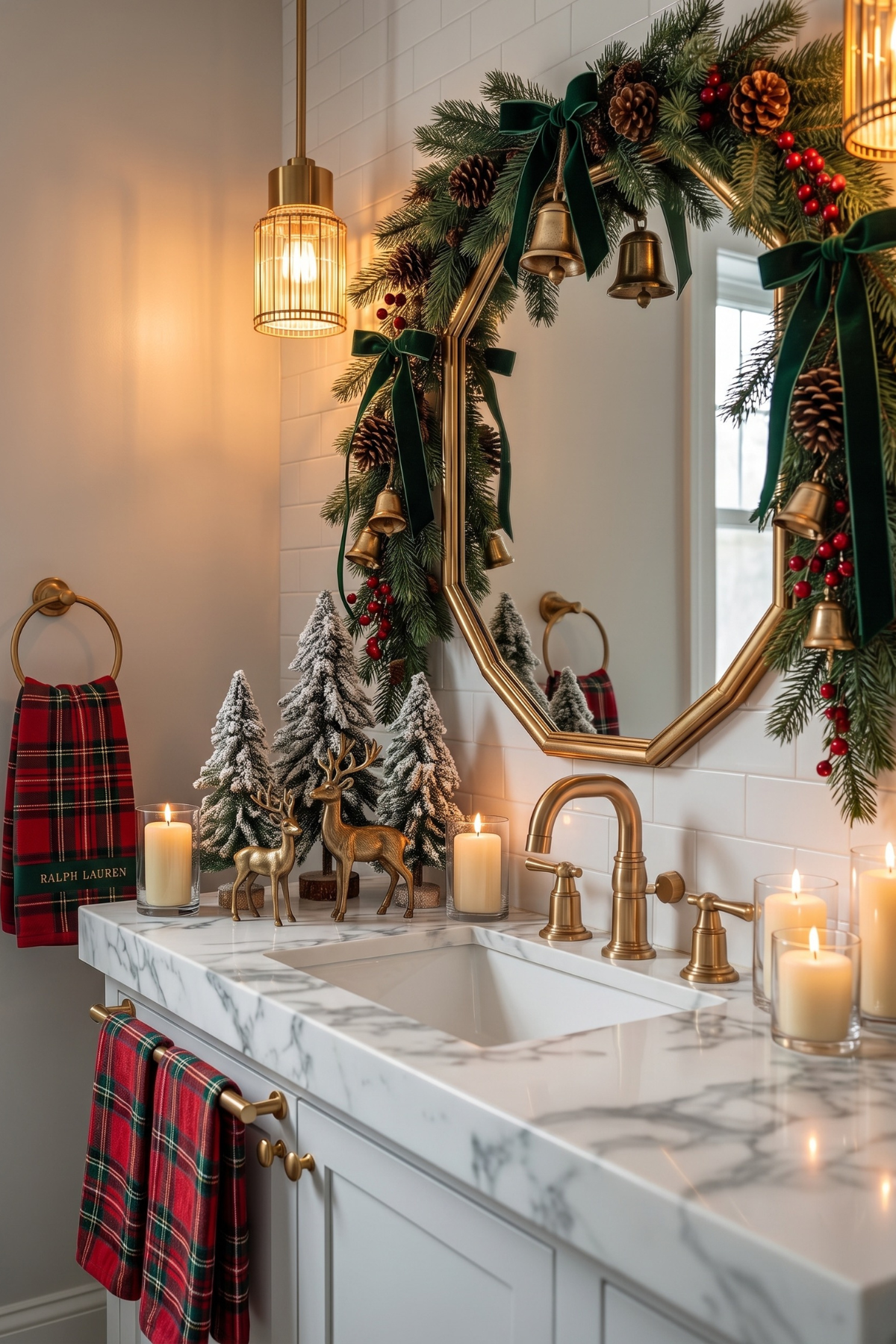
Most people stop decorating for Christmas at the front rooms of the house, which is exactly why this bathroom feels like such a surprise. Pine garland wrapped around a brass octagonal mirror, complete with tiny bells and velvet bows, turns a five-minute stop into its own small moment.
Flocked bottle-brush trees and a pair of brass deer figurines do a lot of the visual heavy lifting on the counter, and they cost very little compared to fresh greenery. Because they’re small, they don’t get in the way of actually using the sink, which matters more in a bathroom than almost anywhere else in the house.
Plaid hand towels are one of the cheapest, lowest-effort ways to bring a whole room into a holiday color story without touching a single fixture. Light a candle or two along the counter and the marble does the rest of the reflecting for you.
Citrus and Pine at the Sink
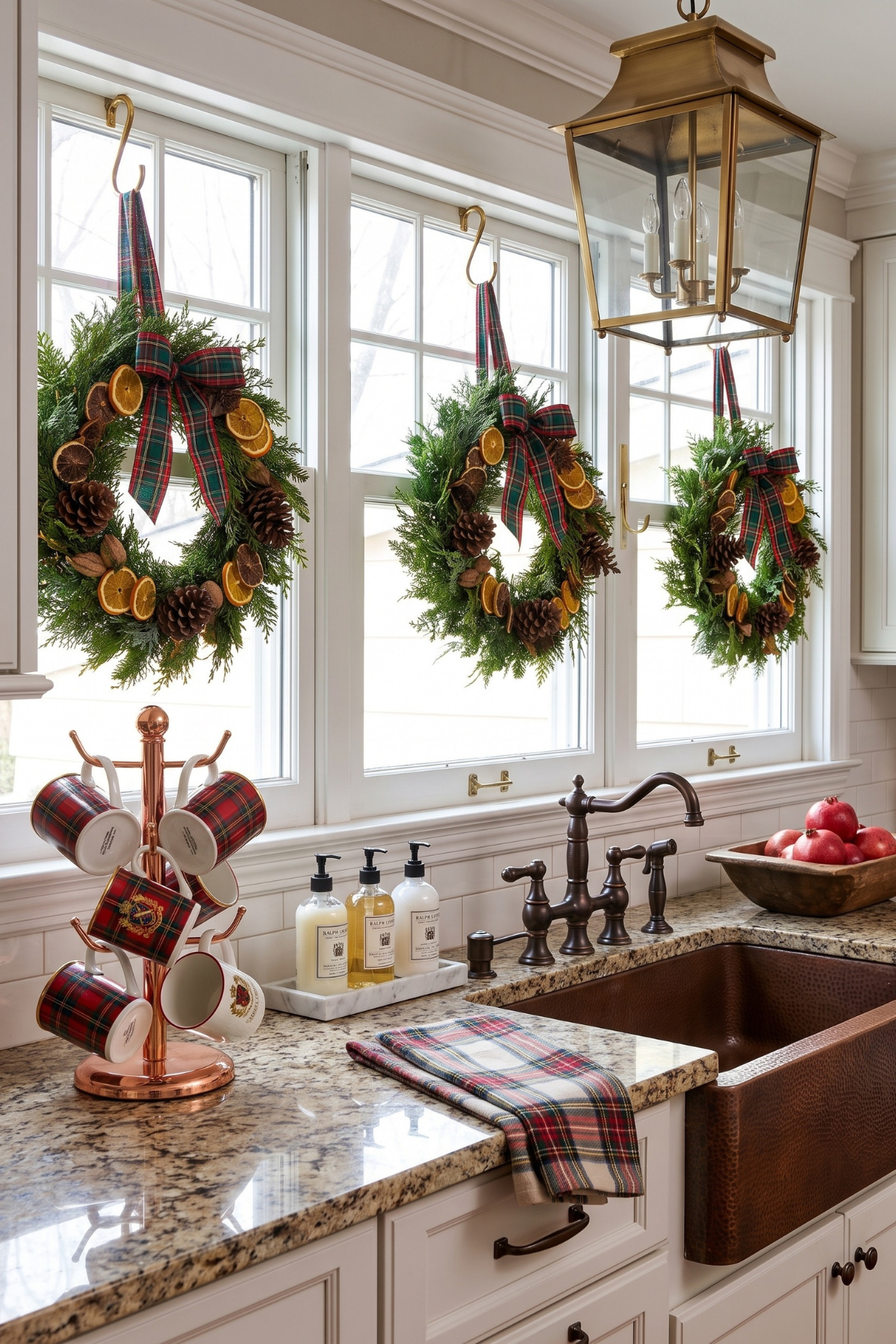
Dried orange slices tucked into a pine wreath change the whole feel of a kitchen window, adding warmth and texture that fresh greenery alone can’t manage on its own. Hung from simple brass hooks across three windows, the wreaths repeat like a pattern rather than reading as three separate decorations.
A copper farmhouse sink and a bronze bridge faucet already lean traditional, so the tartan mugs on the little rotating stand nearby don’t feel like an add-on, they feel like they were always supposed to be there. Even the tartan hand towel draped over the sink edge is doing quiet, deliberate work.
Repeating the same wreath three times across a bank of windows reads as far more designed than hanging three different ones would. If citrus and pine feel like too much upkeep, a plain evergreen wreath with the same tartan ribbon gets you most of the same effect for a fraction of the maintenance.
A Table That Layers Two Fabrics
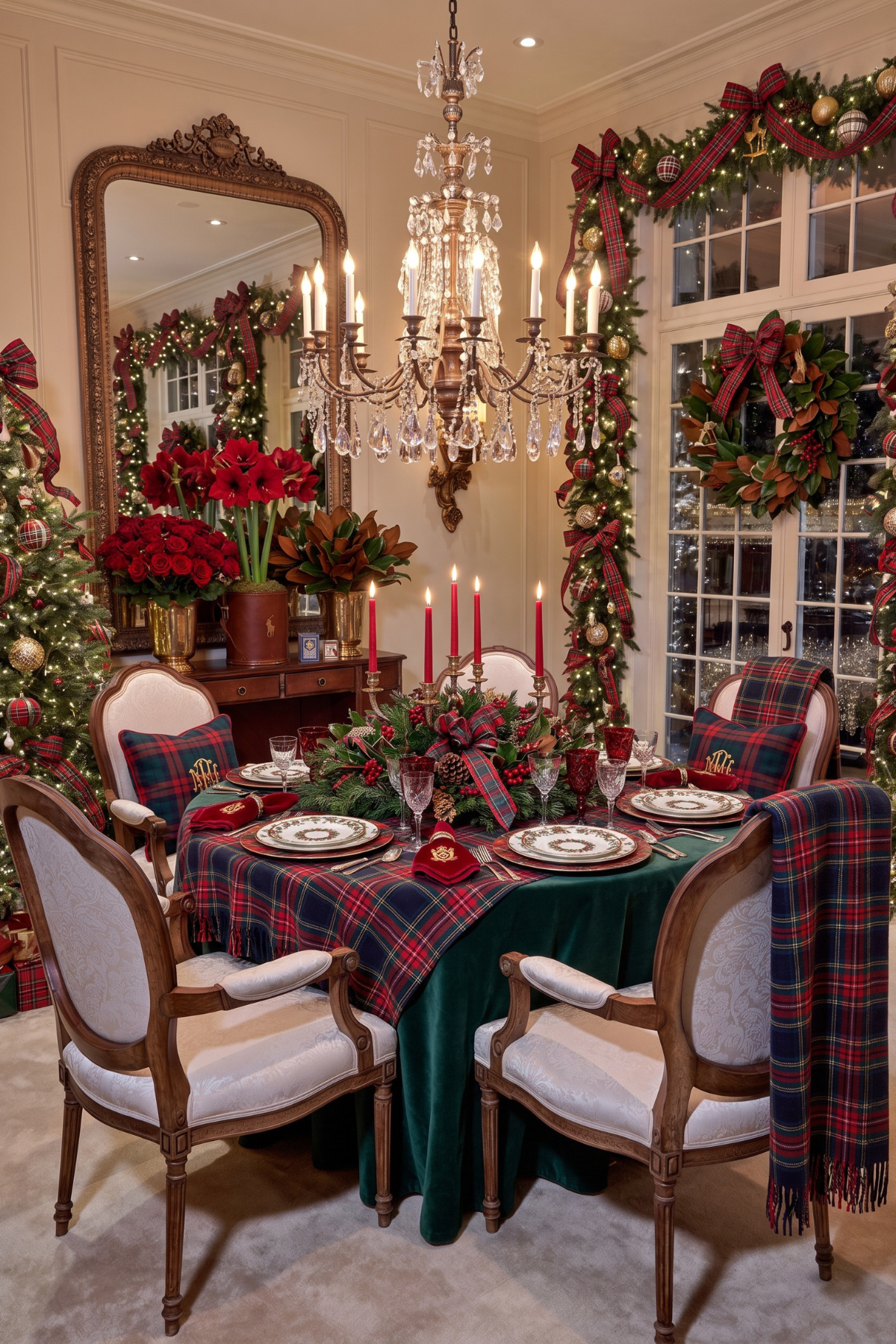
Green velvet underneath a tartan overlay is the single best trick in this entire dining room, and it’s one almost anyone can copy without buying much. The velvet gives the table a rich, solid base color, and the plaid on top adds pattern and movement without the two ever visually competing.
Red taper candles in a low candelabra, surrounded by pine and pinecones, keep the centerpiece from climbing too high to see across the table, which matters more than most people think when you’re actually trying to have a conversation over dinner. China with a wreath motif on the rim is a small detail that photographs beautifully but barely registers when you’re setting the table.
Monogrammed tartan pillows on the dining chairs are the kind of custom touch that reads as generations-old even when it’s brand new. Garland wrapped in the same tartan ribbon around the window frame ties the whole room together without a single extra tree needed.
A Rustic Kitchen Built for Lingering
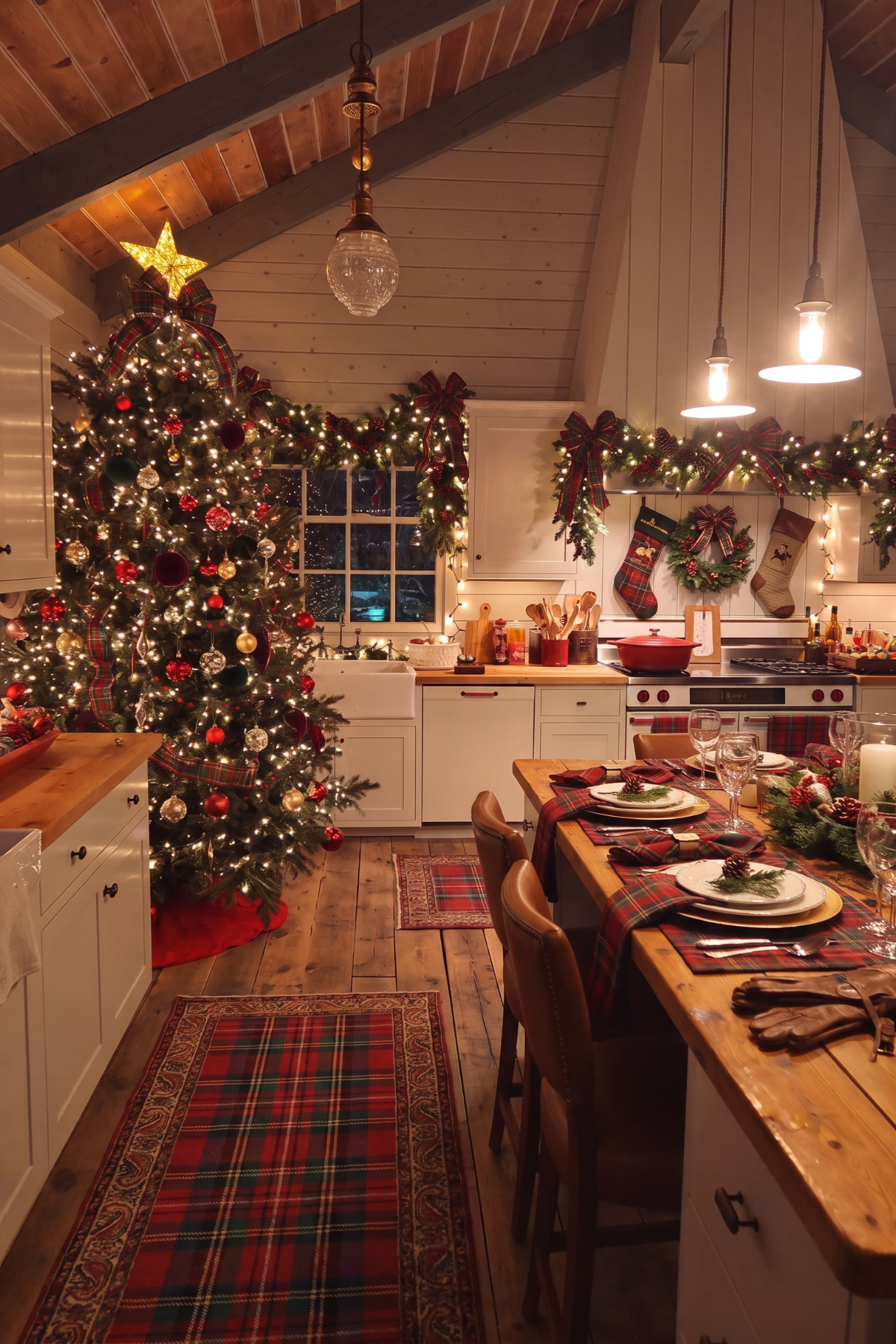
There’s a version of Christmas decorating that’s about showing off, and there’s a version that’s about staying at the table an extra hour. This rustic, vaulted kitchen is clearly the second kind. Warm pendant lights, a star-topped tree tucked into the corner, and tartan stockings hung along the range hood all point toward the same mood: slow down.
Placemats and napkins in the same red plaid as the stockings connect the dining area back to the rest of the room, even though the table sits several feet away from the tree and the stove. Pinecones set directly on each dinner plate are a nice touch that costs nothing if you already have a yard full of them.
A pair of worn leather gloves left casually on the counter tells you more about how this house is actually lived in than any styled vignette could. If your kitchen doesn’t have exposed beams, a single tartan runner down the center of the table gets you most of the same cozy, gathered feeling.
The Best Tartan Rooms Never Feel Like a Costume
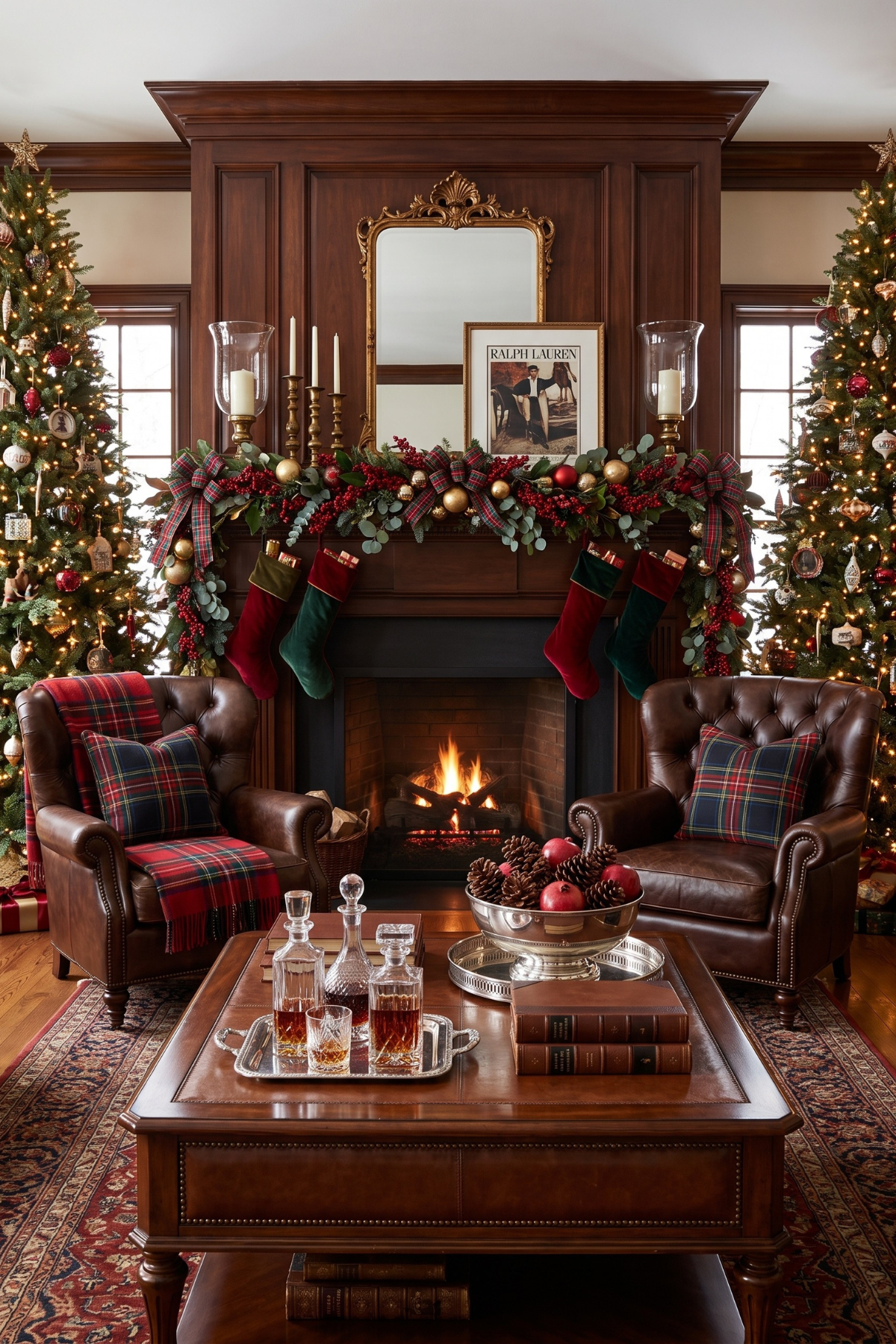
What ties every one of these spaces together isn’t the tartan itself, it’s restraint. Nobody here covered every surface in plaid. They picked a spot, sometimes a whole tablecloth and sometimes just a bow on a porch column, and let that one decision carry the rest of the room.
The other thread running through all ten is material contrast. Tartan next to leather, tartan next to brass, tartan next to real greenery and candlelight, always something with weight standing next to the pattern so it never reads as flat fabric thrown over furniture. That’s what makes a room feel finished instead of staged.
If you’re pulling from any of these for your own house, start with the one piece you already own, whether that’s a throw blanket or a set of napkins, and build outward from there. A room doesn’t need ten tartan moments to feel like Christmas. It usually only needs one done well.