
What Interior Designers Know About Modern Ceiling Design (That Most Homes Miss)
Let’s be honest, ceilings used to be the most ignored surface in the house. White, flat, and forgotten. But modern ceiling design flipped that narrative completely. Today, ceilings are doing real work. They define zones, control mood, enhance proportions, and quietly signal whether a space feels basic or high-end. A well-designed ceiling can make an average room feel architect-designed without changing the furniture at all.
From layered trays to sculptural curves and ambient cove lighting, modern ceilings are all about intention. They guide the eye, soften harsh lighting, and create a sense of flow that walls alone simply can’t achieve. When done right, ceilings don’t shout for attention, they whisper luxury.
This is why designers obsess over lighting temperature, depth, symmetry, and alignment. We’re no longer decorating ceilings, we’re engineering atmosphere. If your room feels “almost there,” chances are the ceiling is the missing piece quietly sabotaging the vibe.
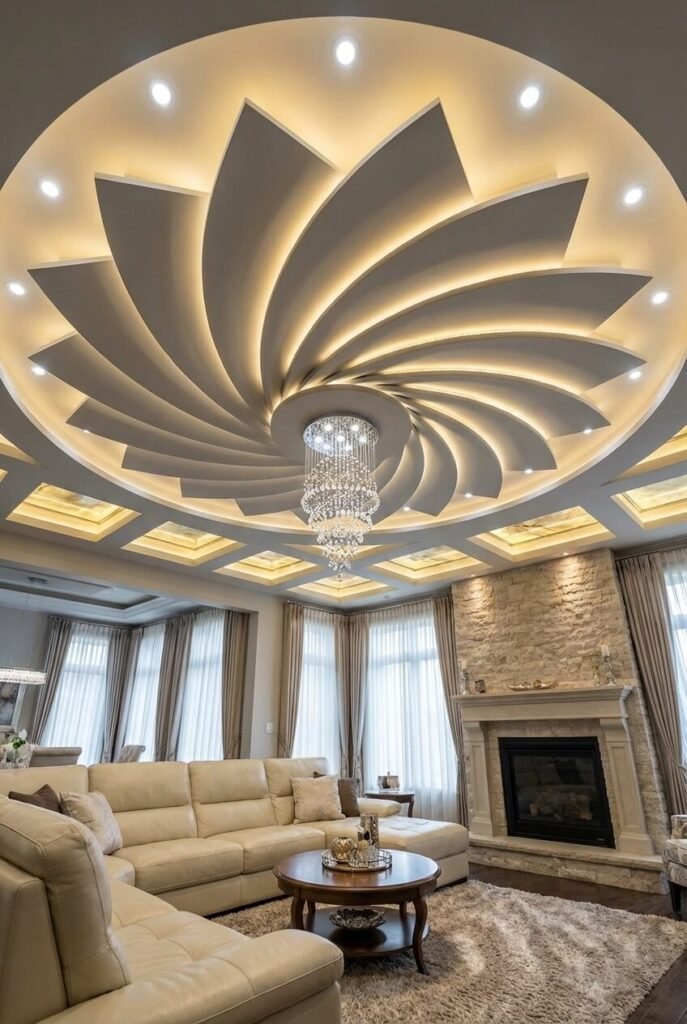
Sculptural Cove Lighting With Fluid Curves

This ceiling is basically doing yoga, and honestly we love that for it. The flowing cove lighting isn’t just decorative drama, it’s a smart design move. Curved ceiling lines soften rigid room geometry, making large modern spaces feel less boxy and more inviting.
The hidden LED strips create indirect lighting, which reduces glare and spreads light evenly, perfect for living areas where harsh overhead lighting kills the vibe. Warm color temperature here is doing heavy emotional labor, making the space feel cozy without sacrificing that high-end look. If you want to recreate this, the key is restraint. Let the ceiling be the statement and keep furniture low-profile so the curves remain the star.
Also, curves visually guide the eye, so align them with focal zones like seating or dining areas. Think of this ceiling as architectural choreography, subtly directing how people move and relax in the room. Bonus tip, matte finishes help the light glow smoother and avoid reflections that break the illusion.
Layered Tray Ceiling With Soft Glow
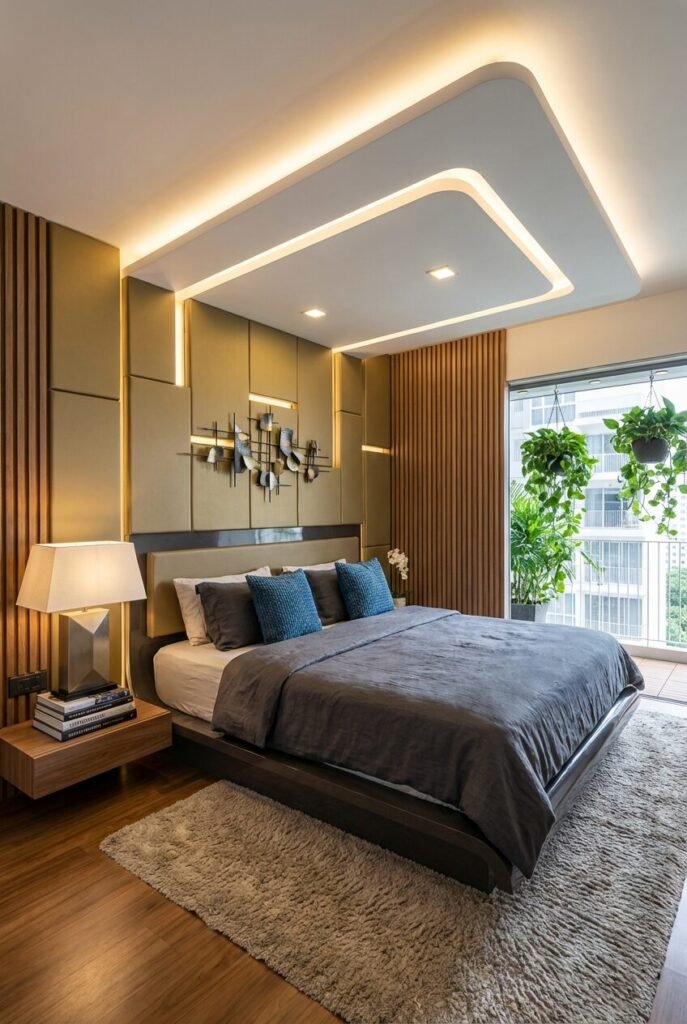
This ceiling is proof that minimal doesn’t mean boring. The layered tray design adds depth without screaming for attention, which is peak modern energy. Recessed LED lighting tucked inside the layers creates a floating effect, making the ceiling appear higher than it actually is.
That’s a win for apartments pretending to be penthouses. Design-wise, this works because it follows hierarchy. The outer layer frames the room, while the inner tray becomes a calm focal zone above the bed. Warm lighting balances the sharp geometry, preventing the space from feeling cold or corporate. If you’re recreating this, keep the color palette tight. Neutral ceilings with subtle contrast help the lighting do the talking.
Also, align the tray with furniture placement, especially beds or sofas, so the ceiling feels intentional rather than random. This is ceiling design that quietly flexes, adding architectural interest while still letting you sleep, chill, and scroll TikTok in peace.
Patterned Ceiling Panels With Ambient Light
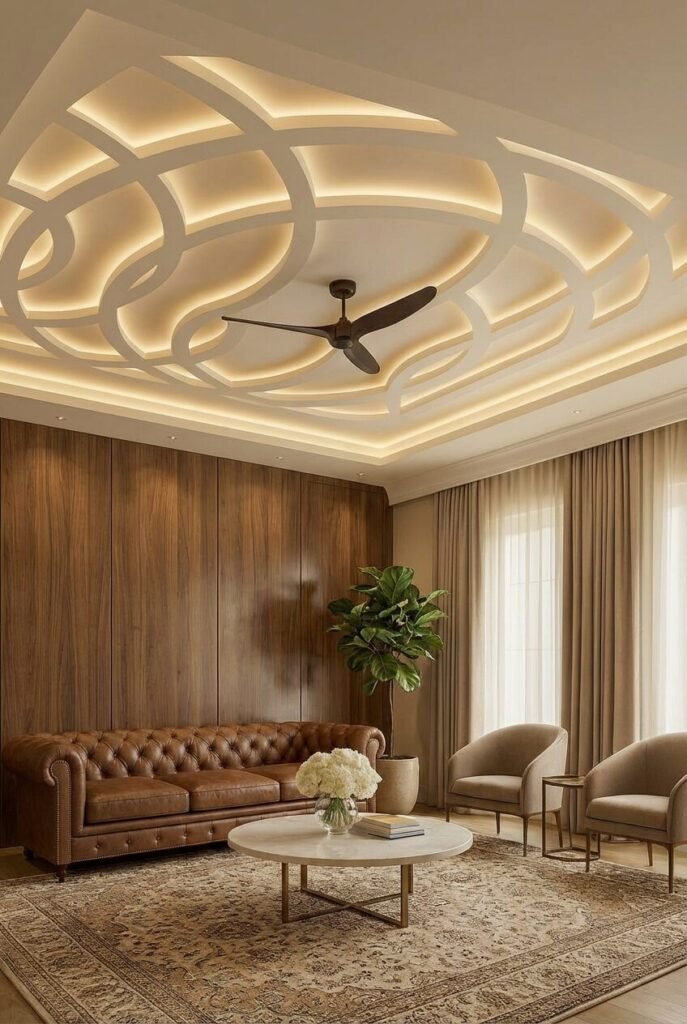
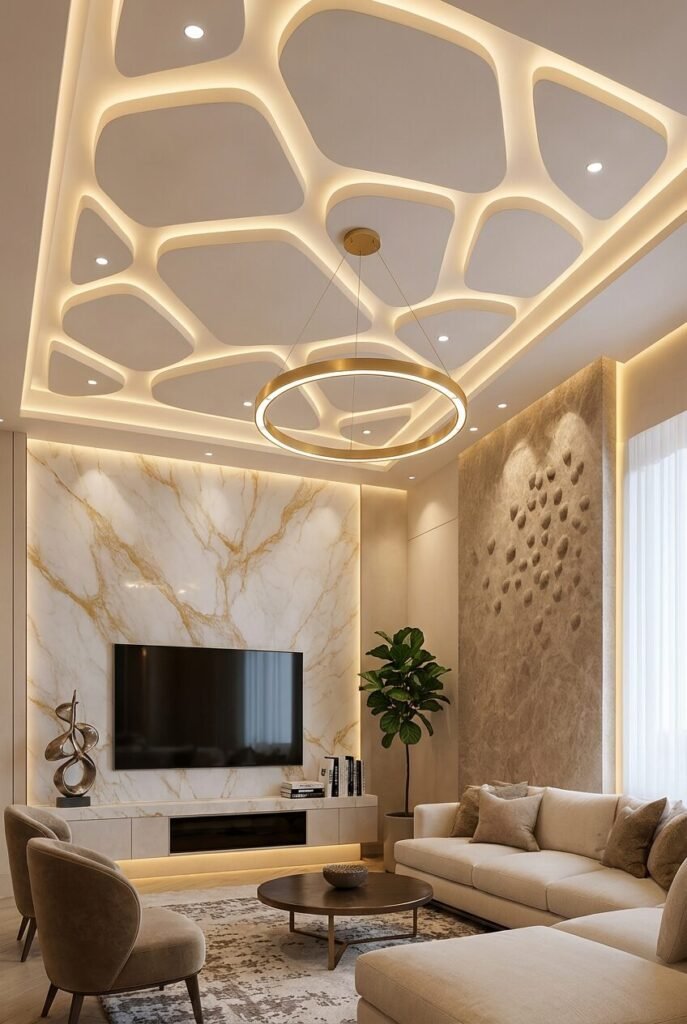
This ceiling said “texture matters” and didn’t ask for permission. The patterned panels add visual rhythm, while the concealed lighting keeps everything feeling elevated, not chaotic. Repetition is the core design principle here, creating harmony even with bold shapes.
The soft backlighting enhances depth, turning the ceiling into a sculptural feature rather than a flat surface we usually ignore. This works beautifully in living rooms because it anchors the space vertically, balancing heavier furniture below. To recreate this look, consistency is everything. Use a repeating motif and stick to one color family so the pattern feels intentional, not overwhelming.
The warm ambient light softens shadows and highlights the relief details without creating harsh contrast. Think of this ceiling as functional art, doing double duty as lighting and architecture. Pro tip, textured ceilings pair best with simpler walls and furniture, otherwise the room starts feeling like it’s trying too hard.
Wood Inset Ceiling With Statement Chandelier
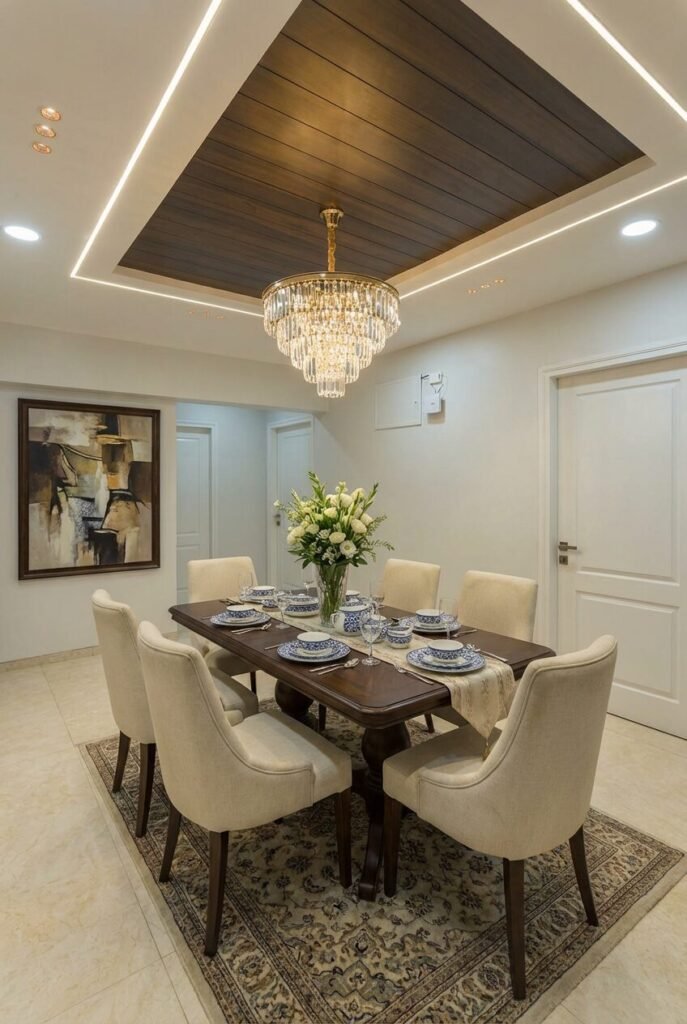
This ceiling is basically luxury with a personality. The wood inset adds warmth and contrast, while the surrounding recessed lighting frames it like a gallery piece. Natural materials on ceilings instantly ground modern spaces, preventing them from feeling sterile.
The chandelier becomes the visual anchor, but notice how the ceiling design supports it instead of competing. That’s intentional hierarchy at work. If you want to recreate this, choose wood tones that echo your furniture or flooring for cohesion. The recessed lighting should be soft and even, acting as ambient support rather than stealing the spotlight.
Ceiling height matters here, so make sure the chandelier scale matches the room. Too small looks sad, too big feels aggressive. This design works because it balances texture, light, and focal points, turning the ceiling into a framing device rather than just decoration. It’s dramatic, but still very grown and intentional.
Minimal Cove Ceiling With Floating Effect
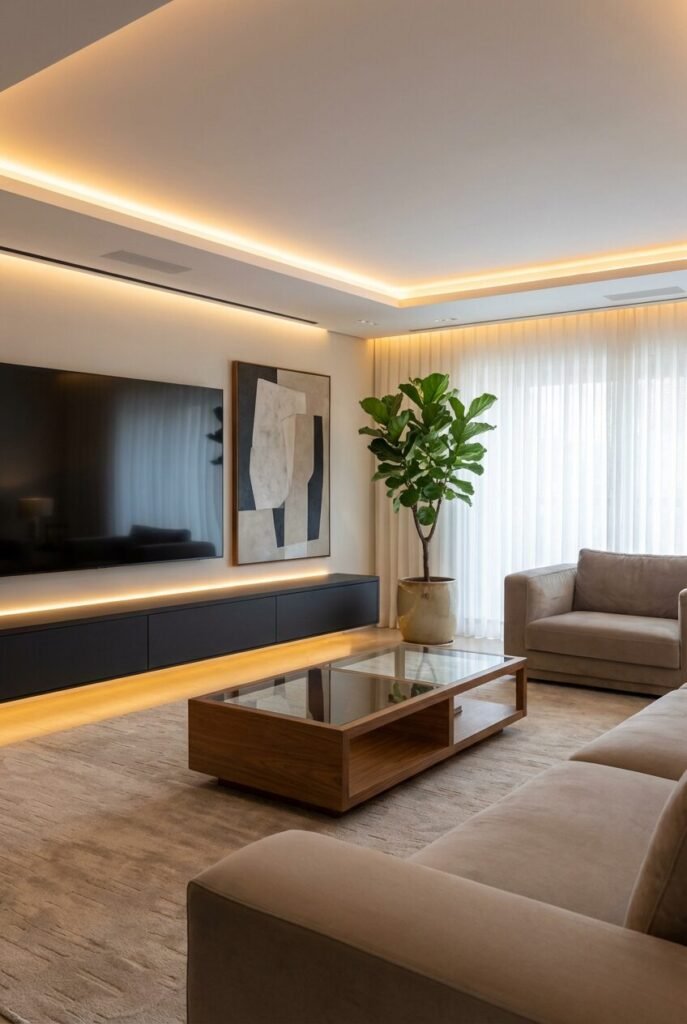
This ceiling understands the assignment: clean, calm, and quietly impressive. The continuous cove lighting creates a floating perimeter that visually lifts the ceiling, making the room feel larger and more open. Indirect lighting is the secret weapon of modern interiors, offering comfort without visual clutter.
This design works best because it follows simplicity and proportion. No random shapes, no unnecessary layers, just one confident line of light wrapping the space. If you want this look, precision is everything. Clean edges, even spacing, and warm LEDs are non-negotiable. Pair it with minimal furniture and soft textures so the ceiling glow enhances, not overpowers.
Also, this type of lighting is perfect for multitasking spaces like living rooms where you want flexibility. It’s calm lighting that still feels premium, ideal for Netflix nights, hosting friends, or pretending your life is way more put together than it actually is.
Layered Cove Ceiling Above Statement Kitchen
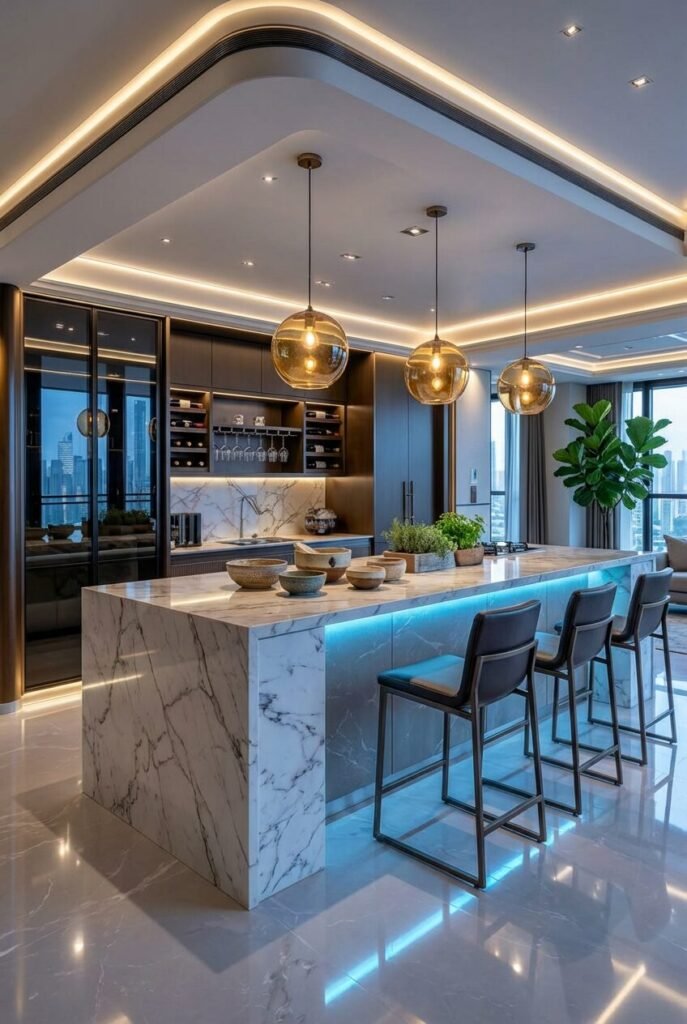
This ceiling understood the assignment: make the kitchen feel expensive without trying too hard. The layered cove ceiling frames the island like a spotlight, while the indirect LED lighting keeps everything soft and flattering. This works because it establishes hierarchy, clearly defining the kitchen as a social zone rather than just a place to microwave regrets.
The warm perimeter lighting balances the marble’s cool tones, preventing the space from feeling sterile. When recreating this look, alignment is key. The ceiling shape should mirror the island footprint so everything feels intentional. Pendant lights then act as vertical anchors, pulling the ceiling design down into the space.
Keep the ceiling color neutral to let materials below shine. Good ceiling design here is about control, guiding attention without visual noise. Also, cove lighting hides imperfections and diffuses light evenly, which is a blessing for open-plan kitchens where shadows can get messy fast.
Dark Circular Ceiling With Luxe Drama
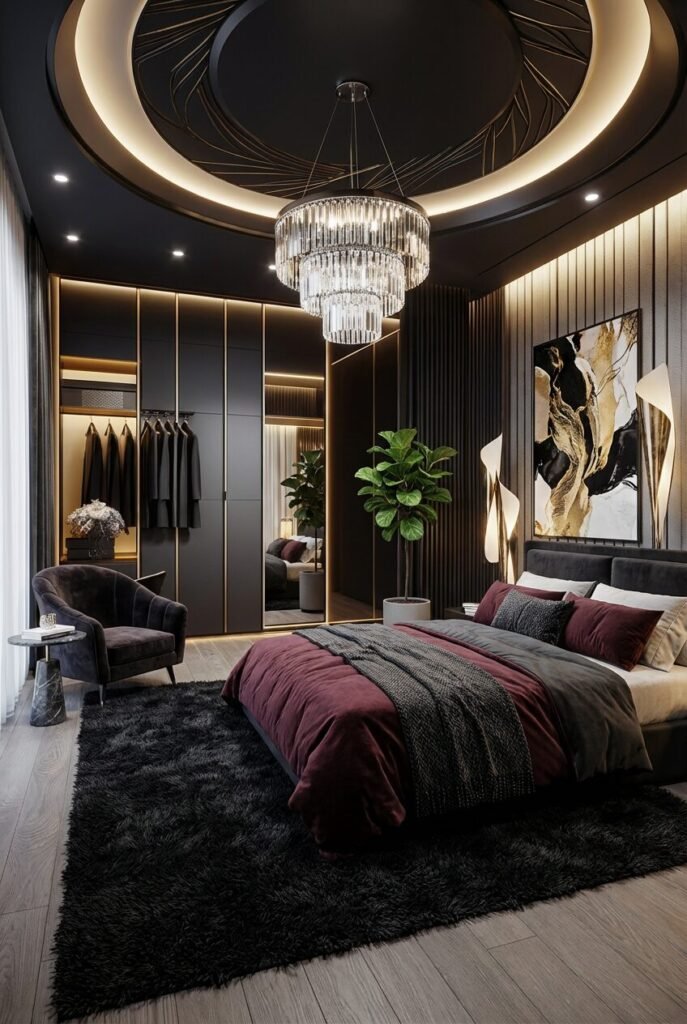
This ceiling is not here to be subtle, and honestly, we respect it. The dark circular tray instantly creates intimacy, while the glowing inner ring adds contrast and depth. Contrast is the design power move here, using dark ceilings to visually lower height and make large bedrooms feel more grounded and cozy.
The chandelier becomes the crown jewel, but notice how the circular lighting frames it instead of competing. If you want to recreate this, commit fully. Half-dark ceilings just look confused. Pair it with vertical wall lines to keep the room feeling tall and balanced. Warm lighting is non-negotiable here; cool light would kill the mood immediately.
This ceiling works because it understands emotional lighting, creating a hotel-level atmosphere that feels dramatic but still sleep-friendly. Pro tip, darker ceilings actually hide shadows better, making the lighting glow smoother and more luxurious.
Sculpted Curves With Playful Lighting Flow
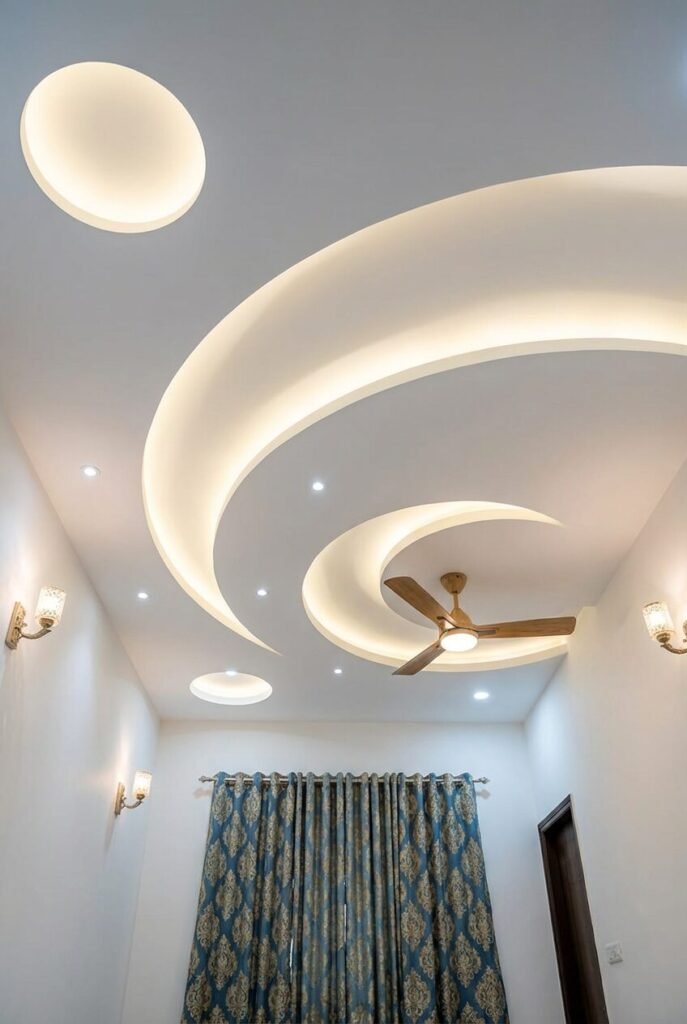
This ceiling is basically art that happens to light your room. The sweeping curves break away from rigid geometry, making narrow spaces feel more dynamic and less boxy. Curves naturally guide the eye, creating movement and visual interest without needing extra decor.
The recessed lighting follows the form, reinforcing the flow rather than distracting from it. When recreating this design, balance is everything. Keep walls simple so the ceiling doesn’t fight for attention. This style works especially well in transitional spaces like corridors or compact rooms that need personality. Use warm LEDs to soften the sculptural edges and avoid harsh shadows.
This ceiling proves that lighting doesn’t have to be boring to be functional, blending creativity with comfort. Bonus insight, curved ceilings also diffuse sound slightly better, making rooms feel calmer and less echo-prone.
Grand Circular Ceiling With Layered Glow
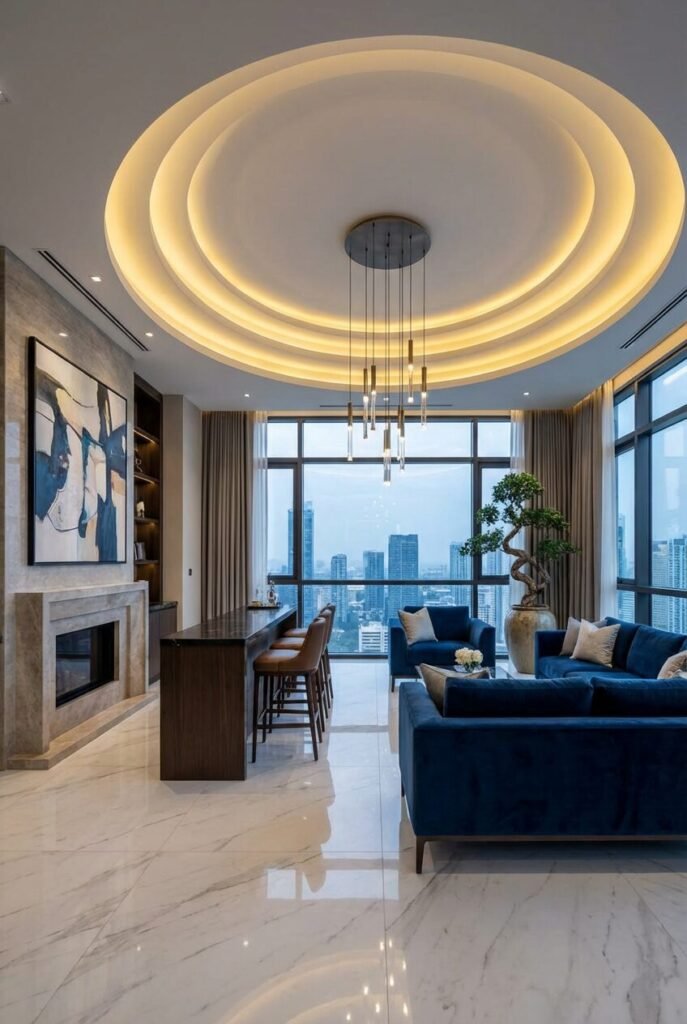
This ceiling is what happens when symmetry meets confidence. The concentric circular layers create a natural focal point, pulling attention upward without overwhelming the space. Layering here adds depth and scale, making high ceilings feel intentional rather than empty.
The warm halo lighting softens the geometry, while the chandelier adds vertical drama without cluttering the visual field. To recreate this look, precision matters. The circles must be perfectly centered and proportionate to the room size. Oversized circles in small rooms feel aggressive, not luxurious. Pair this ceiling with furniture arranged symmetrically to reinforce balance.
This design works because it creates visual calm through repetition, which is why it feels grand but not chaotic. It’s especially effective in open living spaces where the ceiling helps define the main gathering zone.
Minimal Tray Ceiling With Dual Fan Focus
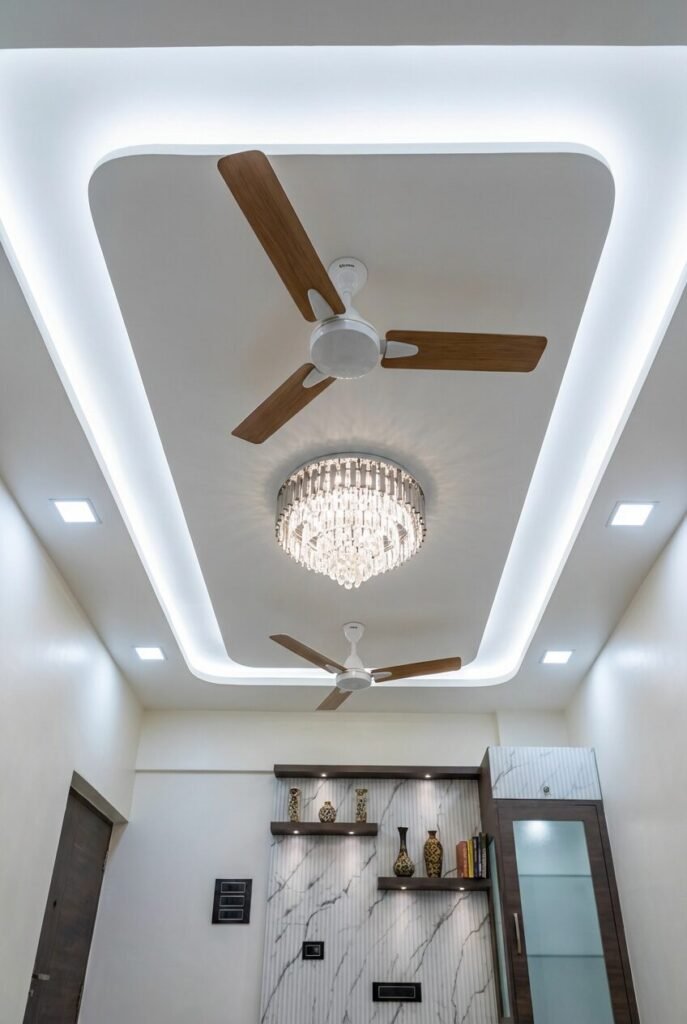
This ceiling is doing a lot while pretending it’s doing nothing, which is peak modern behavior. The recessed tray with soft perimeter lighting creates a floating effect that visually lifts the ceiling. Negative space is the real hero here, allowing fans and chandeliers to coexist without clutter.
The clean geometry keeps airflow functional while still looking polished. When recreating this, spacing is critical. Fans should align symmetrically to avoid visual chaos. Stick to neutral tones so the lighting feels architectural, not decorative. Cool white lighting works better here if the room gets plenty of natural light.
This ceiling design is about balance between utility and aesthetics, proving that practical elements don’t have to ruin the vibe. It’s perfect for multipurpose rooms where comfort, airflow, and style all need to play nicely together.
Design Smarter Ceilings For Long-Term Visual Impact
After exploring all ten ideas, one thing becomes very clear. Great ceiling design isn’t about trends, it’s about principles. Hierarchy, proportion, lighting control, and material balance are what make ceilings feel timeless instead of trendy. The best designs don’t rely on excessive detail, they rely on clarity.
Each ceiling knows its role, whether it’s framing a social space, adding intimacy, or visually expanding a room. When recreating any of these ideas, the goal isn’t copying shapes, it’s understanding why they work. Align ceilings with furniture layouts, use indirect lighting to reduce glare, and respect scale so the room still breathes.
We should treat ceilings as architectural tools, not decorative afterthoughts. When ceilings are designed with purpose, the entire space feels calmer, more cohesive, and more expensive. Because when the ceiling works, everything below it automatically levels up.