
What Happens When You Stop Treating Your Cat’s Wall Space As An Afterthought
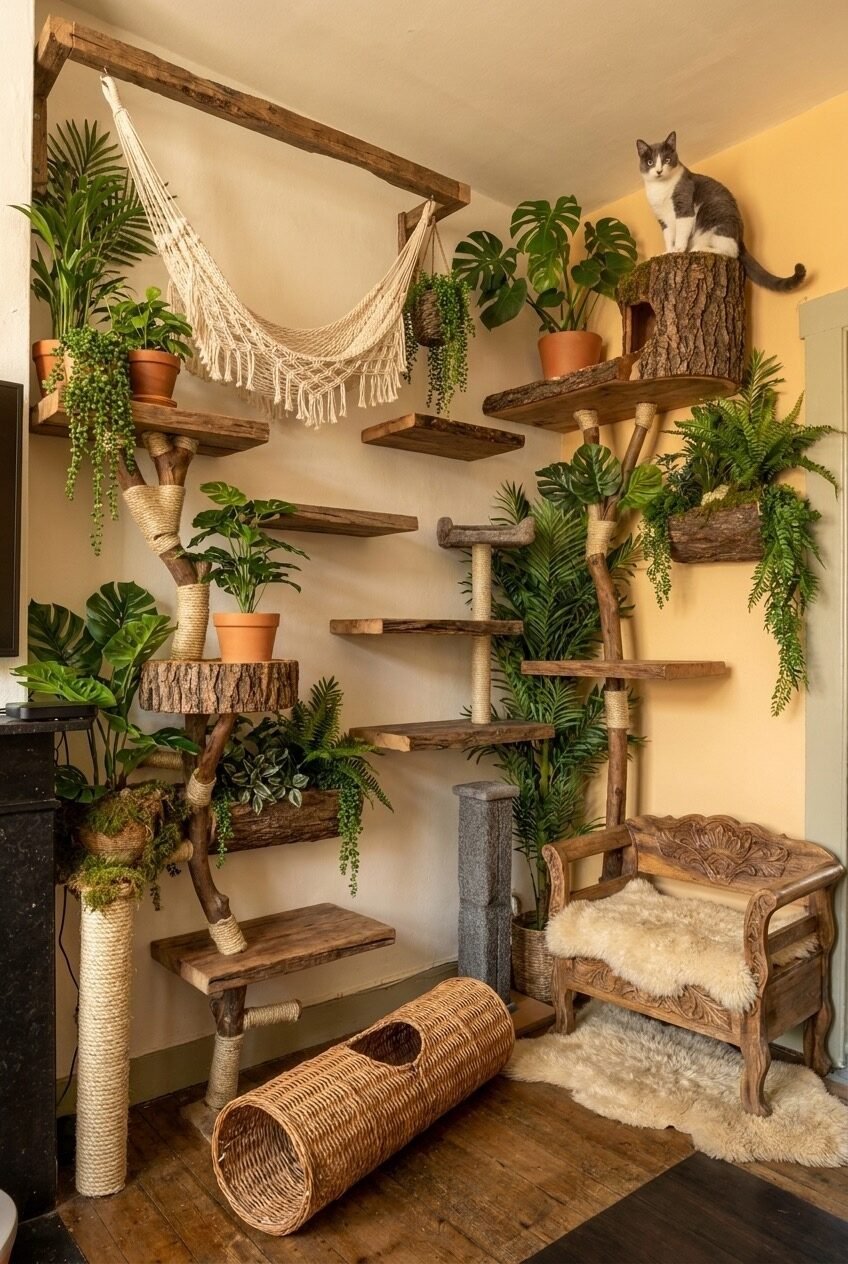
Cats climb because gravity is basically optional to them. Give one a windowsill and they will ask for the curtain rod next. We stopped fighting that instinct a while ago and started designing around it, because a bored cat with unused wall space nearby is really just an accident waiting to happen.
What we like about wall mounted setups is that they do not have to look like pet gear bolted onto an otherwise nice room. The best ones read as actual design choices, whether that means raw wood and rope or something closer to furniture worth photographing for the room itself.
Below are builds we kept coming back to, each pulled from a real space with its own personality. Some lean rustic, some go full fantasy, and a few are quiet enough to disappear into a living room. Pick whichever matches how your cat actually behaves, not how you wish they did.
Odd Shaped Shelves Add Movement
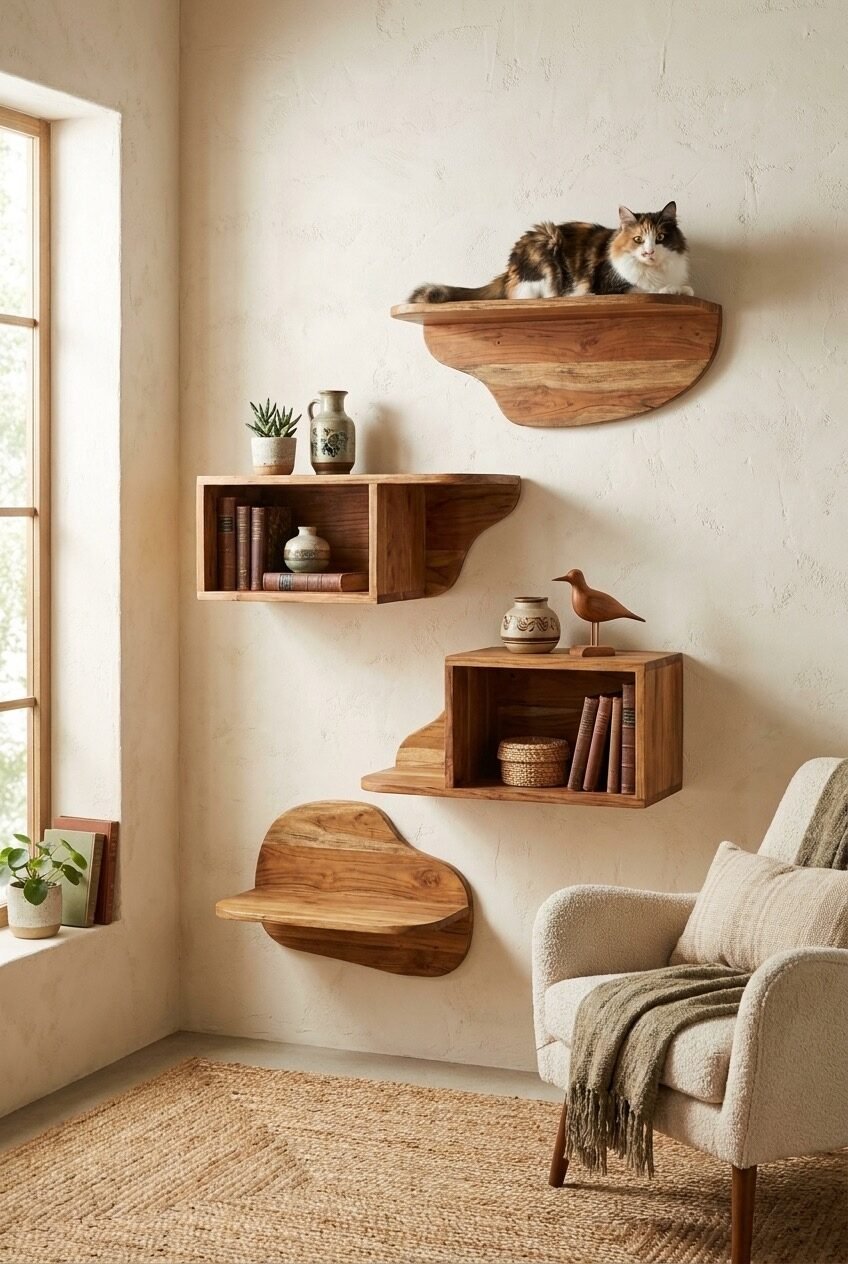
The first thing you notice here is not the cat, it is the shelves. No two are the same shape, which is clearly on purpose. One is boxy enough to hold books, another has been left almost unfinished, like a slice of wood that got lucky. That variation is what keeps a wall of shelves from reading as generic storage.
Mixing open box shelves with slab style floating ones gives you storage and landing space without repeating the same silhouette twice. Height matters just as much as shape. Staggering the levels means a cat has an actual route to climb rather than one flat perch, and the whole thing reads more like a gallery wall than a cat accessory.
If you want to try this, start with three or four shelf shapes and vary the depth so at least one is wide enough for a full stretch. Stick to one wood tone throughout so the irregular shapes feel like a set instead of leftovers from different projects. Add books, a small plant, or a ceramic piece to the lower shelves so the top one reads as the obvious perch.
Color Blocking Turns Play Art
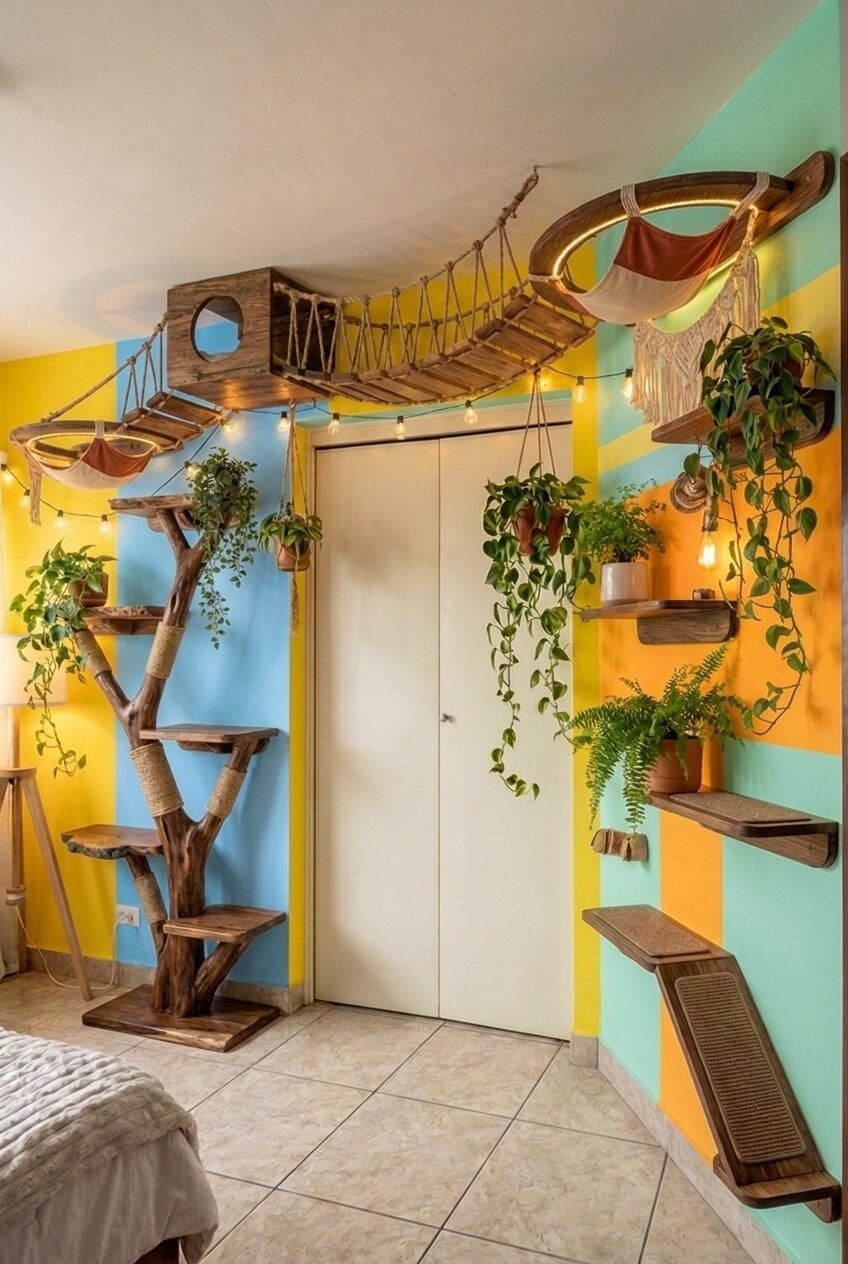
Paint does a lot of heavy lifting in this room. Four colors split the wall into blocks, and suddenly a fairly ordinary bedroom corner has the energy of an actual jungle gym. The branch tree and bridge would still work on a plain white wall, but they would not pop the way they do here.
The rope bridge overhead is doing double duty as both a walkway and a sculptural element, especially with string lights tracing its length. Hammocks tucked into wood rings give cats a place to actually settle rather than just pass through, which matters when a setup is this vertical and this busy.
Pick two or three saturated colors instead of one accent wall, then let the wood tones of the cat furniture stay consistent so the whole thing does not turn chaotic. Hang plants at different heights to fill the gaps between shelves, and keep the string lights low voltage so they can stay on overnight without becoming a fire hazard nobody thought through.
A Flying Saucer For Naps
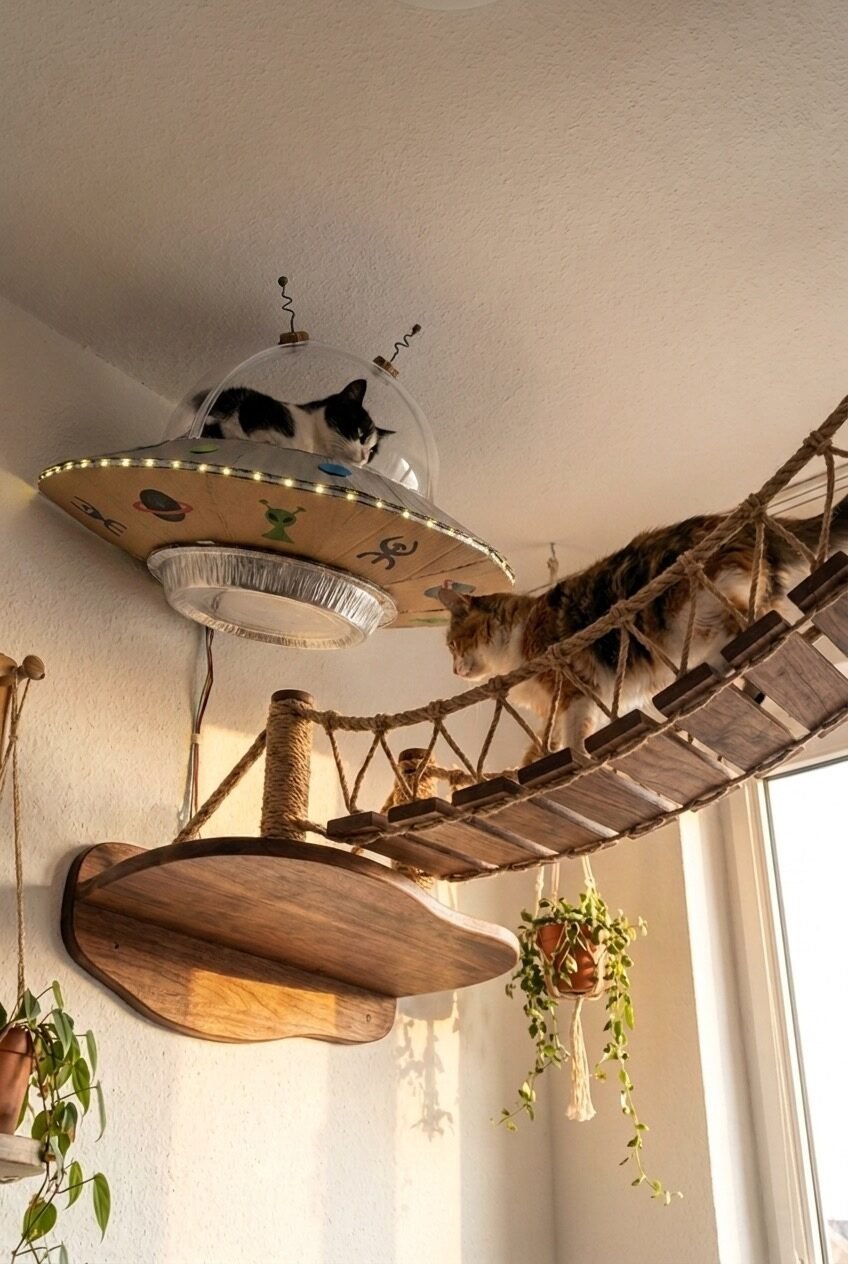
Not every cat perch needs to justify itself as furniture. Sometimes it is just supposed to be fun, and a flying saucer pod with a clear dome roof is about as fun as it gets. It even comes with its own tiny string lights, like the cat is expected to signal for backup.
The dome is the real trick here, since a clear top lets light in and lets you actually see the cat instead of guessing what is happening inside a box. Paired with a suspension bridge made from wood slats and knotted rope, the whole setup turns a plain wall into something closer to a tiny amusement ride.
If you are building something similar, look for a clear acrylic dome or repurpose one from an old light fixture, then mount it on a sturdy wood base wide enough for a cat to turn around in. Keep any bridge on the shorter side at first so nervous cats can build confidence before attempting longer crossings.
An S Curve Steals Show
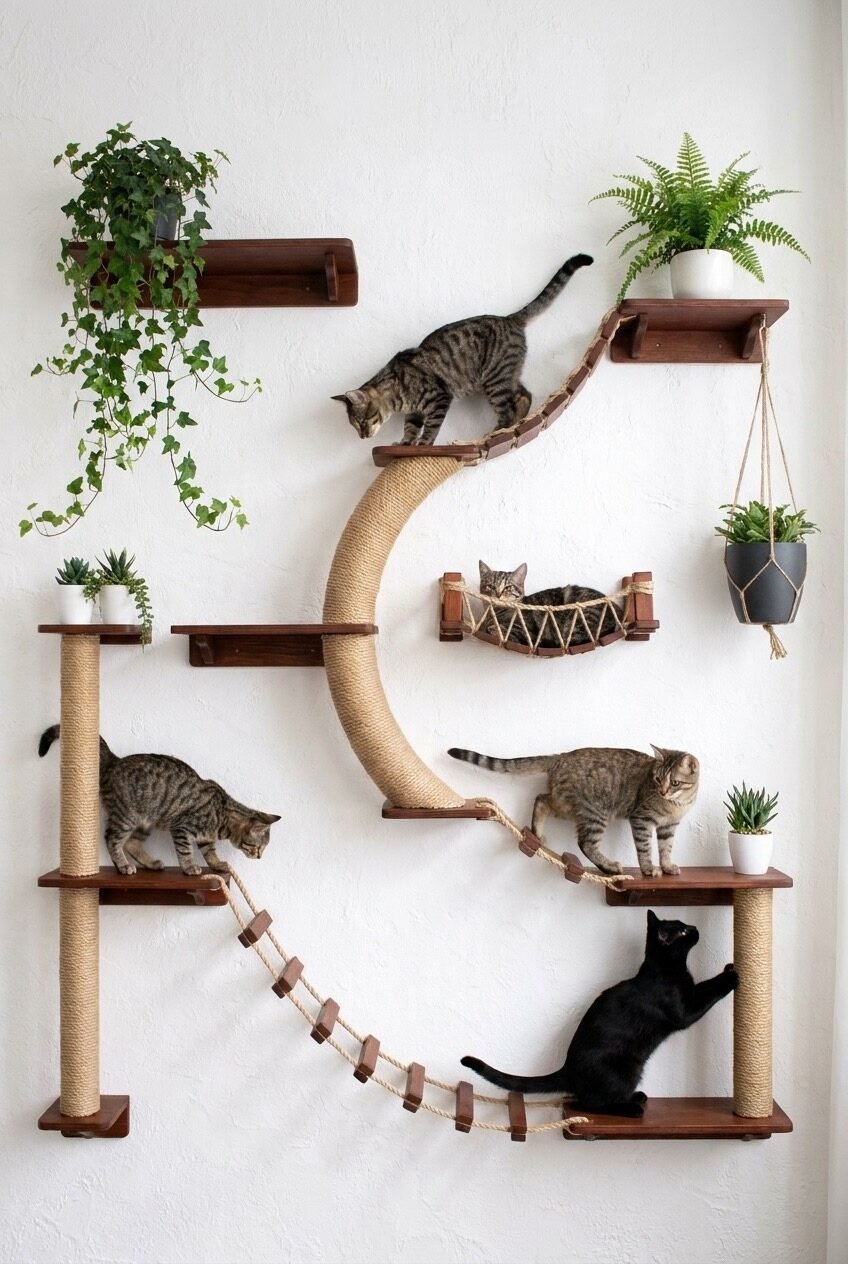
Curves are rare in cat furniture, and that is exactly why this one stands out. Most builds default to straight ramps and right angles because they are easier to construct, but the sisal wrapped S curve running through the middle of this wall turns a functional climb into something closer to a piece of modern sculpture.
White walls do a lot here too, letting the dark wood and warm rope stand out instead of competing with a busier background. Multiple cats can use the system at once because the platforms branch off at different points along the curve, so nobody has to wait their turn on a single path.
To pull this off, you will want a curved core, either bent wood or a custom frame, wrapped tightly in sisal rope so cats can grip it while climbing. Keep the wall color neutral and let the natural wood tones and rope textures carry the visual interest instead of adding extra color or pattern.
Honeycomb Pods Bring Geometric Precision
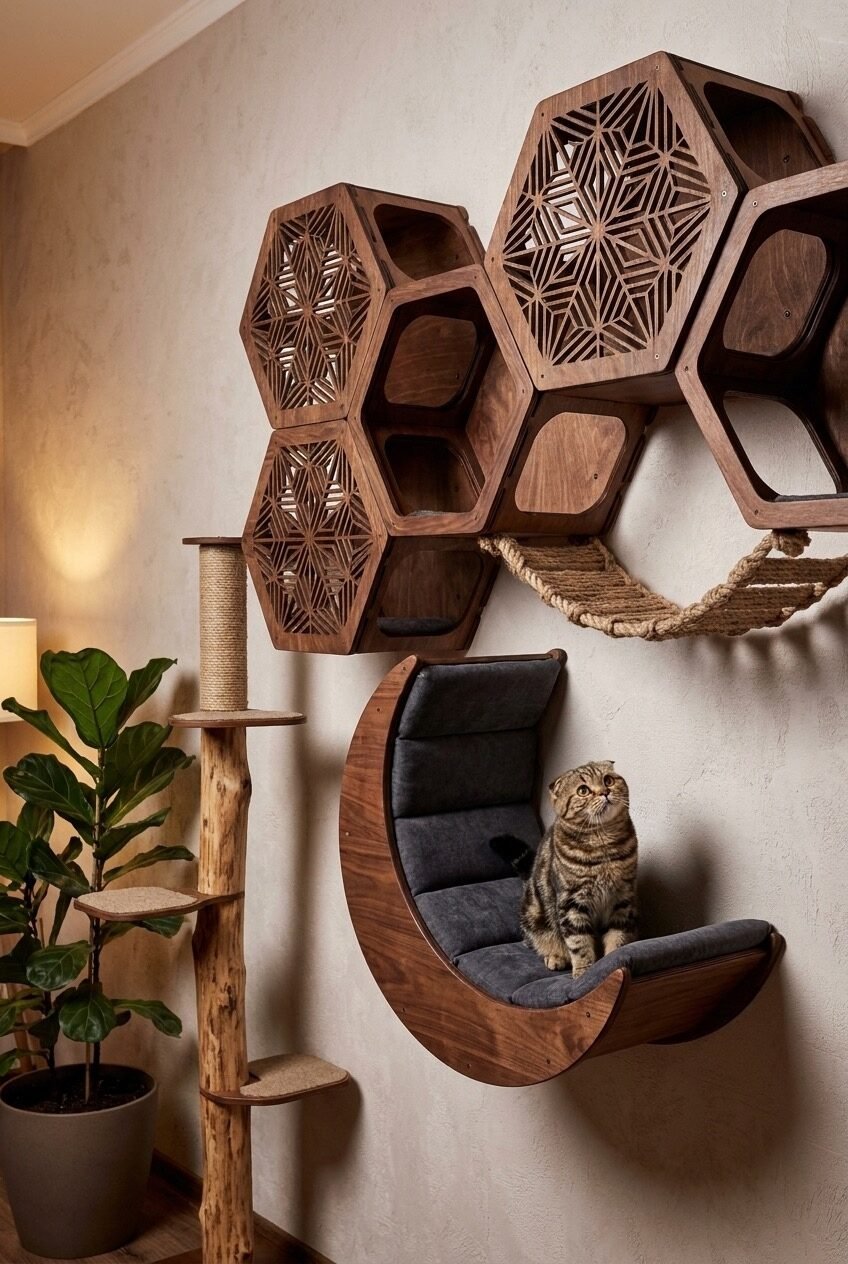
If you want a cat wall that could pass for high end furniture, geometry is your friend. This cluster of hexagon pods locks together like honeycomb, and the laser cut star patterns on the fronts do more than look nice. They let light and air through while still giving cats a semi enclosed space to hide in.
Below the pods, a crescent shaped cushioned seat picks up on the same rounded geometry, which keeps the whole wall feeling like one cohesive system instead of a pod cluster with a random bench underneath. Dark walnut toned wood throughout ties it together and reads more like custom cabinetry than pet furniture.
Repeating a single shape, in this case the hexagon, is the easiest way to get this look without an architecture degree. Mix in one or two pods with solid backs for cats who want to hide completely, and add a soft cushioned piece somewhere lower so there is a landing spot that is not hard wood.
A Branch Tree Meets Stone
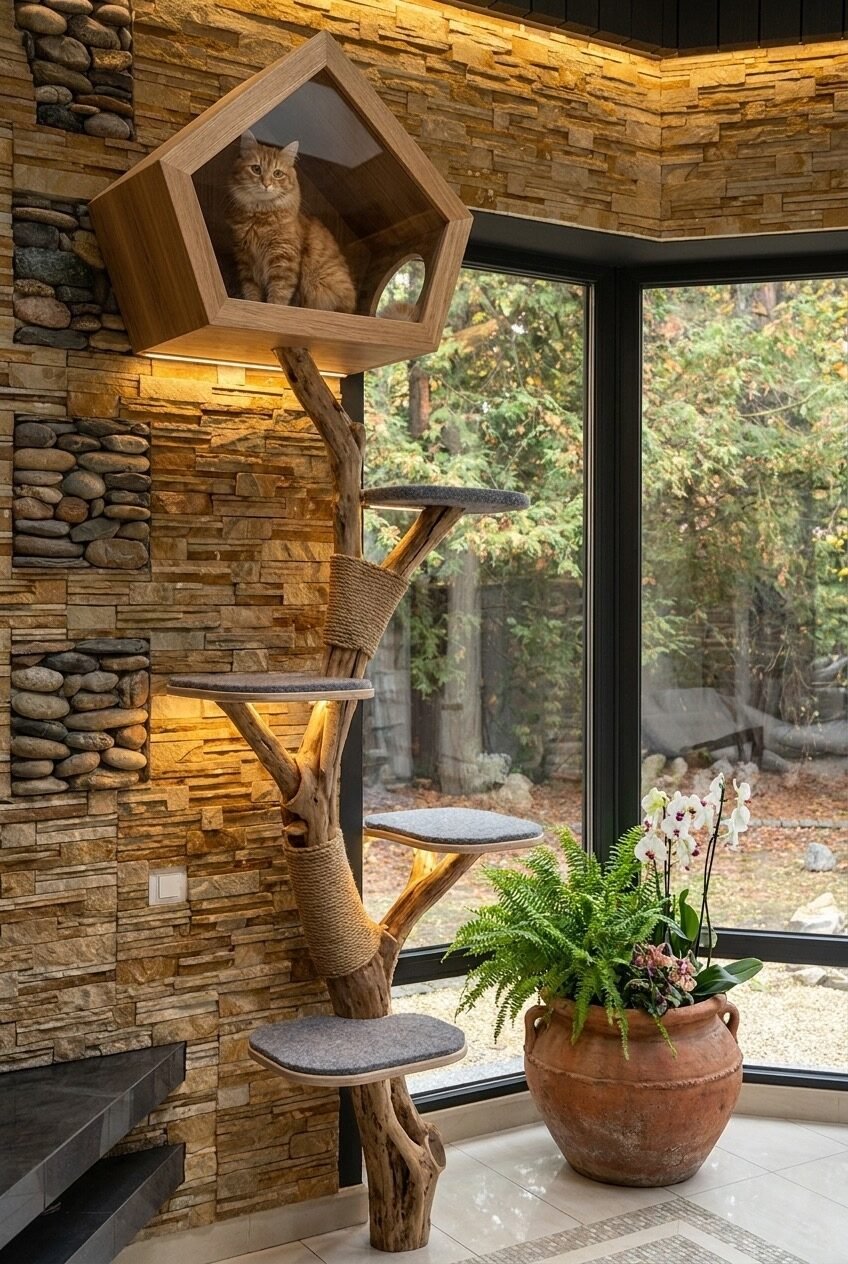
There is a version of indoor outdoor living happening in this corner, and the cat tree sits dead center in it. A real tree branch, left mostly as is, climbs up a stacked stone wall next to floor to ceiling windows, so the line between structural decor and cat furniture basically disappears.
The pentagon shaped den at the top is the one clearly built piece in an otherwise raw, natural setup, and that contrast works because of the glass front. Cats get an enclosed spot without disappearing entirely from view, which matters when the whole point of the corner is to be looked at.
If your home already has a stone accent wall or a big window nook, a single substantial branch mounted vertically will do more visual work than a manufactured tree ever could. Wrap the branch in sisal at climbing points for grip, and add one enclosed box near the top so cats have a destination, not just a path.
String Lights Soften A Corner
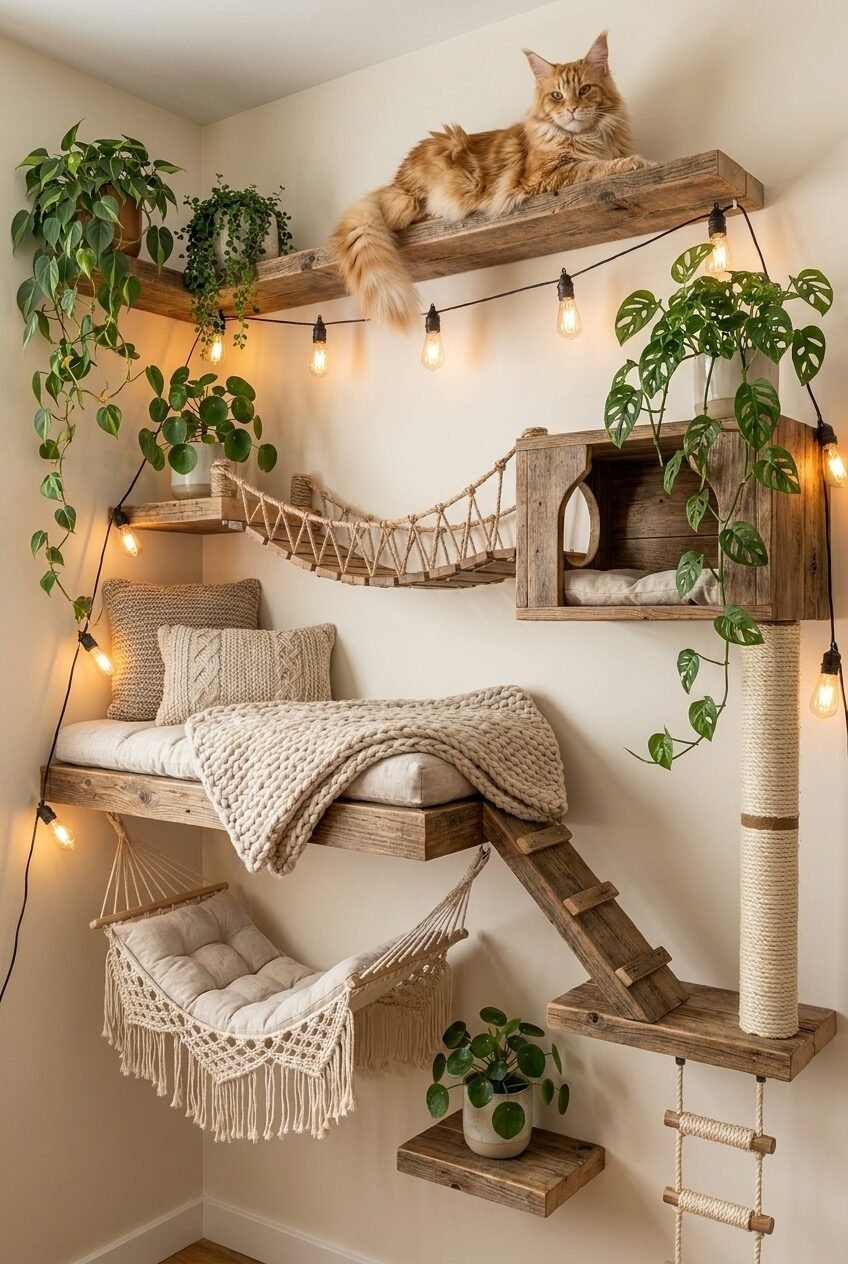
A cushioned bench with a knit blanket and throw pillows might be the least expected detail in a cat setup, but it is the detail that makes this whole wall feel like a room instead of an installation. It is built for a cat, sure, but it looks like somewhere a person would want to sit too.
String lights threaded through the reclaimed wood shelves do a lot of the mood setting, and a rope bridge overhead adds height without crowding the lower levels where the soft furnishings live. Layering textures like knit blankets, macrame, and rough wood keeps a rustic setup from feeling flat or one note.
Reclaimed or distressed wood is worth seeking out here over anything too polished, since the whole look depends on texture. Add a folded blanket and a pillow or two to at least one shelf, string warm toned lights along the edges, and let trailing plants like pothos spill over the sides to soften the hard lines.
A Hallway Becomes A Highway
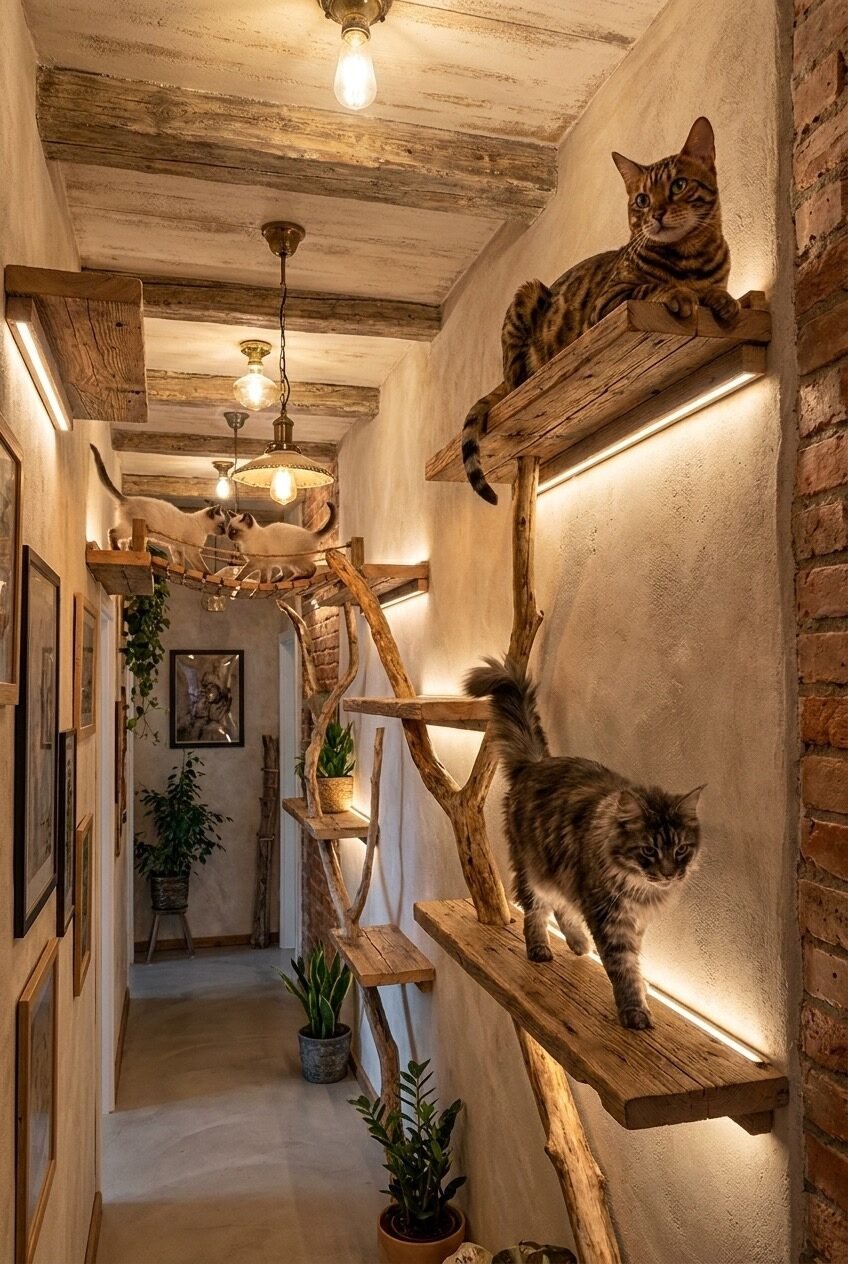
Hallways are one of the most wasted spaces in a house, and this one proves it. Instead of leaving it as a pass through, wood shelves and branch supports line both walls, with a rope bridge connecting them near the ceiling so cats can cross from one side to the other instead of walking the floor like everyone else.
LED strips tucked under each shelf give the whole corridor a soft glow at night, which also happens to make the wood grain and exposed brick look more expensive than they probably were. Running a light source along every level is what keeps a narrow space from feeling like a dark tunnel once the shelves go in.
This works especially well in hallways with high ceilings, since you can stack several levels without ever blocking the walking path below. Keep shelf depth shallow, around eight inches is usually enough, and stick with warm white LED strips rather than bright white so the space still feels like part of the home.
Pallet Wood Doubles As Daybed
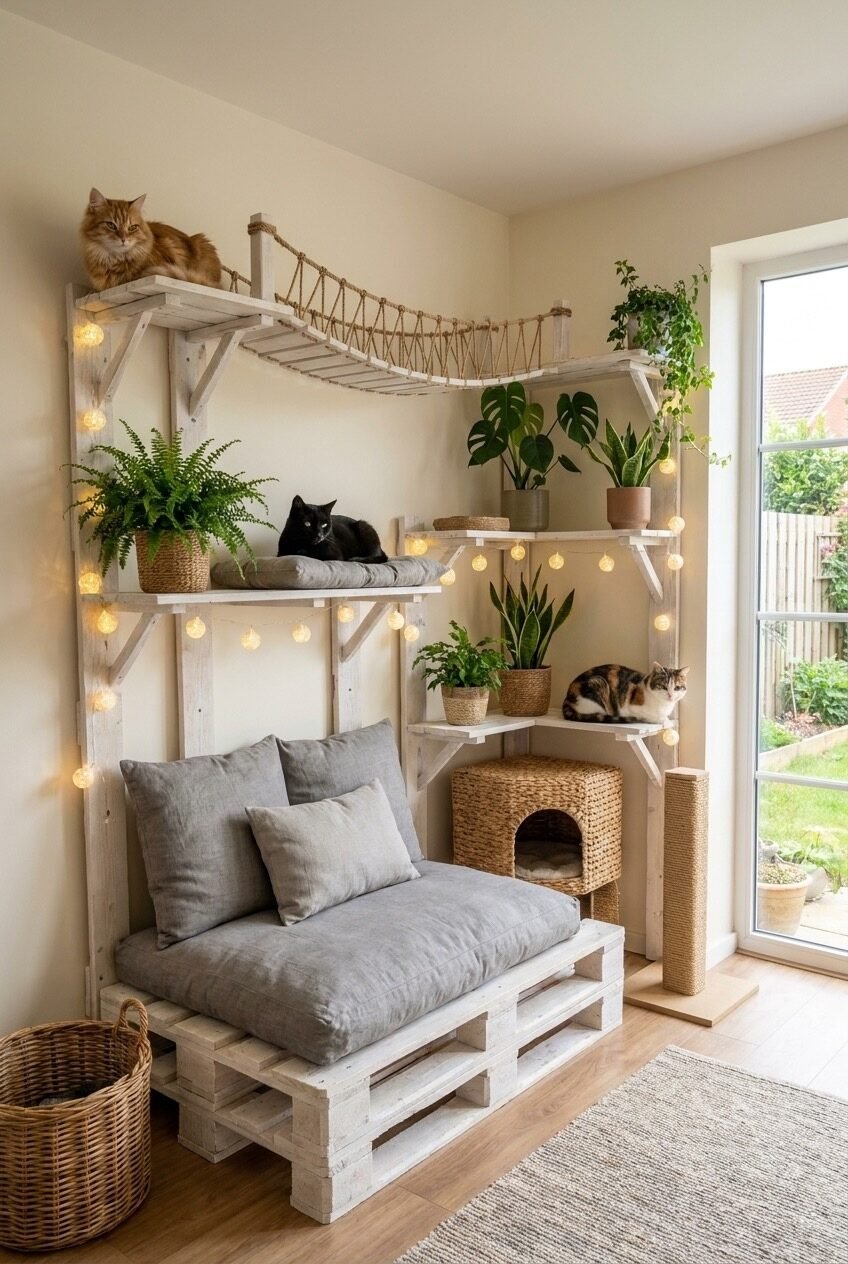
Not every build here requires custom woodworking or a big budget. This whole system is built from pallets, whitewashed and stacked to form both the wall shelving and a low daybed at the base, which means the most expensive part might just be the cushions.
A woven rope bridge up top and a wicker den lower down add texture without adding cost, and the string lights running through the whole thing make the DIY nature basically invisible from a few feet back. Big garden facing windows help too, since natural light hides a lot of imperfect pallet joints.
If you are working with pallets, sand them down before whitewashing so cats are not climbing over splinters, and build the base daybed wide enough for a full size cushion so it doubles as seating for you too. Stack shelves at varying depths above it so cats are not all stuck on one flat plane.
Stacked Crates Build A Condo
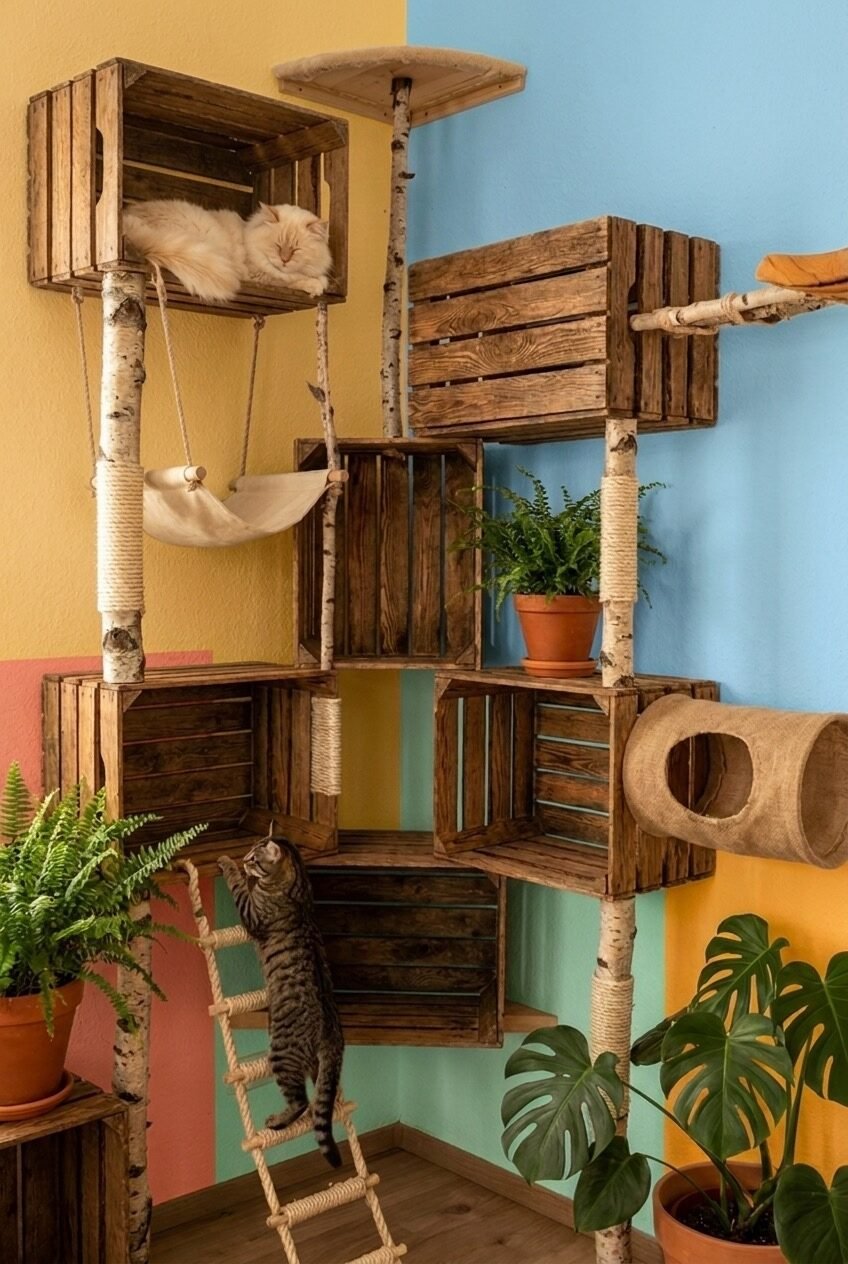
Wooden crates turn out to be one of the easiest ways to build vertical cat housing, and this corner stacks them like building blocks, some open faced, some enclosed, connected by birch branch poles instead of standard dowels for a slightly wilder look.
A burlap tunnel and a rope ladder break up what could otherwise feel like a wall of boxes, giving cats more than one way to move between levels. The colorblocked wall behind it does the same job as the crates, breaking a big surface into smaller, more playful sections instead of one flat block of color.
Crates are easy to source secondhand and simple to stain or leave raw, so this is a solid starting point if budget or time is tight. Stagger them instead of stacking in a perfect grid, leave a few open faced for lounging, and add one enclosed box near the top for cats who want more privacy.
A Wall Can Be Furniture And A Playground
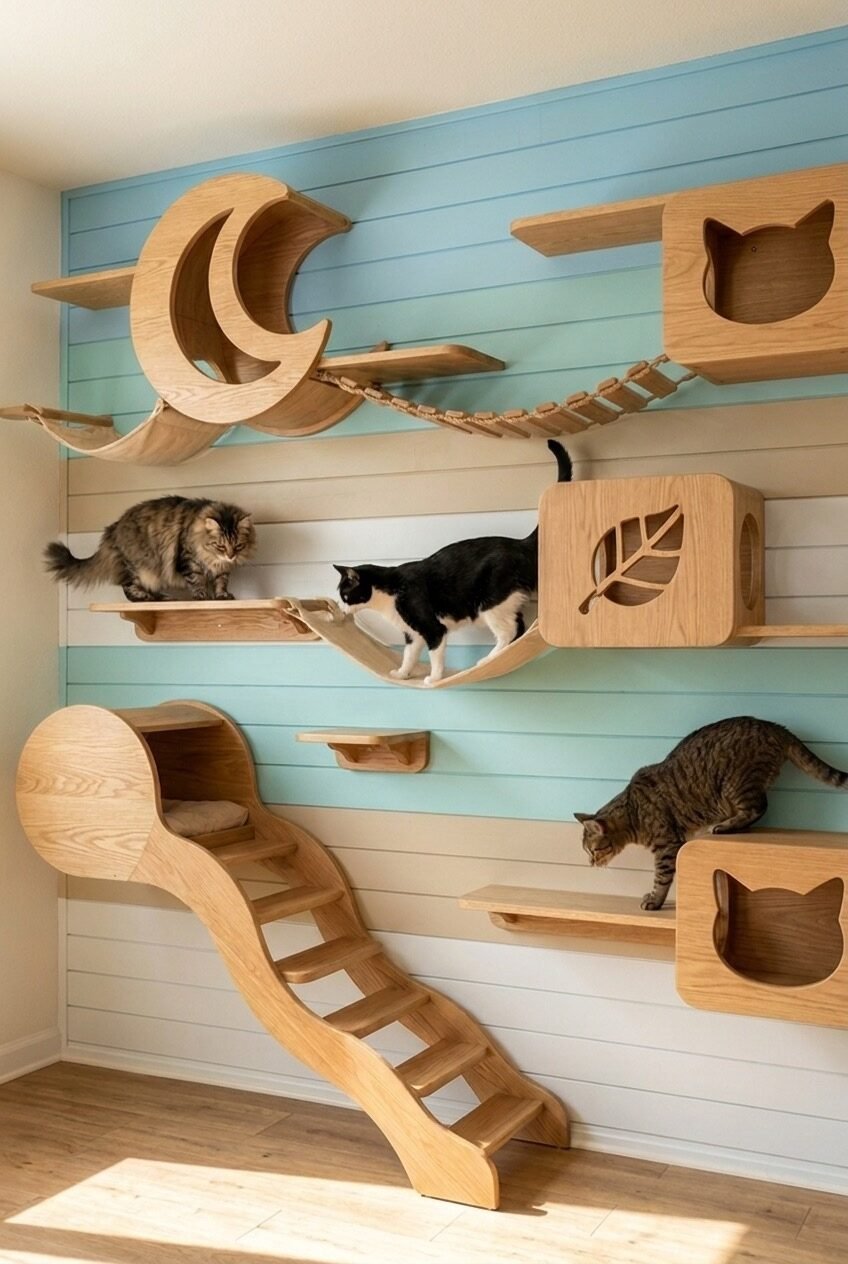
What ties these together is not a single material or color palette, it is the idea that vertical space deserves the same design attention as anything else in a room. None of these walls look like an afterthought, and none look like they were built purely for the cat’s benefit either.
That is the balance worth aiming for. A good wall setup should hold up as decor even on days when the cat is asleep somewhere else entirely, whether that means raw branches, painted crates, or a sculptural ramp running through the middle of the room.
Start small if the whole thing feels like too much at once. One shelf, one bridge, one enclosed box is enough to see how your own cat actually uses vertical space before committing to a full wall. The right setup is the one your cat actually chooses to use, not just the one that photographs well.