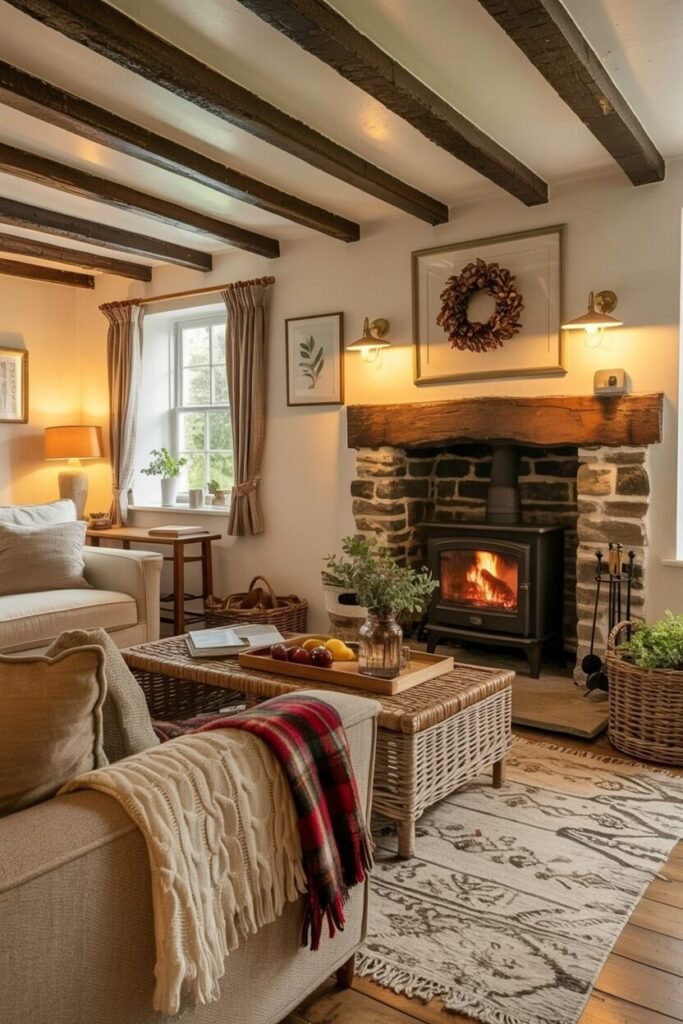

The Soft Coastal Decor Look Everyone’s Trying To Recreate Right Now
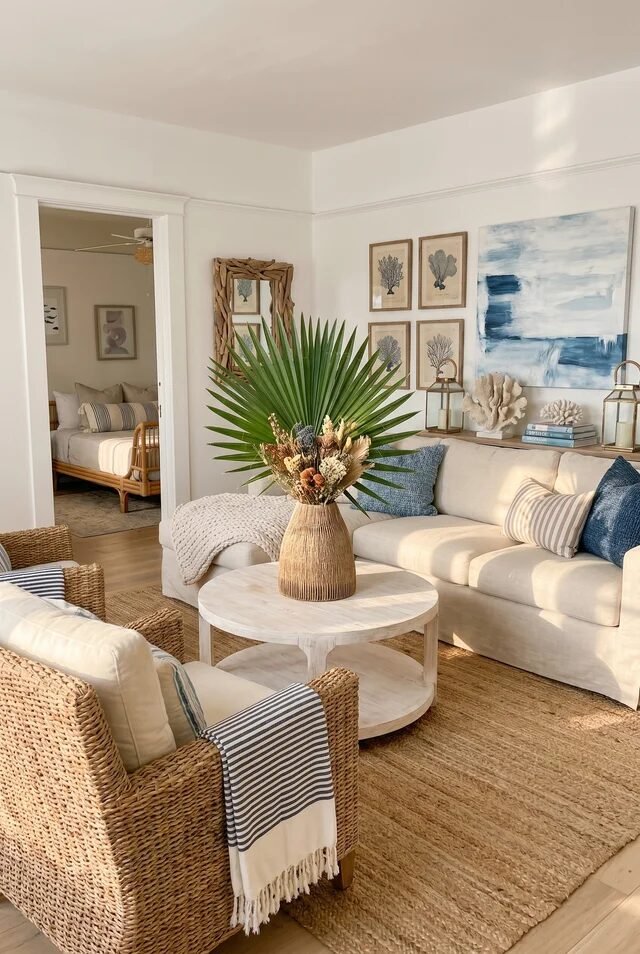
There’s something about coastal decor that instantly changes the energy of a home. Maybe it’s the soft natural textures, the breezy color palettes, or the fact that coastal interiors somehow make us believe we suddenly have our life together enough to drink lemon water near a window at 7 a.m. Either way, the style continues to dominate because it creates spaces that feel calm, welcoming, and genuinely livable instead of overly staged.
What makes modern coastal decor especially appealing is that it has evolved far beyond the obvious beach clichés. Today’s coastal interiors focus more on warmth, layering, and natural materials than giant anchor signs yelling “WELCOME ABOARD” from the wall. We’re seeing woven lighting, driftwood textures, relaxed linen fabrics, muted ocean-inspired tones, and airy layouts becoming the real stars of the aesthetic. The goal is not to recreate a literal beach inside your house — it’s to recreate the feeling of being near one.
Throughout these ideas, we’ll notice how thoughtful texture layering, balanced palettes, natural light, and organic materials work together to create coastal spaces that feel relaxed, elevated, and timeless without trying too hard.
Driftwood Layers That Quietly Warm Coastal Living Rooms
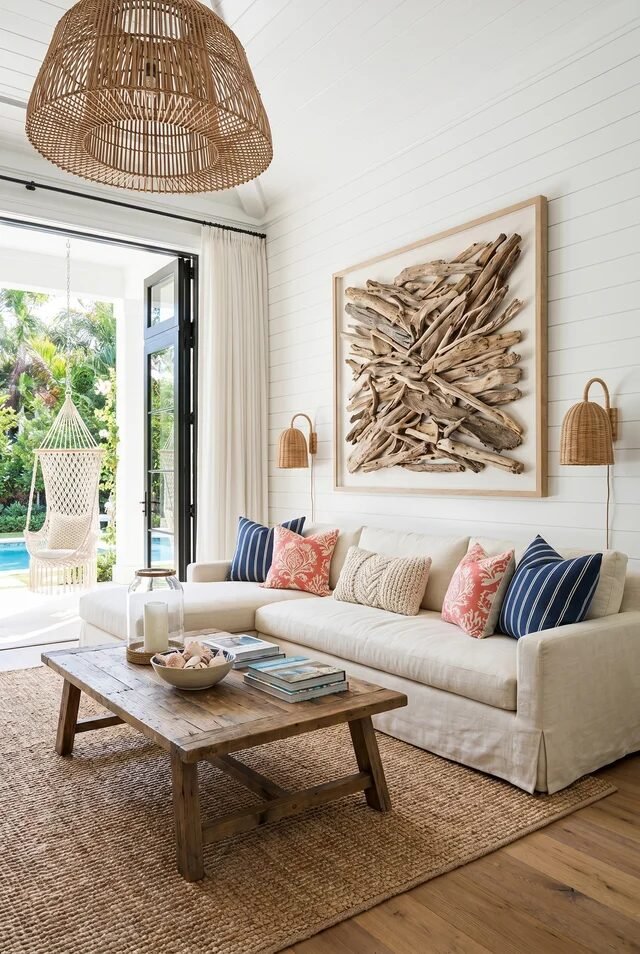
This living room understands something a lot of “coastal decor” misses: beachy does not mean turning your house into a souvenir shop with random anchors everywhere. The space works because it balances soft neutrals, natural texture, and airy negative space instead of overloading the room with themed objects.
That oversized driftwood wall art acts as the focal point, while the woven pendant and jute rug repeat organic textures throughout the room. Design-wise, repetition is doing the heavy lifting here. When similar materials appear multiple times, the room instantly feels cohesive instead of chaotic.
The creamy slipcovered sofa also matters more than people realize. In coastal interiors, bulky furniture can kill the breezy vibe faster than a broken beach umbrella. Low-profile seating keeps the room visually open while still feeling cozy enough for marathon Netflix behavior. The blue striped pillows introduce contrast without overpowering the neutral palette. That soft coral accent is the secret reason the room feels warm instead of sterile.
If we wanted to recreate this look affordably, we’d prioritize texture before accessories. Start with woven lighting, linen curtains, and warm wood tones first. Coastal design always looks more expensive when the materials feel relaxed and slightly imperfect. Honestly, polished perfection is not the vibe here. Slightly weathered woods and handmade decor are what make the room feel believable and lived in.
Tiny Coastal Corners That Feel Surprisingly Expensive
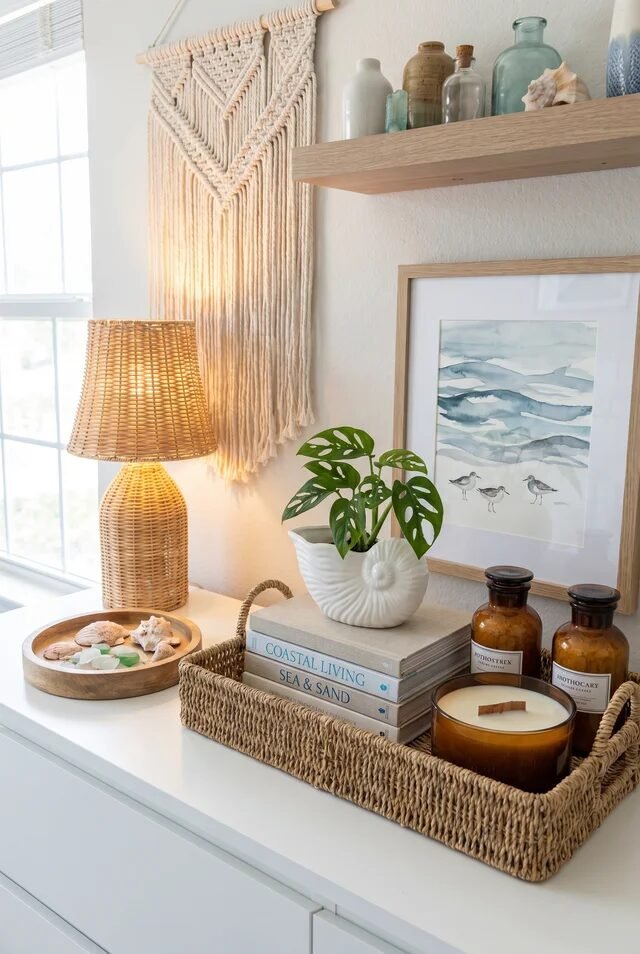
This setup proves small coastal moments can carry an entire room if they’re styled correctly. The tray styling works because every object contributes to a single visual story: woven texture, muted sea-glass colors, soft ceramics, and warm amber tones. Instead of cluttering the console with random decor, the arrangement uses intentional grouping and height variation to create balance. That’s why it feels curated instead of “we bought everything at one clearance aisle and prayed.”
The macrame wall hanging softens the hard lines of the shelf and dresser, which is an underrated coastal design trick. Coastal spaces usually need something tactile because minimalist white walls can start feeling cold very quickly. The woven lamp also adds ambient lighting, and honestly, warm lighting is carrying at least 60% of this aesthetic on its back. Cool-toned bulbs would absolutely ruin the cozy beach-house energy here.
One reason this corner feels elevated is the restrained color palette. We mainly see sandy beige, soft white, faded aqua, and tiny earthy accents. Limiting the palette makes even affordable decor feel intentional and designer-inspired. If we were recreating this at home, we’d focus on natural baskets, textured textiles, and objects with organic shapes rather than overly themed “coastal” signs. Your house does not need a giant “BEACH” sign screaming at guests from across the room. We can be subtle.
Open Shelving That Makes Coastal Kitchens Feel Airier
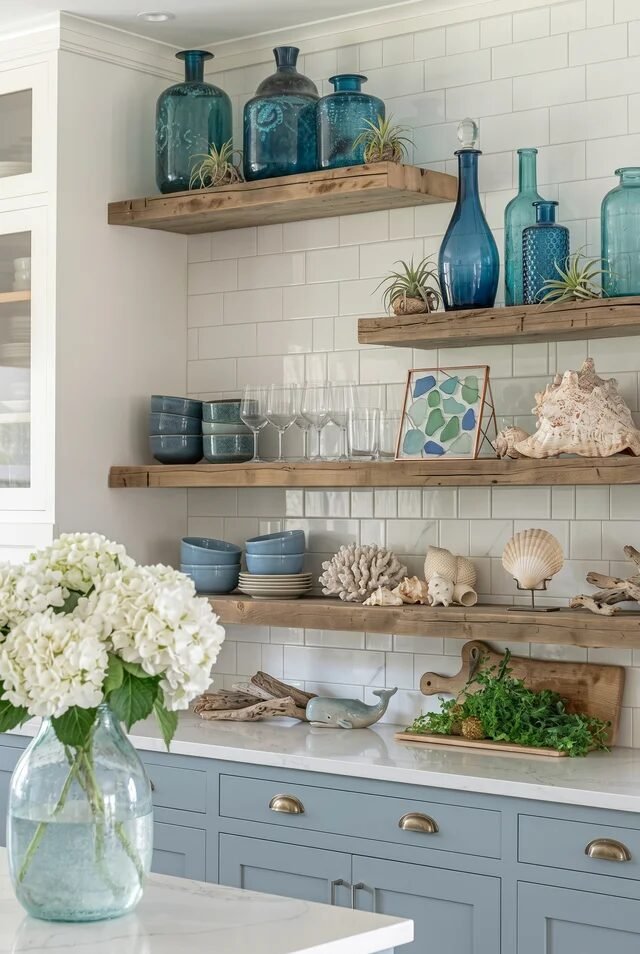
Open shelving can either look effortlessly stylish or like a garage sale exploded in the kitchen. Thankfully, this one understands restraint. The shelves feel balanced because the decor follows a rhythm: blue glass bottles on top, functional dishware in the middle, and organic coastal accents layered throughout. The repetition of blue tones creates visual continuity, which is why the eye moves smoothly across the shelves instead of stopping at random clutter piles.
The white subway tile backdrop is doing serious work here too. Bright reflective surfaces help coastal kitchens feel lighter and cleaner, especially when paired with weathered wood shelving. That contrast between crisp white and rustic texture is what keeps the room from feeling too modern or too farmhouse-heavy. Coastal interiors work best when there’s a little tension between polished and relaxed elements. Too perfect feels cold. Too rustic starts drifting into pirate tavern territory.
What makes this styling especially smart is the mix of practical and decorative pieces. Plates, glasses, and bowls are integrated with coral, shells, and sea-glass-inspired bottles, so the shelves still feel functional. If we wanted to recreate this look, we’d leave breathing room between objects. Coastal styling relies heavily on negative space because it mimics the openness of seaside environments. Crowded shelves instantly make coastal kitchens lose their calm atmosphere.
Soft Coastal Bedrooms That Feel Calm Without Trying
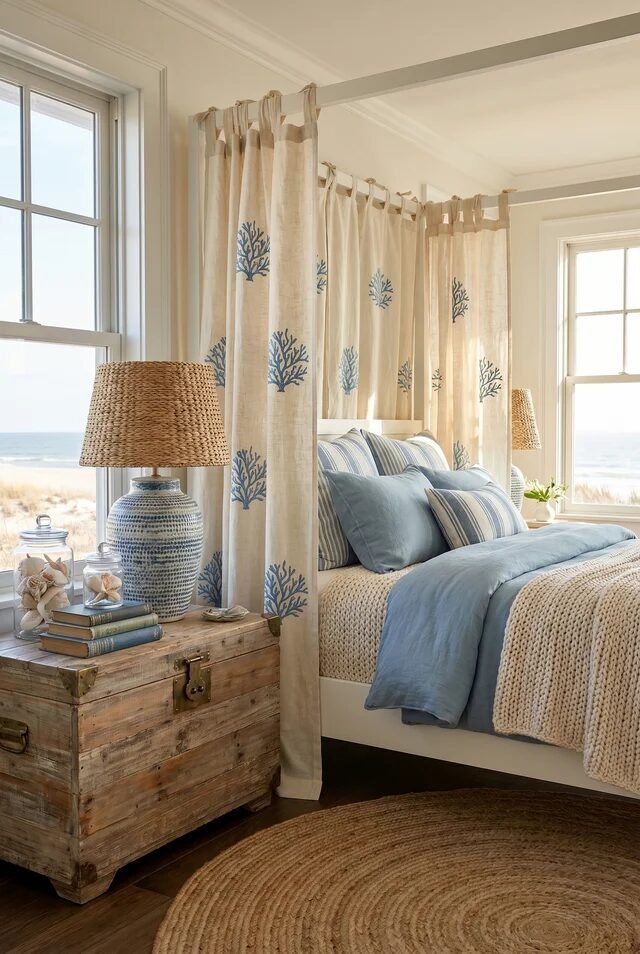
This bedroom nails the kind of relaxed coastal mood that makes people suddenly want to become “morning coffee by the ocean” people overnight. The biggest reason it works is layering. We see linen curtains, knitted throws, woven rugs, soft bedding, and rustic wood all interacting together, which creates warmth without needing loud colors. Coastal bedrooms often fail when everything is too white and flat. Texture is what gives the room depth and emotional warmth.
The pale blue bedding introduces color in a gentle way that doesn’t overwhelm the neutral palette. Blue is being used strategically here instead of aggressively. That’s important because coastal design should feel soothing, not like we accidentally moved into an aquarium. The coral-print curtains subtly reinforce the beach inspiration while still reading sophisticated and grown-up. Repeating small motifs softly throughout a room creates cohesion without looking overly themed.
Another smart detail is the use of natural wood beside soft fabrics. That balance prevents the space from becoming overly delicate or too rustic. The vintage trunk works as both storage and visual grounding, which is ideal in coastal bedrooms where airy fabrics can sometimes make spaces feel floaty. If we were recreating this vibe, we’d prioritize layered textiles and warm lighting before buying decorative beach accessories. Honestly, cozy atmosphere always matters more than themed decor overload.
Collected Seashell Walls With Relaxed Coastal Character
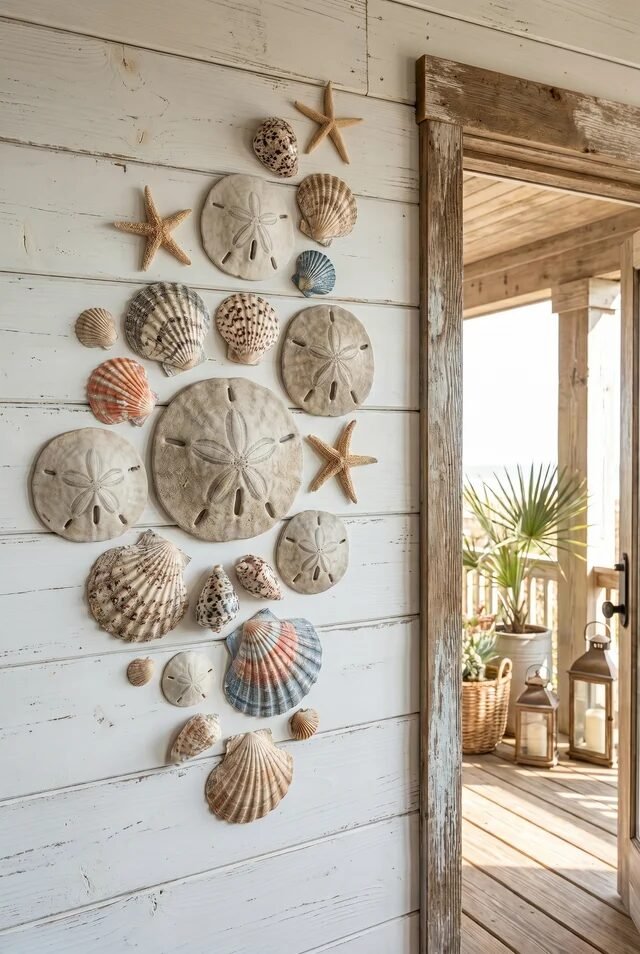
This wall display feels personal and artistic because it embraces imperfection instead of forcing strict symmetry. Coastal decor becomes way more interesting when collections feel organic and slightly accidental, like treasures gathered over time rather than dumped out of a craft store bag five minutes ago. The varying shell sizes create natural movement across the wall, while the weathered wood backdrop reinforces the relaxed coastal mood.
One reason this arrangement works visually is scale variation. Larger sand dollars anchor the composition while smaller shells fill negative space naturally. That balance prevents the display from looking flat or overly repetitive. The distressed wood trim around the doorway also helps frame the installation and adds architectural warmth. Coastal interiors almost always benefit from weathered finishes because they soften the space emotionally and visually.
What keeps this from feeling cheesy is the muted color palette. The shells stay within soft sandy, ivory, and faded blush tones, which allows the texture to become the main feature. Bright artificial colors would completely change the vibe and make the wall feel tourist-shop adjacent. If we wanted to recreate this idea, we’d mount shells with enough spacing so each piece can breathe visually. Coastal styling always feels more elevated when the decor looks naturally collected instead of aggressively decorated.
Driftwood Bathroom Styling That Feels Surprisingly Luxe
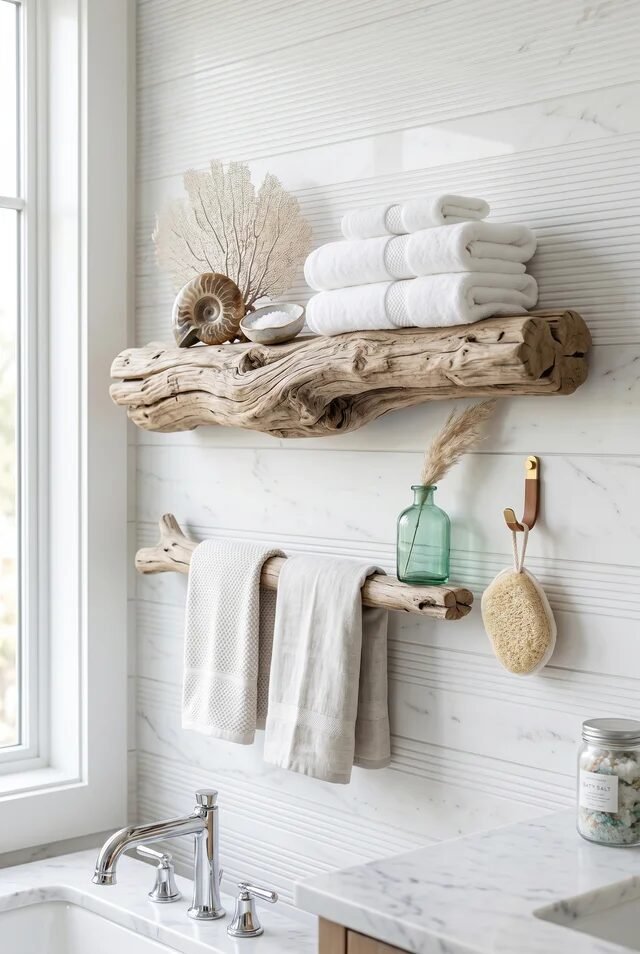
This bathroom is proof that coastal decor can feel elevated without looking like a seafood restaurant lobby. The driftwood shelving instantly creates warmth against the sleek white surfaces, and honestly, that contrast is exactly why the room works. Coastal spaces need tension between polished and organic materials or they start feeling flat. The marble counters and ribbed wall tile bring clean sophistication, while the weathered wood softens everything so the room still feels relaxed and approachable.
What makes this setup especially smart is the vertical styling. Instead of crowding the counter with decor chaos, the shelves pull the eye upward and maximize wall space. That keeps the bathroom visually open, which is important in smaller coastal-inspired spaces. The neutral palette also allows texture to become the star of the room rather than color overload. We’re seeing linen towels, raw wood grain, sea-inspired decor, and soft ceramics doing all the heavy lifting here.
If we wanted to recreate this look, we’d focus on layered natural materials first before buying themed accessories. Driftwood towel bars, woven textures, and muted sea-glass accents instantly create a coastal atmosphere without screaming “beach house gift shop.” Also, keeping towels bright white is lowkey a designer trick because it makes the room feel cleaner, fresher, and more spa-like immediately.
Blue Striped Seating That Feels Timeless Coastal
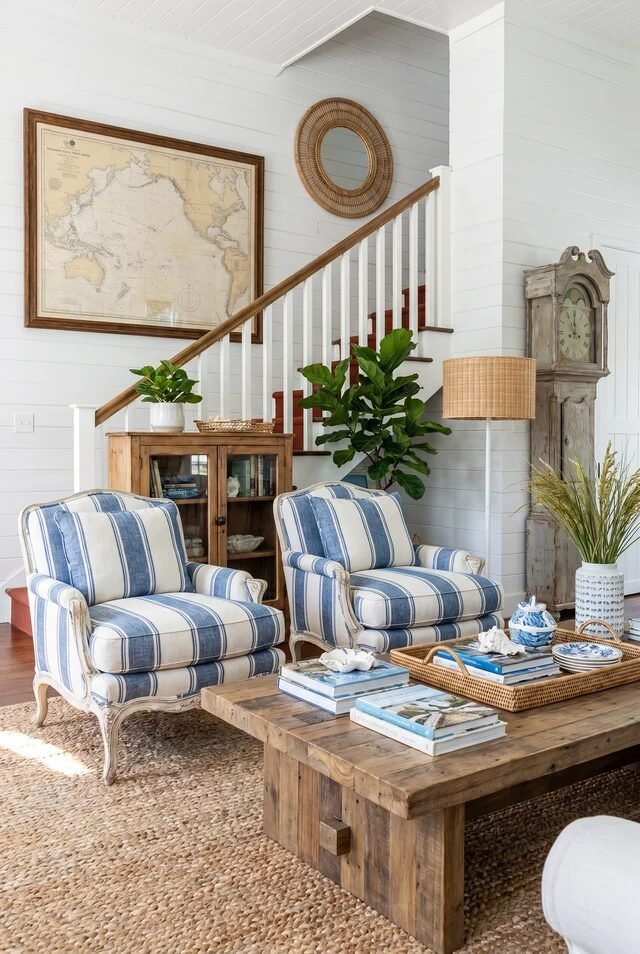
These striped chairs are carrying this entire room with the confidence of someone who definitely owns a yacht. The blue-and-white upholstery immediately establishes a coastal mood, but the space stays sophisticated because the stripes are balanced with warm woods, woven textures, and soft neutral walls. If every single item in the room were blue, this would start feeling aggressively nautical very fast. Instead, the palette feels calm, layered, and grown-up.
One of the strongest design choices here is the mix between formal and relaxed elements. The traditional chair silhouettes and antique-style clock add structure and elegance, while the jute rug and rustic coffee table keep the room approachable. That balance is what makes coastal interiors feel timeless instead of trendy. The large vintage map also works as oversized wall art without visually overwhelming the room because its muted tones blend naturally into the palette.
Another thing worth stealing from this setup is the furniture spacing. Nothing feels shoved together, which allows the room to breathe visually. Coastal interiors almost always benefit from openness because it mimics the relaxed feeling of seaside living. If we were recreating this idea, we’d prioritize natural textures and classic patterns over overly themed decor pieces. Subtle coastal references age way better than giant anchor pillows. We said what we said.
Breezy Coastal Living Rooms With Relaxed Texture
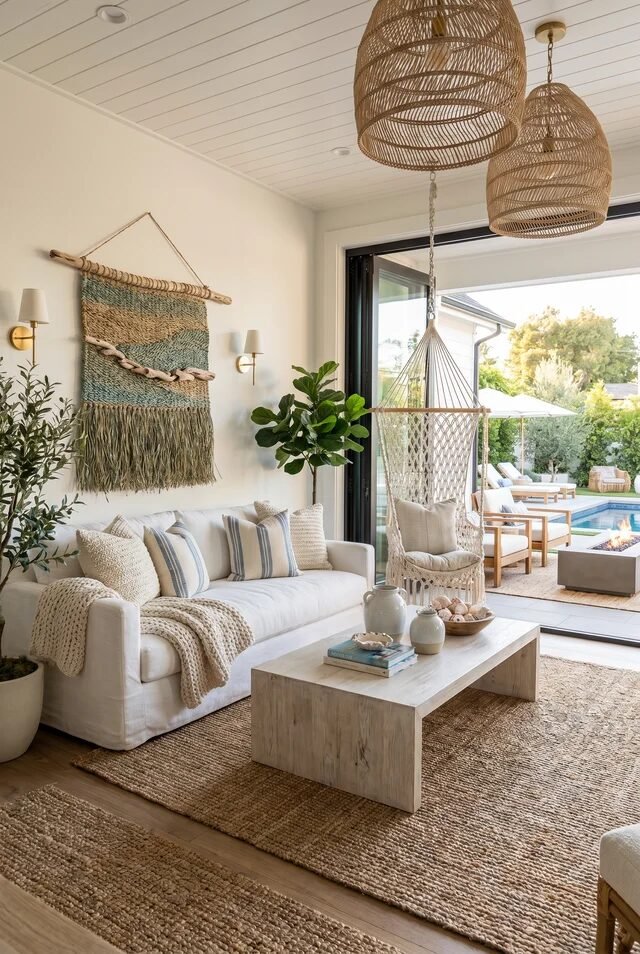
This room feels like the human version of taking a deep breath. Everything works together because the textures are layered thoughtfully instead of competing for attention. The woven pendants, jute rug, knitted throws, and macrame wall hanging all reinforce the same relaxed coastal energy. Repeating similar materials across different areas of the room creates cohesion naturally, which is why the space feels calm instead of cluttered.
The neutral color palette also deserves credit here. Creamy whites, sandy beiges, muted greens, and faded blue accents create softness without making the room feel boring. Coastal interiors often fail when they rely only on color and ignore texture. Here, texture is basically the main character. The hammock chair near the open doors adds movement and casualness, which helps the room feel lived in rather than staged for a furniture catalog nobody actually sits in.
One particularly smart detail is the connection between indoor and outdoor spaces. The large open doors visually extend the room into the patio area, making the home feel brighter and larger overall. If we wanted to recreate this look, we’d prioritize lightweight fabrics, woven lighting, and layered neutrals before buying decorative beach accessories. Honestly, the best coastal rooms feel effortless, not overly decorated like someone panic-bought every shell-shaped object online at 2 a.m.
Woven Coastal Dining Rooms That Feel Softly Elegant
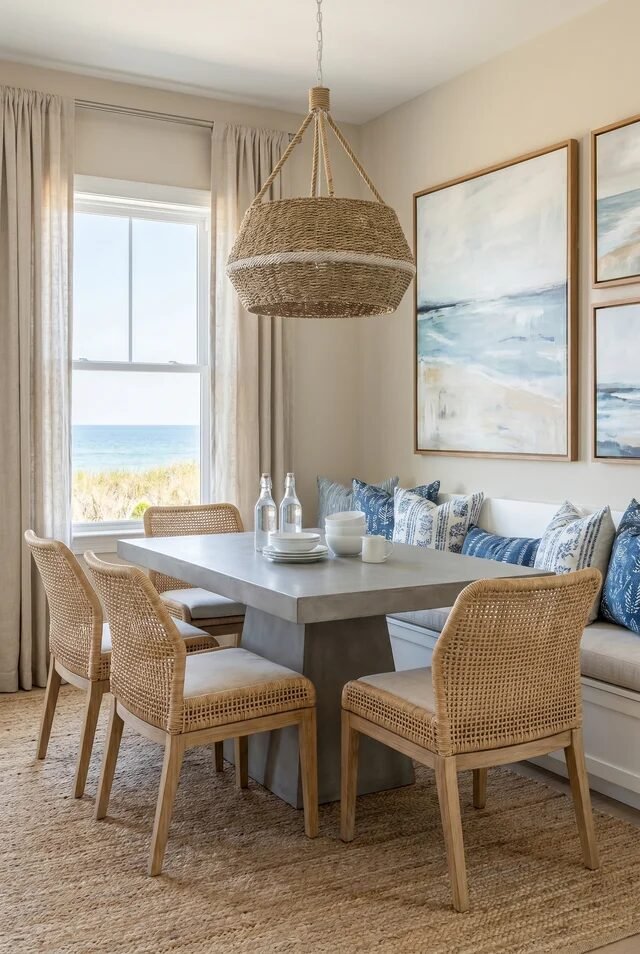
This dining area proves coastal decor can absolutely feel refined without losing its cozy charm. The woven chandelier immediately becomes the focal point because of its oversized scale and sculptural texture. Large lighting pieces are honestly underrated in coastal design. A statement pendant anchors the room visually while reinforcing the relaxed natural aesthetic at the same time.
The built-in bench seating is another reason the room feels so inviting. Besides saving space, it creates a casual lounge-like atmosphere that traditional dining chairs alone usually cannot achieve. The layered blue pillows subtly echo the ocean view outside without turning the room into an obvious beach theme. We also love how the soft linen curtains frame the windows while keeping the light filtered and airy. Natural light is basically free interior design therapy in coastal homes.
The room succeeds because it balances clean lines with organic texture. The concrete-style table adds structure and weight, while the woven chairs soften the overall composition. If we wanted to recreate this setup, we’d focus on mixing tactile materials instead of matching furniture sets too perfectly. Coastal interiors look far more expensive when they feel collected over time. Also, oversized coastal artwork with muted tones always works better than loud tropical prints fighting for attention across the walls.
Narrow Coastal Spaces That Still Feel Warm
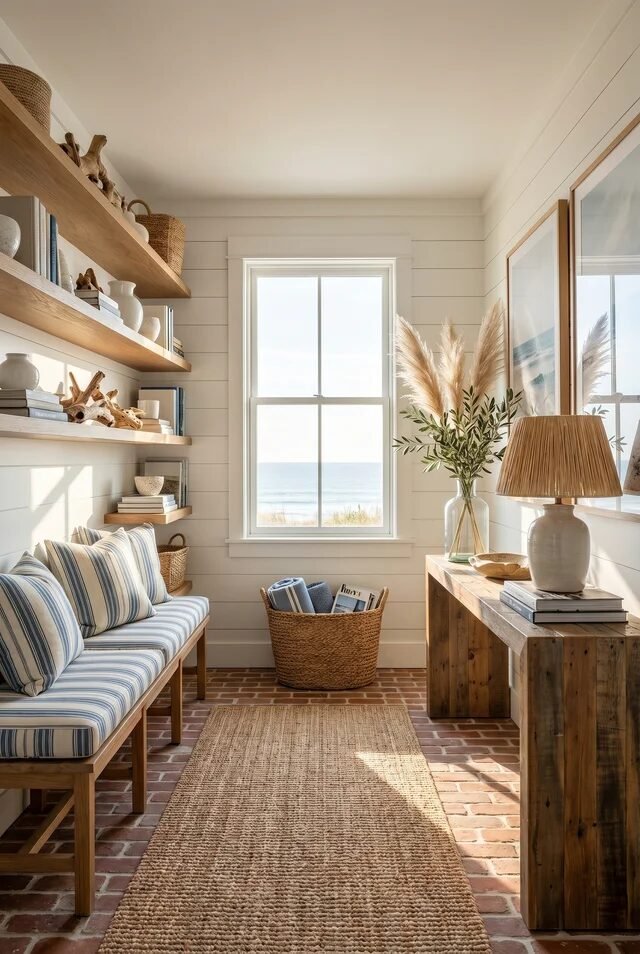
This narrow room could have easily felt cramped, but the layout choices make it feel surprisingly open and peaceful. The biggest reason is the long visual lines created by the shelving, rug, and bench seating. Everything guides the eye toward the window and ocean view, which naturally expands the space visually. Directional styling is one of the easiest ways to make small coastal rooms feel larger without knocking down walls.
The open wood shelving keeps the room airy compared to bulky closed cabinets. Styling is intentionally sparse, allowing each object to breathe visually. Coastal interiors rely heavily on negative space because openness creates that relaxed beach-house atmosphere people are chasing. The mix of books, driftwood pieces, ceramics, and woven baskets adds personality while still maintaining balance. Nothing feels random or overcrowded.
One of the smartest details here is the use of warm earthy tones instead of icy whites. The brick flooring, wood console, woven rug, and soft beige walls create warmth that prevents the room from feeling sterile. Coastal design is at its best when it feels sun-warmed and comfortable, not like we accidentally walked into a dentist office with seashell decor. If we were recreating this look, we’d absolutely prioritize texture layering and functional furniture before adding decorative extras.
Coastal Homes That Feel Relaxed Without Looking Boring
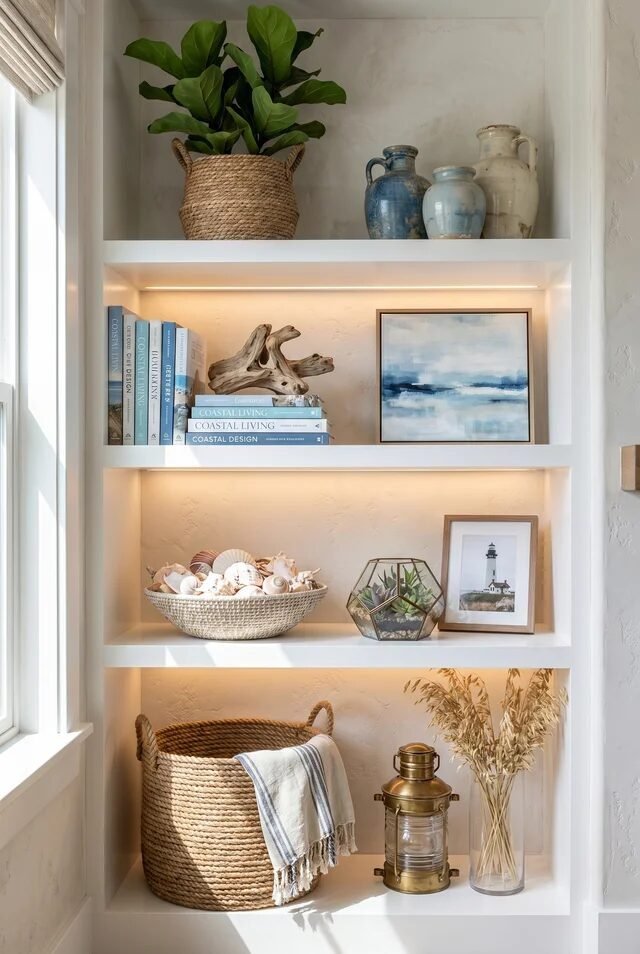
The best coastal interiors are never just about decorating. They’re about creating an atmosphere that feels open, breathable, comforting, and effortlessly collected over time. That’s why the most successful coastal homes lean heavily into texture, natural materials, and subtle layering instead of overwhelming rooms with overly themed decor. A woven pendant, weathered wood table, soft striped fabric, or relaxed linen curtain often says “coastal” more effectively than an entire shelf full of decorative seashells fighting for attention.
One thing these spaces consistently prove is that balance matters. Coastal rooms work best when soft and structured elements exist together. Rustic woods balance crisp white walls. Woven textures soften clean architectural lines. Muted blues add calmness without overpowering neutral palettes. That contrast between airy simplicity and cozy warmth is what makes coastal design feel timeless rather than trendy.
Honestly, the magic of coastal decor is how approachable it feels. We do not need oceanfront property or a millionaire renovation budget to recreate this aesthetic. Thoughtful lighting, layered textures, natural finishes, and intentional styling can completely shift the mood of a home. And at the end of the day, that relaxed “slow living by the sea” feeling is really what people are chasing anyway.