
The Coastal Kitchen Formula That Makes Any Home Feel Brighter
There is something about a coastal kitchen that instantly lowers our stress levels by at least 73 percent. Maybe it is the sunwashed colors, the natural textures, or the fact that every coastal kitchen somehow feels like it belongs near overpriced iced coffee and salty ocean air.
Whatever the reason, this style continues to dominate because it balances beauty with comfort in a way that never feels too formal or exhausting to maintain. The best coastal kitchens are not overly themed spaces filled with anchors and seashells everywhere. They are layered, airy, and intentionally relaxed.
Throughout these ideas, we can see how woven lighting, pale woods, soft blues, marble, sea glass tones, and organic materials all work together to create calm visual flow. Coastal kitchens thrive on natural light, breathable layouts, and texture contrast rather than excessive decoration. That is why these spaces feel timeless instead of trend-chasing. Whether we prefer dramatic statement islands or soft cottage-inspired cabinetry, the core principle stays the same: create a kitchen that feels open, warm, effortless, and just a little bit vacation-coded without trying too hard.
Woven Textures That Instantly Soften Coastal Kitchens
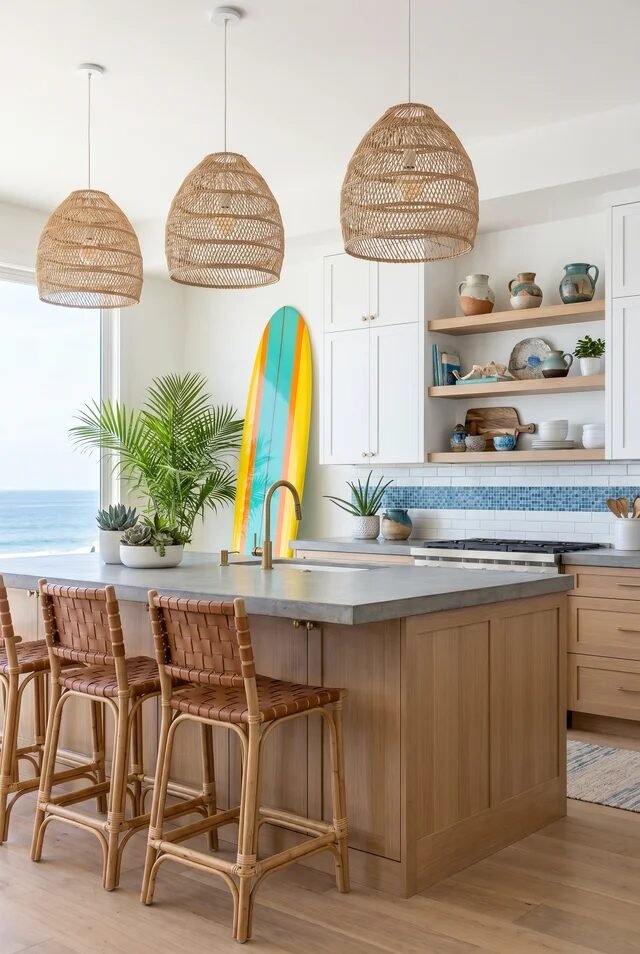
There is something wildly unfair about how much charm woven pendant lights add to a kitchen. Like suddenly the entire room feels calmer, warmer, and weirdly more expensive without even trying. In this space, the rattan lighting becomes the visual anchor, while the pale wood island and woven stools repeat the same organic texture for balance. That repetition is exactly why the room feels cohesive instead of chaotic. Coastal kitchens work best when materials quietly echo each other instead of competing for attention like reality TV contestants.
The surfboard decor could have looked gimmicky, but the placement saves it. Because the palette stays soft and neutral, the bright board acts like intentional artwork instead of random beach merchandise from 2014. We also love how the open shelving introduces pottery in muted ocean colors, which keeps the eye moving naturally around the room.
If we wanted to recreate this look, we’d focus heavily on texture layering first. Think wicker, pale oak, linen, ceramic, and brushed brass. Coastal design is less about “beach themes” and more about relaxed material combinations that feel sunwashed and breathable. Also: oversized pendants are doing a lot of emotional labor here, and honestly? We appreciate them for that.
Soft Seafoam Cabinets With Relaxed Cottage Energy
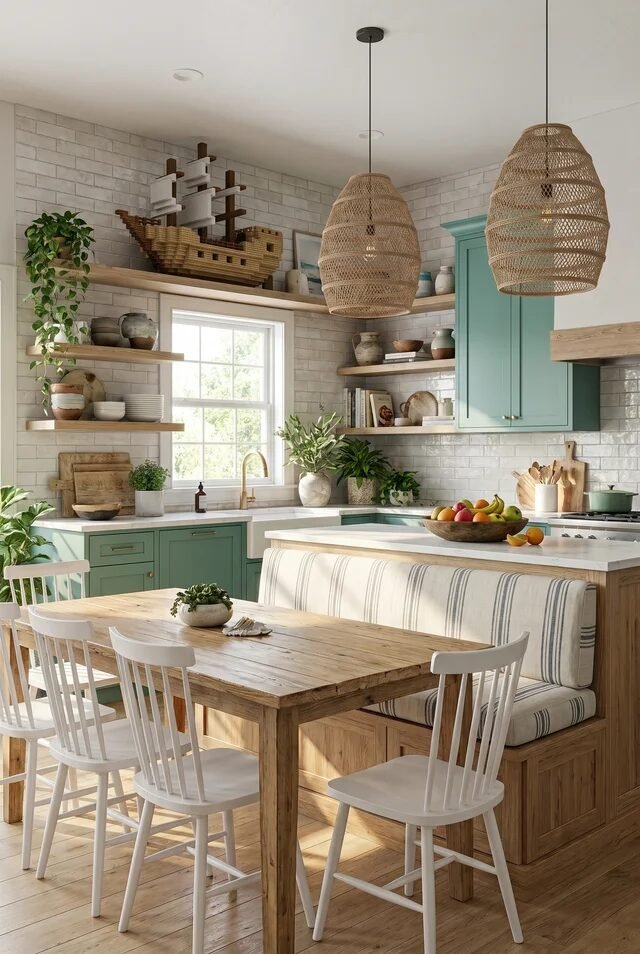
This kitchen feels like a Nancy Meyers movie quietly moved to the coast and started baking sourdough. The muted seafoam cabinetry immediately softens the entire room, especially against the warm wood flooring and creamy subway tile walls. That balance between cool and warm tones is what prevents coastal kitchens from feeling cold or overly sterile. The wood dining table grounds the lighter palette so everything still feels inviting and lived in.
One of the smartest design moves here is the built-in banquette seating. Besides being ridiculously cozy, it visually breaks up the hard lines from the cabinetry and countertops. The striped upholstery also introduces subtle pattern without overwhelming the room. Coastal interiors usually work best when patterns stay understated and airy instead of loud and overly nautical. Nobody needs anchor-print curtains in 2026. We said what we said.
The styling also deserves attention because it avoids overdecorating. Open shelves carry small ceramics, trailing greenery, and cutting boards in varied heights, which creates dimension naturally. When recreating this kind of kitchen, we should prioritize tonal variation over excessive color contrast. Stick to weathered woods, soft greens, off-whites, and natural fibers. The result feels collected over time instead of aggressively “theme designed,” which honestly makes the entire kitchen feel way more expensive.
Vaulted Wood Ceilings Create Instant Coastal Warmth
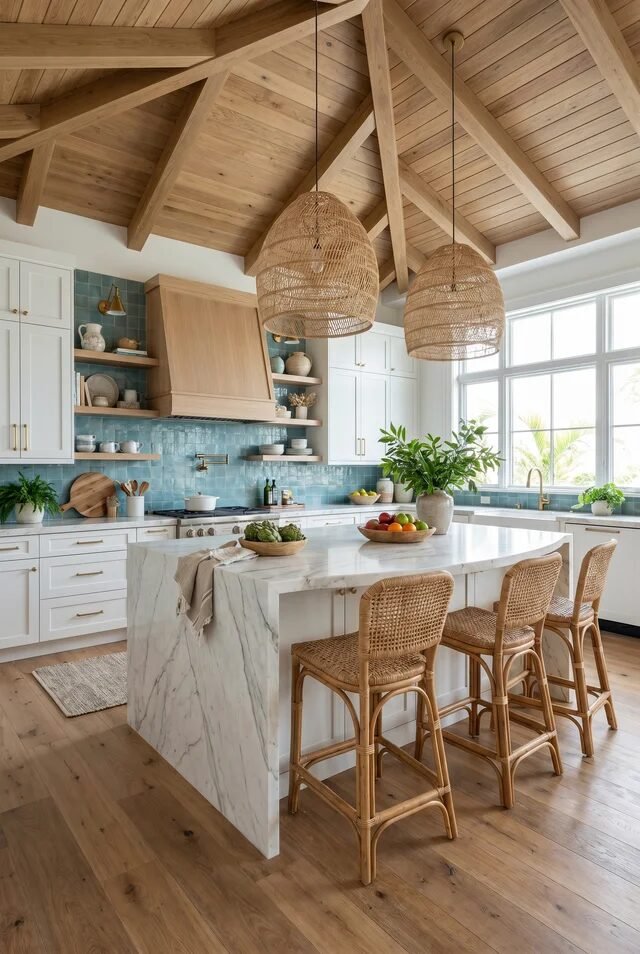
The second we add a vaulted wood ceiling to a coastal kitchen, the entire room suddenly starts acting luxurious. It is literally architectural main-character energy. Here, the warm planked ceiling completely transforms what could have been a standard white kitchen into something layered and dramatic. Natural wood overhead creates visual warmth while also balancing the cooler marble and blue backsplash below. That contrast is why the space feels bright without turning icy.
Another reason this kitchen works so well is proportion. The oversized woven pendants visually fill the vertical space created by the ceiling height, preventing the room from feeling empty or disconnected. Meanwhile, the waterfall marble island adds polish while the woven counter stools keep the room approachable. Coastal design always looks better when refined finishes are softened by relaxed textures. Otherwise things start giving “luxury hotel lobby” instead of comfortable home.
The dusty aqua backsplash is also carrying this room emotionally. Because it stretches horizontally across the kitchen, it subtly mimics the calming effect of ocean tones without screaming BEACH HOUSE in all caps. If we were recreating this style, we’d keep the cabinetry simple and let the architectural features shine. Coastal kitchens become timeless when texture, scale, and natural light lead the design instead of novelty decor. Tiny starfish accessories are simply not the assignment here.
Boat Shaped Islands Make Coastal Kitchens Unforgettable
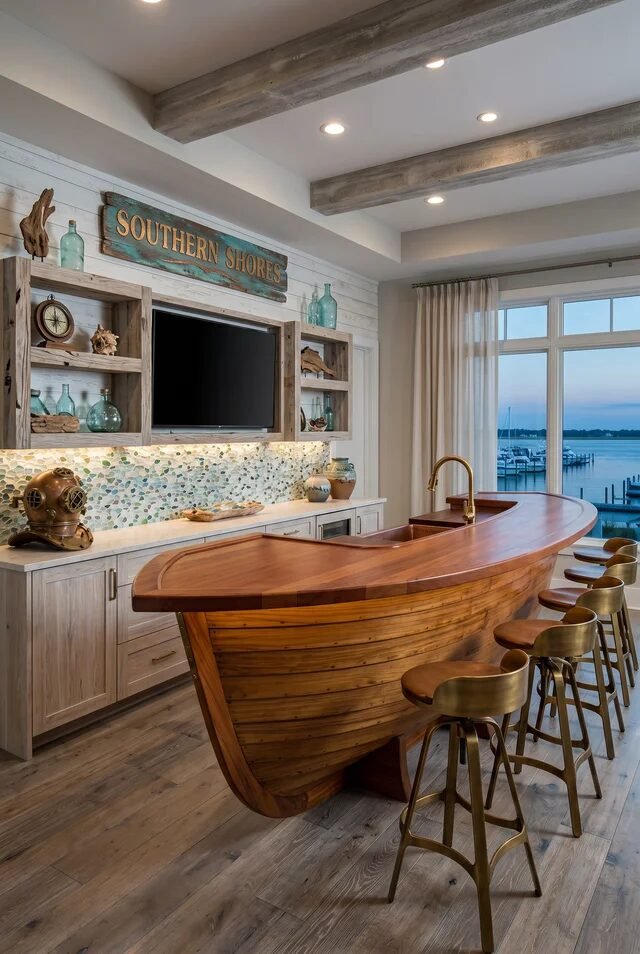
Okay, this kitchen absolutely knew it wanted attention. And honestly? Respect. The custom boat-shaped island turns the entire space into a conversation piece while still functioning as a practical seating area. Because the shape is curved and sculptural, it softens the otherwise linear layout and instantly creates movement. Statement islands work best when the rest of the room stays relatively restrained, which this kitchen handles beautifully.
The wood tones here are especially important. Instead of orange-heavy woods that can feel dated, the finish leans weathered and medium toned, which feels far more coastal and elevated. The brass stools add warmth while subtly reflecting light, helping the room feel brighter without needing overly glossy surfaces. We also love the textured mosaic backsplash because it mimics sea glass in a very grown-up way rather than looking kitschy.
What makes this kitchen successful is that the theme stays integrated into the architecture instead of relying on random beach signs everywhere. Ironically, there is a beach sign here, but the scale and placement actually work because the palette remains muted and cohesive. If we wanted to recreate this concept without a literal boat island, curved edges, organic silhouettes, and nautical materials can still create the same coastal movement. It’s playful without turning the kitchen into a seafood restaurant, which is a delicate line.
Crisp Blue Islands Refresh All White Kitchens
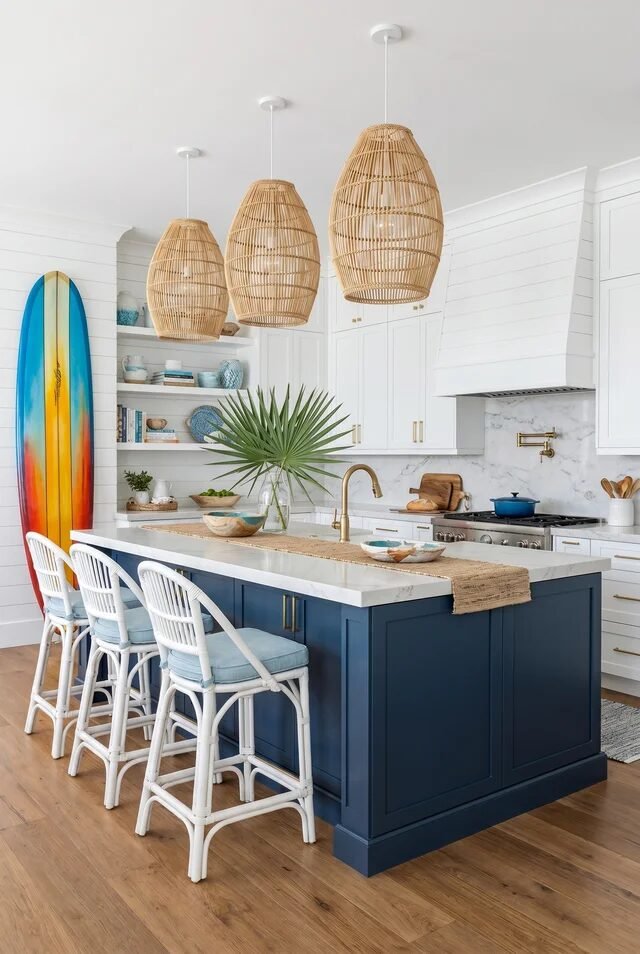
Blue kitchen islands are basically the coastal equivalent of eyeliner. Suddenly the whole room has definition. In this kitchen, the deep navy island anchors the bright white cabinetry and stops the space from feeling too flat or clinical. Using one darker focal color in a mostly white room creates depth while still preserving that airy coastal openness everyone wants. The contrast also helps the woven pendants and pale wood floors stand out more naturally.
One detail we genuinely love is the vertical shiplap walling. Because the lines run upward, the room subtly feels taller and cleaner without needing dramatic architecture. Meanwhile, the surfboard decor injects personality in a way that feels youthful and casual. The trick is restraint: there are only a few playful coastal references, so the kitchen still feels sophisticated instead of themed like a beach rental listing with “ocean vibes” in all caps.
This space also proves how effective mixed materials can be. Brass hardware warms up the cool whites, wicker seating softens the polished surfaces, and the natural runner adds texture across the island. Coastal kitchens feel the most inviting when hard finishes are consistently balanced with tactile materials. If we were recreating this style, we’d prioritize strong contrast first, then layer in relaxed textures afterward. That order matters more than people think.
Marble Islands Meet Relaxed Nautical Elegance
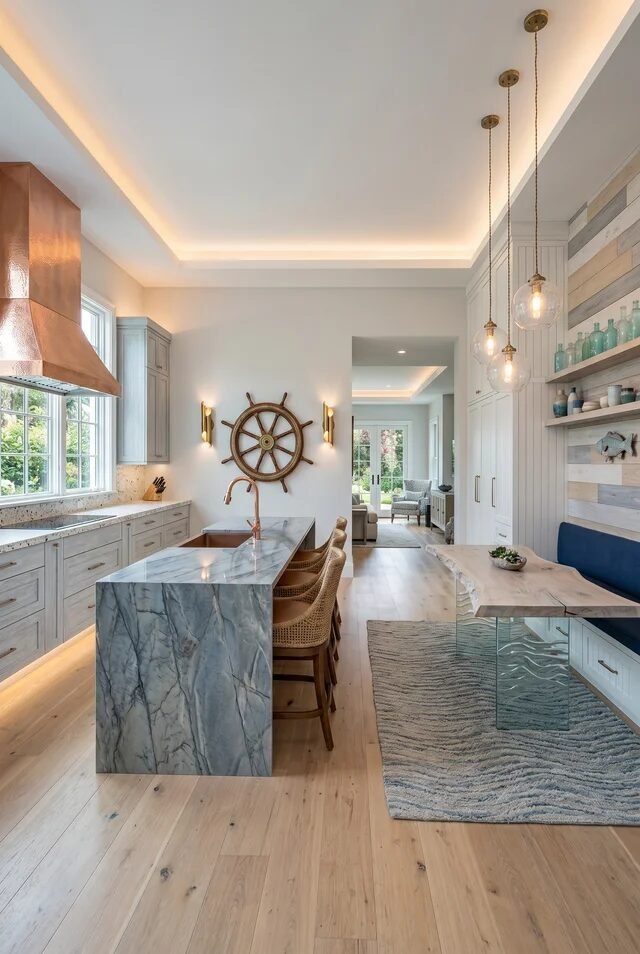
This kitchen somehow feels elegant and laid-back at the exact same time, which honestly is the dream coastal combo. The dramatic waterfall marble island instantly becomes the focal point, but because the rest of the palette stays soft and sandy, the room never feels overly formal. That balance between luxury materials and casual styling is what makes modern coastal kitchens feel timeless instead of trendy. The pale wood flooring also helps reflect natural light upward, making the entire space glow without needing harsh contrast.
We need to talk about the ship wheel wall decor for a second because this could have gone very wrong very fast. But here, it works because the room keeps everything else minimal and refined. Coastal design is strongest when references feel subtle and architectural rather than themed. The glass bench base is another smart move since transparent materials visually reduce heaviness and help narrow kitchens feel more open.
If we wanted to recreate this look, we’d focus heavily on layered lighting. Between the cove ceiling lights, pendant lighting, sconces, and under-cabinet glow, the room feels warm from every angle. Good coastal kitchens rely on soft atmospheric lighting just as much as color palettes. Also, mixed textures like marble, wicker, brushed brass, and wood prevent neutral kitchens from feeling flat or sleepy.
Sea Glass Tiles Brighten Small Coastal Kitchens
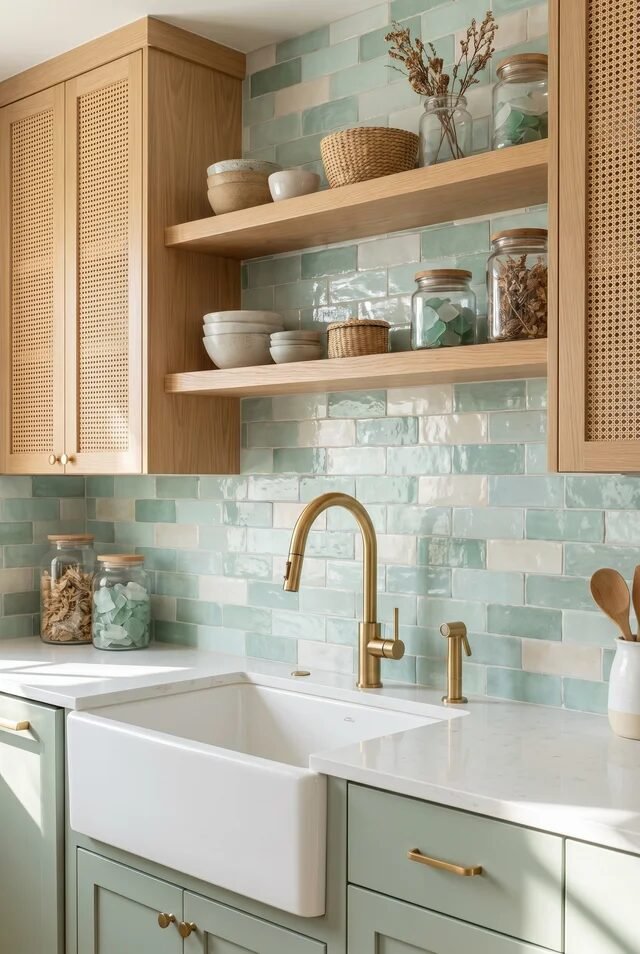
This kitchen proves that backsplash tile can absolutely carry an entire room emotionally. The glossy sea glass-inspired tile instantly adds movement, color variation, and light reflection, making the kitchen feel brighter and more dimensional. When coastal kitchens use watery tones with glossy finishes, they naturally mimic how sunlight reflects off the ocean. It sounds dramatic, but honestly the visual psychology is real.
One of the smartest design choices here is the combination of warm wood cabinetry with cool minty tones. Without the oak cabinets and woven cane inserts, the kitchen could have leaned too icy or sterile. Instead, the natural textures soften the palette and make the space feel welcoming. We also love the floating shelves because they visually open the wall while allowing styling opportunities that feel relaxed instead of overcrowded.
The brass faucet and cabinet hardware deserve appreciation too because metallic warmth helps connect all the tones together. If we were recreating this style, we’d avoid adding too many extra colors. Coastal kitchens usually look best when they stay inside one softened color story and let texture create the visual interest instead. Also, slightly imperfect glossy tiles? Weirdly important. They bounce light in a softer, more organic way than perfectly flat surfaces.
Soft Sage Islands Feel Fresh And Airy
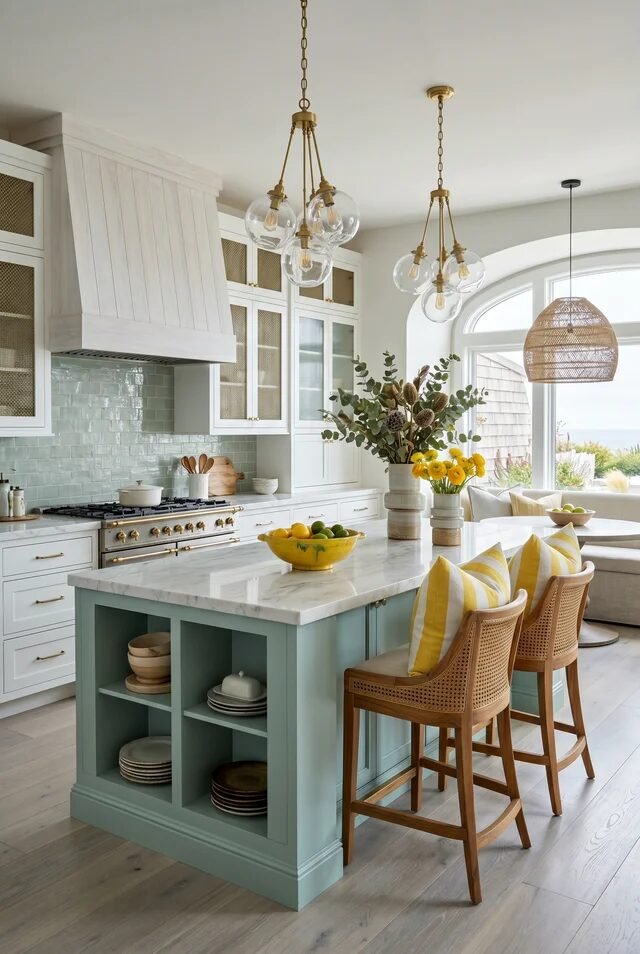
This kitchen is basically what happens when coastal design grows up, gets financially stable, and starts buying fresh flowers every weekend. The soft sage island introduces color in a way that feels calming instead of loud, while the white cabinetry keeps everything feeling crisp and breathable. Muted coastal palettes often age better because they create atmosphere without depending on trendy high-contrast colors.
There is also a really strong balance of shapes happening here. The rounded glass pendants soften the sharper cabinetry lines, while the woven stools bring texture and warmth to the marble surfaces. That mix matters more than people realize. Coastal kitchens can start feeling too smooth and lifeless if every finish is polished. We need tactile contrast to make the room feel human and comfortable rather than staged for a luxury condo brochure.
The styling is quietly genius too. Yellow pillows and citrus decor introduce tiny hits of warmth that energize the cooler greens without overpowering them. Accent colors work best in coastal spaces when they appear in small repeat moments instead of giant statement pieces. If we were recreating this kitchen, we’d prioritize layered neutrals first, then slowly add muted coastal colors through textiles, tile, or painted islands instead of committing everywhere all at once.
Aquarium Islands Create Bold Coastal Drama
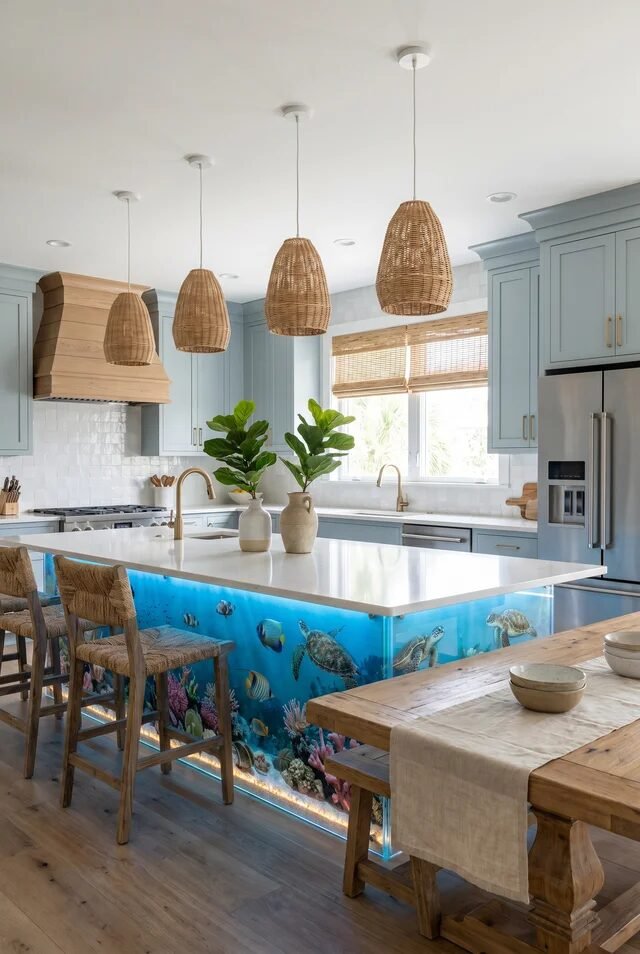
Okay. This kitchen absolutely chose chaos in the best possible way. An aquarium-style island is obviously not subtle, but somehow the surrounding design keeps it feeling surprisingly elevated instead of theme-park ridiculous. Because the cabinetry, countertops, and lighting remain soft and neutral, the glowing underwater feature becomes a controlled focal point instead of visual overload. Statement pieces only work when the rest of the room knows how to stay calm.
The pale blue cabinetry also helps connect the aquarium tones naturally throughout the kitchen, creating color continuity instead of random brightness. We love how the woven pendants and rustic wood table add warmth because without those organic textures, the space could have started feeling too artificial or glossy. Coastal kitchens always benefit from earthy materials grounding the cooler ocean-inspired colors.
Honestly, this idea is not for minimalists, but there are still lessons we can steal from it. The biggest takeaway is intentional focal zoning. Instead of scattering coastal references everywhere, the room commits to one major visual feature and supports it with complementary materials. If we wanted a more subtle version, we could recreate this effect using backlit blue stone, sea glass panels, or illuminated tile instead of a literal aquarium. Slightly less maintenance. Slightly fewer fish responsibilities. Everybody wins.
Fish Scale Tiles Add Instant Coastal Personality
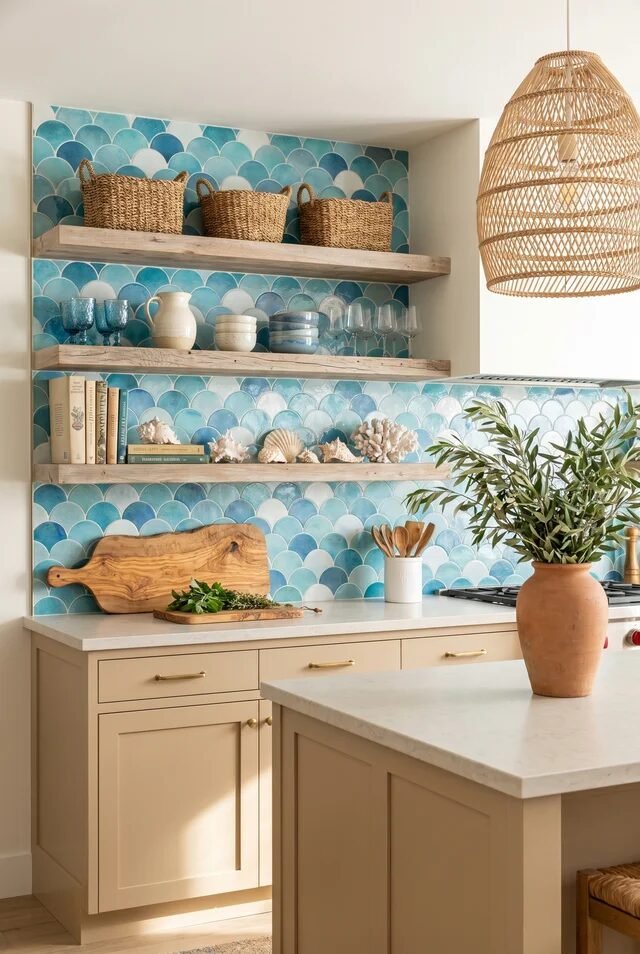
Fish scale tiles are one of those design choices that somehow manage to feel trendy and timeless simultaneously. In this kitchen, the layered blue tones create movement across the backsplash wall, almost mimicking overlapping ocean waves. Because the cabinetry stays warm beige instead of stark white, the tile feels softer and more organic. Coastal kitchens become more inviting when cooler blues are balanced with sandy, earthy neutrals.
The open shelving also plays a huge role here. Styling shelves against a bold backsplash can easily turn chaotic, but this room keeps the decor restrained and tonal. Natural baskets, pale ceramics, driftwood-style cutting boards, and shells all reinforce the relaxed coastal mood without fighting for attention. We also love how the wood shelving visually warms up the blue tile and prevents the wall from feeling too glossy or cold.
If we were recreating this kitchen, we’d absolutely focus on scale and spacing. Smaller fish scale tiles create a more delicate, layered appearance, while oversized versions can feel more modern and graphic. One reason this room feels so calming is because the colors stay muted and dusty instead of hyper-saturated beach blues. Coastal design usually feels more elevated when it whispers instead of screaming “I LOVE THE OCEAN” from across the house.
Relaxed Coastal Kitchens We Honestly Never Want Leaving
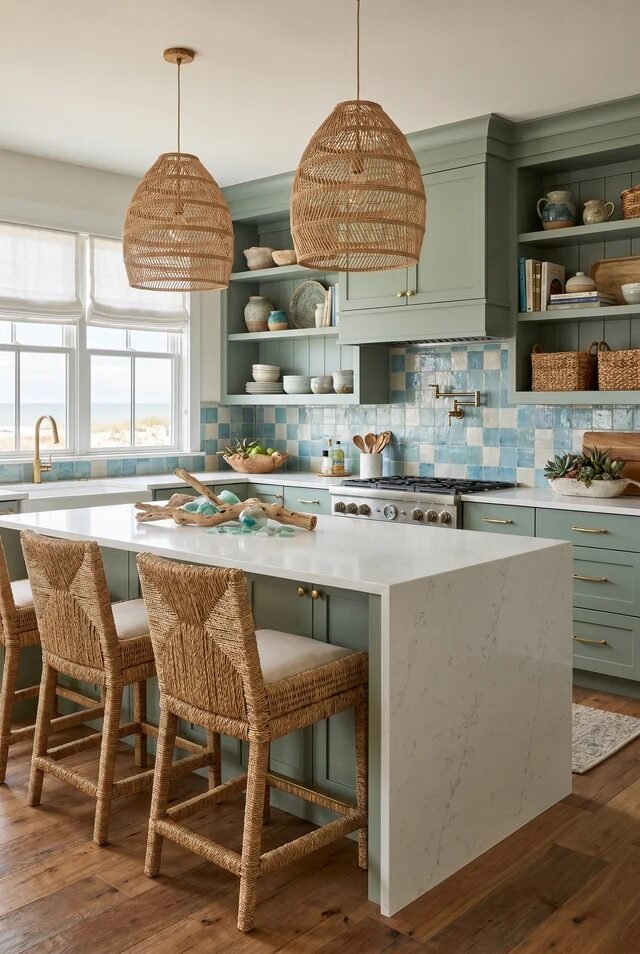
After looking through all ten kitchens, one thing becomes very clear: coastal design is carrying the entire “peaceful but stylish” category right now. These kitchens are proof that we do not need loud colors or complicated decor to create spaces with personality. Instead, the magic comes from thoughtful layering, soft contrast, natural materials, and layouts that feel welcoming instead of overly perfect. Coastal kitchens succeed because they blend elegance with comfort instead of forcing us to choose between the two.
What makes this style especially practical is how adaptable it can be. We can lean modern with sleek marble and brass finishes, go cottage-inspired with seafoam cabinetry and open shelving, or even embrace playful statement features like fish scale tile or sculptural islands.
The key is always balance. Warm woods soften cooler tones, woven textures relax polished surfaces, and subtle ocean-inspired colors keep everything feeling calm and breathable. Honestly, coastal kitchens are less about following strict design rules and more about creating a space that feels naturally bright, collected, and lived in. Which, let’s be real, is exactly the energy most of us want at home right now.