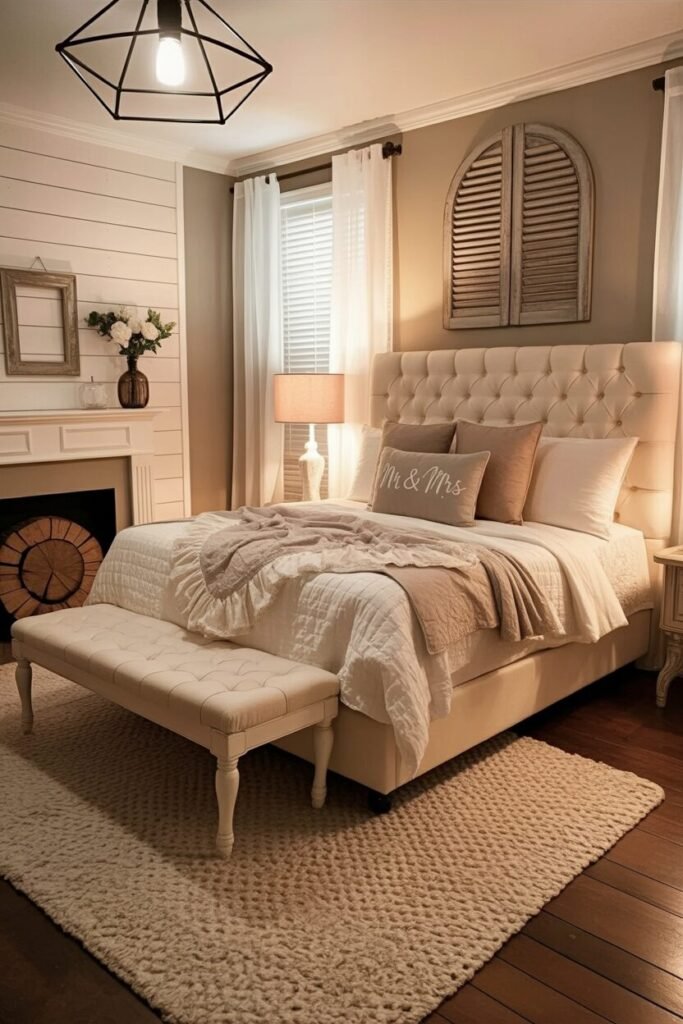

Why Industrial Farmhouse Works: The Design Principles (Almost) No One Talks About
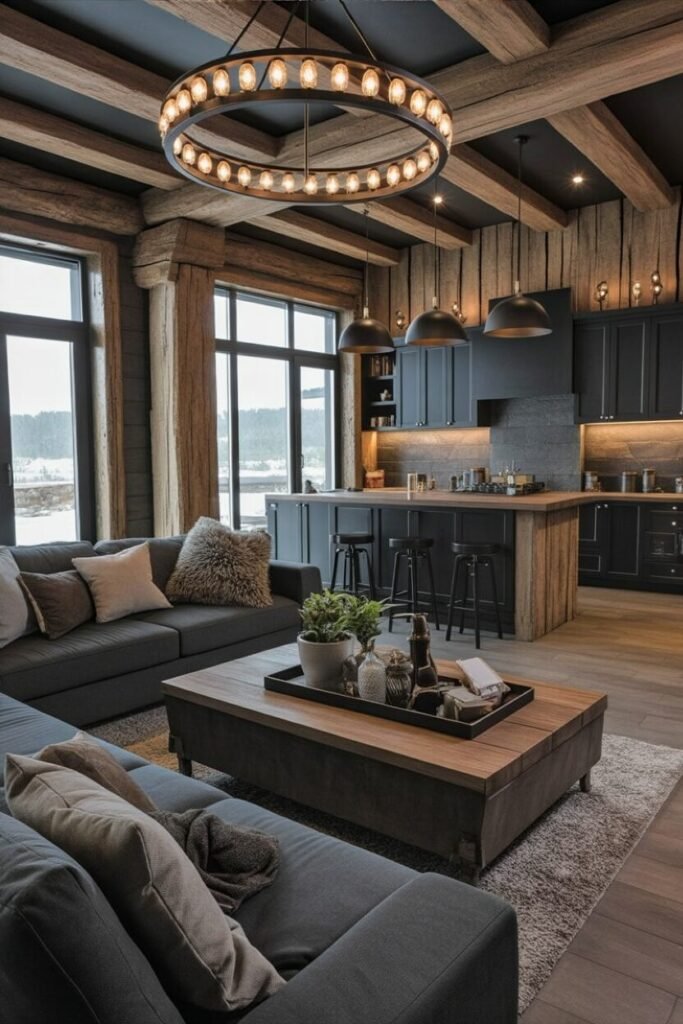
Industrial farmhouse design is what happens when hard-edged materials soften up and start behaving, and honestly, that’s why we love it. The style blends the bold confidence of metal and brick with the warm soul of wood, texture, and cozy lived-in details.
The magic is in how intentionally everything gets balanced. We pair raw elements with softness so the space feels stylish but never sterile. We use contrast to guide the eye, rhythm to connect materials, and texture to keep the space from feeling flat. When industrial farmhouse is done right, it gives that “I live in a loft…but also a cabin” energy that feels surprisingly grounding.
What makes this look so addictive is how personal it becomes—every material has a story, every finish adds character, and every imperfection becomes part of the charm. It’s a style that looks curated but never pretentious, functional but still full of personality.
Blending Comfort With Industrial Clean Lines
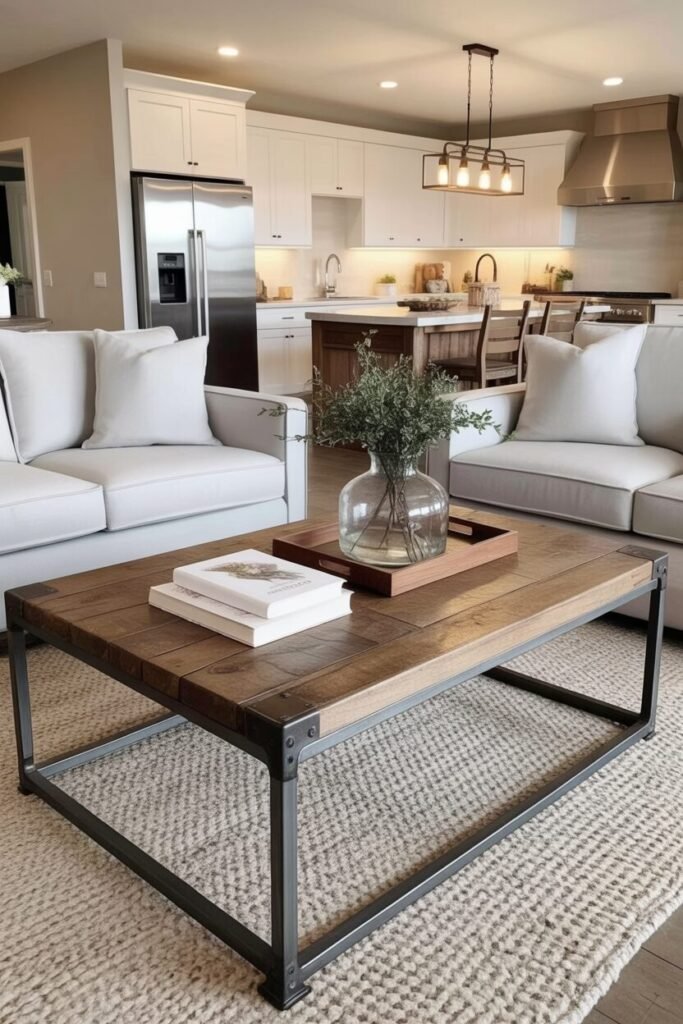
This living room and kitchen combo proves that industrial farmhouse isn’t about picking sides; it’s about letting rustic warmth and metal confidence coexist without drama. The secret is contrast, and not the loud kind. We balance soft white sofas with a structured metal-frame coffee table so the textures play nicely instead of fighting for attention.
When we add warm wood finishes through trays, books, and the flooring, suddenly the metal accents don’t feel cold—they feel intentional. The kitchen repeats this formula with stainless steel surfaces next to white shaker cabinets, which gives everything that “polished but not trying too hard” energy. Lighting also matters more than people think.
A simple, boxy chandelier anchors the space visually so all the open-plan elements stay connected. When recreating this look, keep your palette neutral but varied in texture. Think cozy upholstery meeting industrial bones so the space feels stylish without losing that Sunday-afternoon-nap vibe.
Rustic Warmth Meeting Sleek Industrial Mood
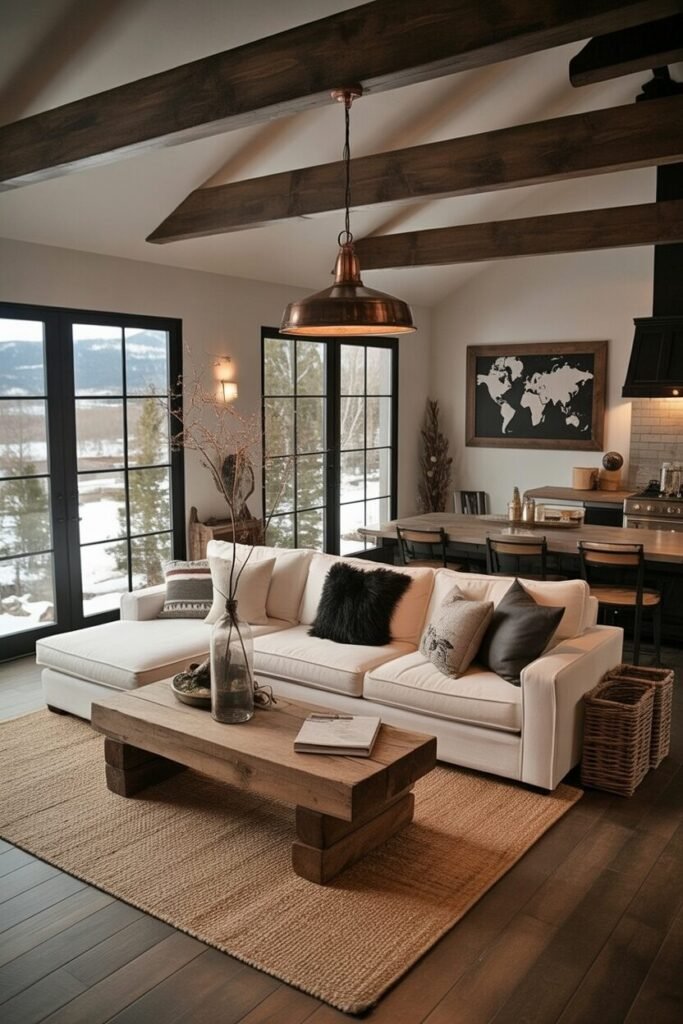
This space is literally the love child of a ski lodge and a modern loft. The big trick here is scale. Those exposed ceiling beams aren’t just cute; they’re doing heavy design lifting by pulling your eye upward and expanding the room visually.
We contrast the chunky wood coffee table with a streamlined sofa so the look stays grounded but not bulky. Industrial farmhouse thrives on tension, and the key is mixing heavy with airy. Black metal window frames sharpen the whole aesthetic, acting like eyeliner for the room by outlining all that gorgeous natural light.
When we pair copper pendant lighting with dark dining chairs, the metals warm up instead of feeling harsh. To recreate this vibe, lean into purposeful material repetition. Use the same wood tones more than once so everything feels unified, then sprinkle contrasting textures through throws and pillows. The goal is laid-back luxury with just enough edge to feel curated, not chaotic.
Cozy Corner Kitchen With Industrial Punch
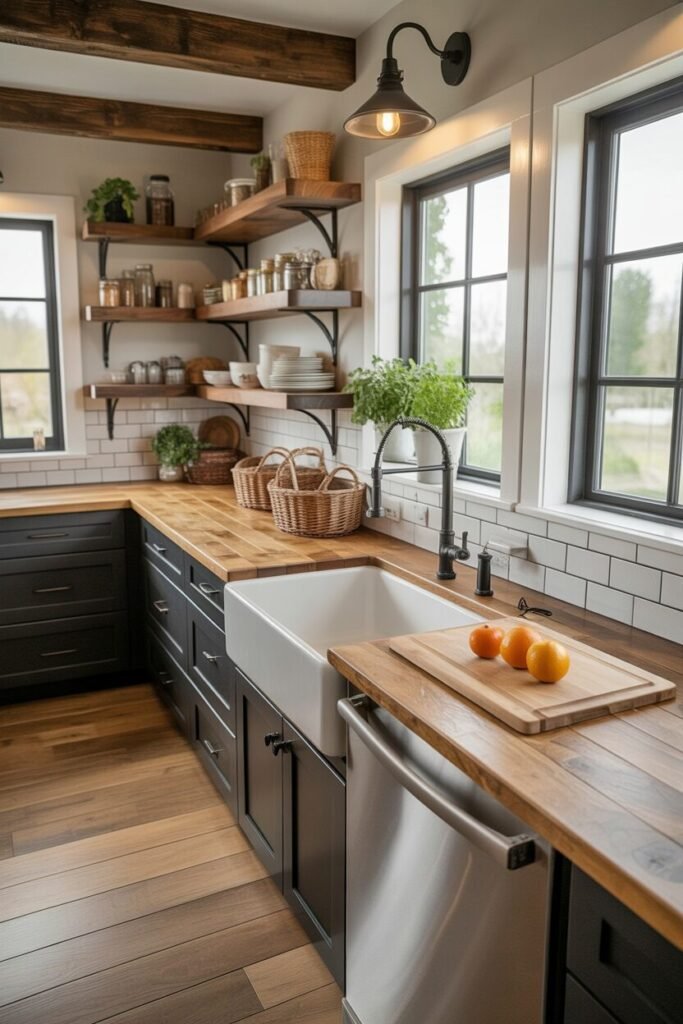
This kitchen shows how to make farmhouse charm feel grown-up without losing the homey vibe. The wooden countertops bring a ton of warmth, while the matte black lower cabinets add structure and keep things from reading too sweet.
Open shelving is doing major aesthetic heavy lifting here. It softens the industrial edges and lets us display functional pieces as decor, but the trick is intentional styling. Group objects by height and material so it feels curated, not cluttered. Exposed beams draw attention upward, giving the whole kitchen a rustic frame that contrasts beautifully with the slick stainless appliances.
The farmhouse sink adds that “I actually cook here” energy while still being ridiculously stylish. To recreate this, focus on balancing openness and solidity. Keep the lower half visually heavy with darker cabinets, and let the upper half breathe with shelves and windows. Plants and baskets introduce organic textures that keep the industrial elements from feeling too stark.
Industrial Farmhouse Bathroom With Personality
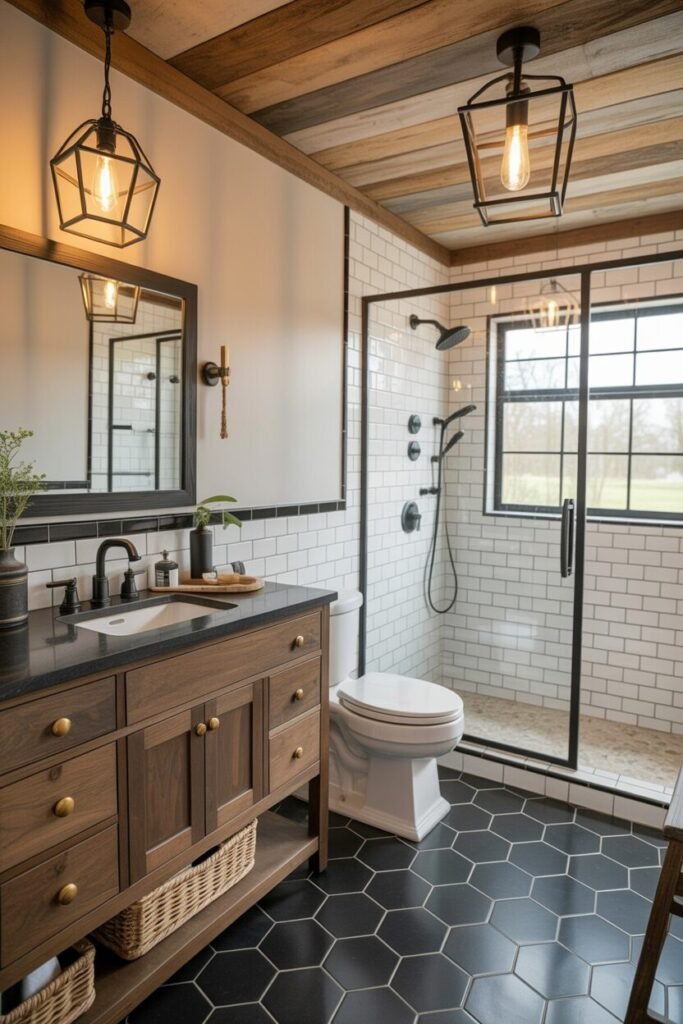
This bathroom is serving rustic spa meets factory loft, and honestly, we’re here for it. The key design principle at play is mixed geometry. We’ve got subway tile on the walls, hex tile on the floor, and wood paneling above—all different shapes but the same visual weight, which keeps everything balanced instead of dizzying.
Brass hardware instantly warms the palette, preventing the black fixtures from looking too harsh. The vanity brings in wood grain, grounding the space with texture so the industrial lighting doesn’t overwhelm. That glass shower enclosure is crucial because it allows the tile patterns to remain visible, giving the bathroom depth without shrinking the footprint.
When we recreate a look like this, we prioritize cohesive contrast. Repeat the black accents at least three times, match the warmth of the wood to the warmth of the metal, and let lighting be both functional and decorative. This bathroom proves industrial farmhouse doesn’t need to feel cold—it can feel like the chic reboot your morning routine needed.
Warm Tones With Industrial Bar Simplicity
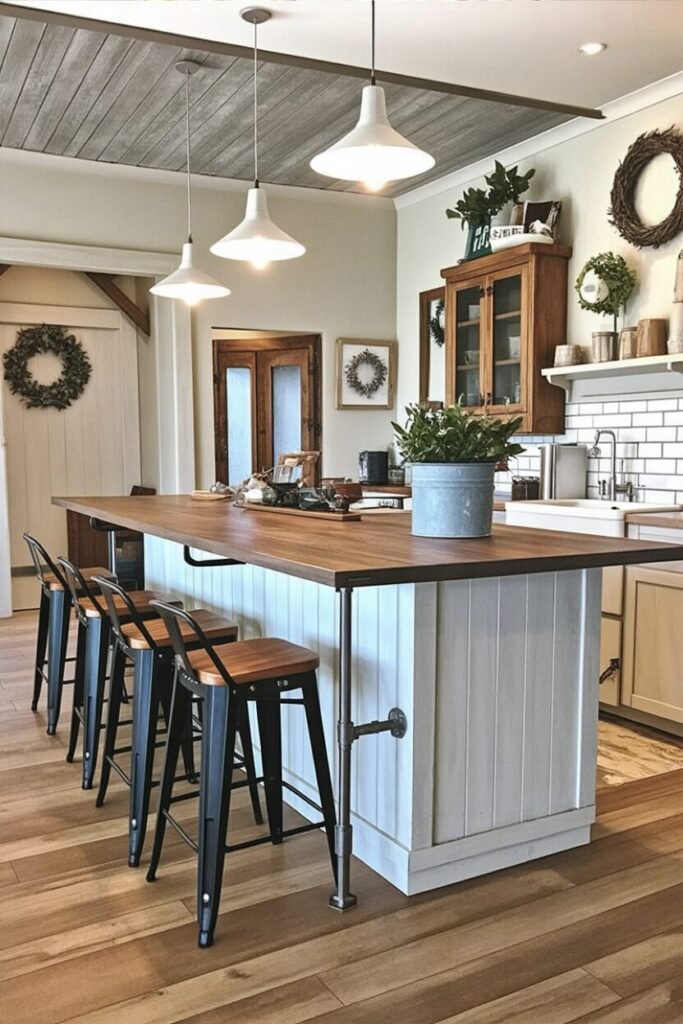
This kitchen leans heavily on warm wood tones to soften the industrial edges, and it works because everything feels intentional and repeated. The bar stools bring both metal and wood into one silhouette, which ties together the cabinetry and the island’s paneling without feeling theme-park rustic.
Pendant lights keep the focus downward and frame the island like it’s the star of a cooking show—because honestly, it is. Notice how the vertical lines from the beadboard island carry up into the ceiling planks. This is vertical rhythm, a subtle design trick that makes a space feel taller and more cohesive.
The greenery adds organic softness and keeps the palette from leaning too heavy. To recreate this, choose lighting with simple, clean geometry and mix only two or three wood tones max. The goal is calm warmth with a tiny industrial wink, not a lumberyard explosion.
Leather, Wood, and Metal Working Together
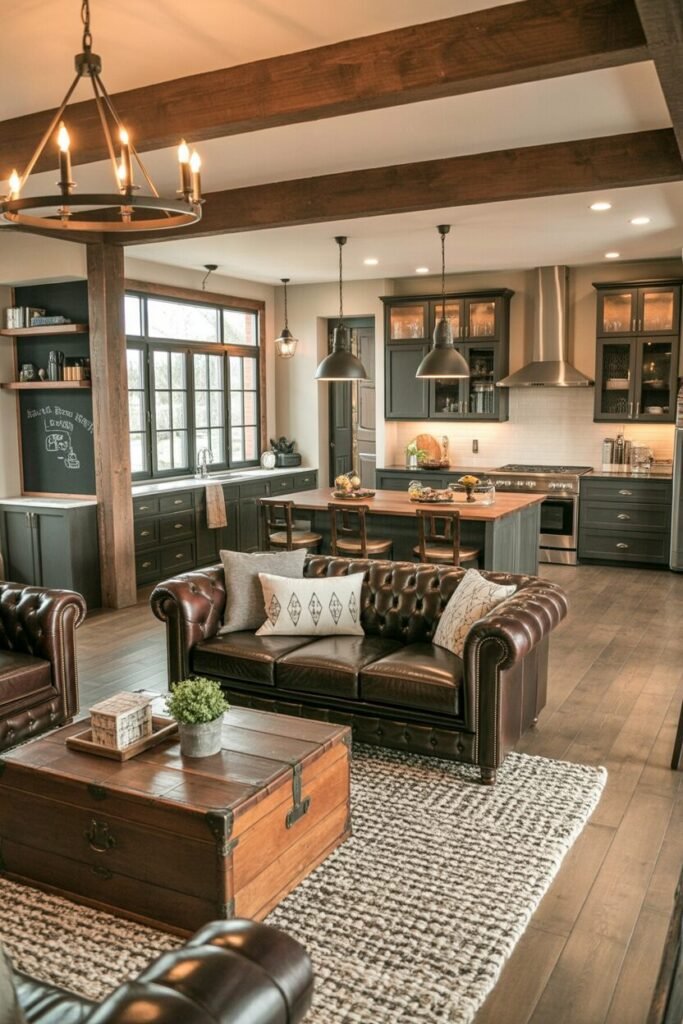
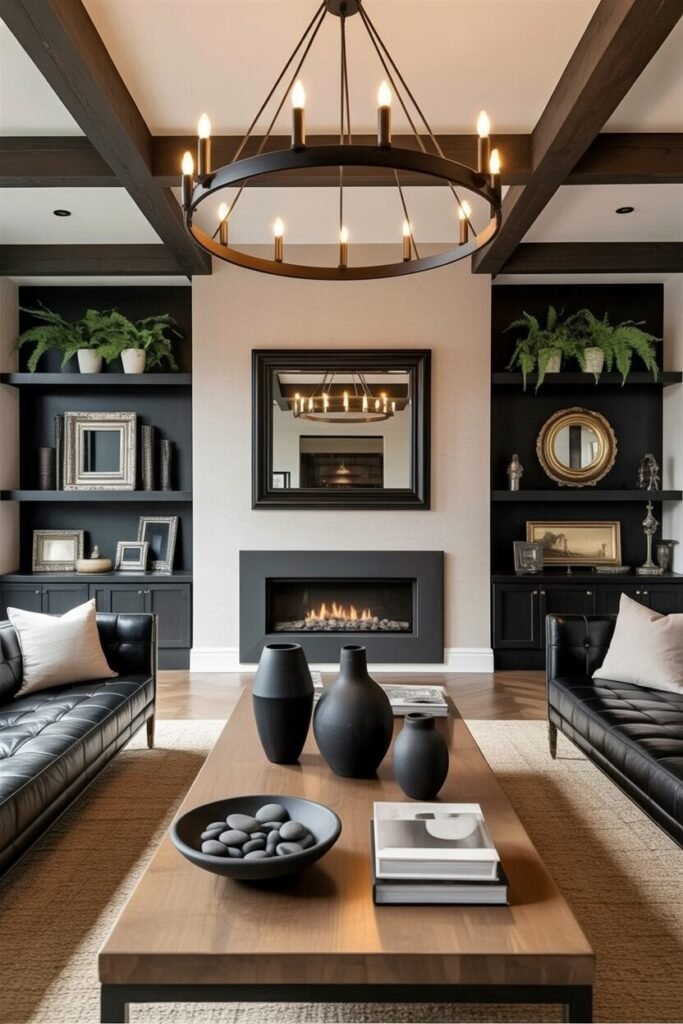
This room goes full dramatic farmhouse with industrial undercurrents thanks to that leather seating moment. Leather always adds a luxe weight to a room, and it balances beautifully with the dark cabinetry and metal pendant lights. The chunky wooden coffee trunk introduces old-world charm and serves as functional storage while giving the space a grounded anchor point.
Exposed beams connect visually to the darker cabinets, creating a top-to-bottom rhythm that keeps the eye moving. When we repeat similar tones—like deep browns and matte blacks—the space feels cohesive and intentional. The rug softens everything with texture, proving industrial farmhouse doesn’t need to be all hard edges.
To recreate this, lean into material layering. Pair heavy textures like leather and wood with softer knits and warm metal finishes. The design magic happens when the space feels substantial but still incredibly inviting, like a lodge and a loft decided to co-parent.
Black Cabinets With Farmhouse Warmth
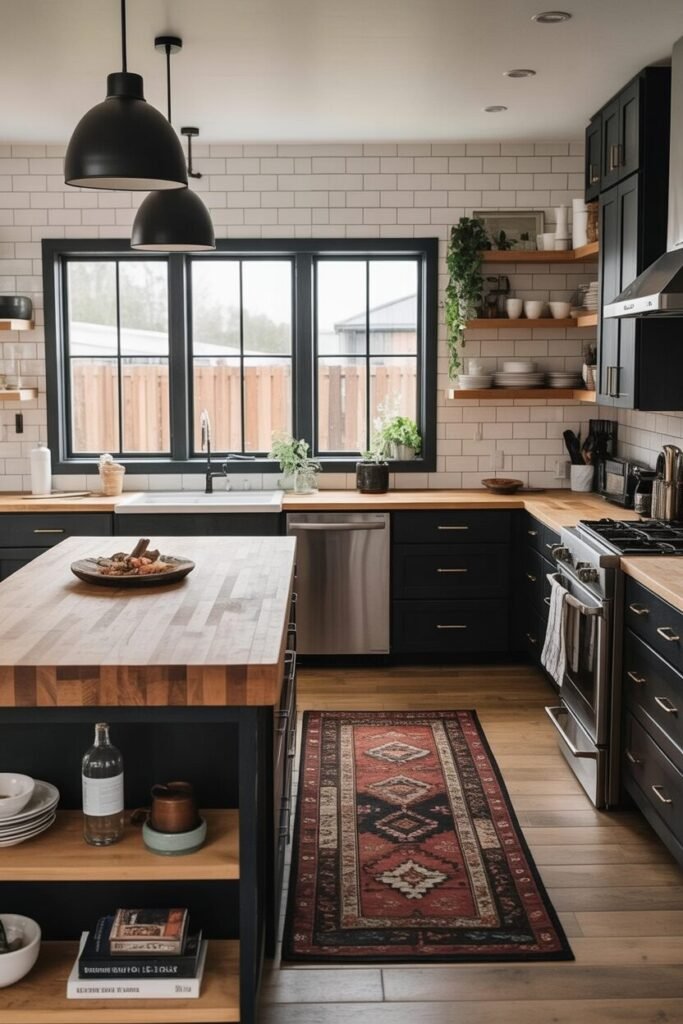
This kitchen plays in the dark cabinetry sandbox, but it keeps things from feeling heavy by using open shelving and tons of natural light. Butcher-block counters introduce warmth, and the brick-red rug injects color without breaking the industrial vibe.
Black pendants echo the cabinet color and create vertical balance by anchoring the ceiling visually. The trick here is contrast control. When you mix dark cabinets with warm wood, the temperature levels out and the look feels earthy instead of severe. Notice the consistent repetition of black through window frames, lighting, and hardware—this is what keeps the space unified.
To recreate this, start with a grounded base color like charcoal or matte black, then layer in warm woods and textured textiles so the room feels approachable. Finish with plants to soften the edges because nothing relaxes an industrial space faster than a little greenery.
Bright Entryway With Industrial Touches
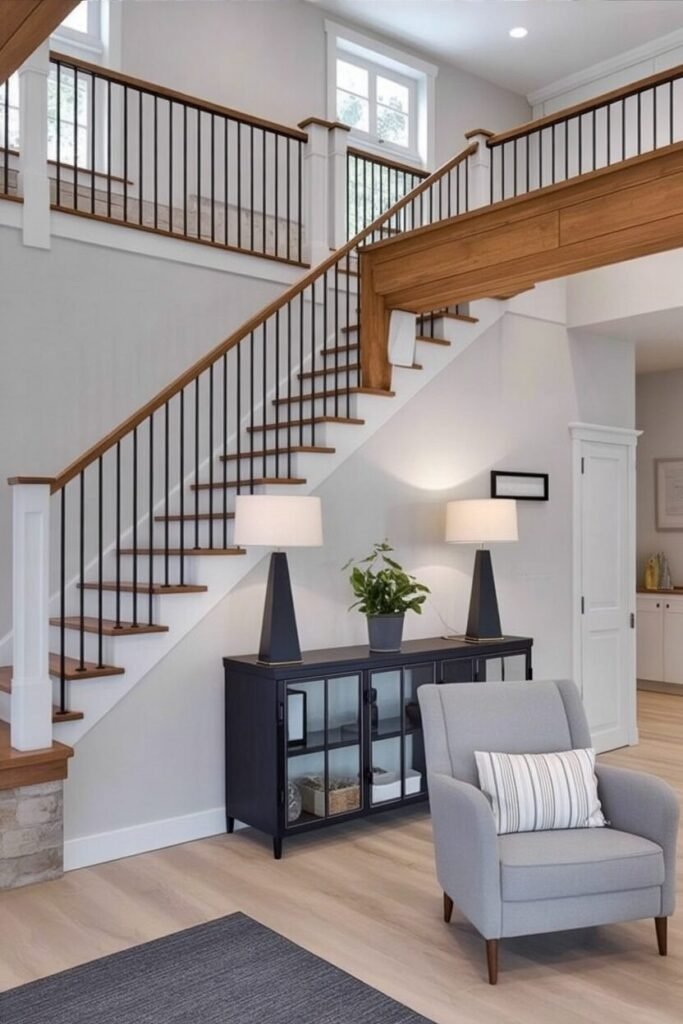
This entryway feels fresh and airy, but it still sneaks in industrial character through the black metal railing and cabinet hardware. The real star here is the architectural balance between wood and metal. The wooden beam and stair treads warm up the monochrome elements, proving industrial farmhouse doesn’t have to be dark to have personality.
The lamps bring symmetry, keeping the eye level visually calm even in a high-traffic area. We focus on positive negative space, leaving open floor area so the textures and shapes can breathe. The light gray chair softens the space, giving it a comfy moment without distracting from the bold lines.
If you want to recreate this look, pair crisp whites with natural woods, then layer in metal accents sparingly but intentionally. The goal is bright, structured, and welcoming—like a hug, but with clean lines.
Brick And Shiplap Done Industrial-Farmhouse Style
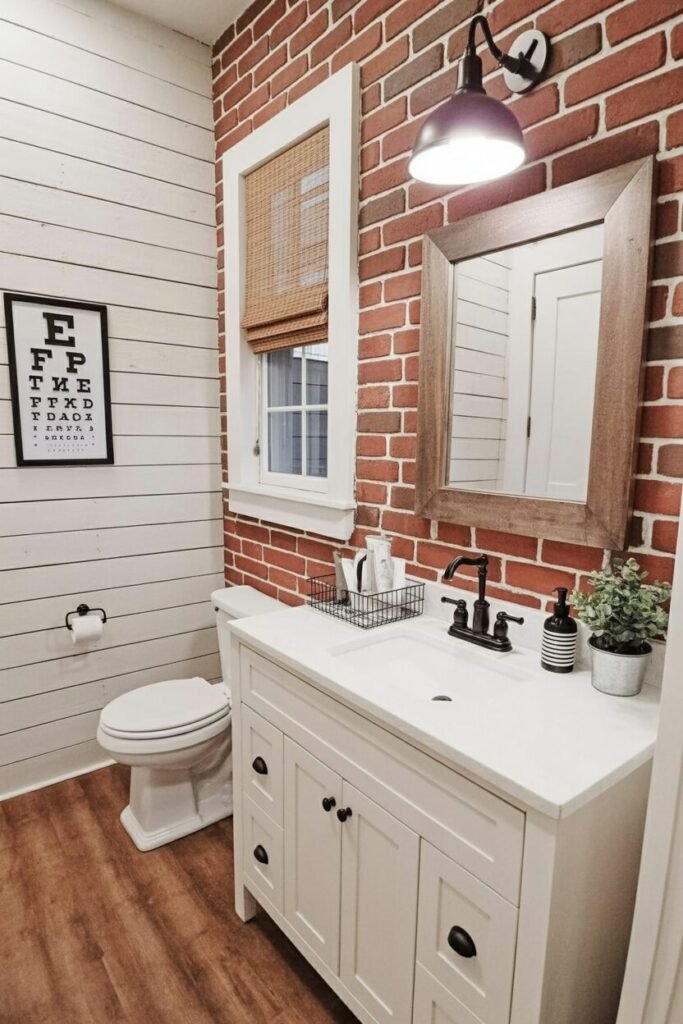
This bathroom proves you can mix two strong textures—brick and shiplap—without chaos if you control color and pattern scale. The red brick wall gives instant industrial grit while the white shiplap balances it with farmhouse brightness. The vanity stays simple so the walls can be the main characters.
Black fixtures create contrast that sharpens the whole composition, acting like punctuation marks for the design. The woven shade adds softness and filters natural light so the room feels grounding rather than loud. This look works because everything has a place in the visual hierarchy. Brick takes center stage, shiplap supports, and wood accents humanize the cooler materials.
To recreate this, focus on intentional contrast. Use one bold texture, one neutral texture, and unify them with repeated hardware finishes. The result is a bathroom that feels playful, warm, and perfectly industrial farmhouse without overdoing it.
Industrial Loft Kitchen With Farmhouse Warmth
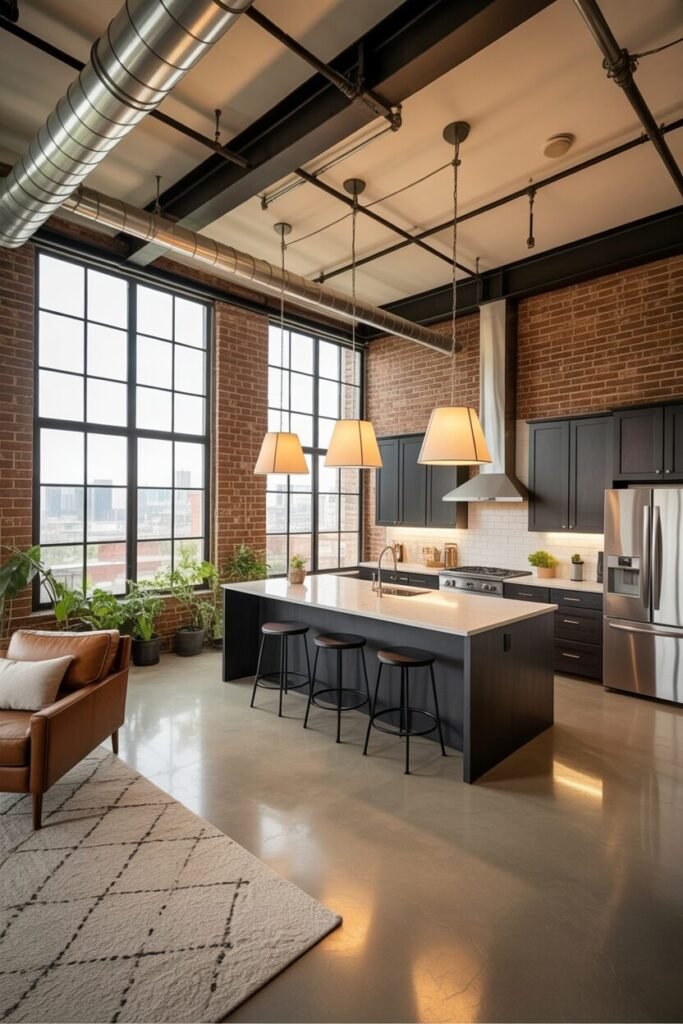
This final space feels like a converted warehouse that decided to get cozy. The double-height windows bring in massive amounts of light, which softens the dark cabinetry and metal framework. The exposed ductwork embraces true industrial DNA, but the warm textiles, plants, and caramel leather chair keep the room from feeling cold.
The island is sleek and modern, but the wood stools introduce organic warmth and make the space feel lived-in. The design principle doing the heavy lifting here is softening industrial architecture through tactile materials. When we combine polished surfaces with textured rugs or warm woods, the vibe becomes balanced instead of echoey.
To recreate this look, don’t shy away from architectural elements like brick or metal; just counter them with welcoming materials so the space doesn’t lean too hard into the factory theme. The end result is stylish, grounded, and effortlessly cool.
Designing Warmth Into Raw Industrial Spaces
Industrial farmhouse doesn’t work because it’s trendy; it works because it respects opposites. We take spaces with exposed structure and strong lines, then soften them with warmth, organic materials, and pieces that feel like they’ve lived a little.
The beauty comes from carefully controlling tension—mixing dark metals with natural fibers, pairing rough brick with smooth countertops, letting bold silhouettes coexist with inviting textures. This design approach creates depth without clutter, character without chaos, and comfort without sacrificing style. The secret is treating every element like part of a conversation, repeating materials so the story feels cohesive, and allowing natural light to soften the heavier pieces.
When we layer thoughtfully, the result isn’t just aesthetically pleasing; it’s emotionally comforting. Industrial farmhouse lets us enjoy strength and softness at the same time, which makes any space feel grounded, intentional, and incredibly livable.