
Coastal Bedrooms With The Perfect Balance Of Warmth And Airiness
There’s something about a coastal bedroom that instantly makes life feel 37% less chaotic. Maybe it’s the soft colors, the natural textures, or the fact that the room quietly tricks our brains into thinking we own beachfront property somewhere expensive. Either way, coastal design has evolved far beyond cheesy anchor decor and random “Beach Please” signs hanging on walls. Modern coastal bedrooms feel calmer, warmer, and way more elevated because they focus on atmosphere instead of obvious themes.
The best coastal spaces usually combine airy palettes, woven textures, layered fabrics, organic materials, and sunlight that practically deserves its own IMDb credit. A successful coastal bedroom should feel relaxed without becoming visually lazy or overly minimal.
That balance is what makes the style timeless. Throughout these ideas, we’ll see how color palettes, texture layering, natural light, and subtle ocean-inspired details work together to create bedrooms that feel peaceful, stylish, and genuinely livable. Basically: beach energy, but make it emotionally restorative and aesthetically expensive.
Coral Prints, Rattan, And Vacation Energy Everywhere
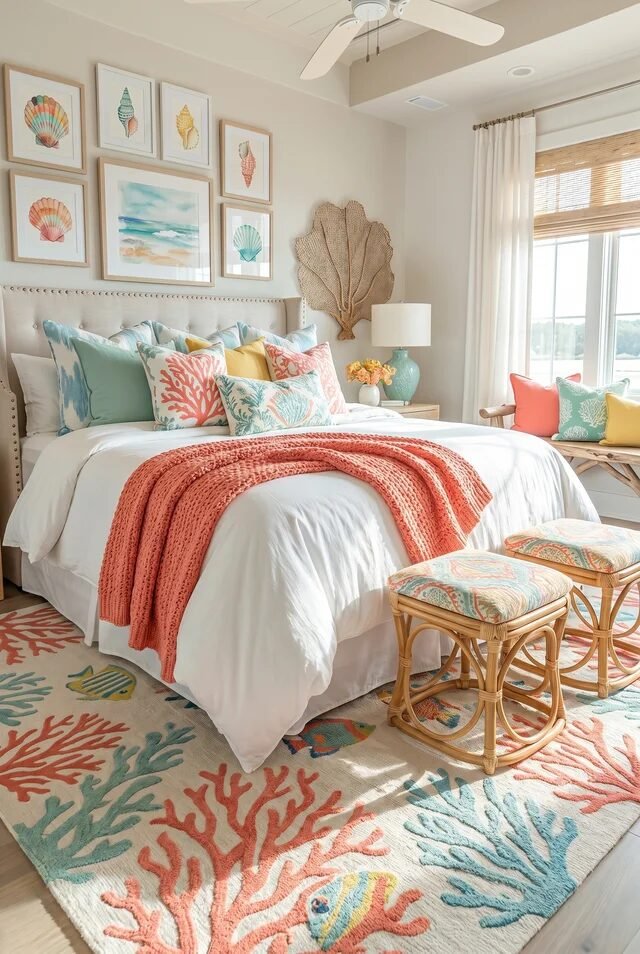
This bedroom basically feels like a beach resort that accidentally became emotionally attached to us. The biggest reason this space works is the color layering. Instead of using every “ocean” shade possible and creating a room that looks like a souvenir shop exploded, the palette stays controlled with coral, aqua, sandy beige, and crisp white.
That balance keeps the room playful without becoming visually exhausting. The white bedding acts like negative space, letting the colorful accents breathe instead of competing for attention.
The coral-pattern rug is honestly doing heavy lifting here. It anchors the entire room while repeating the coastal theme in a way that feels artistic rather than cheesy. We also love how the framed shell art creates vertical movement above the bed, which helps draw the eye upward and makes the room feel taller. Tiny designer trick. Massive impact.
If we wanted to recreate this look, we’d focus on texture before decor. Woven stools, layered knit throws, natural wood tones, and soft linen curtains make the room feel warm and relaxed. Coastal design works best when it feels collected, not overly themed. Nobody wants their bedroom looking like a seafood restaurant lobby from 2009.
Blue Coral Wallpaper That Actually Feels Sophisticated
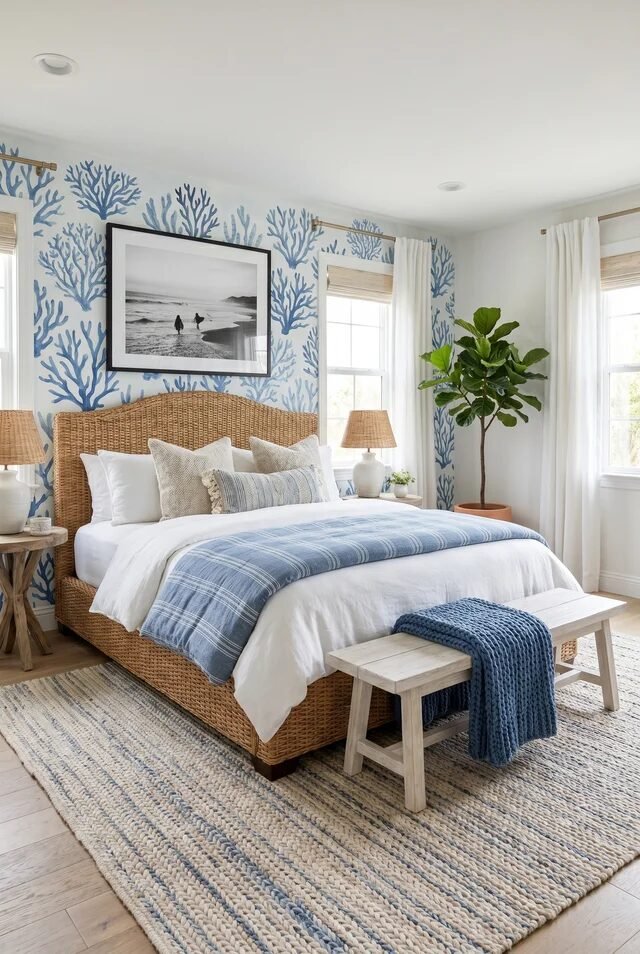
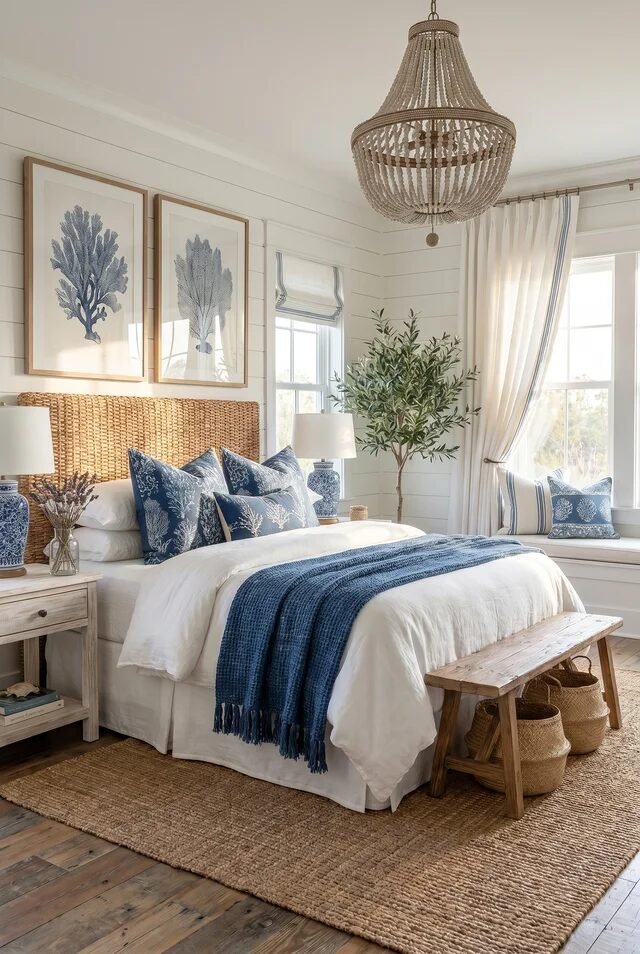
Let’s all take a moment to appreciate wallpaper that understands restraint. The blue coral print immediately creates a coastal identity, but because the rest of the room stays neutral, it still feels calm and elevated instead of screaming “BEACH HOUSE!!!” at every guest who walks in. This is a perfect example of one statement element carrying an entire design concept.
The woven bed frame adds softness and organic texture, which is important because coastal rooms can easily become too flat when everything is white and blue. Notice how the layered bedding uses subtle stripe variation instead of loud patterns. That keeps the eye moving without creating chaos. We also have symmetry from the matching lamps and curtains, which quietly makes the room feel polished and intentional.
One of the smartest details here is the lighting strategy. The sheer curtains diffuse natural light beautifully, helping the blue wallpaper feel airy instead of dark. If we were recreating this space on a budget, honestly, wallpaper plus one rattan furniture piece would already get us halfway there. Coastal bedrooms feel luxurious when they prioritize texture, softness, and natural light over excessive decor clutter. Minimalism but with sunscreen energy.
Moody Coastal Style With Boutique Hotel Vibes
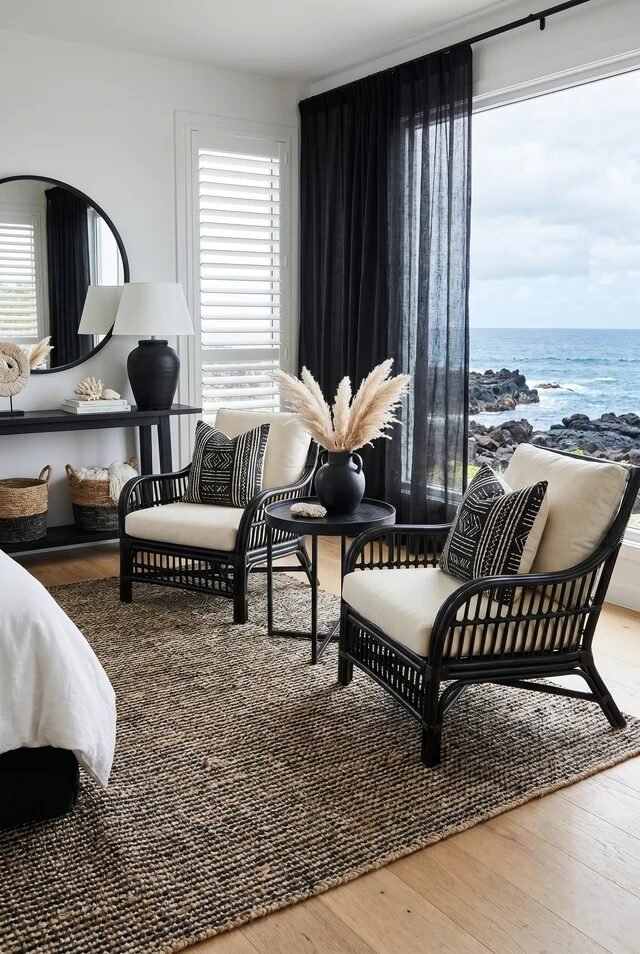
Okay this one is for people who love coastal decor but are deeply allergic to seashell overload. Instead of leaning bright and airy, this room uses contrast to create a more mature coastal atmosphere. The black rattan chairs, dark curtains, and textured rug give the space depth while still keeping that relaxed oceanfront feeling. It proves coastal design does not always need pastel blues and driftwood signs saying “Relax.”
What really makes this room successful is the visual weight distribution. The dark furniture is balanced by soft cream cushions, pale flooring, and massive natural light from the windows. Without those lighter elements, the room would feel heavy fast. The ocean view obviously deserves its own fan club, but the styling wisely keeps furniture low-profile so the scenery remains the focal point.
The pampas grass and woven textures also add movement without relying on stereotypical nautical decor. That’s a trick worth stealing. If we want a coastal bedroom that feels modern, we should focus more on materials than themed accessories. Linen, jute, black wood, matte ceramics, and organic textures instantly create that elevated coastal mood. This is basically what happens when beach style gets a luxury apartment glow-up.
Neutral Coastal Bedroom With Relaxed Organic Warmth
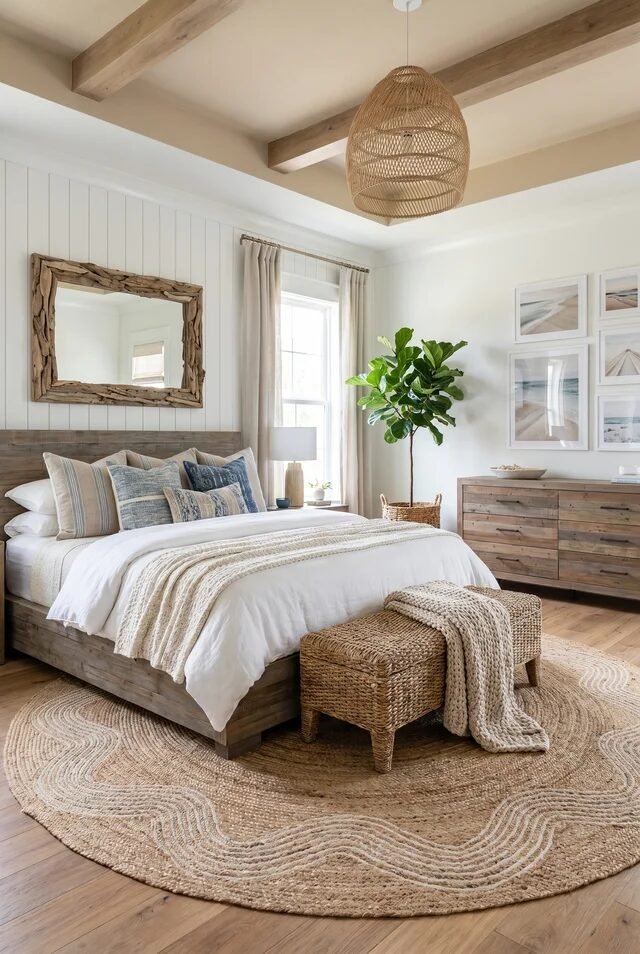
This room understands the power of softness. Nothing here is loud, trendy, or trying to become TikTok famous for five minutes. Instead, the design focuses on warm neutrals, layered textures, and subtle architectural details that make the bedroom feel timeless. The entire space succeeds because every material feels natural and visually calming.
The wood tones play a huge role here. Between the ceiling beams, bed frame, dresser, and woven bench, the room feels grounded and cohesive instead of random. We also love the circular rug because it softens all the straight lines from the furniture and architecture. That’s an underrated design principle people forget constantly. When a room has too many hard edges, adding curves immediately creates better visual flow.
Another smart detail is the tonal layering. Instead of sharp contrast, this room uses slight variations of beige, cream, taupe, and warm wood to create dimension quietly. The result feels cozy but still airy. If we wanted to recreate this look, we’d prioritize oversized woven lighting, linen bedding, and furniture with visible texture. Coastal spaces become far more sophisticated when they lean organic instead of overly decorative. Very “expensive vacation rental we pretend we own” energy.
Soft Yellow Coastal Bedroom That Feels Sunny
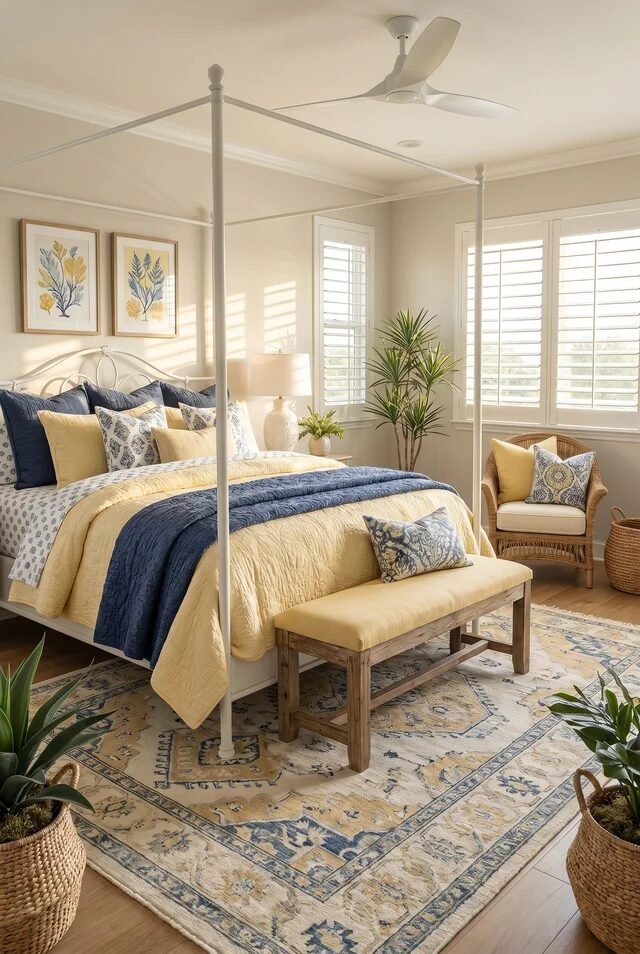
This bedroom feels like waking up inside a slow Sunday morning. The buttery yellow accents completely change the mood of the space because they add warmth without overpowering the softer coastal palette. Blue and yellow are naturally complementary, so the room instantly feels balanced and cheerful. It’s a reminder that coastal design does not always have to rely on aqua alone.
The canopy bed creates strong vertical structure, which helps the room feel elegant rather than casual beach-cottage chaotic. Meanwhile, the layered textiles keep everything approachable and comfortable. We’ve got patterned pillows, quilted bedding, vintage-inspired rugs, and woven accents all working together without fighting for attention. That balance matters because layering only works when colors stay cohesive.
One thing this room does especially well is mixing traditional and coastal elements together. The classic rug pattern adds refinement while the wicker chair and soft botanical styling keep the room relaxed. If we recreated this ourselves, we’d stick to sunlight-inspired tones like butter yellow, faded navy, sandy beige, and warm white. Coastal bedrooms feel more personal when they borrow from classic interior styles instead of following every beach trend on Pinterest like it’s a legal obligation.
Sage Green Coastal Calm With Natural Texture
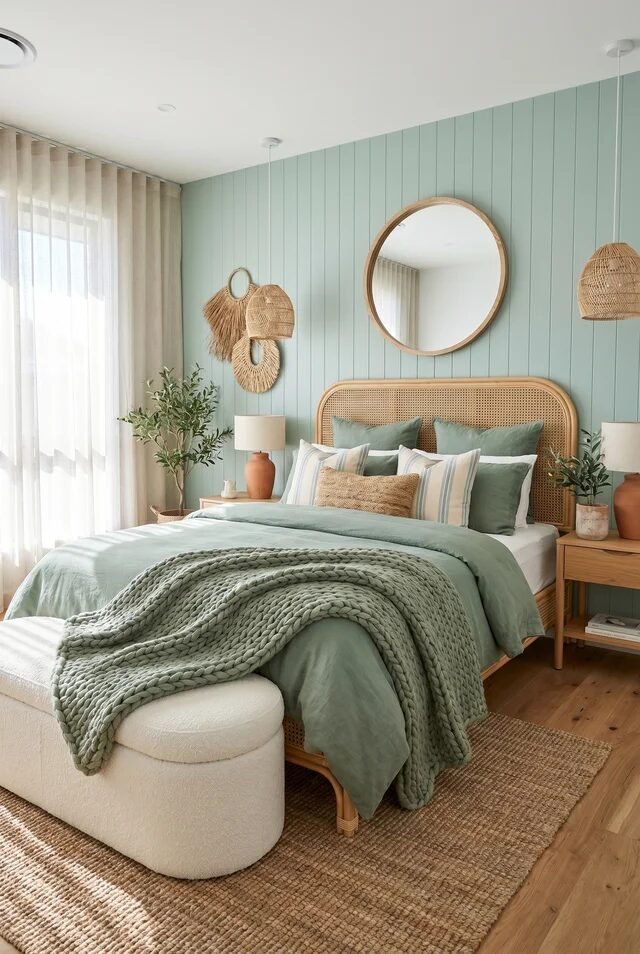
This bedroom feels like the coastal version of a deep exhale. The soft sage panel wall instantly creates a calm atmosphere because muted green tones naturally mimic ocean grasses and sea glass without feeling overly beach-themed. Color psychology absolutely matters in bedroom design, and softer greens tend to make spaces feel more restful and grounded. Pairing that shade with warm rattan and sandy beige textures keeps the room from feeling cold or sterile.
One thing this space does really well is texture stacking. We’ve got woven lighting, cane furniture, chunky knit bedding, linen fabrics, and jute rugs all layered together without visual chaos. That works because the palette stays intentionally restrained. When colors are soft and cohesive, we can layer far more texture without overwhelming the room. Honestly, this is interior design’s version of “doing the most quietly.”
The vertical wall paneling is also sneaky genius because it visually elongates the room while adding subtle architectural detail. If we wanted to recreate this vibe, we’d prioritize organic materials first and decor second. Coastal bedrooms always feel more elevated when texture becomes the main character instead of random nautical accessories fighting for screen time.
Playful Coastal Colors Without Looking Childish
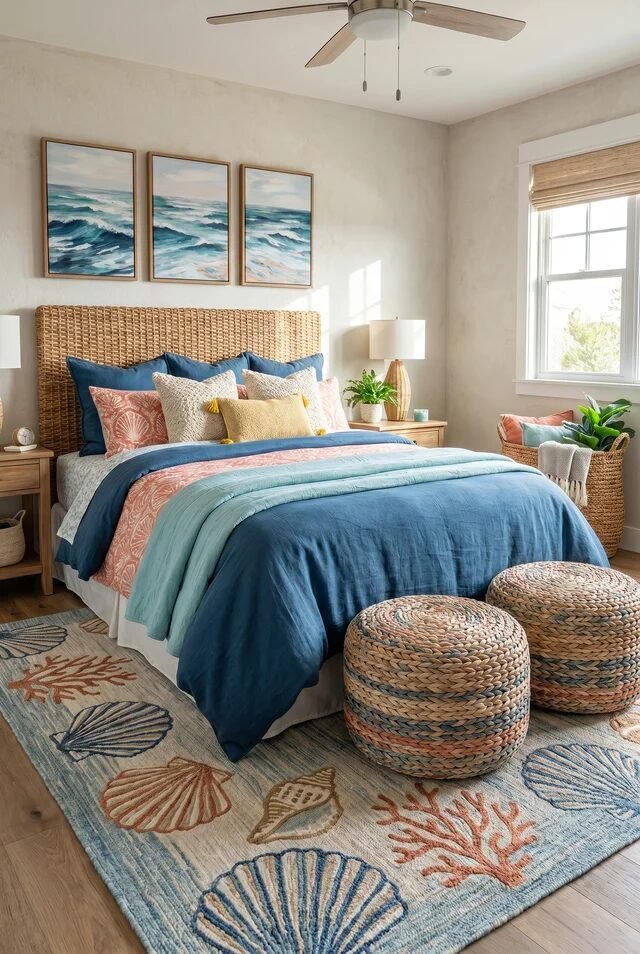
This room understood the assignment: colorful coastal decor without turning the bedroom into a cartoon crab shack. The palette mixes deep navy, soft aqua, coral pink, and sandy neutrals in a way that feels cheerful but still grown-up. The secret is balance. Bold bedding colors are grounded by warm beige walls and natural woven textures, preventing the room from becoming visually overwhelming.
The woven headboard creates a strong focal point while adding warmth against the smoother painted walls. We also love how the shell-inspired rug quietly reinforces the coastal theme without relying on obvious signage or themed decor. That’s a huge design principle people overlook. Repetition works best when it feels subtle and integrated naturally into the room.
Another smart detail is the layering of shapes and patterns. The bedding includes multiple prints and colors, but because they all share similar tones, everything still feels cohesive. If we recreated this ourselves, we’d focus on choosing one dominant color, one accent shade, and one grounding neutral. Too many competing coastal colors can quickly make a bedroom feel like a beach gift shop during tourist season. We do not need that energy near our pillows.
Airy Canopy Bedroom With Relaxed Resort Energy
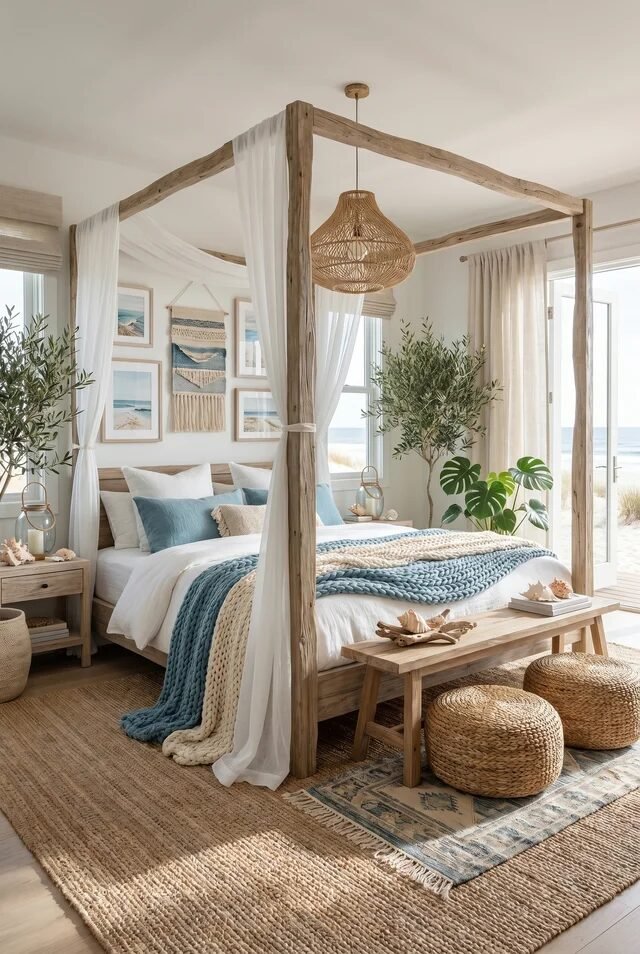
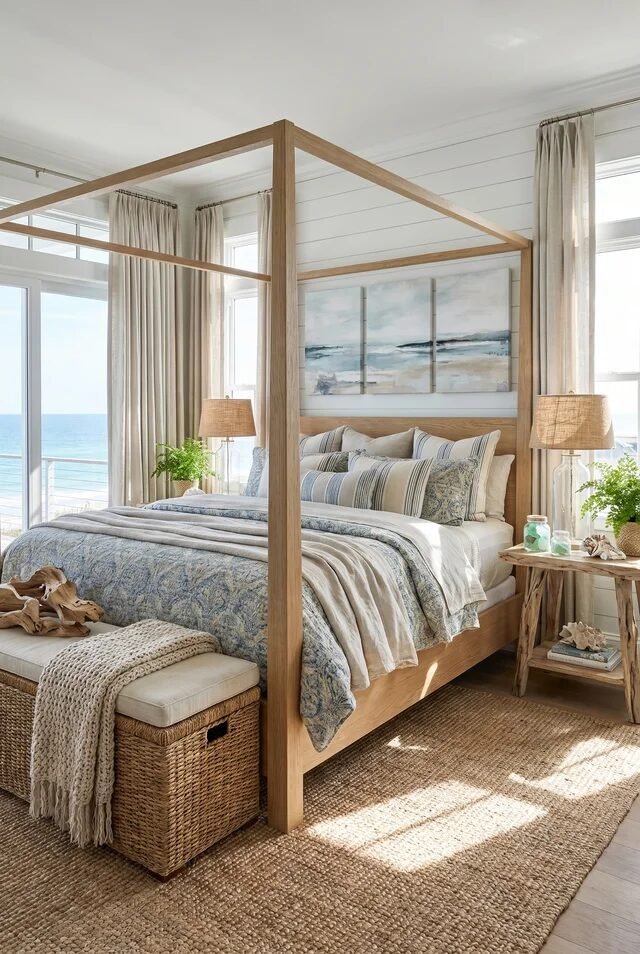
This bedroom genuinely looks like somebody booked a luxury coastal villa and then refused to leave. The oversized wooden canopy bed immediately creates structure and presence, but the sheer white curtains soften everything so the room still feels light and breezy. That contrast between heavy wood and airy fabric is exactly what gives this space its dreamy coastal balance.
The layout also deserves applause because the furniture placement allows natural light to move freely through the room. Nothing blocks the windows, which keeps the ocean view and sunlight as the main focal points. Meanwhile, the woven pendant light and layered rugs add warmth so the space doesn’t feel too stark or minimal. Coastal rooms need softness somewhere or they can start feeling emotionally unavailable.
We also need to talk about the styling restraint here. There are decorative shells and beach artwork, but they’re used sparingly. That’s why the room feels elevated instead of themed. If we wanted this look at home, we’d focus on oversized natural textures, breezy linen curtains, and muted blue accents. The best coastal bedrooms feel collected organically over time, not like we panic-bought everything from the “nautical” aisle in one afternoon.
Minimal Coastal Bedroom With Oceanfront Serenity
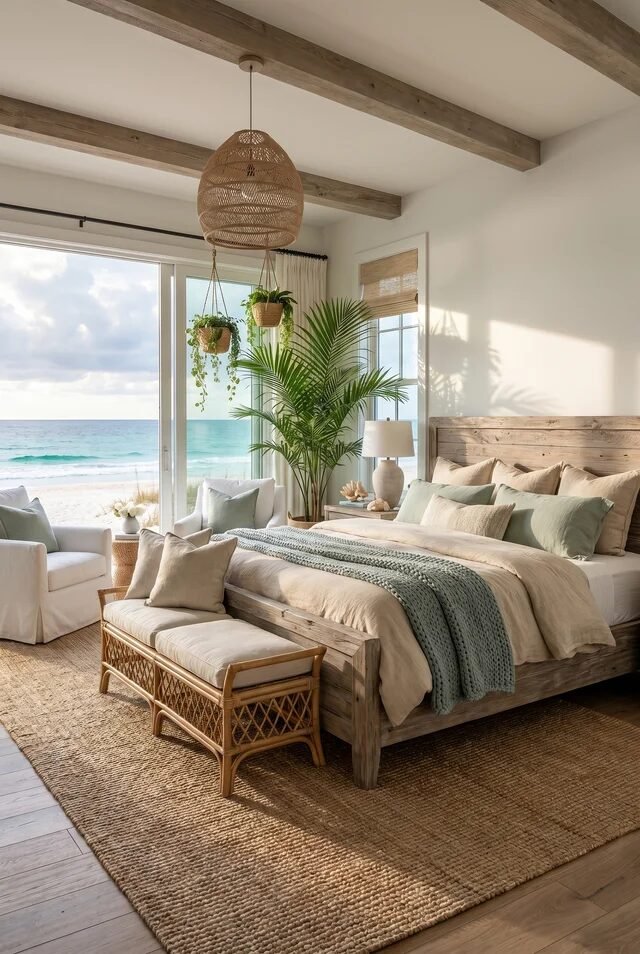
This space proves coastal design can feel incredibly luxurious without stuffing the room with decor. The entire bedroom relies on simplicity, scale, and natural materials to create impact. The oversized bed frame, massive woven rug, exposed beams, and soft neutral palette all work together to create a calm visual rhythm. Sometimes the strongest design move is simply giving the room space to breathe.
The ocean view obviously steals attention immediately, so the interior styling wisely stays understated. Notice how the bedding colors echo the landscape outside with sandy beige, soft seafoam, driftwood tones, and warm whites. That visual connection between indoors and outdoors is one of the biggest principles behind successful coastal interiors.
We also love the use of greenery here because the tall palm introduces height and movement while softening the room’s straight architectural lines. If we recreated this style, we’d avoid clutter completely and invest in fewer, larger pieces instead. Oversized rugs, substantial wood furniture, and layered neutral textiles instantly create that calm luxury aesthetic. Coastal bedrooms always feel richer when they prioritize atmosphere over excessive decoration. Rich aunt vacation home vibes in the absolute best way.
Blue Botanical Coastal Style With Vintage Charm
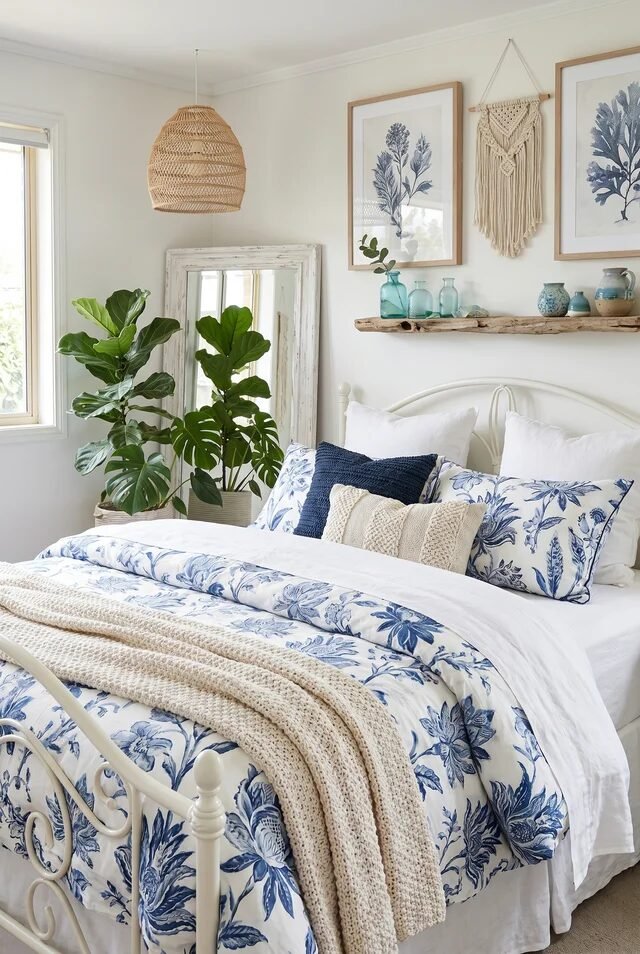
This bedroom leans slightly cottagecore and honestly? It works beautifully. The blue botanical bedding introduces a coastal palette without using obvious beach imagery, making the space feel softer and more timeless. That’s an important design trick for anyone wanting coastal style that still feels elegant five years later. Instead of themed decor overload, the room uses color and pattern to suggest the ocean subtly.
The styling also nails visual layering. Between the macrame wall hanging, distressed wood shelf, vintage-style iron bed, and woven pendant light, every piece contributes texture without competing aggressively for attention. We especially love the oversized plants because they bring organic shape and freshness into the room while balancing the cooler blue tones.
One of the smartest choices here is keeping the walls bright white. That clean backdrop prevents the patterned bedding and decor from feeling busy. If we wanted to recreate this vibe, we’d mix crisp white bedding with one strong blue botanical print and plenty of natural woven accents. Coastal bedrooms tend to feel more sophisticated when they borrow inspiration from vintage interiors instead of chasing every trendy Pinterest beach aesthetic at full speed.
Soft Textures, Ocean Hues, And Effortless Coastal Living
After seeing all these coastal bedroom ideas, one thing becomes painfully obvious: coastal design is really about creating a feeling, not just following a theme. The rooms that feel the most beautiful are usually the ones that prioritize warmth, texture, softness, and natural flow instead of stuffing every corner with seashell decor like it’s a souvenir store clearance event. Great coastal bedrooms feel collected, breathable, and intentionally calming.
We also saw how flexible the style can be. Some spaces leaned bright and colorful, others felt moody and modern, while a few mixed vintage charm with relaxed beach-house energy. That versatility is exactly why coastal interiors continue surviving trend cycles without looking outdated every six months. Whether we prefer soft sage greens, sandy neutrals, classic navy blues, or sun-faded coral accents, the key always comes back to balance and texture.
At the end of the day, the best coastal bedroom is simply one that makes us want to stay in bed an extra hour pretending we hear ocean waves instead of phone notifications and responsibilities.