
Why These Retro Living Rooms Feel Surprisingly Relevant Right Now
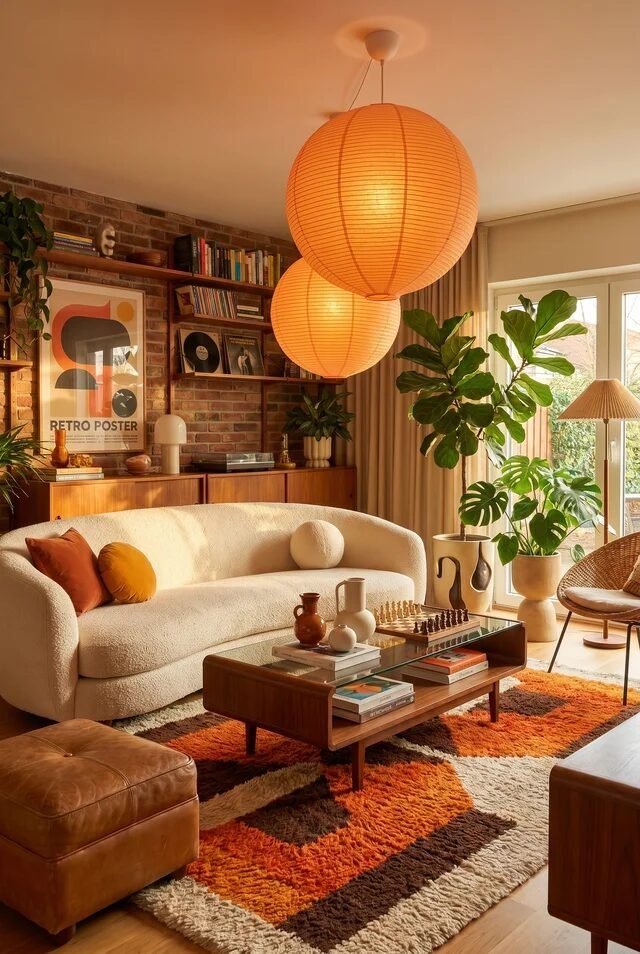
Retro living rooms are having a serious comeback right now, and honestly, we totally understand why. After years of ultra-minimal beige spaces that looked emotionally unavailable, people are craving homes with actual personality again.
Retro interiors bring warmth, curves, texture, and color back into the conversation without feeling old-fashioned when styled correctly. The magic really comes from the balance. We’re not trying to recreate a dusty 1974 time capsule complete with orange shag carpeting from wall to wall. Instead, the goal is mixing nostalgic design elements with modern comfort so the room still feels livable for real life.
What makes retro living rooms especially fun is how expressive they are. Sculptural lighting, geometric art, walnut woods, velvet upholstery, funky shapes, and earthy palettes all work together to create spaces that feel layered and collected. Retro design thrives when rooms look personal rather than perfectly polished. That slightly imperfect, lived-in energy is exactly what makes these spaces feel cozy, welcoming, and endlessly photogenic.
Industrial Retro Corners With Playful Energy
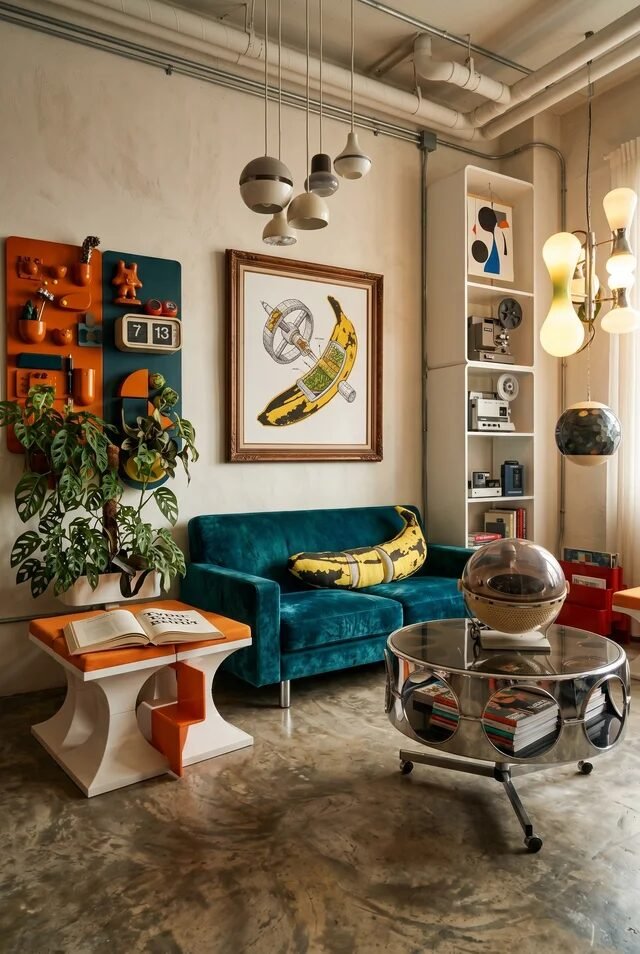
This living room feels like somebody mixed a 1970s bachelor pad with a tiny art gallery and somehow made it look ridiculously cool instead of chaotic. The exposed ceiling pipes instantly push the room into that industrial-retro territory, but the velvet teal sofa softens everything before the space starts feeling too cold.
That contrast is honestly the secret sauce of retro interiors: hard architectural elements balanced with plush textures. Without the velvet, this room would lean “abandoned warehouse.” With it? Suddenly it feels curated.
The orange wall organizer is doing more heavy lifting than people realize. Retro spaces thrive when functional items double as sculptural decor. That’s why the asymmetrical shelving, globe-inspired coffee table, and funky pendant cluster work so well together. None of the shapes fully match, but they all share rounded silhouettes. Repeating shape language is what keeps eclectic rooms from looking like random Facebook Marketplace finds.
If we were recreating this look, we’d focus on layered lighting first. Notice how there are pendants, floor lamps, and ambient daylight all working together. Retro rooms LOVE warm pools of light because it enhances the saturated tones and reflective chrome finishes. Also, let’s normalize giant banana artwork immediately. Tiny wall art could never survive in a room this dramatic.
Warm Walnut Walls Meet Curved Retro Comfort
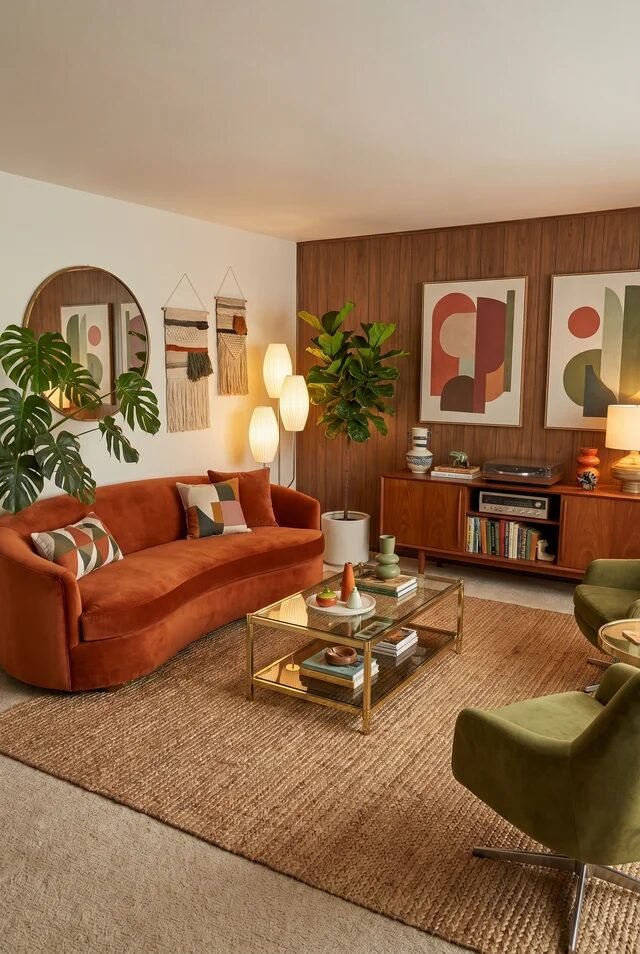
This room is basically proof that retro design does not need to scream with neon colors to feel nostalgic. The walnut panel wall creates a grounded mid-century backdrop, while the burnt orange curved sofa adds softness that keeps the room from looking too formal. Curved furniture is one of the easiest ways to make retro interiors feel updated instead of stuck in a time capsule. Straight lines can feel stiff fast, especially with darker wood tones.
One thing this room gets extremely right is visual balance. The oversized artwork above the console mirrors the rounded shape of the sofa, while the olive accent chairs quietly repeat the earthy palette without overpowering the space. Retro rooms usually work best when there are only three or four dominant colors repeating throughout the room. Here, we see walnut brown, rust orange, olive green, and creamy ivory doing all the work without visual clutter.
The woven rug also deserves attention because it prevents the room from becoming too glossy. Between the brass coffee table, wood paneling, and velvet upholstery, there’s already plenty of visual richness happening. Natural textures are what stop retro spaces from looking overly staged or “theme restaurant” coded. Adding oversized plants helps too because vintage-inspired interiors can sometimes feel heavy without organic shapes breaking things up.
Bold Seventies Wallpaper That Refuses To Behave
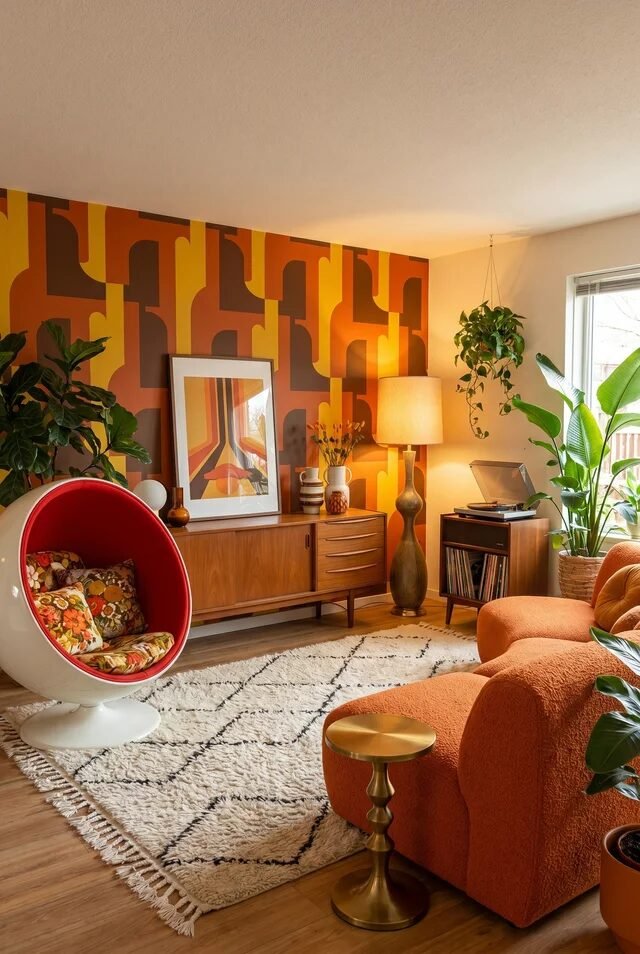
This living room absolutely said “minimalism is boring” and honestly? We support the drama. The geometric wallpaper instantly becomes the focal point, but what makes it successful is how the rest of the room quietly supports it instead of competing for attention. The low walnut credenza, creamy boucle textures, and rounded orange seating all pull colors from the wallpaper without turning the room into visual chaos. Retro interiors work best when one element gets permission to be loud while everything else plays backup dancer.
That iconic ball chair is also a smart styling choice because retro spaces love sculptural furniture. Rounded pod-like shapes instantly reference 1960s and 1970s design trends without needing to fill the room with cliché diner decor. We also love how the white shell of the chair contrasts against the warm oranges and browns. Without those lighter breaks, the room could start feeling visually heavy very fast.
The shag-inspired rug is another subtle genius move. Retro rooms need softness because geometric prints and hard wood furniture can easily make spaces feel rigid. Layering tactile materials like boucle, shag, velvet, and linen creates the cozy “lived-in cool” vibe people actually want from retro homes. Also, can we talk about how every retro room instantly gains 37% more personality once a record player enters the chat?
Earthy Boho Retro Styling That Feels Relaxed
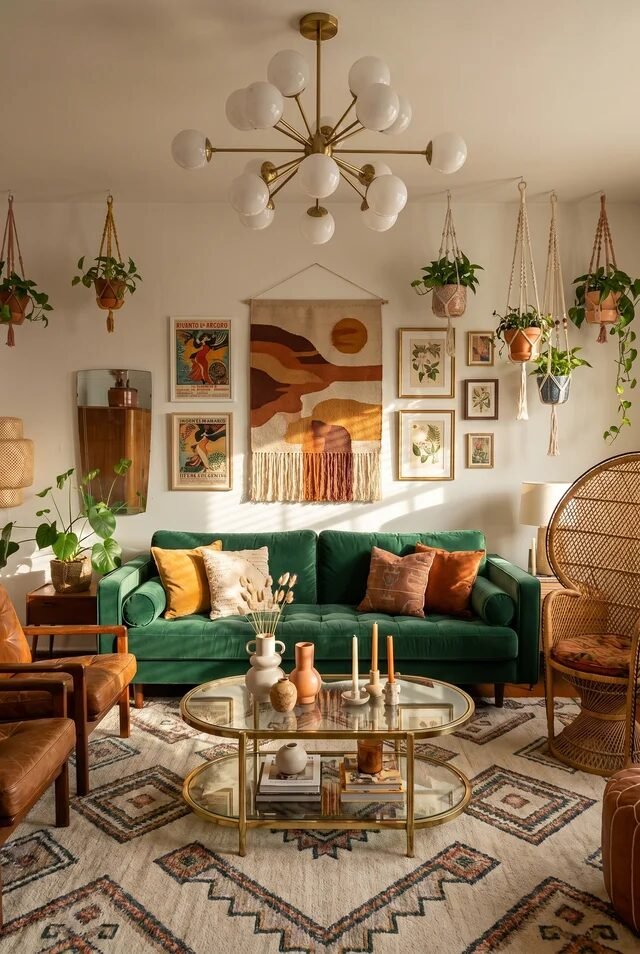
Some retro living rooms feel like museums where nobody is allowed to sit down. This one feels like people actually drink coffee here while pretending they totally understand vinyl audio quality. The emerald green sofa becomes the anchor piece, but the surrounding warm browns, terracotta accents, and woven textures keep the room approachable instead of overly polished. Retro design becomes way more livable when mixed with earthy boho elements instead of strict period styling.
There’s also a strong sense of vertical layering happening here. Hanging plants pull the eye upward while the gallery wall fills the empty upper portion of the room. Meanwhile, the low-profile coffee table keeps the center visually open. This balance matters because retro rooms can quickly feel overcrowded if every decorative element sits at the same height. The peacock chair especially adds sculptural height without blocking sightlines, which is honestly a design trick more people should steal.
Lighting is doing a ton of emotional work here too. The warm-toned bulbs bounce beautifully against the brass table frame and earthy textiles, creating that golden-hour effect even indoors. Warm lighting is basically mandatory in retro interiors because cool white bulbs instantly kill the nostalgic atmosphere. And yes, hanging plants absolutely count as emotional support decor at this point.
Moody Retro Geometry With Seventies Lounge Vibes
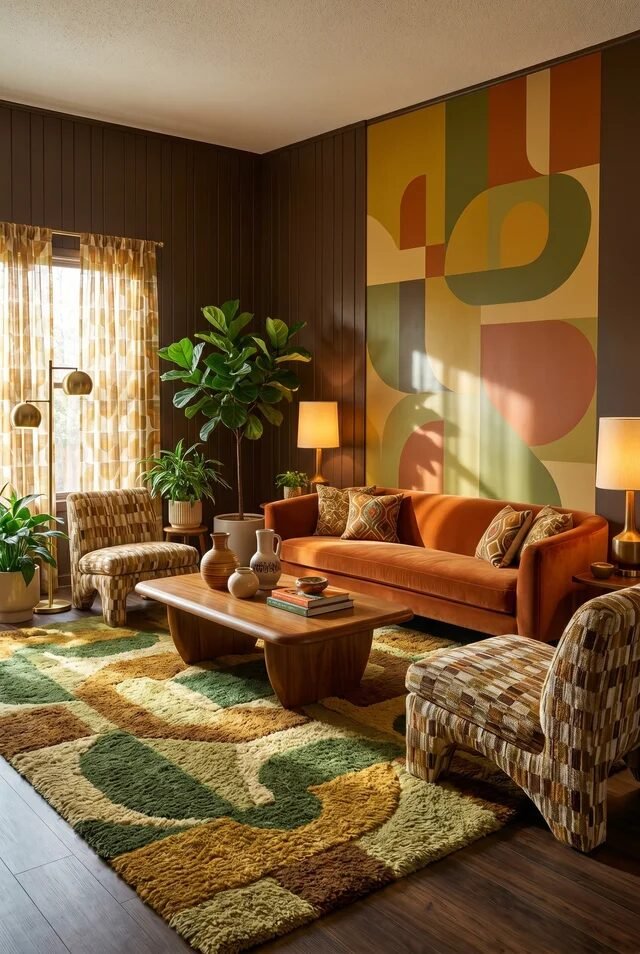
This room feels like the cool aunt’s house where every object somehow looks expensive and vintage at the same time. The oversized geometric mural immediately creates movement across the wall, but the earthy palette keeps it sophisticated instead of cartoonish. Olive green, mustard, rust, and walnut tones are classic retro combinations because they mimic natural landscapes while still feeling rich and cozy. Retro palettes usually succeed when they feel slightly muted rather than hyper-saturated.
The furniture layout is also incredibly smart for conversation flow. Notice how the curved sofa and rounded coffee table soften the sharp geometry from the wall art and paneling. Retro interiors often rely on this push-and-pull between structured lines and organic curves. Without those softer silhouettes, the room would feel visually aggressive very quickly.
We also need to appreciate the rug because it quietly ties every color together without looking too coordinated. That’s a huge retro design principle people miss. Matching everything perfectly actually makes vintage-inspired spaces feel fake. The goal is collected and layered, not “we bought the entire showroom set in one afternoon.” Adding textured upholstery on the chairs was also genius because it introduces pattern variation without needing another loud print fighting for attention.
Cozy Retro Corners With Collected Personality
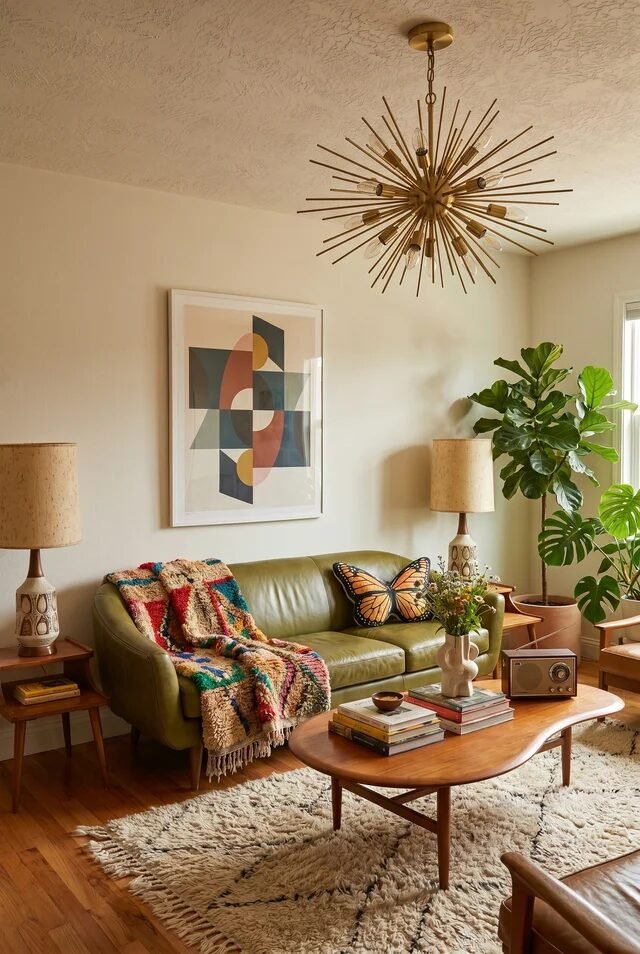
This living room has the exact energy of someone who owns vinyl records “for the sound quality” but also secretly because the covers look cute on shelves. The olive green leather sofa immediately establishes the retro mood, but the room avoids feeling overly themed because the palette stays soft and airy. Cream walls, warm wood tones, and layered textiles stop the darker colors from taking over. Retro rooms feel far more timeless when saturated pieces are balanced with neutral breathing space.
The starburst chandelier is doing what every great retro light fixture should do: acting like functional sculpture. It draws the eye upward and gives the ceiling personality without needing dramatic architectural details. Meanwhile, the shag rug softens all the wood finishes and keeps the room cozy instead of stiff. Texture layering matters a LOT in retro spaces because clean-lined furniture can otherwise start feeling visually flat.
We also love the small playful accents here, especially the butterfly pillow and colorful throw blanket. Retro interiors thrive when they feel a little quirky and personal rather than perfectly curated. The goal is “cool collected apartment,” not “furniture showroom with emotional issues.” Adding oversized plants is also genius because organic shapes naturally soften all the geometric decor happening around them.
Desert Sunset Murals That Steal Attention
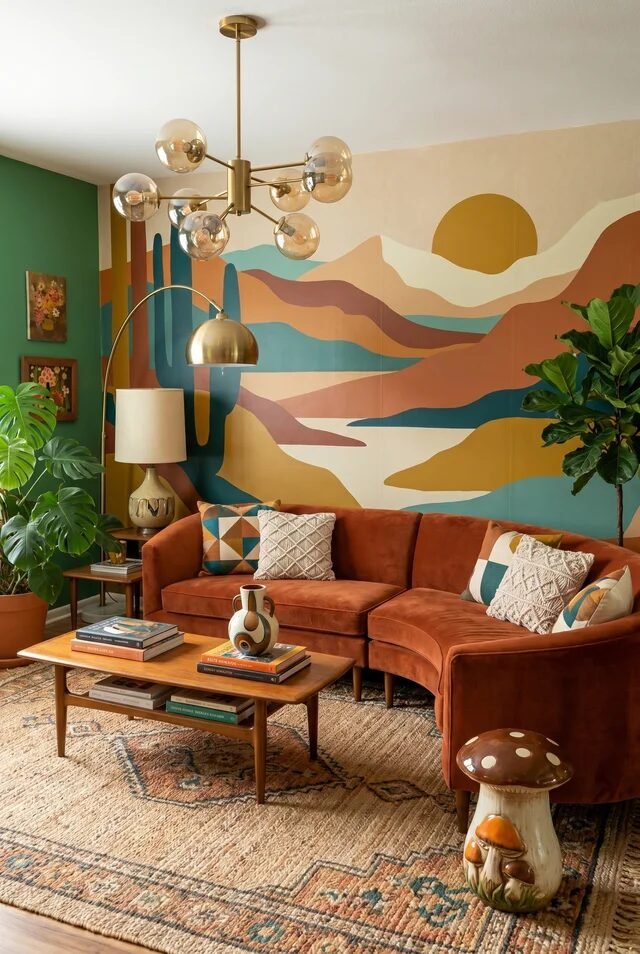
This room understood the assignment and then added a cinematic soundtrack for dramatic effect. The oversized mural instantly becomes the star of the space, but notice how the curved rust sofa quietly mirrors the flowing landscape shapes behind it. Repeating curves across furniture and wall treatments creates visual rhythm, which is why this room feels intentional instead of chaotic. Retro interiors LOVE cohesion through shape repetition.
Color balance is also incredibly smart here. The teal, mustard, terracotta, and cream tones all feel bold individually, yet the muted finish keeps them from overwhelming the room. That’s a huge retro design trick people often miss. Vintage-inspired palettes usually work best when colors feel earthy and slightly dusty rather than super bright and synthetic. The brass lighting adds warmth too, helping the mural feel elevated instead of cartoonish.
The layered rug situation deserves attention because it grounds all the color happening above. Without that softer patterned base, the room could start feeling visually top-heavy. Large-scale wall art or murals should almost always be paired with quieter flooring so the eye has somewhere to rest. Also, the mushroom stool? Completely unnecessary. Completely iconic. Retro rooms honestly need at least one object that sparks the sentence: “Wait… where did you even find that?”
Vaulted Mid-Century Spaces With Graphic Warmth
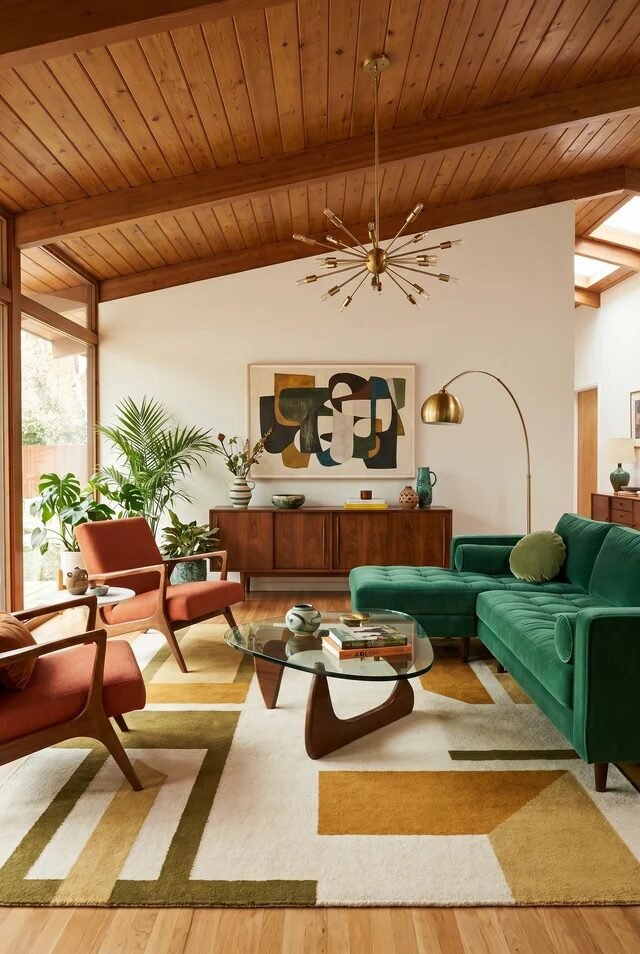
This room feels like the architectural version of a really expensive espresso machine. The vaulted wood ceiling immediately creates warmth and drama before we even notice the furniture. Retro-inspired interiors often rely heavily on natural wood because it creates richness without requiring excessive decoration. When the architecture already has texture and tone, the decor can stay cleaner and more intentional.
The emerald sectional becomes the anchor piece here, and honestly, green velvet continues to carry retro interiors on its back. But what makes this room especially successful is the balance between heavy and light elements. The large sectional has visual weight, so the glass coffee table helps keep the center feeling open and airy. Meanwhile, the slim-legged chairs prevent the layout from looking bulky. Retro rooms work best when there’s variation in furniture density.
The geometric rug quietly ties the whole palette together through olive, mustard, cream, and brown tones without screaming for attention. We also love how the artwork above the console introduces abstract forms that echo the rug pattern below. Repeating colors and motifs across different surfaces is what makes a retro room feel professionally layered rather than randomly decorated. And yes, every retro living room becomes instantly cooler once an arc floor lamp enters the room like a celebrity cameo.
Rich Walnut Walls And Burnt Orange Drama
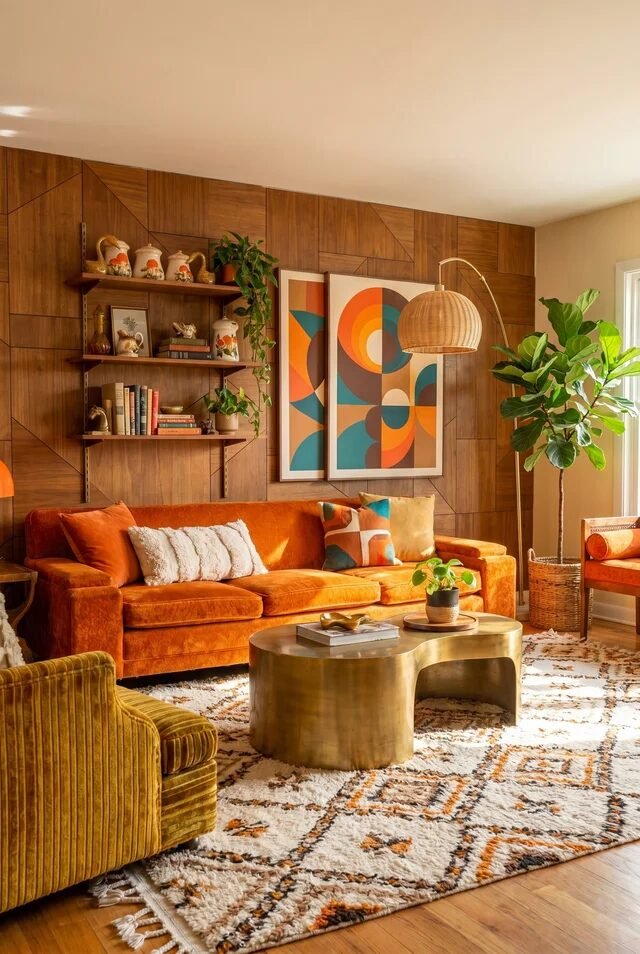
This room said “warm tones only” and honestly committed harder than most people commit to New Year resolutions. The paneled walnut wall creates instant vintage depth, while the burnt orange velvet sofa injects that unmistakable seventies-inspired richness. Wood paneling works best in retro interiors when paired with tactile fabrics that soften all the hard lines. Without the velvet and woven textiles, the room could easily start feeling too rigid or masculine.
One detail we absolutely need to discuss is the mix of shapes happening here. The curved brass coffee table offsets the angular wall paneling beautifully, while the rounded pendant lamp introduces softness overhead. Retro interiors often rely on this contrast between structured geometry and fluid curves. It keeps the room visually dynamic and prevents everything from feeling overly matchy-matchy.
The styling also feels collected instead of staged, which is a huge reason the room works. Open shelving with ceramics, trailing plants, and stacked books adds casual personality without cluttering the layout. Retro spaces become far more believable when decorative items look slowly accumulated over time rather than purchased in one panic-filled online shopping session. Also, that corduroy chair texture? Absolutely peak cozy aunt energy in the best possible way.
Elegant Retro Curves With Soft European Charm
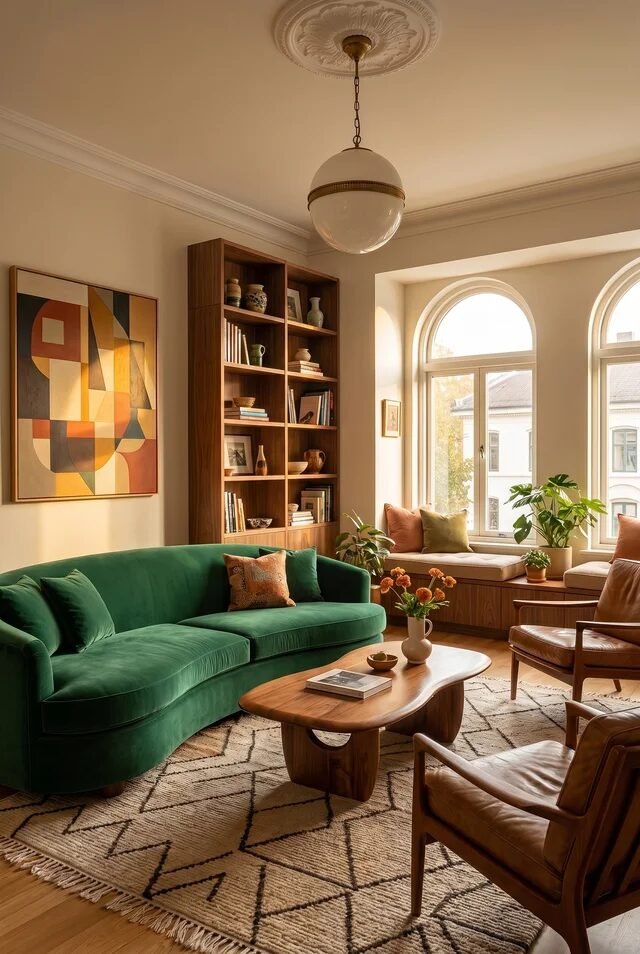
This living room feels like retro design went on vacation in Paris and came back significantly more refined. The curved emerald sofa immediately introduces vintage personality, but the creamy walls, classic molding, and tall arched windows give the room a softer, almost European elegance. Mixing retro furniture with traditional architectural details is one of the easiest ways to modernize vintage-inspired interiors.
The layout also understands restraint, which retro spaces honestly struggle with sometimes. Instead of filling every corner with loud patterns and novelty decor, the room focuses on a few impactful shapes. The curved sofa, sculptural wood coffee table, globe pendant, and abstract artwork all share soft rounded forms that visually connect the room together. Repetition through silhouette is subtle, but it’s what makes the design feel cohesive.
Natural light is another huge reason this room succeeds. Sunlight bouncing across the velvet upholstery and warm walnut wood keeps the darker tones from feeling heavy. Meanwhile, the neutral rug acts like a visual buffer between all the richer colors. Retro rooms become dramatically more livable when there’s enough negative space and softness balancing the bold statement pieces. Honestly, this is the kind of room that makes people suddenly want to start using words like “curated” unironically.
Good Retro Design Always Feels Collected Naturally
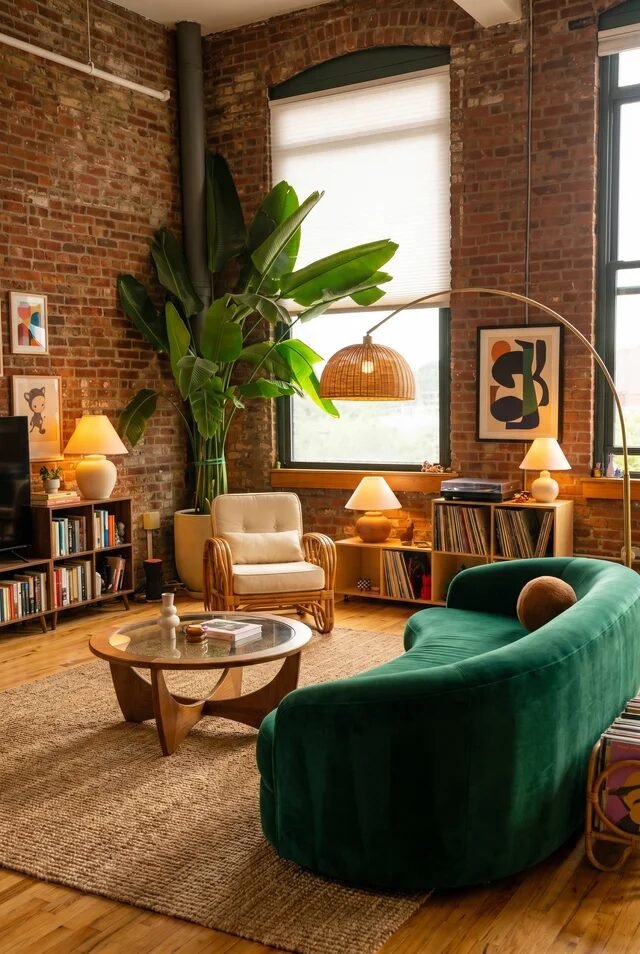
The best retro living rooms never feel like somebody panic-bought an entire vintage showroom in one weekend. They feel layered slowly over time, with textures, colors, and furniture shapes that naturally build character together. That’s why successful retro interiors focus less on perfection and more on atmosphere.
Warm woods, curved silhouettes, brass accents, abstract art, low-profile furniture, and cozy lighting all help create that nostalgic feeling without making the room look dated. The real secret is knowing when to stop before the space turns into a themed movie set.
We also love how flexible retro styling can be. Some spaces lean earthy and bohemian, others feel sleek and space-age inspired, while some mix vintage pieces with modern architecture for a softer updated look. There’s room for personality here, which honestly explains why retro interiors photograph so well online right now.
They feel expressive, comforting, and visually rich in a way many trend-driven spaces don’t. At the end of the day, retro living rooms work because they prioritize warmth, individuality, and the kind of charm that makes people actually want to stay awhile.