
Dark Living Rooms That Feel Inviting Instead of Heavy, and Why They Work
Black walls have a reputation problem. People picture a cave, a bachelor pad from 2009, or a room that swallows every lamp you own. Fair worry, honestly. But a dark living room usually goes wrong for one boring reason, and it has very little to do with the paint.
What matters is everything the paint sits next to: how light hits the surface, which textures catch it, and whether some warmth shows up in wood, brass, leather, or flame. Get those right and black stops being a mood and becomes a backdrop that makes furniture and art look sharper than they ever do on white.
We gathered rooms that take very different routes there, from rustic to sleek, and broke down the design logic behind each so you can borrow the parts that suit your space.
Backlight the Wall, Not the Room
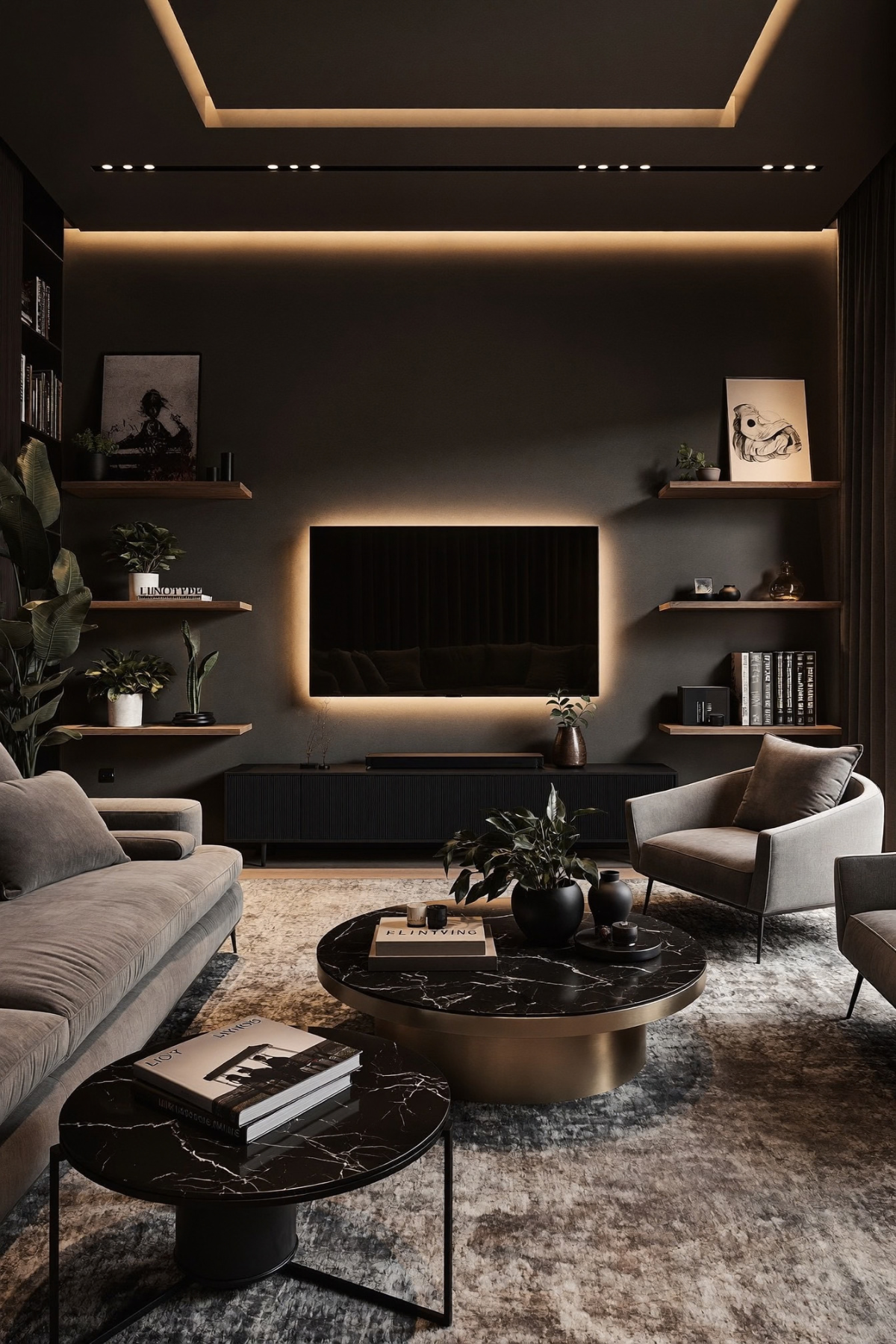
Look at how the light in this room behaves. Nothing hangs from the ceiling in the usual way. A recessed strip traces the ceiling edge, another washes the wall behind the television, and the result is a soft halo that outlines shapes instead of flooding the space. That halo is what stops black from reading flat.
Floating walnut shelves add the second layer. They hold plants, a leaning print, and a few dark objects, and nothing more, so the wall never turns into a shop display. Warm LED strips around 2700K are what make black walls feel deep instead of dead. Tuck them behind the TV, under shelf lips, or along a ceiling cove.
The furniture keeps the palette calm: a taupe velvet sofa, gray armchairs on slim black legs, and a round marble coffee table with a brass base that picks up the glow. Copy the lighting first, since it costs less than a new sofa and does most of the work.
Let the Landscape Do the Decorating
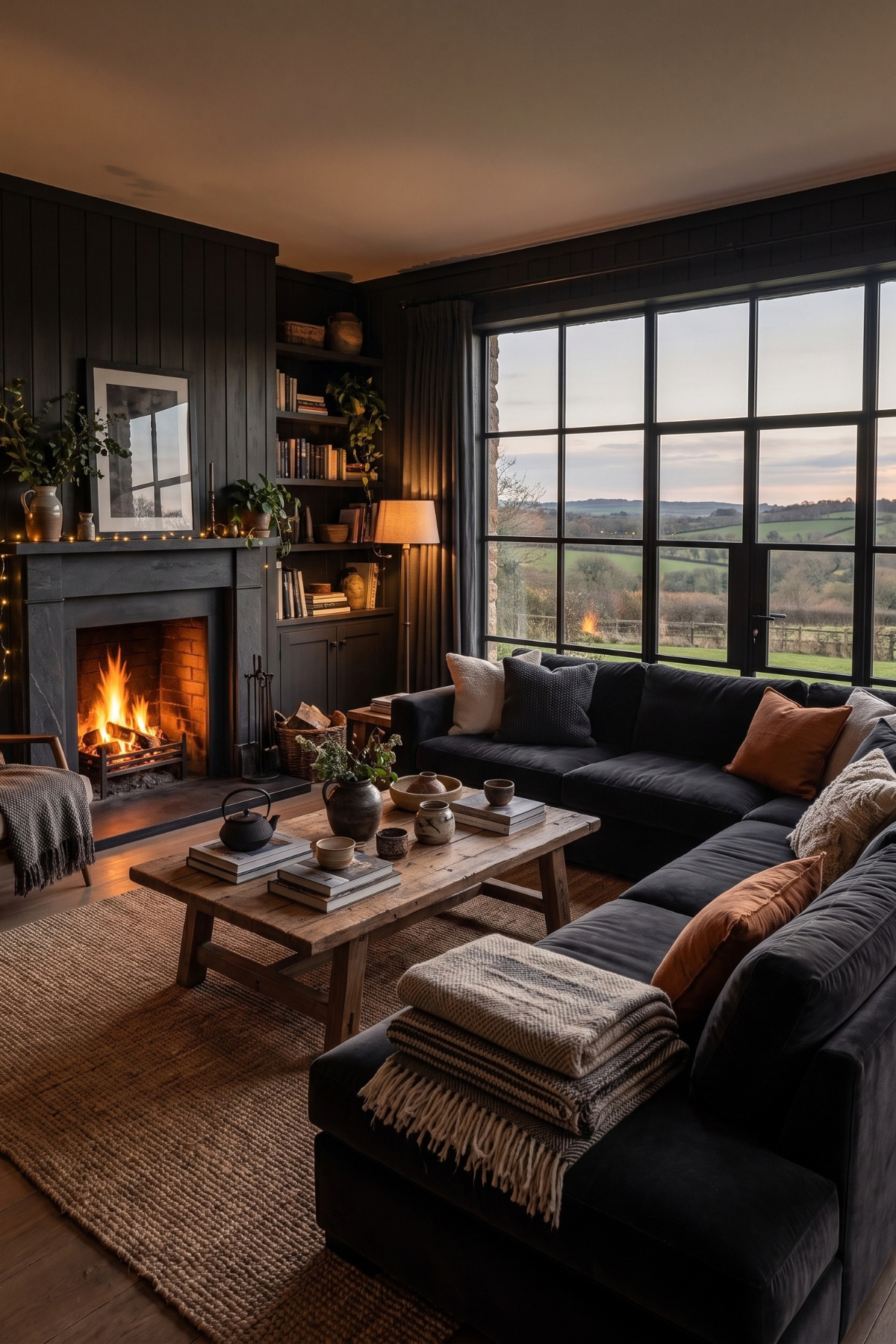
Start with the boards. Vertical black paneling gives this room its backbone, and it’s one of the friendlier DIY routes into dark walls: tongue-and-groove or thin MDF battens, a coat of satin black, done in a weekend. The grain catches light in thin lines, so the wall never looks like one flat slab.
Then look at the window. A steel-framed grid with rolling fields behind it works like a living painting, which means the walls barely need art at all. Rust and cream cushions on a charcoal velvet sectional pick up the sunset colors outside, so the inside and the view seem to be talking to each other.
The coffee table is scarred reclaimed wood holding ceramic bowls and a cast iron teapot, with a fire crackling a few steps away. Rough wood and handmade pottery are the counterweight that keeps a black room from feeling polished to death. A jute rug ties everything to the floor. Add a basket of split logs nearby for extra warmth.
Total Black Only Works With Texture
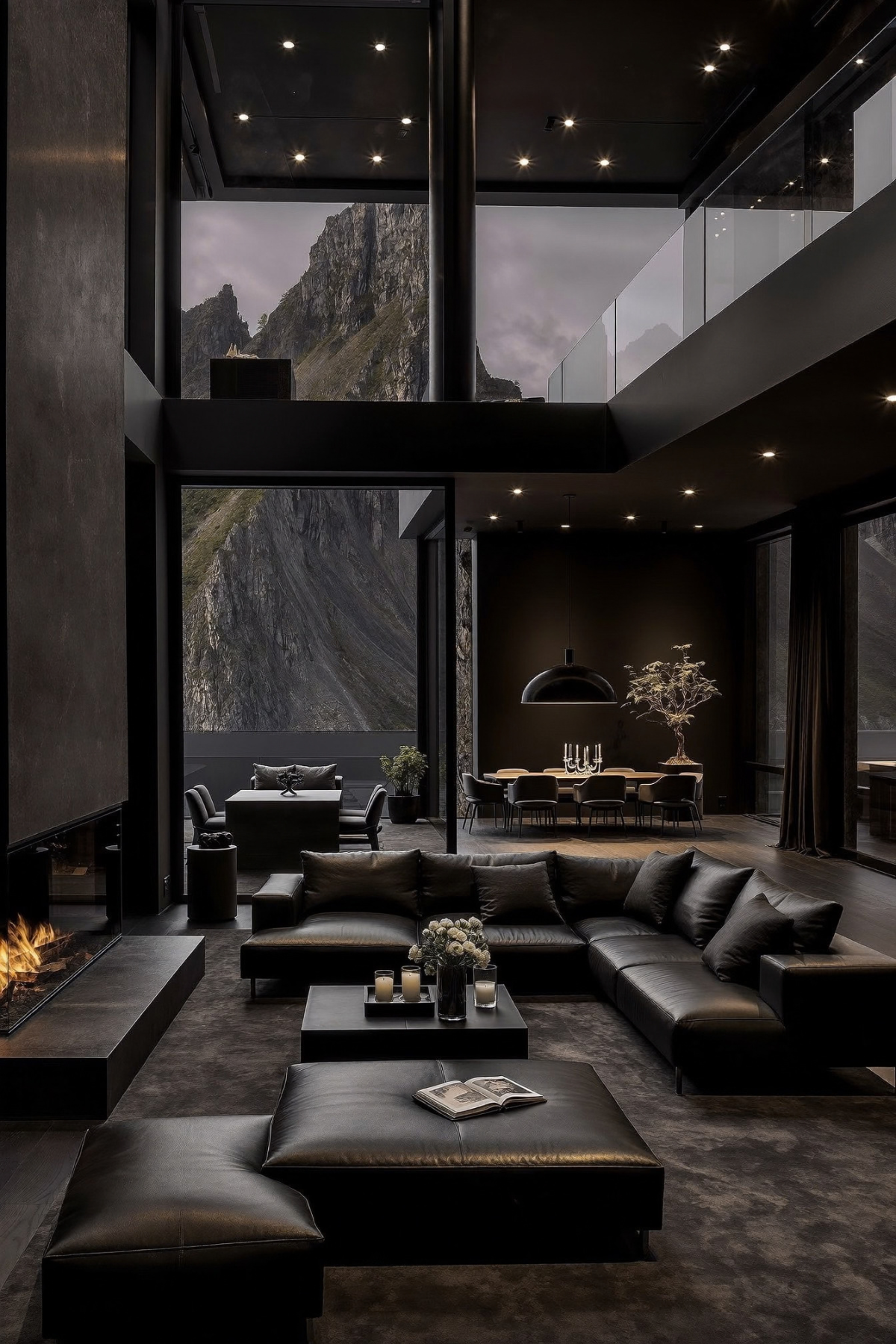
Here’s the thing about a room where the sofa, floor, walls, ceiling, and fireplace all sit near black: it lives or dies on surface. Matte plaster on the walls, glossy leather on the seating, a shadowy plush rug, and a metal fireplace hood each reflect light differently, so the eye keeps finding edges even when the color never changes.
Scale helps too. The double height ceiling and the mountain outside the glass do plenty of heavy lifting, but a smaller home can borrow the trick with low, wide furniture, like the oversized leather ottoman working as a coffee table here. Mix at least three finishes in the same dark shade so nothing melts into the next thing.
Small signs of life stop it from feeling like a showroom: white roses, a couple of candles in glass, an open book. Skip anything bright, because in a room this quiet even a red vase would shout. Keep lighting low and warm so the leather can glow.
Green Velvet Against Charcoal Paneling
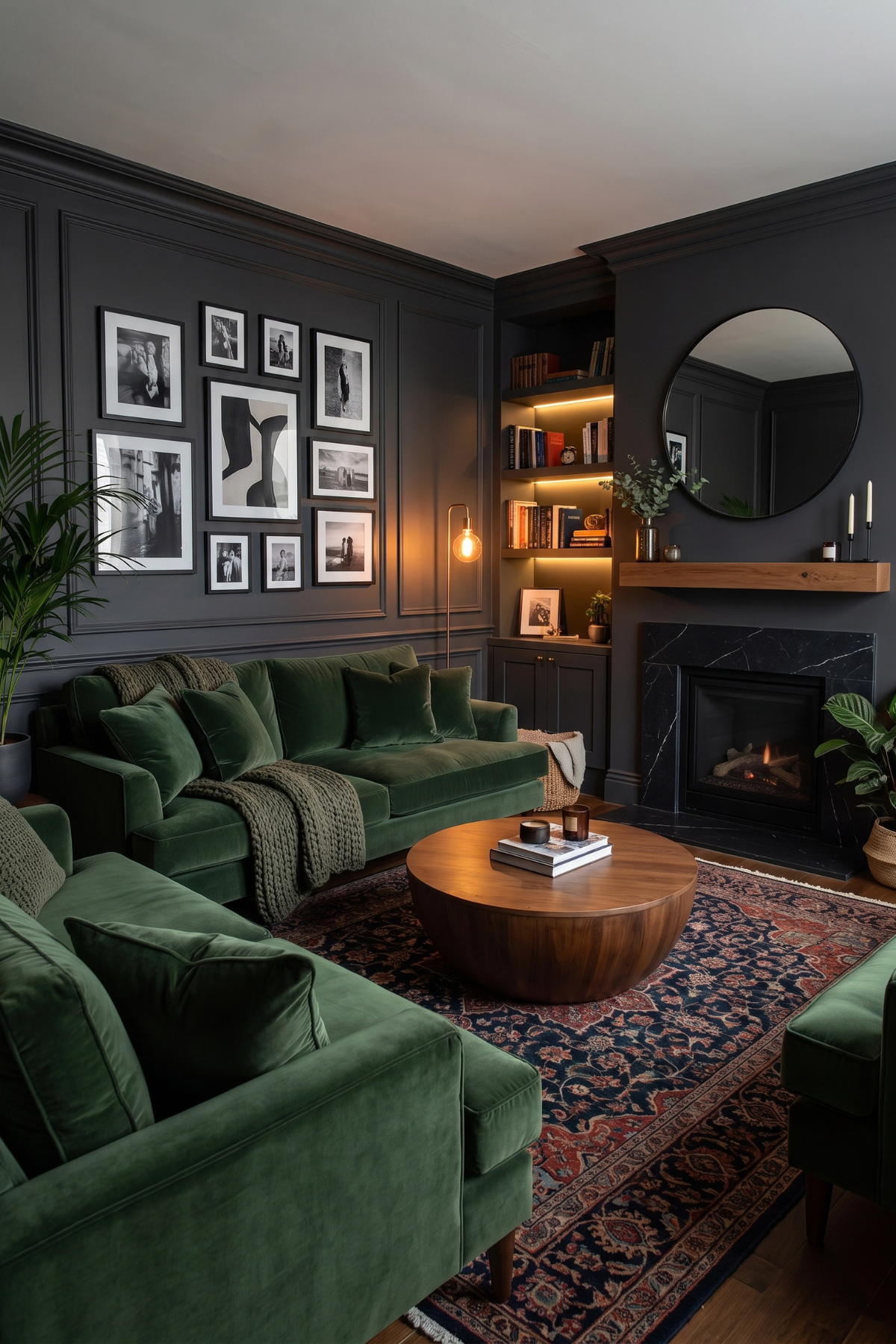
Black and green sounds like a forest at midnight, and this room proves it can be exactly that without turning gloomy. The emerald velvet sofas are saturated enough to hold their own against charcoal walls, while the painted molding keeps everything feeling architectural instead of flat.
Notice how quiet the rest of the room stays around that color. A walnut drum coffee table, a black marble fireplace surround, and a round black mirror give the eye somewhere to rest, and a Persian rug in navy and rust pulls in extra warmth. Pick one saturated jewel tone for the biggest piece of furniture and let every other surface stay neutral or wooden.
Framed black and white photos in matching black frames read as one gallery wall, and the backlit shelves beside the fireplace supply a low glow after dark. A brass globe floor lamp adds a small hit of shine without stealing the scene. A dimmer switch on the lamps lets the emerald shift from day to evening.
Let One Mirror Steal the Wall
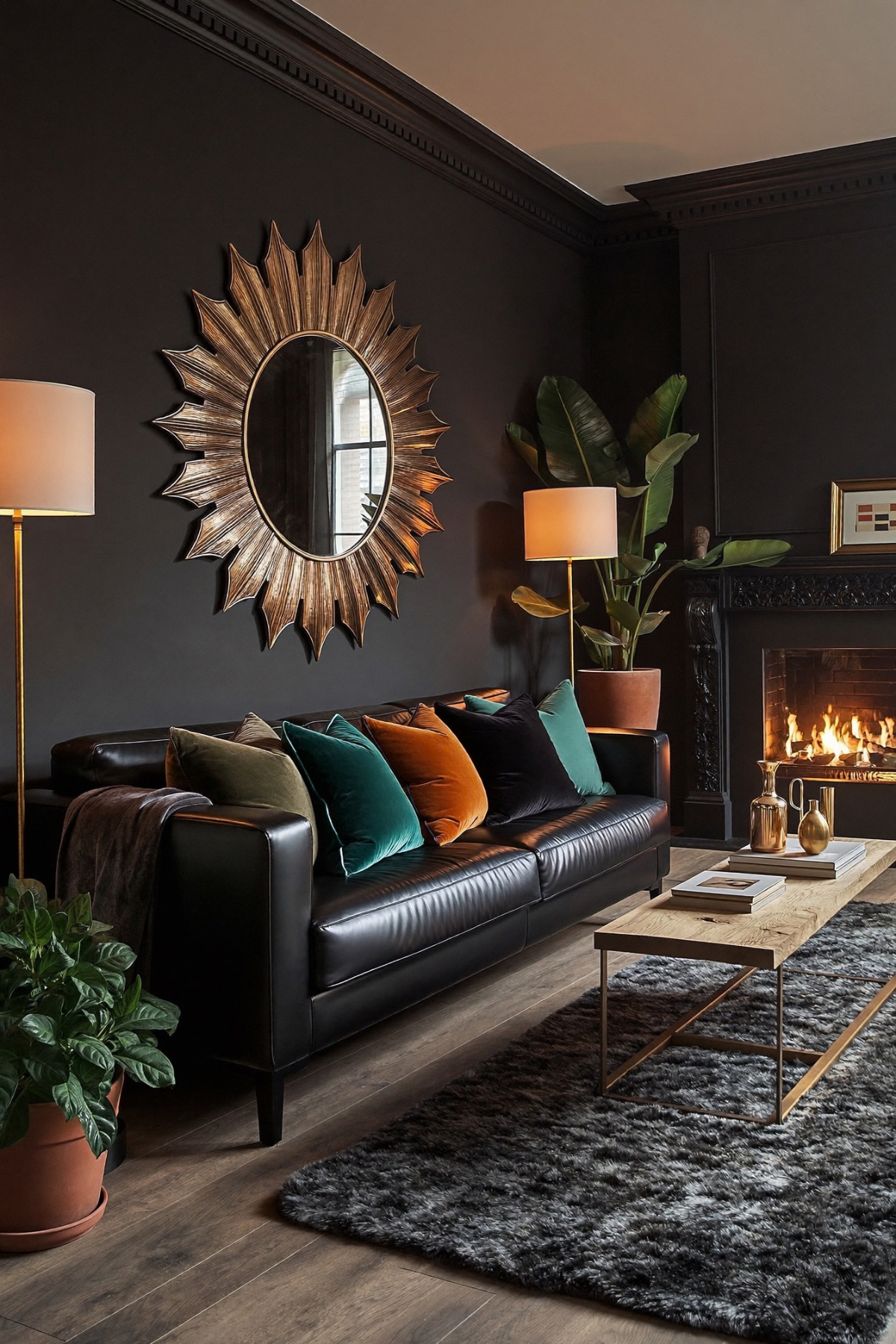
Every dark wall needs one thing that gets to be the loudest. Here it’s the bronze sunburst mirror, oversized and slightly wild, hung dead center above a sleek black leather sofa. It bounces lamp light back into the room and gives a plain black wall a shape worth looking at.
The pillow lineup is the fun part: olive, deep teal, burnt orange, and black velvet sitting side by side against glossy leather. Different colors, similar richness, and none of them fight the mirror because they share a warm undertone. Stick to three or four jewel tones with the same depth, so the mix looks planned instead of random.
Brass floor lamps on either side, a banana leaf plant in a terracotta pot, and a light oak coffee table on a slim gold frame keep the palette warm. Ornate crown molding painted the same black as the walls quietly upgrades the whole room, and all it costs is a can of paint.
Boho Texture Loves a Black Backdrop
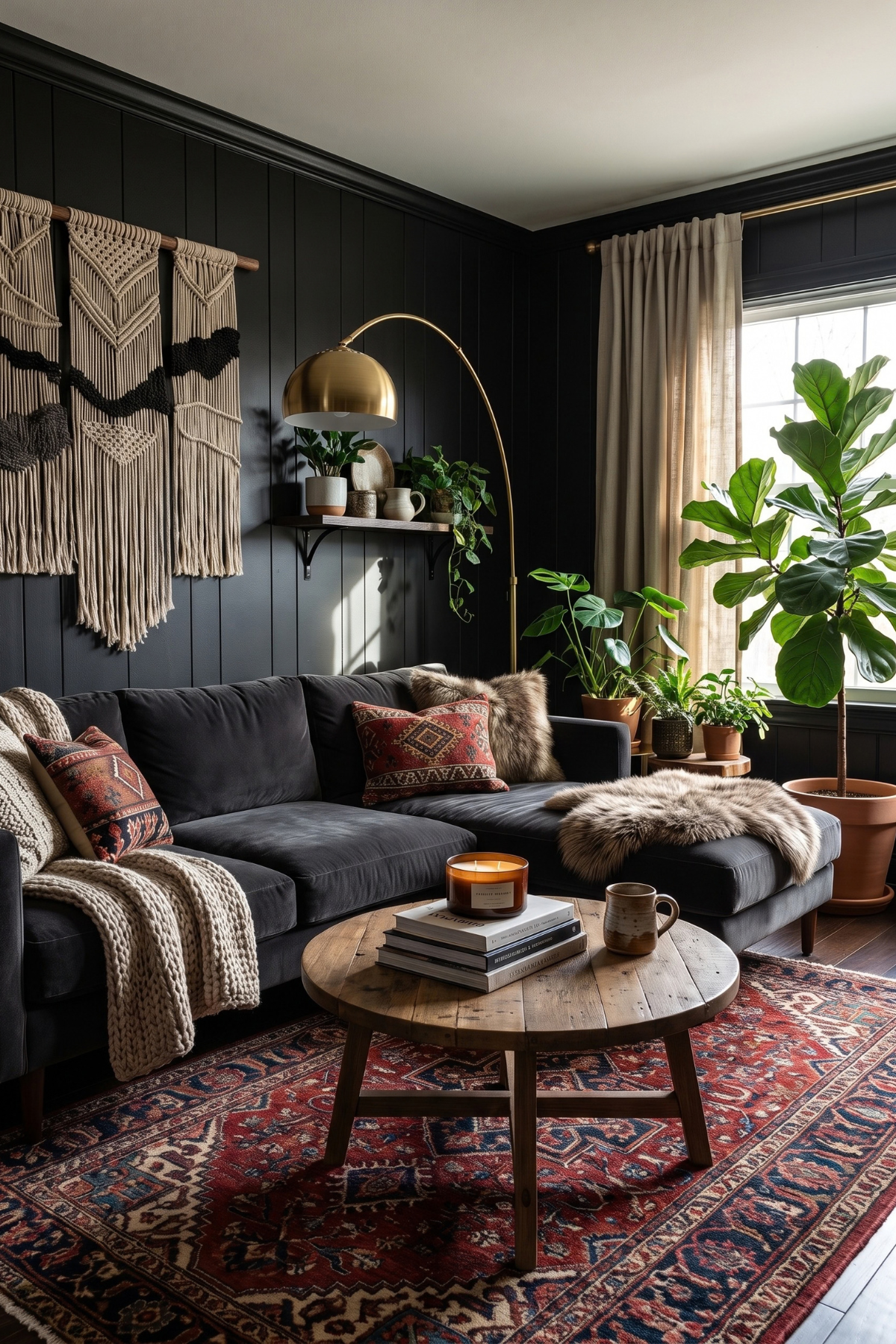
Those three macrame panels on the left are doing more than filling wall space. Cream rope against black board paneling is close to maximum contrast, so the knots and fringe read like a drawing, and the woven black sections echo the wall behind them. Hang a piece like this at curtain rod height so it feels anchored.
Everything else piles on softness: a chunky knit throw, kilim print cushions, a faux fur pelt across the chaise, and a charcoal sofa that nearly vanishes into the wall. A round reclaimed wood coffee table and a red Persian rug ground the fluff with something heavier. Boho works on black when the soft, warm layers clearly outnumber the dark ones.
Plants finish the story. A fiddle leaf fig by the window, trailing pothos on a bracket shelf, and a brass dome arc lamp leaning over the sofa like a reading light. Sheer linen curtains keep daylight gentle, which the black walls appreciate. Layer, then step back and edit.
Traditional Paneling in Its Darkest Form
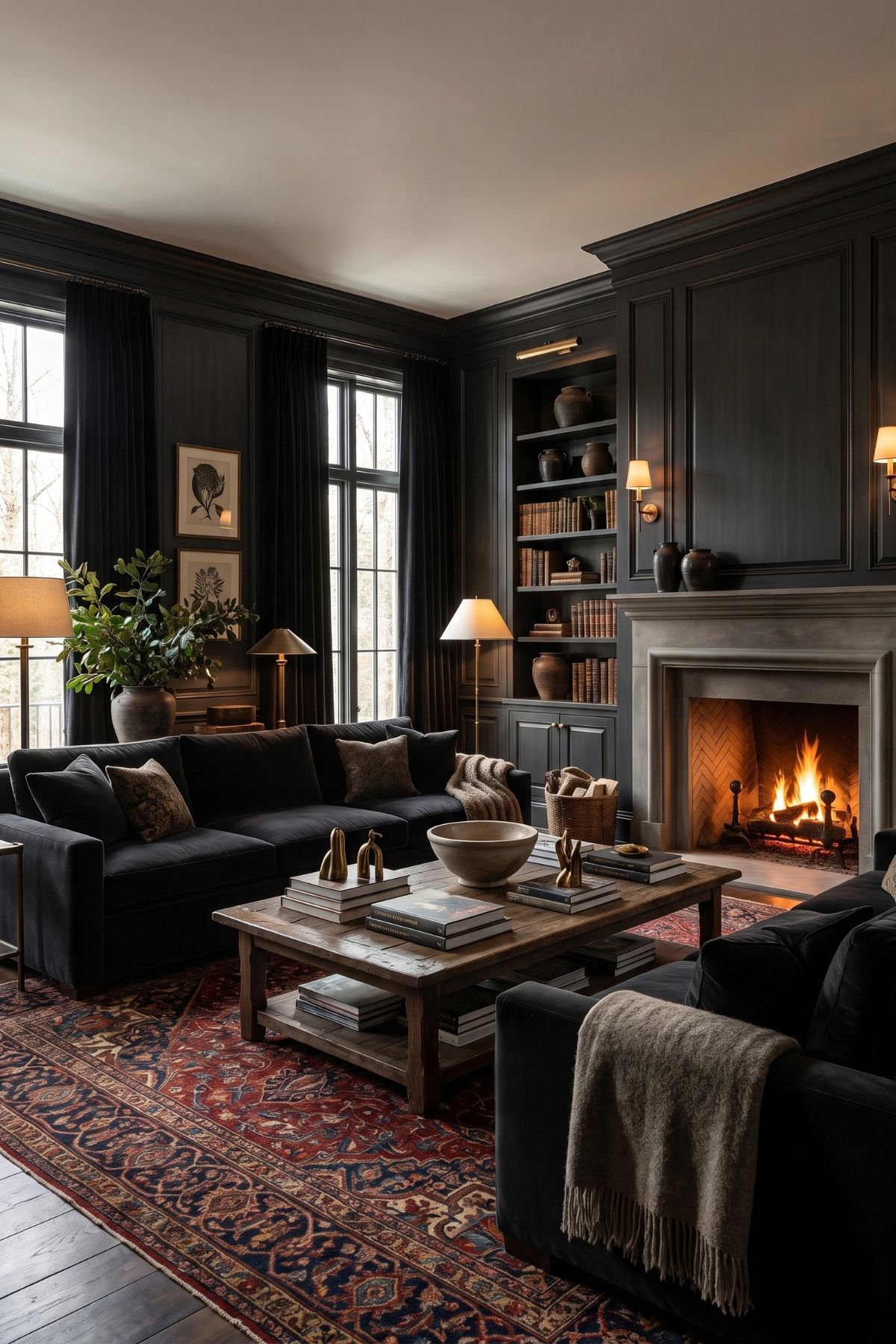
Wondering how a heavy, classic room avoids feeling like a funeral parlor? Look at the sconces. Paired wall lights flank the fireplace, brass floor lamps sit at every seating corner, and a picture light hangs over the bookshelf, so the room gets warm pools at eye level instead of one harsh light from above.
Paneled walls here are a single black, with the trim painted to match, which makes the molding read as shadow and texture instead of decoration. When paneling, trim, and walls share one color, the depth shows up on its own. A gray stone fireplace surround supplies the only pale note, and it feels right.
Leather-bound books and old pottery fill the built-ins, tall velvet curtains fall floor to ceiling, and a worn red and navy Persian rug keeps the black sofas from floating. Stack coffee table books in odd numbers, add a couple of brass sculptures, and the whole thing looks collected over time. Aged brass fixtures suit paneled rooms best.
Matte Black Walls and Raw Oak
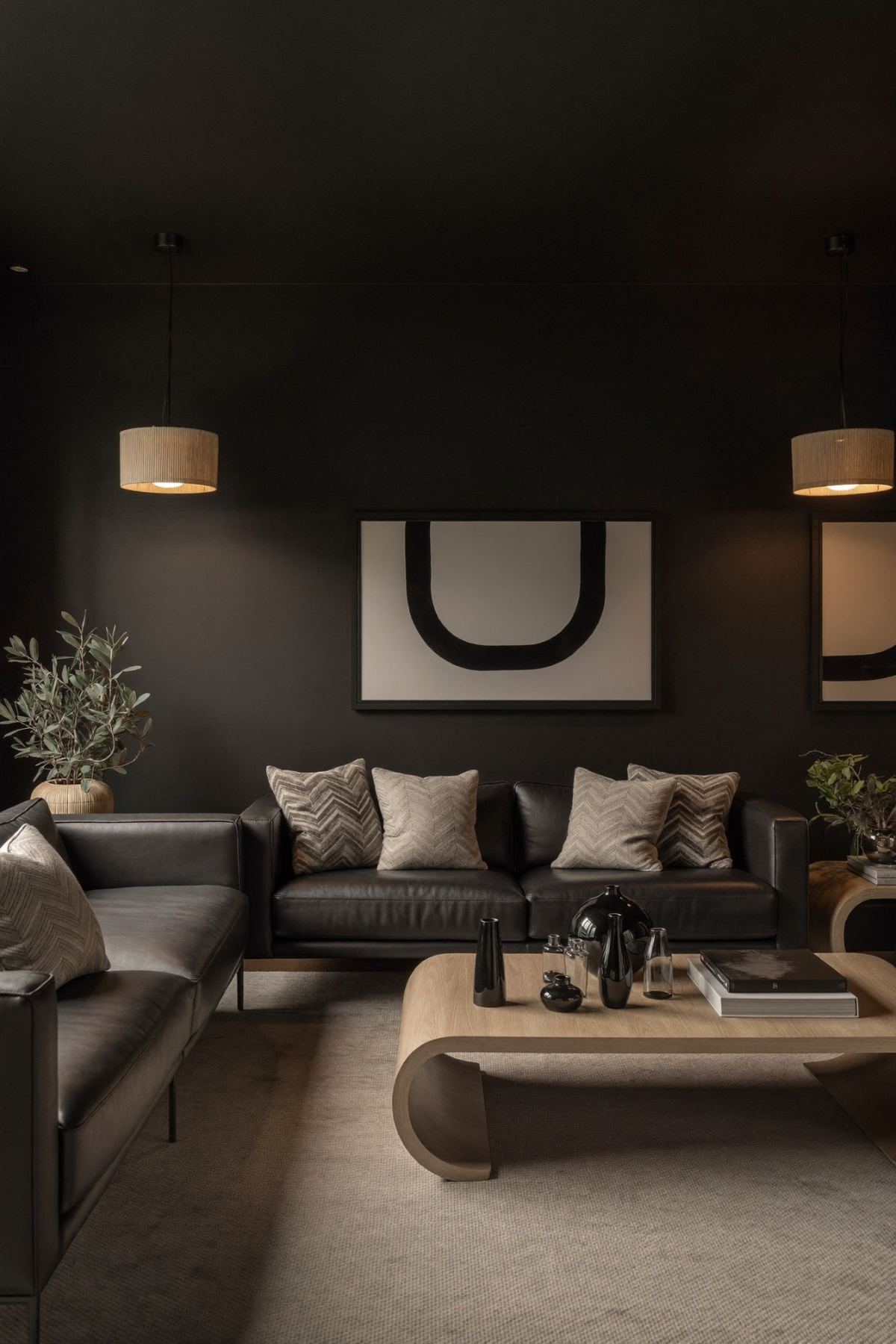
Painting the ceiling the same black as the walls is a quiet trick, and it’s the reason this room feels calm instead of boxed in. When no line separates wall from ceiling, the eye stops measuring the room and simply takes in the mood.
Warmth comes from a short list of materials. A pale woven rug, a sculptural light oak coffee table with a curved base, and rattan pendant shades with a soft glow keep the room from turning stiff. Chevron pillows in stone and charcoal echo one another without shouting. Use natural fibers and pale wood as the counterbalance whenever the walls are matte black.
Art stays simple: one oversized abstract print in black and cream, thinly framed, with a matching second piece peeking in on the right. Glossy black vases on the table shine against all that matte, and an olive branch in a rattan pot adds one small green note. Test a swatch at night before you buy full gallons of paint.
Gold Accents That Stay Under Control
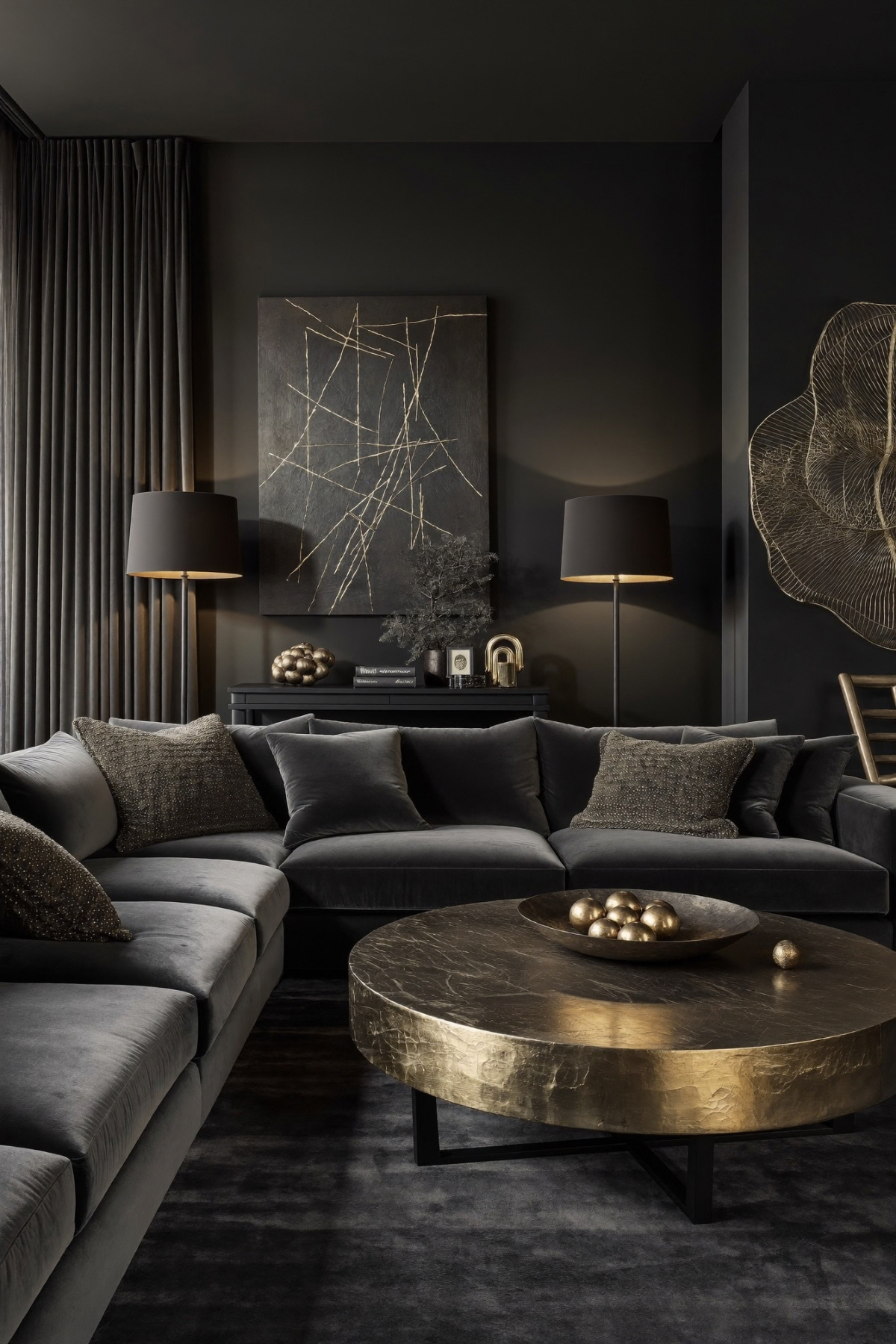
Metallics can go cheap fast, so notice how restrained this room is. Nearly everything is charcoal or black: the velvet sectional, the plush carpet, the drapes, even the lamp shades. Gold appears only where the eye should land, in the hammered coffee table, a bowl of spheres, the lines cutting across the painting, and a wire sculpture on the side wall. Restraint is what keeps this from tipping into flashy.
Lamp shades are the smartest detail. Black on the outside, gold on the inside, so light glows warm without adding a single shiny object. Cool white bulbs would flatten all that gold. Keep metallics to three or four pieces, repeated at different heights, and let everything else stay matte. That repetition is what makes the gold look deliberate.
Texture handles the rest: velvet, beaded cushions, gathered drapery, and a low pile rug a shade lighter than the walls. On a tight budget, gold spray paint on thrifted bowls and frames gets you most of the way there.
Worn Leather Makes Black Feel Human
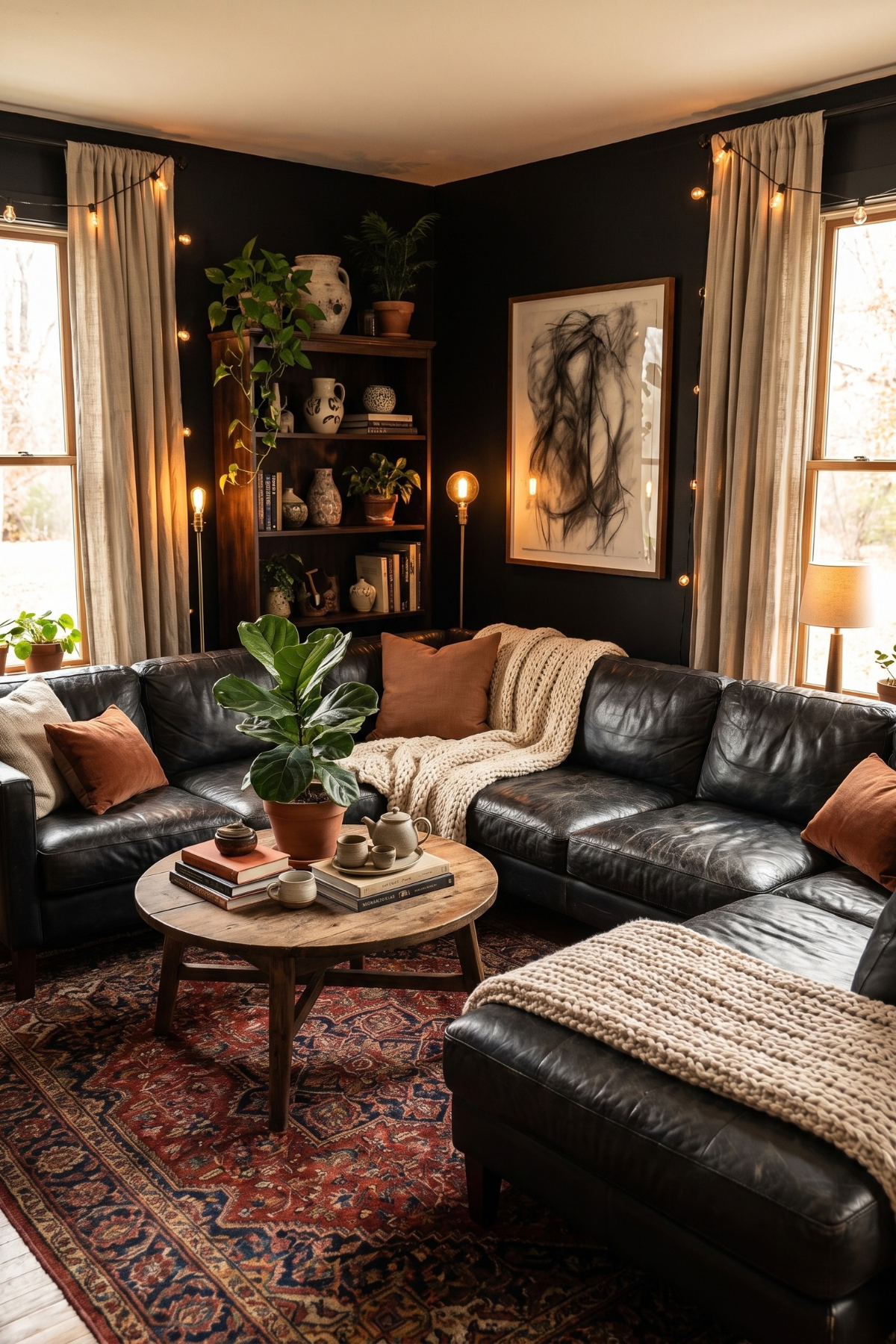
This is the kind of room where you’d end up sitting with tea for two hours. The leather sectional has real creases and scuffs, and they help. Perfect leather looks precious, while softened, cracked leather looks like it has already been lived in, which is what a black room needs to stay approachable.
Tea tray, stacked books, and a fiddle leaf fig in a terracotta pot sit on a round rustic table, and the red Persian rug underneath sends warmth outward. Terracotta cushions and a cream chunky knit throw echo the pot. Treat warm bulbs like furniture here: globe floor lamps and string lights along the curtains fill every corner.
Linen curtains soften the windows and let daylight bounce around, while a charcoal drawing in a wood frame ties the dark wall to the wooden bookshelf. Buy secondhand leather if you can, since the wear is part of the look and it saves money. Swap the books and mugs on the table now and then.
Go Dark, Then Add Warmth Until It Feels Like Home
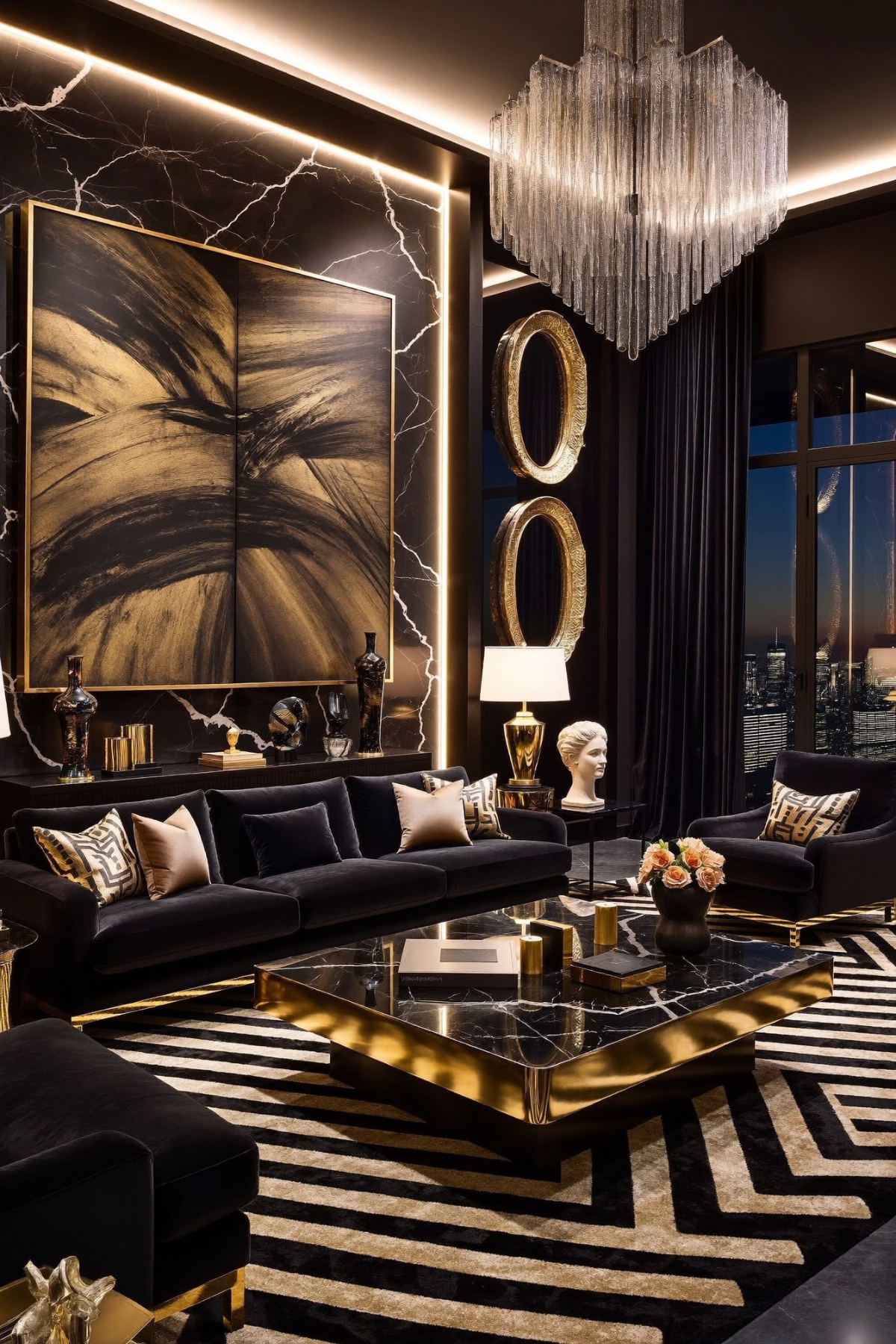
If you take one thing from all of this, make it the warmth. Black paint is the easy part, and a weekend and a couple of coats will get you there. What decides the result is what you put against it, meaning lamps that glow, materials with some grain or grit, and at least one surface that shines.
Not ready to commit the whole room? Start with a single wall behind the sofa, or paint just the built-ins and see how the evening light treats them. Black is forgiving once you add lamps, and it’s easy enough to paint over if it turns out not to be your thing.
Screenshot the rooms you liked, notice where the glow lands in each one, and start with that. Your own version will beat any copy we could write.