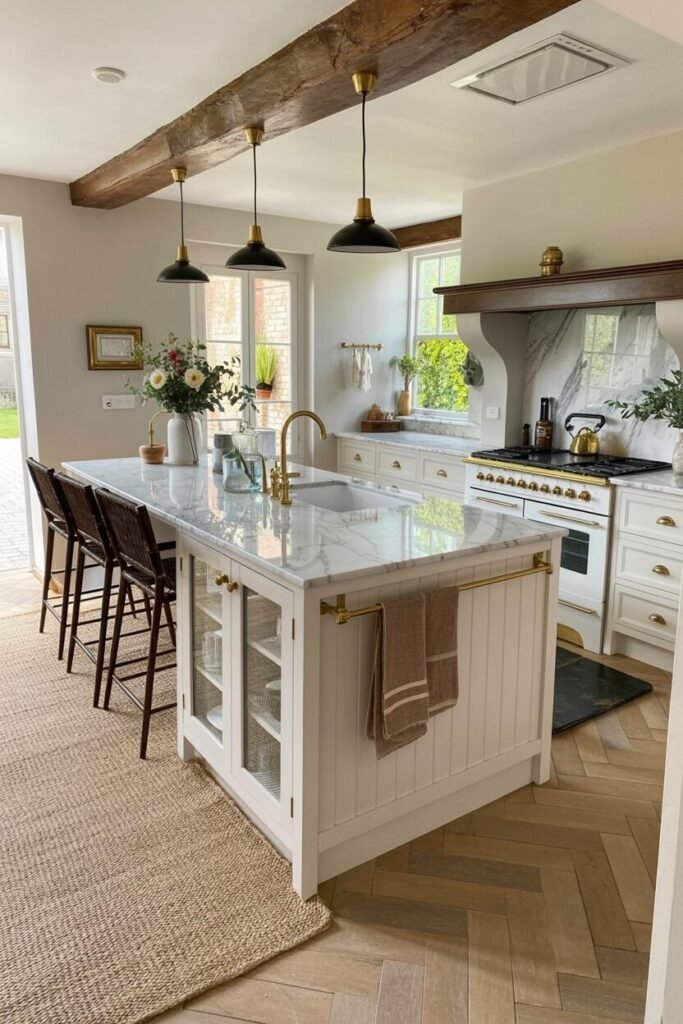

Black Kitchens Worth Copying, Plus the Small Details That Make Them Work
Black cabinets have a reputation for swallowing light, shrinking rooms, and highlighting every fingerprint. Some of that is fair. But the kitchens that get it right never rely on black alone, and that’s the whole trick. Dark color works best as a backdrop, not the entire performance.
What makes a black kitchen feel rich instead of gloomy is everything beside it: wood with some wildness in the grain, metal that warms up under the light, a window that pulls the outside in. Spaces like this tend to feel closer to a good restaurant at dusk than a cave.
So below, we’re walking through kitchens that each handle darkness differently, from rustic stone to glossy lacquer to loud, layered color. Borrow whatever suits your layout and your tolerance for wiping surfaces, and skip the rest without guilt.
Let Shadows Do the Decorating
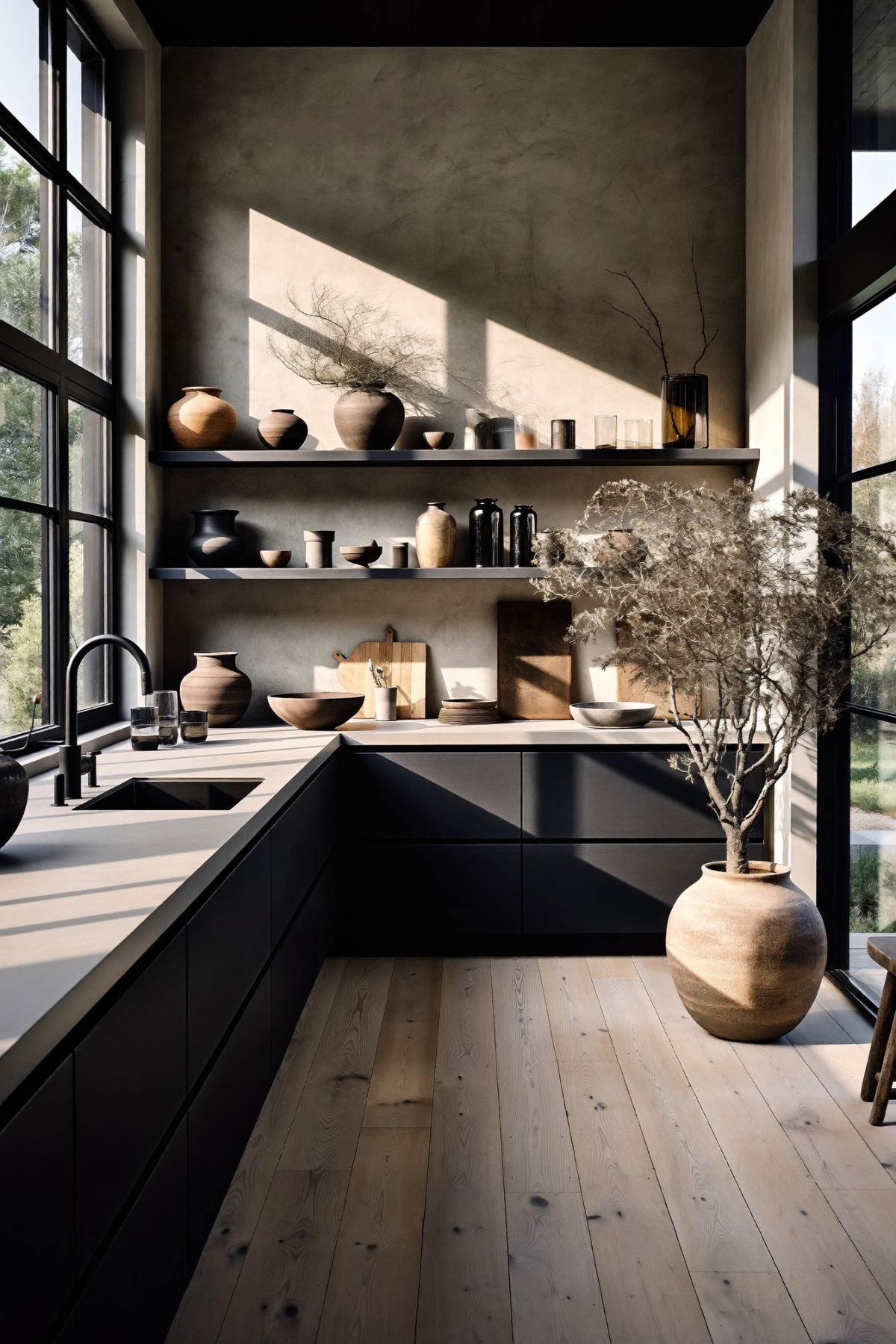
Look at where the sunlight lands in this kitchen. A hard diagonal patch across the plaster wall does more than any framed print could, and it only works because everything around it is quiet and matte. Flat-front black cabinets absorb glare instead of bouncing it, so the light stays the star.
Earth runs the palette: clay pots, a soft plaster wall, pale oak boards, and one dried branch in a floor-sized vessel. Nothing is shiny, which is exactly why nothing fights. Keep every surface matte and let texture, not gloss, create the interest. Uneven pottery and rough plaster carry the room, and both would look awkward beside anything polished.
If your kitchen has a decent window, start there. Trade shelf clutter for a short row of handmade bowls and vessels in two or three earthy tones, leave gaps between them so the shadows can read, and park one oversized planter on the floor. Bare branches cost far less than fresh flowers and last for months.
Red Is the Kitchen’s Loudest Friend
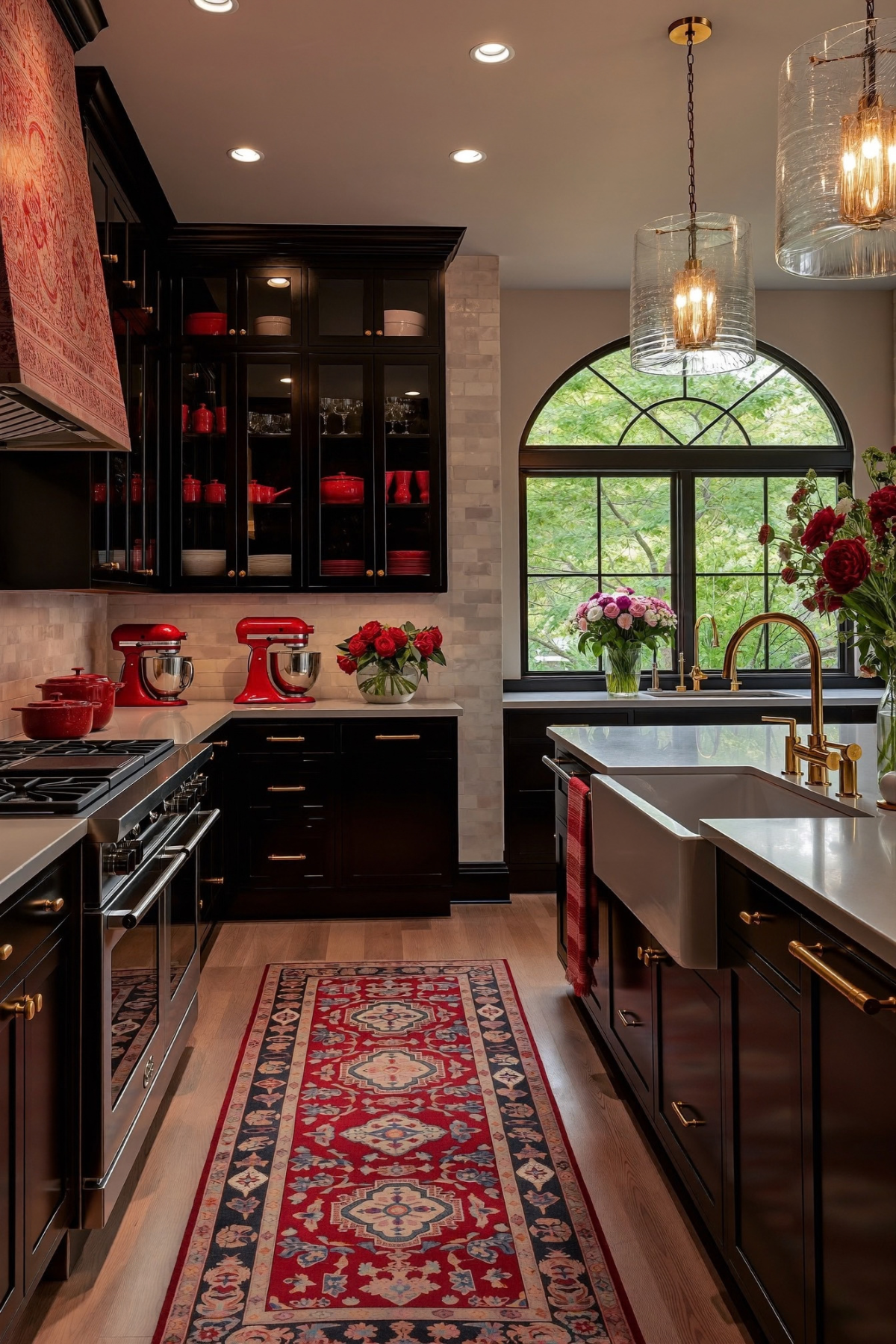
Red accessories on black cabinets sound like a risky pairing, but the secret here is repetition. Red shows up on the stand mixers, the enameled pots behind the glass doors, the roses, the dish towel, and the runner, so the eye reads it as a plan rather than an accident.
Glass-front uppers are working quietly too. Because the shelves are lit and the cookware inside is red, the black cabinet turns into a display case instead of a wall. Brass hardware and warm pendant glow soften everything, and the pale, softly uneven tile gives the reds room to breathe. Pick one loud color and repeat it at several different heights.
Not ready for a rug this bold? Begin with cookware, since enameled pots double as decor and can be swapped when the mood changes. Then add a patterned runner in the same family to break up the floor. Fresh flowers in a matching shade finish the story, and they cost less than most cushions.
Wood, Brick, and a Little Grit
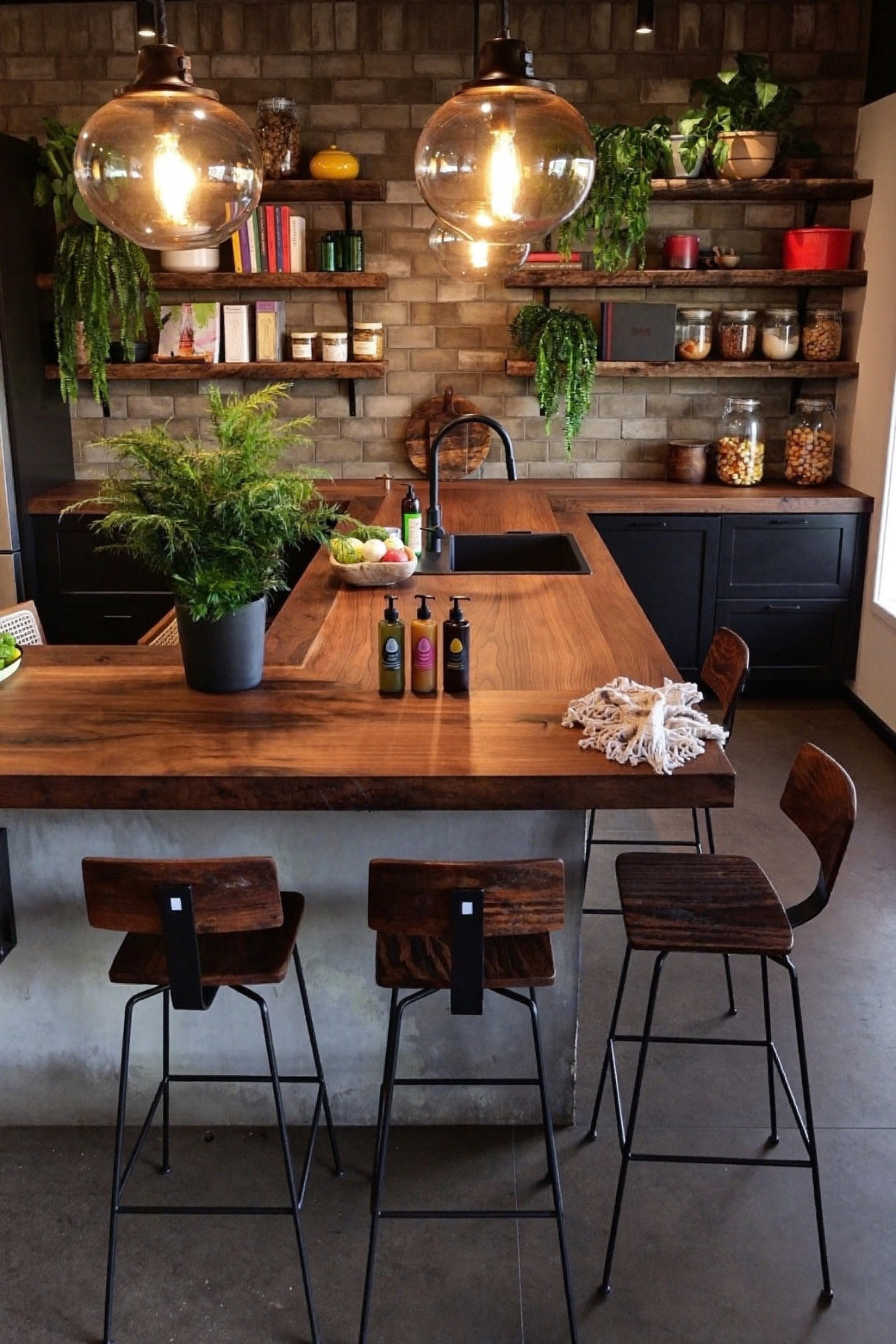
Spend on the counter first if you can only pick one thing. A thick walnut slab wrapping into an L-shaped peninsula gives this kitchen a warm center of gravity, and everything else, from the concrete-look base to the black sink and gooseneck tap, plays a supporting role.
The backdrop is worth studying. Gray brick and reclaimed-style shelves bring roughness, while glass globe pendants add smoothness and a soft amber glow. Hanging ferns and jars of grains take the edge off all that iron and hard stone. Rough textures need a few smooth, glowing counterpoints, or the room slides into warehouse territory.
A budget version is very doable. Butcher block or a stained pine top on a simple base gets close, and open shelves made from thick planks on black brackets can hold a mix of books, jars, and trailing greenery rather than matching sets. Stools with wooden seats and slim iron frames keep sightlines open in a smaller room and stay easy to wipe down.
Clashing Art Makes Dark Rooms Sing
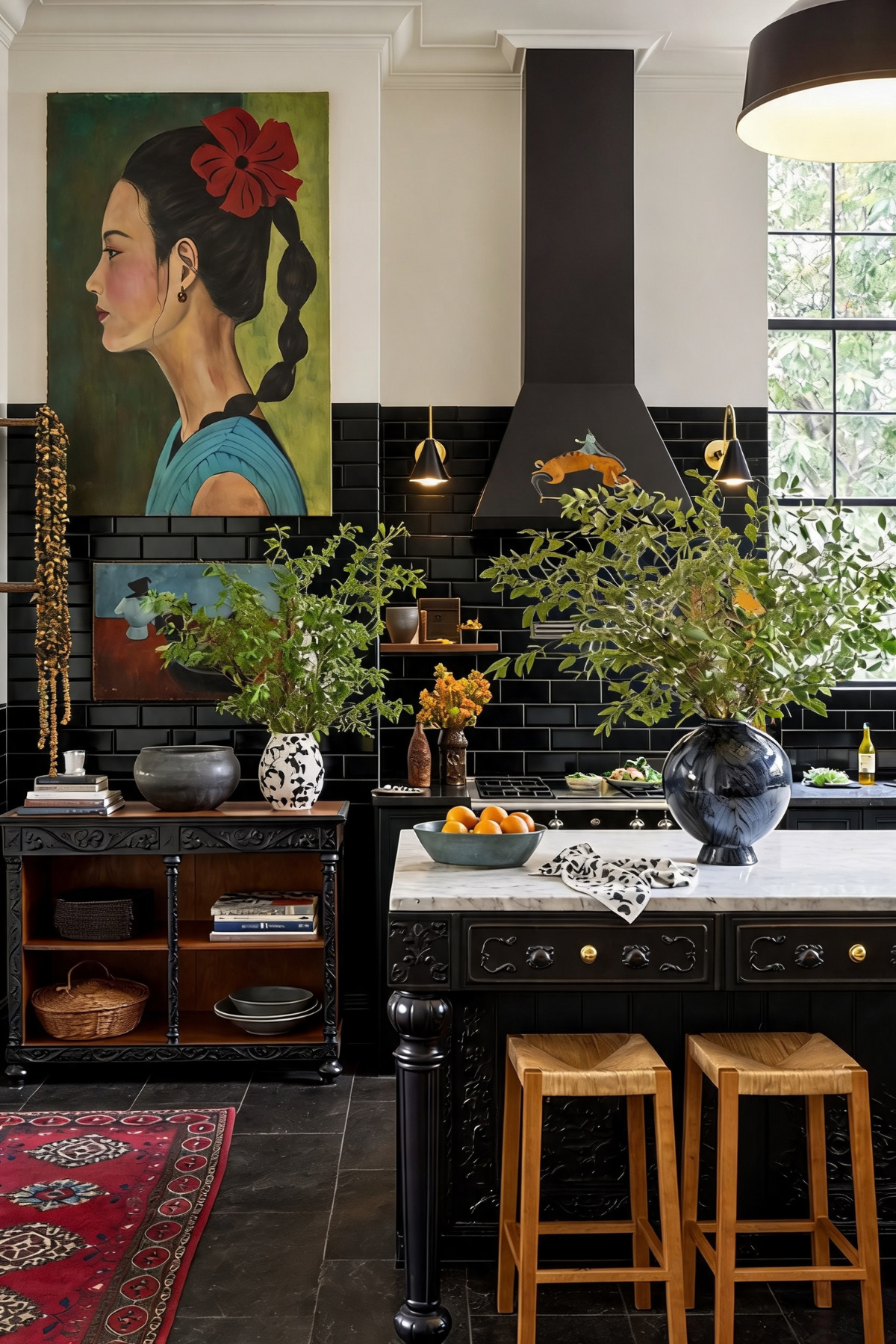
Half-height black subway tile, white walls above, and a huge painted portrait hung right over the seam. That split is the clever part: the dark band grounds the kitchen while the pale upper wall gives the artwork somewhere to breathe. Without it, the painting would drown.
Layering does the rest. A carved black island, a marble top, rush-seat stools, a patterned rug, brass sconces, and two oversized leafy branches all disagree politely. Let one hero piece lead, and make everything else agree with it on color, not style. Ornate carving and modern black tile are old enough friends to share a room, especially with plain marble sitting between them.
Try a smaller version by choosing one large piece of art you would happily stare at, then hanging it lower than feels natural. Fill vases with cut branches from the garden instead of tidy bouquets, since foliage that looks a bit wild suits a bolder room. Even a secondhand carved table can stand in as an island.
Run the Wood Slab Up Higher
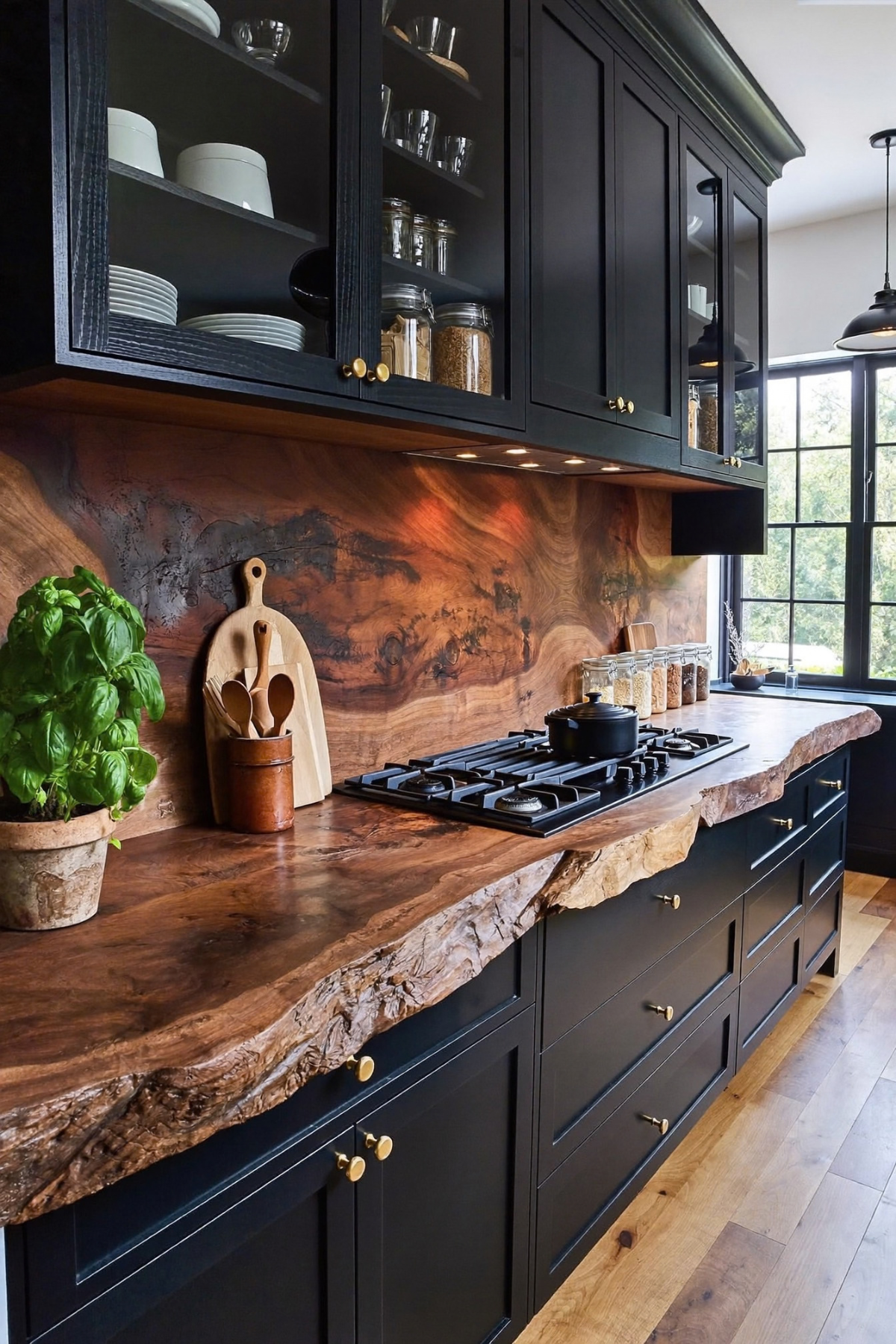
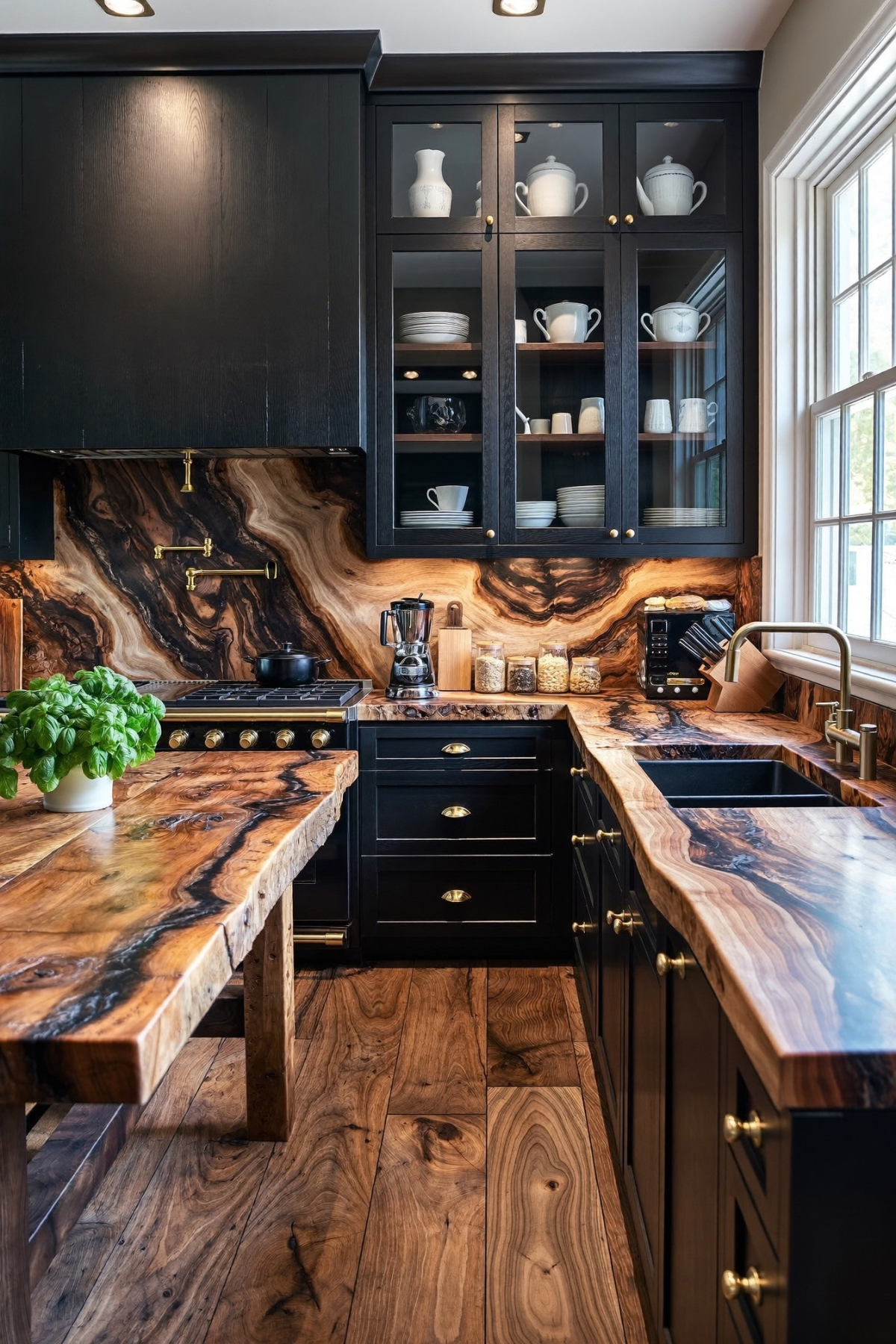
Most kitchens stop the wood at the countertop. Here the same slab climbs the wall as a backsplash, with its rough live edge left intact along the front, and the result is a room that looks carved from one enormous tree. Black shaker cabinets above and below act like a picture frame.
There’s a practical catch worth planning for: wood near a cooktop needs respect. Seal every surface with a food-safe, water-resistant finish, and ask your installer about clearance from open flame. Behind the burners, use a heat-safe panel or stone insert, and save the real wood for zones that don’t get splattered. Warm under-cabinet lights make the grain glow at night.
Solid slabs are pricey, so consider one dramatic piece instead of a whole run. A live-edge shelf, a wood-look laminate that copies the figure, or a veneer panel can borrow the same drama. Brass knobs, a terracotta pot of basil, and a wooden board leaned against the wall keep the theme going without adding much cost.
Let the Island Glow From Below
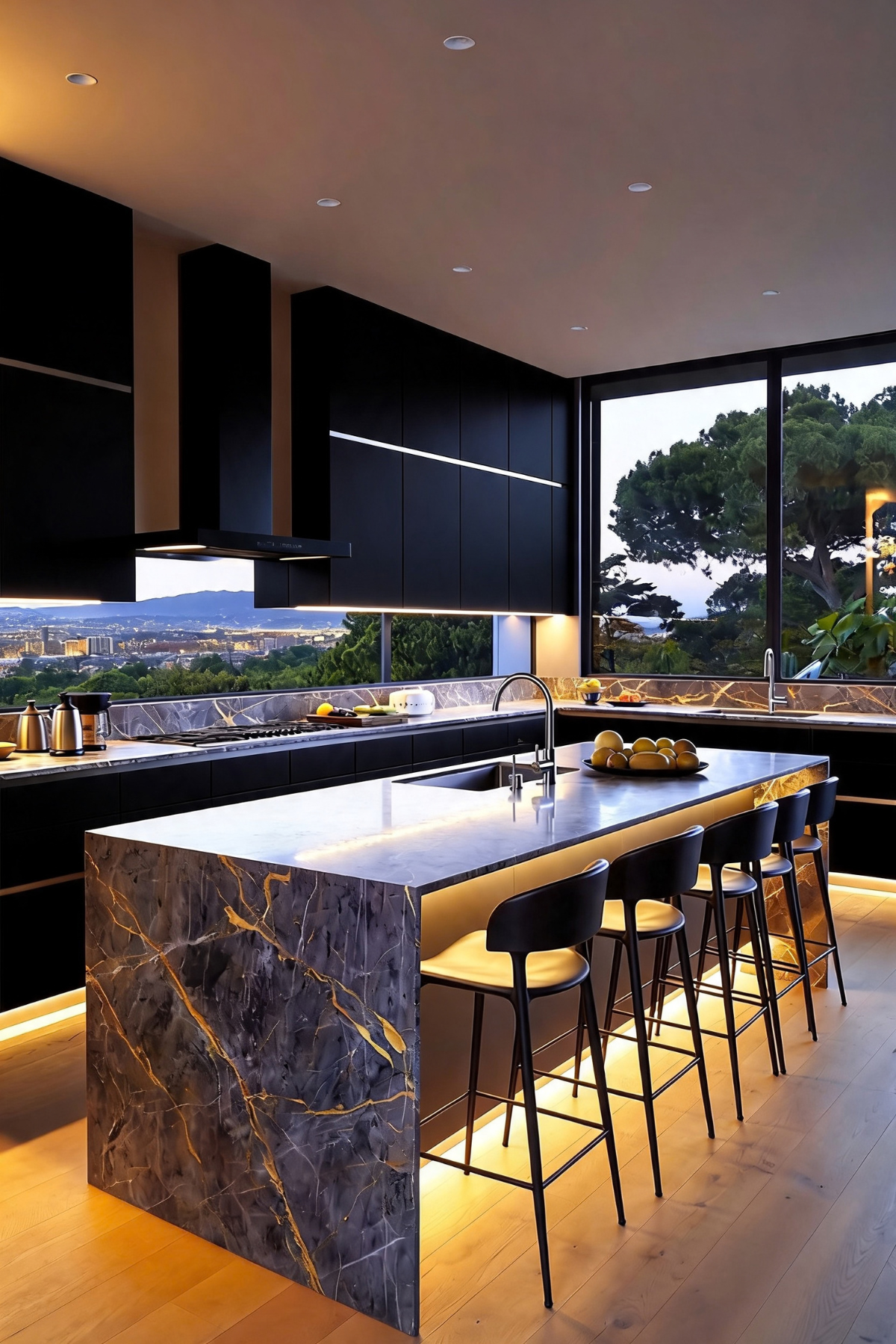
That waterfall island edge, dark marble with gold veins running down it like cracks in old porcelain, is the kind of feature a room gets built around. The rest of the kitchen obliges by staying quiet: matte black slab cabinets, a slim black hood, and not a single handle in sight.
Drama lives in the glow. Warm LED strips tucked under the island overhang and along the toe kick paint the floor amber and make the marble look lit from within. Layer light at three heights, ceiling, under-cabinet, and floor level, so the room still works after sunset. Big windows with a city view at dusk add reflections for free.
You don’t need a slab to try it. Peel-and-stick LED tape on a dimmer, hidden behind a lip or under a floating cabinet, costs little and installs in an afternoon. Stay with a warm color temperature, close to candlelight, since cool white makes black cabinets feel clinical. Slim black bar stools let the light pass straight through.
Rustic Stone Meets Dark Cabinetry
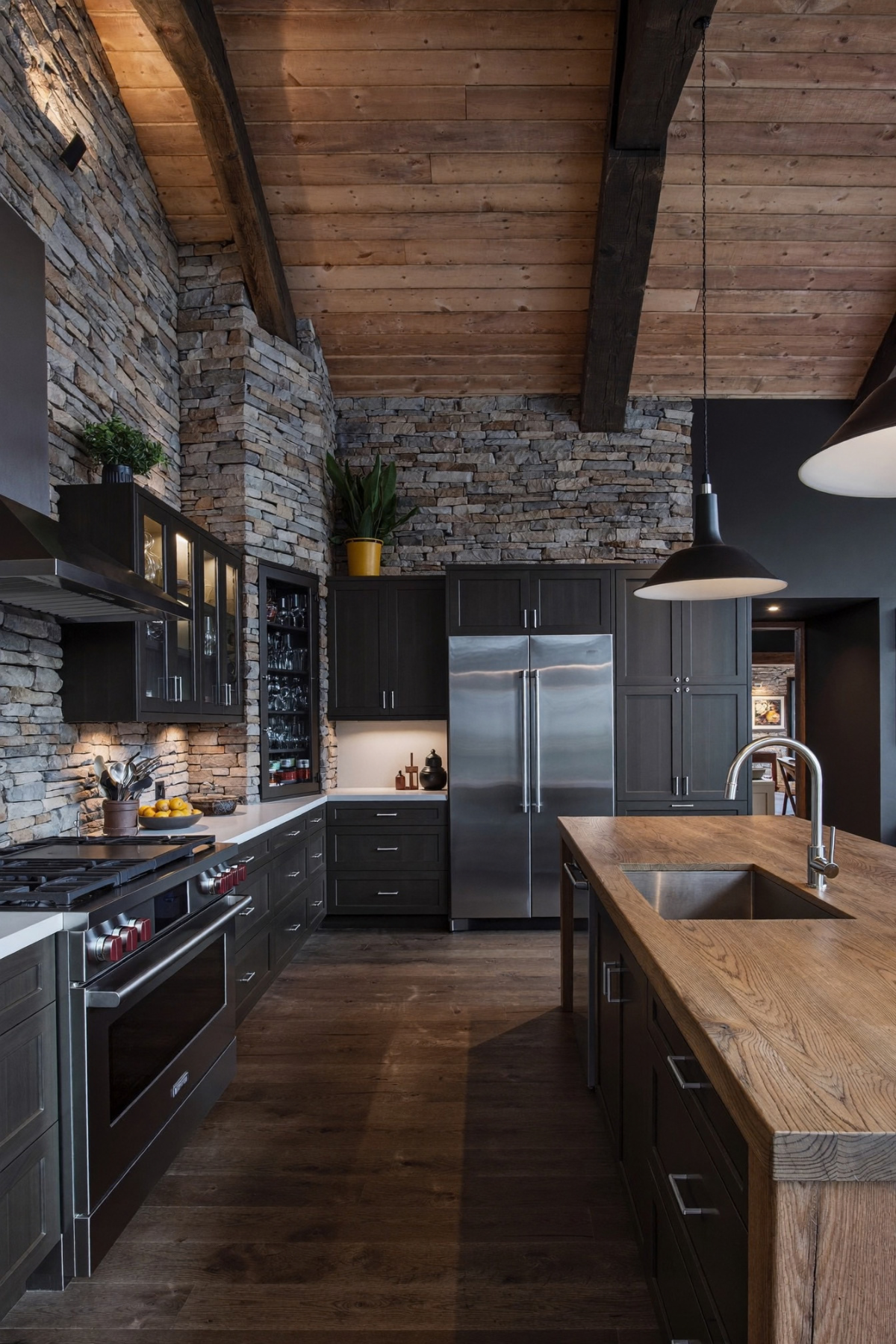
Tall ceilings can make a kitchen feel like a barn or a lodge, and the difference here is weight. Dark exposed beams, wood planks overhead, and stacked stone walls all pull the eye upward, while charcoal shaker cabinets hold the ground level steady so nothing floats away.
Notice how much texture is packed in without much color: gray stone, oak, a dark wood floor, stainless steel. When the palette stays this narrow, the surfaces do the talking. Let stone or brick be the loud material and keep the cabinets calm. A pale counter along the wall gives the eye a rest, and a light oak island top shifts the mood from cave to cabin.
Real stone is a big project, so consider thin stone veneer on a single wall, ideally the one behind the range or beside the fridge. Add black pendants with simple shades, one bright yellow planter for a small burst of color, and under-cabinet lighting to wash the stone with warm light.
Gloss Black in a Narrow Galley
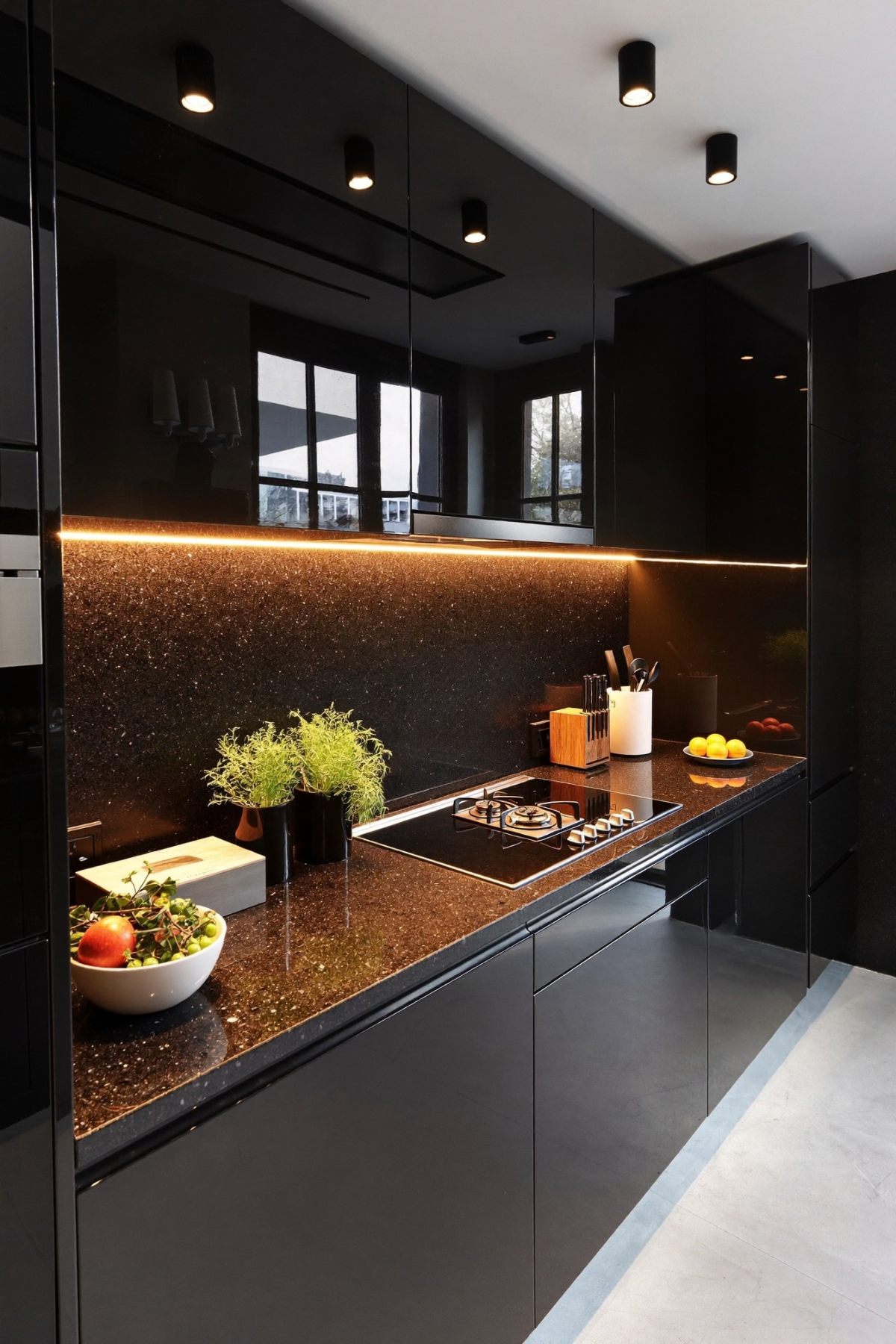
Small kitchens in black sound like bad advice, yet this galley proves the opposite. High-gloss lacquer doors bounce the windows and ceiling lights back into the room, so the walls seem farther away than they are. Tiny flecks in the dark stone add depth without introducing any pattern.
Practical stuff first: gloss shows fingerprints, so handleless doors that open with a push or a routed edge keep surfaces clean. Ceiling spots aimed downward and a thin glowing strip beneath the uppers make the counter feel like a stage. In tight rooms, keep the cabinet color continuous from floor to ceiling so the eye reads one calm block. A pale concrete-look floor stops the black from pooling underfoot.
Then bring in life. A couple of potted herbs, a bowl of citrus, and a wooden knife block are plenty, since anything bright pops against that dark backdrop. Keep counters mostly clear, because in a mirror-finish kitchen every extra object doubles in reflection.
Olive Tiles Warm Up Matte Black
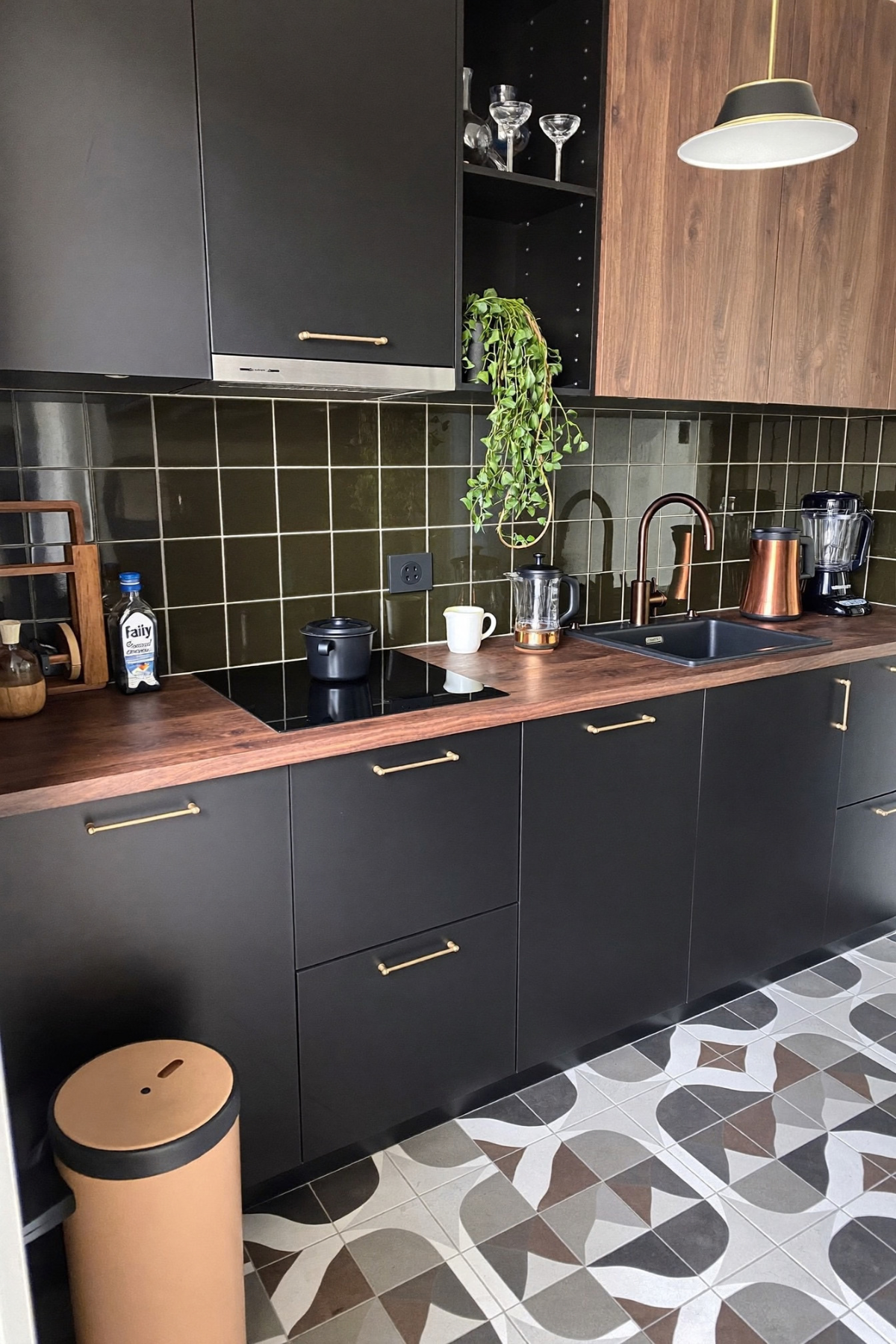
Start with the tile. Glossy olive green squares with pale grout sit between matte black cabinets and a walnut-toned counter, and that color is the reason the whole run works. It’s dark enough to belong, but green enough to feel like a garden instead of a void.
Details stack up quickly: brass bar pulls, a copper tap and matching kettle, one wooden upper cabinet breaking up the black, and a trailing plant spilling off an open shelf. Pick two warm metals and repeat them in small, scattered doses. Here brass and copper are close enough in tone to look like siblings, not rivals, so the counter never feels crowded.
Geometric cement-style flooring might be the boldest move, and it’s also the most forgiving. Busy patterns in gray, brown, and cream hide crumbs and scuffs. A rental-friendly version could combine peel-and-stick floor tiles, matte black cabinet fronts over existing boxes, and long brass pulls, which change the face of a kitchen for very little money.
Black Cabinets Can Be Traditional Too
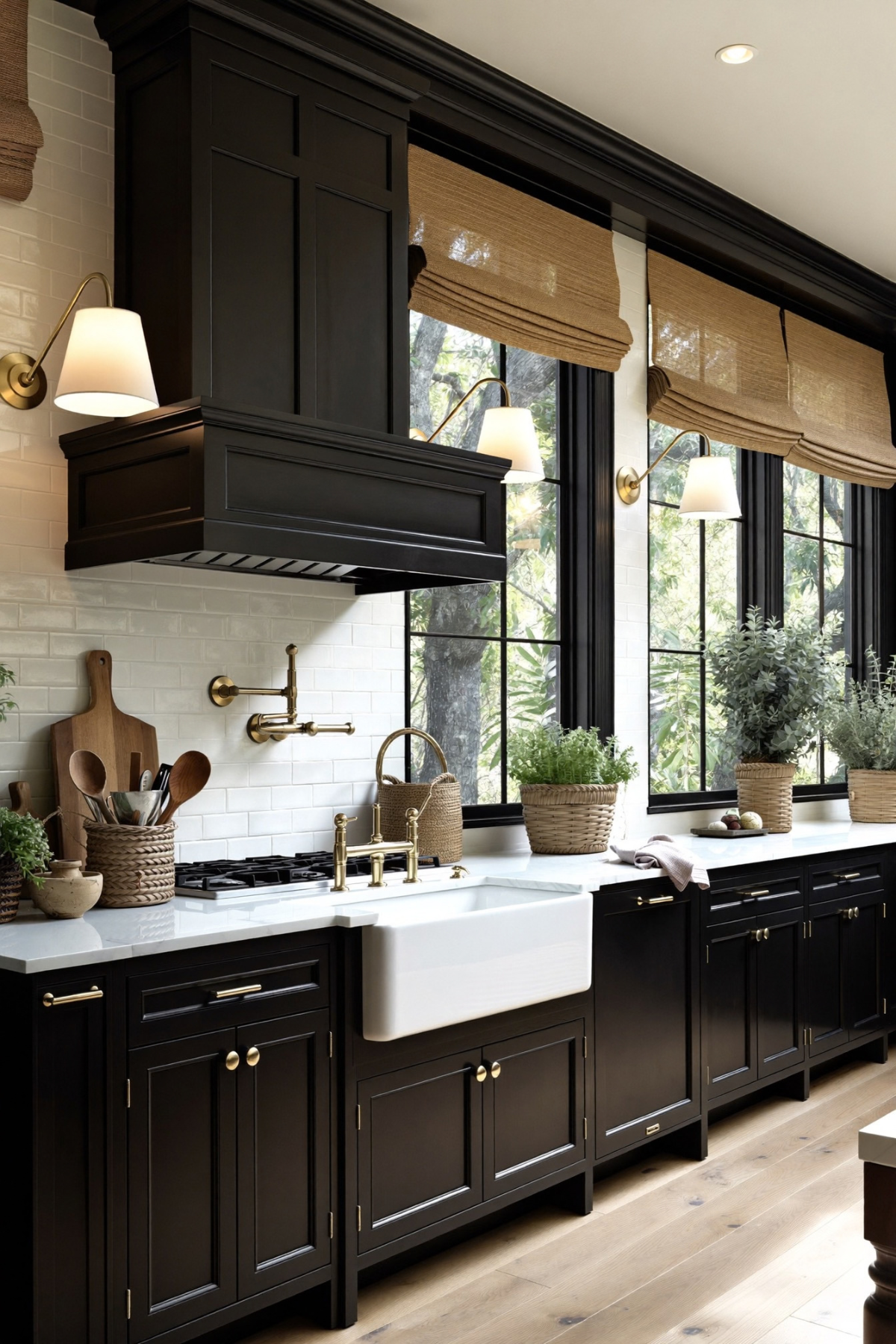
Who decided black belonged only to modern kitchens? Paneled doors, heavy trim on the range hood, and a deep white farmhouse sink push these cabinets firmly into classic territory. White subway tile behind them keeps the darkness from closing in.
Warmth comes from soft materials. Woven roman shades, wicker baskets holding herbs, and unlacquered brass fixtures, a bridge tap and a pot filler, pull the black toward something friendlier. A dark kitchen needs at least one big, soft, natural material to counter all that hard paneling. Shades over black-framed windows filter daylight into a golden haze that flatters the cabinet paint.
For your own version, pair black cabinet paint with white ceramic tile and a marble-look counter, then add wall sconces with fabric shades on either side of the window so evenings feel calm. Baskets are the cheapest upgrade here: use them for herbs, utensils, and produce, and mix sizes so the counter looks gathered over time, not bought as a set.
Paint It Black, Then Let the Room Breathe
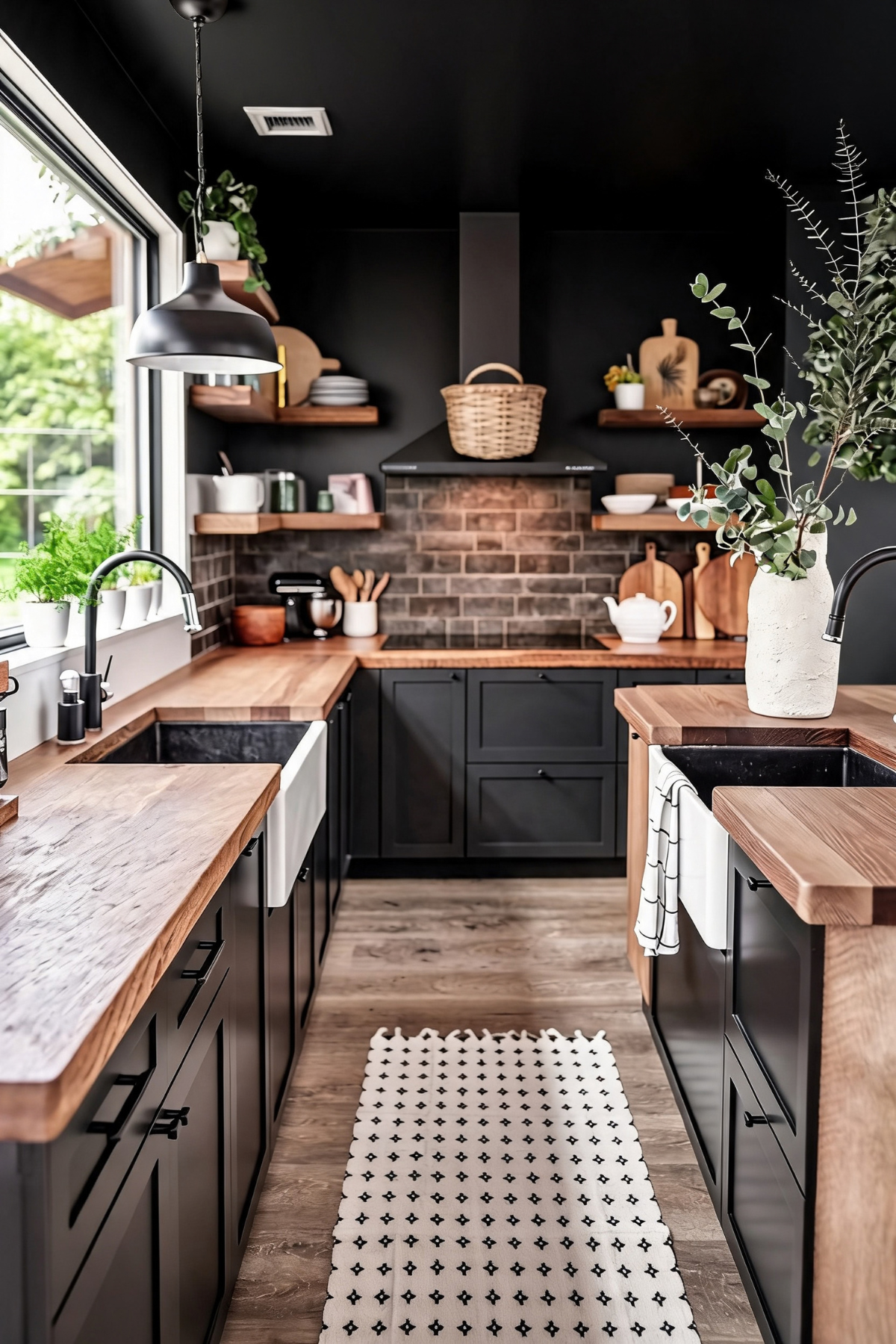
Whichever direction you lean, a few habits show up in every dark kitchen that works. A warm material sits nearby, whether wood, brass, or woven fiber. Lighting arrives at more than one height. And something alive, even a handful of herbs, keeps the room human.
Rushing is the real risk with black. Sample paint on a large board, check it in morning and evening light, and live with it for a week before committing. Undertones matter more than the name on the can, since some blacks lean blue, some brown, and some green.
Starting small is fine: one wall, one run of lower cabinets, or even a black range hood will tell you how much darkness you actually enjoy living with. Add wood, add a plant, and turn the lights low to see how it settles.