
We Didn’t Expect Brown and Beige Bathrooms to Feel This Luxurious
Brown and beige bathrooms have quietly become one of the most enduring design trends, and honestly, it is easy to see why. While bold colors come and go faster than viral TikTok aesthetics, these earthy tones continue to create spaces that feel calm, welcoming, and effortlessly sophisticated. The magic of a brown and beige bathroom is not simply about choosing neutral colors. It is about layering warmth, texture, and natural materials in a way that makes the room feel collected rather than sterile.
Throughout these ideas, we can see how wood vanities, stone surfaces, woven accents, textured tiles, and warm lighting work together to create depth without overwhelming the eye. Beige provides brightness and softness, while brown introduces grounding and character. Together, they create balance, one of the most important principles in interior design.
The best brown and beige bathrooms do not rely on color alone—they rely on thoughtful material combinations, strategic lighting, and texture-rich styling. The result is a space that feels timeless today and will likely feel just as beautiful years from now.
Vertical Walnut Slats Meet Spa-Like Simplicity
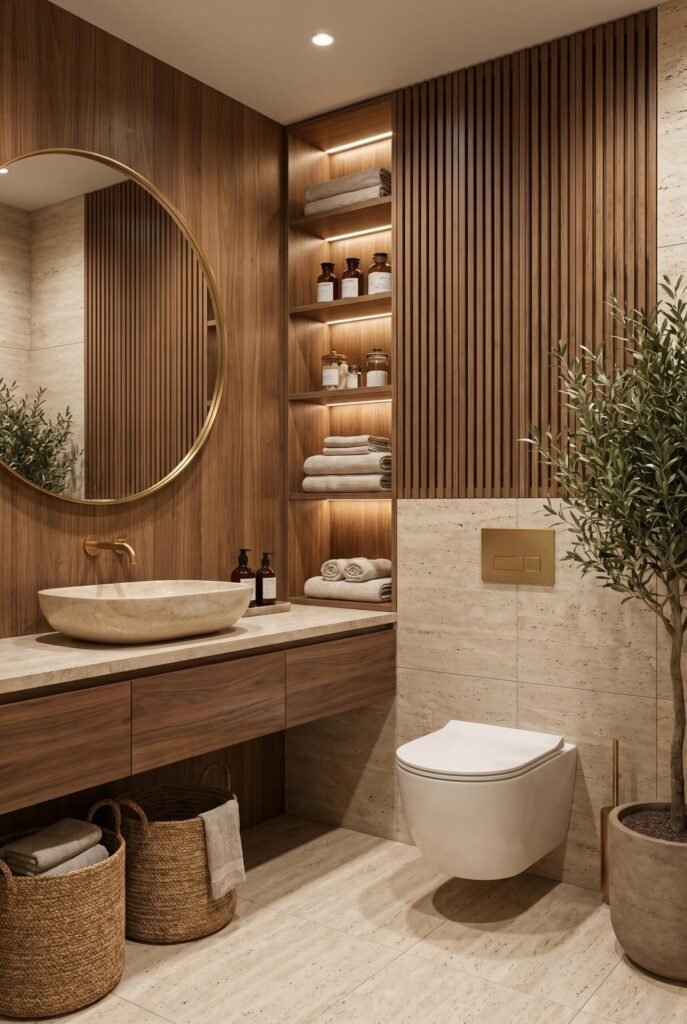
This bathroom proves that beige and brown do not have to feel traditional or heavy. The vertical walnut slat wall instantly draws the eye upward, creating the illusion of taller ceilings while adding rhythm and texture. Pairing warm wood with creamy stone tiles keeps the palette grounded and balanced. The design works because it combines strong linear elements with soft organic materials, preventing the room from feeling flat or overly minimalist.
The floating vanity is another smart move. By exposing floor space underneath, the room feels visually lighter and larger. Notice how the woven baskets introduce texture without disrupting the color palette. If we are recreating this look, stick to three dominant materials at most: wood, stone, and natural fibers. Too many finishes can dilute the calm spa effect.
The recessed shelving deserves a standing ovation. Besides providing storage, the integrated lighting creates depth and highlights decorative items. Layered lighting is one of the easiest ways to make a beige bathroom feel luxurious instead of builder-grade. Honestly, this is the bathroom equivalent of having great skin and pretending it happened naturally.
Terracotta Tiles And Warm Resort Energy
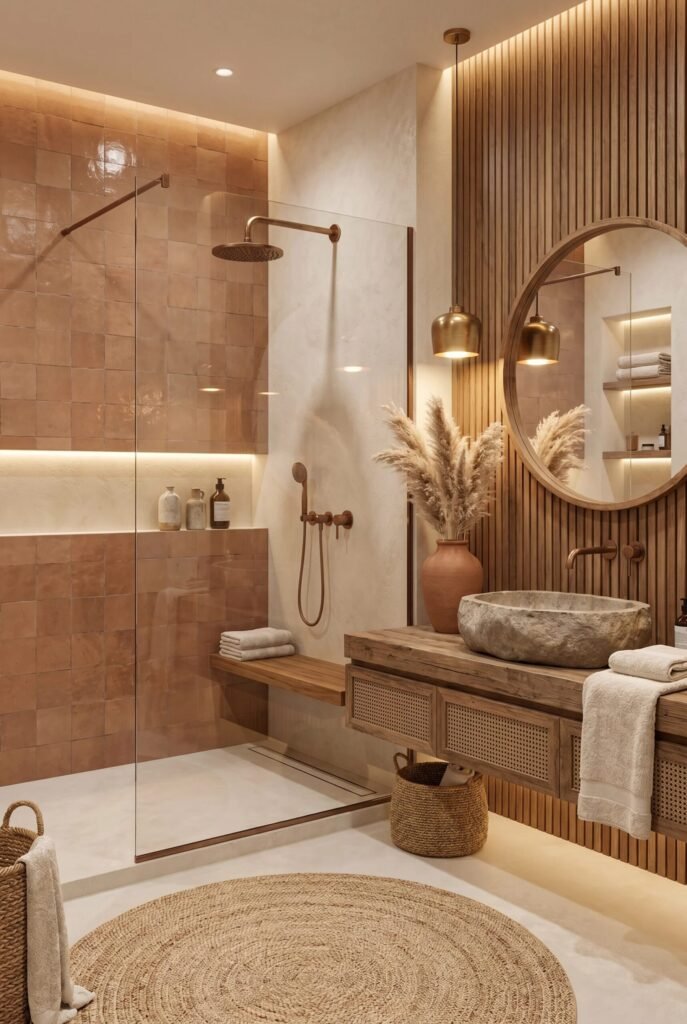
This space feels like a boutique hotel hidden somewhere people keep gatekeeping on TikTok. The earthy terracotta shower tiles immediately establish warmth, while the beige walls soften the contrast. Instead of relying on color variety, the design focuses on tonal layering. Using multiple shades within the same warm color family creates richness without visual chaos.
One of the smartest choices here is the mix of textures. Glossy shower tiles reflect light, while the slatted wood wall introduces tactile contrast. The stone vessel sink adds another layer of organic character. When working with a brown-and-beige palette, texture often becomes more important than color itself because it prevents the room from feeling one-dimensional.
The woven rug, pampas grass, and cane-front vanity reinforce the relaxed aesthetic without turning the room into a coastal décor cliché. If you want to recreate this look, prioritize warm lighting temperatures around 2700K to 3000K. Cool white lighting can instantly make these rich earth tones feel dull and lifeless. This room understands that vibes are a design strategy, not an accident.
Layering Traditional Warmth With Natural Stone
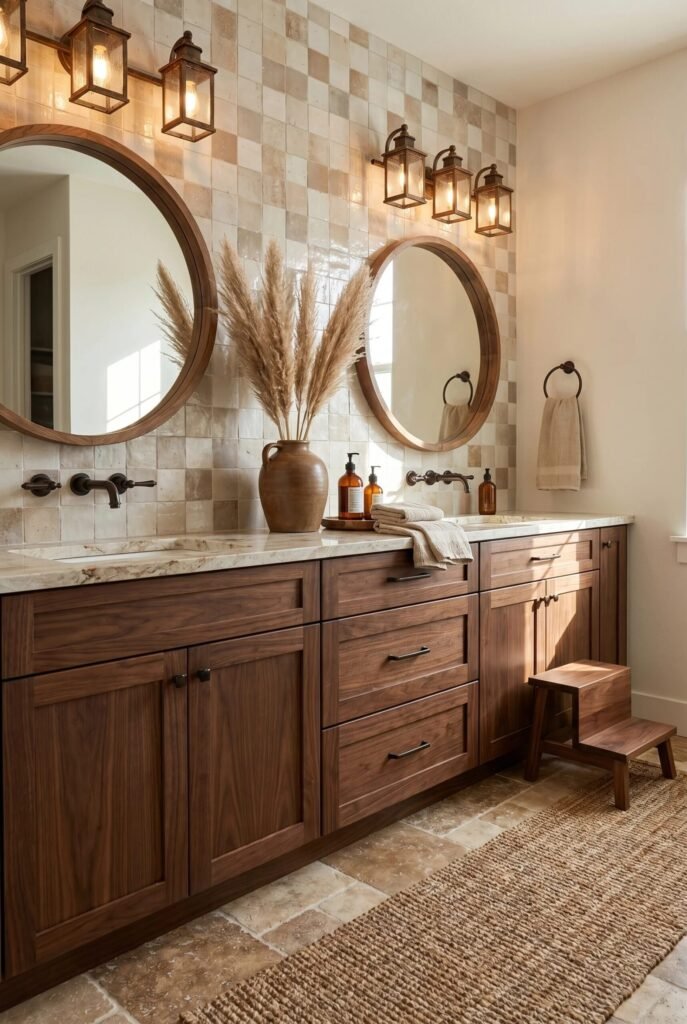
This bathroom leans slightly farmhouse yet feels surprisingly current because of its material consistency. Rich brown cabinetry anchors the room visually, while the checker-pattern tile wall creates subtle movement. The secret is repetition: wood tones, black hardware, and warm neutrals appear multiple times throughout the design, creating cohesion.
The dual round mirrors soften the abundance of rectangular shapes below them. This balance between curves and straight lines is an important design principle often overlooked. Without those mirrors, the vanity area could feel boxy and rigid. The lantern-style sconces also introduce vertical emphasis, helping the room feel taller and more elegant.
For anyone recreating this aesthetic, pay close attention to scale. The oversized vase filled with dried grasses acts as a focal point, preventing the long vanity from feeling repetitive. A common mistake is scattering many small accessories across the countertop. Fewer, larger decorative elements often create a more designer-approved appearance than dozens of tiny objects. Think quality over clutter because your bathroom is not auditioning for a flea market documentary.
Vintage Elegance Wrapped In Beige Neutrals
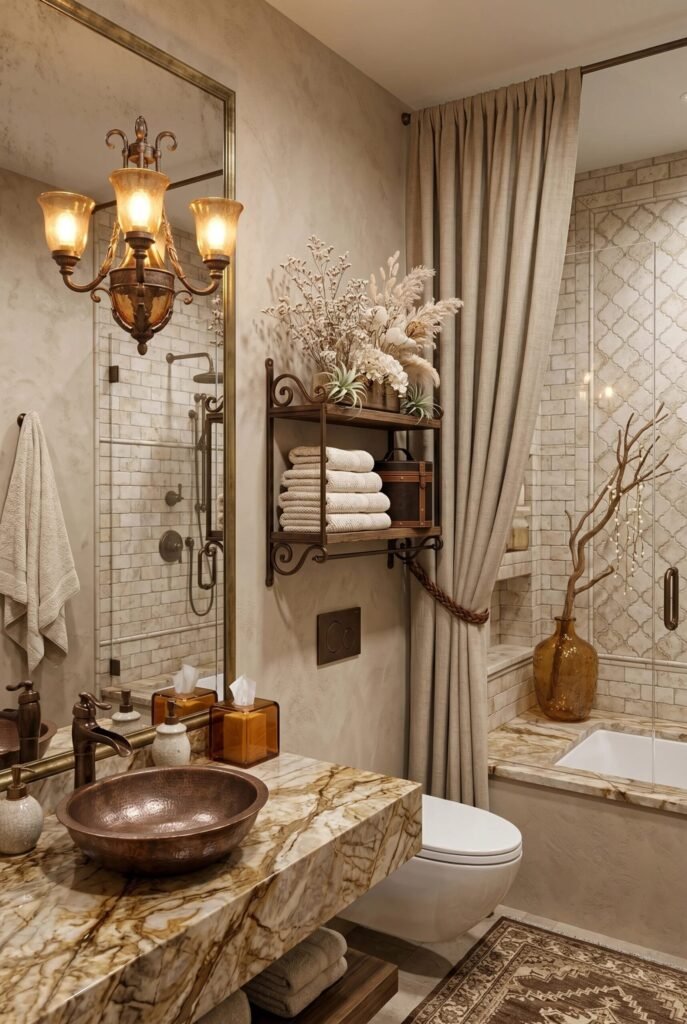
Some bathrooms whisper luxury while others practically write poetry about it. This one definitely belongs in the second category. The dramatic marble vanity introduces movement through veining, while the soft beige walls and curtains keep everything approachable. Contrast in pattern is what gives this room personality without requiring bold colors.
The wall-mounted shelf is doing more work than it gets credit for. Besides providing practical towel storage, it creates a vertical styling moment that fills empty wall space. The aged bronze fixtures complement the warm undertones throughout the room and help establish a timeless look. If you’re aiming for longevity, warm metals generally pair better with brown-and-beige palettes than polished chrome.
What makes the design especially successful is the use of fabric. Curtains soften hard surfaces and introduce visual warmth that tile alone cannot achieve. We often focus on stone and fixtures while forgetting textiles altogether. Strategically adding fabric can make a bathroom feel more like a furnished room and less like a utility space. It’s basically the design equivalent of putting on a tailored blazer instead of staying in pajamas.
Rich Mocha Tones With Organic Texture
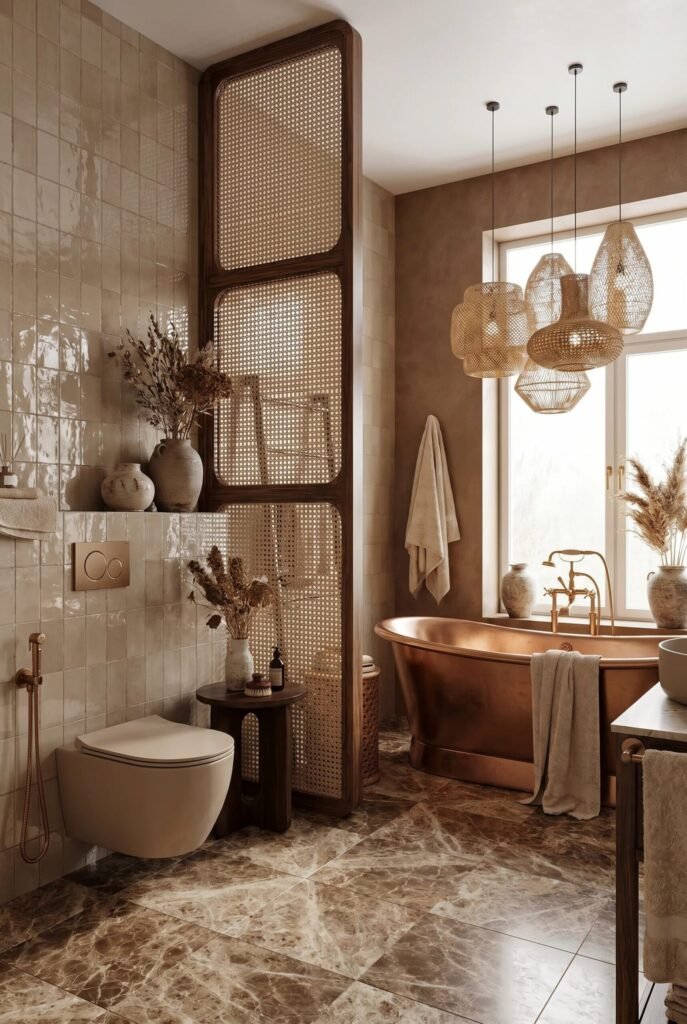
This bathroom embraces deep brown shades without becoming dark or overwhelming. The secret lies in balancing heavier materials with generous natural light. The bronze bathtub, marble-look flooring, and woven pendant lights all contribute warmth, but the large window prevents the palette from feeling enclosed. Whenever we use darker browns, adequate lighting becomes non-negotiable.
One standout feature is the cane partition. Besides adding privacy, it introduces texture and visual separation without blocking light. This is a fantastic strategy for larger bathrooms where open layouts can sometimes feel undefined. The woven pendants further reinforce the organic aesthetic while creating a dramatic focal point above the tub.
Notice how almost every decorative element follows the same earthy story. Dried botanicals, woven materials, aged metals, and warm stone all speak the same visual language. That consistency is why the room feels curated instead of random. A cohesive material palette often has more impact than an expensive renovation budget. The result is a bathroom that feels cozy, sophisticated, and just a little bit like the kind of retreat we’d happily disappear into for an entire Sunday afternoon.
Cozy Cottage Bathroom With Layered Textures
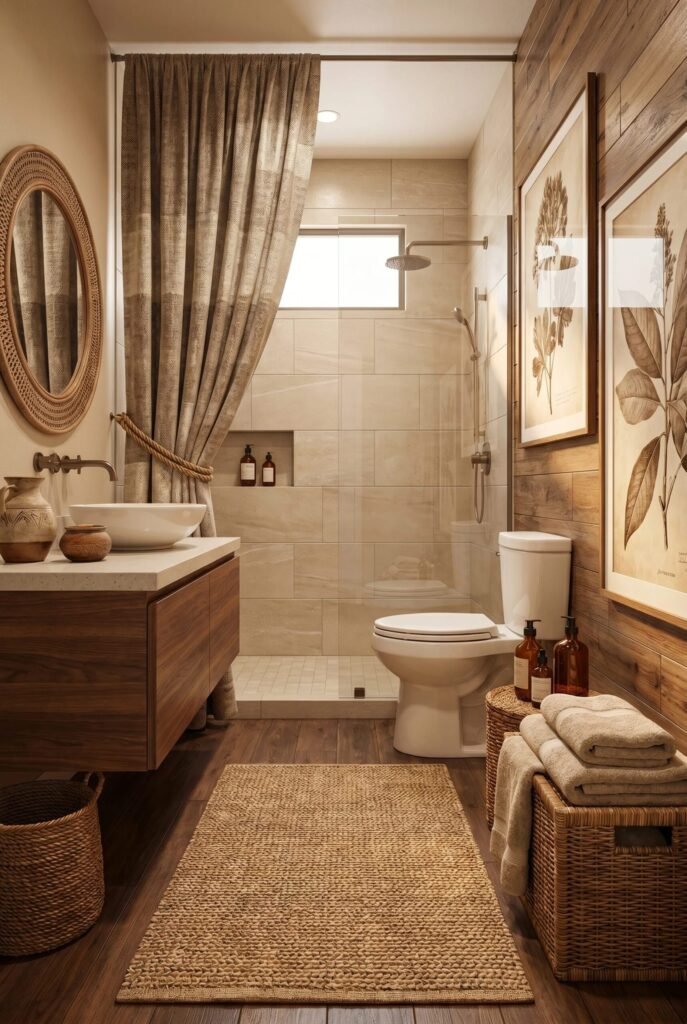
This bathroom feels like the design equivalent of wrapping yourself in a soft blanket while drinking coffee on a rainy morning. Instead of relying on dramatic colors, the space builds visual interest through layers of texture. The beige shower tile, dark walnut vanity, woven rug, wicker baskets, and linen curtain all contribute something different. When working with a brown-and-beige palette, texture becomes the feature wall because color contrast is intentionally subtle.
The long woven runner is doing more than protecting bare feet from cold floors. It visually elongates the room and helps guide the eye toward the shower area. This is a useful trick for narrow bathrooms where improving visual flow matters. The wood accent wall on the right also prevents the beige surfaces from blending together into one giant neutral blur.
What really makes this design successful is its softness. Rounded accessories, natural fibers, and fabric treatments balance the harder surfaces of tile and glass. If you want a bathroom that feels warm instead of sterile, introduce at least three tactile materials such as wood, linen, and woven accents. Your bathroom should feel like a retreat, not a dentist’s waiting room.
Arched Windows And Resort-Inspired Luxury
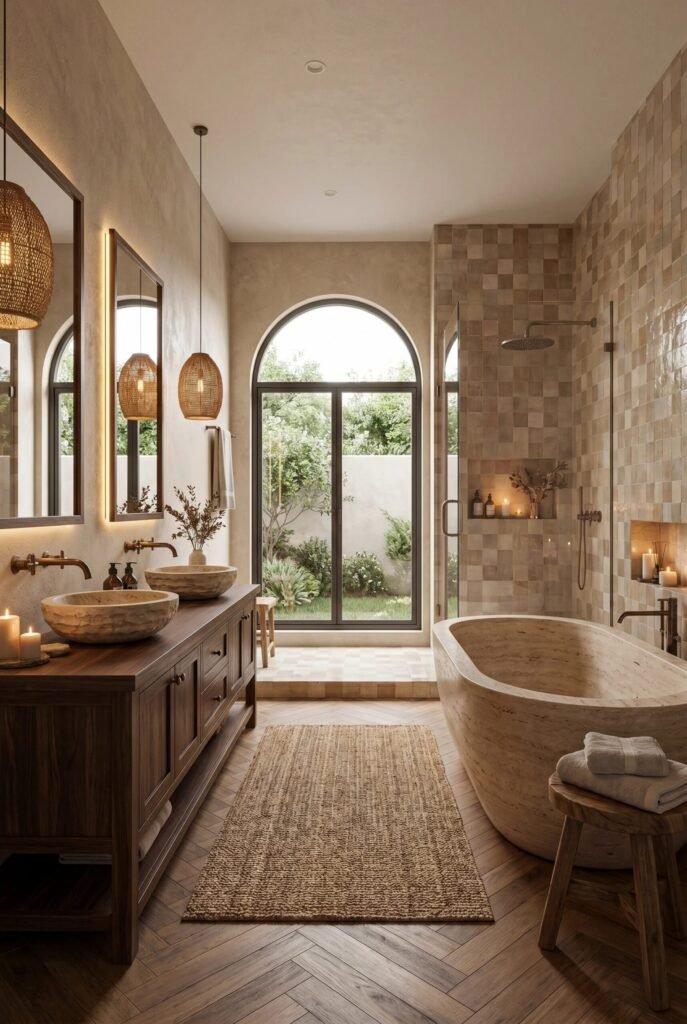
Some bathrooms are functional. This one looks like it belongs in a boutique resort where cucumber water mysteriously appears whenever you need it. The dramatic arched window immediately becomes the focal point, bringing natural light deep into the room. Large architectural features often create more impact than expensive decorative accessories because they shape the entire visual experience.
The design succeeds through balanced proportions. The substantial stone bathtub visually anchors one side of the room while the oversized double vanity balances the other. Without this equilibrium, the room could feel lopsided. The herringbone flooring introduces subtle movement beneath all the larger surfaces, helping the space feel dynamic without becoming visually busy.
Notice how the materials remain remarkably restrained. Beige stone, warm wood, woven accents, and soft lighting appear repeatedly throughout the design. If recreating this look, avoid introducing random colors that compete with the earthy palette. A limited material palette often feels more luxurious because it creates intentionality and visual calm.Sometimes the most expensive-looking design move is simply knowing when to stop adding things.
Skylit Sanctuary With Organic Warmth
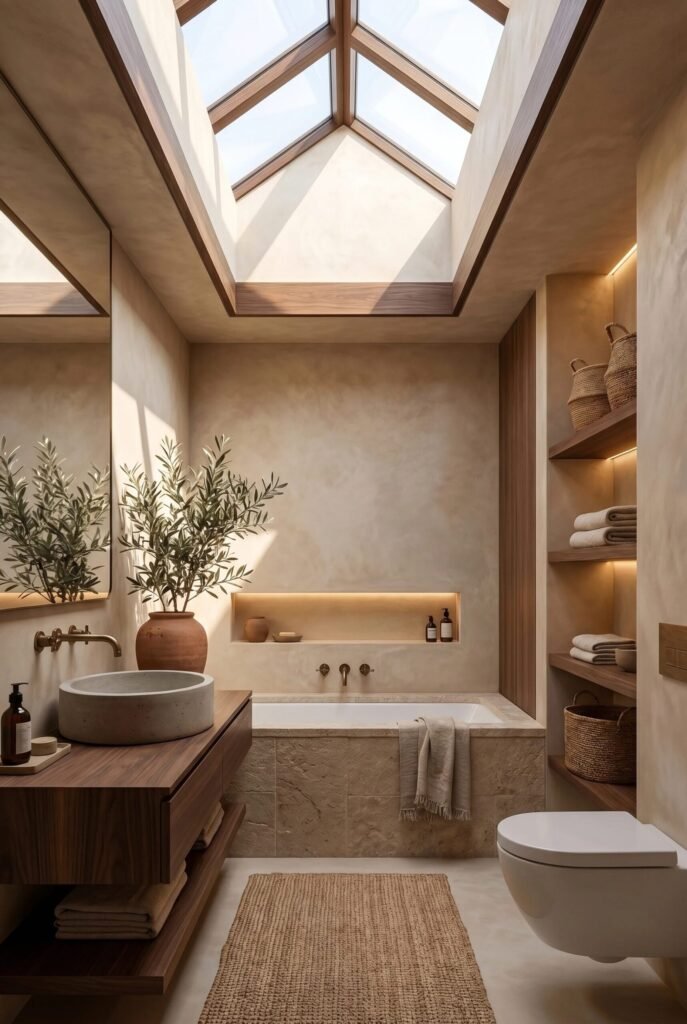
Natural light is the star of this bathroom, and honestly, it deserves top billing. The oversized skylight floods the space with daylight, making every beige and brown surface appear richer and more dimensional. Good lighting doesn’t just illuminate materials—it completely transforms how we perceive color, texture, and depth.
The built-in shelving demonstrates excellent space planning. Instead of adding bulky storage furniture, the recessed shelves maintain an open feeling while still providing practical storage. The integrated lighting inside the shelves adds another layer of warmth during evening hours. This combination of functionality and aesthetics is exactly what elevates a bathroom from ordinary to thoughtfully designed.
The earthy palette feels especially sophisticated because it incorporates variation rather than sameness. Warm wood cabinetry, textured stone, creamy plaster walls, and woven baskets each contribute unique character. If you want to recreate this style, focus on tonal layering rather than matching everything perfectly. The most inviting neutral spaces typically combine multiple shades and finishes instead of repeating one exact color everywhere. Think collected and natural rather than perfectly coordinated.
Modern Minimalism With Ambient Lighting
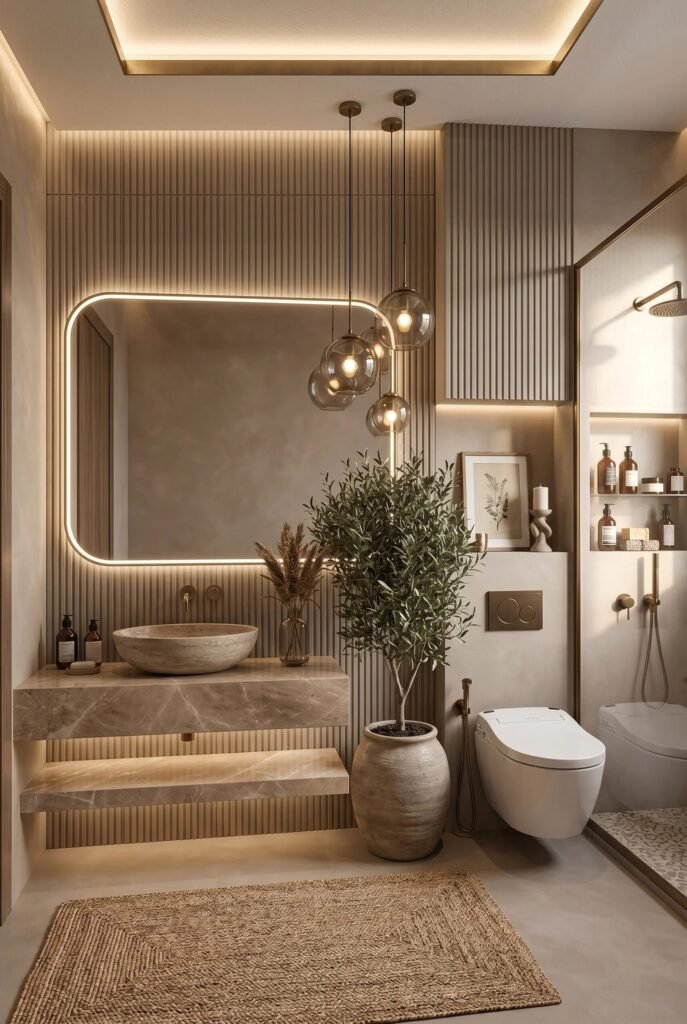
This bathroom proves that minimalism does not have to feel cold. The beige palette remains soft and welcoming thanks to strategic lighting and textured surfaces. The fluted wall treatment behind the vanity creates depth without relying on bold patterns, while the illuminated mirror acts as both a functional feature and a design statement. Vertical lines naturally draw the eye upward, making ceilings feel taller and rooms feel larger.
One standout principle here is layered lighting. Recessed ceiling illumination, integrated mirror lighting, shelf lighting, and decorative pendants all work together to eliminate harsh shadows. Many bathrooms rely on a single overhead fixture and then wonder why everything feels flat. Great lighting design is often what separates a builder-grade bathroom from a luxury-inspired one.
The floating stone vanity also contributes to the airy aesthetic by exposing floor space underneath. Combined with the wall-mounted toilet, the room feels visually lighter despite the substantial materials. Whenever possible, allowing more floor to remain visible can make even compact bathrooms feel significantly more spacious. It’s basically a visual magic trick that designers use constantly.
Stone Feature Walls And Earthy Sophistication
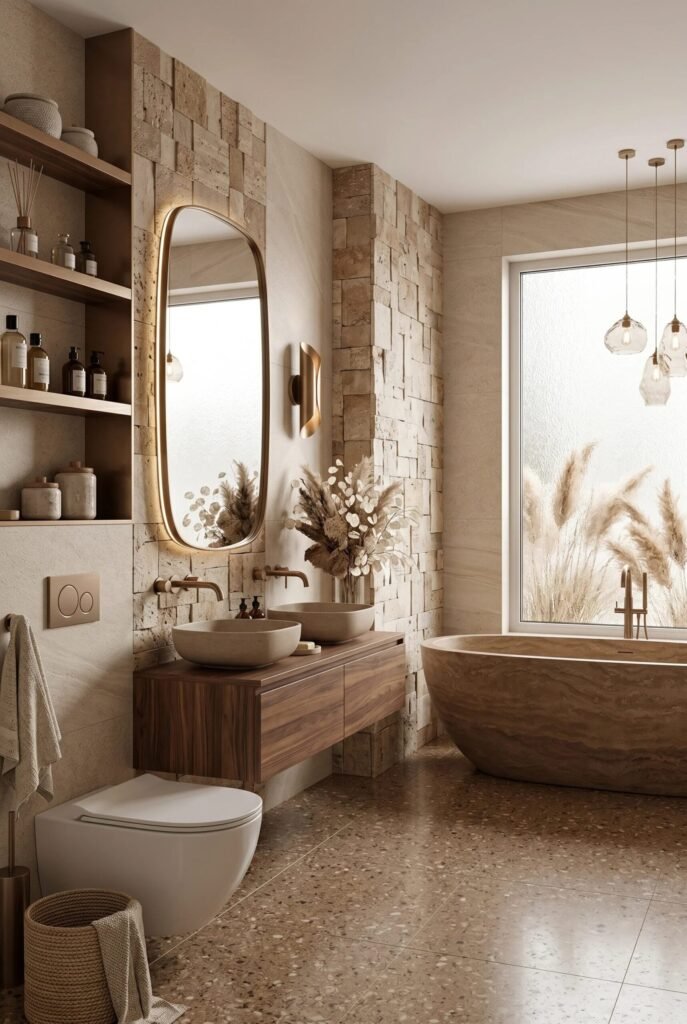
This bathroom embraces texture in a completely different way. Instead of smooth surfaces dominating the room, the stacked stone wall becomes the focal point and introduces incredible depth. The irregular stone pattern contrasts beautifully with the cleaner lines of the floating vanity and modern fixtures. Strong contrast between rough and smooth textures often creates a more memorable design than color contrast alone.
The oversized window contributes to the calm atmosphere by connecting the interior with natural surroundings. Because the color palette already mirrors outdoor tones, the transition feels seamless. The warm stone bathtub reinforces this connection and helps establish a spa-inspired mood throughout the room.
A particularly smart detail is the use of open shelving. Decorative bottles, ceramics, and dried botanical arrangements personalize the space without creating clutter. If you’re recreating this look, choose accessories that share similar tones rather than introducing bright accent colors. Consistency in decorative styling helps a room feel curated and intentional rather than randomly assembled over time. The result is a bathroom that feels timeless, earthy, and effortlessly elevated without trying too hard.
Warm Neutrals Create Bathrooms We Never Outgrow
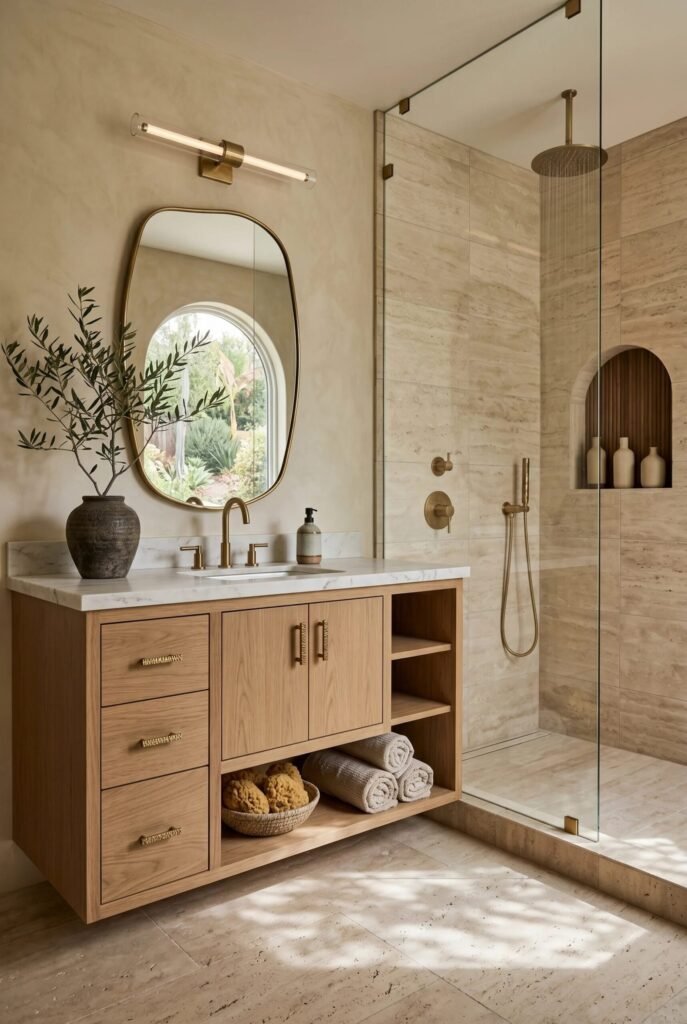
After exploring these brown and beige bathroom ideas, one thing becomes clear: timeless design is rarely about chasing trends. It is about creating a space that feels comfortable, functional, and visually balanced every single day. Brown and beige succeed because they provide a versatile foundation that can lean modern, rustic, minimalist, spa-inspired, farmhouse, or even luxury hotel chic without losing their warmth.
What makes these bathrooms especially successful is their attention to detail. Layered lighting creates atmosphere, natural materials add authenticity, and carefully selected textures prevent neutral palettes from feeling flat. Whether it is a fluted wood wall, a stone soaking tub, woven storage baskets, or an oversized window that floods the room with sunlight, every element contributes to the overall experience.
A beautiful bathroom is not just about how it looks—it is about how it feels when we walk into it. Brown and beige excel at creating that feeling of calm, comfort, and understated elegance, making them a combination we are unlikely to regret anytime soon.