
These Whimsical Apartment Details That Make Ordinary Rooms Feel Enchanted
A whimsical apartment aesthetic is not about following strict decorating rules or chasing every trend that appears on social media. It is about creating a home that feels personal, imaginative, and slightly magical the moment we walk through the door. While minimalist interiors often focus on removing personality, whimsical spaces celebrate it. They embrace color, playful details, collected treasures, botanical elements, vintage finds, artistic lighting, and decor pieces that spark curiosity.
The beauty of this style is that it can be adapted to almost any apartment size. Whether we have a tiny studio or a spacious rental, whimsical design encourages us to think creatively about every corner. A gallery wall can become a storytelling feature. A lamp can double as artwork. Plants can transform an ordinary room into a secret indoor garden.
Throughout these ideas, we will explore how thoughtful layering, intentional color palettes, texture, lighting, and creative decor choices can work together to create an apartment that feels less like a temporary living space and more like a charming reflection of who we are.
Turn Your Apartment Into A Plant-Filled Storybook Nook
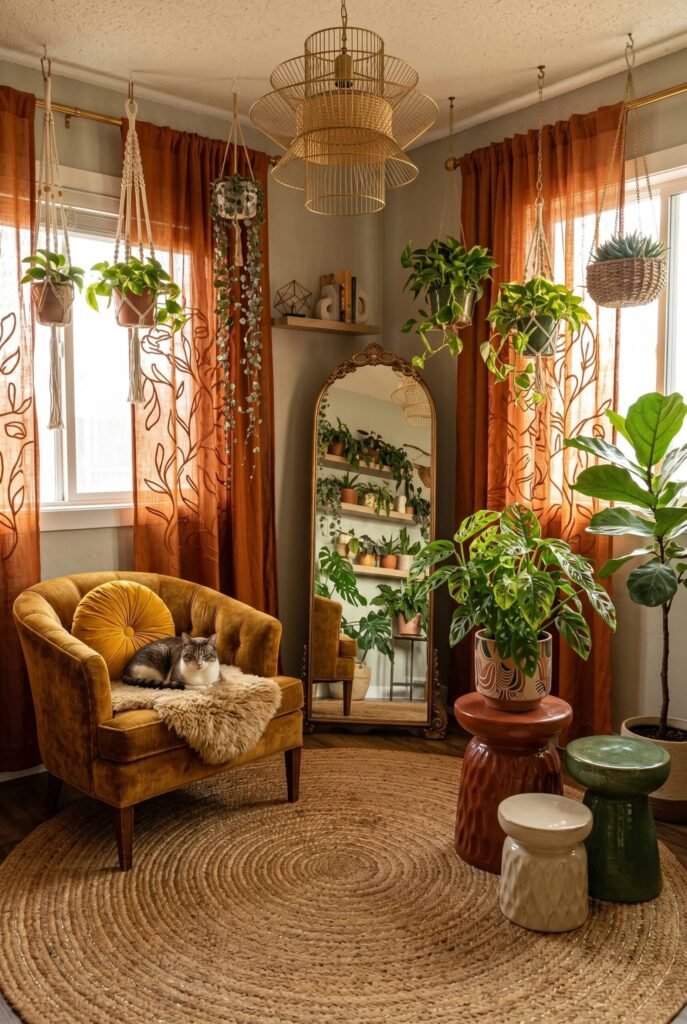
This corner proves that whimsical design does not require a giant apartment or a massive budget. The magic comes from layering natural textures, warm colors, and living greenery in a way that feels collected over time. The rust-colored curtains immediately create warmth while the hanging plants draw the eye upward, making the room feel taller and more immersive. The round jute rug softens all the hard architectural lines, while the vintage-inspired chair creates a cozy focal point that practically begs us to cancel plans and read a fantasy novel instead.
One of the smartest design moves here is the vertical styling. Plants appear at multiple heights—from the ceiling to shelves to floor pots—which creates rhythm and movement throughout the room. When recreating this look, avoid placing all your plants on one level because layered heights make a space feel intentionally designed rather than randomly decorated.
The mirror is doing double duty by reflecting both light and greenery, making the apartment feel larger and brighter. Add warm-toned woods, woven materials, and curved furniture silhouettes to maintain the whimsical energy. Think of the room as a tiny indoor conservatory where every corner feels a little enchanted.
Create Candlelit Evenings That Feel Cinematic
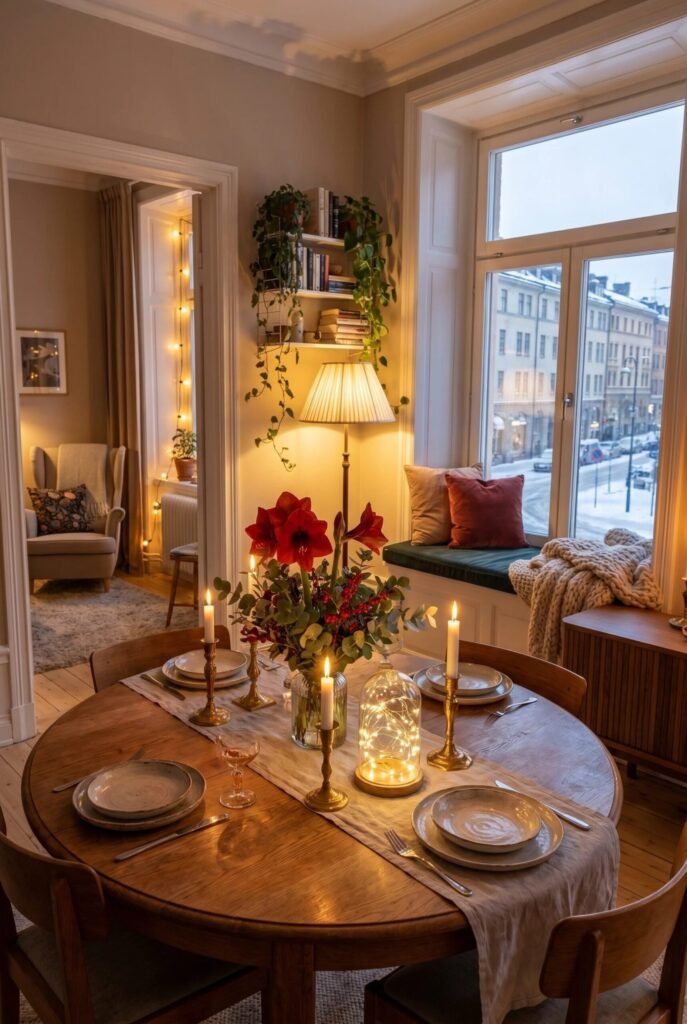
Some apartments feel decorated. Others feel like scenes from a cozy indie movie. This dining area belongs firmly in the second category. Instead of relying on overhead lighting, the design uses layered ambient lighting from candles, lamps, fairy lights, and window glow. The result is a soft atmosphere that feels welcoming even before anyone sits down for dinner.
The design principle carrying this space is visual warmth. Notice how nearly every surface features warm wood, creamy neutrals, brass accents, or soft textiles. These materials bounce light beautifully and prevent the room from feeling cold. The window bench adds another layer of functionality by transforming an overlooked architectural feature into a reading nook, conversation spot, and decorative focal point all at once. Whimsical interiors often succeed because they make everyday moments feel special rather than because they contain unusual furniture.
To recreate the look, focus on lighting zones rather than one central light source. Add table lamps, battery-operated candles, string lights, and textured fabrics. A simple dining table instantly feels magical when surrounded by layered lighting and soft textures. Honestly, this is the apartment equivalent of putting a cozy filter on real life.
Mix Floral Fantasy With Modern Apartment Living
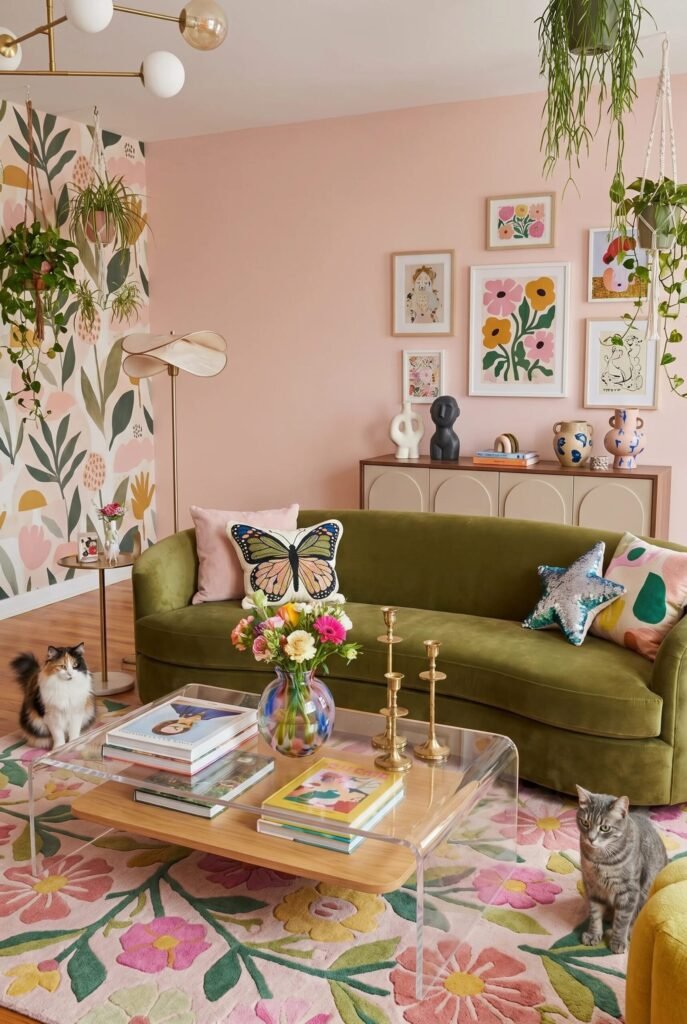
This living room demonstrates a secret many people overlook: whimsical design is not about clutter. It is about controlled playfulness. The oversized floral rug, botanical wallpaper, and colorful artwork all feel expressive, yet the room remains balanced because the larger furniture pieces are relatively simple. The curved olive-green sofa acts as a grounding element that keeps the space from becoming visually chaotic.
Color coordination is doing a lot of heavy lifting here. The greens from the sofa connect to the wallpaper, plants, and decorative accents, creating cohesion throughout the room. Meanwhile, blush pink walls soften the palette and prevent the stronger floral patterns from feeling overwhelming. When using bold patterns, repeating colors across multiple elements helps everything feel intentional instead of accidental.
Another clever detail is the use of organic shapes. Curved furniture, rounded lighting, floral motifs, and hanging plants all reinforce the whimsical theme. To recreate this style, start with one statement feature—such as a floral rug or wallpaper—and build supporting colors around it. The goal is not perfection. The goal is creating a space that feels joyful enough to make guests stop mid-sentence and say, “Wait… this apartment is adorable.”
Add Storybook Charm Through Vintage Details
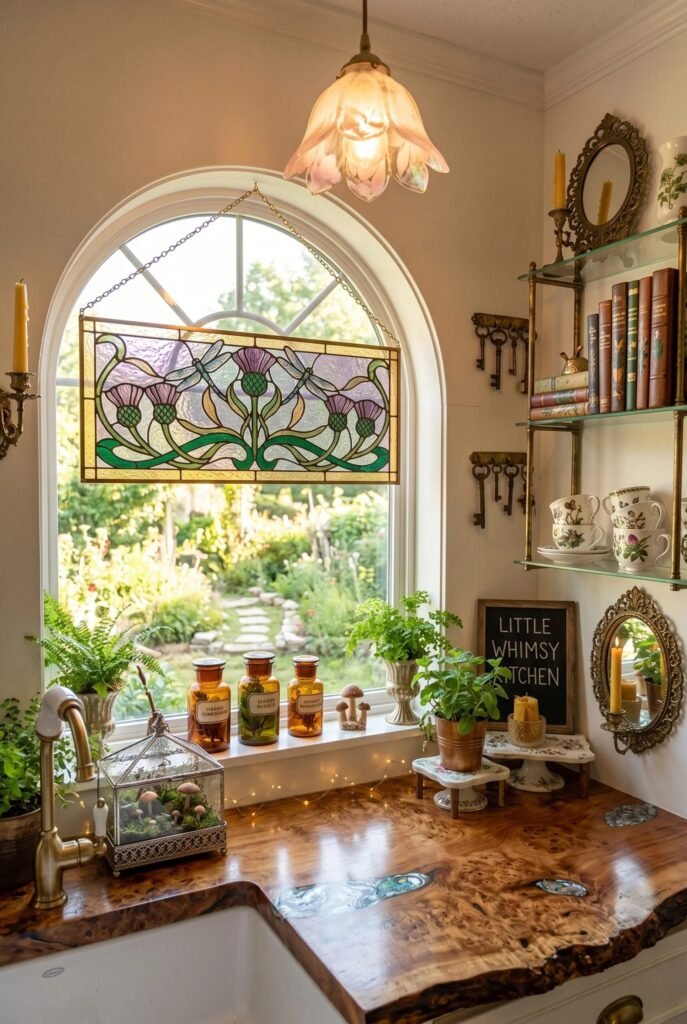
This kitchen corner feels like it belongs inside a fairy tale cottage hidden somewhere beyond a secret garden gate. The stained-glass window treatment immediately establishes a whimsical mood, but what makes the design successful is how every other element supports that focal point. Vintage-inspired mirrors, antique-style shelving, botanical accents, and warm wood tones all contribute to a layered narrative.
The strongest design principle here is thematic consistency. Rather than mixing unrelated trends, the room commits to a romantic cottage-inspired story. The brass fixtures, aged frames, glass bottles, and botanical displays all reinforce the same aesthetic direction. Whimsical interiors feel more convincing when every decorative choice supports a clear visual story.
Natural light also plays a huge role. The stained glass filters sunlight into softer, more colorful tones, creating visual interest throughout the day. If authentic stained glass is outside the budget, decorative window films can create a similar effect. Add herbs, vintage containers, and warm wood finishes to strengthen the connection between indoors and outdoors. Suddenly even making coffee feels less like a chore and more like the opening chapter of a charming novel.
Let Decorative Lighting Become Functional Art
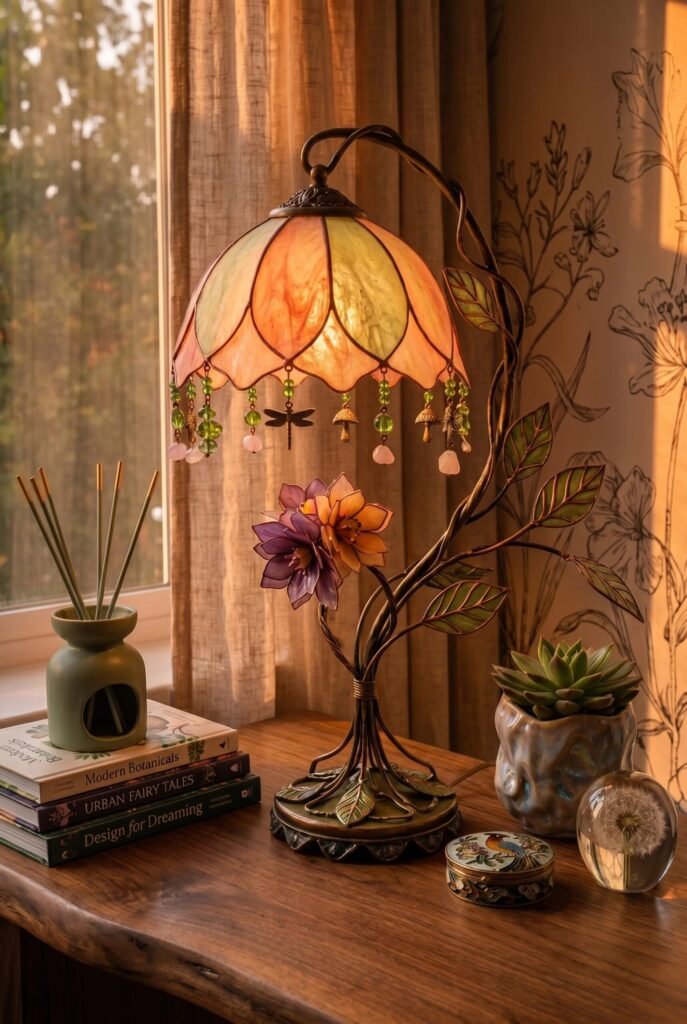
Most table lamps exist to provide light. This lamp is clearly aiming for main-character status. The floral-inspired stained-glass shade, sculptural metal base, and nature-inspired details transform a practical object into a decorative centerpiece. This approach perfectly reflects a key whimsical design principle: everyday items should be beautiful as well as functional.
One reason this vignette works so well is because of its balanced composition. The lamp serves as the dominant focal point, while the books, diffuser, plants, and small accessories create supporting layers around it. Nothing competes for attention. Whenever you use a highly decorative piece, keep surrounding decor slightly simpler so the statement item can shine.
The warm glow also enhances the apartment’s atmosphere by introducing emotional lighting rather than purely functional lighting. Soft illumination creates depth, highlights textures, and makes a room feel more intimate. To recreate this idea, look for lighting with artistic silhouettes, floral motifs, stained glass, or handcrafted details. We often spend hours choosing furniture, but sometimes a single magical lamp can completely change how a room feels after sunset. And honestly, that’s a pretty impressive performance for one lightbulb.
Turn Your Bed Into A Whimsical Gallery Wall
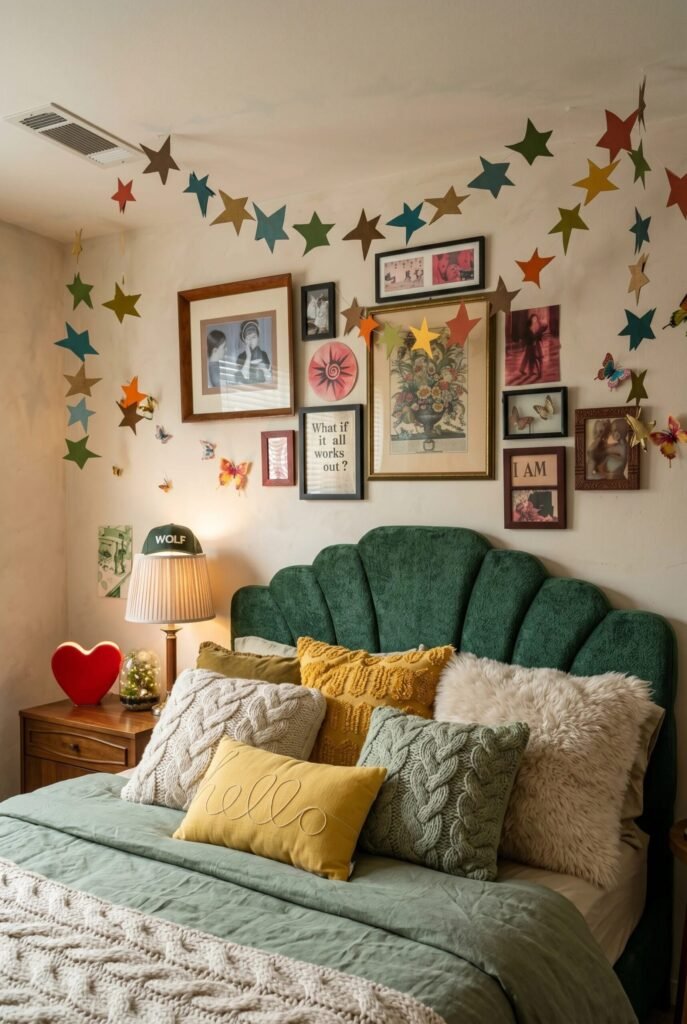
This bedroom feels like the grown-up version of the creative corner we would have designed at thirteen if we had unlimited decorating freedom and a surprisingly healthy budget. The shell-shaped velvet headboard instantly establishes a playful focal point, while the star garland and collected gallery wall transform an ordinary bed wall into a personal storytelling feature. Instead of relying on one oversized piece of art, the room uses multiple smaller pieces to create visual movement and personality.
The secret design principle here is layered self-expression. The artwork, framed prints, butterflies, and decorative accents all vary in size, shape, and color, which creates an organic composition rather than a perfectly symmetrical display. When building a whimsical gallery wall, mix frame styles and sizes but maintain a repeating color palette to avoid visual chaos.
Texture is equally important. Chunky knit pillows, faux fur cushions, velvet upholstery, and soft bedding prevent the room from feeling flat. If you want this look, focus on creating contrast between smooth and tactile surfaces. The goal is a bedroom that feels collected, cozy, and slightly magical—like your personality accidentally became interior design.
Frame Spaces With Colorful Beaded Curtains
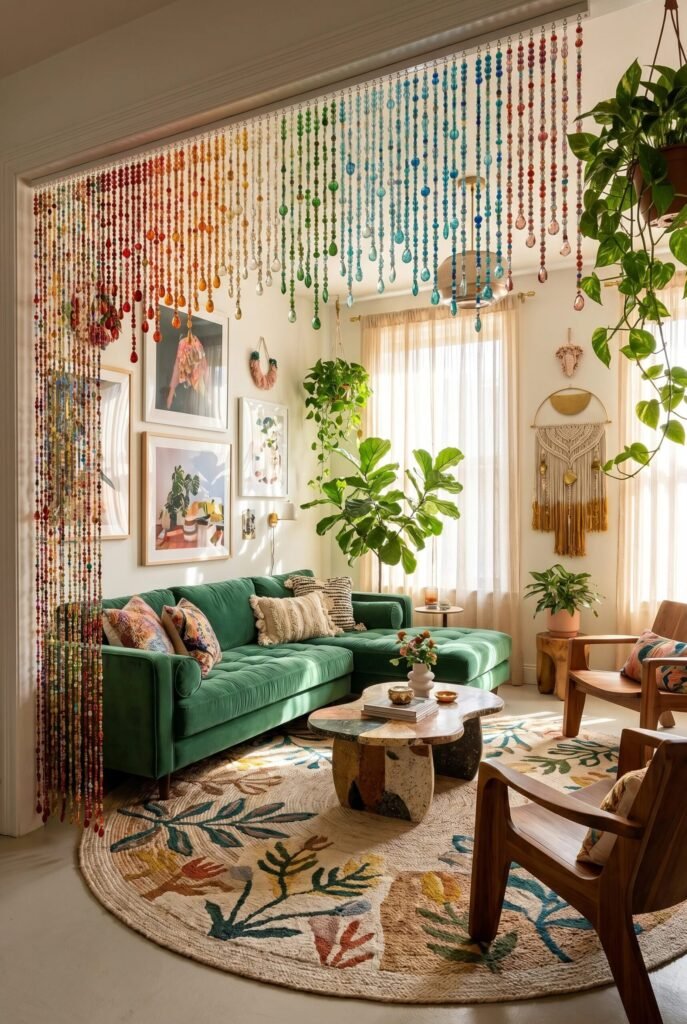
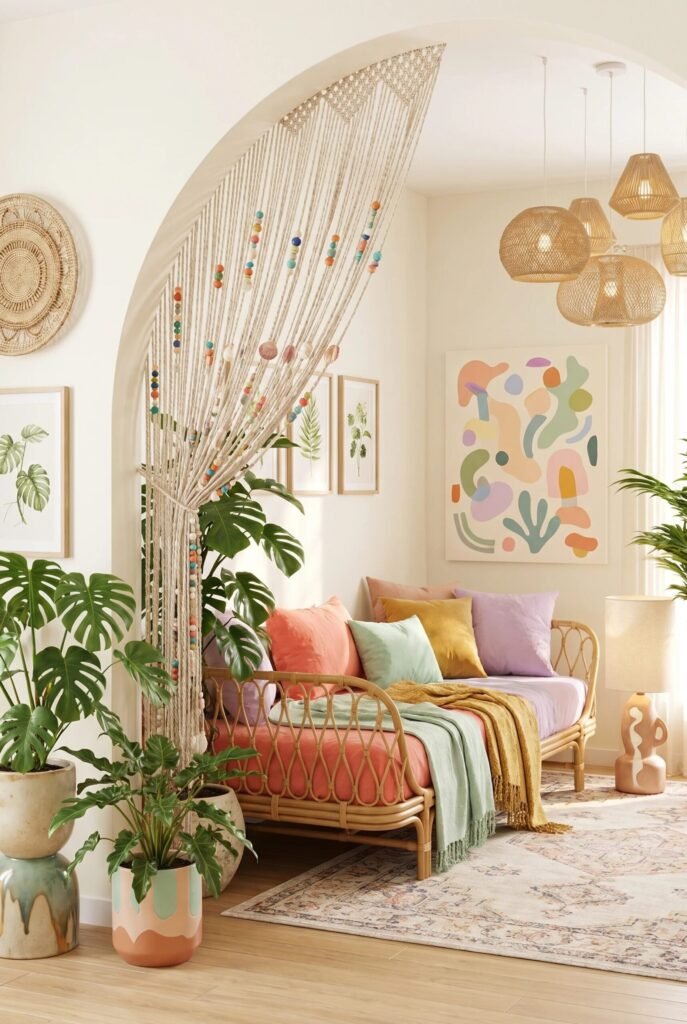
Whimsical apartments often succeed because they make transitions between spaces feel special, and this beaded curtain is a perfect example. Instead of treating a doorway as a purely functional opening, it becomes an artistic feature that introduces color, texture, and movement. The cascading rainbow beads instantly draw attention upward and create a playful frame around the living room beyond.
What makes this room particularly successful is its balance between vibrant accents and grounded elements. The colorful beads are supported by the botanical rug, patterned cushions, and artwork, while the green sofa and natural wood furniture provide visual stability. Every whimsical room needs at least one grounding element, otherwise the design can start feeling overwhelming instead of charming.
Plants also play an important role by softening the vertical lines and connecting the indoor environment to nature. To recreate this aesthetic, combine natural materials such as jute, wood, and woven textiles with colorful statement pieces. The contrast keeps the space sophisticated. After all, we want “creative apartment owner,” not “craft supply closet exploded during a full moon.”
Blend Bohemian Warmth With Whimsical Charm
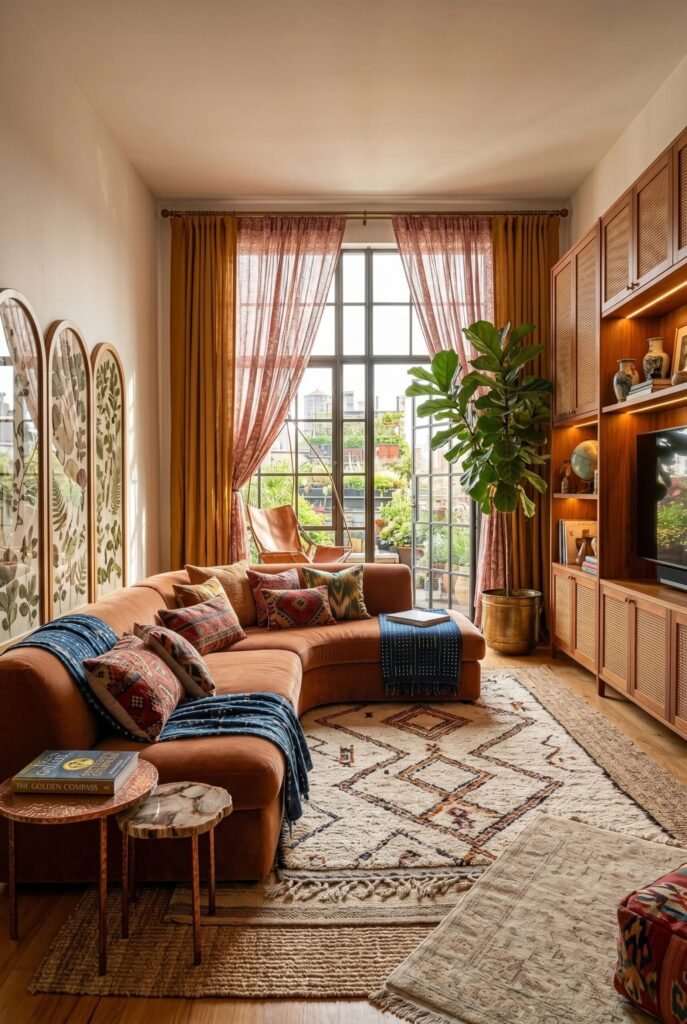
This living room proves that whimsy does not always have to mean pastels, mushrooms, or fairy lights. Sometimes it comes through warmth, storytelling, and collected details. The curved rust-colored sectional immediately establishes comfort, while the layered textiles, vintage-inspired rugs, and botanical artwork create an environment that feels personal rather than showroom-perfect.
One of the strongest principles at work here is color repetition. Terracotta tones appear in the sofa, curtains, accessories, and artwork, creating cohesion throughout the room. Meanwhile, creams and natural wood finishes prevent the palette from becoming too heavy. Repeating a dominant color three to five times throughout a room is one of the easiest ways to make eclectic spaces feel intentional.
The floor-to-ceiling windows also contribute significantly by providing natural light and strengthening the room’s connection to outdoor greenery. To recreate this atmosphere, prioritize layered textiles, warm earth tones, and furniture with soft silhouettes. The result feels cozy, worldly, and inviting—as if every object has a story and at least one of them probably involves an impulsive flea market purchase.
Add Magical Decor With Unexpected Lighting
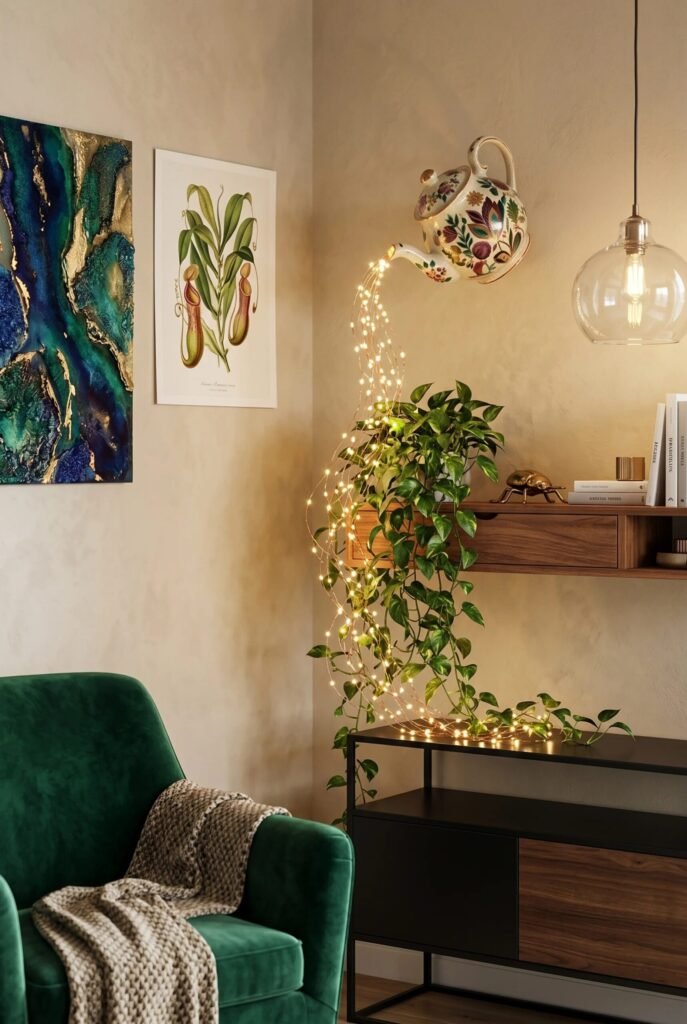
Few things embody whimsical decorating better than turning ordinary objects into conversation starters. This floating teapot light installation does exactly that. Rather than hanging traditional wall art, the design transforms a decorative teapot into an imaginative lighting feature that appears to pour glowing fairy lights directly onto a trailing plant.
The brilliance of this idea comes from combining functionality with surprise. Great whimsical design often includes an element that makes visitors pause for a second and say, “Wait… how cute is that?” The warm lights create a visual pathway that guides the eye downward while simultaneously highlighting the greenery below. Decor feels more memorable when it tells a visual story rather than simply filling empty wall space.
Notice how the surrounding furniture remains relatively simple. The neutral walls, streamlined shelving, and clean-lined cabinet prevent the feature from competing with other decorative elements. If recreating this look, keep nearby accessories restrained. Sometimes a single playful statement piece creates more impact than twenty smaller decorations fighting for attention at the same time.
Design A Dreamy Cloud-Themed Escape
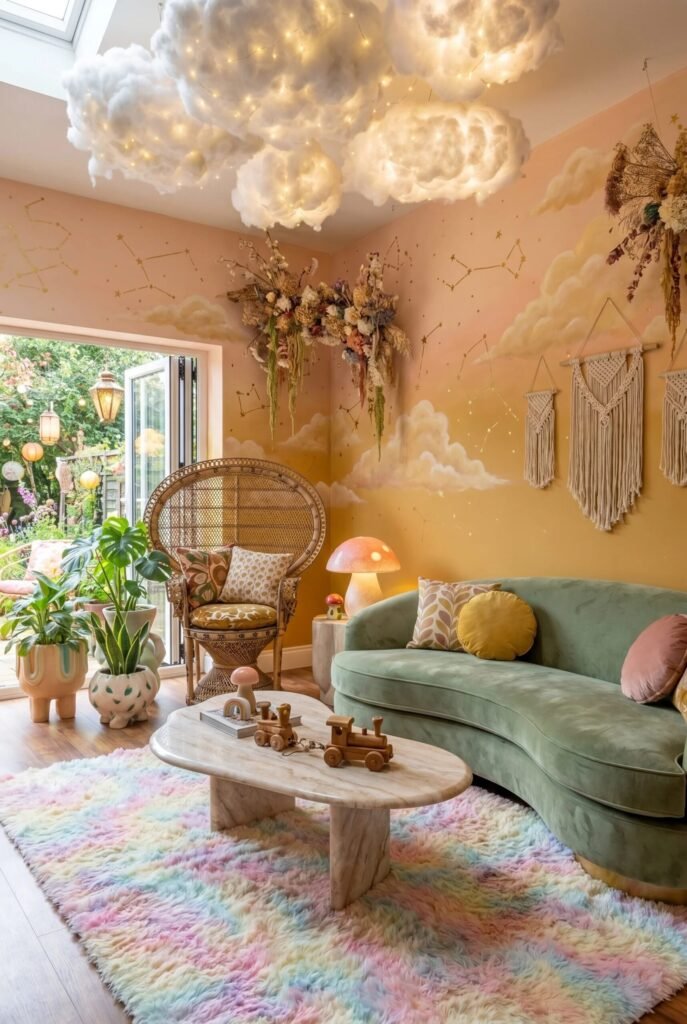
If whimsical apartments had a headquarters, this room might qualify. From the glowing cloud ceiling installation to the celestial wall art and pastel textures, every element contributes to a cohesive dreamscape that feels straight out of a fantasy novel. Despite the playful theme, the space still feels sophisticated because the palette remains soft and controlled.
The most important principle here is immersive theming. Rather than introducing one cloud-themed item and stopping there, the design repeats celestial motifs across the ceiling, walls, lighting, and accessories. This repetition creates a complete visual experience. Strong whimsical interiors work because they commit fully to a concept instead of scattering unrelated decorative trends around a room.
Balance also prevents the design from becoming overwhelming. The pastel sofa, natural rattan chair, and light wood furniture ground the room with familiar materials. If recreating this style, invest in layered ambient lighting because illumination is what makes the cloud installation truly magical. The room feels less like a living room and more like the inside of a very pleasant daydream—which, honestly, is a pretty solid design goal.
Create A Home That Feels Wonderfully Yours
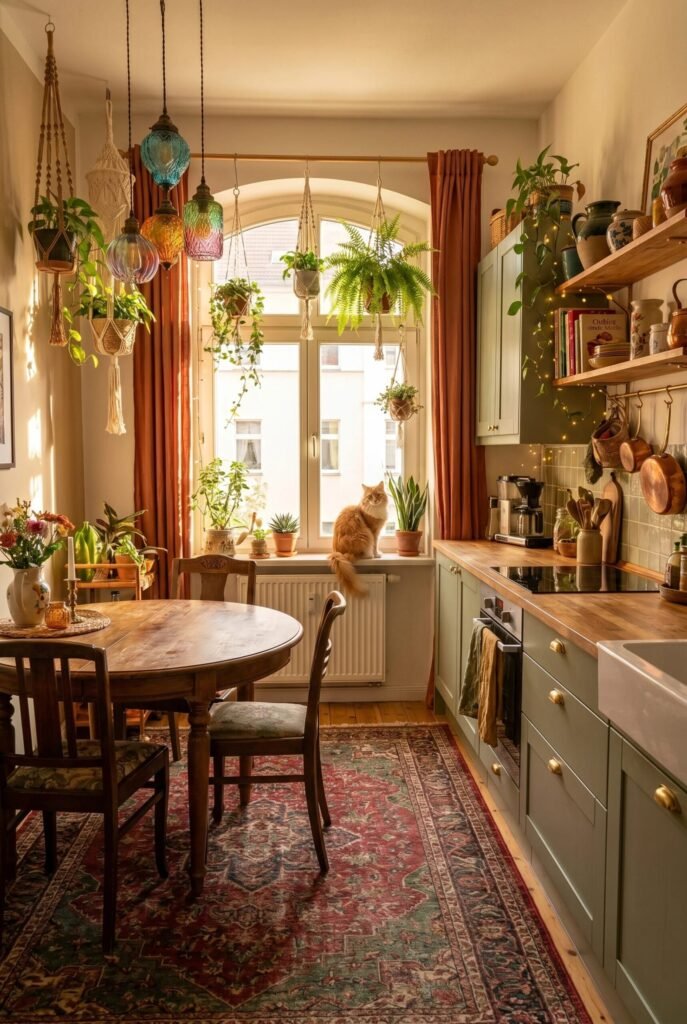
The most memorable whimsical apartments are not necessarily the most expensive or the most perfectly styled. They are the ones that feel alive with personality. They tell stories through collected objects, meaningful artwork, unexpected color combinations, cozy textures, and imaginative details that make everyday life feel a little more special.
As we have seen throughout these ideas, whimsical design thrives on balance. It pairs playful elements with thoughtful design principles, allowing creativity to shine without creating visual clutter. Whether it is a cloud-inspired ceiling, a botanical reading corner, a colorful beaded doorway, or a gallery wall filled with personal treasures, each choice contributes to an atmosphere that feels joyful and uniquely personal.
The goal is not perfection. The goal is creating spaces that make us smile when we enter them and make guests linger a little longer than planned. After all, a whimsical apartment is more than a decorating style—it is a reminder that our homes can be functional, beautiful, and delightfully imaginative at the same time.