
Inside The Minimalist Dining Rooms Everyone Wants To Recreate
Minimalist dining rooms have a way of reminding us that great design is not about filling every corner with furniture, décor, or things we bought at 2 a.m. because an algorithm convinced us we needed them. Instead, they focus on what truly matters: creating a space where people can gather comfortably while surrounded by beauty that feels intentional rather than overwhelming. The best minimalist dining rooms balance simplicity with warmth, proving that “less” does not have to feel empty.
Throughout these ideas, we see recurring principles that make minimalist dining rooms successful. Natural materials add texture, thoughtful lighting creates atmosphere, and carefully selected furniture establishes visual balance. Rather than relying on excessive decoration, these spaces use proportion, scale, color harmony, and negative space to create impact. The result is a dining room that feels calm, functional, and effortlessly stylish at the same time.
Whether your style leans organic, modern, moody, or softly contemporary, minimalist design offers a foundation that adapts beautifully to your home and lifestyle. Sometimes the most inviting room is simply the one that allows the people inside it to become the focal point.
Layered Organic Textures With Sculptural Warmth
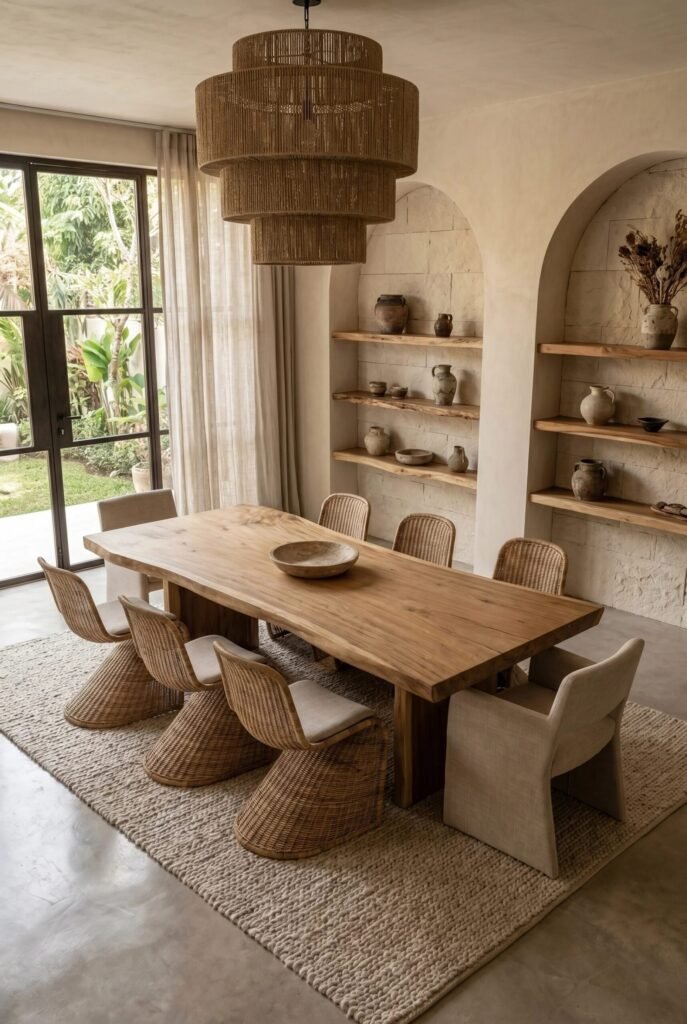
This dining room proves that minimalism does not have to feel cold, sterile, or like a furniture showroom where nobody is allowed to touch anything. The design succeeds because it relies on a restrained palette of warm wood, natural fibers, stone textures, and earthy ceramics.
The oversized woven chandelier becomes the focal point, while the arched niches quietly support it through repetition of curved forms. One of the most effective design principles here is material consistency. Rather than introducing dozens of finishes, the room repeats similar warm tones throughout the furniture, shelving, rug, and accessories.
The visual weight is distributed carefully across the room. The substantial dining table anchors the center, while the woven chairs soften its heaviness through texture. This balance prevents the space from feeling overly rustic or overly modern. If we are recreating this look, choosing furniture with visible grain and tactile surfaces is far more important than adding decorative clutter.
Notice how the styling remains intentionally sparse. A few handcrafted vessels create rhythm without overwhelming the shelves. Minimalist spaces look their best when every object contributes either texture, scale, or visual contrast.Think quality over quantity—the exact opposite of that random décor shopping spree we all pretend was intentional.
Coastal Simplicity With Fresh Color Accents
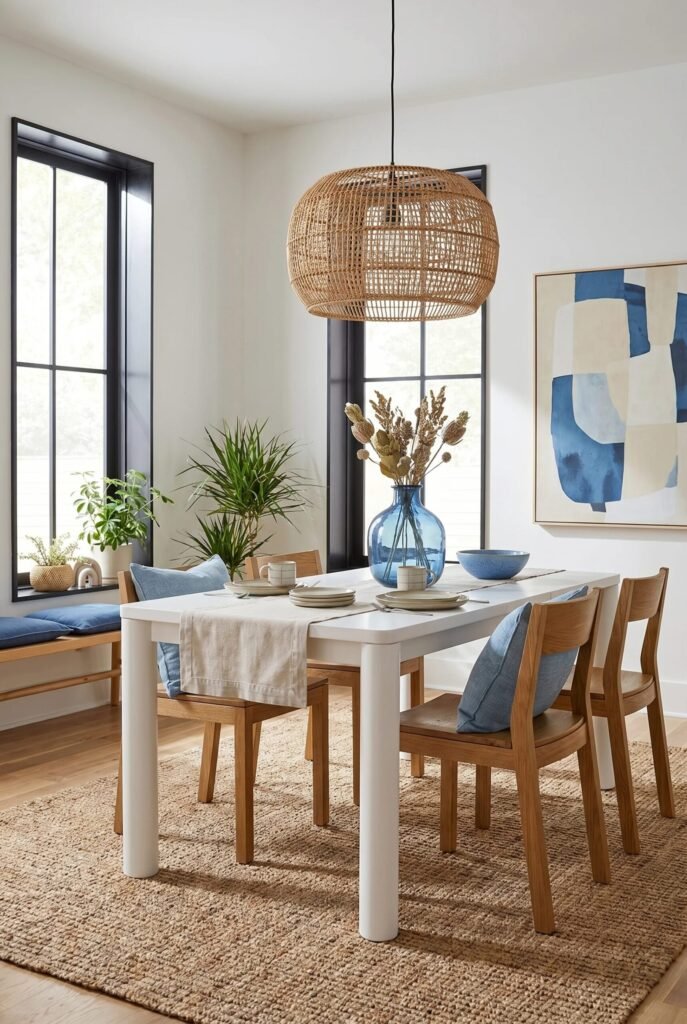
This dining room shows how a minimalist space can feel cheerful without relying on loud colors or excessive décor. The foundation remains incredibly simple: white walls, clean-lined furniture, natural wood tones, and abundant natural light. What keeps the room from looking flat is the strategic use of blue accents. The artwork, vase, cushions, and tableware create a repeating color story that guides the eye around the room. Repetition is one of the easiest design principles to use when creating a polished interior.
The large woven pendant introduces texture overhead while maintaining visual lightness. Because the fixture is airy and open, it fills vertical space without making the room feel crowded. This is especially useful in smaller dining areas where bulky lighting can dominate the entire room. The natural jute rug also grounds the furniture grouping and subtly defines the dining zone.
If you want to recreate this look, begin with a neutral base and select one accent color to repeat three to five times throughout the room. The result feels intentional instead of random. Minimalism becomes much more inviting when we combine simplicity with carefully curated moments of personality. In other words, the room whispers instead of screaming for attention, and somehow looks much cooler because of it.
Monochrome Banquette Seating For Modern Living
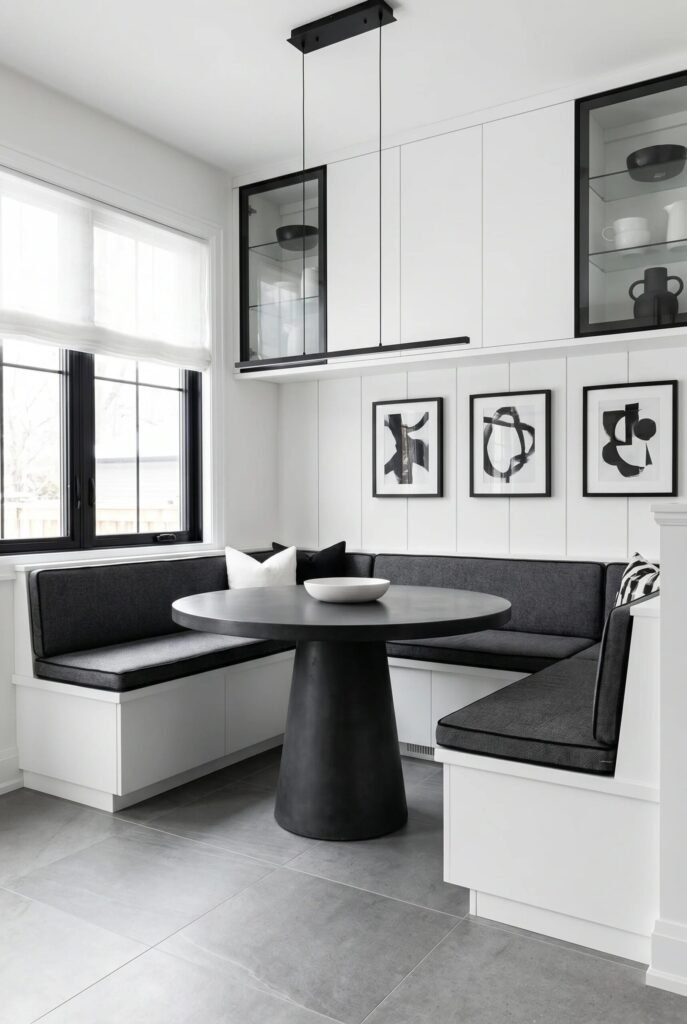
Built-in seating is basically the minimalist secret weapon nobody talks about enough. This dining nook demonstrates how integrated furniture can make a room appear larger, cleaner, and significantly more organized. The continuous bench seating eliminates visual interruptions while maximizing functionality. Because the benches blend into the architecture, the room feels cohesive rather than filled with separate pieces competing for attention.
A major principle at work here is contrast. The white walls, cabinetry, and trim provide a bright backdrop, while the charcoal upholstery and black table establish strong visual anchors. High contrast creates definition, which is particularly important in minimalist interiors where decorative elements are intentionally limited. Without these darker components, the room could easily feel washed out.
The round pedestal table contributes to both form and function. Its shape encourages conversation while improving traffic flow in a compact footprint. If we wanted to recreate this design, investing in custom-looking built-ins or even simple bench seating would deliver the biggest impact. Minimalist spaces often feel luxurious when storage, seating, and architecture work together as one unified system. Plus, there are fewer chair legs to accidentally kick before your morning coffee, which feels like a personal victory.
Curved Forms Create Elegant Minimalist Drama
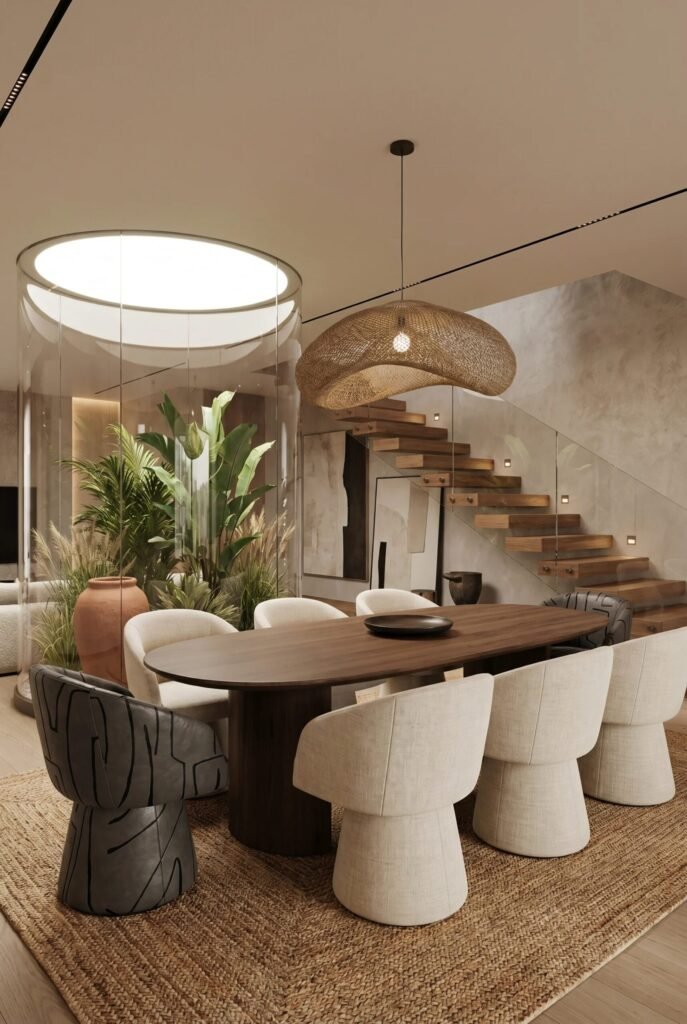
This dining room proves that minimalism can absolutely be dramatic when shape becomes the star of the show. Instead of relying on bright colors or decorative accessories, the design introduces interest through sculptural furniture. Rounded dining chairs, an elongated oval table, and a fluid woven pendant all contribute to a soft visual language. Repeating similar forms throughout a room creates harmony and makes the overall design feel intentional.
Another reason this space works so well is scale. The large pendant light occupies significant visual space above the table, helping the room feel balanced despite the soaring ceiling height. Meanwhile, the oversized indoor planting feature acts as a natural focal point that connects the architecture with organic elements. Large spaces often require larger gestures to avoid feeling empty.
For readers hoping to recreate this look, prioritize furniture silhouettes before worrying about accessories. Curved furniture instantly softens modern interiors and creates a more welcoming atmosphere. Minimalist rooms become far more memorable when shape and proportion replace unnecessary decoration. It is basically the design equivalent of wearing one perfectly tailored outfit instead of piling on fifteen accessories and hoping for the best.
Moody Minimalism With Timeless Character
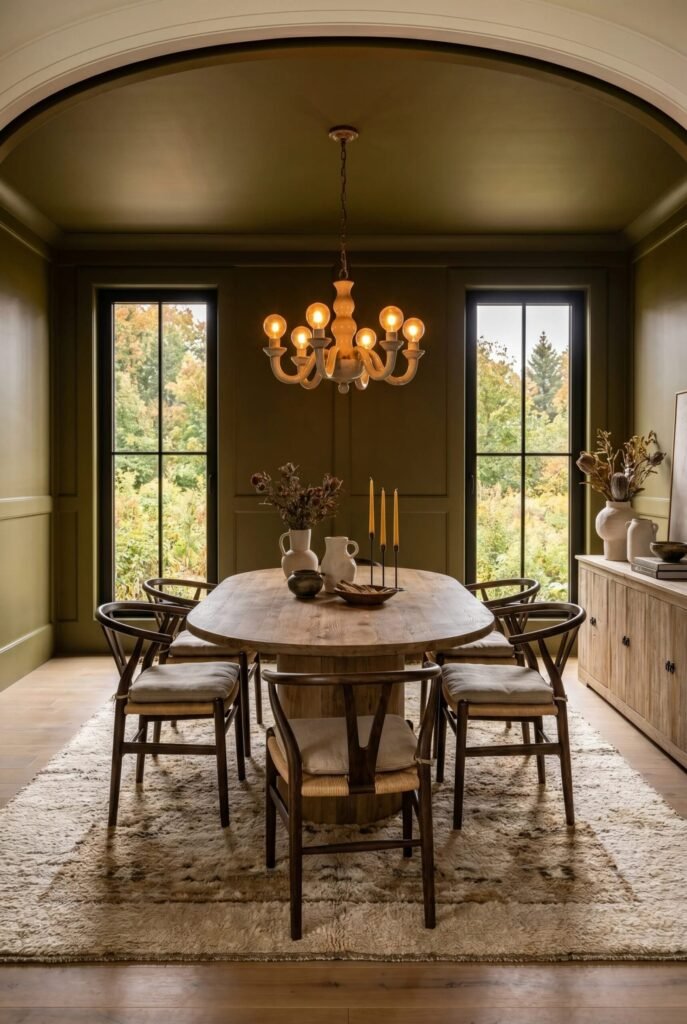
Minimalist dining rooms are often associated with bright whites and pale woods, but this space shows another direction entirely. The rich olive walls create depth and intimacy while maintaining a streamlined aesthetic. Because the room limits its palette to earthy greens, warm woods, and muted neutrals, the atmosphere feels calm rather than overwhelming. A restrained color palette is often more important than using light colors when designing a minimalist space.
The symmetry immediately catches our attention. Matching windows frame the dining table, while the centered chandelier reinforces balance throughout the room. Symmetrical layouts naturally feel organized and visually satisfying, making them particularly effective in dining rooms where gathering and connection are the primary functions.
Texture also plays a huge role here. The plush rug, natural wood furniture, soft upholstery, and matte painted walls prevent the darker palette from feeling heavy. If we are recreating this style, layering textures is essential whenever using deeper colors. Minimalism works best when visual interest comes from texture, proportion, and lighting rather than excessive decoration. The result feels sophisticated, cozy, and just a little bit mysterious—in the best possible way.
Warm Minimalism With Open Shelf Styling
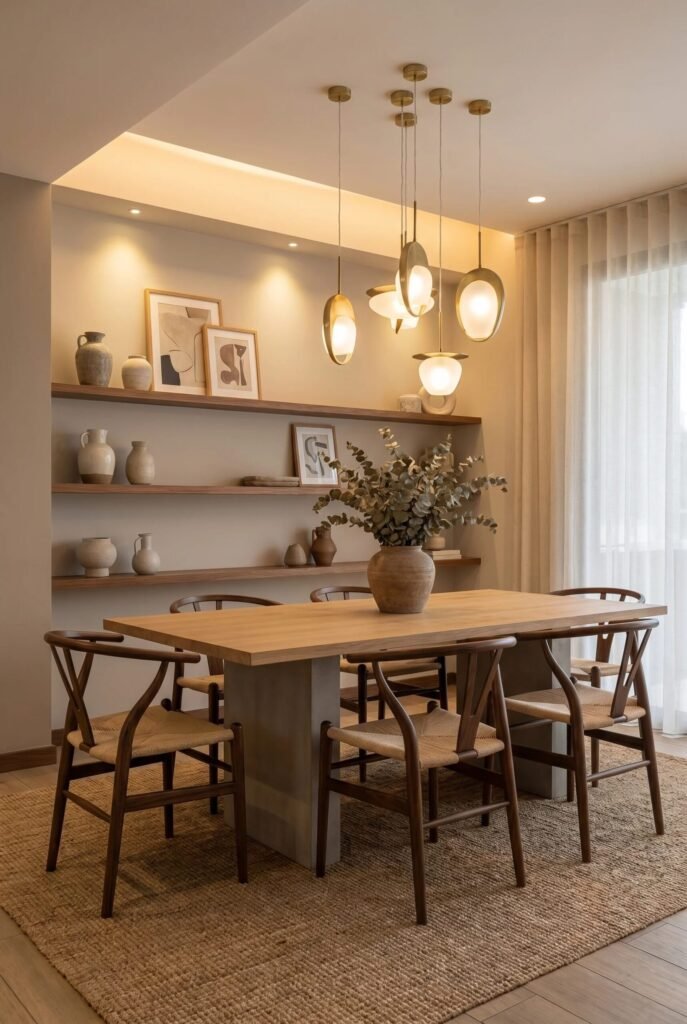
This dining room proves that minimalism does not mean eliminating personality. Instead, it focuses on displaying fewer items with greater intention. The floating shelves become a decorative feature without overwhelming the room because the styling remains restrained. Neutral ceramics, simple artwork, and natural greenery create visual rhythm while maintaining plenty of breathing room. One of the core principles here is negative space—the empty areas are just as important as the objects themselves.
The warm wood dining table acts as the room’s anchor, while the woven chairs introduce texture without adding visual heaviness. Above, the cluster pendant lights create a layered focal point that draws attention upward and prevents the room from feeling flat. Lighting is doing double duty here: functional illumination and architectural interest.
If we wanted to recreate this look, we would focus on limiting shelf décor to a carefully curated collection of objects with similar tones and materials. Minimalist styling becomes more sophisticated when everything feels connected rather than collected at random. Think less “souvenir shelf from five vacations” and more “gallery exhibit curated by someone who actually has their life together.”
Artistic Materials Meet Modern Minimalist Design
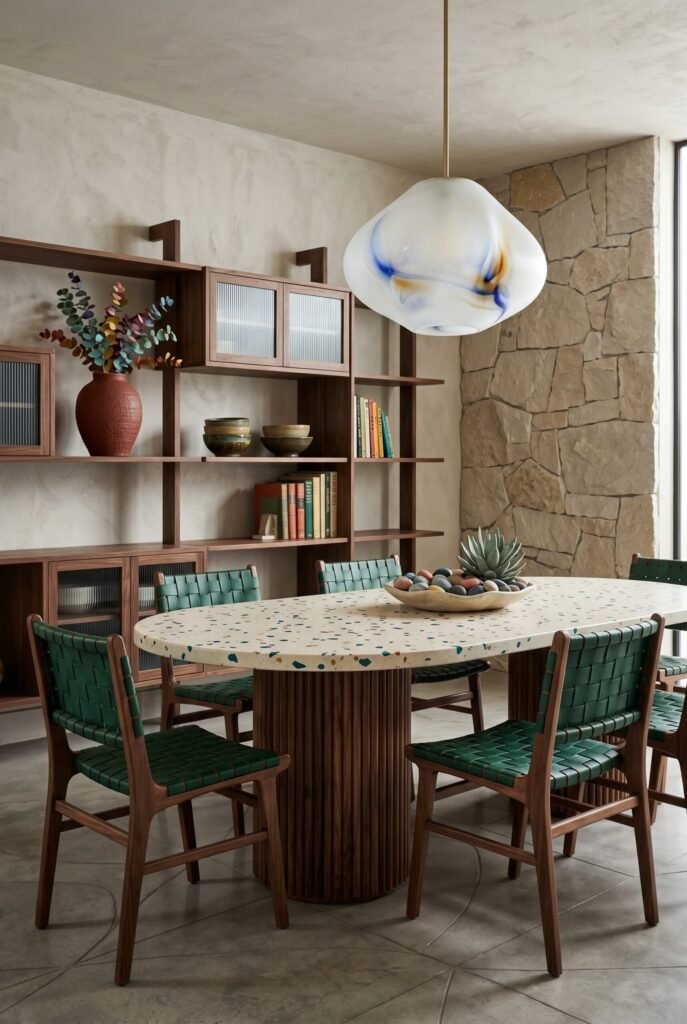
This dining room introduces a more playful interpretation of minimalism while still maintaining a clean and uncluttered appearance. The terrazzo dining table immediately becomes the star of the room because the surrounding palette remains relatively restrained. Notice how the speckled tabletop adds visual movement without requiring additional decorative accessories. A strong focal point often allows the rest of the room to remain beautifully simple.
The design also demonstrates the power of material contrast. Warm walnut shelving, woven green chairs, textured plaster walls, and natural stone all contribute unique textures while staying within an earthy palette. This layered approach prevents minimalism from feeling sterile. The sculptural pendant reinforces the artistic atmosphere while introducing softness through its organic shape.
For readers recreating this aesthetic, selecting one standout material can completely transform a dining room. Once that statement piece is established, allow supporting elements to remain quieter. Great minimalist spaces often rely on one memorable feature supported by excellent restraint everywhere else. Basically, one main character is enough. The furniture does not need an entire supporting cast fighting for screen time.
Soft Curves For An Inviting Atmosphere
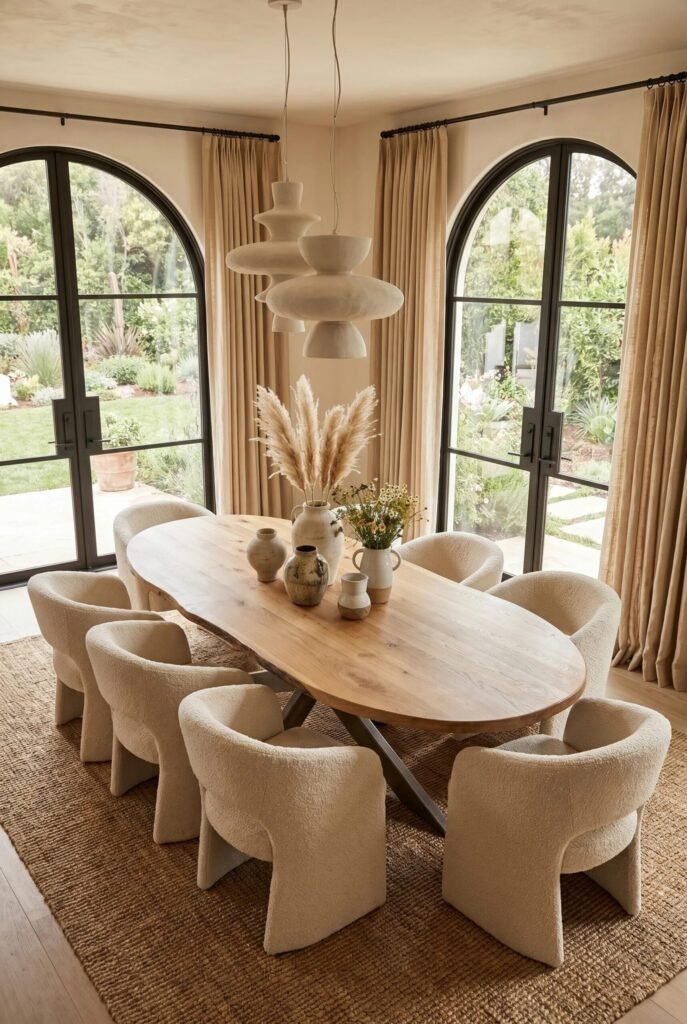
Minimalist dining rooms sometimes get criticized for feeling too serious, but this space completely avoids that problem through the use of curves. The oval dining table, rounded chairs, arched windows, and sculptural pendant lights create a visual language that feels welcoming and relaxed. Repeating shapes throughout a room is one of the easiest ways to create harmony and flow.
Natural light plays a major role in the success of this design. The large arched windows flood the room with sunlight while simultaneously acting as architectural focal points. The neutral color palette allows these beautiful shapes to take center stage rather than competing with bold colors or busy patterns. The woven rug underneath grounds the entire arrangement and provides warmth underfoot.
When recreating this look, prioritize furniture with soft silhouettes and avoid overly sharp lines. Even a simple room can feel luxurious when curves are repeated consistently. Minimalism becomes far more approachable when comfort is treated as a design feature rather than an afterthought. Nobody wants a dining room that looks amazing but feels like a waiting room at a very expensive dentist.
Monochromatic Layers Create Effortless Sophistication
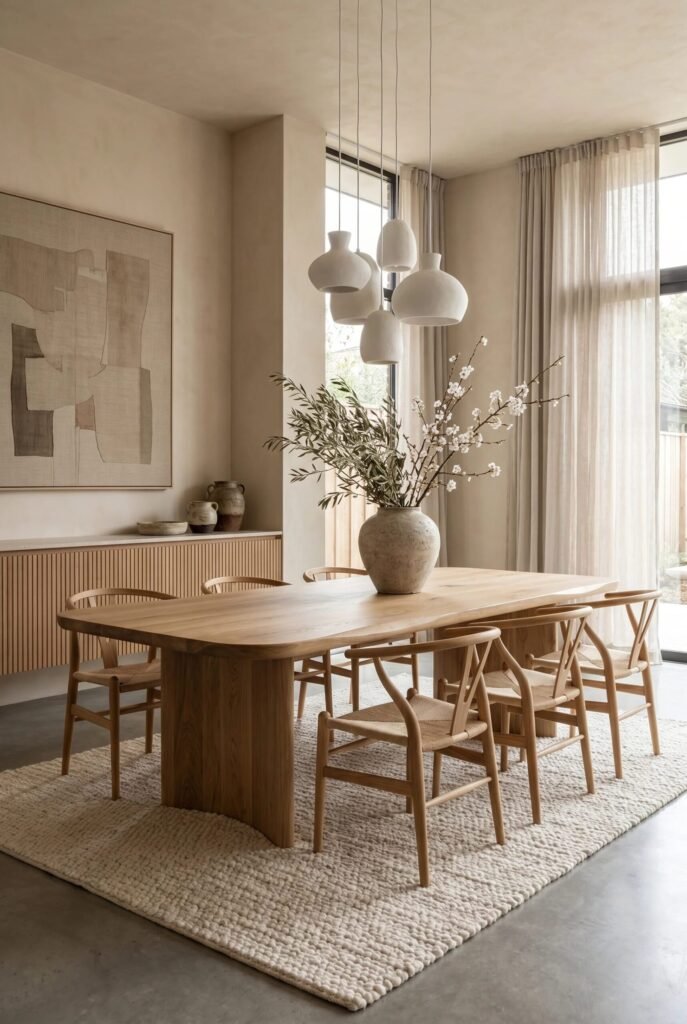
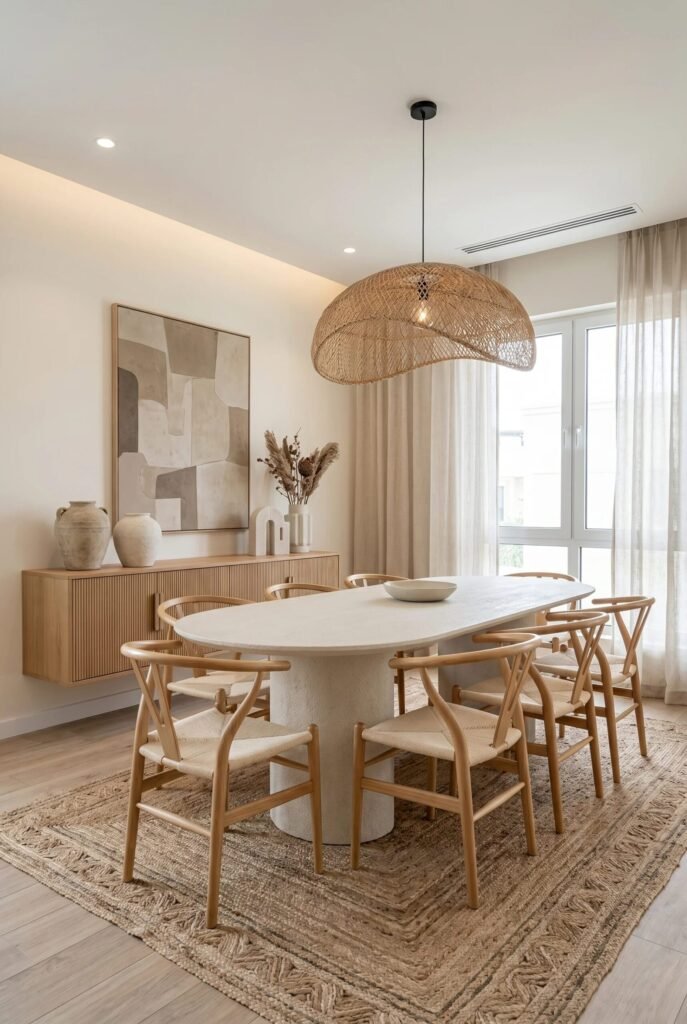
At first glance, this dining room appears incredibly simple, but the design is actually built upon careful layering. The neutral palette includes subtle variations of cream, beige, ivory, taupe, and natural wood. These small shifts in tone create depth without disrupting the calming atmosphere. Layering shades within the same color family is one of the most effective minimalist design strategies.
The furniture selection reinforces the room’s understated elegance. The substantial wood table introduces weight and stability, while the wishbone-style chairs keep the overall composition feeling light and airy. Overhead, the sculptural pendant grouping acts almost like artwork, providing visual interest without cluttering surfaces or walls.
A particularly smart detail is the oversized vase centerpiece. Instead of filling the table with multiple accessories, the room relies on one statement arrangement. This approach keeps the dining area functional while maintaining visual impact. Minimalist decorating often works best when a single larger element replaces numerous smaller decorative objects.Fewer items usually mean less visual noise and, as a bonus, fewer things collecting dust while silently judging our cleaning schedule.
High Contrast With Refined Modern Details
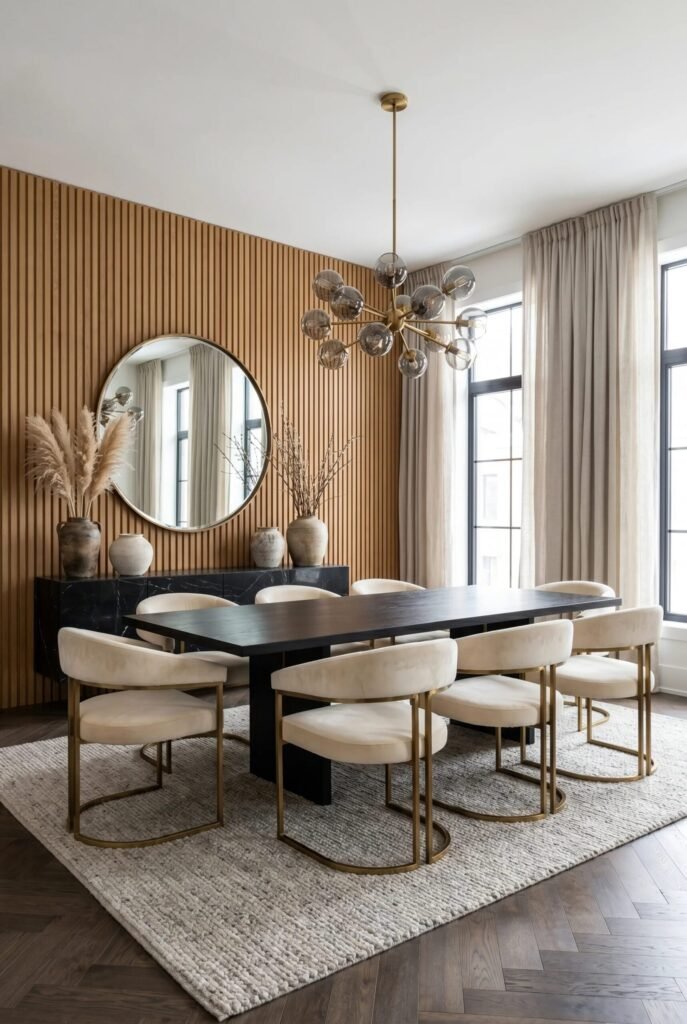
This dining room demonstrates how contrast can elevate a minimalist design from simple to striking. The dark dining table immediately commands attention against the lighter rug, upholstery, and walls. This balance between light and dark creates visual tension that keeps the room interesting despite the restrained palette. Contrast is often the secret ingredient that prevents minimalist spaces from feeling flat.
The vertical wood slat wall introduces texture and rhythm while remaining incredibly clean. Because the pattern repeats consistently, it adds depth without creating clutter. The round mirror helps soften all the linear elements and reflects natural light back into the room, making the space feel larger and brighter.
The lighting fixture deserves special attention as well. Its sculptural form acts as functional art, proving that practical pieces can also contribute to a room’s personality. If we wanted to recreate this aesthetic, investing in one dramatic light fixture would deliver significant impact. Minimalism is not about removing character—it is about making every remaining element work harder. In this room, every piece earns its place, which is honestly more than we can say for that mystery chair currently holding laundry somewhere in our homes.
Beautifully Simple Spaces That Never Go Out Style
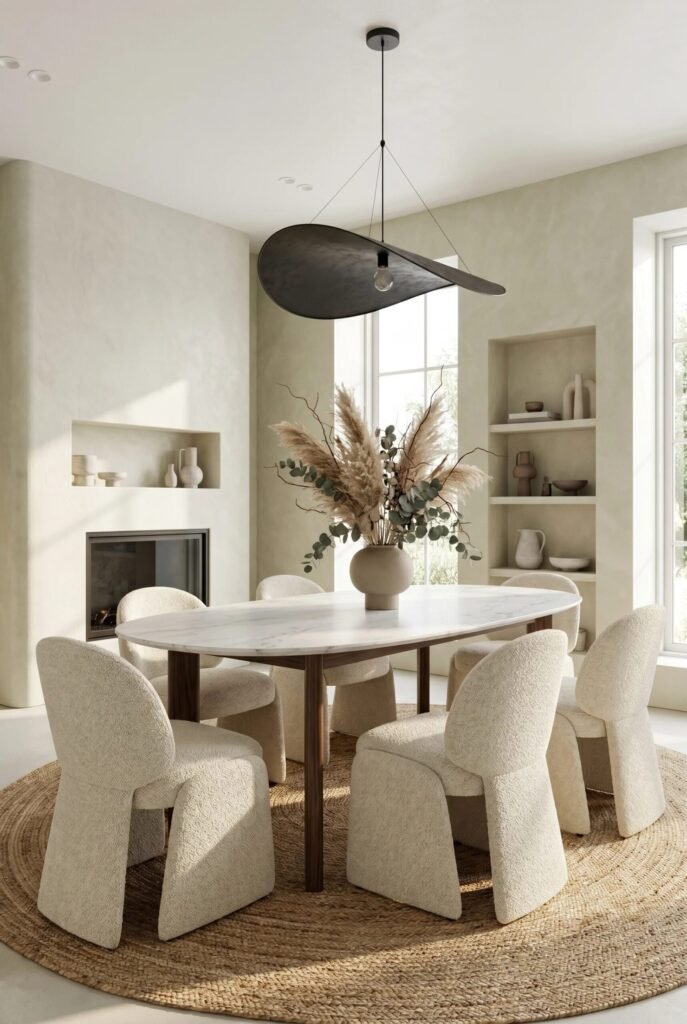
After exploring these minimalist dining room ideas, one thing becomes clear: simplicity is not a limitation—it is a design strategy. The most memorable spaces are often the ones that resist the urge to do too much. By focusing on meaningful materials, clean silhouettes, and thoughtful composition, minimalist dining rooms create an environment that feels timeless rather than trend-driven.
What makes these rooms especially appealing is their versatility. A minimalist dining room can feel cozy with warm woods and woven textures, sophisticated with sculptural lighting and refined finishes, or dramatic through contrast and architectural details. The common thread is intentionality. Every piece serves a purpose, every material contributes to the overall atmosphere, and every design choice supports visual harmony.
As we recreate these ideas in our own homes, it helps to remember that minimalism is not about perfection. It is about creating breathing room, reducing visual stress, and allowing beautiful elements to shine. A well-designed dining room should feel welcoming, lived-in, and easy to enjoy—because the best memories around the table rarely come from the décor itself, but from the people gathered around it.