
Minimalist Living Rooms That Balance Simplicity And Comfort Perfectly
Minimalist living rooms used to have a reputation for looking a little too serious, like nobody was allowed to sit on the furniture without signing paperwork first. Thankfully, modern minimalism has evolved into something much warmer, softer, and honestly way more livable. Today’s minimalist spaces focus less on removing personality and more on creating intentional calm through thoughtful design choices. The real goal is not emptiness — it is visual balance, comfort, and emotional breathing room.
Throughout these ideas, we can see how texture, lighting, scale, and natural materials completely transform simple interiors into spaces that feel layered and inviting. Warm woods, earthy fabrics, soft curves, muted palettes, and sculptural lighting all help minimalist rooms feel welcoming instead of sterile. Even the smallest design decisions, like using oversized curtains or repeating accent tones, quietly shape the atmosphere of the entire room.
The best part about minimalist design is that it is surprisingly flexible. Whether we love cozy neutrals, moody contrasts, earthy colors, or soft organic textures, minimalism can adapt without losing its clean and calming foundation. Basically, minimalist living rooms are less about “having less” and more about finally giving our eyes a break from visual chaos and random decor decisions we made at 2 AM online shopping.
Soft Neutrals That Quietly Calm Everything Down
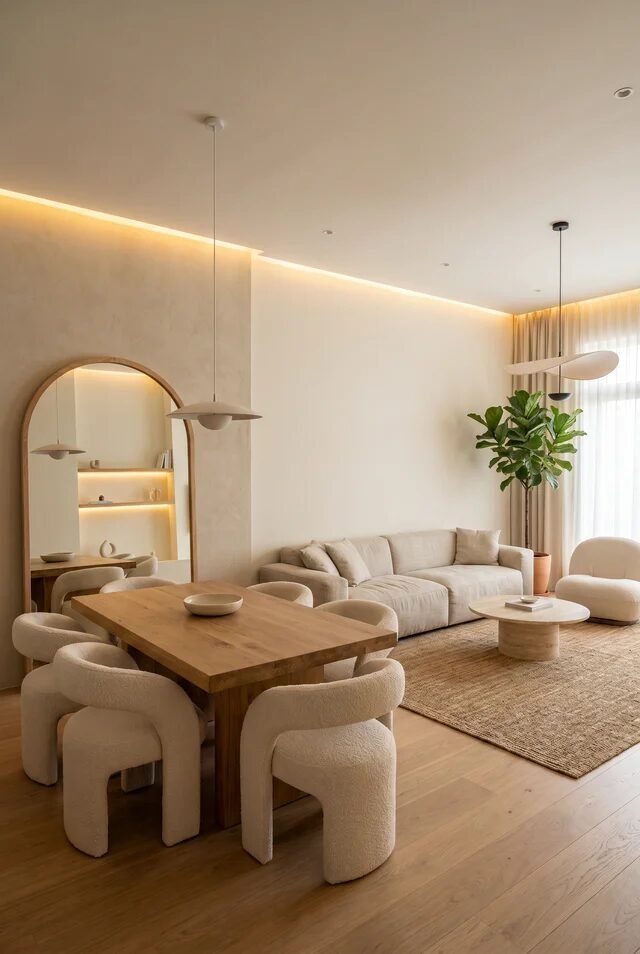
This living room proves that minimalism does not have to feel cold, scary, or like a dentist office with good lighting. The entire space works because the palette stays inside warm beige, oat, cream, and light wood tones without becoming visually flat. That balance matters.
When we decorate with similar shades, texture becomes the real personality of the room. Notice how the boucle dining chairs, woven rug, linen sofa, and matte wood table all create depth without loud color contrast. This is one of the easiest minimalist tricks for making a room feel expensive instead of empty.
The lighting design is also doing heavy emotional labor here honestly. Hidden LED strip lighting around the ceiling softens the architecture and removes harsh shadows, which instantly makes minimalist spaces feel more welcoming. The rounded mirror and curved furniture help counterbalance all the straight lines from the walls and dining table too. Minimalist rooms can accidentally look stiff, so soft silhouettes are basically the social skills of modern interiors.
If we wanted to recreate this vibe, we should focus on fewer but larger decor pieces instead of cluttering shelves with tiny objects that nobody dusts anyway. One oversized mirror, one large plant, and one textured rug will always look calmer than twenty random accessories fighting for attention. Also, keeping furniture slightly low-profile helps the ceiling appear taller and the room more breathable. Tiny visual trick. Massive payoff.
Dark Contrast Makes Minimalism Feel Dramatic
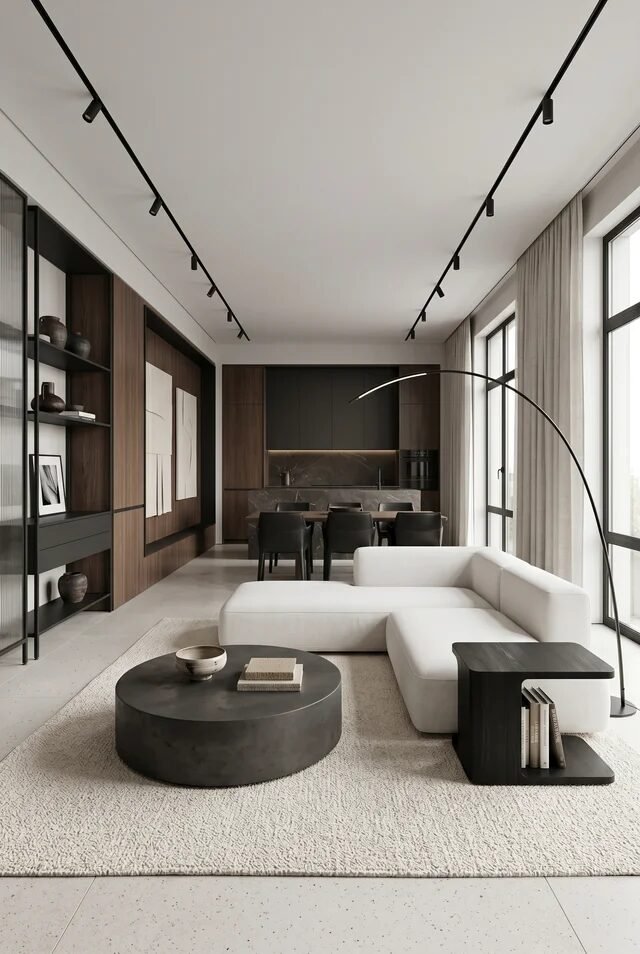
This space leans into a moodier version of minimalism, and honestly? It works because the contrast is intentional instead of chaotic. The creamy sectional, pale flooring, and oversized rug create a clean visual base, while the black furniture and dark walnut paneling add structure and weight. Without those darker elements, the room would feel unfinished and floaty. Minimalist interiors need visual anchors, and here the black coffee table and cabinetry handle that job perfectly.
One thing this room does incredibly well is repetition. The black accents repeat across the track lighting, dining chairs, side table, and kitchen finishes, which creates rhythm throughout the open-concept layout. That consistency is what makes minimalist homes feel polished rather than randomly “modern.” We are basically teaching the eye where to travel. Also, the oversized arc lamp adds movement and curves to a room full of strong horizontal lines, preventing it from looking too rigid.
If someone wanted to steal this aesthetic, we would recommend sticking to three dominant materials max. In this case: dark wood, black matte finishes, and soft upholstery. That limitation keeps the design cohesive. Floor-to-ceiling curtains are another huge detail here because they visually elongate the room while softening all the hard architectural edges. Minimalism loves contrast, but it also needs softness or things start feeling emotionally unavailable.
Warm Wood Slats Add Instant Architectural Interest
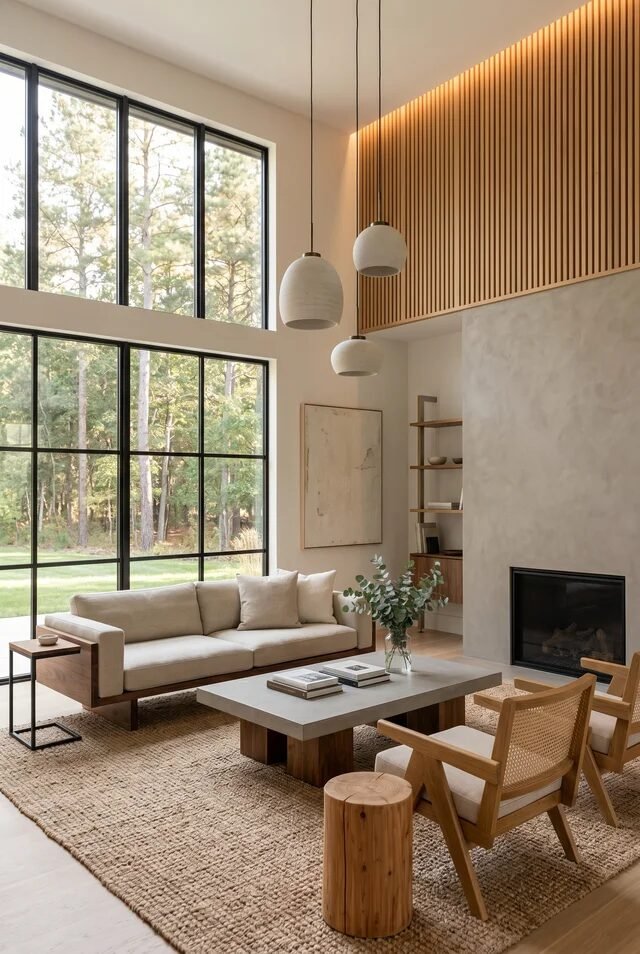
This room feels minimalist, but definitely not boring, because the architectural details are carrying the entire aesthetic. The vertical wood slat wall draws the eye upward and emphasizes the double-height ceiling, which instantly makes the room feel grander and more custom-designed. Vertical lines naturally create the illusion of height, which is why slat walls are basically the cheat code of modern interiors right now.
Another smart design move is how the furniture stays visually lightweight despite the large room size. The sofa has slim arms, the chairs have open cane sides, and the coffee table uses clean block shapes without heavy ornamentation. In minimalist design, visual breathing room matters just as much as square footage. Even the decor styling stays restrained with just a few books, greenery, and ceramic pieces. We do not need seventeen candles and a decorative chain link sculpture trying to audition for Pinterest fame.
The lighting strategy deserves attention too. Natural light floods the room through those massive black-framed windows, while the warm pendant lights soften the vertical scale at night. Mixing warm wood tones with creamy upholstery prevents the space from feeling sterile. If recreating this look, prioritize texture layering over color layering. Think woven rugs, matte plaster walls, oak finishes, linen fabrics, and subtle stone surfaces. Minimalism becomes dramatically more inviting when the materials feel earthy and touchable instead of ultra glossy and cold.
Cozy Minimalism Works Better With Texture
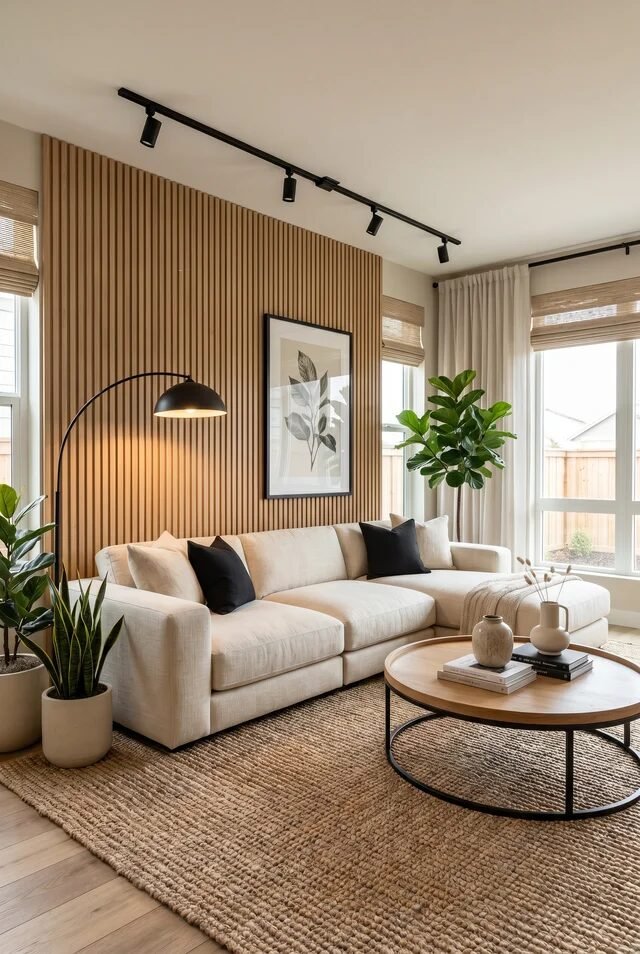
Some minimalist living rooms accidentally look like nobody actually lives there. This one avoids that problem by leaning heavily into texture and warmth. The woven rug, wood slat feature wall, linen sofa, and soft drapery all create a layered feeling without visual clutter. Texture is what gives minimalist spaces emotional warmth when the color palette stays neutral. Without it, beige-on-beige can start looking suspiciously like unfinished drywall energy.
The room composition also feels extremely balanced. The sofa sits centered against the statement wall, while the round coffee table softens the strong vertical slat lines behind it. Good minimalist interiors usually combine opposing shapes like this because contrast creates harmony. The black lighting fixtures and throw pillows add just enough visual punctuation to stop the palette from becoming too soft or sleepy. Tiny black accents are honestly the eyeliner of modern interiors.
Another detail worth stealing is the use of natural light control. The woven Roman shades add texture during the day, while the full-length curtains soften the edges of the windows and make the room feel taller. If we recreated this style, we would keep decor intentionally sparse but impactful. One oversized framed print works better than a chaotic gallery wall here. Minimalism is less about owning nothing and more about making every single item actually contribute to the atmosphere.
Moody Minimalism Still Feels Surprisingly Relaxing
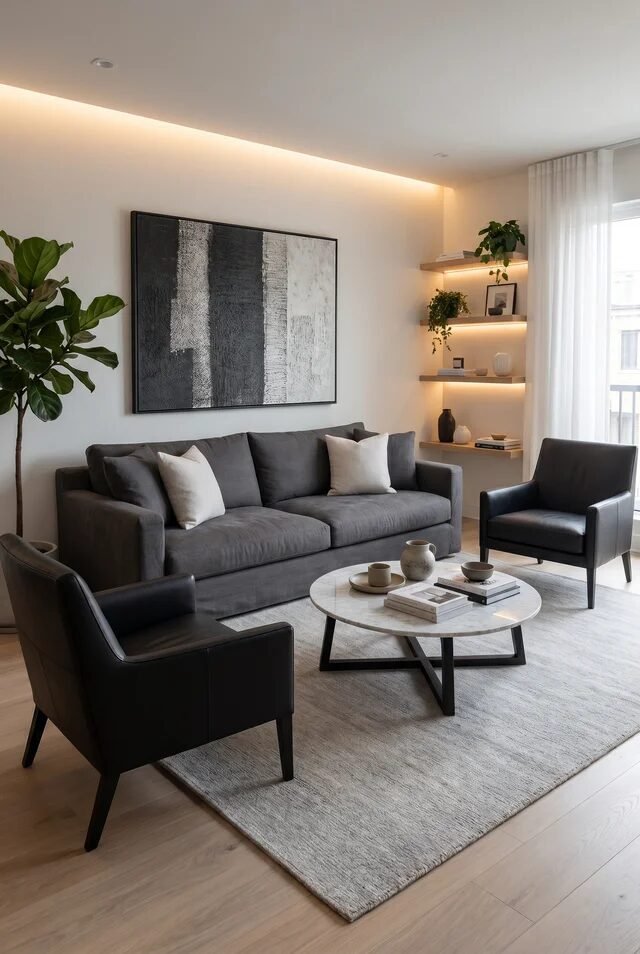
This room proves minimalist interiors do not always need pale woods and creamy everything to feel calm. The charcoal sofa and black accent chairs create a grounded, cocoon-like atmosphere while the pale walls, floating shelves, and soft lighting prevent the room from becoming visually heavy. The key to darker minimalism is balancing depth with enough negative space so the room can still breathe.
The layered lighting here deserves a standing ovation honestly. Instead of relying on one harsh ceiling light that feels like interrogation-room energy, the space uses indirect LED lighting and shelf illumination to create softer shadows. That glow makes the black furniture feel elegant rather than severe. The floating shelves also keep the styling airy because open shelving visually weighs less than bulky cabinetry. Every decor item feels curated instead of randomly surviving from previous apartments.
For anyone trying to recreate this aesthetic, focus on tonal variation rather than adding more colors. Different shades of gray, black, ivory, and taupe create sophistication without visual chaos. The oversized abstract artwork also helps tie the palette together while adding scale to the wall. We should also notice how the furniture legs stay slim and elevated off the floor because that creates visual openness. Chunky furniture in dark colors can overwhelm a minimalist room fast, and suddenly the vibe becomes “corporate waiting room with trust issues.”
Sculptural Shapes Make Minimalism Feel Artistic
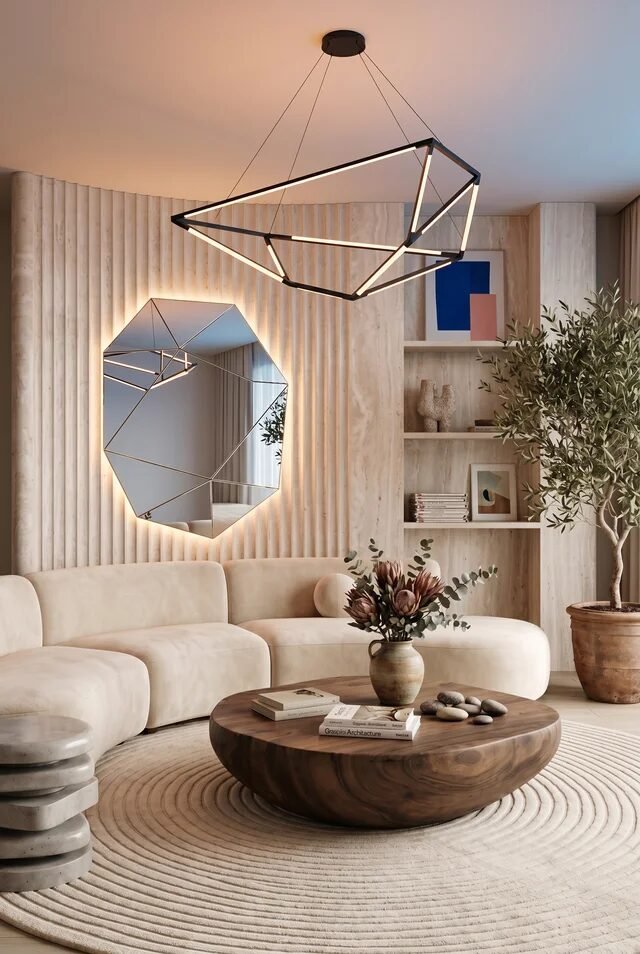
This living room feels like minimalism decided to attend art school and suddenly developed a personality. The curved sofa, geometric chandelier, faceted mirror, and rounded coffee table all work together because the room repeats sculptural forms in different ways. When minimalist spaces focus on shape instead of excessive decor, the entire room instantly feels more intentional and high-end. We are basically letting silhouettes become the entertainment here.
The neutral palette also deserves credit because it allows the dramatic forms to stand out without overwhelming the eye. Cream upholstery, pale wood paneling, and soft stone textures create a calm background while darker accents from the chandelier and walnut table add visual grounding. That contrast matters. Without darker elements, the room could start floating into “luxury spa waiting room” territory. The vertical wall slats also subtly elongate the walls and add rhythm without needing busy wallpaper or complicated art installations.
If recreating this style, focus on investing in one statement light fixture first because overhead lighting becomes functional sculpture in minimalist interiors. Also, notice how the styling stays restrained with stacked books, natural florals, and organic ceramics. Minimalism works best when every object looks curated instead of surviving from three different apartments and a breakup phase.
Earthy Colors Warm Up Modern Minimalism
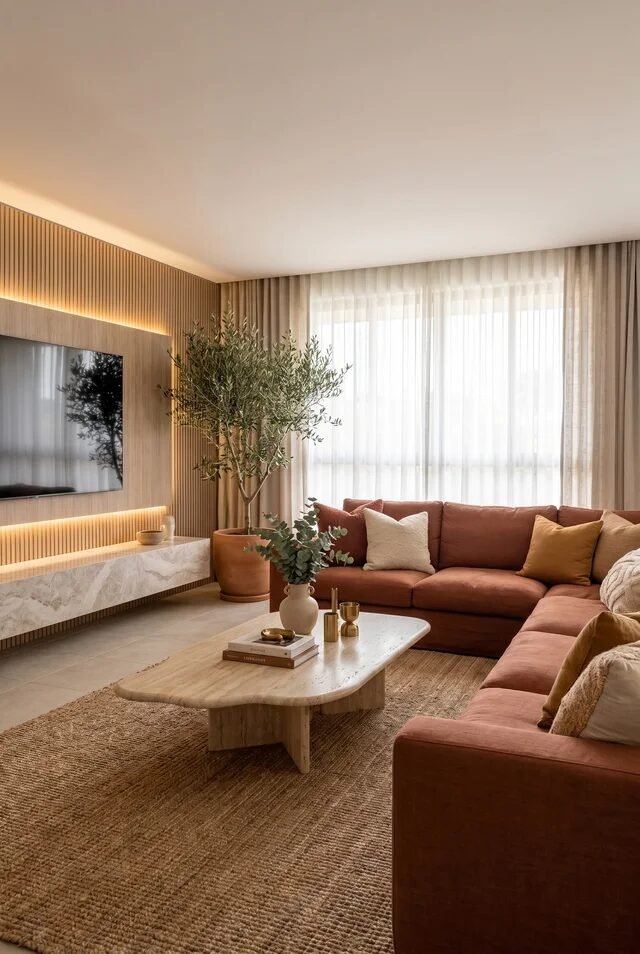
This room proves minimalist design does not need to live exclusively in shades of oat milk and sadness. The rust-colored sectional completely transforms the atmosphere by bringing warmth and emotional depth into an otherwise streamlined space. Earthy tones like terracotta, cinnamon, clay, and caramel make minimalist rooms feel more human and livable without creating visual chaos.
The layout itself is extremely smart too. The large sectional naturally defines the seating zone while the curved coffee table softens the boxy architecture around it. That balance between straight and rounded forms is what keeps minimalist interiors from feeling stiff. Meanwhile, the integrated TV wall with hidden LED lighting creates a sleek focal point without adding clutter. Built-in lighting is honestly one of the most underrated modern design moves because it adds ambience while visually simplifying the room.
Another detail worth stealing is the heavy use of texture layering. We have woven rugs, matte wood slats, soft linen curtains, marble surfaces, and plush upholstery all working together quietly in the background. That combination keeps the neutral parts of the room from feeling flat. If we recreated this aesthetic, we would keep accessories minimal but warm-toned. Think bronze accents, ceramic vases, olive trees, and natural woods instead of shiny chrome decor trying way too hard to look futuristic.
Moody Greens Create Relaxed Minimalist Energy
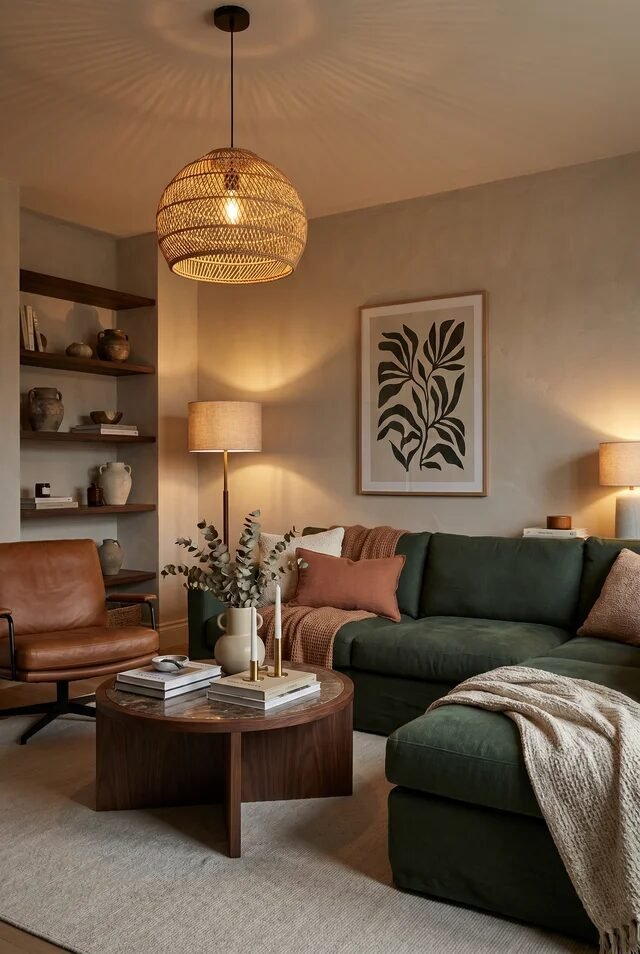
This living room feels calm, grounded, and just slightly mysterious in the best way possible. The deep green sectional immediately becomes the focal point, but because the rest of the palette stays warm and earthy, the room still feels balanced instead of dramatic. Dark colors work beautifully in minimalist interiors when they are paired with warm lighting and natural textures. Otherwise things can start giving luxury cave energy very fast.
Lighting is honestly carrying the emotional atmosphere here. The woven pendant light throws soft shadows across the ceiling, while the table lamps create smaller pools of warm light around the seating area. That layered lighting approach is what makes the room feel cozy at night instead of flat and overly modern. The walnut coffee table and leather accent chair also introduce richer materials that add depth without cluttering the visual flow.
One thing this room does especially well is color repetition. The earthy brown tones from the chair, shelving, throw pillows, and wood furniture subtly echo one another throughout the space. Repeating colors helps minimalist rooms feel cohesive without needing excessive decor. If we wanted to recreate this vibe, we should prioritize natural fabrics like linen, cotton, boucle, and woven fibers because texture becomes extra important once the color palette stays restrained. Basically, minimalism still needs personality. It just whispers instead of yelling.
Soft Boho Minimalism Feels Effortlessly Inviting
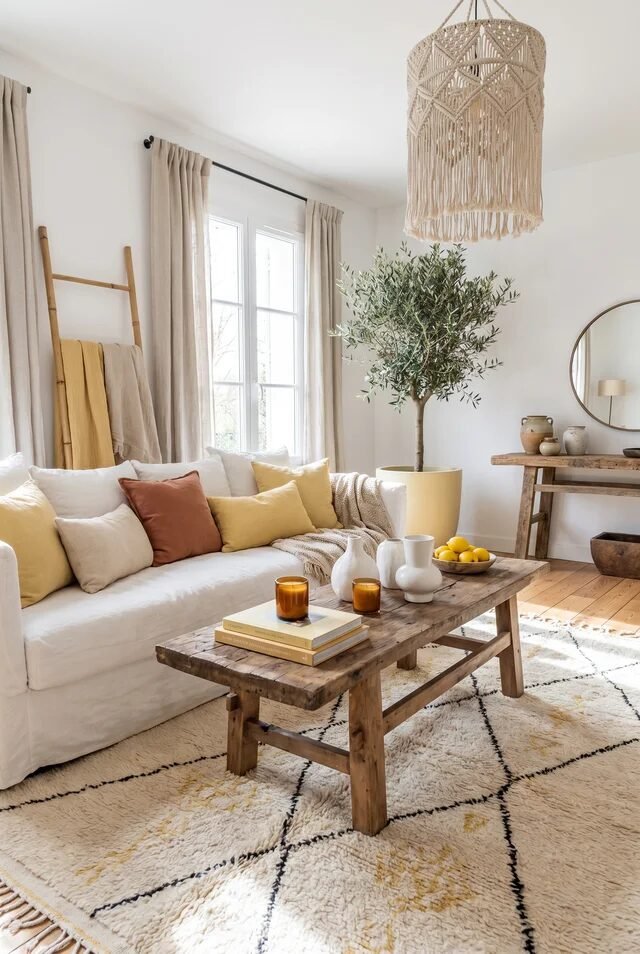
This room blends minimalist structure with soft bohemian warmth, and honestly the combination feels incredibly approachable. The white sofa and neutral walls create a clean foundation, while the rustic wood table, macrame pendant, and layered textiles stop the space from feeling too polished or sterile. The secret to cozy minimalism is mixing clean visual simplicity with imperfect natural textures.
The styling also feels intentionally relaxed instead of overly staged. The leaning ladder, casual throw blankets, handmade pottery, and woven rug all create a lived-in atmosphere without adding unnecessary clutter. That balance matters because minimalist homes can sometimes feel emotionally distant if every single object looks untouched. Here, the slightly rustic finishes make the room feel warm and personal while still maintaining visual calm.
Natural light is another major design feature in this space. The tall windows paired with soft linen curtains allow daylight to diffuse gently throughout the room, making everything feel brighter and airier. If recreating this look, we would stick to warm off-whites instead of icy bright whites because warmer tones feel softer and more forgiving. Also, mixing old wood textures with cleaner modern pieces helps prevent the room from looking too showroom-perfect. Nobody wants their living room feeling like a furniture store where we are scared to sit down.
Sage Green Adds Calm Without Feeling Boring
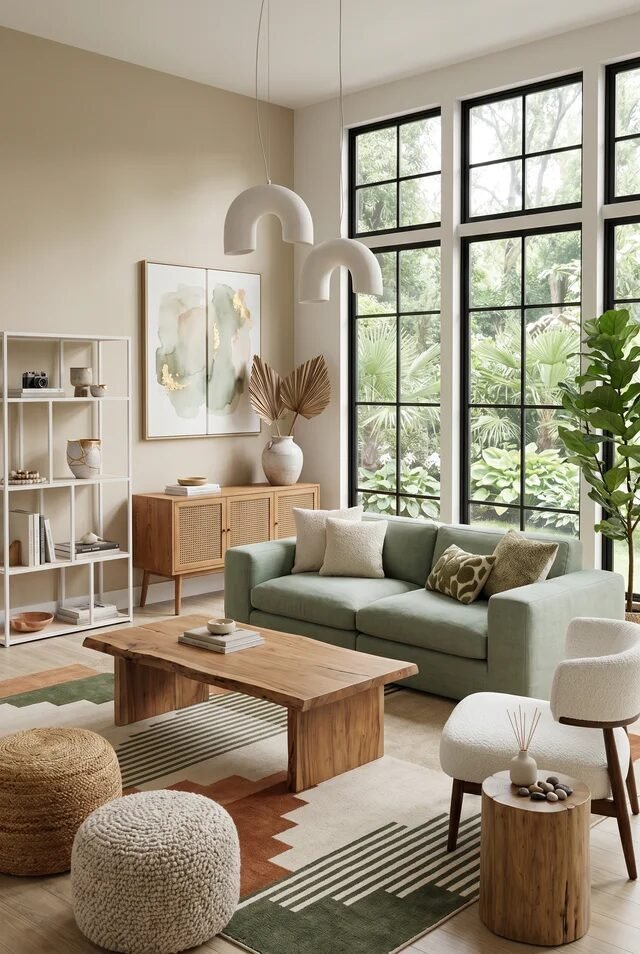
This living room shows exactly how to introduce color into minimalist design without turning the space into a chaotic Pinterest experiment. The muted sage sofa acts as a soft focal point while still blending beautifully with the warm woods, creamy textiles, and black-framed windows. Muted greens work especially well in minimalist interiors because they feel earthy, calming, and visually lightweight at the same time.
The room composition is also incredibly balanced. The large windows bring in massive amounts of natural light, while the furniture arrangement keeps sightlines open and uncluttered. Notice how most pieces have simple silhouettes and exposed legs. That openness underneath furniture helps smaller rooms feel less crowded visually. The geometric rug quietly introduces pattern without overwhelming the space too, which is a smart move when working with multiple natural textures already competing for attention.
One of the best details here is the material layering. Cane cabinet doors, boucle stools, raw wood furniture, and soft upholstery all create depth while staying within a calm neutral palette. If we recreated this design, we would keep decor intentionally minimal and focus more on quality materials than excessive styling. A few sculptural vases, one oversized plant, and meaningful textures will always feel more elevated than shelves overloaded with tiny trendy accessories we secretly stop liking three weeks later.
Beautiful Minimalism Starts With Intentional Everyday Comfort
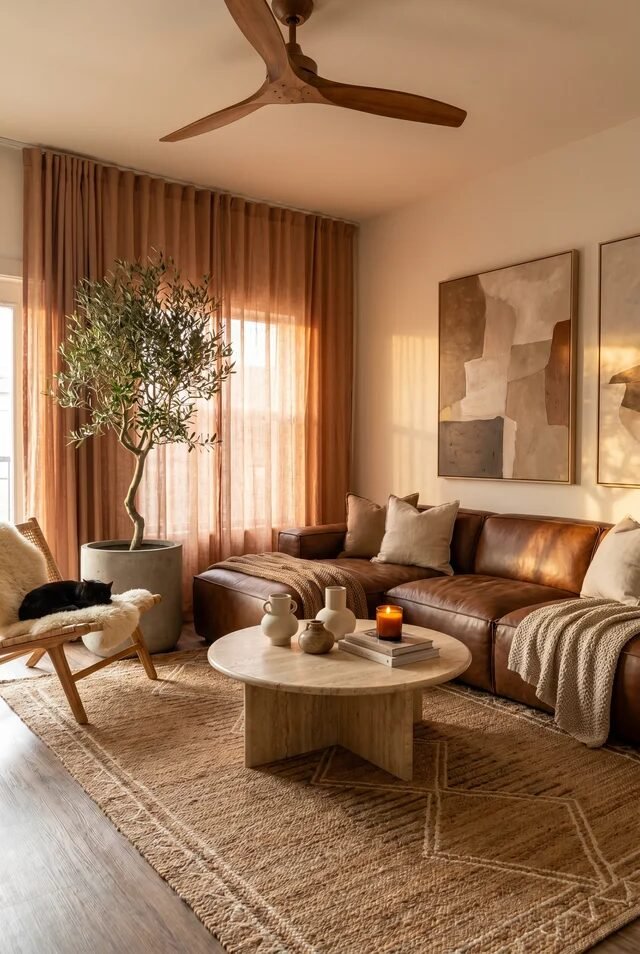
After exploring all ten living room ideas, one thing becomes very obvious: the most successful minimalist spaces are never actually empty. They are layered carefully with texture, proportion, lighting, and meaningful materials that make the room feel balanced and emotionally comfortable. Minimalism works best when every piece contributes to the atmosphere instead of simply filling space for no reason.
What makes these interiors feel modern yet timeless is their ability to combine simplicity with warmth. Soft neutral palettes, earthy woods, woven textures, sculptural furniture, and natural light all create rooms that feel calm without becoming boring. Even the bolder spaces using dark tones or richer colors still maintain visual clarity because the layouts stay intentional and uncluttered. That consistency is what gives minimalist interiors their relaxing energy.
If we are taking inspiration from these spaces, the biggest takeaway is probably this: we do not need more decor to create a beautiful living room. We need better balance. Choosing fewer but more impactful pieces, prioritizing texture over excess accessories, and letting natural light become part of the design can completely change how a room feels. Also, our future selves will probably appreciate having fewer tiny objects to dust every weekend.