
The Quiet Power Behind Well-Designed Moody Living Rooms
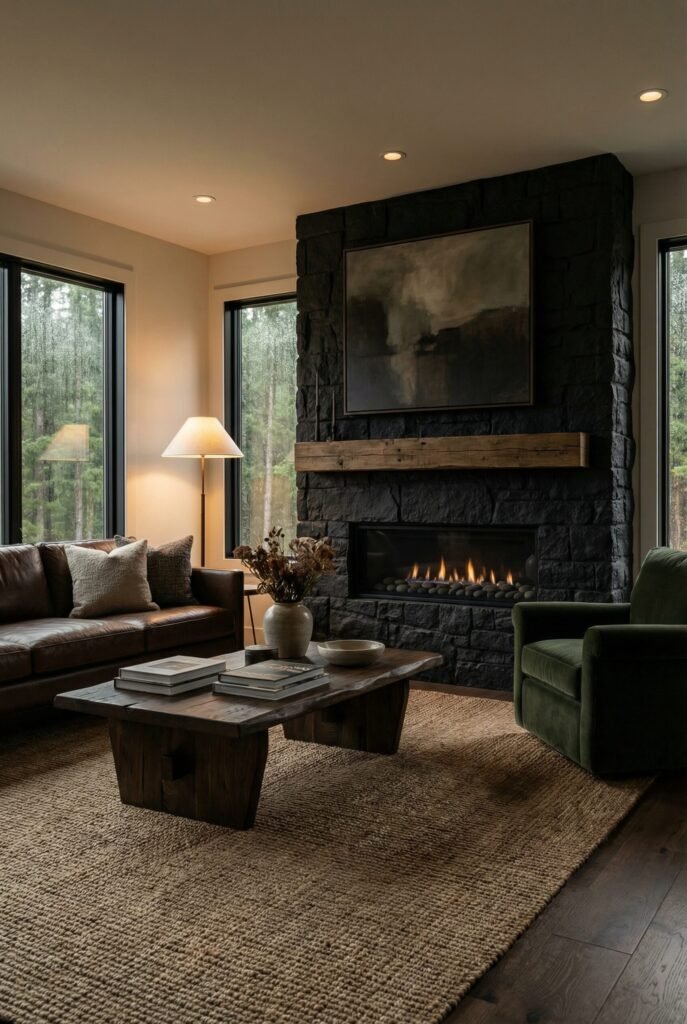
Moody living room design is not about making your space darker just to look dramatic. It’s about creating emotional depth through control, balance, and intention. A well-designed moody room feels layered, grounded, and slightly cinematic, like the space knows how to slow you down after a long day.
Color plays a role, but it’s never the only hero. Deep hues work best when paired with warm lighting, tactile materials, and furniture that feels generous instead of stiff. We see moody spaces succeed when contrast is softened, not sharpened. That means fewer bright whites, more warm neutrals, and lighting that hugs the room instead of flooding it.
Texture becomes the quiet MVP, doing the work that color doesn’t need to scream about. Moody design is atmosphere-first, aesthetics second, and when done right, the room feels personal, calm, and confidently lived-in. This is not about trends. It’s about crafting a space that feels like an emotional reset button every time you walk in.
Soft Shadows With Deep Comfort
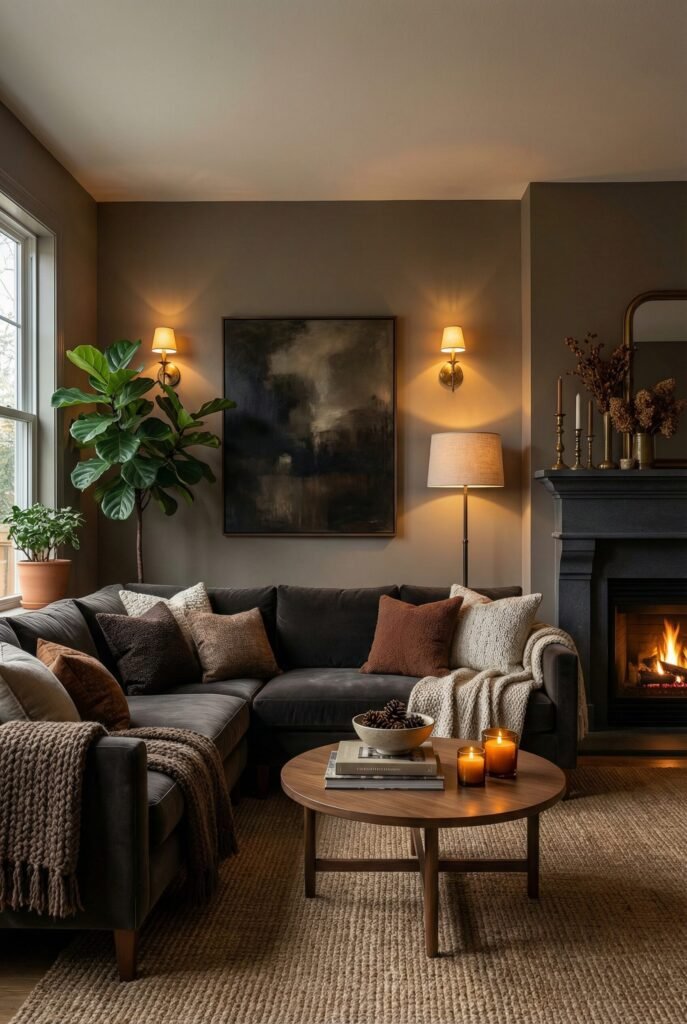
This living room works because it understands that moody design is not about going dark everywhere, but about controlling contrast and softness at the same time. The walls, sofa, and artwork sit close in tone, which creates a calm visual field and makes the space feel emotionally grounded.
That’s a core principle in moody interiors: when color contrast is low, texture has to do the heavy lifting. Notice how the knit throws, matte pottery, and woven rug quietly add depth without stealing attention. Lighting is layered intentionally at eye level using wall sconces and table lamps, which avoids harsh shadows and keeps the atmosphere cinematic.
We also love the rounded coffee table breaking the dominance of straight lines, because moody rooms can easily feel rigid if everything is boxy. If you recreate this, prioritize warm lighting and tactile materials before adding more décor. Moody comfort is built slowly, not styled aggressively. This room feels like a soft landing, not a performance.
Bookish Moody Corner With Soul
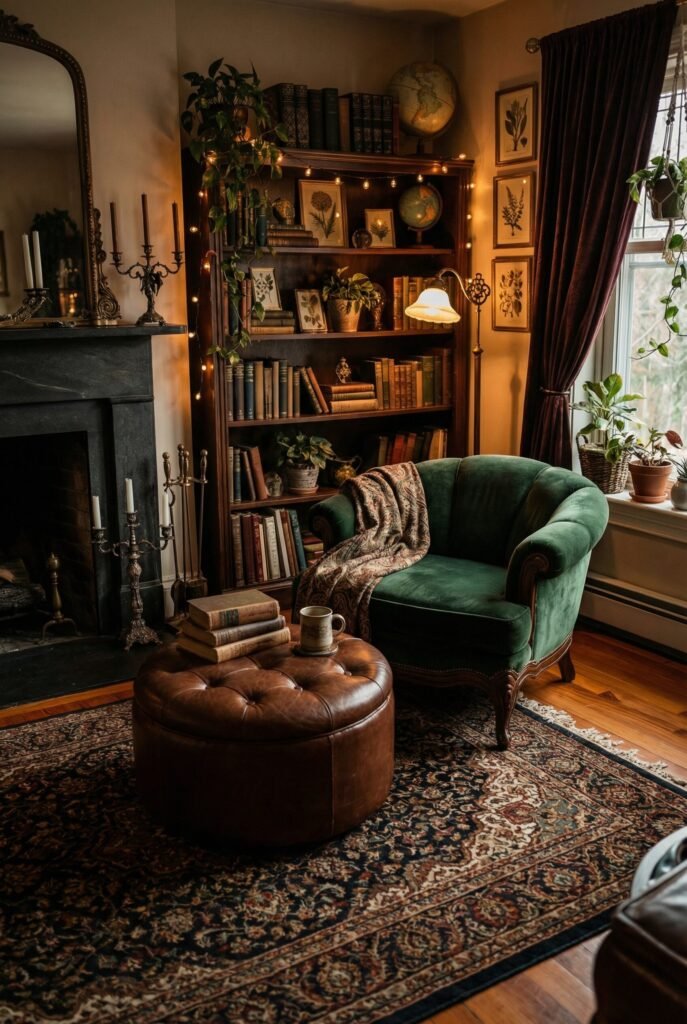
This space proves that moody rooms don’t have to be minimal to feel intentional. The design principle here is controlled abundance. Yes, there are books, plants, art, and decorative objects everywhere, but the tight color palette keeps visual noise under control.
Deep wood tones and earthy greens create cohesion, while warm lighting unifies the chaos into something cozy and deliberate. Multiple small light sources are crucial here, because dense rooms need layered glow to avoid heavy shadows. We also love how the armchair, ottoman, and fireplace form a reading micro-zone, giving the room a clear purpose.
Moody interiors work best when function is obvious, not vague. If you want to recreate this look, start with the shelves as your anchor and build outward slowly. Let repetition guide you. Repeated tones, repeated materials, repeated shapes. This is not clutter, this is character with boundaries.
Dark Walls With Leather Elegance

This living room understands restraint, and restraint is powerful in moody design. The dark paneled walls add architectural depth, but the room stays welcoming because the materials are warm and tactile. Leather plays a big role here by softening the severity of the dark backdrop and adding visual richness through natural variation.
The artwork is slightly lighter than the wall, which creates gentle contrast without breaking the mood. Lighting is minimal and directional, reinforcing intimacy rather than brightness. Moody spaces thrive when every element earns its place, and this room doesn’t over-explain itself.
If you want to recreate this, invest in fewer statement pieces and let negative space exist. Empty walls are not mistakes, they are breathing room. This kind of quiet luxury comes from confidence, not decoration overload.
Warm Neutrals With Moody Balance
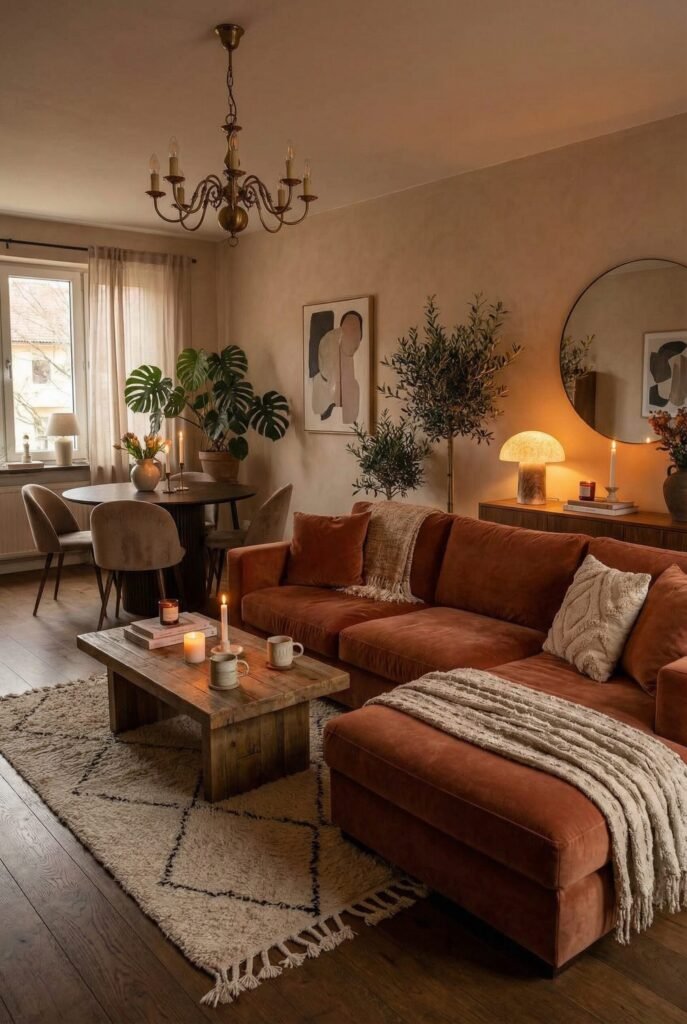
This room shows that moody doesn’t mean dark for the sake of drama. The palette stays warm and grounded, using rust, soft browns, and creamy neutrals to create emotional depth without heaviness. The key principle here is temperature consistency.
Everything leans warm, from the lighting to the wood tones, so the room feels inviting rather than intense. The sectional layout encourages conversation, which is important because moody spaces should still feel social. The rug adds subtle pattern and texture, anchoring the furniture without pulling attention away.
When recreating this look, choose one dominant warm tone and layer variations of it. Moody design is about atmosphere, not contrast shock. This room feels like an evening mood, not a midnight one, and that balance makes it incredibly livable.
Earthy Mood With Ambient Layers
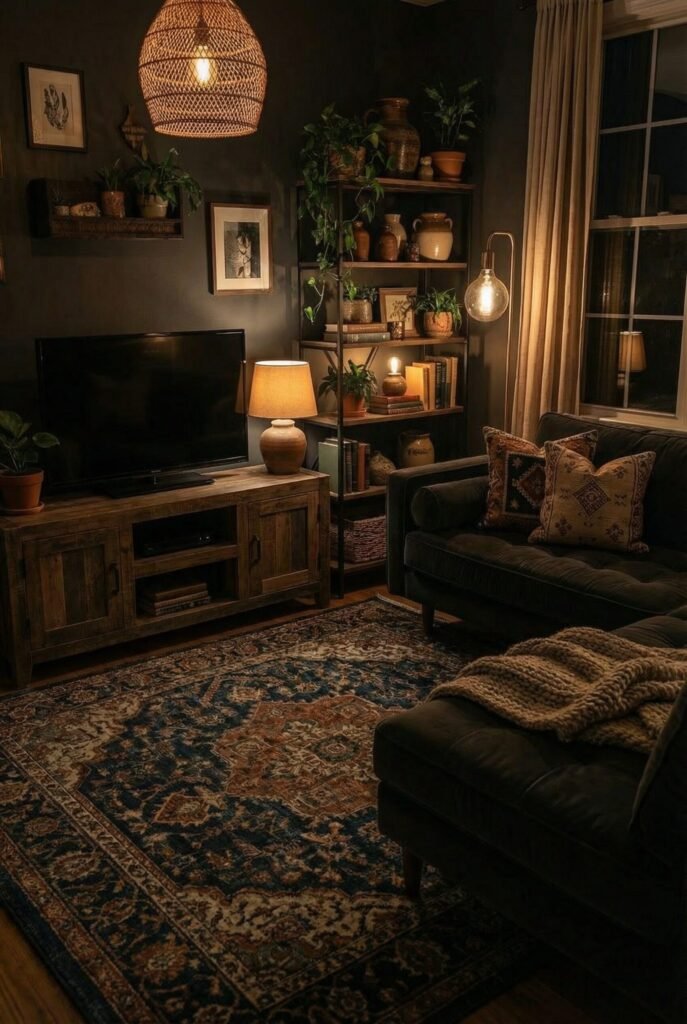
This living room proves that moody interiors and greenery are not enemies. Deep wall colors create intimacy, while plants introduce organic contrast and visual softness. The design principle at work here is biophilic grounding, using natural elements to prevent dark spaces from feeling closed-in.
Warm ambient lighting reflects softly off textured surfaces like woven pendants, wood furniture, and patterned rugs. Storage is integrated into open shelving, which keeps the room functional without sacrificing mood. We love how every object feels intentional but relaxed.
If you recreate this, always choose warm bulbs and avoid cool white light at all costs. Cool lighting kills mood instantly. Moody spaces should feel like a slow exhale at the end of the day, not a cave. This room gets that emotional balance exactly right.
Warm Height With Moody Calm
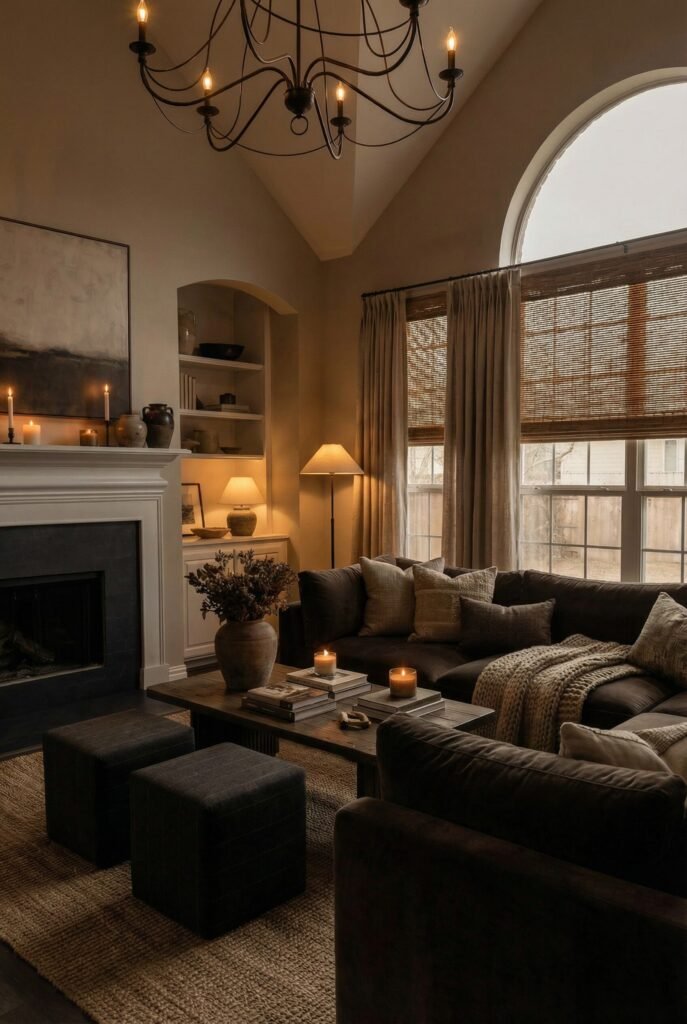
This living room uses vertical space to create mood without feeling overwhelming. High ceilings can easily kill coziness, but here the design principle is visual grounding. Dark furniture, layered rugs, and low seating pull the eye downward, while warm lighting keeps the upper space soft instead of echoey.
The chandelier adds character, but notice how the bulbs are warm and slightly dim. That’s intentional. Bright overhead lighting would ruin the vibe instantly. We also love how the arched window brings in daylight without dominating the room. Curtains are layered and slightly sheer, filtering light instead of blocking it. Moody rooms don’t fight light, they control it.
If you want to recreate this, anchor tall spaces with heavy textures like chunky rugs and deep sofas. Candles and table lamps fill the middle layer, making the room feel intimate despite the height. This is how you make a dramatic room feel emotionally safe, not intimidating.
Dark Wood With Emerald Drama
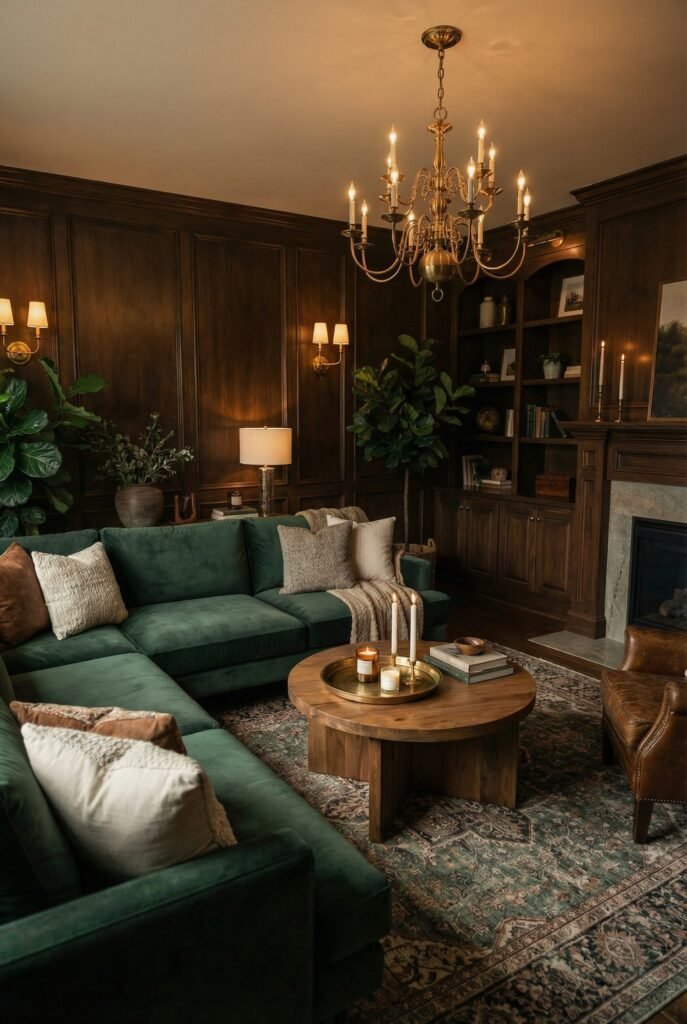
This space is a lesson in rich material storytelling. Dark wood paneling creates instant depth and luxury, while the emerald sectional injects color without breaking the moody palette. The key here is saturation control. The green is deep, not bright, so it feels grounded instead of playful.
Warm brass lighting adds contrast and prevents the room from feeling flat or heavy. We love how the rug quietly ties the sofa and wood tones together, acting as a visual translator. Moody design works best when colors talk to each other, not shout. If you recreate this look, commit fully.
Partial dark wood looks accidental. Go all in on walls or built-ins, then soften with fabric and plants. The round coffee table breaks up the straight lines, which keeps the room from feeling too formal. This space feels bold, confident, and slightly dramatic, in a “yes, we planned this” way.
Deep Green With Golden Glow
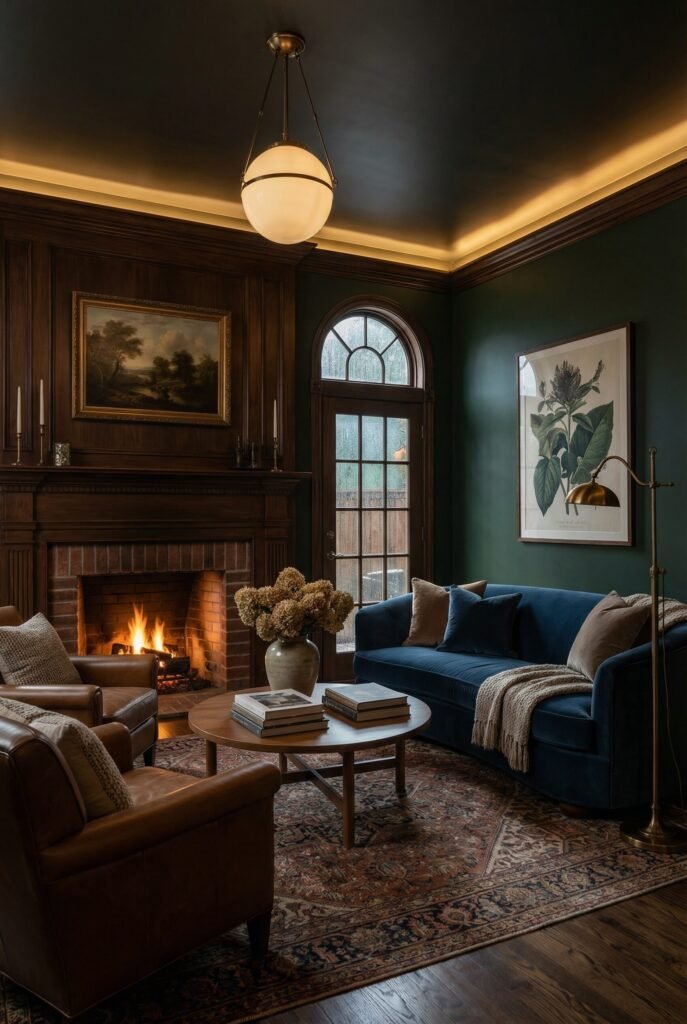
This room proves that ceiling design matters more than people think. The dark ceiling paired with hidden cove lighting creates a soft halo effect, which instantly elevates the mood. That’s a classic contrast containment move. Instead of making everything dark, light is carefully framed and controlled.
The green walls feel lush but calming, especially paired with warm wood and brass accents. The fireplace becomes a natural focal point, anchoring the space emotionally and visually. We also love how the artwork stays muted, supporting the palette instead of competing with it. Moody rooms succeed when light feels intentional, not accidental.
If you recreate this, prioritize indirect lighting and avoid harsh overheads. The seating layout encourages conversation, which keeps the room from feeling like a museum. This is moody living done right: dramatic, cozy, and totally livable.
Classic Blue With Fireplace Warmth
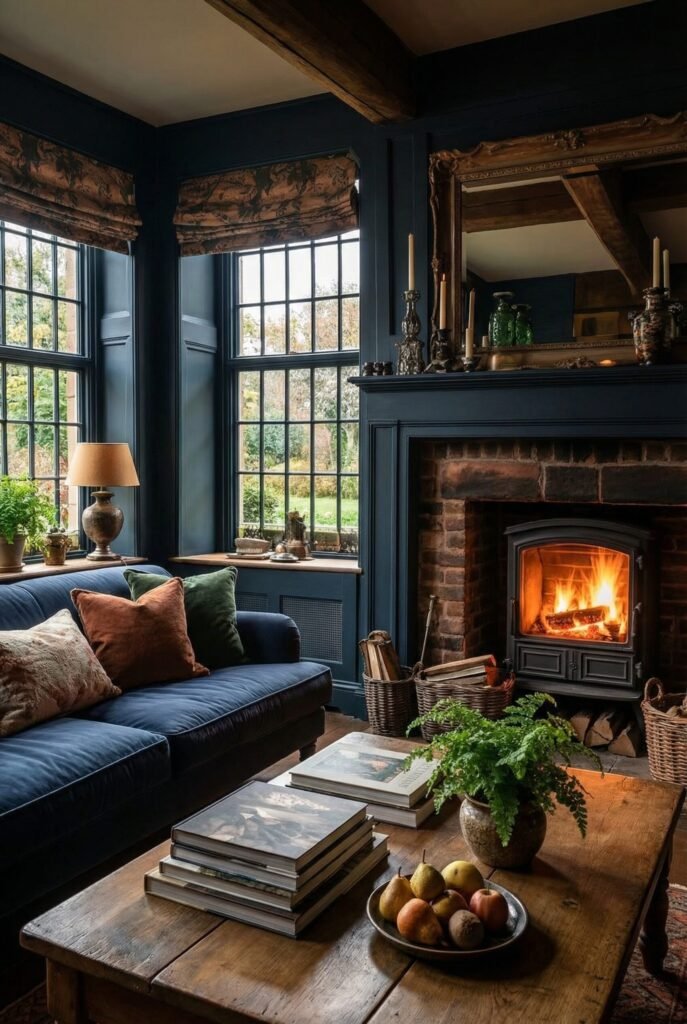
This space balances traditional charm with modern mood by leaning into deep blue as a neutral. The walls create intimacy, while large windows prevent the room from feeling boxed in. The fireplace adds warmth and becomes the emotional center, making the dark palette feel welcoming instead of cold.
Notice how textures carry the room. Soft upholstery, woven baskets, aged brick, and wood all work together to add depth. Lighting stays warm and low, bouncing gently off darker surfaces. Moody rooms rely on texture as much as color, especially when walls go dark.
If you recreate this look, layer your materials carefully and avoid anything glossy that reflects too much light. This room feels timeless, grounded, and deeply comfortable, like it’s been loved for years, not styled for a weekend shoot.
Charcoal Walls With Cozy Layers
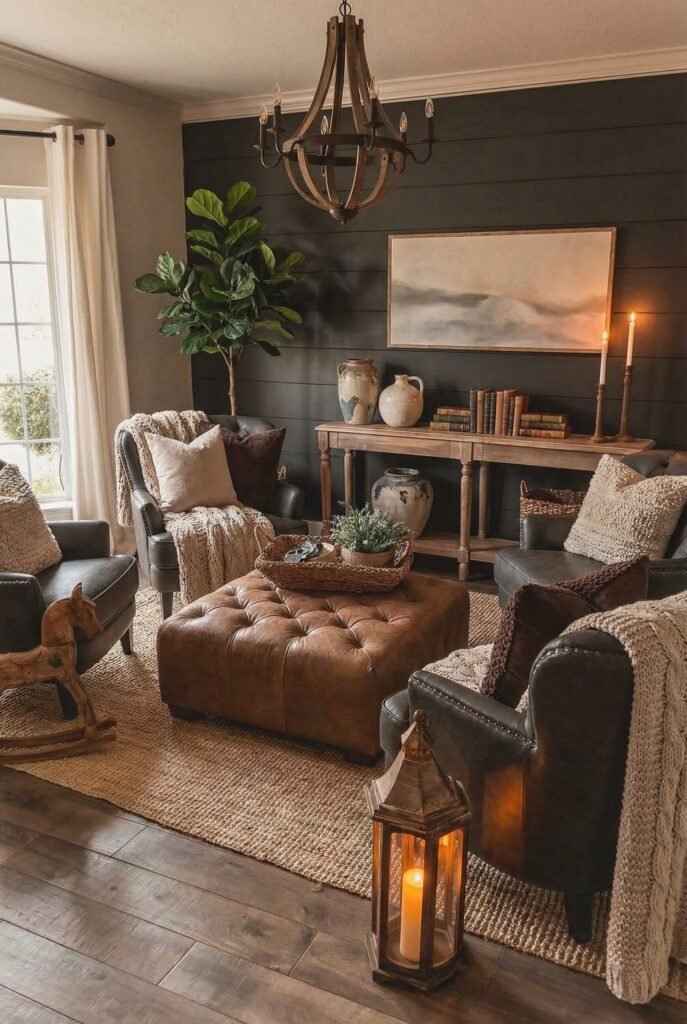
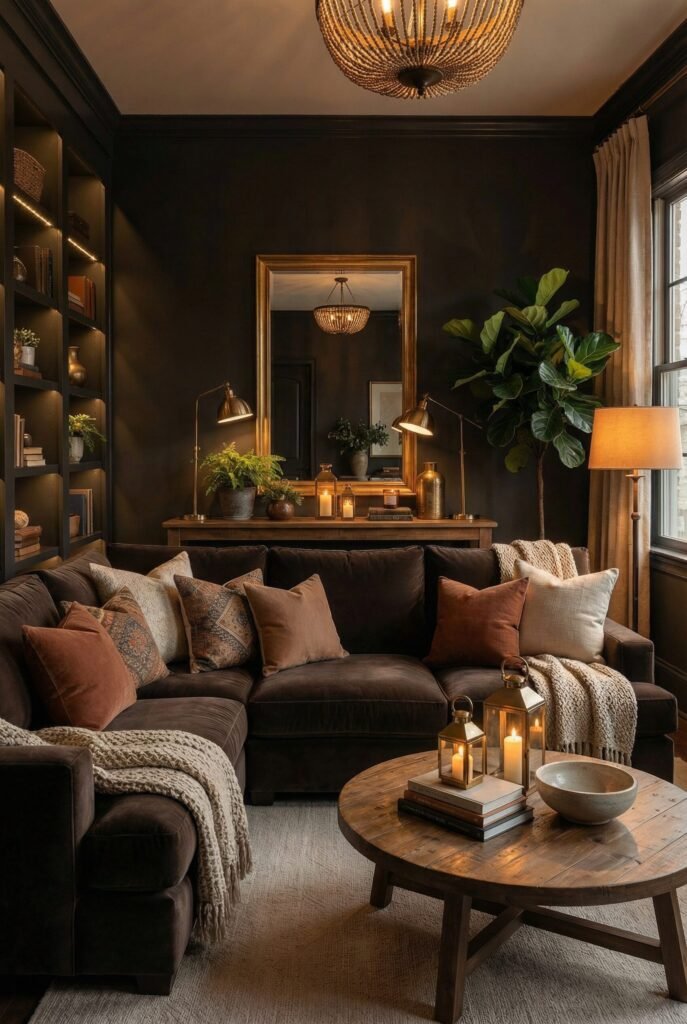
This living room shows how dark walls can still feel soft and approachable. The charcoal backdrop sets the mood, while warm woods, leather, and textiles add balance. The design principle here is contrast through material, not color. Everything stays neutral, but textures do the talking.
The chandelier adds structure, while lanterns and candles bring intimacy at floor level. We love how seating is arranged close together, encouraging connection rather than distance.
Moody design should feel human-scaled, not dramatic for drama’s sake. If you want to recreate this, focus on layering rugs, throws, and pillows in similar tones. Repetition creates calm. This room feels grounded, relaxed, and quietly confident, like it knows it looks good without trying too hard.
Designing Moody Spaces That Stay Comfortable Daily
The biggest myth about moody living rooms is that they’re hard to live with. In reality, the best moody spaces are deeply practical because they’re designed around comfort first. When lighting is layered, furniture is plush, and colors are thoughtfully restrained, the room naturally supports daily life.
We don’t design moody rooms to impress guests for five minutes. We design them to feel good at 9 p.m. on a random Tuesday. The secret is consistency, keeping tones warm, materials tactile, and layouts human-scaled. Moody rooms reward patience, intention, and editing. Not everything needs to be seen at once.
Let shadows exist. Let materials age. Let the space feel a little quieter than the rest of the house. That’s where the magic happens. If your living room makes you want to sit longer, talk slower, and scroll less, then congratulations, you nailed the mood.