
Inside The Bold Logic Of 80s Bedroom Design Choices
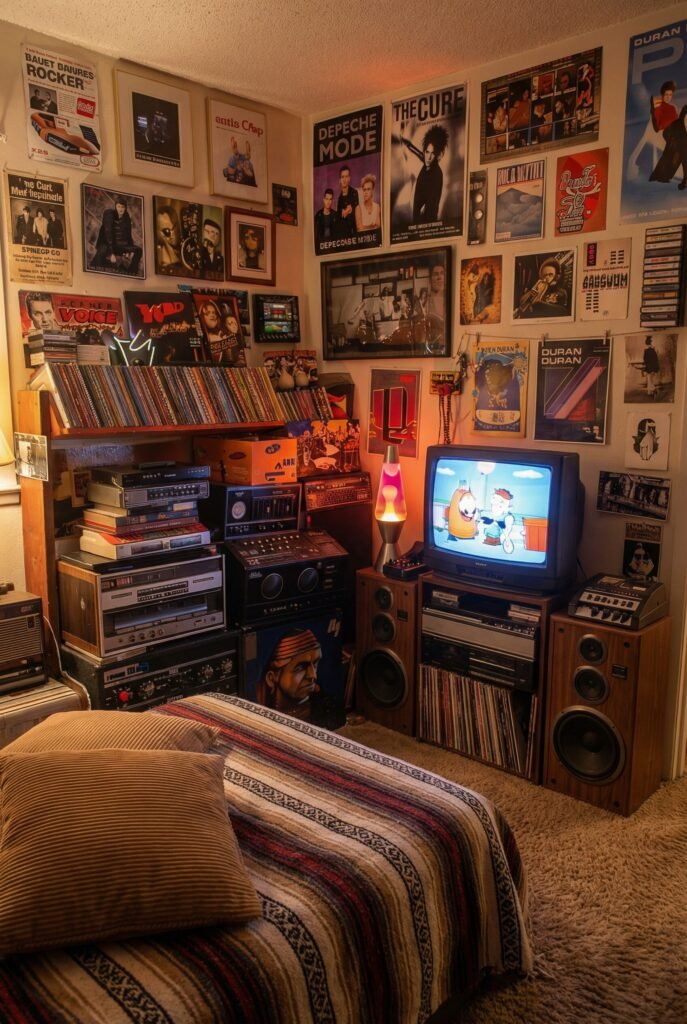
Welcome to the unapologetic world of 80s bedroom design, where subtlety politely waited outside. This era treated bedrooms as self-expression zones, not neutral sleep boxes. Color was loud, lighting was emotional, and furniture had opinions.
From neon glow and pastel dreams to dark wood drama and graphic geometry, the 80s believed your room should reflect who you were, not what trends dictated. Design principles leaned heavily on contrast, repetition, and atmosphere.
Strong colors were balanced with structure, bold patterns were grounded by symmetry, and lighting was layered to create mood instead of just brightness. Materials mattered too. Brass, chrome, velvet, lacquer, and glossy plastics added texture and visual energy.
What makes these ideas timeless today is intention. Nothing was accidental. We see 80s bedrooms as controlled chaos with a plan. When recreated thoughtfully, they feel expressive, nostalgic, and surprisingly functional. This is about confidence, creativity, and letting your bedroom tell a story that feels personal, playful, and unforgettable.
Moody Teal Glam With Brass Energy
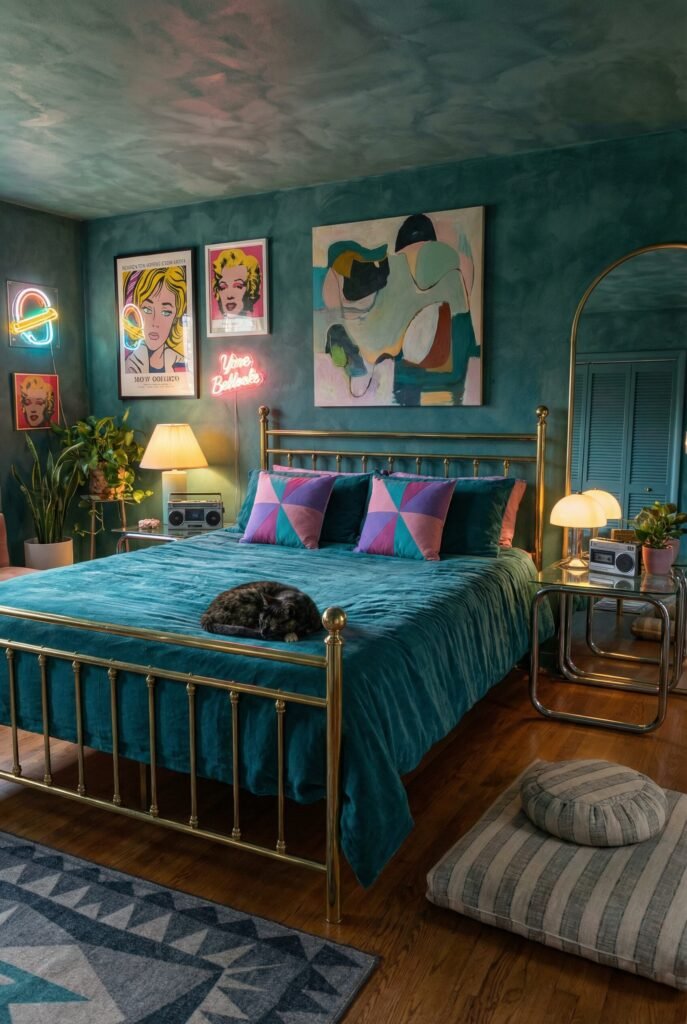
This bedroom screams late-night MTV vibes, but the magic isn’t just the color, it’s the controlled contrast. Teal walls work here because they sit between cool and dramatic, acting as a saturated backdrop for reflective materials. Brass furniture is doing the heavy lifting by bouncing warm light around the room, which prevents the space from feeling cave-like.
In 80s design, shine was never optional. The brass bed frame, glass side tables, and neon accents create layered reflections that add visual depth without adding clutter. Artwork placement matters more than people think. Notice how bold graphic art is hung at eye level and grouped tightly, creating a gallery wall effect that feels intentional instead of chaotic. That’s a classic 80s move: density over minimalism.
Textiles soften the look, with plush bedding and velvet pillows balancing all the hard surfaces. If you want to recreate this, keep your color palette tight and let materials vary. We always say: one dramatic color, one shiny metal, one soft texture. That trio never fails.
Pastel Paradise With Miami Heat
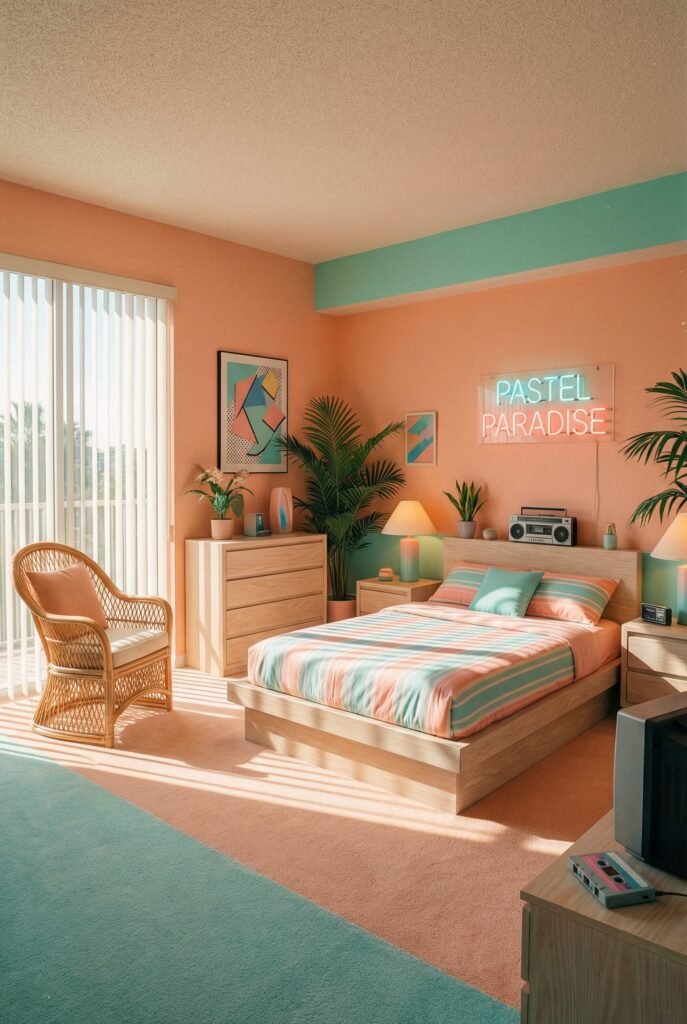
This room is basically a postcard from Miami Vice, and yes, that’s a compliment. The design principle carrying this space is low-contrast color harmony. Peach, mint, and soft teal live close enough on the color spectrum to feel calm, yet playful. This is why the room feels bright without becoming childish. Light wood furniture grounds the palette and keeps it from floating away into cotton-candy chaos.
Lighting does the real storytelling here. Natural light floods the room and amplifies pastel tones, while neon signage adds a nostalgic glow after sunset. In 80s interiors, lighting wasn’t just functional, it was theatrical. The mix of daylight, table lamps, and neon creates a layered lighting plan that shifts mood throughout the day.
Furniture stays simple because color already carries visual weight. If you’re recreating this, avoid dark floors or heavy patterns. Let negative space breathe. We recommend treating pastels like neutrals and neon like jewelry. Small dose, big personality, zero regrets.
Dark Wood Executive 80s Drama
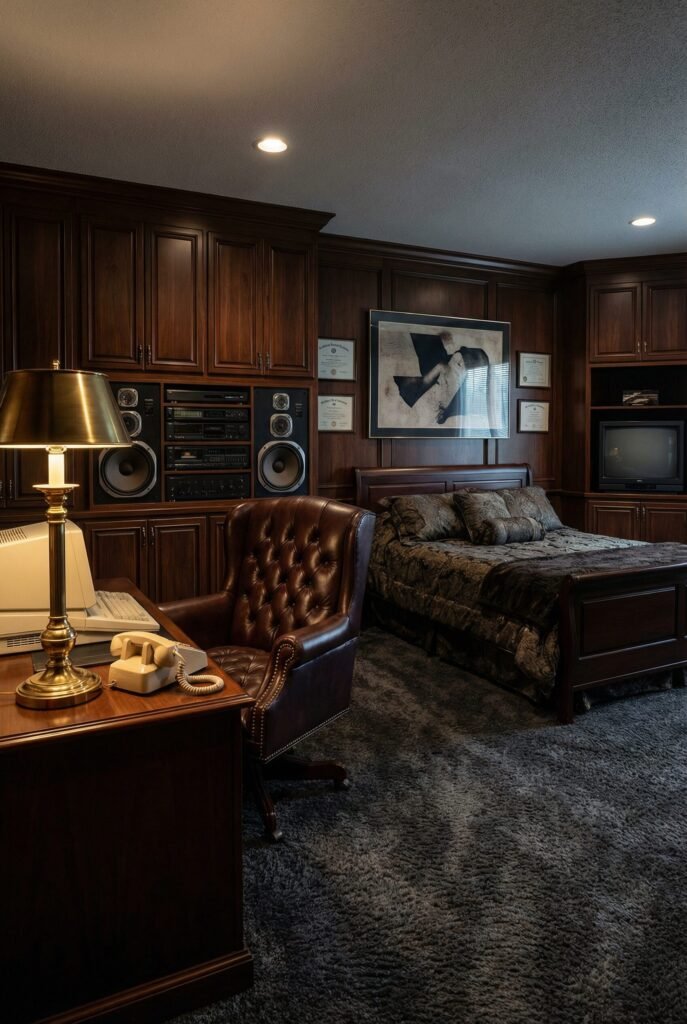
Welcome to the power-bedroom era, where wood paneling meant you made it. This look works because of monochromatic material dominance. Dark wood wraps the room, creating cohesion and a sense of authority, while leather and brass accents introduce subtle contrast. The key is repetition.
When the same material appears on walls, cabinetry, and furniture, the space feels intentional rather than dated. Lighting is intentionally warm and low. Recessed ceiling lights provide ambient coverage, but table lamps handle mood. The 80s loved controlled darkness, not pitch black caves. Soft carpeting absorbs sound and adds luxury, which balances the visual heaviness of the wood.
Artwork is minimal and framed formally to reinforce symmetry and order. To recreate this vibe, keep your palette narrow and your finishes rich. Skip trendy colors. We believe this style only works when you fully commit. Halfway dark wood just looks confused, not confident.
Maximalist Arcade Bedroom Time Capsule
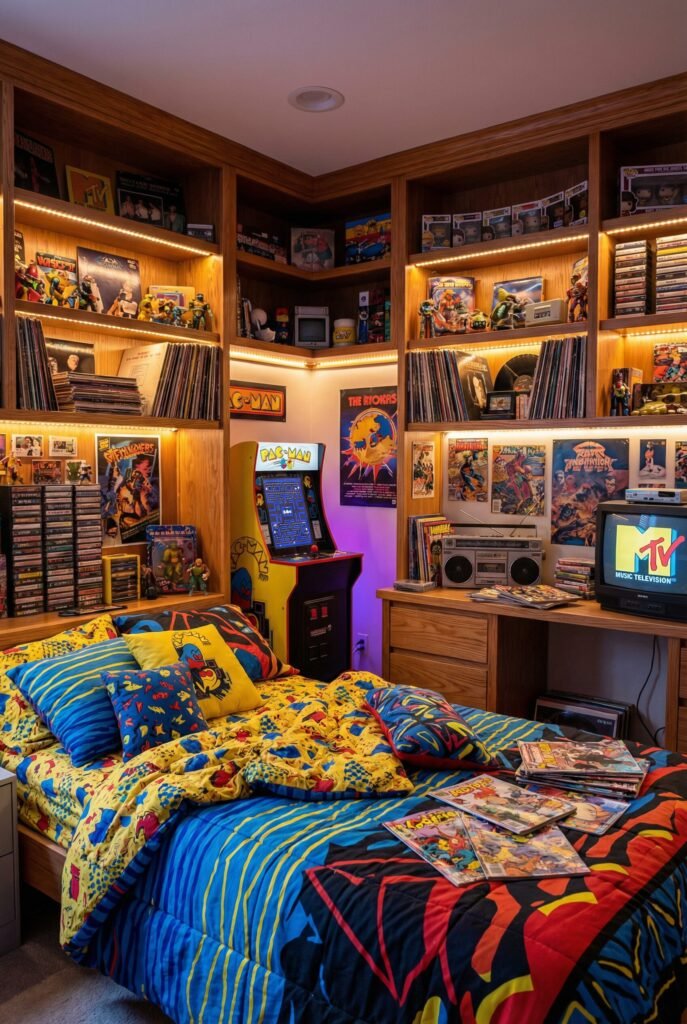
This room is pure serotonin, and it works because of themed visual zoning. Every surface is busy, but nothing feels random. Shelving creates structure, allowing collectibles, vinyls, and memorabilia to feel curated rather than chaotic. The built-in lighting behind shelves separates layers visually, which is crucial when color and pattern are everywhere.
Textiles lean bold, with comic-inspired prints and saturated hues pulling from the same limited color family. That’s the secret sauce. Maximalism still needs discipline. The arcade machine acts as a focal point, anchoring the room and giving your eyes somewhere to land.
Lighting is warm and nostalgic, mimicking incandescent glow from old electronics. If you want to recreate this, start with storage first, then decorate slowly. We always say: structure first, chaos second. Without shelving and lighting, this vibe collapses fast.
Cozy 80s Bedroom With Nostalgia Glow
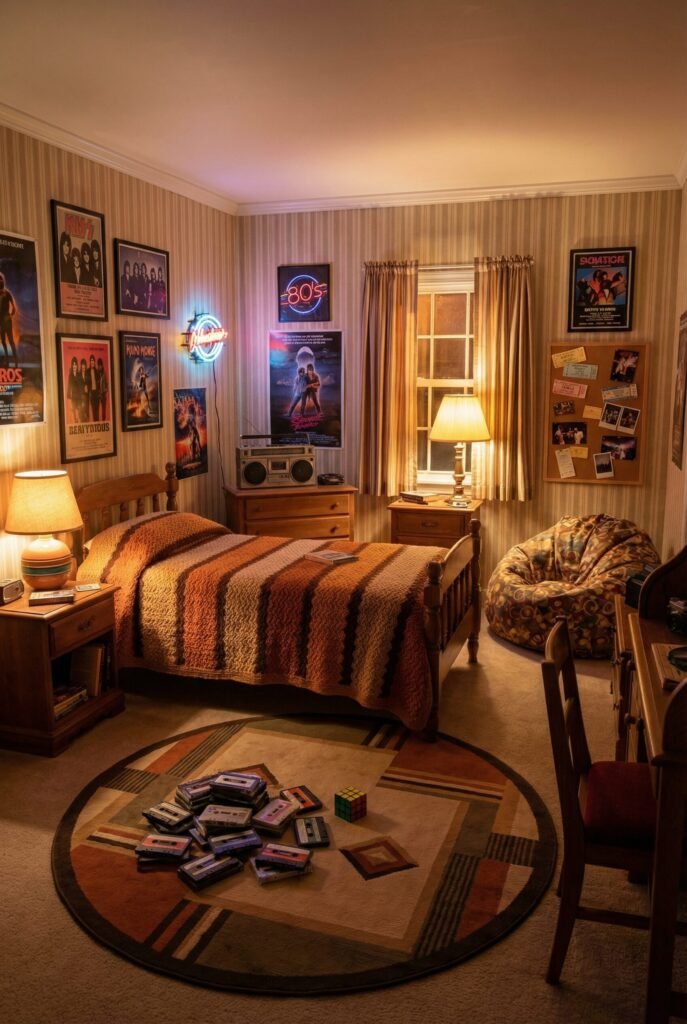
This bedroom feels like a warm memory, and that’s intentional. The design principle here is emotional layering through lighting and texture. Warm lamps, striped wallpaper, and soft carpeting work together to create visual comfort. Nothing screams for attention, yet everything contributes to atmosphere.
Wall decor follows a storytelling approach. Movie posters, cork boards, and neon signs aren’t just decoration, they’re personal artifacts. 80s bedrooms were identity spaces, not showroom displays. Furniture proportions stay modest, which keeps the room feeling intimate.
The circular rug subtly anchors the layout and softens all the straight lines. To recreate this, focus less on perfection and more on feeling. Mix eras slightly, but keep lighting warm. We believe nostalgia only works when it feels lived-in. If it looks too curated, the magic disappears.
Primary Pop Geometry Bedroom Energy
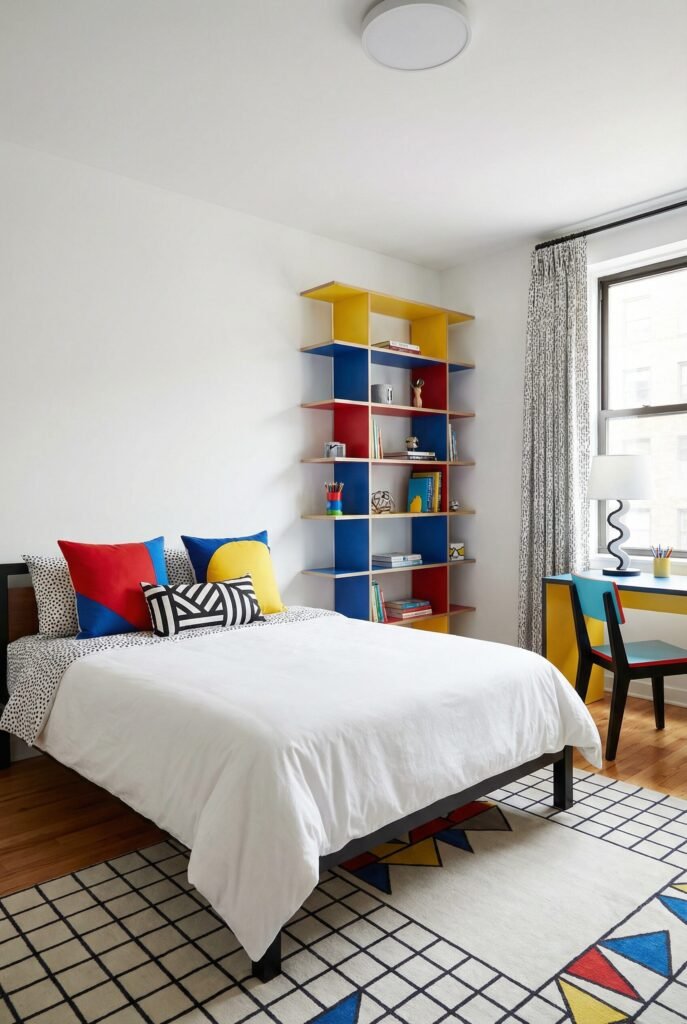
This bedroom is a straight-up manifesto of 80s graphic confidence, and the real magic lies in structured color blocking rather than chaos. Primary colors feel bold because they’re framed by white negative space, which acts like a visual reset button for your eyes.
White walls, bedding, and ceilings create breathing room so red, blue, and yellow can pop without turning the room into a toy store. The shelving unit works as a vertical design anchor, pulling the eye upward and subtly increasing perceived ceiling height. That vertical rhythm is a classic postmodern trick. Notice how geometric motifs repeat across pillows, rugs, and furniture details, creating visual consistency through repetition.
Furniture shapes stay clean and simple because color already does the expressive work. If you want to recreate this look, start with neutral bones, then add color in controlled zones. We always say loud colors need quiet neighbors. When structure leads and color follows, the room feels playful, confident, and very intentionally 80s.
Soft Neon Cozy 80s Revival
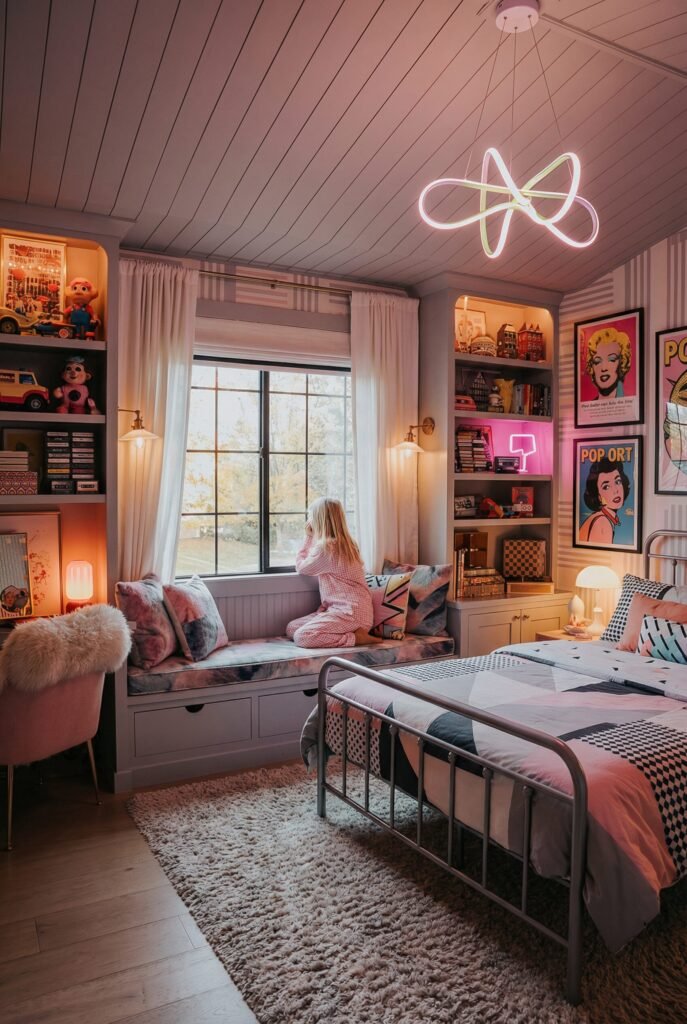
This bedroom proves that the 80s could be soft, emotional, and surprisingly calming when lighting is handled right. The guiding principle here is ambient glow over direct illumination, which allows neon to feel cozy instead of overwhelming. Neon signs act as mood lighting, not task lighting, creating a gentle halo that wraps the room in warmth.
Plush bedding and textured fabrics absorb light rather than reflect it, softening contrast and preventing harsh glare. Built-in shelves add symmetry and visual order, while warm backlighting creates depth and highlights personal objects without clutter. In true 80s fashion, lighting becomes emotional storytelling.
The window seat introduces a secondary zone, making the room feel layered and intimate. To recreate this, avoid cool-white bulbs and aggressive LEDs. We believe the secret to modern 80s style is glow, not glare. When light feels soft, nostalgia hits harder and the room becomes effortlessly inviting.
Neo-Tokyo Neon Dreamscape
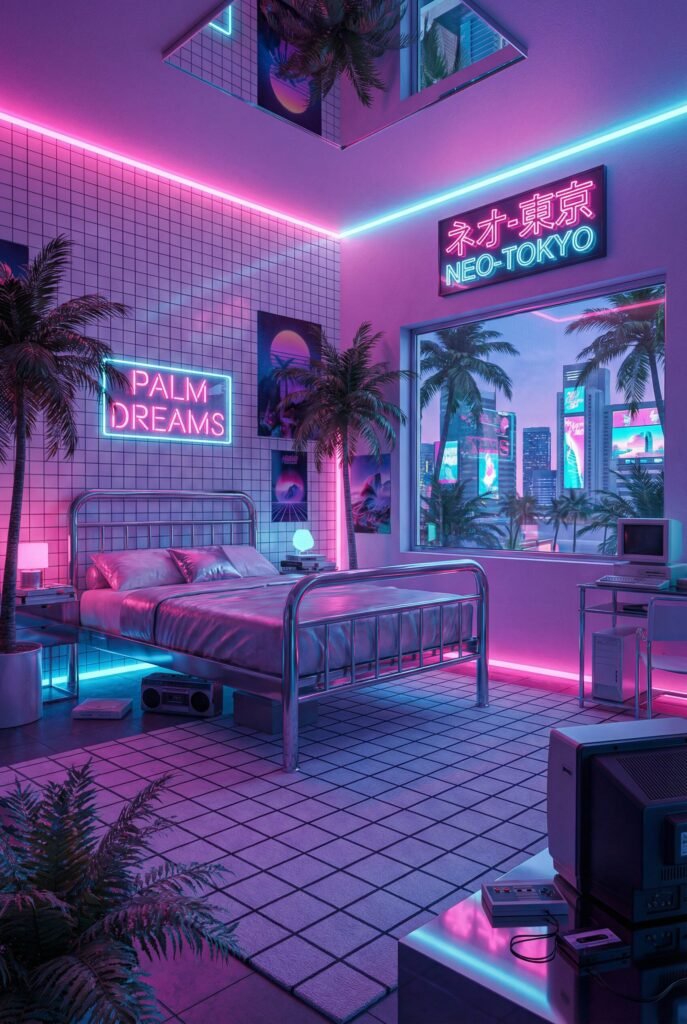
This bedroom dives headfirst into cinematic 80s futurism, and it works because of total color immersion rather than scattered accents. Pink and blue lighting wrap every surface, blurring edges and dissolving boundaries, which visually expands the room.
Grid tiles, glossy finishes, and reflective surfaces multiply the glow, making light itself the main design element. In 80s sci-fi interiors, atmosphere always outranked furniture. The bed frame stays minimal and metallic so it doesn’t interrupt the visual flow, while palm silhouettes and skyline views add layered depth and fantasy.
LED placement is deliberate, outlining architecture and guiding the eye through the space. If you want to recreate this, choose two dominant neon tones and fully commit. We always say undecided neon looks accidental. When color is immersive and intentional, the room becomes an experience, not just a bedroom.
Glam Art Deco 80s Luxe
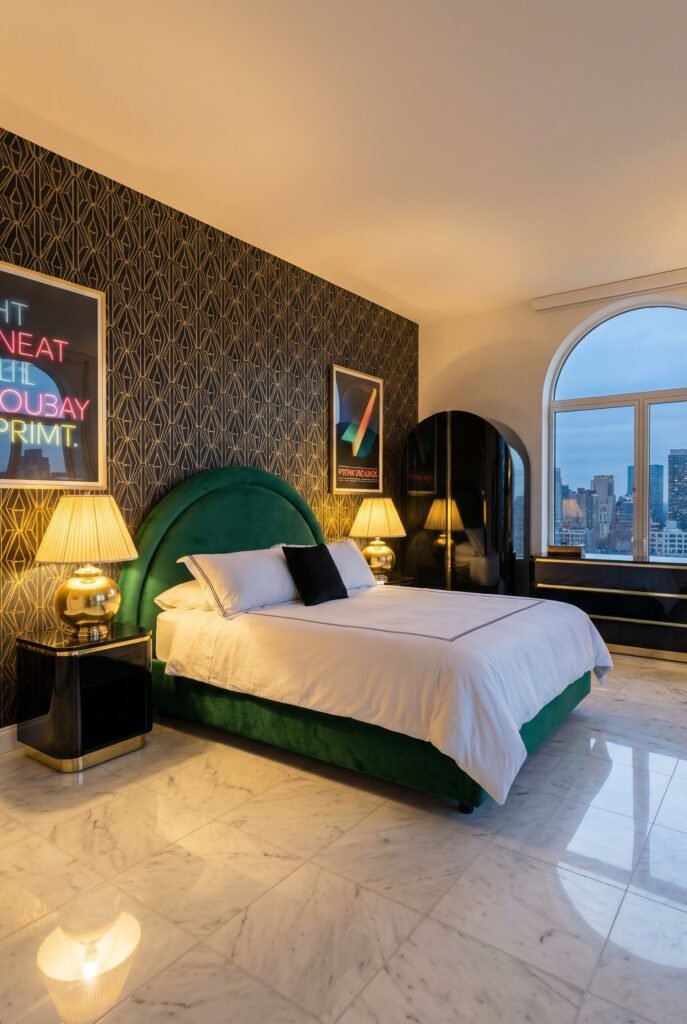
This bedroom channels late-80s glamour by mastering material contrast and symmetry. Velvet, brass, marble, and bold wallpaper coexist because each material has a clear role and visual weight. Dark patterned walls create drama, while polished floors reflect light upward to balance the heaviness.
Contrast control is what separates luxury from visual overload. Symmetry brings calm to the richness, with matching lamps, balanced artwork, and a centered bed grounding the space. The emerald velvet headboard anchors the palette, bridging warm metallics and cool neutrals.
Lighting stays warm and directional, highlighting texture rather than flooding the room. To recreate this look, focus on tactile richness first. We believe luxury is felt before it’s noticed. Even one high-quality surface can elevate the entire room and make the space feel unapologetically indulgent.
Pastel Memory Lane Bedroom

This bedroom feels like a time capsule because it’s built on emotional layering rather than visual perfection. Soft pastel walls create a gentle backdrop that lets personal objects take center stage. Woven furniture, plush bedding, and warm lighting introduce tactile comfort that immediately signals nostalgia.
Patterns stay subtle and repeat quietly across wallpaper and textiles, maintaining harmony without demanding attention. 80s bedrooms were personal identity spaces, not showroom displays. Vintage tech and band posters feel authentic because they’re integrated naturally instead of staged.
Lighting remains low and warm, enhancing intimacy and softness. If you want to recreate this vibe, resist over-curation. We always say nostalgia needs a little mess to feel real. When a room looks slightly imperfect and deeply personal, the emotional connection becomes the true design feature.
Design Loudly But Keep The Chaos Intentional
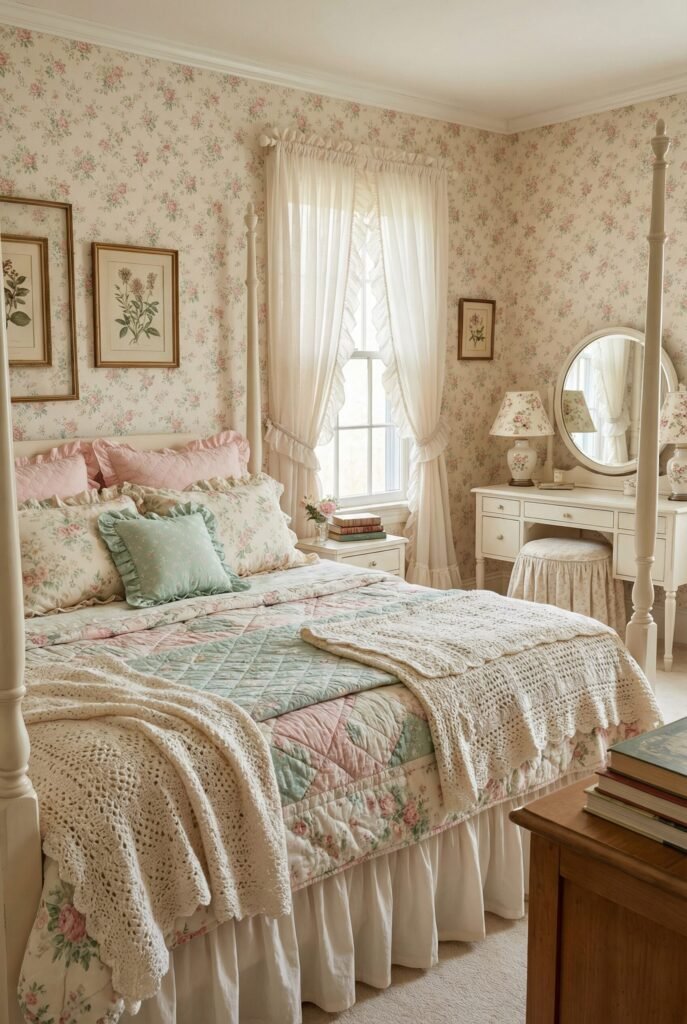
Recreating an 80s bedroom today isn’t about copying every neon sign or pastel pillow you see online. It’s about understanding the logic behind the look. The best 80s-inspired spaces balance boldness with control. Color needs structure, lighting needs purpose, and nostalgia needs restraint.
Choose one dominant vibe, whether it’s glam, futuristic, cozy, or graphic, then support it with consistent materials and repeated shapes. Avoid mixing too many themes in one room unless you have strong visual anchors. Lighting should always be layered, never flat. Texture is your best friend when colors get intense. Most importantly, let the room feel lived-in.
The 80s weren’t curated for cameras, they were curated for personality. We believe a great 80s bedroom feels confident, not try-hard. When design decisions feel intentional and expressive, the result isn’t retro cosplay. It’s a bold, modern bedroom with serious nostalgic soul.