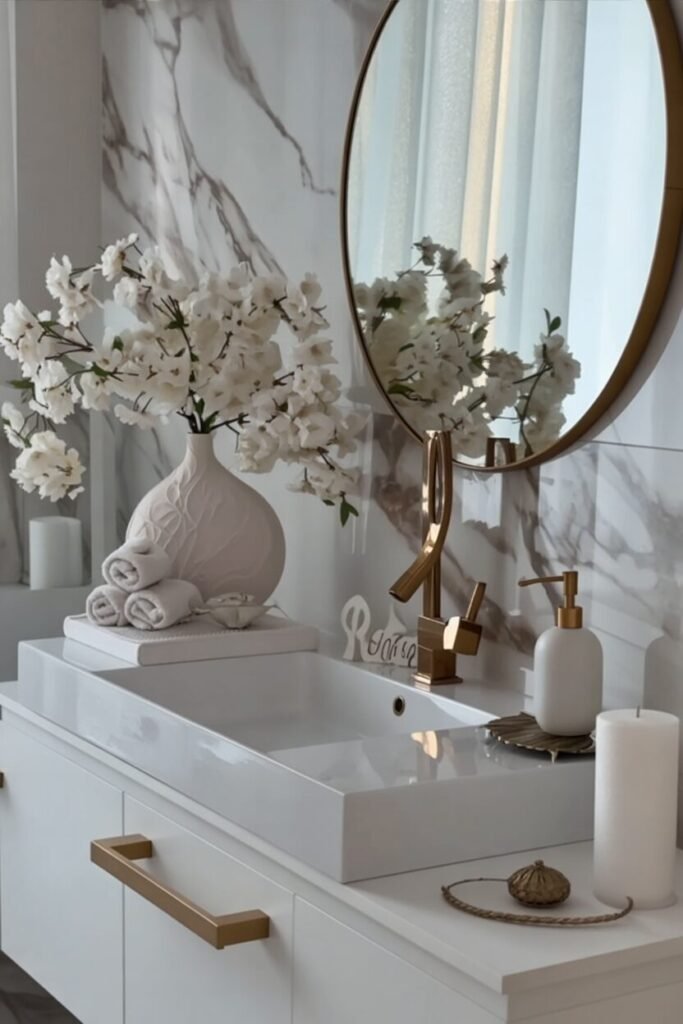

The Minimalist Bathroom Formula Designers Keep Coming Back To
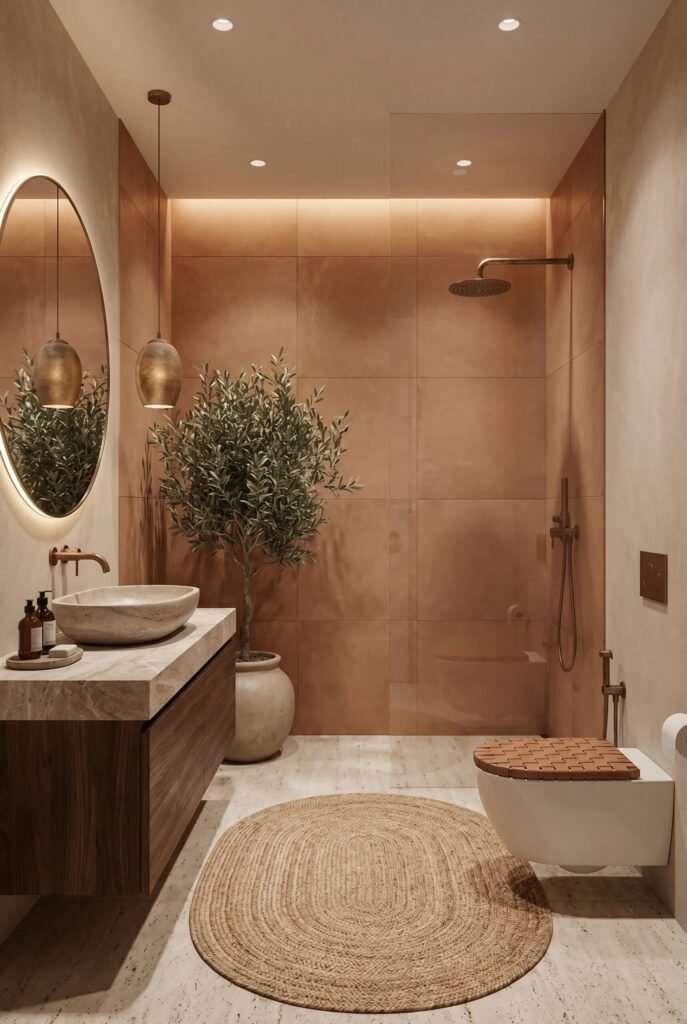
Minimalist bathrooms are not really about having less. They are about making every element work harder. The best minimalist spaces feel calm because they remove visual distractions and allow beautiful materials, thoughtful layouts, and intentional details to take center stage. When we step into a well-designed minimalist bathroom, the room immediately feels larger, brighter, and easier to use.
Throughout these ideas, we can see a common theme: simplicity supported by smart design principles. Floating vanities create openness, frameless glass keeps sightlines clear, and built-in storage eliminates unnecessary clutter. Natural materials like wood, stone, plaster, and marble add warmth without overwhelming the space. Even lighting becomes part of the architecture through backlit mirrors, recessed LEDs, and subtle ambient glows.
The secret is that minimalism is not about creating an empty room. It is about creating a room where every feature has purpose. When function and beauty work together, minimalist bathrooms become timeless rather than trendy.That’s the kind of design that still feels fresh years later.
Frameless Luxury With Black Grid Contrast
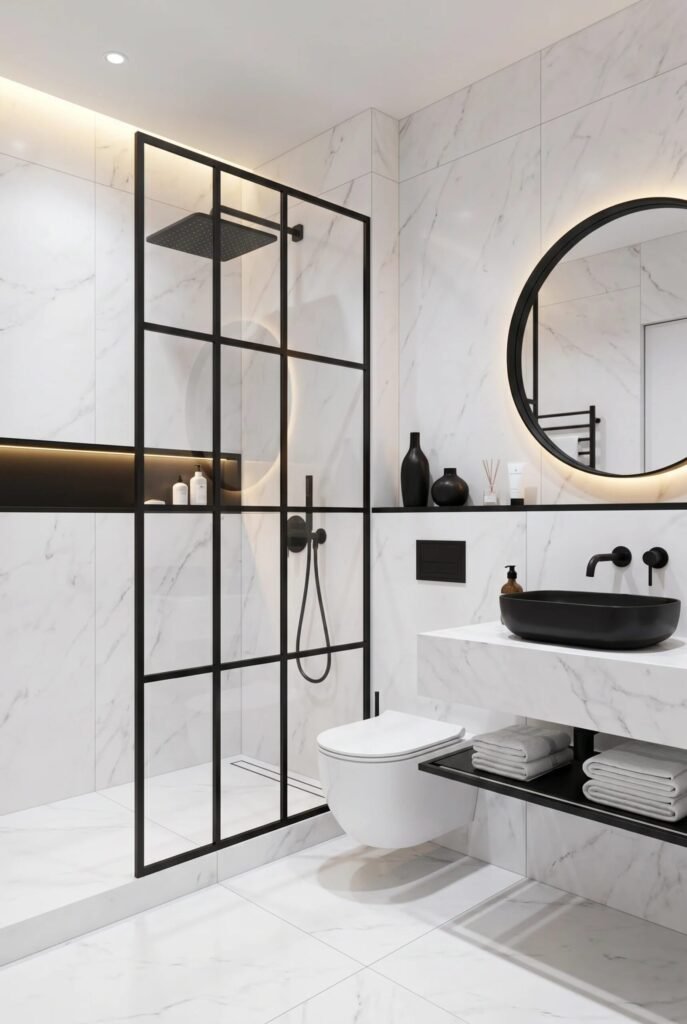
This bathroom proves that minimalism does not have to mean boring. The design relies on a high-contrast palette where bright marble-look surfaces meet matte black accents, creating a crisp visual hierarchy. The black-framed shower enclosure acts as the room’s anchor, giving structure to an otherwise light and airy space. One of the smartest design principles here is repetition. The black finish appears on the shower frame, faucet, mirror, shelf, and accessories, creating cohesion without introducing clutter.
The floating vanity and wall-mounted toilet also play an important role. By exposing more floor area, they create the illusion of a larger room. This is a classic minimalist trick that works especially well in compact bathrooms. The hidden storage shelf underneath keeps towels accessible while maintaining clean sightlines.
If we want to recreate this look, focus on limiting finishes to three materials: marble, black metal, and white ceramic. Minimalist bathrooms feel expensive when materials are repeated consistently rather than endlessly mixed. Think less “showroom sample board” and more “quiet luxury with excellent boundaries.”
Moody Spa Bathroom With Skylight Drama
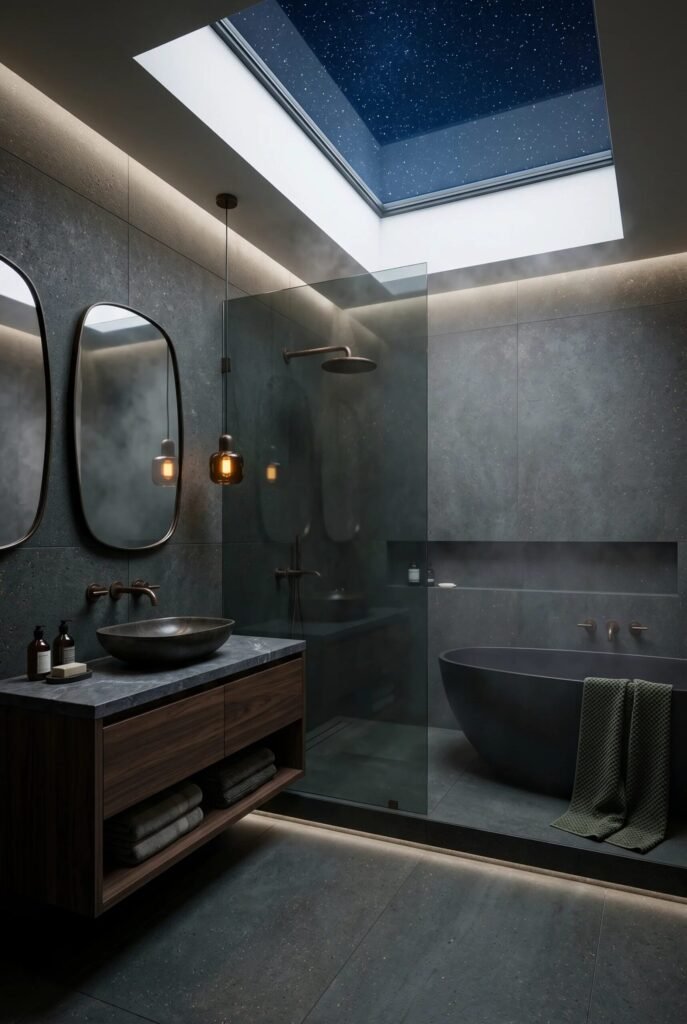
Some bathrooms wake us up. This one tells us to cancel our plans and stay in the tub. The dark stone surfaces create a cocoon-like atmosphere, while the oversized skylight introduces natural light from above. This contrast between darkness and daylight is what makes the space feel dramatic rather than gloomy. The strongest design principle at work here is balance between heavy and light visual weight.
The floating wood vanity prevents the room from feeling too cold. Dark bathrooms often need one warm material to create emotional comfort, and wood performs that job beautifully. Notice how the pendant lights add another layer of warmth while keeping visual clutter low. Instead of several decorative items, the lighting itself becomes the decor.
When recreating this aesthetic, invest in layered lighting. Recessed LEDs, pendant fixtures, and indirect lighting should work together. A minimalist bathroom is not about removing everything—it is about making every remaining element work harder. Bonus points if your bathtub makes guests suspicious that you secretly own a luxury resort.
Illuminated Shower Niches That Double As Decor
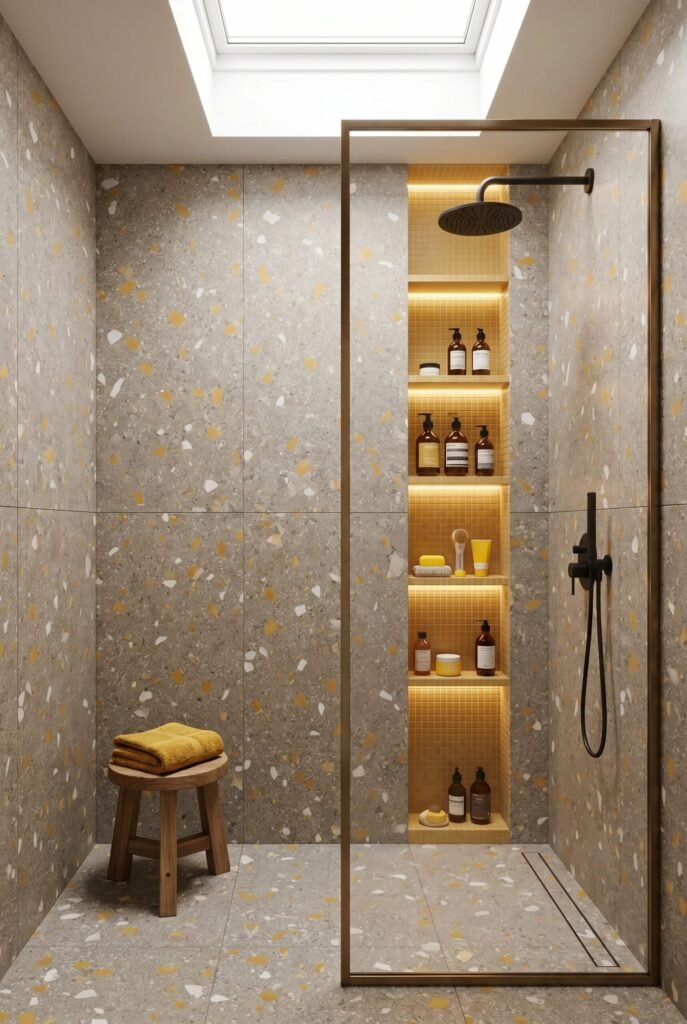
Sometimes storage becomes the star of the room, and honestly, we love that for it. This illuminated shower niche transforms a practical necessity into an architectural feature. Instead of adding baskets, racks, or hanging organizers, the recessed shelving creates built-in storage that feels seamless. The minimalist principle here is integration—combining function and beauty in a single element.
The warm LED lighting softens the niche and highlights toiletries like curated display pieces. Even everyday shampoo bottles suddenly look like they belong in a boutique hotel. Vertical niches are particularly effective because they maximize storage without increasing visual bulk. The eye naturally travels upward, making ceilings feel taller as a bonus.
If we are planning a renovation, consider niche depth carefully. Too shallow and products won’t fit; too deep and the niche becomes visually heavy. Stick with a warm color temperature around 2700K–3000K for a cozy glow. Built-in storage is one of the easiest ways to achieve a cleaner minimalist aesthetic because fewer items end up competing for attention. Your shower products deserve a better life than balancing on random corners.
Organic Minimalism With Sculpted Surfaces
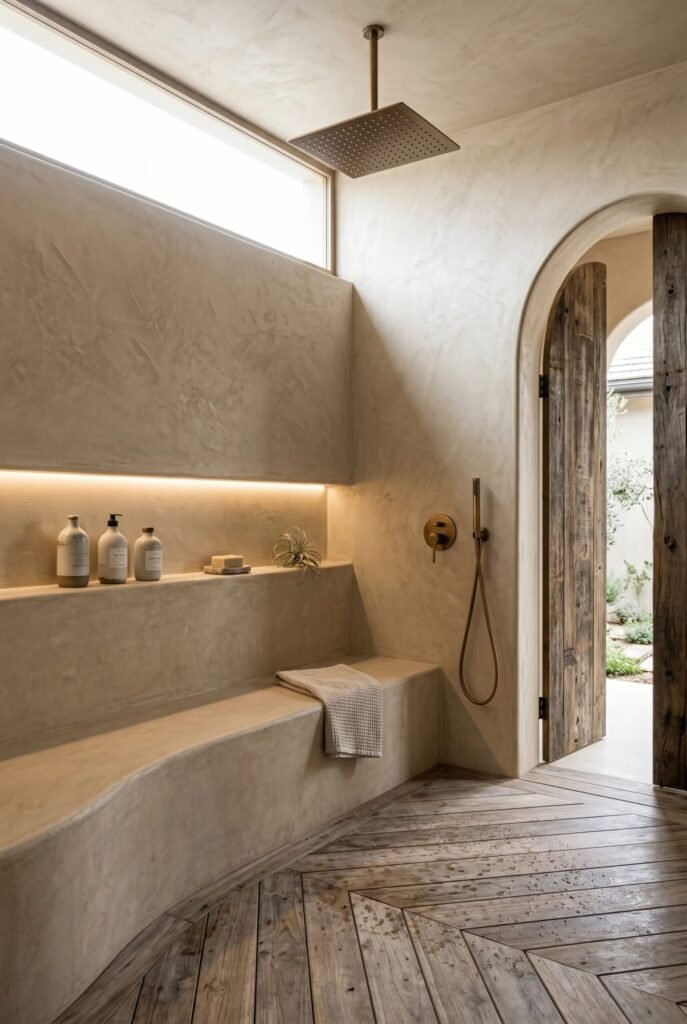
This bathroom takes a softer approach to minimalism by replacing hard lines with gentle curves and textured finishes. The plaster-style walls, built-in bench, and arched doorway create a calming environment inspired by Mediterranean and organic-modern design. Instead of relying on decorative accessories, the architecture itself provides visual interest. This is a perfect example of minimalist design through form rather than decoration.
The built-in seating adds practicality while maintaining continuity across the room. Because it emerges directly from the wall, there are no extra furniture pieces disrupting the flow. Meanwhile, the warm wood flooring introduces texture and prevents the neutral palette from feeling flat. The hidden lighting beneath the ledge creates subtle depth without demanding attention.
To recreate this look, prioritize natural textures over decorative objects. Limewash, plaster finishes, travertine, and aged wood all contribute character without clutter. Organic minimalism succeeds when every surface feels intentional and tactile. It is basically the design equivalent of someone who effortlessly looks stylish while claiming they “just threw this together.”
Deep Green Retreat With Natural Layers
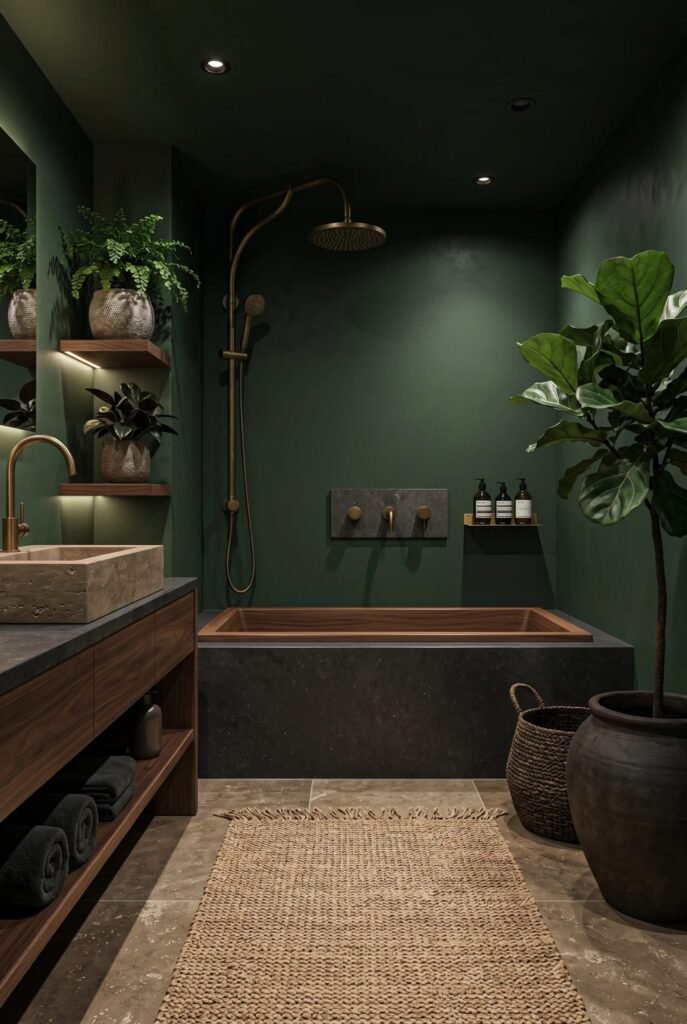
Minimalism does not always mean white walls and monochrome palettes. This rich green bathroom proves that color can still feel restrained when used strategically. The dark green walls establish a strong backdrop, while natural wood, stone, and woven textures add warmth and dimension. The design principle driving this room is controlled contrast. Every material feels distinct, yet nothing fights for attention.
Plants play a significant role here. Rather than introducing dozens of decorative objects, a few large botanical elements create life and softness. Notice how the shelving is styled sparingly, allowing negative space to remain part of the composition. Minimalist rooms often feel calmer because empty space is treated as a design element rather than a missed opportunity.
For readers hoping to recreate this vibe, choose one dominant color and support it with earthy neutrals. Keep accessories intentional and scale them up instead of multiplying them. A single large plant often creates more impact than ten small decorative pieces. This bathroom feels like a luxury spa and a secret jungle had a very successful collaboration.
Warm Wood Vanity With Soft Hotel Glow
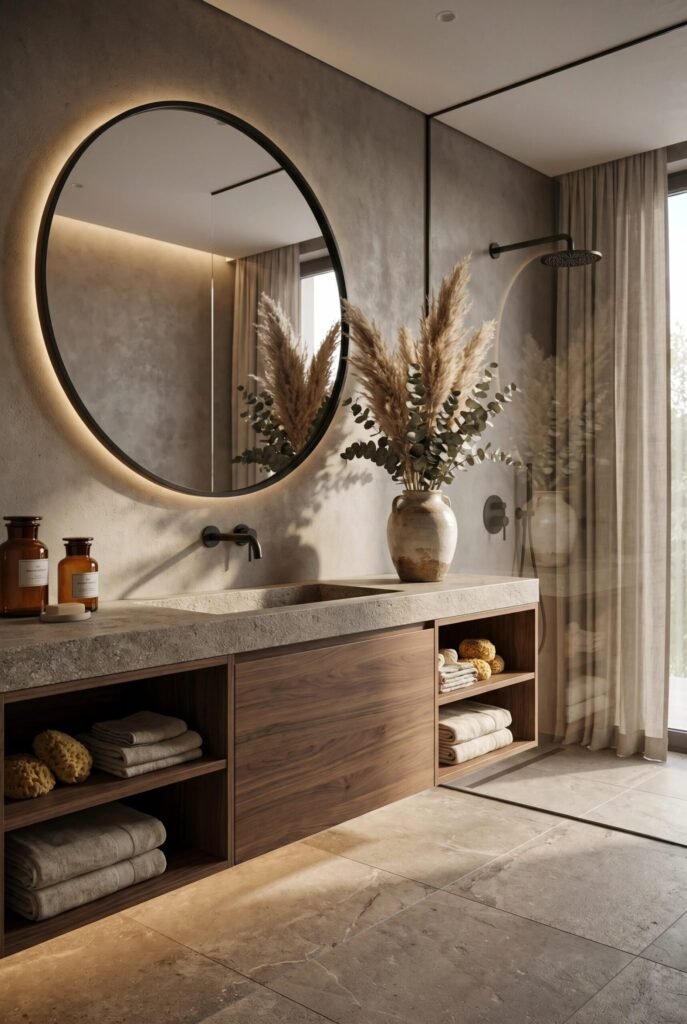
This bathroom feels like the minimalist version of a boutique hotel that somehow smells expensive all the time. The design centers around warm wood cabinetry, textured stone surfaces, and a softly illuminated round mirror. Rather than creating contrast through bold colors, the room relies on tonal layering. This design principle uses multiple shades of beige, taupe, walnut, and cream to create depth without visual noise. The result feels calming, sophisticated, and surprisingly cozy.
The open shelving deserves attention too. Instead of hiding everything behind doors, neatly folded towels become part of the styling. This works because the color palette remains disciplined. If the shelves were filled with brightly colored products, the minimalist effect would disappear almost instantly. Sometimes restraint really is the secret sauce.
To recreate this look, focus on warm undertones throughout the room. Pair natural wood with stone-look finishes and soft ambient lighting. A large backlit mirror can provide both functional illumination and a focal point without adding decorative clutter. It’s proof that minimalist bathrooms don’t have to feel cold or sterile to look incredibly polished.
Colorful Terrazzo Meets Clean Minimalism
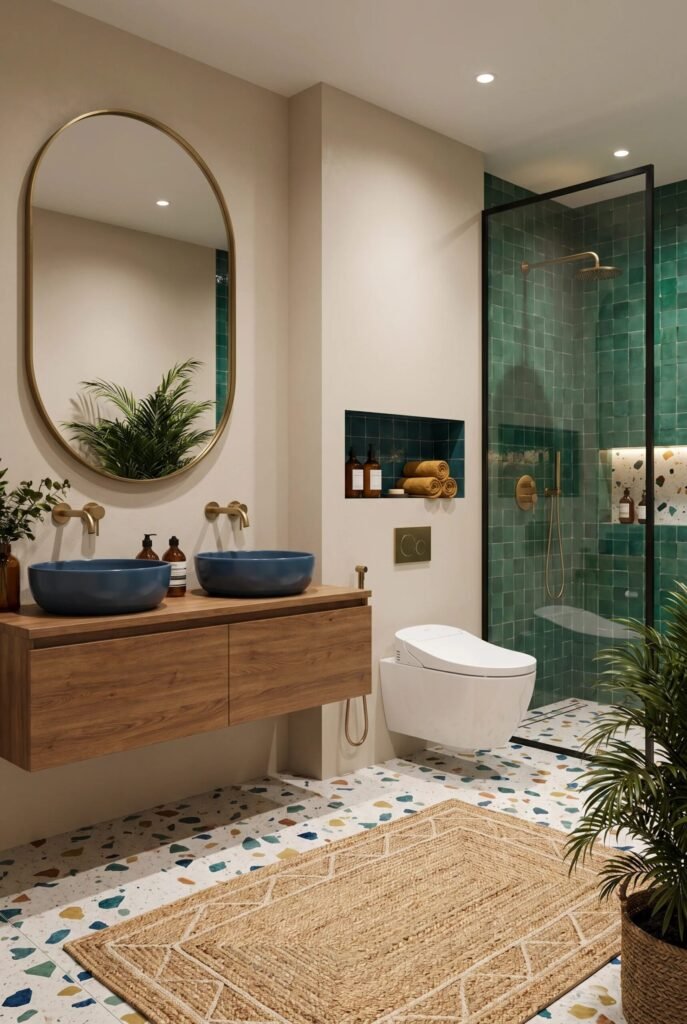
Minimalism gets unfairly accused of being allergic to personality. This bathroom politely disagrees. While the overall layout remains clean and streamlined, the terrazzo flooring and rich green shower tile inject character into the space. The key design principle here is controlled visual emphasis. Instead of competing focal points, the floor and shower area carry most of the visual energy while the surrounding walls stay intentionally simple.
The floating wood vanity helps balance the vibrant materials by introducing warmth and grounding the room. Meanwhile, the oversized mirror stretches vertically, making the ceiling feel taller. Notice how the decorative plants are used sparingly. They soften the geometry without turning the bathroom into a rainforest-themed gift shop.
If we want a colorful minimalist bathroom, choose one or two standout surfaces and keep everything else restrained. Limit decorative accessories and let materials do the storytelling. Minimalism works best when color is treated as an intentional design feature rather than an afterthought. A little terrazzo confidence goes a surprisingly long way.
Marble Simplicity With Built-In Elegance
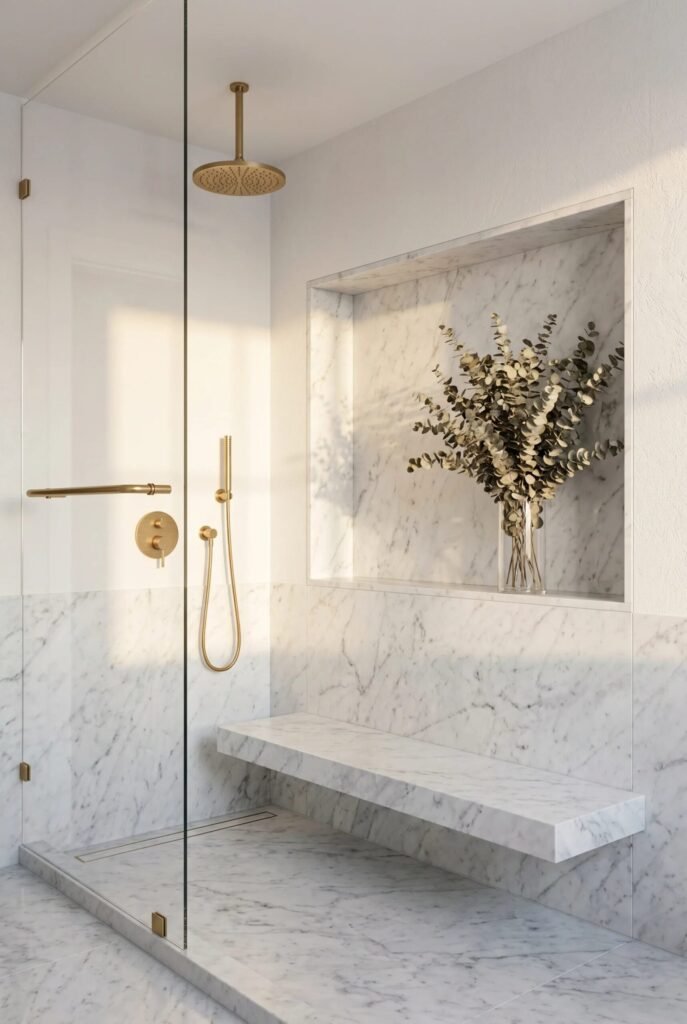
Some bathrooms whisper luxury instead of shouting it, and honestly, that’s usually more impressive. This all-marble space relies on clean architectural lines and integrated features rather than decorative accessories. The floating marble bench, recessed wall niche, and frameless shower enclosure create an uninterrupted visual flow. One of the strongest minimalist principles here is continuity. The same material wraps walls, floors, and built-ins, reducing visual breaks throughout the room.
The niche deserves special recognition because it doubles as storage and decor. By recessing the floral arrangement into the wall, the design maintains clear sightlines while still introducing softness. The brass fixtures also provide subtle contrast without overwhelming the neutral palette.
When recreating this aesthetic, avoid mixing too many materials. Let one dominant surface take center stage and use secondary finishes sparingly. Minimalist luxury often comes from material consistency rather than excessive decoration. This bathroom feels less like a room and more like a beautifully carved piece of architecture.
Compact Vanity With Natural Texture
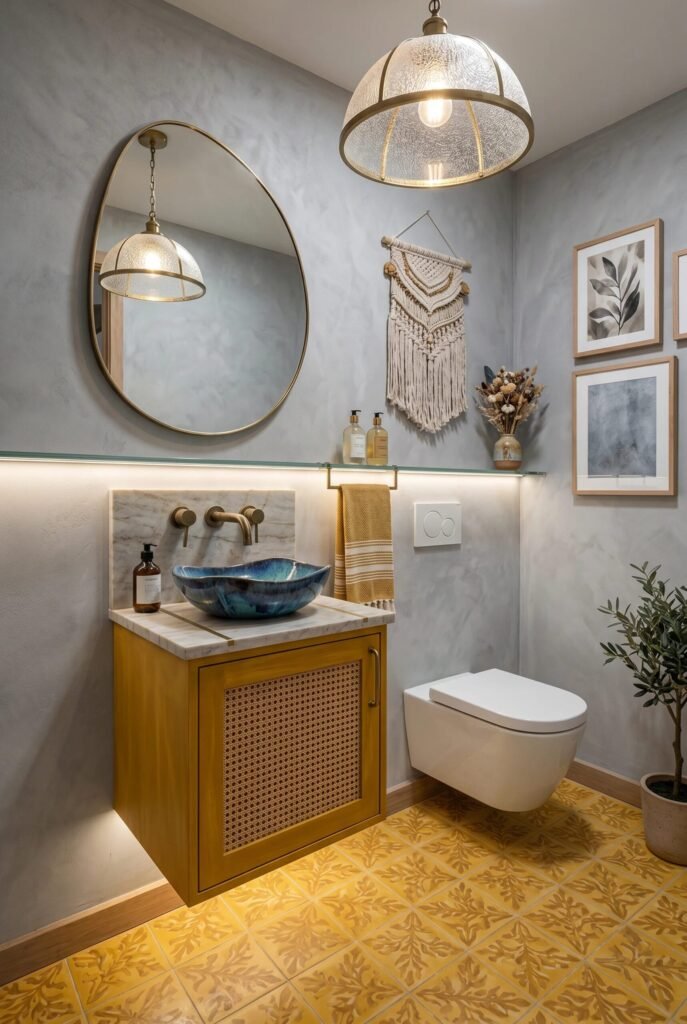
This vanity setup proves that even the smallest bathroom can have major design energy. The woven cane cabinet front introduces texture, while the marble countertop and sculptural vessel sink add refinement. Rather than filling the space with decorative objects, the design allows individual elements to stand out. This follows the minimalist principle of intentional contrast—pairing simple forms with rich textures.
The asymmetrical mirror is especially effective because it softens the room’s geometry. Bathrooms are usually filled with rectangles, so introducing an organic shape creates visual interest without creating clutter. The warm brass fixtures further reinforce the relaxed, natural aesthetic while adding a touch of understated elegance.
If we’re working with a compact bathroom, focus on selecting fewer but stronger design features. A unique mirror or statement sink often delivers more impact than multiple accessories. Minimalist spaces feel curated when every item contributes something meaningful to the composition. In other words, let the vanity be the main character and retire the unnecessary supporting cast.
Small Bathroom With Organic Warmth
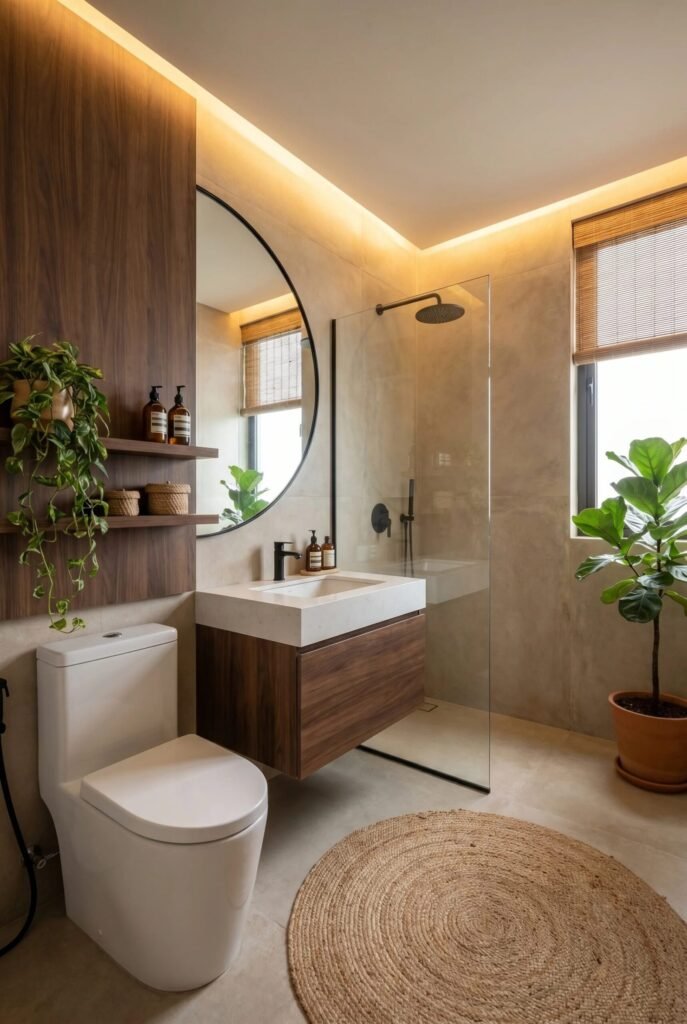
This bathroom shows how minimalism can feel inviting rather than ultra-modern. Warm wood tones, soft beige surfaces, woven textures, and greenery work together to create a relaxed atmosphere. The design principle driving the room is biophilic balance—connecting natural materials and plant life with clean architectural forms. That combination makes the space feel grounded and restorative.
The floating vanity helps maintain openness, while the frameless shower enclosure prevents visual barriers from interrupting the layout. One particularly smart detail is the continuous ceiling lighting. The perimeter LED glow draws the eye around the room and subtly expands the perceived dimensions. It’s a simple trick that makes smaller bathrooms feel significantly larger.
For readers hoping to recreate this look, prioritize natural materials and warm lighting over excessive decor. Add one or two substantial plants instead of several small accessories. A minimalist bathroom should feel edited, not empty. Think of it as giving every design element enough breathing room to actually be appreciated instead of forcing them to fight for attention.
Simple Design Choices That Never Feel Temporary
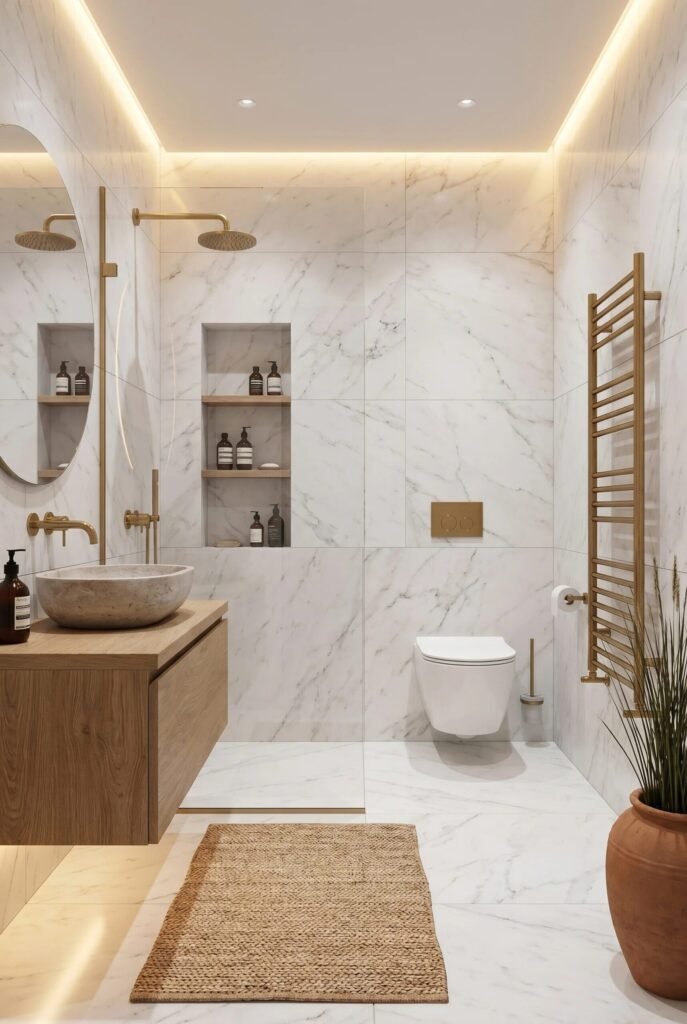
After exploring these minimalist bathroom ideas, one thing becomes clear: great design is rarely about following trends. Instead, it comes from understanding balance, proportion, material selection, and thoughtful restraint. The bathrooms that feel the most luxurious are often the ones that avoid doing too much. They allow textures, light, and architectural details to create interest instead of relying on endless accessories.
Whether we are drawn to warm wood vanities, dramatic dark palettes, organic plaster finishes, spa-inspired marble spaces, or nature-filled retreats, the same principles continue to appear. Consistency creates harmony. Negative space creates calm. Quality materials create character. Minimalist bathrooms succeed when every design decision feels intentional rather than accidental.
As we plan our own bathroom refresh, it helps to remember that simplicity is not a limitation. It is actually a design strategy. Sometimes removing one unnecessary element can improve a room more than adding ten new ones. And honestly, our countertops will probably thank us for it.