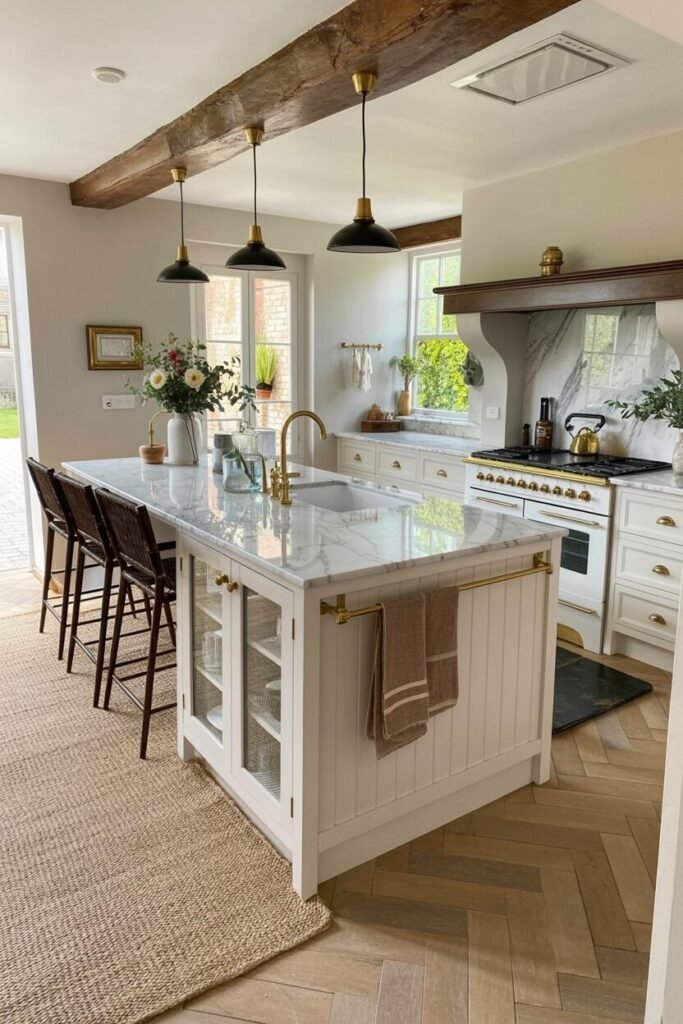

The Quiet Details Behind Today’s Most Beautiful Minimalist Kitchens
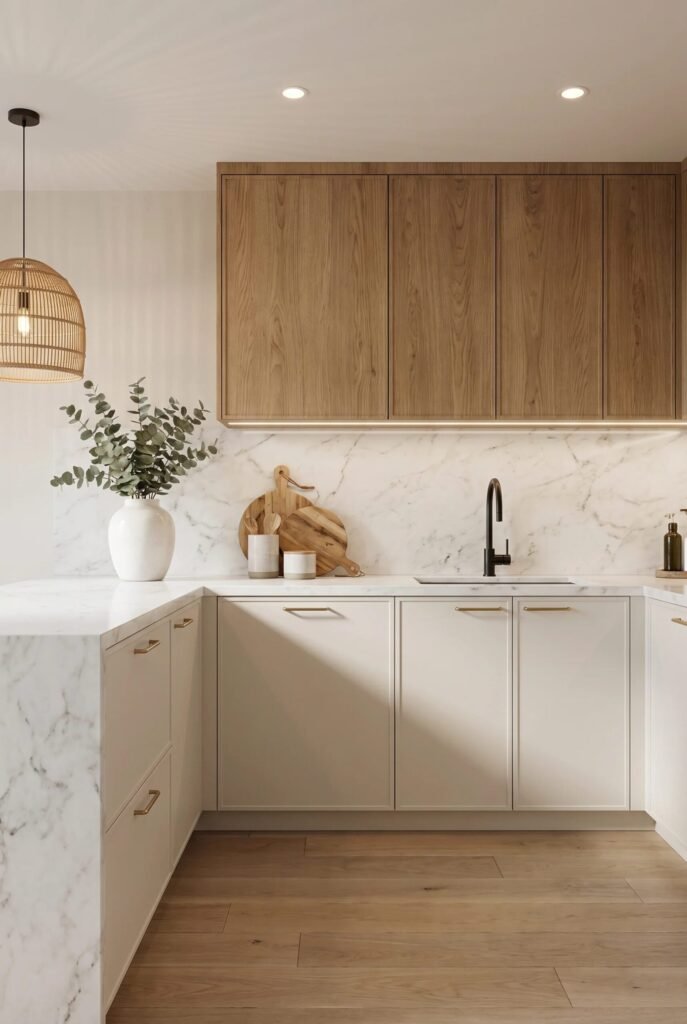
Minimalist kitchens have earned a reputation for being sleek, calm, and undeniably beautiful, but the best ones offer far more than a clean countertop and a neutral color palette. They create spaces that support the way we actually live. A thoughtfully designed minimalist kitchen reduces visual clutter, improves functionality, and makes everyday routines feel surprisingly enjoyable. That morning coffee somehow tastes better when the space around us feels organized and intentional.
Throughout these ideas, we have seen how minimalism can take many forms. Some kitchens lean warm and organic with natural wood and stone, while others embrace bold colors, dramatic contrasts, or sculptural architectural details. The common thread is not the specific style but the commitment to simplicity with purpose.
True minimalist design is not about removing personality—it is about removing distractions. When every material, color, and object serves a clear role, the entire room feels more balanced and inviting. Whether we are working with a compact apartment kitchen or a spacious open-concept layout, minimalist principles help create spaces that feel timeless, functional, and beautifully easy to live in.
Sculptural Curves That Make Minimalism Feel Warm
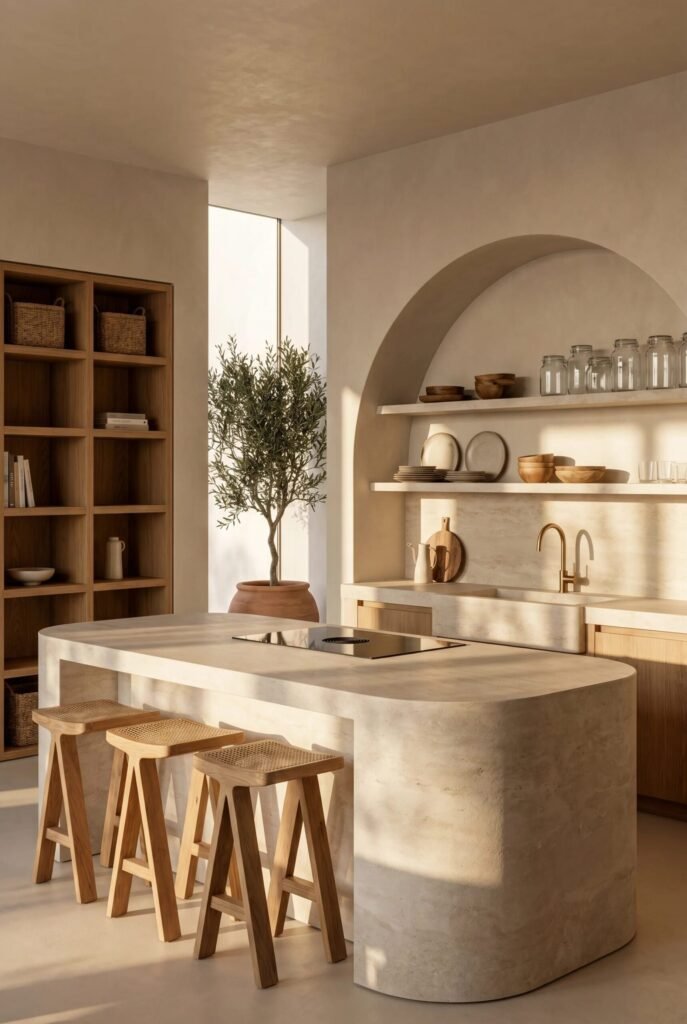
This kitchen proves that minimalism does not have to mean sharp edges, cold surfaces, or a personality crisis. The curved island instantly softens the room and creates visual flow, which is one of the most overlooked principles in minimalist design. Instead of stopping the eye with hard corners, the rounded forms encourage movement throughout the space. The arched niche behind the sink reinforces that softness, creating repetition that makes the room feel intentional rather than random. Repeating shapes is a simple designer trick that makes a space feel more expensive and cohesive.
The color palette stays firmly in the warm-neutral zone, allowing texture to become the star. Limewash-style walls, natural wood shelving, woven stools, and stone surfaces all contribute subtle variation without creating visual clutter. When working with a minimalist kitchen, we want materials doing the decorating rather than excessive accessories.
If you want to recreate this look, focus on a maximum of three core materials. Stone, wood, and plaster work beautifully together because each brings a different texture while staying visually calm. Minimalist spaces feel luxurious when they prioritize texture over decoration. The olive tree is also a smart move because organic shapes balance all the architectural elements without demanding attention.
Hidden Pantry Storage That Actually Looks Beautiful
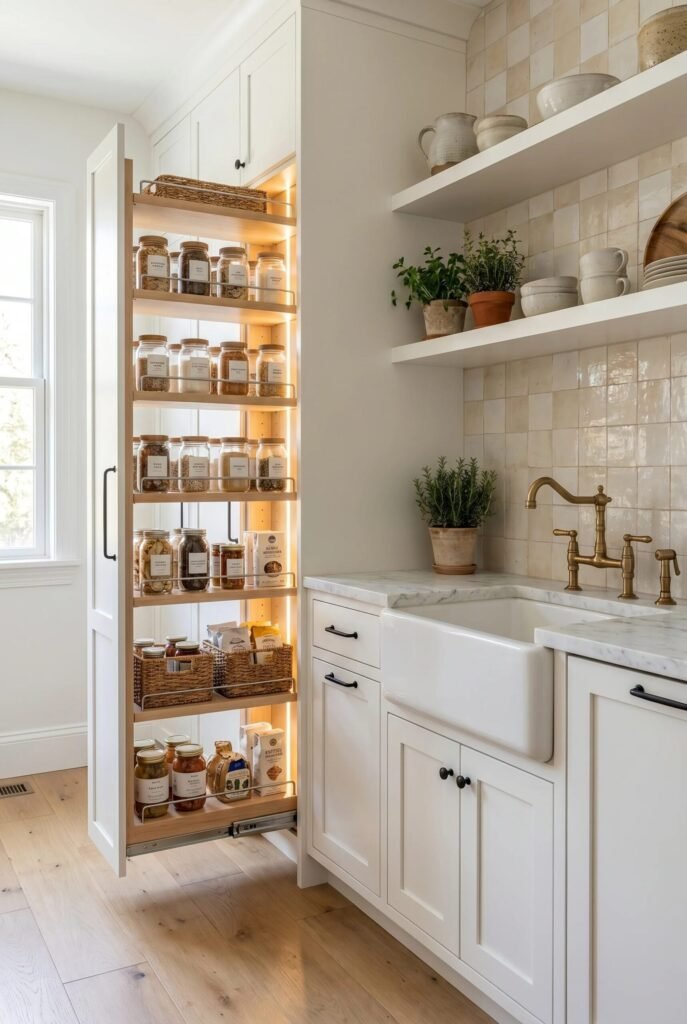
Let’s be honest. Most minimalist kitchens look amazing until real people move in with cereal boxes, snack bags, and seventeen different spice jars. This pull-out pantry solves that problem while still keeping the room visually clean. The design principle at work here is concealed organization. Instead of eliminating storage, it makes storage smarter. A successful minimalist kitchen is not about owning less stuff—it is about seeing less stuff.
The illuminated shelving creates a subtle glow that turns everyday pantry items into a curated display. Notice how consistent glass containers and neutral labels instantly reduce visual noise. The eye naturally reads similar objects as one cohesive element rather than dozens of separate distractions. That is why decanting ingredients can dramatically improve the appearance of a kitchen.
The surrounding design stays intentionally restrained with shaker-style cabinetry, warm brass fixtures, and creamy handmade-looking tile. Nothing competes for attention. If you are recreating this aesthetic, prioritize vertical storage whenever possible. Tall pull-out cabinets maximize square footage while keeping countertops clear. Countertop emptiness is often what makes a kitchen feel larger, brighter, and more minimalist than it actually is.
Soft Architectural Details Meet Functional Minimalism
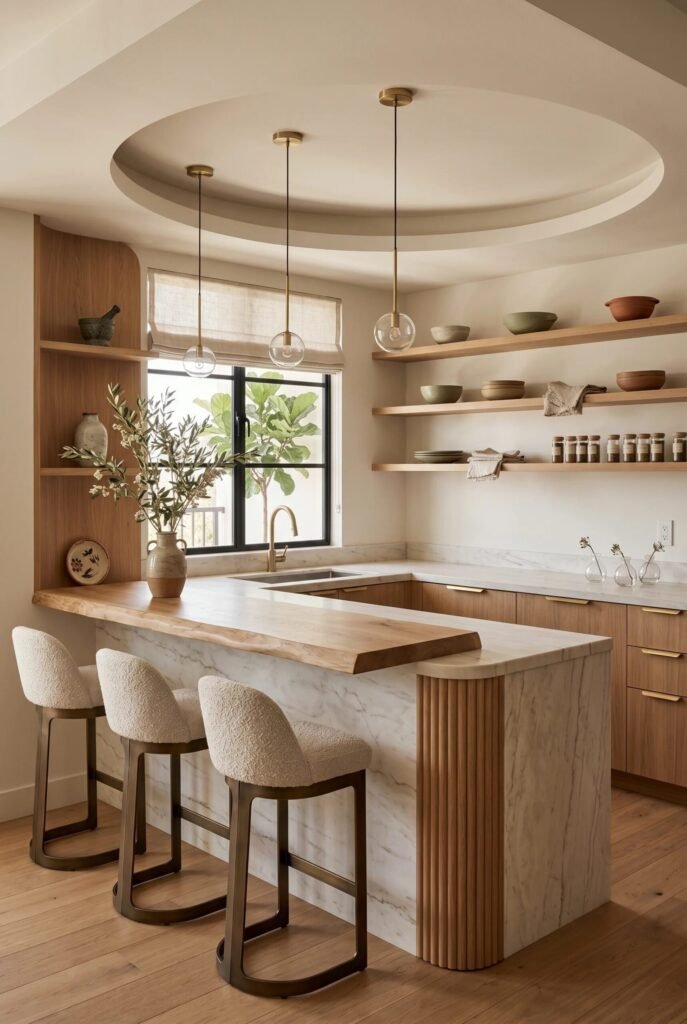
Minimalist kitchens often get accused of feeling sterile, but this space completely avoids that trap. The secret lies in combining practical layouts with subtle architectural interest. The recessed circular ceiling feature immediately creates a focal point while remaining understated. Instead of adding decoration, the design integrates beauty directly into the architecture. The best minimalist spaces build interest into the structure rather than layering it on afterward.
Open shelving is another feature that works because it is carefully controlled. Notice the limited color palette of ceramics and the generous spacing between objects. Shelves become cluttered when every inch gets filled. Here, negative space is treated as an intentional design element. That breathing room allows each piece to feel more special.
The marble island introduces visual weight while the fluted wood detail adds rhythm and texture. Together they create balance between smooth and textured surfaces. When recreating this style, keep decorative items grouped by material or color family. Random collections can quickly disrupt the calm atmosphere. Minimalist kitchens succeed when every object feels like it earned its place rather than accidentally landed there.
Bold Blue Cabinets With Minimalist Discipline
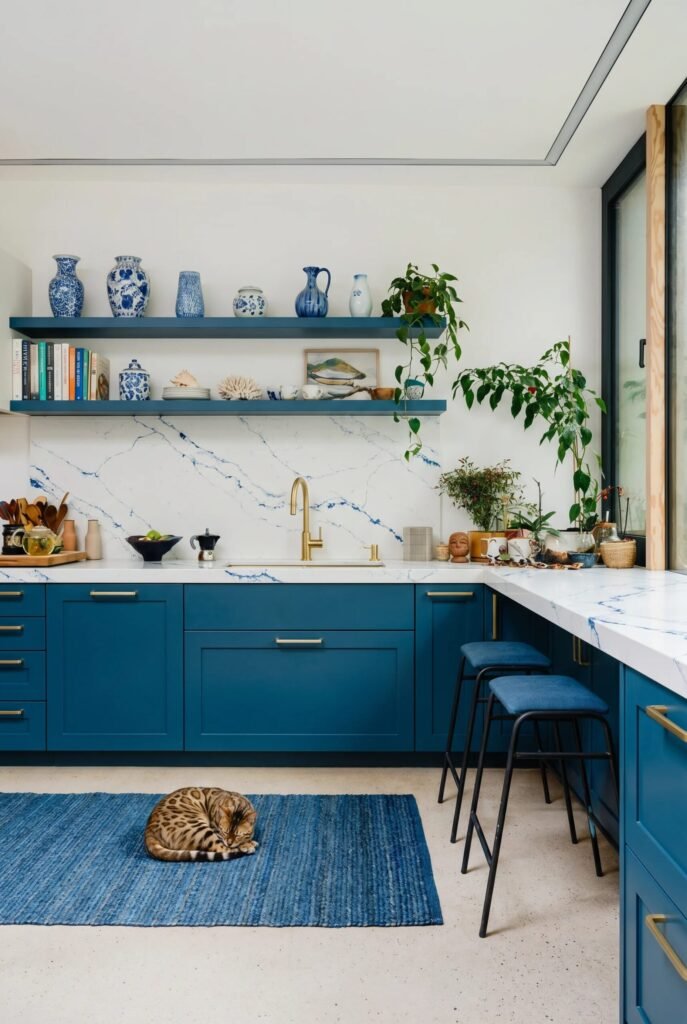
Who said minimalist kitchens must be beige? This design proves that color can absolutely coexist with minimalism when used strategically. The deep blue cabinetry acts as a dominant visual anchor while the white walls and countertops provide contrast and breathing room. This follows a classic design principle called controlled contrast. Instead of multiple competing colors, one bold hue carries the entire room. A strong focal color often looks more minimalist than several muted shades fighting for attention.
The open shelving works because it continues the blue accent story through decorative pottery and accessories. Repetition creates harmony, making the styling feel curated rather than chaotic. Even the blue rug reinforces the palette while helping define the working zone of the kitchen.
One particularly smart detail is the abundance of greenery. Plants introduce organic movement and softness, preventing the room from feeling overly polished. If you want to try a colorful minimalist kitchen, limit yourself to one statement color and one accent metal. In this case, blue and brass create a timeless combination. Minimalism is not about removing personality—it is about editing it with confidence. Also, bonus points to the sleeping cat for understanding the importance of creating a relaxed atmosphere.
Rich Walnut Cabinets Create Quiet Luxury
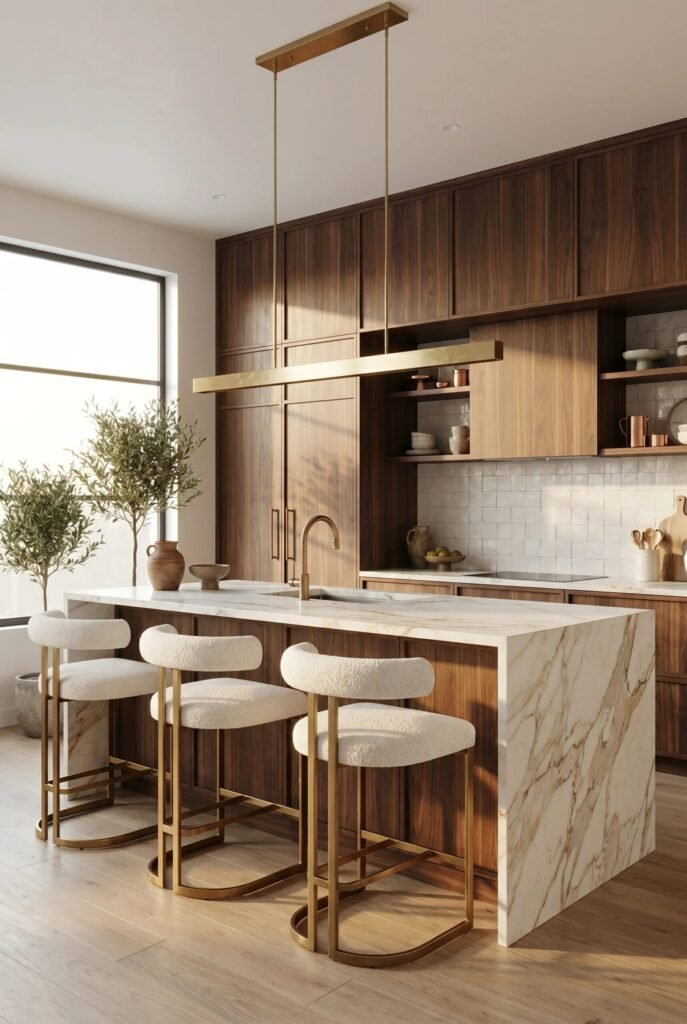
This kitchen feels like the minimalist version of a luxury hotel suite. The rich walnut cabinetry establishes warmth and depth without relying on decorative extras. Dark wood naturally commands attention, which means fewer accessories are needed overall. This is a great example of visual weight distribution. The cabinetry grounds the room while the lighter marble surfaces provide balance and contrast. When one material has strong character, everything around it can become simpler.
The waterfall island introduces a sculptural quality that feels modern yet timeless. Meanwhile, the oversized linear pendant creates a clean horizontal line that visually stretches the space. Long horizontal elements are a favorite minimalist design trick because they make rooms feel calmer and more expansive.
Another reason this kitchen works so well is restraint. The shelves contain only a handful of functional objects, and decorative styling remains minimal. If recreating this aesthetic, invest more budget into fewer high-quality finishes instead of adding numerous decorative pieces. Luxury minimalism is often about material quality rather than quantity. The combination of walnut, marble, brass, and natural light creates a layered environment that feels sophisticated without trying too hard—which, honestly, is the ultimate minimalist flex.
Compact Layouts That Work Harder
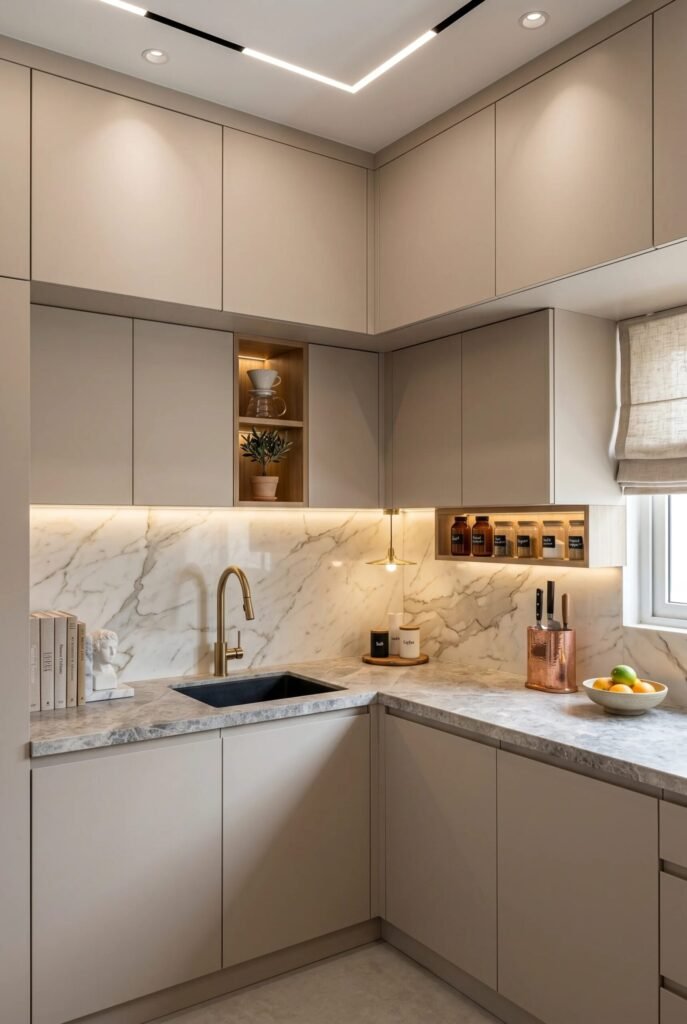
Small kitchens often get unfairly labeled as limiting, but this design shows that thoughtful planning beats square footage every single time. The L-shaped layout creates an efficient work triangle between the sink, cooktop, and preparation area, reducing unnecessary movement during everyday cooking. One of the strongest design principles here is spatial efficiency. Every cabinet, shelf, and surface serves a purpose without making the room feel crowded. Good minimalist design is not about having less space—it is about making every inch work smarter.
The warm wood accents prevent the white cabinetry from feeling flat or clinical. Notice how the wood shelf, lower cabinet panel, and cutting boards repeat the same tone throughout the room. This repetition creates visual harmony while adding warmth. The brass hardware and faucet introduce subtle contrast without overwhelming the palette.
If you want to recreate this look, prioritize multifunctional storage solutions like the rolling organizer shown here. Open-access food storage keeps essentials nearby while reducing upper cabinet dependence. In small minimalist kitchens, accessibility and organization should always be considered part of the decor. Bonus points if your kitchen feels organized enough that you stop buying the same spice three times.
Moody Minimalism With Boutique Hotel Energy
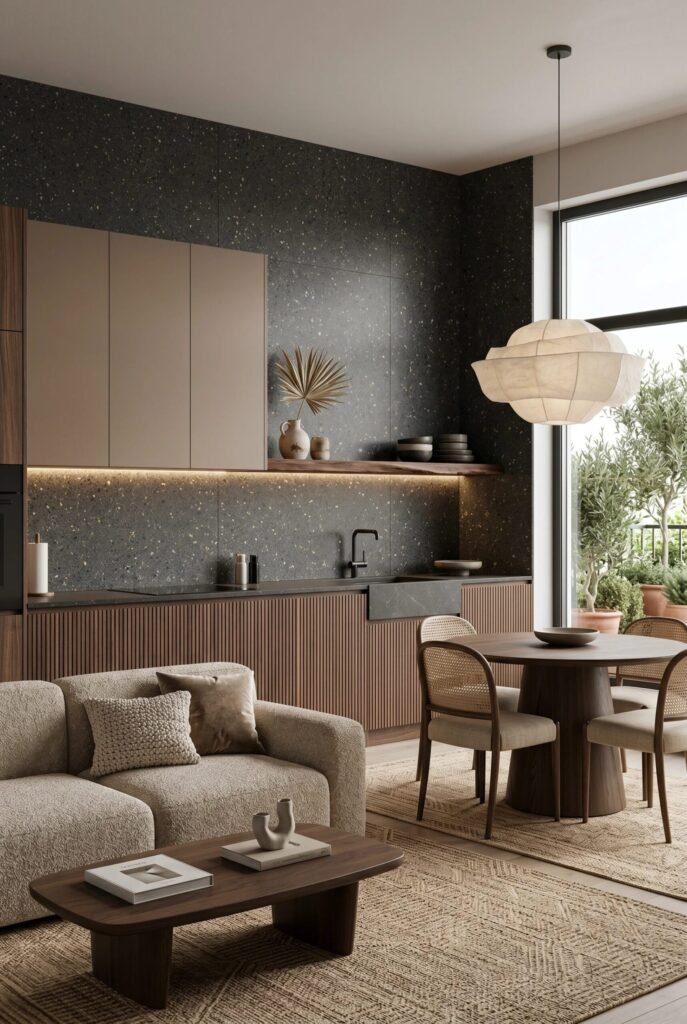
Minimalism does not always have to be bright and airy. Sometimes it looks like this—dark, dramatic, and effortlessly cool. The deep stone walls immediately create a sense of intimacy, while integrated lighting prevents the space from feeling heavy. This kitchen follows the principle of contrast management. Dark surfaces absorb visual noise, allowing the limited furnishings and decor to stand out with greater impact. A restrained palette often makes bold design decisions feel surprisingly calm.
Texture plays a huge role here. Fluted wood cabinetry, stone surfaces, woven textiles, boucle upholstery, and sculptural lighting create depth without relying on colorful accessories. When multiple textures share similar tones, a room feels layered rather than busy.
The open-plan arrangement also demonstrates excellent visual zoning. The rug defines the dining area, while lighting distinguishes different functions within the same room. If recreating this aesthetic, focus on warm ambient lighting rather than relying solely on overhead fixtures. Lighting is often what separates cozy minimalism from a space that accidentally feels like a luxury parking garage. Trust us, there is a difference.
Natural Materials Meet Modern Simplicity
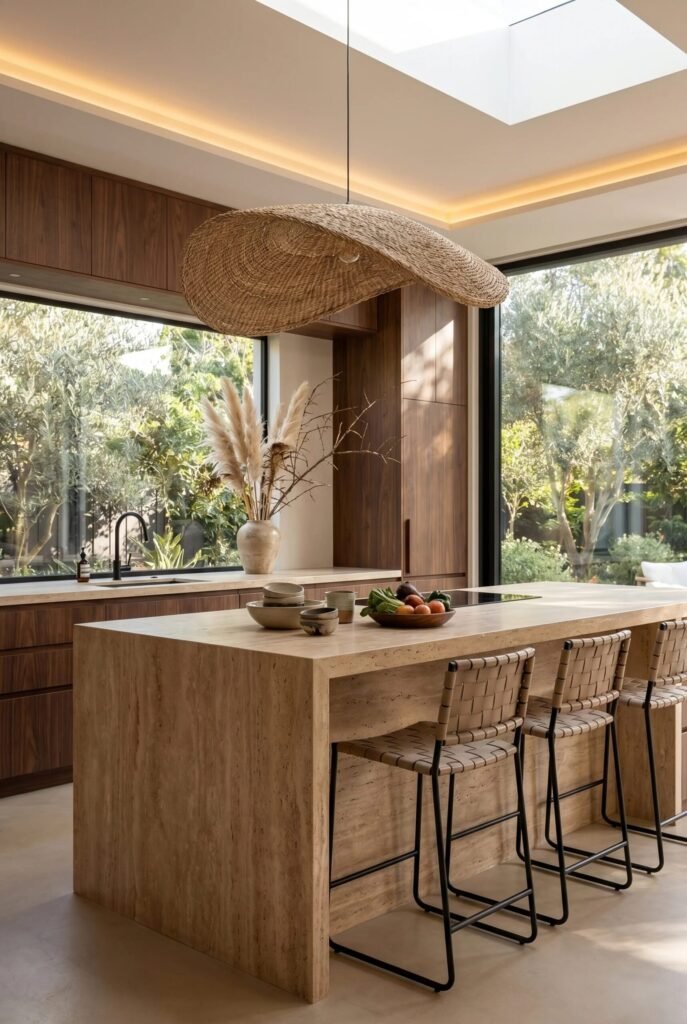
This kitchen feels like a vacation rental we would immediately save to Pinterest and then pretend we could recreate over a single weekend. The design succeeds because it leans heavily into natural materials while keeping forms simple and uncluttered. Travertine-inspired stone, walnut cabinetry, woven seating, and organic decor all work together to create a calm, grounded atmosphere. When materials are rich in texture, the overall design can remain wonderfully minimal.
One of the standout features is the oversized woven pendant. Large-scale lighting acts as functional sculpture, creating a focal point without requiring additional decoration. The substantial island reinforces this effect by anchoring the room visually and physically. Scale matters here. A few larger elements often create more impact than dozens of smaller accessories.
The expansive windows bring nature directly into the design narrative. Outdoor greenery becomes part of the decor, reducing the need for excessive styling indoors. If you are recreating this look, invest in natural textures before decorative objects. Texture creates lasting character, while trendy accessories often become clutter waiting to happen.
Crisp Contrast With Organic Warmth
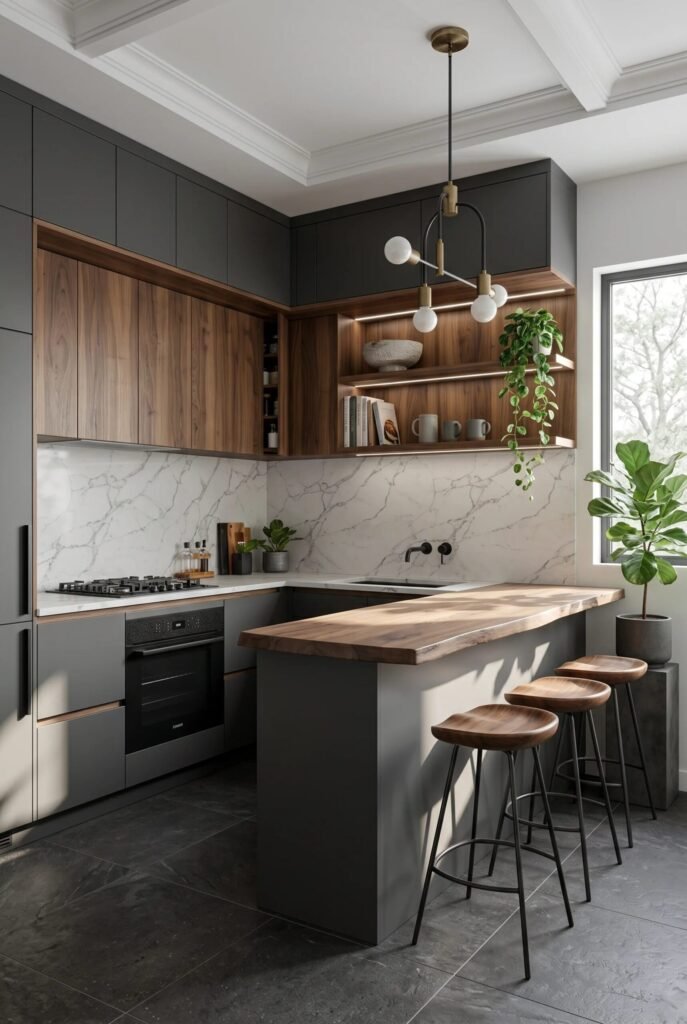
This kitchen proves that dark cabinetry and minimalism can absolutely be best friends. The charcoal cabinetry establishes structure and sophistication, while the walnut accents soften the overall composition. This is a classic example of balancing visual temperature. Dark cool tones create depth, while warm wood introduces comfort and approachability. The most successful minimalist interiors balance contrast instead of avoiding it.
The marble-look backsplash provides movement without visual chaos. Because the veining remains subtle and controlled, it adds interest while supporting the minimalist aesthetic. Open shelving introduces another layer of warmth, displaying only a handful of carefully selected items. Notice how negative space is just as important as the objects themselves.
The island extension deserves extra attention because it combines dining, prep, and social functions in one streamlined element. Multifunctionality is a cornerstone of modern minimalist design. If furniture or fixtures can perform multiple roles, the overall space remains cleaner and more efficient. Minimalist kitchens often feel larger because every piece works harder, not because they contain fewer functions.
Quiet Luxury Through Layered Neutrals
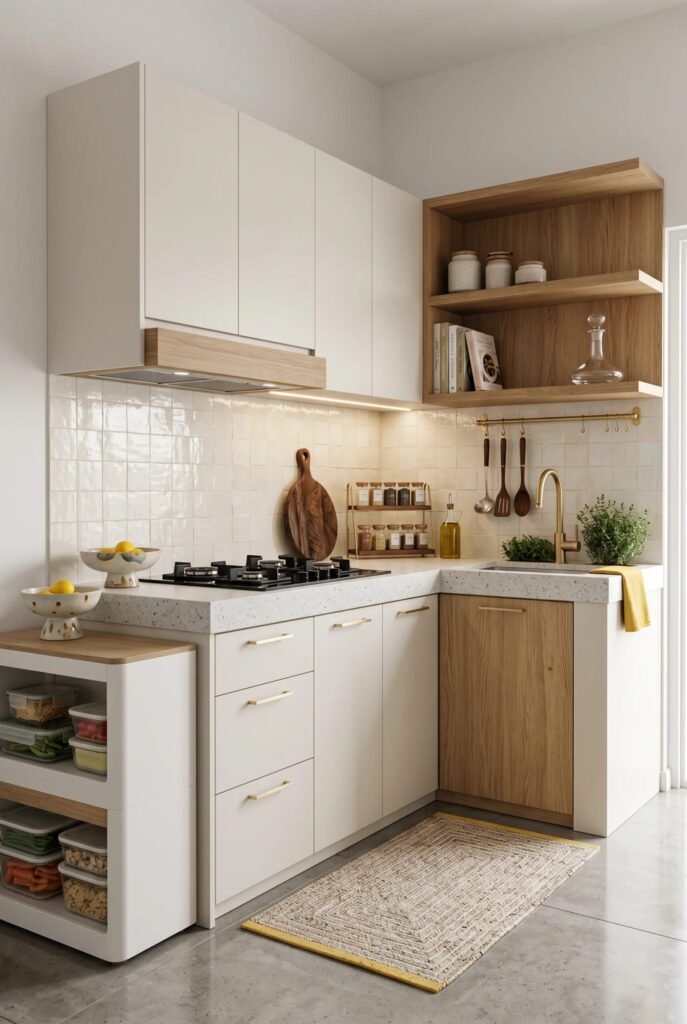
At first glance, this kitchen appears incredibly simple, but that simplicity is exactly what makes it effective. The design relies on layered neutral tones rather than dramatic color contrasts. Cream cabinetry, soft stone surfaces, warm wood, and subtle brass details create a cohesive environment where nothing competes for attention. The secret to elevated minimalism is often tonal variation rather than color variation.
The handcrafted-looking backsplash tiles introduce texture and depth while maintaining visual consistency. Because the tiles reflect light differently throughout the day, the wall gains movement without requiring bold patterns. This is an excellent example of creating interest through materiality rather than decoration.
The styling remains intentionally restrained. A few herbs, wooden utensils, ceramics, and practical kitchen tools provide personality while supporting everyday function. If you are recreating this aesthetic, focus on editing rather than adding. Before placing an accessory, ask whether it contributes beauty, function, or both. The strongest minimalist kitchens are carefully curated, not completely empty. After all, we are designing a kitchen for actual humans—not a furniture showroom that nobody is allowed to touch.
Less Visual Noise, More Space To Enjoy
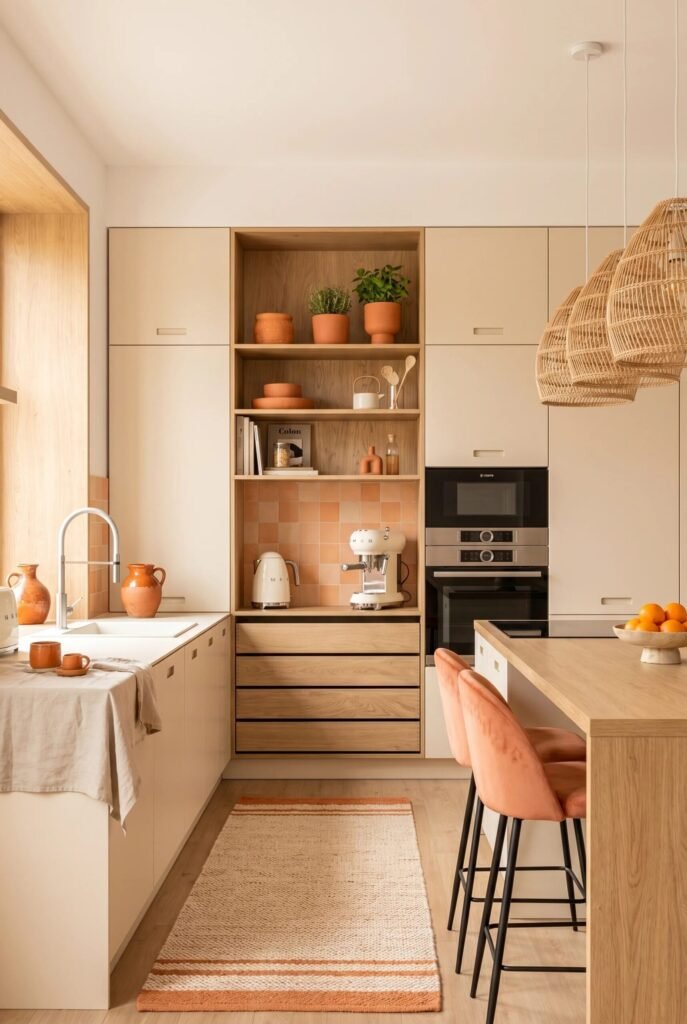
A great minimalist kitchen is not defined by what is missing. It is defined by what remains. The most successful designs carefully balance beauty and practicality, proving that simplicity can still feel warm, welcoming, and full of character. From hidden storage solutions and statement islands to rich natural materials and layered textures, these ideas demonstrate that minimalism is far more versatile than many people realize.
As trends continue to come and go, minimalist kitchens remain relevant because they focus on principles rather than passing fads. Good proportions, thoughtful organization, quality materials, and intentional styling never really go out of fashion. When the foundation of a space is strong, it continues looking fresh long after trend-driven designs begin to feel dated.
The goal is not perfection. The goal is creating a kitchen that feels calm, functional, and genuinely enjoyable to use every day. If these ideas prove anything, it is that sometimes the smartest design move is also the simplest one. And honestly, our future selves will probably appreciate having fewer surfaces to clean too.