
How to Use Rocks So Your Yard Stops Looking Like Everyone Else’s
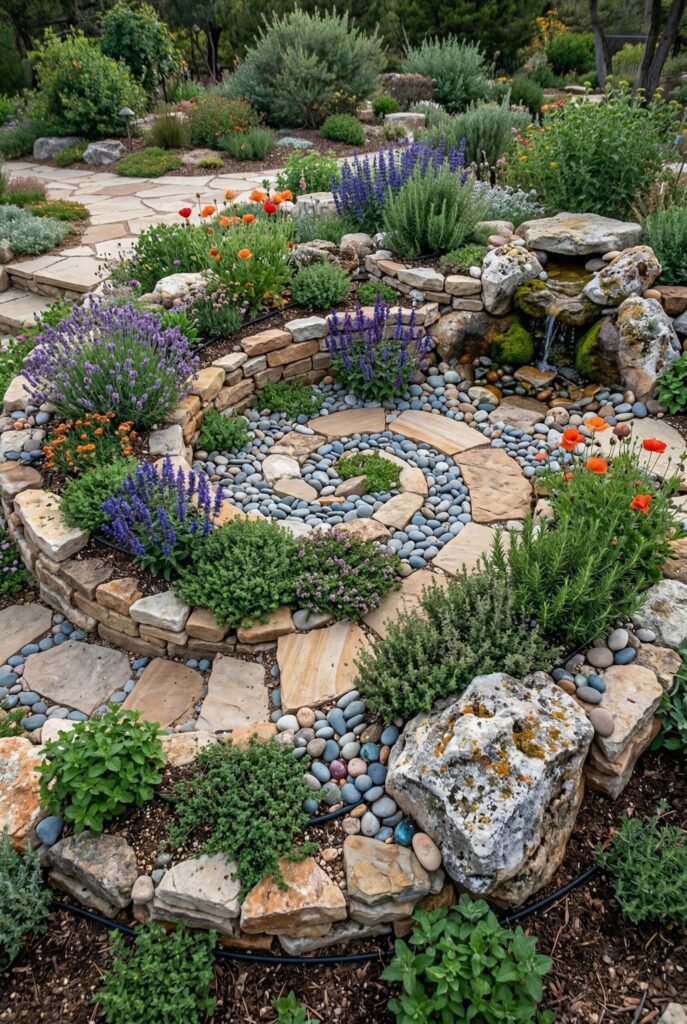
Rock landscaping isn’t just about tossing stones around and calling it a day—let’s be real, we’re building vibes. What makes rock-based design so powerful is its ability to shape movement, define zones, and create texture without relying on constant maintenance. Rocks act as the backbone of a landscape, giving structure where plants alone can’t. Whether we’re working with curved borders, dry riverbeds, or layered stone paths, every placement tells the eye where to go next.
What we love most? The balance between hard and soft elements. When we pair rugged stone with flowing plants or clean gravel with sculptural greenery, the contrast instantly elevates the space. Good rock landscaping always mixes textures, scales, and tones to avoid looking flat or artificial. It’s not random—it’s intentional chaos.
So as we go through these ideas, think less about copying and more about principles. Because once we understand the “why,” recreating the look becomes way easier (and way more fun).
Layered Stone Borders With Blooming Cottage Charm
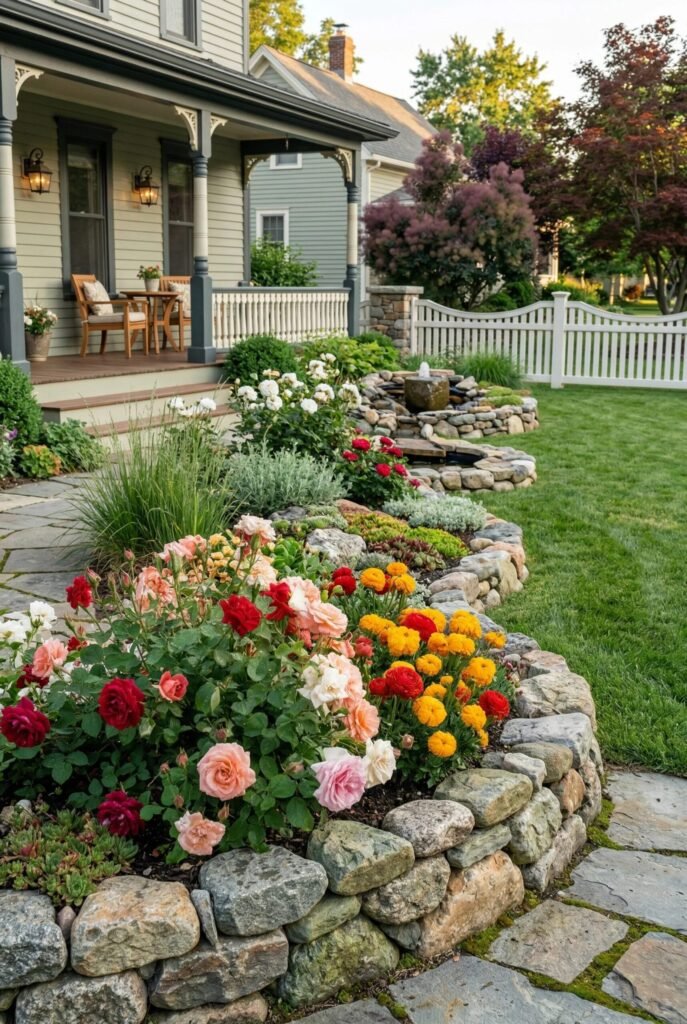
This one is basically the Pinterest dream front yard, but let’s talk why it works. The curved stone edging instantly softens the geometry of the house, creating a natural flow from porch to garden. Instead of harsh lines, we get movement. Curves in landscaping guide the eye and make small spaces feel bigger and more organic. The stacked stones also add that imperfect, rustic texture farmhouse lovers are obsessed with.
Now let’s get into the planting strategy, because it’s doing a lot. Notice how the flowers are layered by height—low ground covers, mid-height blooms like roses, and taller greenery in the back. This creates depth without chaos. We always want a “front-to-back story” in garden beds, not a random plant party. Bonus: repeating colors (reds, yellows, soft pinks) keeps it cohesive.
If we were recreating this, we’d focus on contrast. Pair soft florals with rough stone, structured porch lines with loose planting. And don’t skip the focal moment—that tiny rock fountain? It quietly steals the show without screaming for attention.
Cozy Fire Pit Garden With Natural Stone Pathways
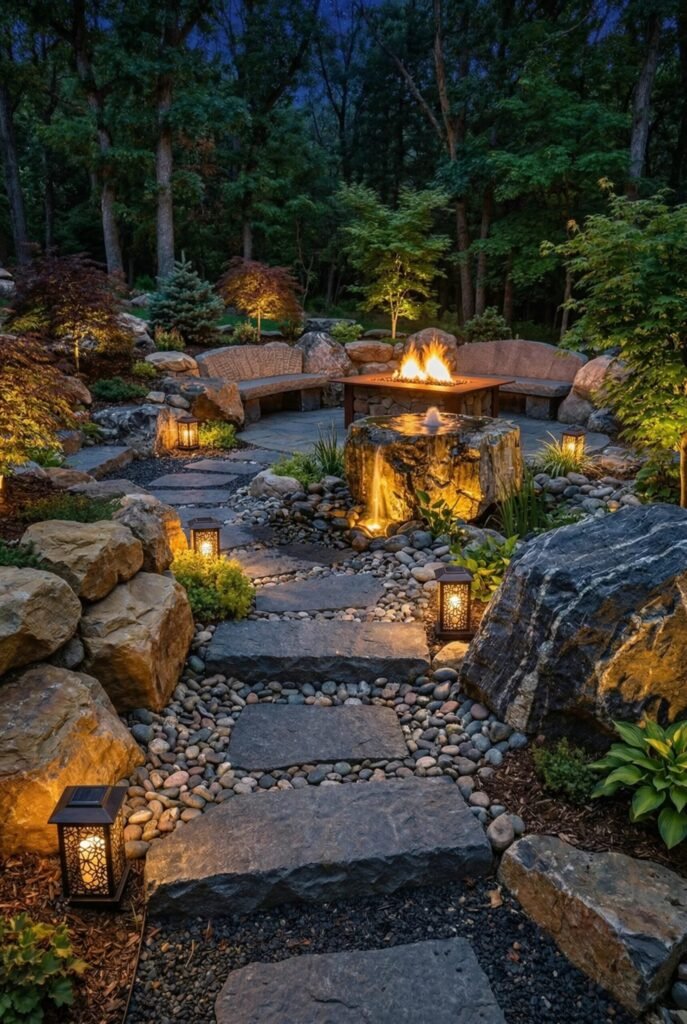
Okay this is less “yard” and more “main character energy.” The layout is circular, which is key. Circular designs naturally invite gathering and conversation. When we design outdoor seating, shape matters just as much as furniture. The fire pit acts as the visual anchor, and everything radiates outward from it.
The stepping stone path is doing double duty—function and storytelling. Instead of a straight walkway, the staggered stones slow you down, making the space feel intentional and almost cinematic. Add in the pebble ground cover and suddenly we’ve got layered texture underfoot. Mixing large slabs with small gravel creates contrast and prevents the space from feeling flat.
Lighting here is the secret sauce. Low lanterns, warm tones, subtle uplighting on trees—it’s cozy without trying too hard. If we’re copying this vibe, keep lights below eye level and warm in temperature. Harsh white lighting? Immediate vibe killer.
Minimal Zen Rock Garden With Flowing Path
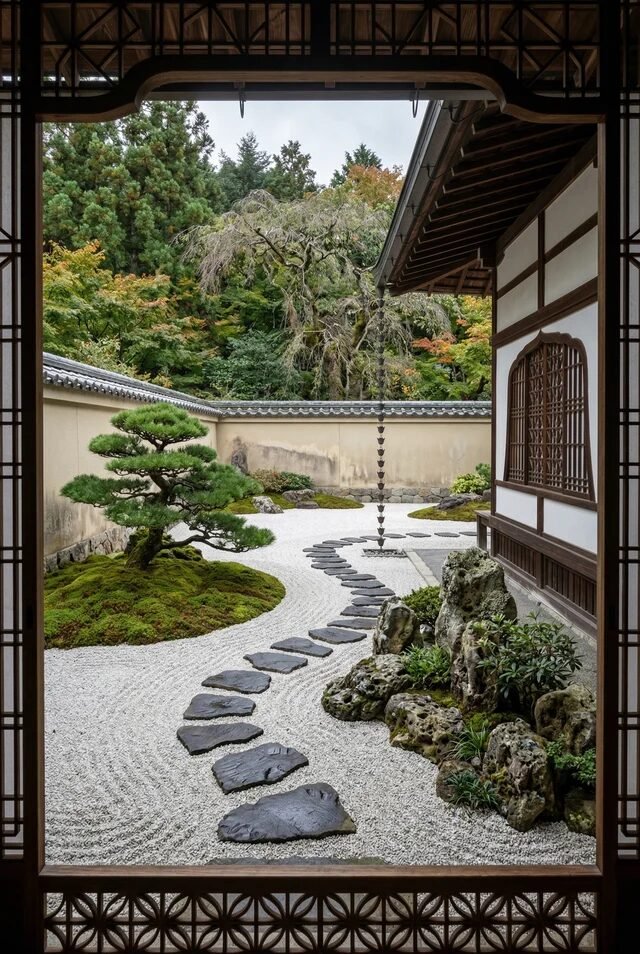
This is for when we want peace, clarity, and zero visual chaos. The design leans heavily on negative space, which is honestly the hardest thing to pull off. Empty space is not wasted space—it’s what makes everything else feel intentional. The raked gravel creates movement, almost like water, while the stepping stones give direction.
Notice how asymmetry plays a role here. The stones aren’t evenly spaced, and that’s on purpose. It mimics nature, which is never perfectly balanced. The single sculptural tree becomes the focal point, supported by moss and rocks. In minimalist landscapes, fewer elements mean each one has to work harder visually.
If we’re recreating this, restraint is everything. Limit your plant palette, stick to neutral tones, and focus on texture over color. And yes, maintenance matters—those clean gravel lines don’t happen by accident. This is low clutter, not low effort.
Backyard Rock Stream With Soft Ambient Lighting
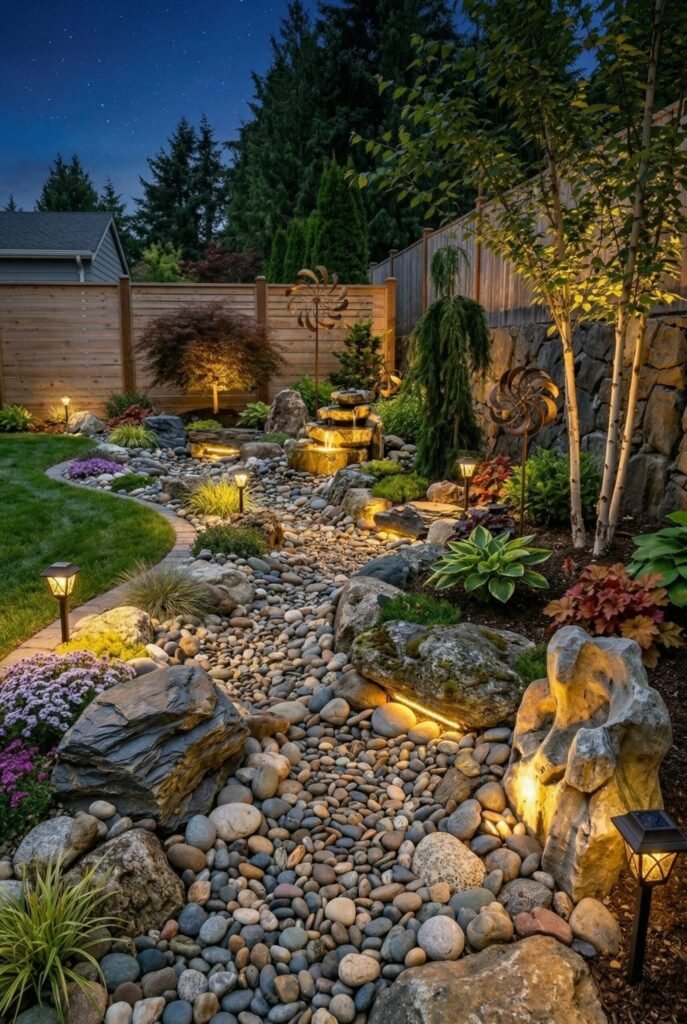
This setup is basically a dry riverbed glow-up, and we love that for us. The winding rock stream creates natural movement through the yard, guiding the eye from one zone to another. Curved pathways and “streams” make spaces feel larger because they reveal the garden gradually. It’s like visual storytelling but for landscaping.
The mix of stone sizes is doing heavy lifting here. Large boulders anchor the design, while smaller pebbles fill in the gaps and add texture. Then we layer in plants along the edges to soften everything. Hardscape should always be balanced with greenery to avoid that overly harsh, construction-site look.
And let’s talk lighting—because wow. Warm lights tucked between rocks create depth and drama at night. If we’re recreating this, we’d hide lights slightly behind stones or plants so the glow feels natural, not staged. Think “mood lighting,” not “interrogation room.”
Lush Rock Garden Border With Natural Water Detail
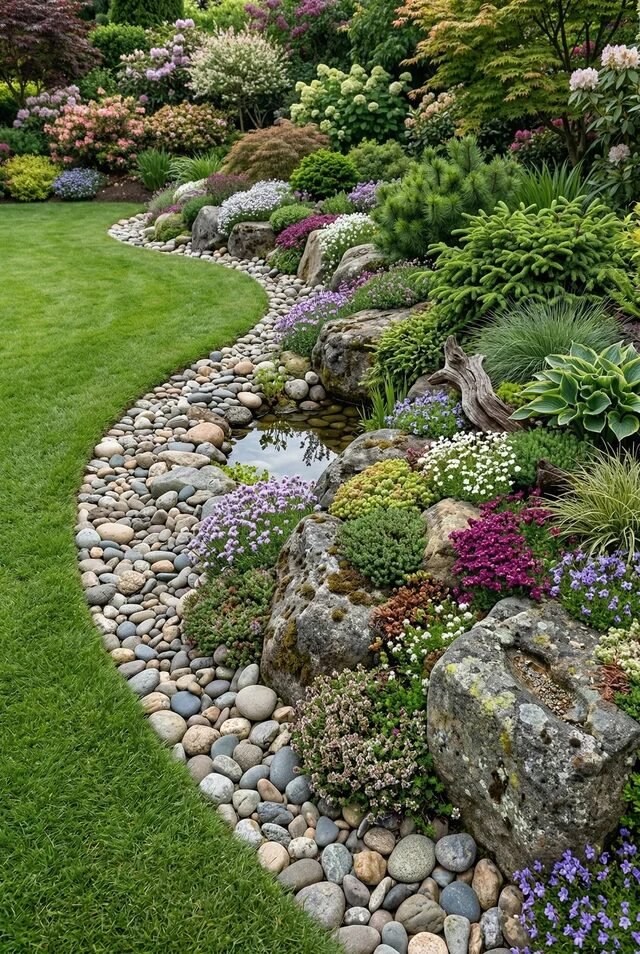
This one is giving “effortless but actually planned for hours.” The rock border curves alongside the lawn, creating a soft division without feeling boxed in. Blending lawn edges with stone and plants creates a seamless transition instead of a harsh boundary. It’s subtle, but it makes everything feel more high-end.
The planting here is all about density and variation. Different leaf shapes, heights, and shades of green keep it visually rich, while pops of purple and white flowers add rhythm. We want controlled variety—not randomness—so repeating plant types is key. The small water feature adds movement and reflection, making the space feel alive.
If we’re trying this at home, focus on layering and scale. Bigger rocks first, then medium, then small fillers. And don’t forget: a slightly overgrown look is part of the charm. Too perfect, and suddenly it feels fake.
Colorful Rock Pathway With Groundcover Drama
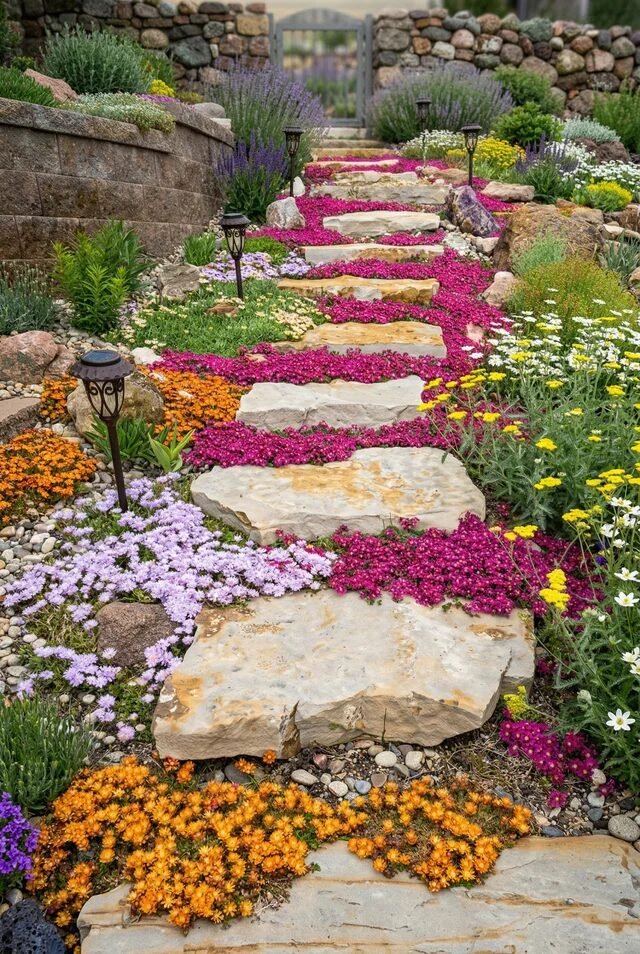
This one is basically a garden saying “yes, I am the moment.” The oversized stepping stones create a strong visual rhythm, pulling you forward through the space. But the real star? That vibrant groundcover weaving between them. Using low-growing plants instead of plain gravel instantly softens hardscape and adds movement. It’s structured, but still playful.
What makes this work is color control. Even though it looks wild, the palette is actually curated—pinks, purples, yellows, and soft greens repeating throughout. That repetition keeps things cohesive instead of chaotic. We want bold color, but with boundaries, otherwise it turns into visual noise real fast. The irregular stone placement also adds a natural, slightly whimsical flow.
If we’re recreating this, spacing is key. Leave enough room for plants to spill over edges and blur the lines. And choose hardy groundcovers like creeping phlox or thyme—pretty and practical. Because yes, we want cute, but we also want low-maintenance energy.
Natural Rock Pond With Layered Waterfall Feature
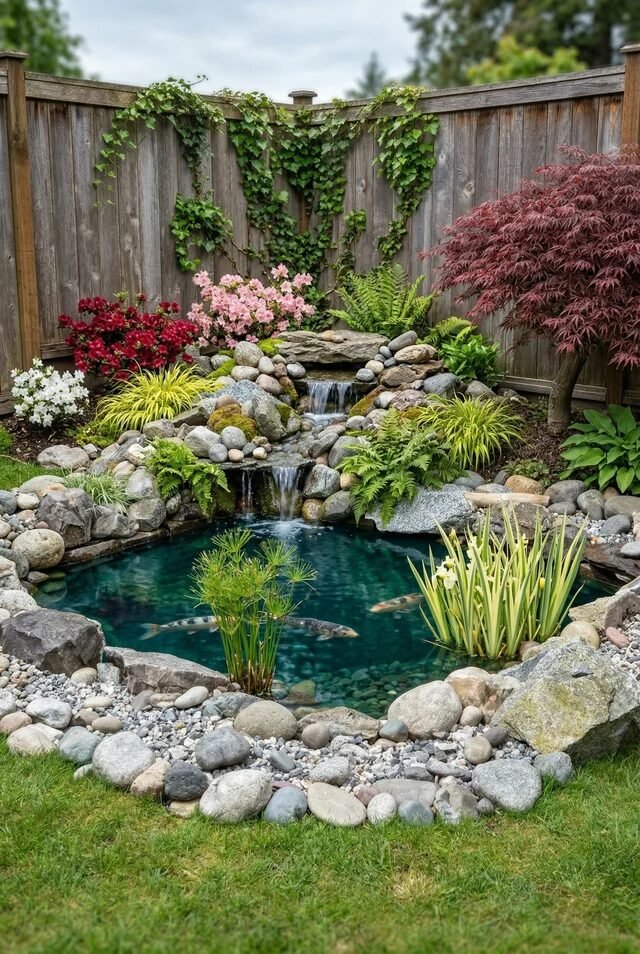
Okay, this is giving luxury backyard spa without actually booking a spa. The design centers around the pond as a focal point, with the waterfall adding both sound and movement. Water features instantly elevate a space because they engage more than just visuals—they bring sound and reflection into play.
Let’s talk structure. The rocks are layered in a way that mimics natural terrain, not stacked like a wall. That’s intentional. We always want rocks to feel “placed by nature,” meaning varied sizes, slightly asymmetrical, and partially embedded into the ground. This prevents that overly constructed look.
Planting here is also strategic. Taller plants sit behind the waterfall, while softer, lower greenery surrounds the pond edge. This frames the water feature without blocking it. If we’re recreating this, think in zones—background, midground, foreground. And don’t forget water clarity: dark liners + clean edges = that dreamy, glassy pond look.
Modern Rock Border With Clean Curved Lines
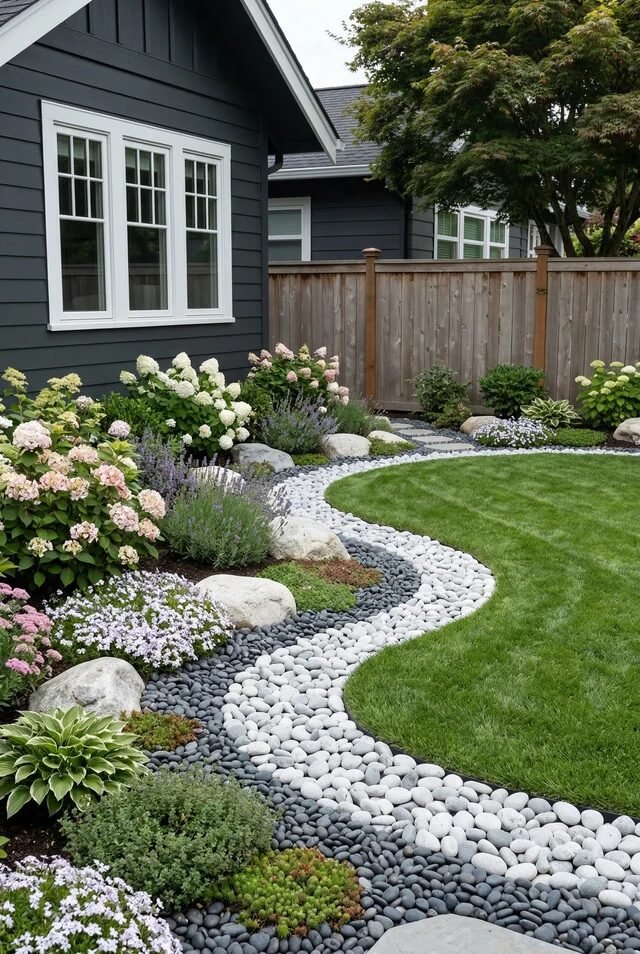
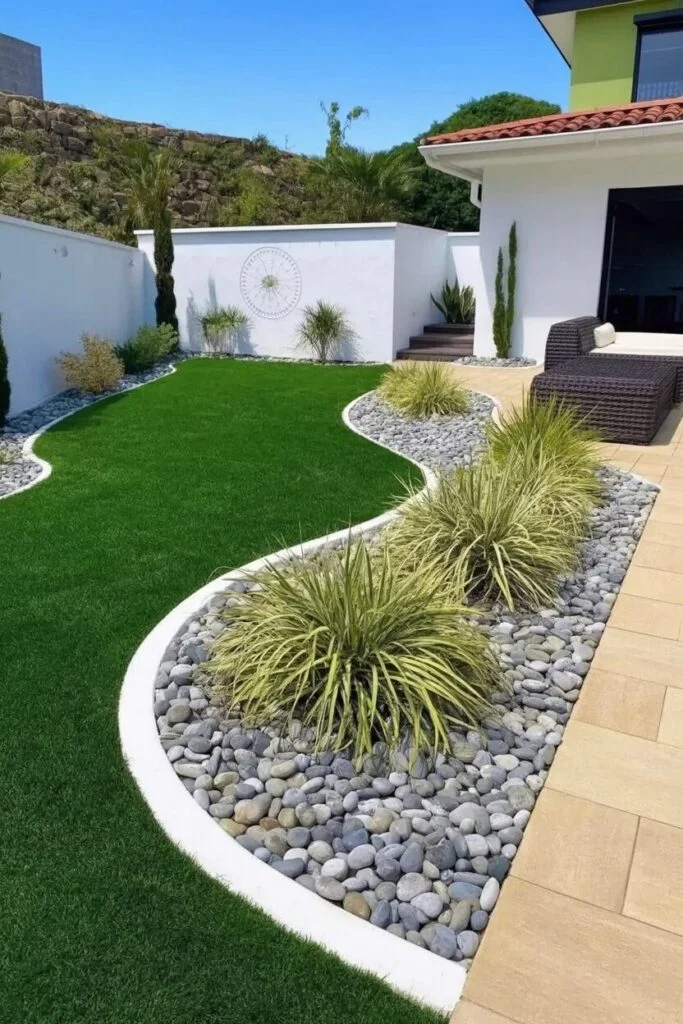
This is what happens when minimalism meets landscaping and actually works. The flowing rock border mirrors the curve of the lawn, creating a super satisfying visual contrast. Curved lines soften modern homes and prevent outdoor spaces from feeling too rigid or boxy.
The real design trick here is contrast in color and texture. Light and dark pebbles are layered together, creating a subtle pattern that feels elevated but not busy. Then we add structured plants like hydrangeas and low shrubs for softness. Mixing clean lines with organic textures keeps the space balanced—not too sterile, not too wild.
If we’re copying this, edging matters more than you think. Crisp separation between lawn and rock is what makes it look expensive. Use steel or hidden edging to keep everything in place. And keep your palette tight—this isn’t the place for random colors sneaking in.
Desert Rock Garden With Sculptural Succulents
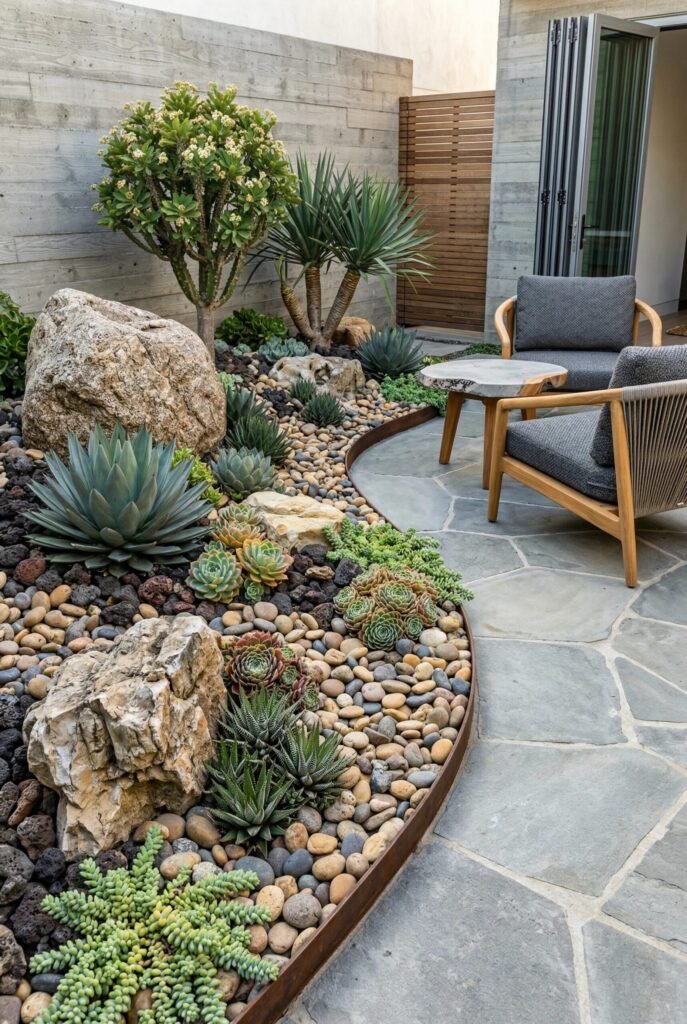
This is low-water landscaping but make it aesthetic. The design leans into sculptural plants like succulents and small trees, paired with layered rock textures. When plants have strong shapes, they double as decor, not just greenery. It’s giving modern, calm, and slightly “we have our life together.”
The curved border around the patio creates a natural transition between hardscape and planting area. Notice how the rocks vary in size—from chunky boulders to small pebbles. That variation keeps the space visually interesting. Scale contrast is what stops minimalist gardens from feeling flat or boring.
If we’re recreating this, drainage is everything. Succulents hate soggy soil, so layer gravel underneath and choose well-draining soil mixes. Also, group plants in clusters instead of spacing them evenly. It feels more natural—and way more designer.
Contemporary Rock Garden With Structured Layers
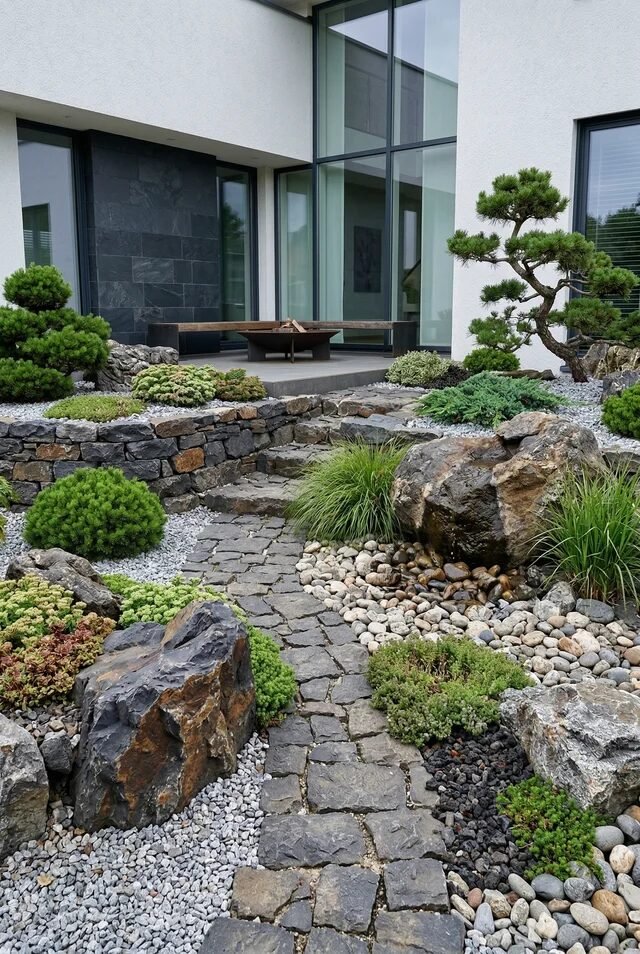
This one is clean, modern, and quietly flexing good design skills. The layout uses levels—raised stone platforms, steps, and planted zones—to create depth. Layering vertically is one of the easiest ways to make a small space feel more dynamic and architectural.
The material palette is super intentional. Dark stones, light gravel, and greenery create a balanced contrast that feels polished. And those larger rocks? They act as anchors, grounding the entire design. Every rock should feel like it belongs, not like it was randomly dropped in.
If we’re recreating this, think composition first. Start with your largest stones (your “statement pieces”), then build around them with smaller rocks and plants. And keep pathways slightly irregular—it adds movement and prevents that overly planned, showroom vibe.
Design Smarter Not Harder With Timeless Rock Elements
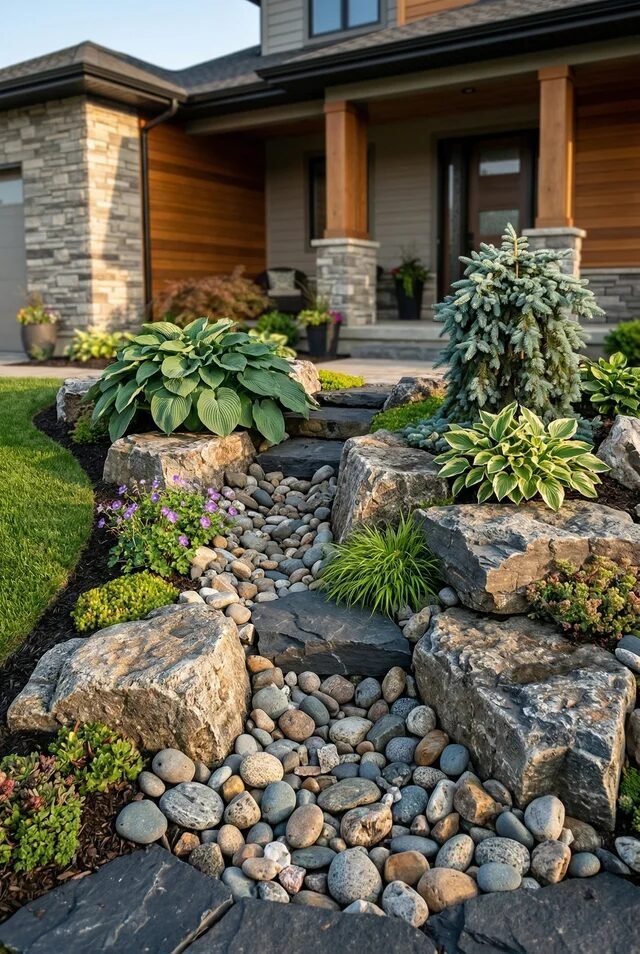
At the end of the day, rock landscaping wins because it’s both aesthetic and practical—basically the dream combo. It reduces maintenance, improves drainage, and adds year-round structure even when plants decide to take a seasonal break. A well-designed rock layout should still look good in winter, not just peak summer. That’s how we know it’s working.
The real secret? Layering and restraint. We don’t need ten different stone types or every plant from the garden center. Instead, we focus on a cohesive palette, varied sizes, and intentional placement. Repetition creates harmony, while variation keeps things interesting. That balance is what separates a designed yard from a chaotic one.
If we take anything from this, let it be this: start with structure, then soften with greenery, and finish with details like lighting or water features. Because when rocks lead the design, everything else falls perfectly into place.