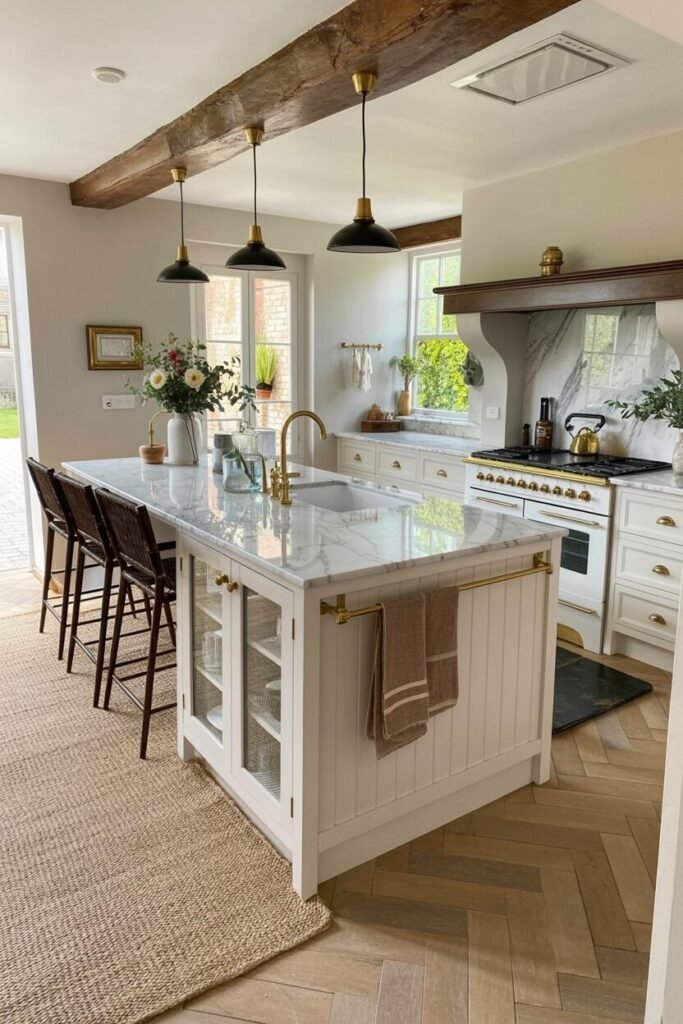

Grandmacore Kitchens Explained
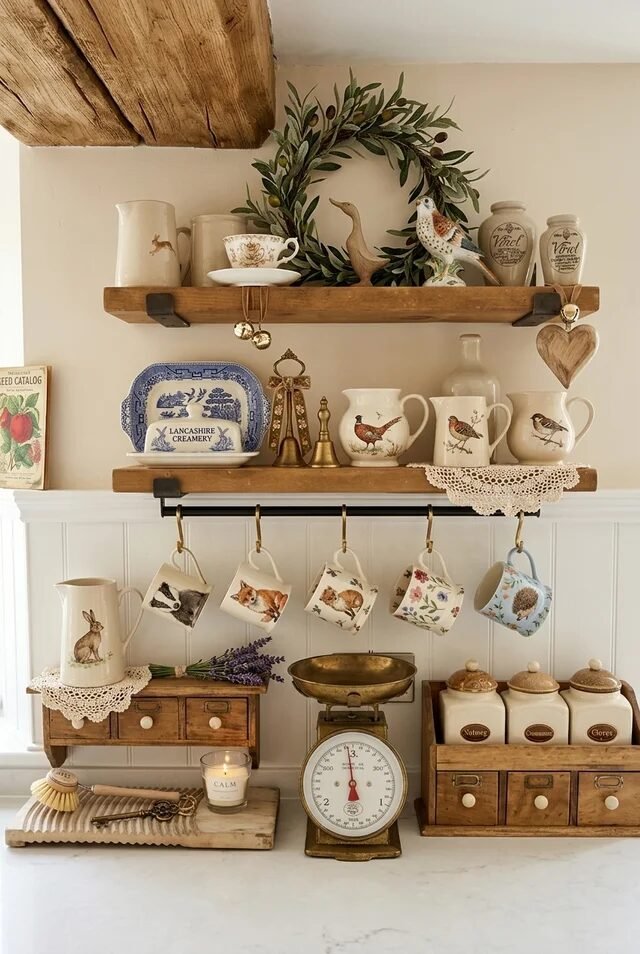
Grandmacore kitchens aren’t just about aesthetics—they’re about emotional design, and yes, we’re getting a little sentimental about it. This style thrives on comfort, memory, and the quiet beauty of things that feel lived-in. We’re not chasing perfection here; we’re building spaces that feel like they’ve been loved for decades. That’s the real magic.
What makes grandmacore work is its balance between softness and structure. You’ll notice layers of textiles, vintage ceramics, and natural materials, all grounded by warm wood tones or classic layouts. It’s the layering of textures and stories that creates depth, not just the objects themselves. Nothing feels random, even when it looks effortless.
As we explore these ideas, think less about copying and more about curating. Start with pieces that feel personal, then build around them slowly. Because honestly? The best grandmacore kitchens don’t look styled—they feel remembered.
Sunlit Cottage Breakfast Nook With Vintage Charm
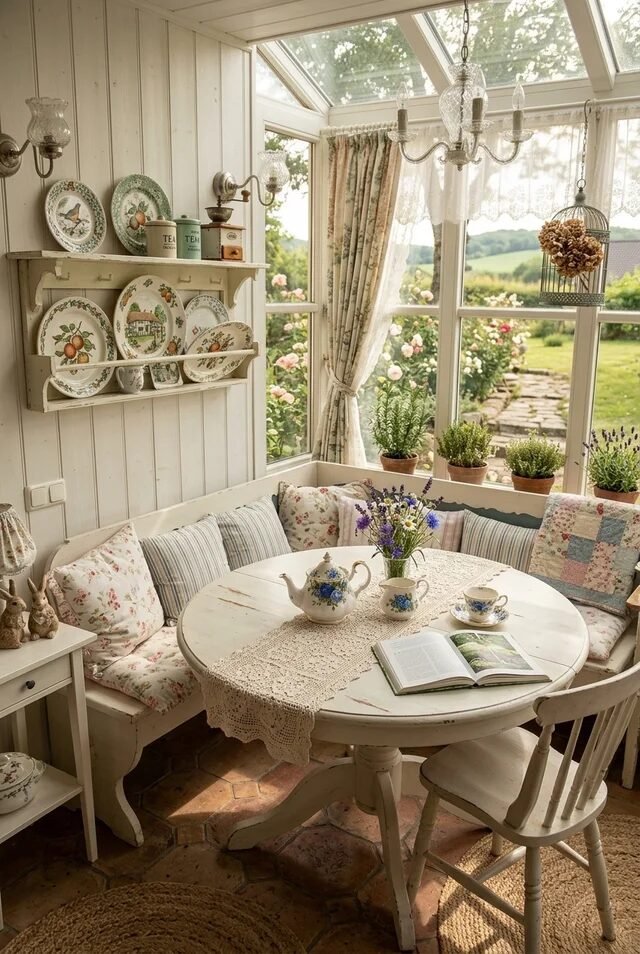
There’s something borderline unfair about how cozy this setup is. A built-in corner bench instantly creates a sense of enclosure, which is key for grandmacore—we’re designing for emotional warmth, not just function. The round table softens all those vertical panel lines, balancing the rigidity of the walls with something more inviting. And don’t ignore that skylight moment—it’s basically free mood lighting all day.
The layering here is doing quiet heavy lifting. Florals, stripes, lace, and patchwork somehow coexist without chaos because the palette stays soft and muted. That’s your takeaway: if you want to mix patterns, keep colors in the same tonal family so nothing screams for attention. The result feels curated, not cluttered.
If we’re recreating this, prioritize seating comfort first. Add cushions with varied textures, then build upward with small decor like plates or hanging accents. Bonus tip: a slightly worn table finish? Non-negotiable. Perfection is not invited to this aesthetic.
Warm Wooden Cabinet Styling With Hanging Mug Display
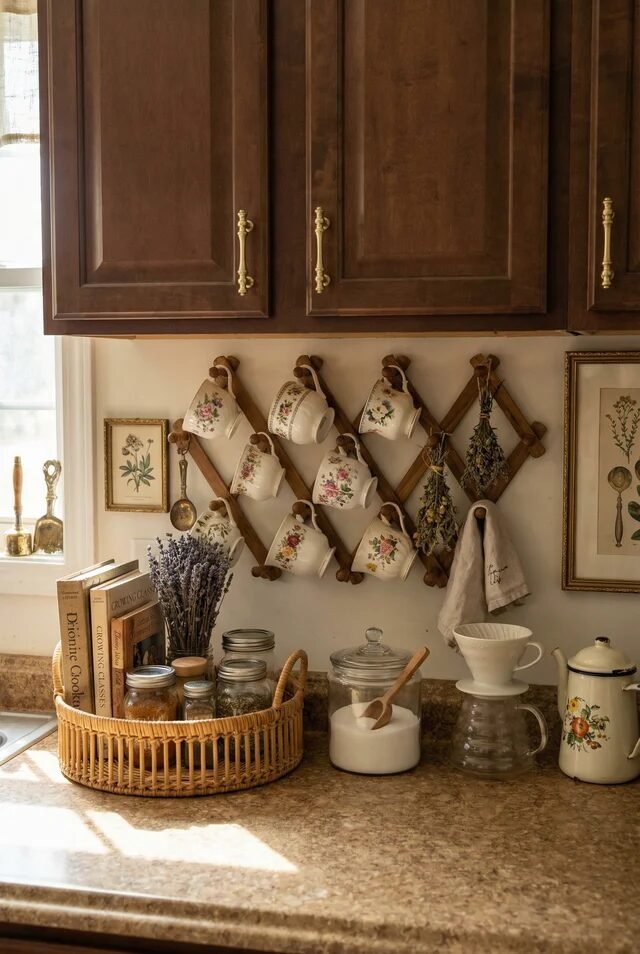
This is where function meets “wait… this is actually cute?” Hanging mugs aren’t just storage—they create vertical rhythm across an otherwise flat wall. We’re turning everyday objects into decor, which is peak grandmacore energy. The diamond rack shape adds visual movement, breaking the boxy feel of the cabinets above.
Notice how the countertop styling doesn’t feel random. Everything is grouped intentionally: jars together, books stacked, florals clustered. That’s called zoning. Instead of scattering items, we group by purpose or material to create calm visual pockets. It makes even busy spaces feel organized.
If you’re copying this look, mix materials like glass, ceramic, and wood to avoid a flat aesthetic. Also, lean into “used but loved” pieces—perfectly new mugs won’t hit the same. And please, let something be slightly imperfect. That’s literally the charm.
Layered Vintage Kitchen With Open Shelving Magic
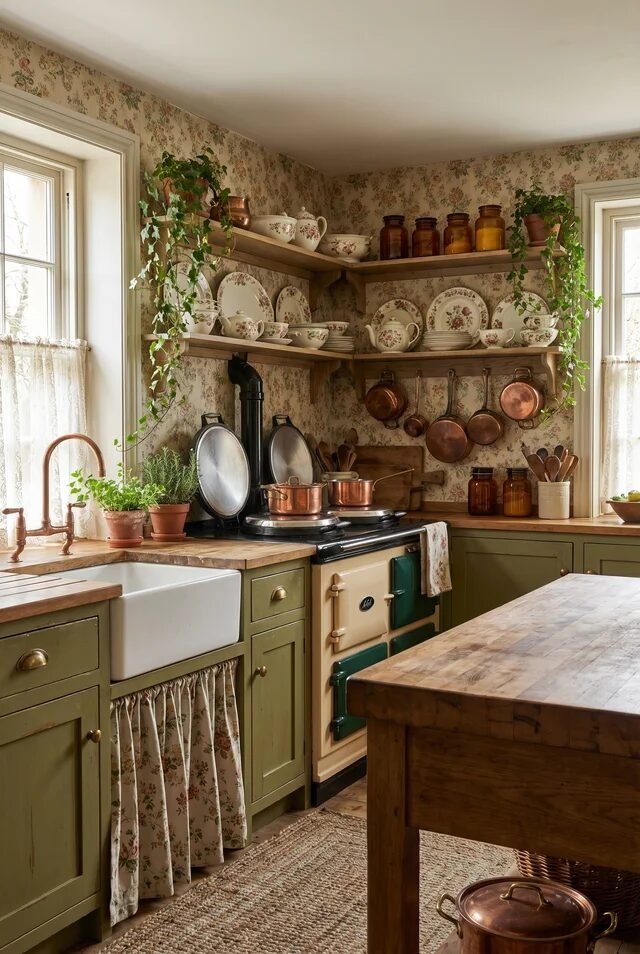
This kitchen is basically storytelling in physical form. Open shelves are doing more than storage—they’re displaying a lifestyle. The key here is layering heights and depths. Plates stand upright, jars sit forward, plants drape downward. This creates visual dimension so your shelves don’t look like a flat lineup of stuff.
Color-wise, we’ve got earthy greens, warm woods, and copper accents. It feels grounded because everything pulls from nature. That’s a design shortcut: if you’re unsure what colors to combine, steal from nature—it rarely fails. The result feels cohesive without trying too hard.
When recreating, don’t overcrowd your shelves. Leave breathing room so each piece feels intentional. Add trailing plants last—they soften hard edges and instantly make everything feel lived-in. And yes, slightly mismatched cookware? That’s not a mistake. That’s the whole point.
Vintage Wall Gallery With Functional Kitchen Decor
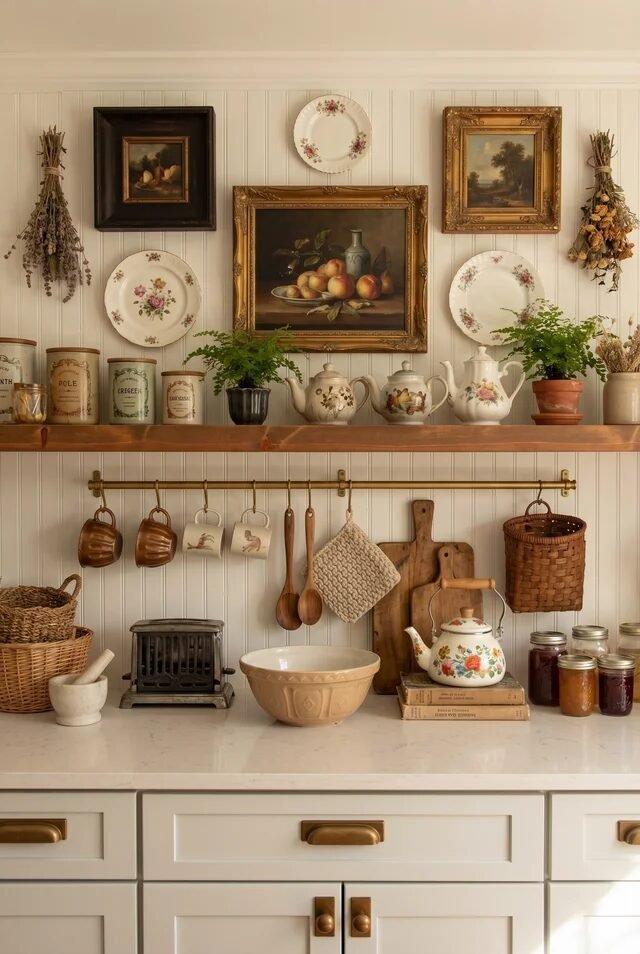
This is where wall decor becomes a full personality. Plates, paintings, dried herbs—nothing here is random. The composition works because of balance. Larger frames anchor the center, while smaller plates and objects orbit around them. We’re basically creating a gallery wall, but make it edible-adjacent.
There’s also a strong horizontal line from the shelf, which grounds the entire arrangement. Below it, functional items like mugs and utensils hang neatly, keeping the space practical. That’s the trick: blend decorative and usable elements so your kitchen doesn’t feel like a museum.
If you’re building this, start with one central piece and expand outward. Stick to a tight color story—creams, muted florals, warm woods—to avoid visual chaos. And don’t overthink spacing. Slight irregularity actually makes it feel more authentic and less “Pinterest-perfect.”
Rustic Shelf Styling With Heirloom Kitchen Accents
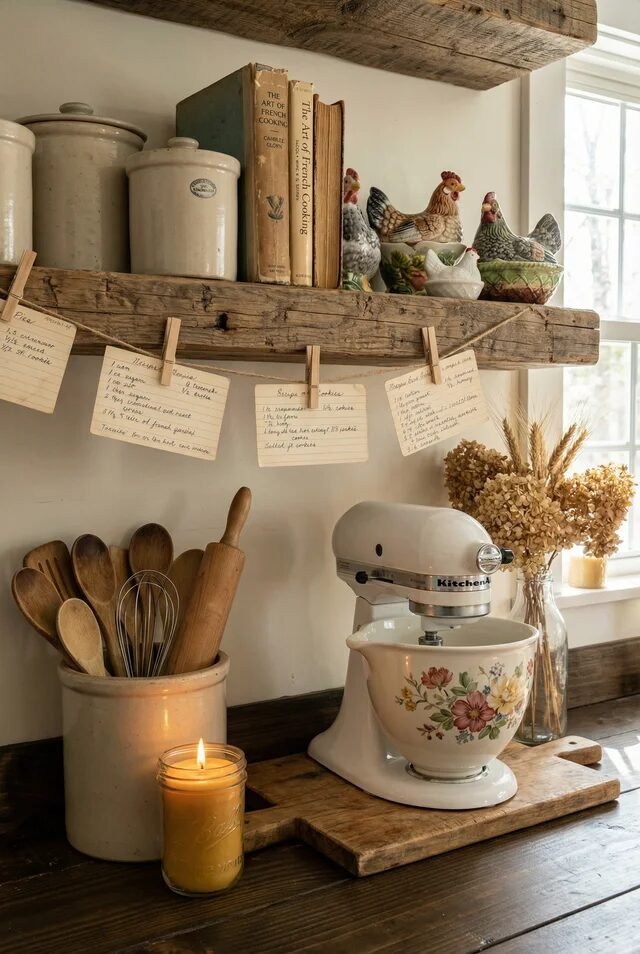
This setup is giving “passed down through generations” in the best way. The chunky wood shelf adds weight, which is crucial when you’re styling lighter, delicate objects. Contrast is what makes this look rich—heavy wood against soft ceramics and paper textures.
The mini recipe cards clipped below? That’s storytelling again. It adds movement and a human touch, like someone actually uses this space (imagine that). The styling works because items are grouped in threes and varied in height—classic design trick that never fails.
When recreating, anchor your vignette with one larger object (like a mixer or crock), then build around it with smaller pieces. Add something organic—dried flowers, herbs, even a candle—to soften the look. And honestly, if it looks a little nostalgic and slightly chaotic? You nailed it.
Hanging Basket Ceiling With Rustic Farmhouse Layers
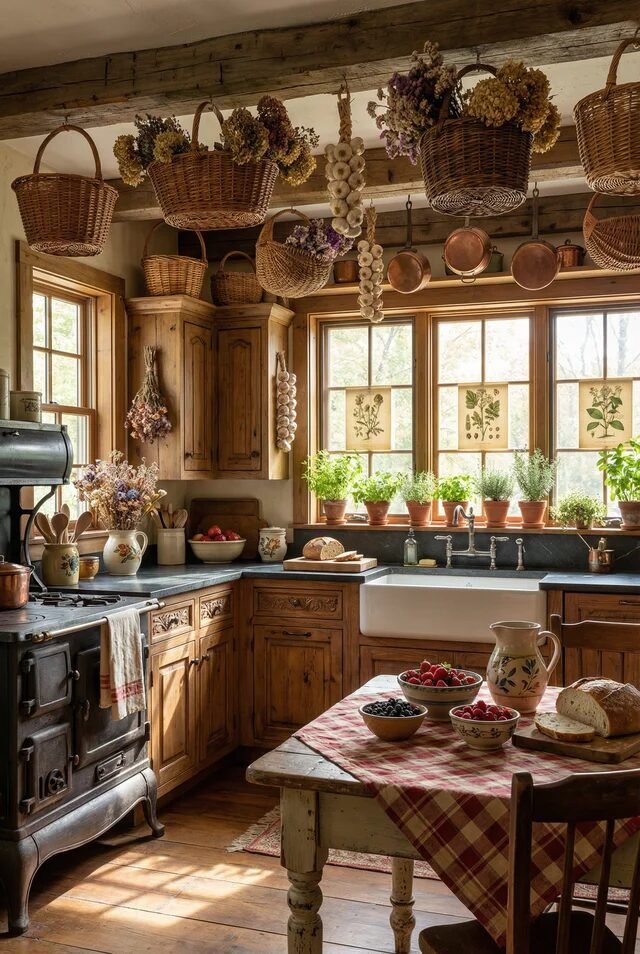
Okay but… hanging baskets from the ceiling? That’s not decor, that’s a personality trait. This works because it draws the eye upward, using vertical space that most kitchens completely ignore. We’re creating overhead layering, which adds depth and makes the room feel fuller without cluttering counters. The repetition of baskets also builds rhythm—your eye moves naturally across the space.
What really ties this together is material consistency. Wicker, wood, copper, linen—it’s all warm, tactile, and slightly imperfect. That’s your cheat code: stick to natural textures so even busy styling feels cohesive instead of chaotic. The dried florals inside the baskets soften everything and add that slightly nostalgic, “we bake bread on Sundays” vibe.
If you’re recreating this, don’t overcrowd every basket. Let some breathe. Mix heights slightly so it feels organic, not grid-like. And please secure them properly—we want cozy, not chaotic falling decor energy.
Cozy Cottage Kitchen With Antique Stove Centerpiece
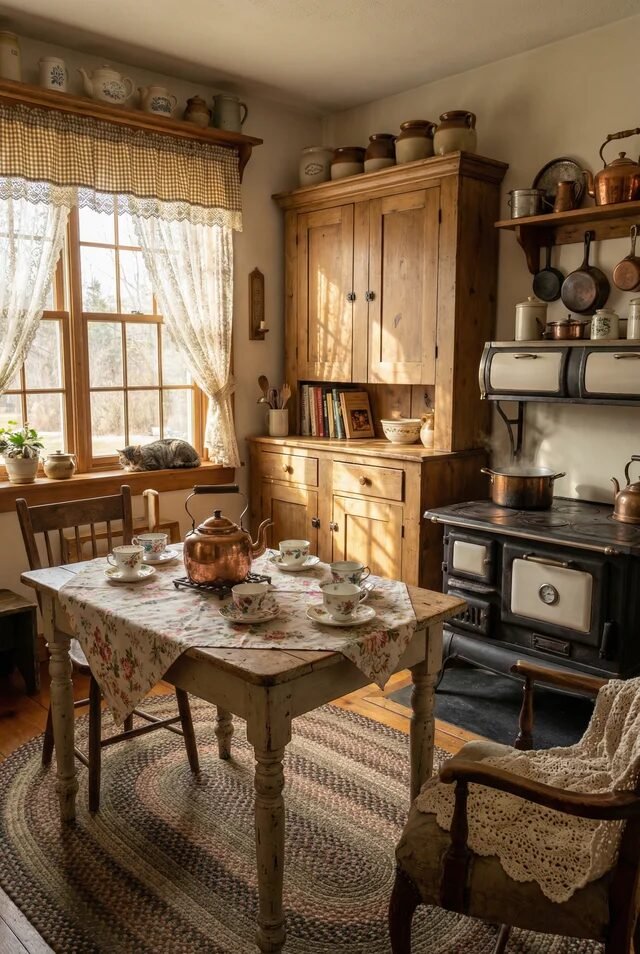
This kitchen said “modern appliances are optional” and honestly? Respect. The antique stove becomes the visual anchor, grounding the entire space with weight and history. Every room needs a focal point, and here it’s doing all the heavy emotional lifting. Everything else—wood cabinetry, soft textiles—supports it without competing.
Lighting plays a huge role here. That soft window light paired with warm wood tones creates a golden, almost cinematic glow. We’re layering light sources naturally instead of relying on harsh overheads, which makes the space feel instantly calmer and more intimate.
To recreate this vibe, you don’t actually need a vintage stove (unless you’re committed like that). Focus on one standout piece—maybe a rustic cabinet or statement table. Then layer in textiles like lace curtains or a braided rug. And yes, a slightly sleepy cat by the window? Highly recommended for authenticity.
Functional Kitchen Island With Open Rustic Storage
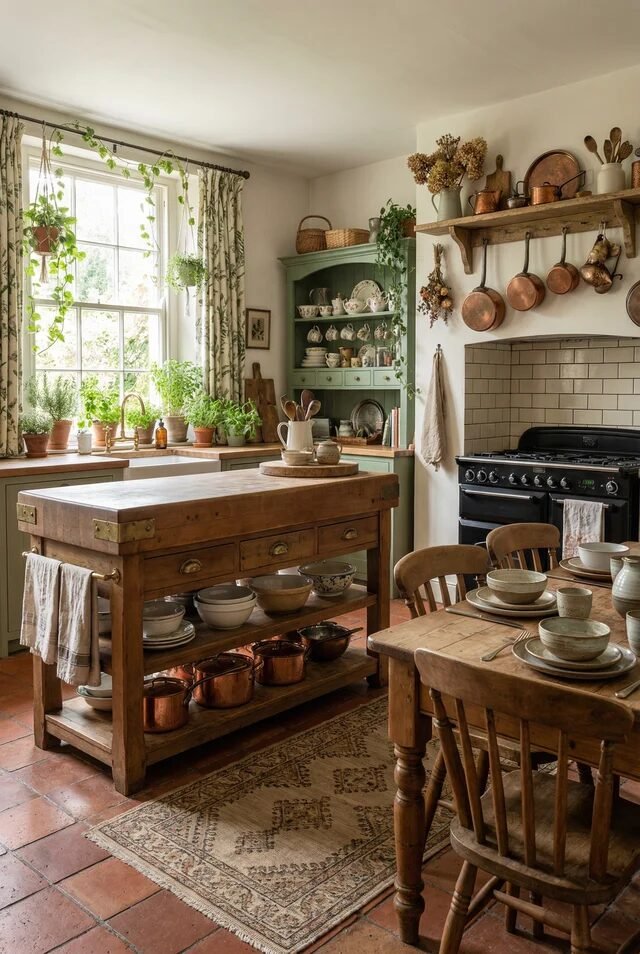
This is what happens when practicality gets a glow-up. The island isn’t just for prep—it’s storage, display, and visual balance all in one. Open shelving underneath keeps cookware accessible while also adding texture through repetition. We’re blending utility with styling, which is the core of grandmacore kitchens.
Notice how the island sits centrally, acting as a visual anchor that balances the heavier elements like the stove and cabinetry. That’s spatial zoning. Each area has a purpose, but nothing feels disconnected because materials and tones stay consistent—warm wood, soft greens, and earthy ceramics.
If you’re recreating this, choose an island with visible storage or modify one with baskets or open shelves. Style it lightly—don’t fill every inch. Add a linen towel or a few stacked bowls for that “effortlessly used” look. And keep pathways clear—we want cozy, not obstacle course.
Floral Wallpaper Kitchen With Copper Accent Drama
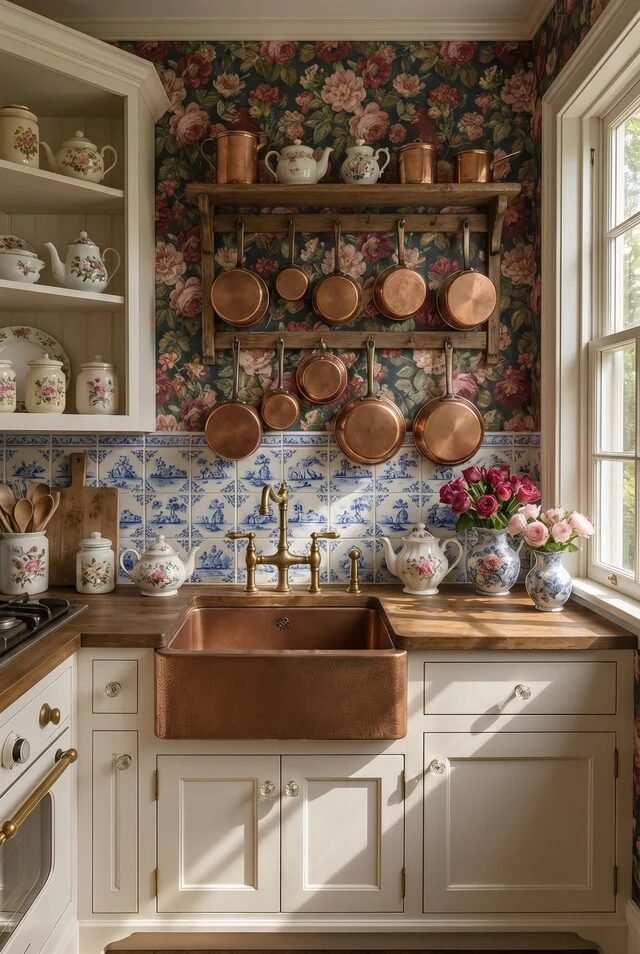
This kitchen is not shy—and honestly, we love that for it. The floral wallpaper creates a bold backdrop, but it works because everything else plays along. When you go big with pattern, you need repetition to make it feel intentional, not random. Here, the copper pans echo the warm tones in the wallpaper, tying everything together.
The backsplash adds another layer, but notice it’s more structured and subtle. That contrast is key. We’re balancing busy patterns with calmer elements so the space doesn’t feel overwhelming. It’s basically visual pacing for your eyes.
If you want to try this, commit fully. Half-measure florals will just feel confused. Pair bold wallpaper with metals like copper or brass to ground it. And keep cabinetry neutral so it doesn’t fight for attention. It’s a lot—but in a very controlled, “we know what we’re doing” way.
Vintage Sink Corner With Soft Textile Layering
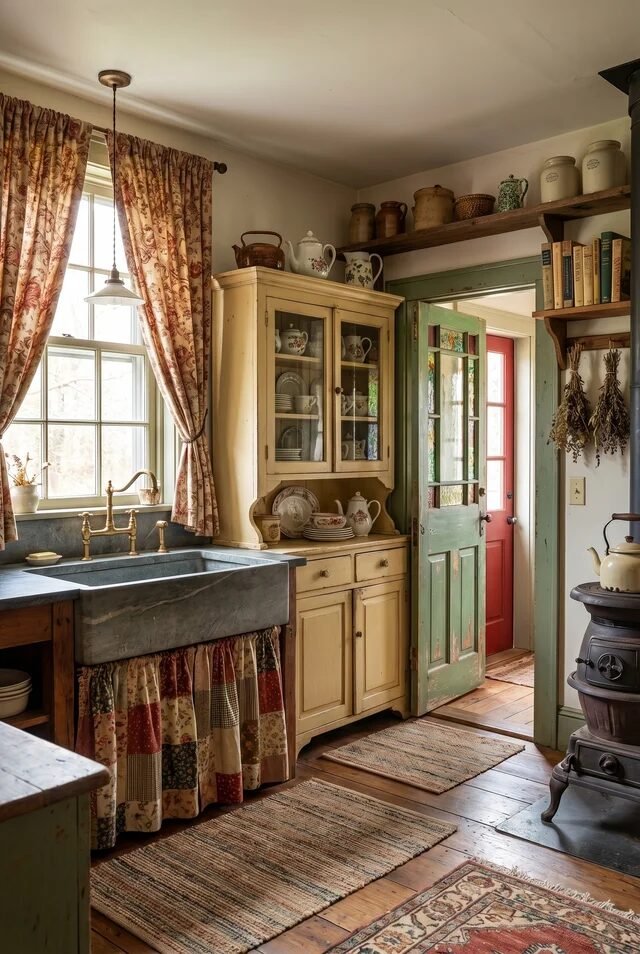
This corner is quietly doing everything right. The skirted sink instantly softens the hard edges of cabinetry, adding movement and texture at eye level. Textiles in kitchens are underrated, but they’re what make a space feel lived-in instead of showroom-stiff. That layered curtain + rug combo? Cozy overload in the best way.
Color-wise, we’ve got muted greens, warm woods, and faded reds working together. Nothing is too saturated, which keeps the look grounded. A slightly washed-out palette helps vintage elements feel authentic rather than costume-like.
If we’re recreating this, start with one textile moment—like a sink skirt or patterned curtain—then build around it. Mix patterns carefully by keeping colors consistent. And don’t forget small details like dried herbs or ceramics nearby. It’s those little touches that make the whole space feel like it has stories to tell.
Designing Kitchens That Feel Collected, Not Decorated
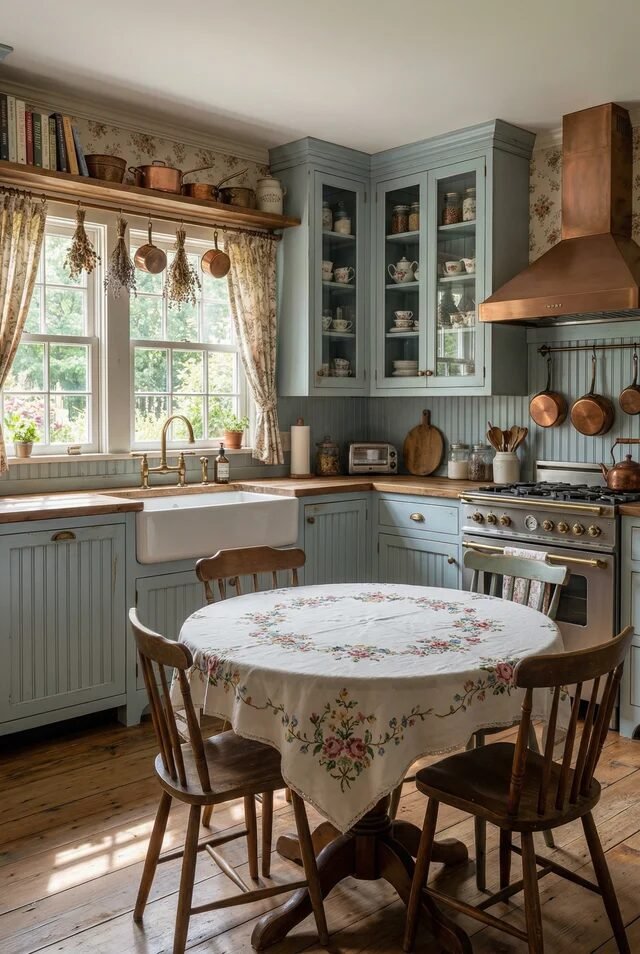
If there’s one rule grandmacore quietly lives by, it’s this: nothing should feel brand new or overly staged. The goal is a space that evolves, not one that’s installed overnight. We’re designing kitchens that feel collected over time, where every object has a reason to exist—even if that reason is just “it makes us smile.”
The secret sauce is restraint mixed with intention. Yes, we layer patterns, textures, and vintage finds—but we anchor them with cohesive color palettes and repeated materials. That’s how we avoid chaos and land firmly in “charming and curated” territory. It’s less about how much you add, and more about how thoughtfully you place it.
So as you recreate these looks, trust your instincts a little more. Let things be imperfect. Let them feel personal. Because at the end of the day, grandmacore isn’t about impressing anyone—it’s about creating a kitchen you actually want to linger in.