
Unique Ground Level Decks That Quietly Fix Awkward Backyards
Low deck ideas are having a moment—and honestly, it’s about time. There’s something incredibly satisfying about outdoor spaces that feel grounded, connected, and easy to live in. Instead of towering structures, we’re working closer to the earth, which naturally creates a more relaxed and inviting atmosphere. When we design at ground level, the transition between indoors and outdoors feels seamless instead of staged.
What makes low decks so powerful is their flexibility. They can become anything—a dining zone, a cozy lounge, a kid-friendly play area, or even a mini resort setup if we’re feeling ambitious. The key is understanding zoning, flow, and proportion. A low deck isn’t just a platform; it’s a foundation for how we use the space.
As we go through these ideas, notice how materials, lighting, and layout work together. Great design isn’t about doing more—it’s about making every element feel like it belongs.
Multi-Level Deck With Outdoor Kitchen Flow
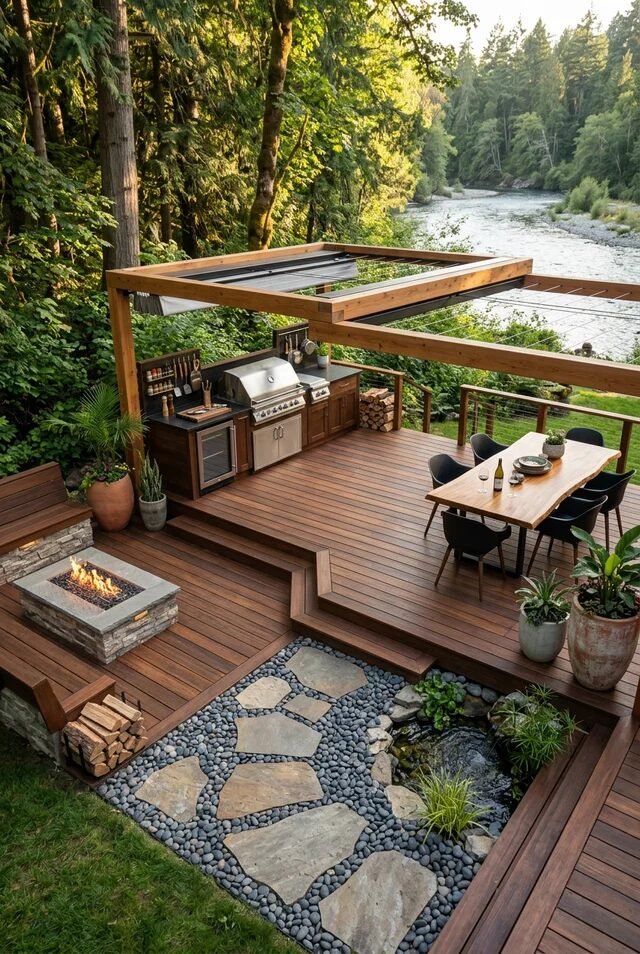
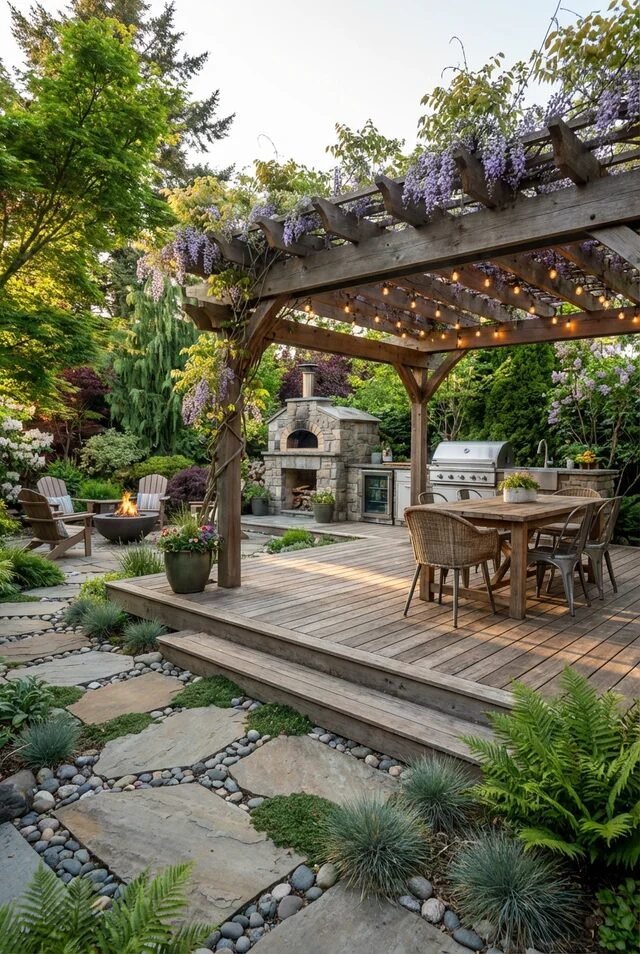
This setup is basically the “we accidentally became outdoor chefs” starter pack. The layered deck creates natural zoning without walls, which is design gold. One level handles cooking, another handles dining, and the lower zone softens everything with stone and water. When we separate functions by height instead of barriers, the space feels bigger and more intentional.
Notice how the pergola frames the kitchen area like a ceiling without closing it in. That’s a classic trick to anchor a focal point. The mix of materials—wood decking, stone fire pit, pebble inlay—adds contrast, which keeps the eye moving. If everything matched too perfectly, it would feel flat and honestly a little boring.
If we’re recreating this, prioritize flow first. Keep at least 36–42 inches of clearance around cooking zones, and align your dining table with the grill for easy hosting. Add subtle lighting under counters or steps. The goal is not just pretty—it’s “effortlessly hosting six people while pretending we didn’t plan it.”
Cozy Cottage Deck Wrapped In Garden Layers
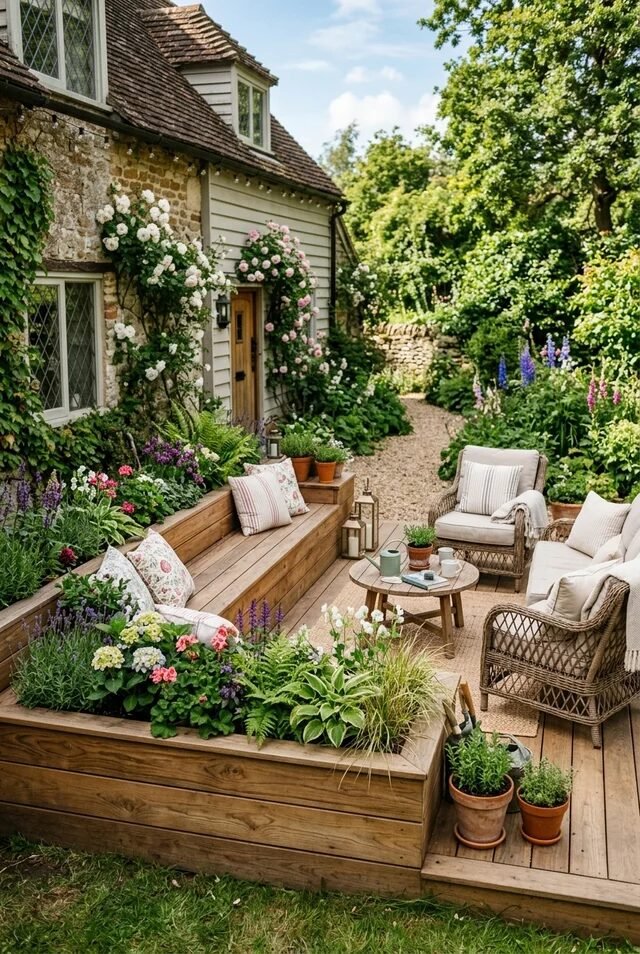
This one feels like we stumbled into a Jane Austen reboot, and we’re not mad about it. The magic here is layering—raised planters, climbing florals, and furniture all stacked visually. Layering softens hard edges and makes a ground-level deck feel lush instead of flat.
The built-in planter bench is doing double duty: seating and structure. That’s efficient design. The florals create a semi-enclosed feel without blocking light, which is key for small outdoor spaces. Notice the color palette too—soft greens, muted florals, natural wood. It’s cohesive without being matchy.
To recreate this, think in tiers: ground plants, mid-height seating, and vertical climbers. Mix textures like wicker, linen, and weathered wood. We want it to feel collected over time, not bought in one panic-scroll session. And don’t overcrowd—leave breathing space so the garden feels curated, not chaotic.
Playful Kid-Friendly Deck With Built-In Activity Zone
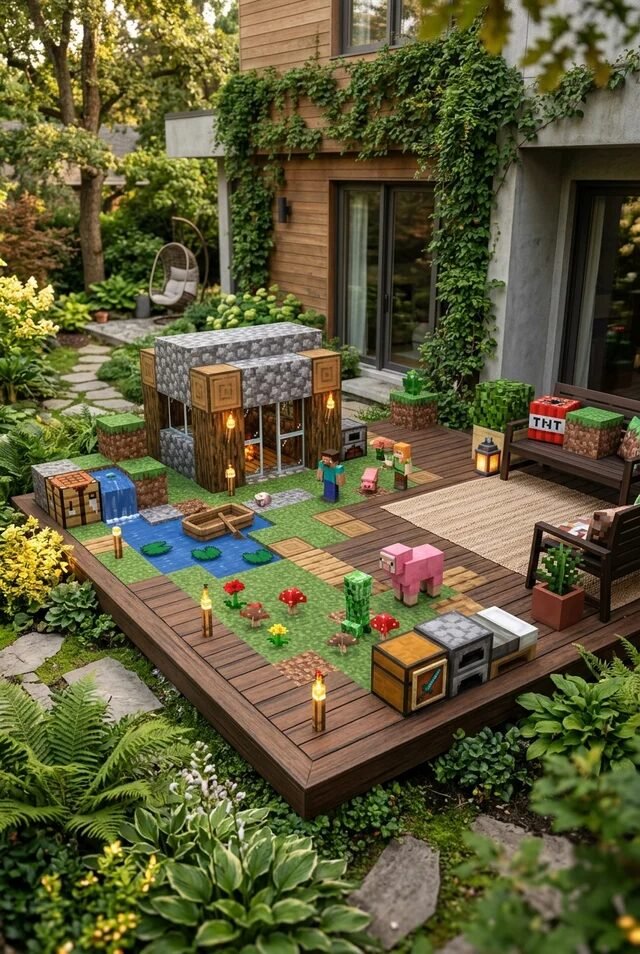
Okay this one is giving “Pinterest parent who has their life together,” but we can fake it. The genius here is turning part of the deck into a dedicated play surface. Zoning for kids doesn’t just help them—it keeps the rest of the space from being chaos.
The contrast between wood decking and the colorful play zone creates visual separation without walls. That’s a subtle but powerful design move. Also, everything is scaled low and accessible, which makes the space feel intentional instead of cluttered with random toys.
If we’re copying this, use modular or removable elements so the space can evolve. Think outdoor rugs, foam tiles, or even painted deck sections. Add soft lighting for evening play and keep seating nearby so adults can supervise while pretending to relax. The goal is a space where kids stay entertained and we don’t lose our sanity.
Minimal Pergola Deck With Soft Draped Privacy
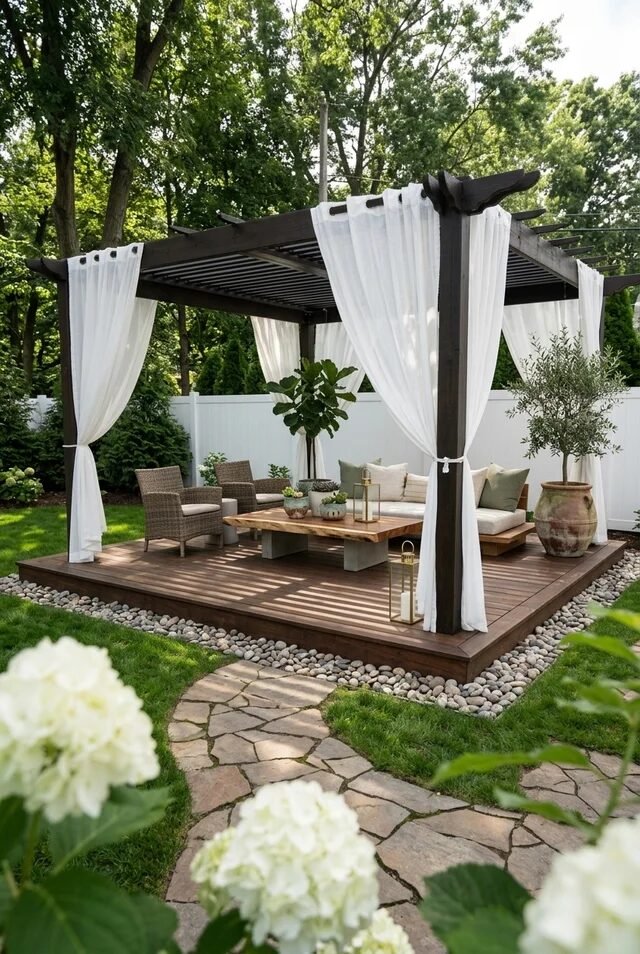
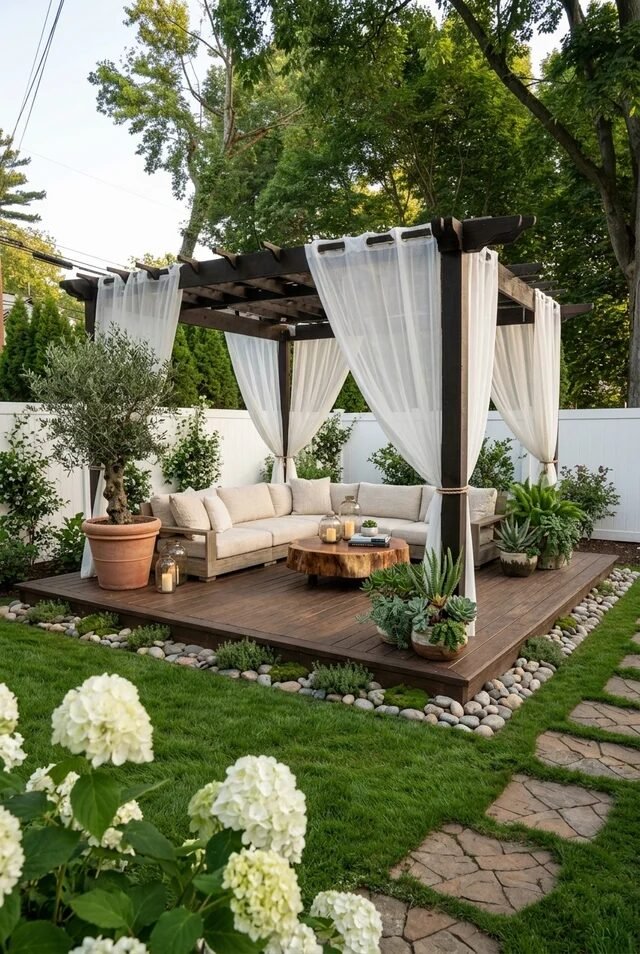
This is the “we drink iced coffee here and pretend life is calm” vibe. The pergola adds structure, but the curtains soften it, which creates that perfect balance between architectural and cozy. Soft elements like fabric instantly warm up hard outdoor structures.
The symmetry is doing a lot of heavy lifting here. Furniture is centered, curtains are evenly spaced, and the deck platform is clearly defined. That kind of balance makes even simple setups feel expensive. The neutral palette also keeps everything calm and cohesive.
To recreate this, focus on proportions. Make sure your pergola height and width feel generous, not cramped. Use outdoor-rated curtains for durability, and anchor furniture with a central coffee table. We’re aiming for “luxury resort energy,” not “DIY project gone rogue.” Add lanterns or low lighting to enhance that relaxed evening glow.
Simple Ground-Level Deck With Ambient Lighting Glow
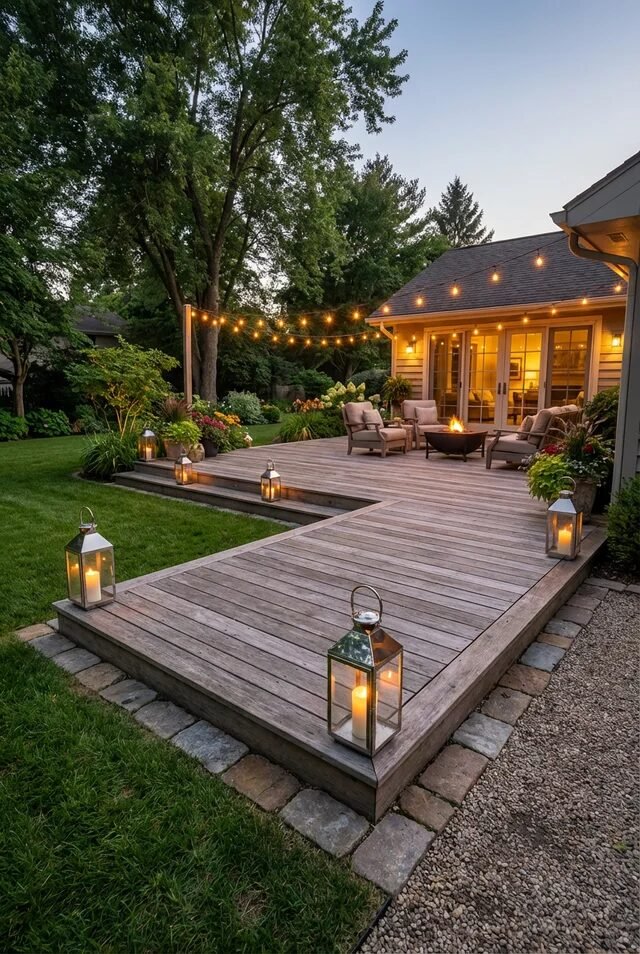
This is proof we don’t need a massive budget to get a vibe. The design is super straightforward—a flat deck, clean lines—but the lighting? That’s where the magic happens. Lighting is what turns a basic deck into a whole experience.
The string lights create a visual ceiling, while lanterns define the edges. That layering of light adds depth and makes the space feel intentional after sunset. The furniture is arranged in a loose circle, which naturally encourages conversation. It’s subtle, but it works.
If we’re recreating this, focus on warm-toned lighting (2700K is your best friend). Mix overhead and ground-level sources for dimension. Keep the layout simple but intentional—don’t just scatter chairs randomly. We want “effortless cozy,” not “we dragged furniture outside and hoped for the best.” Add a fire pit if possible—it instantly becomes the heart of the space.
Zen-Inspired Deck Framing A Koi Pond
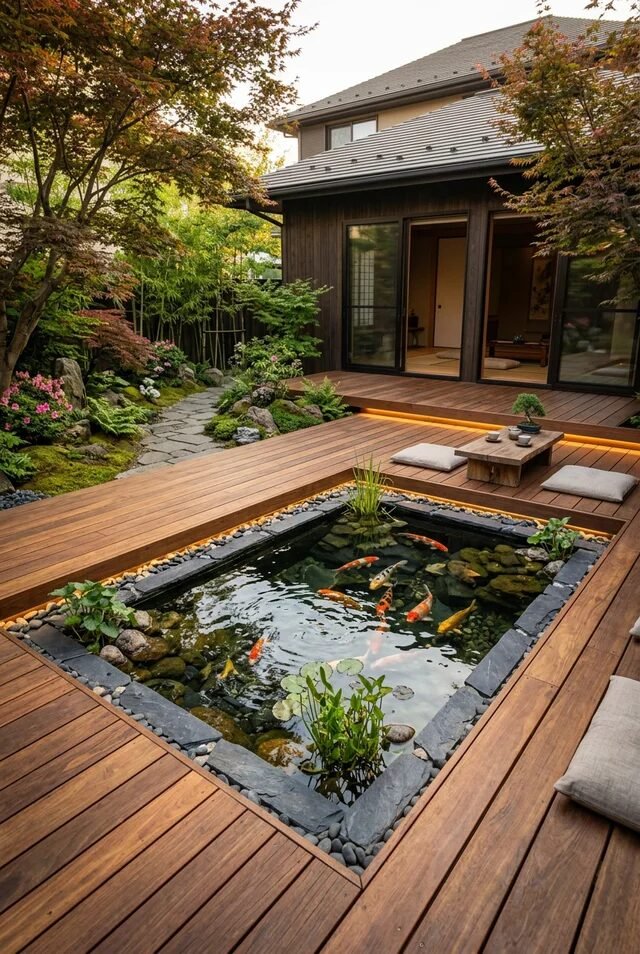
This is the “we suddenly found inner peace” corner of the internet. The deck wraps around the pond, making water the literal centerpiece. When we design around a focal element instead of placing it after, the whole space feels intentional and calming.
The symmetry here is subtle but powerful. Clean deck lines contrast with organic pond shapes, creating balance between structure and nature. The low seating keeps everything grounded (literally), which enhances that serene, almost spa-like vibe. And that soft underlighting? It adds depth without screaming for attention.
If we’re recreating this, keep materials minimal—warm wood, dark stone, and controlled greenery. Avoid overdecorating. Let negative space breathe. We want “quiet luxury,” not “garden center exploded.” Also, consider filtration and maintenance early, because nothing ruins zen faster than murky water.
Intimate Fire Pit Deck With Night Glow
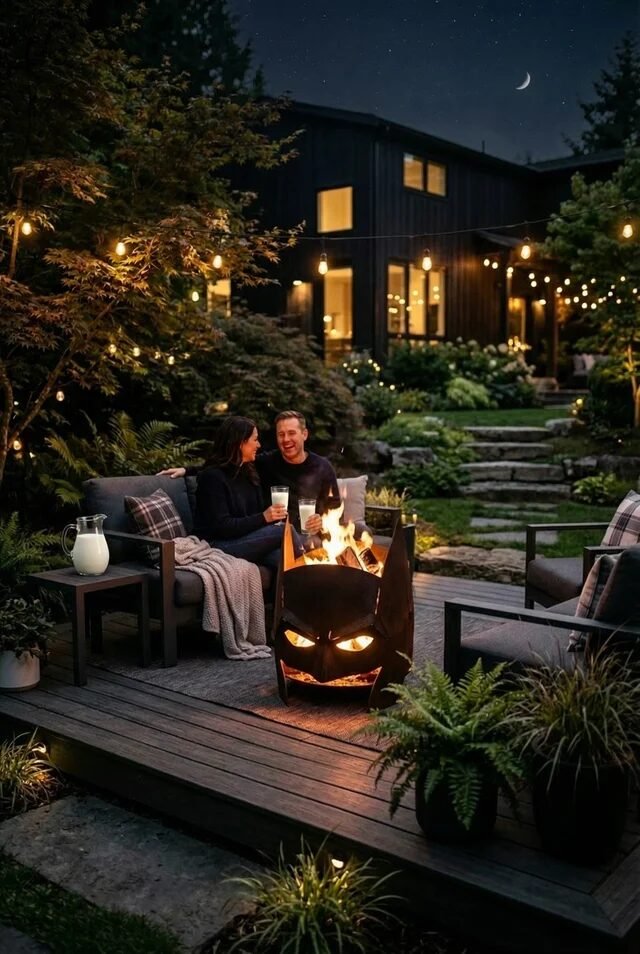
This is where we accidentally stay outside until midnight. The layout is tight, cozy, and centered around the fire—aka the ultimate social magnet. Circular seating arrangements naturally encourage conversation, which is why this setup just works.
Lighting is doing a lot of emotional heavy lifting here. String lights overhead + soft landscape lighting = layered ambiance. The dark exterior of the house actually enhances the glow, creating contrast that makes everything feel warmer and more inviting.
If we want this vibe, keep furniture scaled to the deck size—oversized chairs will kill the intimacy. Add textiles like throws and cushions for comfort. The trick is making it feel styled but still “kick your shoes off and stay awhile” casual. And always anchor the fire pit safely with proper spacing and fire-resistant materials.
Tropical Pool Deck With Resort Lighting Layers
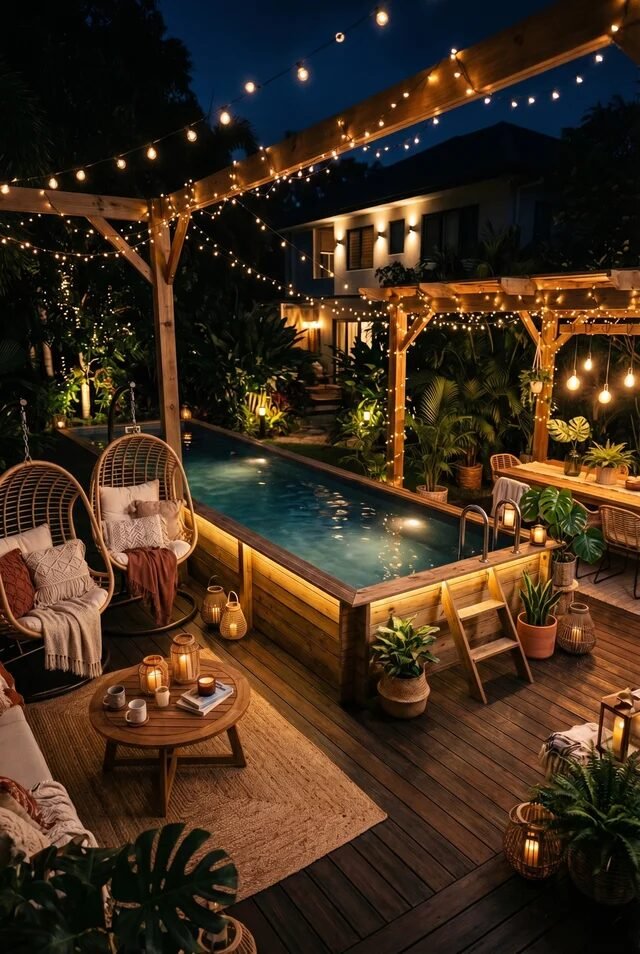
Okay, this is giving “we booked Bali but it’s actually our backyard.” The deck wraps tightly around the pool, maximizing usable space while keeping everything connected. Good design here is about flow—wet zone, lounge zone, and dining zone all visually linked.
Lighting is layered like a pro: underwater pool lights, string lights above, and lanterns at eye level. That creates depth and makes the space usable long after sunset. The mix of materials—rattan, wood, soft textiles—adds texture without overwhelming the space.
To recreate, think in zones but keep transitions seamless. Use consistent wood tones and repeat materials across areas. Add greenery in clusters for that lush feel. We’re aiming for “boutique hotel energy,” not “random patio furniture collection.” Bonus tip: include a small step or ladder detail that feels integrated, not like an afterthought.
Rustic Outdoor Bar Deck Under Pergola
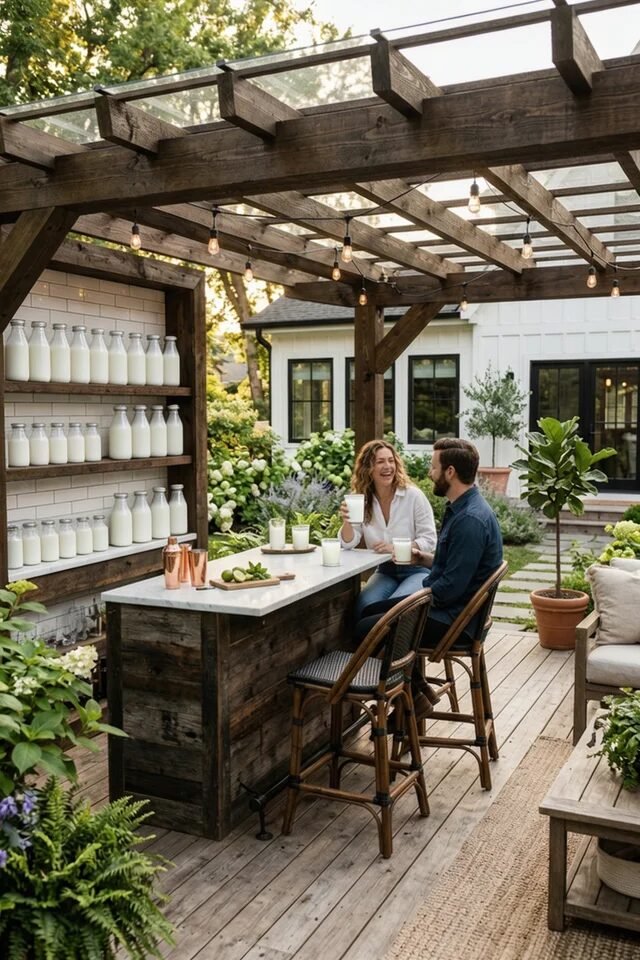
This one is for when we decide we’re “hosting people now” and fully commit. The pergola defines the bar area, turning it into a destination instead of just another corner. Creating a clear focal zone instantly elevates a simple deck into an experience.
Open shelving adds both function and styling opportunity. The repetition of bottles creates visual rhythm (yes, even milk bottles can be aesthetic apparently). The wood tones and greenery soften the structure so it doesn’t feel too rigid or heavy.
If we’re recreating this, prioritize bar height and seating comfort—around 40–42 inches for the counter is ideal. Add task lighting under the pergola for usability. We want it to look good AND actually function when guests are hovering waiting for drinks. Keep decor simple but intentional—too much clutter kills the vibe.
Feminine Glam Deck With Cozy Lounge Layers
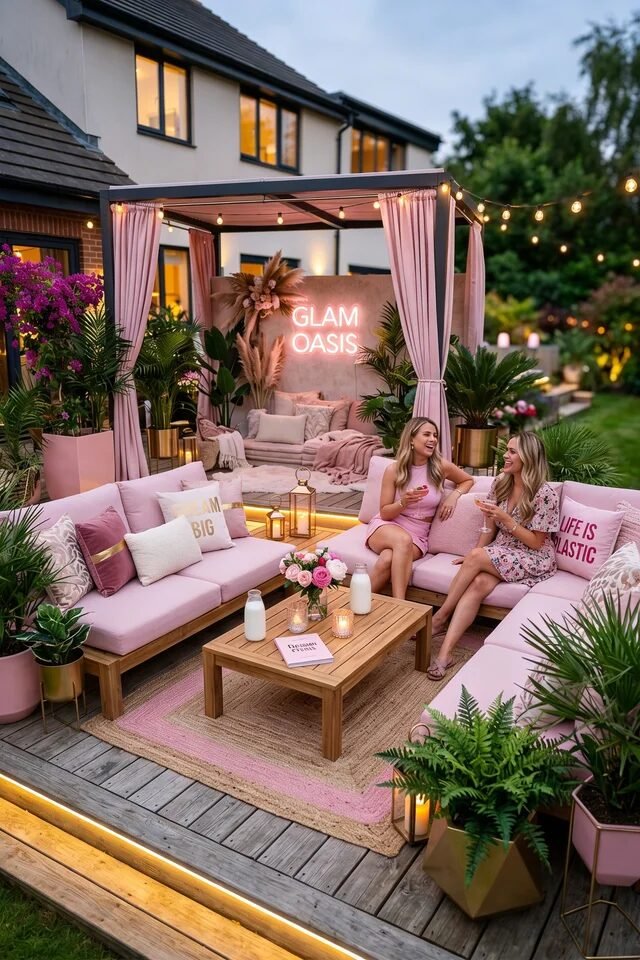
This is the “girls night but make it aesthetic” setup and honestly… it’s working. The cohesive pink palette is bold, but balanced with neutrals and greenery so it doesn’t feel overwhelming. Color coordination is powerful, but it needs contrast to stay sophisticated.
The layout is anchored by a central coffee table and wrapped seating, which creates a social hub. The pergola and curtains frame the space, making it feel like an outdoor room. And that neon sign? Instant focal point, zero effort.
If we’re recreating this, stick to a tight color palette (2–3 main tones max). Layer textures—linen, velvet, wood—to add depth. We want “curated glam,” not “everything pink we could find.” Add warm lighting underneath seating or along edges to give that soft glow that makes everyone look better in photos (priorities).
Designing Ground Level Decks That Actually Work Beautifully
After exploring all ten ideas, one thing becomes clear: low decks aren’t about simplicity—they’re about intention. Every successful setup we’ve seen uses thoughtful zoning, layered textures, and strategic lighting to create depth without relying on height. When we design low, we have to design smarter, because every detail becomes more visible.
The real secret? Balance. Mixing hard and soft materials, open space and defined zones, structure and flexibility. Whether it’s a pergola, built-in seating, or a central feature like a fire pit or pond, each element should serve a purpose. Nothing is just “there for vibes” (even though it still looks like it is).
If we’re recreating any of these, start with how we want to use the space daily. Then build around that. A well-designed low deck doesn’t just look good—it quietly makes outdoor living feel effortless.