
Coastal Living Rooms Quietly Became Less Nautical and Way More Interesting
There’s something wildly unfair about a good coastal living room. The moment we walk into one, suddenly we believe we deserve slower mornings, expensive candles, and a personality built entirely around iced coffee near the ocean. But the best coastal interiors are not just about beach references everywhere. They work because they balance softness, texture, natural light, and effortless comfort in a way that feels emotionally relaxing. A truly successful coastal living room should feel breathable, layered, and casually refined instead of overly themed.
Throughout these ideas, we can see how materials are doing most of the heavy lifting. Woven jute rugs, weathered woods, linen upholstery, stone textures, and oversized plants create warmth long before color palettes even enter the conversation. That is why modern coastal interiors feel elevated now compared to the seashell-and-anchor era we collectively survived.
The real secret is restraint. Coastal spaces look best when they hint at the ocean instead of screaming “BEACH HOUSE” every five seconds. Soft blues, sandy neutrals, organic shapes, and airy layouts create homes that feel timeless, cozy, and honestly kind of addictive.
Driftwood Textures Meet Airy Ocean Light
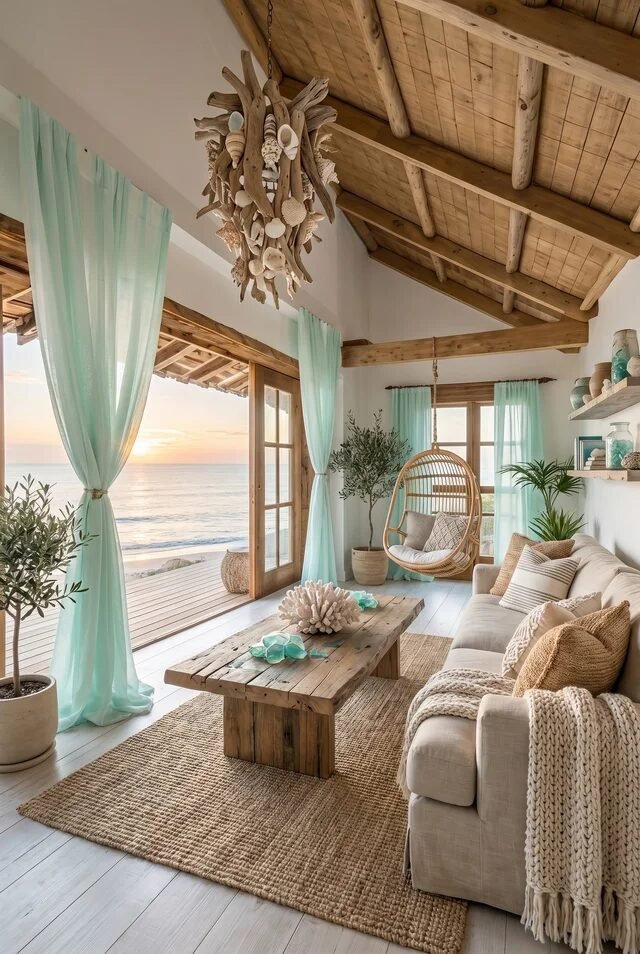
This living room is basically what happens when a beach vacation becomes emotionally attached to you and refuses to leave. The exposed wood ceiling instantly warms up the entire space, while the sheer aqua curtains soften all that rustic texture so the room never feels heavy. That contrast between rugged and airy is exactly why this coastal setup works so well. Without the translucent fabrics, the timber could’ve leaned cabin-core real fast.
The furniture placement is also doing quiet architectural work here. The low-profile sofa, chunky reclaimed coffee table, and woven rug keep the eye grounded while the ocean view becomes the actual focal point. We love how the decor stays intentionally imperfect too. Driftwood lighting, coral-inspired accessories, and woven textures create movement without looking overly themed. Coastal rooms always look better when they feel collected instead of purchased in one dramatic weekend.
If we wanted to recreate this vibe, we’d focus heavily on layered natural materials first. Linen, jute, raw wood, rope, and matte ceramics carry the room harder than color does. The soft seafoam accents only succeed because the base palette stays sandy and neutral. Also: never underestimate oversized curtains in coastal interiors. They add softness, verticality, and that breezy “someone here definitely owns expensive sunscreen” energy.
Soft Blue Accents Calm The Entire Space
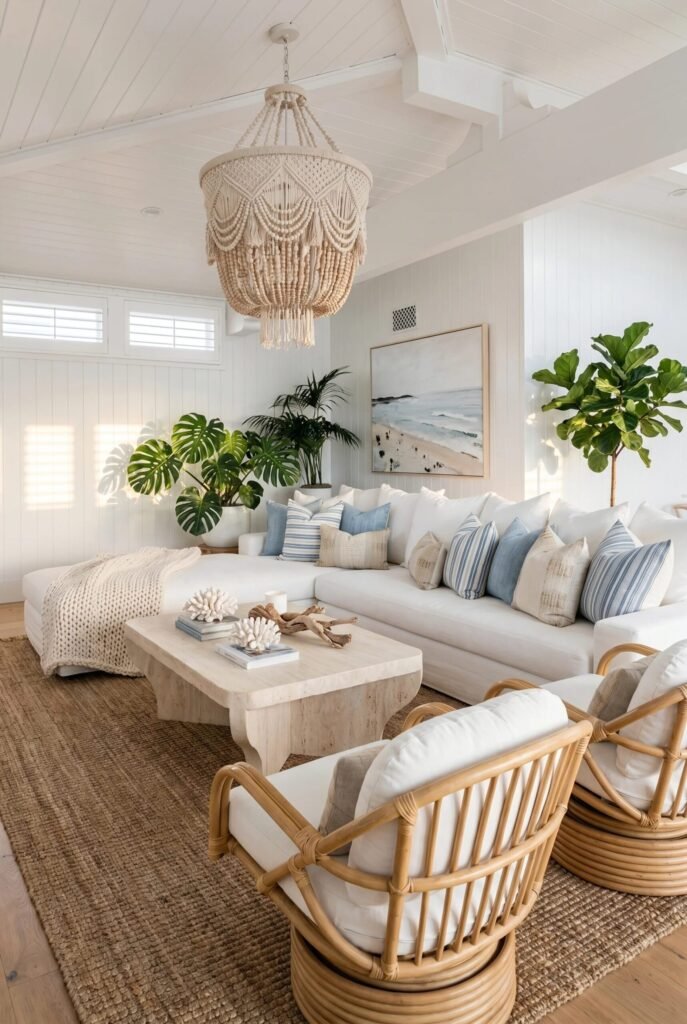
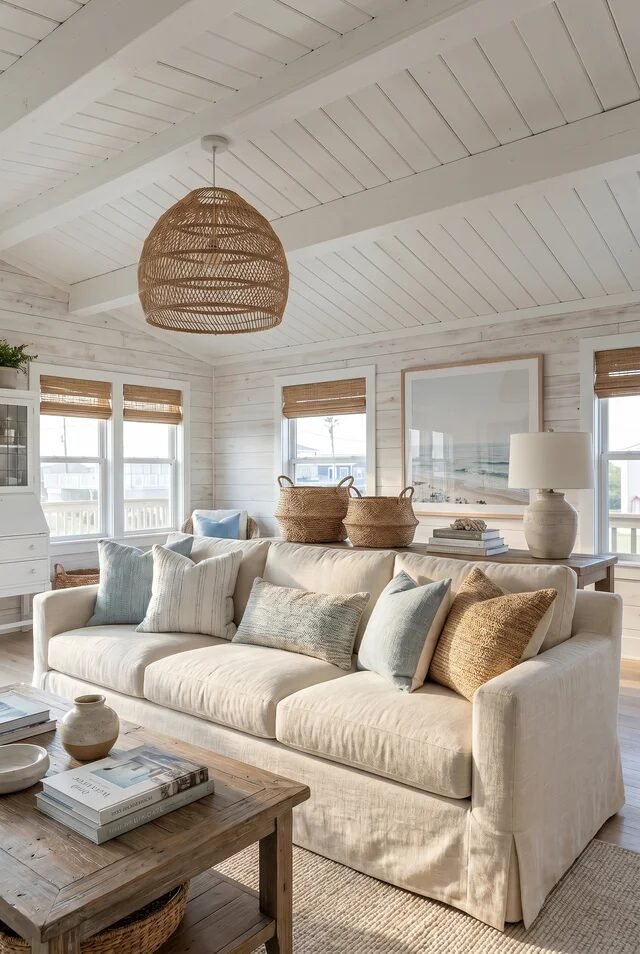
This room proves coastal design does not need seashell wallpaper and random anchor decor from 2009. Instead, it leans into restraint, which honestly makes everything feel more expensive. The palette is almost entirely warm white, sandy beige, and dusty blue, creating a layered tonal look that feels calm instead of overly styled. The magic here comes from repetition, not clutter. Notice how the blue accents repeat across pillows, artwork, and subtle decor pieces without screaming for attention.
One of the smartest design decisions is the oversized sectional paired with lightweight rattan chairs. Visually, this prevents the seating arrangement from becoming too bulky. The woven chandelier also helps balance the scale of the sofa while pulling the eye upward toward the ceiling. Coastal interiors need vertical softness, otherwise white rooms can start feeling flat and oddly clinical. Nobody wants their beach house looking like a dentist office with throw pillows.
To recreate this look, we’d prioritize texture before accessories. Chunky knit throws, woven fibers, linen upholstery, and matte woods add dimension even when the palette stays minimal. Large tropical plants are also carrying this room aesthetically and emotionally. They soften corners, introduce organic shape variation, and stop the neutral palette from feeling sleepy. A coastal room without greenery is honestly just a beige room near water.
Double Height Coastal Spaces Feel Surprisingly Cozy
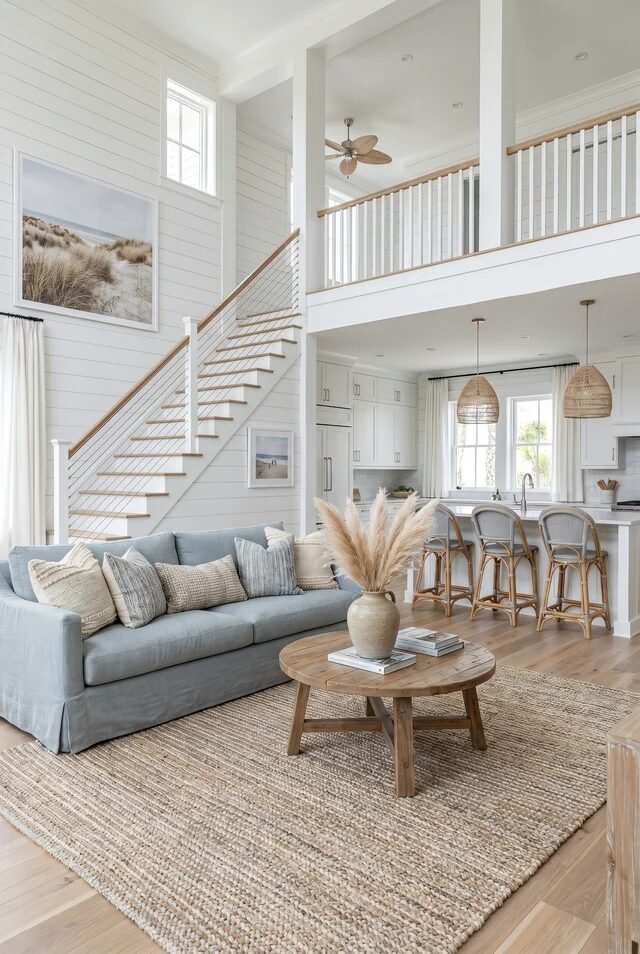
Tall ceilings can either feel luxurious or like we accidentally rented an upscale airport lobby. Thankfully, this room avoids that problem by using horizontal layering everywhere. The shiplap walls, oversized rug, long sofa silhouette, and repeated woven textures visually stretch the room sideways, which balances the dramatic height beautifully. This is a masterclass in making open-concept coastal interiors still feel intimate.
The color palette also deserves credit for the calm atmosphere. Instead of sharp navy contrasts, the space uses faded blue-gray upholstery mixed with warm oak and creamy whites. That softer tonal approach keeps the room relaxed and livable. The staircase becomes part of the aesthetic too because the wood handrail quietly echoes the coffee table and bar stools. Good coastal design usually repeats wood tones intentionally so the space feels connected instead of randomly assembled from Pinterest panic.
We also need to appreciate the lighting strategy here. Natural light floods the room, so the decor stays visually lightweight. Woven pendants and pale textiles reflect brightness instead of absorbing it. If we were recreating this style, we’d avoid heavy dark furniture completely because it would interrupt the room’s visual flow. Coastal interiors thrive when furniture feels breathable and slightly casual, like nobody panics if sandy feet enter the room occasionally.
Vaulted Ceilings Make Coastal Rooms Feel Cinematic
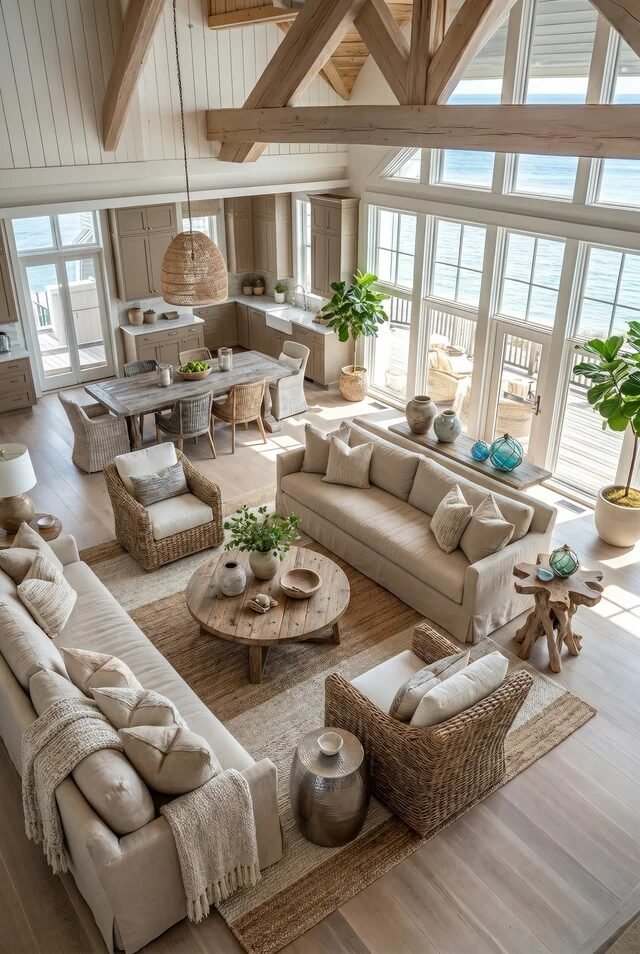
This space understands scale in a way that honestly deserves applause. The soaring ceilings and massive windows could’ve made the room feel cold, but the designer anchored everything with oversized seating clusters and layered natural textures. Large coastal rooms only work when the furniture visually “fills” the volume without overcrowding it. That’s why the chunky woven chairs and broad sofas feel so important here. Tiny furniture would’ve disappeared instantly.
The neutral palette also creates visual calm despite the dramatic architecture. Warm beige upholstery, pale oak woods, woven lighting, and sandy rugs all blend softly together so the ocean view remains the star. We especially love how rounded furniture edges soften the strong structural beams overhead. It creates balance between architecture and comfort, which coastal interiors absolutely need. Otherwise the room risks feeling too sharp and formal for a beach-inspired home.
If we were stealing ideas from this space immediately, it would be the layered seating arrangement. Multiple conversational zones make huge rooms feel welcoming instead of echoey. The trick is using repeated textures across every zone so the layout still feels cohesive. Also, those oversized windows? Minimal window treatments are the correct decision every single time. Imagine blocking that view with heavy curtains. Criminal behavior honestly.
Navy Coastal Decor Feels Tailored And Fresh
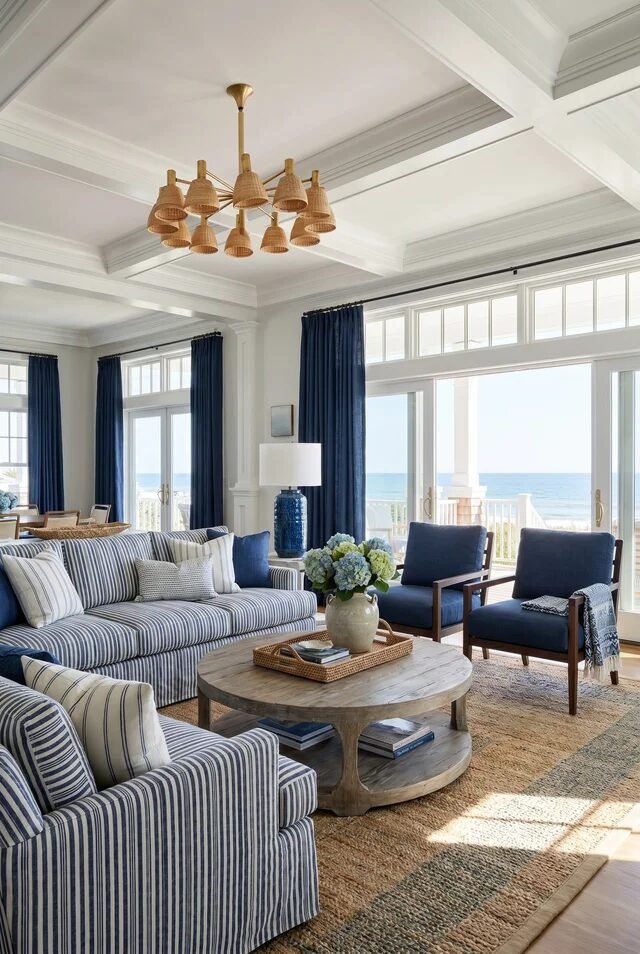
This room takes a more polished approach to coastal design, and honestly, it works ridiculously well. Instead of relying on pale aqua tones, it uses deep navy accents to create structure and contrast. The striped upholstery immediately introduces classic coastal personality, but the crisp white walls stop the room from feeling overly traditional. This balance between tailored and relaxed is what makes modern coastal interiors feel elevated instead of cheesy.
The symmetry here is also quietly doing a lot of heavy lifting. Matching chairs, balanced curtain placement, and centered furniture arrangements make the room feel calm and intentional. Coastal interiors often look best when the layout itself feels organized because the textures already add enough casual energy. We especially love the woven chandelier because it softens the more formal blue palette and introduces warmth overhead. Without it, the room could’ve leaned slightly too nautical-country-club.
For anyone recreating this style, focus on mixing structured and relaxed materials together. Tailored striped upholstery pairs beautifully with organic woods, woven rugs, and casual ceramics. Navy works best as an accent color rather than the dominant palette in coastal spaces. Too much can make the room feel heavy fast. Also, fresh flowers and natural sunlight are basically unpaid interns in coastal design. They make everything look more alive with minimal effort.
Statement Coffee Tables Add Organic Character
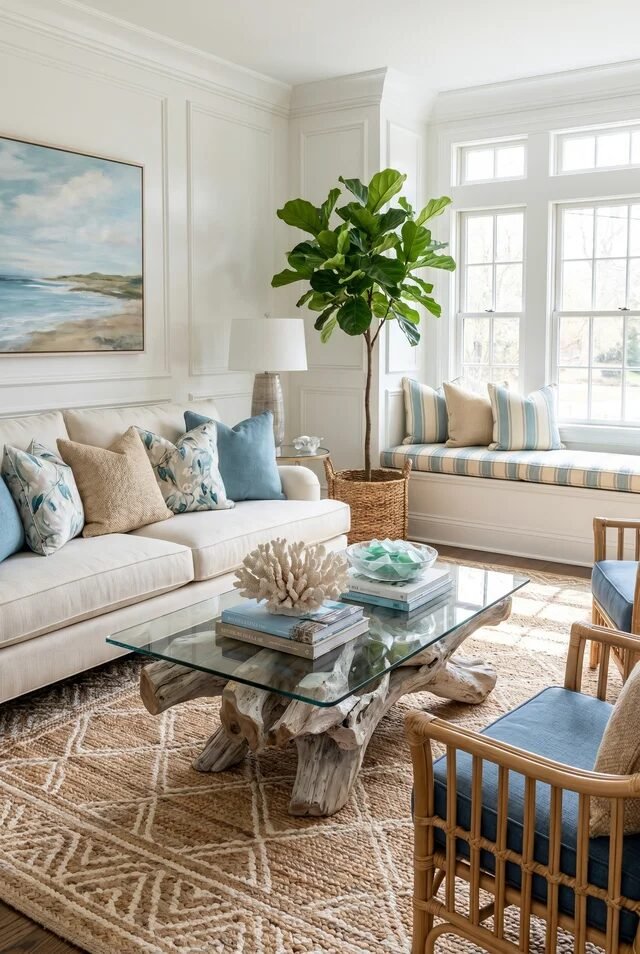
This coastal living room understands one very important design truth: straight lines need something weird nearby. That’s exactly why the sculptural driftwood coffee table works so well here. The glass top keeps the room visually light, while the raw wood base introduces natural movement and texture. Without that organic centerpiece, the room could’ve felt a little too polished and predictable. Coastal spaces usually shine when there’s at least one element that feels collected from nature instead of ordered online during a midnight scrolling spiral.
The built-in window seat also deserves appreciation because it quietly maximizes both function and softness. Instead of cluttering the room with extra chairs, the seating becomes part of the architecture itself. The striped cushions repeat the pale blue tones from the throw pillows, creating subtle color continuity throughout the space. We also love how the woven rug grounds everything while still feeling relaxed and beachy rather than formal. Texture is honestly carrying coastal interiors on its back at this point.
If we were recreating this look, we’d keep the palette extremely controlled. Cream, sand, pale driftwood brown, and soft ocean blue are enough. Too many accent colors would ruin the calm layered effect immediately. Also, oversized plants are essential in rooms like this because they soften corners and bring in that effortless “vacation rental but make it expensive” energy.
Stone Fireplaces Warm Up Coastal Interiors Beautifully
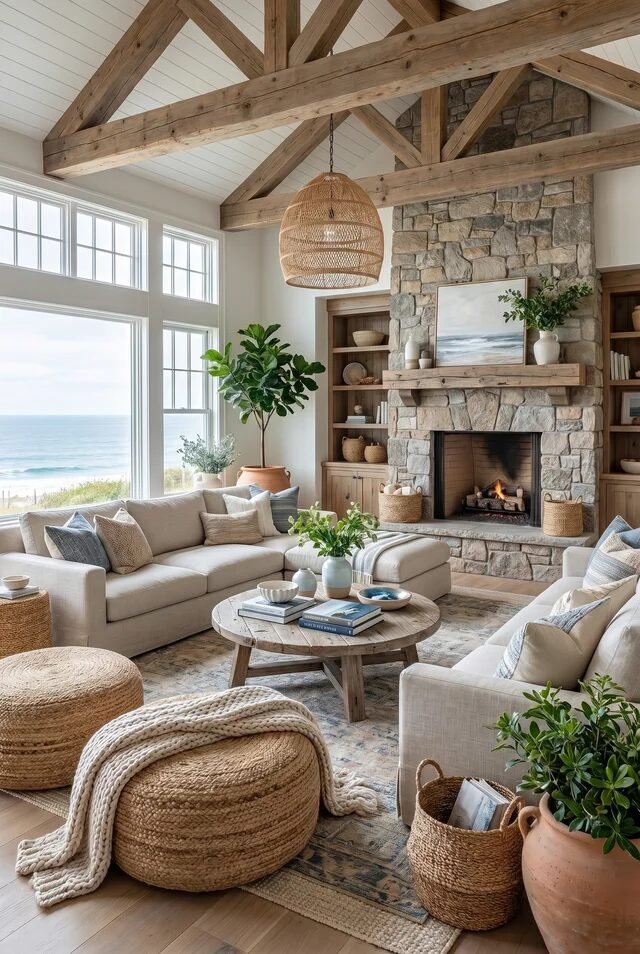
Some coastal living rooms accidentally feel cold because everyone becomes emotionally attached to white paint and forgets warmth exists. This room avoids that problem completely by introducing a massive stone fireplace paired with warm exposed beams. The combination creates balance between airy coastal brightness and grounded rustic texture. That tension between soft and rugged is exactly why this space feels cozy instead of sterile.
The furniture layout is also incredibly smart. Two large sofas facing each other instantly create conversation flow, while the round coffee table softens all the strong architectural lines overhead. Round shapes matter more than people realize in coastal interiors because they keep open spaces from feeling too rigid. We especially love the oversized woven pendant light because it visually lowers the ceiling and makes the huge room feel more intimate. High ceilings are gorgeous, but emotionally they sometimes need calming down a little.
To recreate this aesthetic, we’d focus on mixing materials instead of overdecorating. Stone, linen, jute, oak, wicker, and matte ceramics naturally build depth without needing loud colors. The muted blue accents work because they appear sparingly among all the warm neutrals. Also, layered baskets are basically the unpaid interns of coastal styling. They add storage, texture, and casual charm while pretending they’re not working overtime.
Skylights Make Coastal Rooms Feel Airier
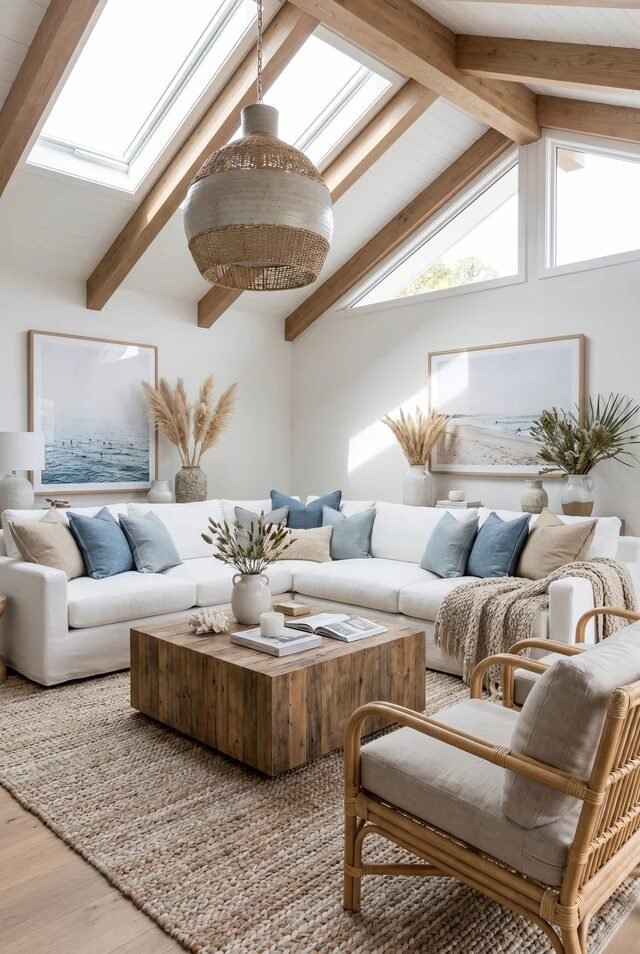
This room is proof that natural light is basically free interior design therapy. The skylights completely transform the atmosphere by pulling sunlight deep into the space, making every neutral texture feel brighter and softer. Combined with the exposed wood beams, the room balances warmth and openness perfectly. Coastal interiors almost always look more luxurious when light becomes part of the design strategy itself.
The seating arrangement also feels intentionally relaxed without becoming messy. The oversized sectional creates one unified conversation zone, while the woven accent chairs add shape variation and prevent the room from looking too blocky. We love how the square wood coffee table anchors the center because the chunky silhouette contrasts beautifully against all the soft upholstery. Good design usually comes from balancing opposites, honestly. Soft versus structured. Airy versus grounded. Cozy versus clean. Very “main character discovers inner peace near the ocean” energy.
One of the smartest details here is the restrained styling. The room uses only a few decorative objects, but every item has visual weight because the palette stays cohesive. Repeating sandy beige, weathered oak, and dusty blue creates harmony without trying too hard. If we were recreating this space, we’d avoid shiny finishes entirely. Coastal rooms almost always feel calmer when materials stay matte, textured, and slightly imperfect.
Coastal Gallery Walls Feel Surprisingly Sophisticated
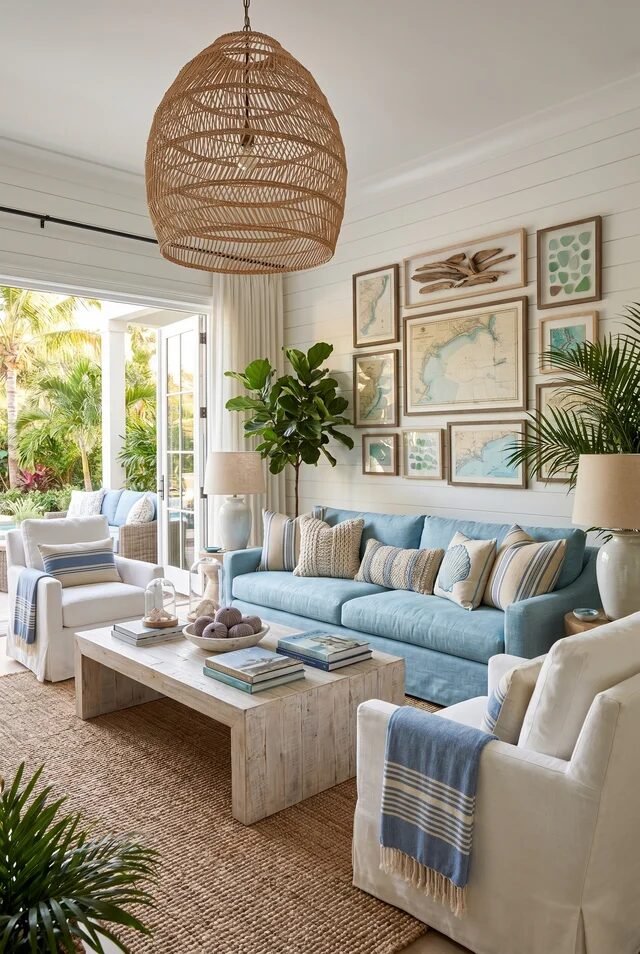
Gallery walls can go wrong incredibly fast. One minute we’re curating “coastal charm,” and the next minute the room looks like a seafood restaurant with emotional baggage. Thankfully, this living room keeps everything cohesive by sticking to soft ocean-inspired artwork in matching wood frames. The result feels collected and layered instead of chaotic. Consistency in framing and color palette is what keeps gallery walls looking elevated.
The pale blue sofa also changes the entire mood of the room. Instead of using blue as a tiny accent, the space allows it to become the main upholstery statement while surrounding it with creamy whites and woven textures for balance. That’s an important coastal design trick: bold colors feel calmer when paired with heavy natural materials like jute rugs, wood coffee tables, and rattan lighting. Otherwise the room risks feeling too bright and playful instead of grounded.
We also need to discuss the oversized woven pendant because honestly, she’s carrying the ceiling visually. Large lighting fixtures help define seating zones while adding softness overhead. Coastal spaces feel more complete when texture appears at every height in the room, not just near the floor. And yes, tropical plants remain undefeated in coastal interiors. They make every room look healthier, happier, and slightly more expensive with almost suspicious ease.
Vintage Surfboards Become Instant Coastal Art
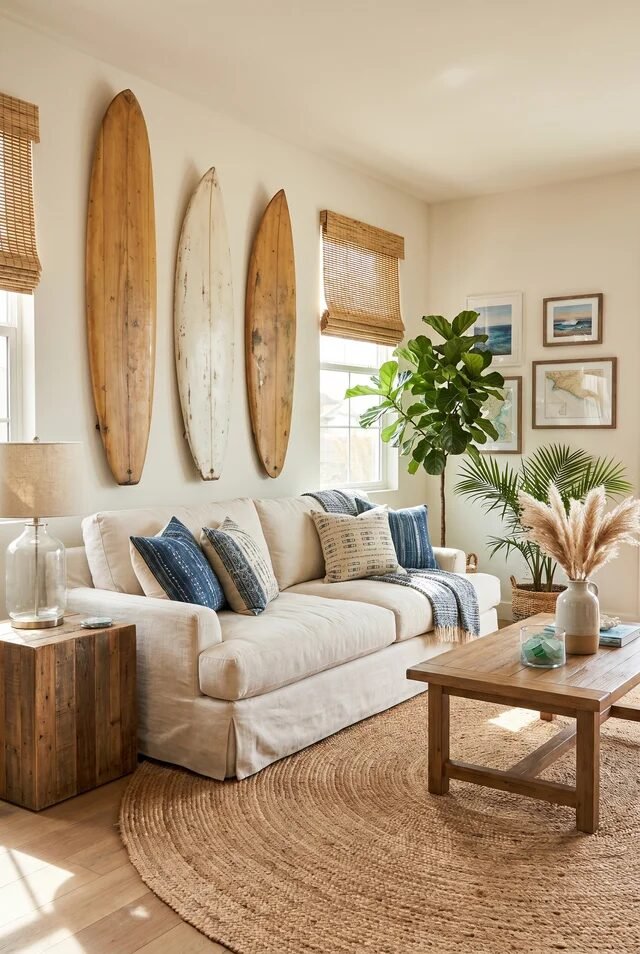
This living room takes a more playful approach to coastal style, and honestly, it works because the decor feels personal instead of staged. The vintage surfboards instantly create vertical drama while acting as sculptural wall art. Oversized statement pieces are often better than cluttering coastal rooms with dozens of tiny beach accessories. One bold focal point always feels more intentional than a shelf full of decorative starfish fighting for relevance.
The room also leans heavily into warm neutral layering, which keeps the surfboards from overwhelming the space. The creamy slipcovered sofa, woven round rug, bamboo shades, and rustic wood tables all create softness and warmth underneath the stronger wall display. We especially love the subtle blue textiles because they quietly reinforce the coastal palette without dominating it. This is the kind of room that feels relaxed enough for daily life but still visually curated. Basically the dream.
If we were borrowing ideas from this setup, we’d absolutely focus on mixing vintage and modern pieces together. Coastal interiors feel more authentic when they include slightly weathered or nostalgic elements. Natural materials should always lead the palette before bright coastal colors enter the conversation. Also, oversized plants near corners help balance tall wall decor beautifully while preventing the space from feeling visually top-heavy.
The Coastal Living Rooms Quietly Winning Everyone Over Lately
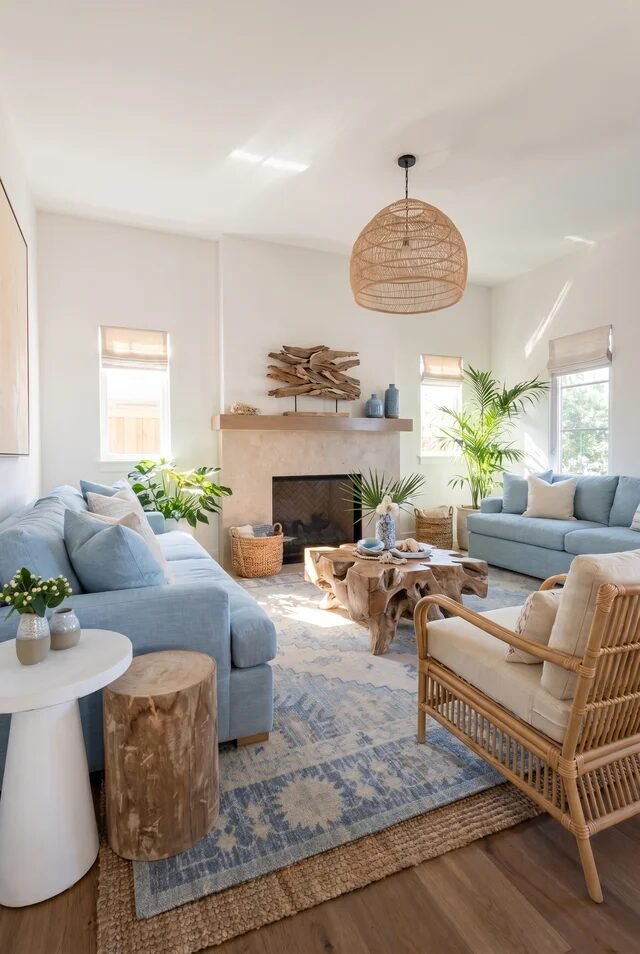
Coastal living rooms have evolved so much beyond the predictable nautical clichés, and honestly, we love to see the growth. The new version of coastal design feels warmer, softer, and far more personal. Instead of decorating with obvious beach motifs, these spaces focus on atmosphere first. Natural light becomes part of the styling, layered textures replace excessive accessories, and comfort is treated almost like a design principle itself. The goal is no longer creating a room that looks coastal. It is creating a room that feels calm the second we enter it.
What makes these ideas especially effective is how versatile they are. Some spaces lean rustic with exposed beams and stone fireplaces, while others feel airy and refined with pale linens, skylights, and woven lighting. Yet every room still shares the same emotional core: relaxed elegance without unnecessary formality. That balance is what makes coastal interiors so livable for everyday life.
At the end of the day, the best coastal rooms are the ones that feel collected over time. A little imperfect. A little sun-faded. A little “we accidentally became happier after redesigning this space.” Honestly, that is probably the dream.